Tag: meta

  • Meta developing new social networking app to compete with Twitter

    Meta developing new social networking app to compete with Twitter

    Meta, the parent company of Facebook and Instagram, is developing a standalone text-based social network app that could potentially compete with both Twitter and its decentralised rival, Mastodon.

    According to reports, Meta is exploring the creation of a decentralised social network for sharing text updates, providing a separate space where public figures and creators can share timely updates about their interests.

    Meta’s Twitter-like app would allow the company to take advantage of the current confusion at Twitter, where cost-cutting has been widespread ever since Elon Musk’s takeover of the platform late last year. Companies have withdrawn their spending following Twitter’s restoration of suspended accounts and release of a paid account verification that resulted in scammers impersonating firms.

    The new app, codenamed P92, will allow users to log in using their existing Instagram credentials and will be based on a similar framework to Mastodon, a Twitter-like service launched in 2016.

    The decentralised platform cannot be run at the whim of a single entity and cannot be bought or sold. Meta’s plans come at a time when Facebook, its largest platform, is struggling to capture the attention of younger audiences. In addition, the company has invested heavily in the metaverse, a virtual world where users interact and work, which has yet to come to fruition.

    Instagram, its video-sharing app, is also facing tough competition as content creators or hit influencers abandon the platform in favour of TikTok. It is currently unclear when Meta will launch the new app.

  • Donald Trump to return to Facebook, Instagram after two-year ban

    Donald Trump to return to Facebook, Instagram after two-year ban

    Donald Trump will be allowed back on to Facebook and Instagram after Meta announced it would be ending its two-year suspension of his social media accounts.

    The ban will end “in the coming weeks,” Meta said. In a statement, Nick Clegg, Meta’s president of global affairs, said the public “should be able to hear what their politicians are saying.”

    The former US president was indefinitely suspended from Facebook and Instagram after the Capitol riots in 2021.

    The social media giant had acted following Trump’s “praise for people engaged in violence at the Capitol,” Clegg said. “The suspension was an extraordinary decision taken in extraordinary circumstances,” he added.

    Clegg said a review had now found that Trump’s accounts no longer represented a serious risk to public safety. However, owing to Trump’s past, he would now face intensified penalties for any offences in the future.

    Meta’s Oversight Board, a body it set up to review moderation rulings, said that the decision to reinstate Trump on its platforms “sat with Meta alone; the board did not have a role in the decision.”

    The board had already informed Meta that a review of Trump’s suspension was necessary.

    It encouraged Meta to be open and to offer more details about new laws protecting public figures so that it could assess how they were being applied.

  • WhatsApp will stop working on older smartphones after December 31

    WhatsApp will stop working on older smartphones after December 31

    Every year, WhatsApp discontinues support for specific devices that are considered obsolete. After December 31, the Meta-owned messaging platform will no longer be available on more than 40 smartphones, including two older iPhones.

    WhatsApp is discontinuing support for devices and operating systems that are rarely used and quite old. The messenger currently supports Android 4.1 and higher, iOS 12 and higher, and KaiOS 2.5.0 and higher.

    GizChina has compiled a list of 49 phones that will no longer be able to operate WhatsApp after December 31.

    Apple: iPhone 5, iPhone 5c

    Samsung: Galaxy Ace 2, Galaxy Core, Galaxy S2, Galaxy S3 mini, Galaxy Trend II, Galaxy Trend Lite, Galaxy Xcover 2

    LG: LG Enact, Lucid 2, Optimus 4X HD, Optimus F3, Optimus F3Q, Optimus F5, Optimus F6, Optimus F7, Optimus L2 II, Optimus L3 II, Optimus L3 II Dual, Optimus L4 II, Optimus L4 II Dual, Optimus L5, Optimus L5 Dual, Optimus L5 II, Optimus L7, Optimus L7 II, Optimus L7 II Dual, Optimus Nitro HD

    Sony: Xperia Arc S, Xperia miro, Xperia Neo L

    Huawei: Ascend D, Ascend D1, Ascend D2, Ascend G740, Ascend Mate, Ascend P1

    Given that the majority of individuals use the latest recent smartphones, very few people may be impacted by WhatsApp’s expiration. However, it’s time to upgrade if your phone is on the aforementioned list.

  • Meta to settle Cambridge Analytica scandal case for $725 million

    Meta to settle Cambridge Analytica scandal case for $725 million

    Facebook parent Meta has agreed to pay $725 million to settle a lawsuit that accused the social media giant of allowing third parties to access users’ private data. The amount was disclosed in a court filing late on Thursday.

    “The proposed settlement of $725,000,000 is the largest recovery ever achieved in a data privacy class action and the most Facebook has ever paid to resolve a private class action,” lawyers for the plaintiffs said in the filing.

    As part of the settlement, Facebook has not admitted any wrongdoing, which must still be approved by a judge in the US District Court for the District of Columbia’s San Francisco division.

    In August, it was reported that Facebook had struck a preliminary agreement, though the sum and specifics of the settlement were not disclosed at the time.

    In 2018, Facebook users accused the social network of breaking privacy guidelines by sharing their data with third parties, including the British business Cambridge Analytica, which was tied to Donald Trump’s 2016 presidential campaign.

    According to the lawsuit, Cambridge Analytica, which has since shut down, then gathered and abused the personal data of 87 million Facebook users without their knowledge.

    This information was allegedly utilised to create software to sway US voters in Trump’s favour.

    Since then, Facebook has banned access to its data from thousands of apps suspected of abusing it, limited the amount of information available to developers, and made it easier for users to calibrate personal data sharing settings.

    In 2019, the federal government penalised Facebook $5 billion for deceiving its users and mandated independent control of its personal data handling.

  • Twitter reverses controversial new policy that bans links to other social media platforms

    Twitter reverses controversial new policy that bans links to other social media platforms

    Less than 24 hours after it was first introduced, Twitter removed its controversial new policy that banned links to certain other social media sites on Sunday evening.

    Elon Musk, the platform’s owner, asked Twitter users if they thought he should step down as the platform’s CEO before the development took place. The results of the poll are expected early on Monday.

    Twitter deleted the tweet that listed the competing websites users will not be allowed to tweet links to, including Facebook, Instagram, Mastodon, and Truth Social, in response to a significant backlash against the policy.

    Additionally, it removed a tweet thread from its @TwitterSupport account that had earlier in the day announced the policy.

    Another official Twitter account, @TwitterSafety, is now running a poll asking users whether the platform should “have a policy preventing the creation of or use of existing accounts for the main purpose of advertising other social media platforms.” That poll is set to conclude Monday at 9 pm Eastern time.

  • Meta introduces Stars for Pakistani content creators to monetize content

    Meta introduces Stars for Pakistani content creators to monetize content

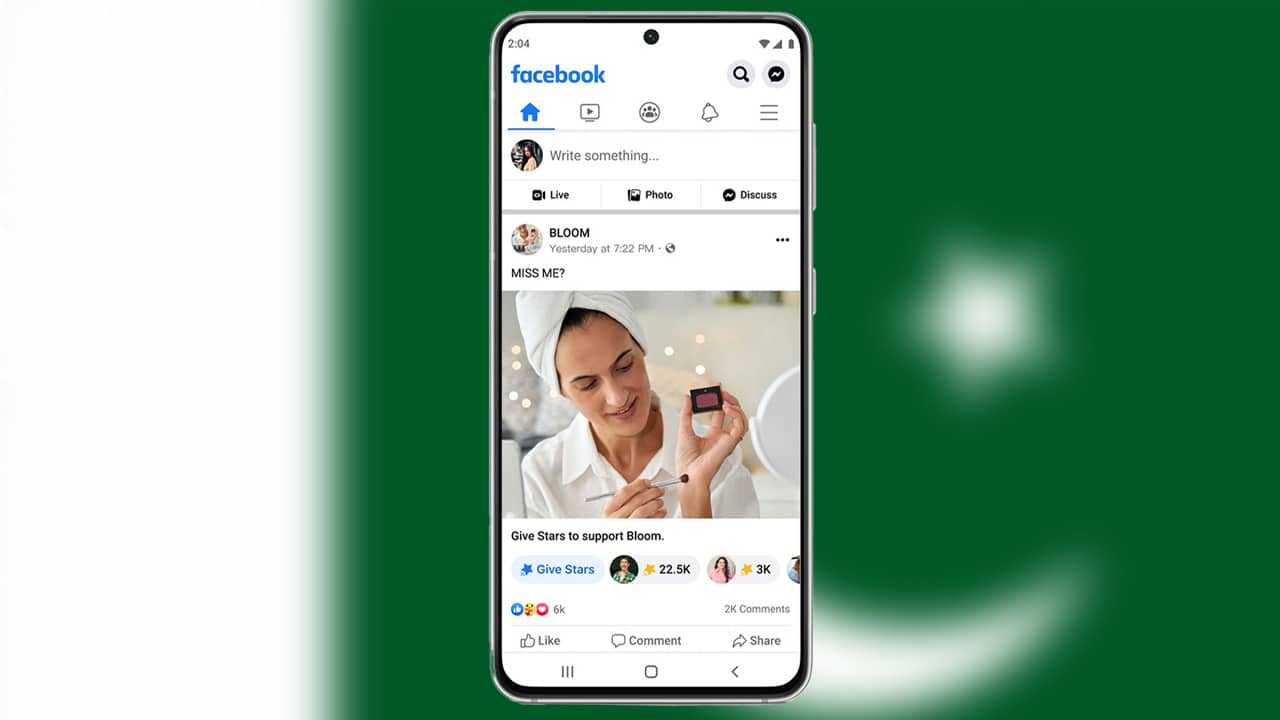
    All Pakistani content creators who meet the requirements can now use Facebook Stars, Meta’s monetization tool, to connect with their viewers and grow their businesses.

    According to Express Tribune, Pakistani online content creators will be able to sign up, monitor their profits by content type, manage their goals, and access other Stars settings thanks to Stars, a digital tool that fans can buy and send to support creators.

    This feature is accessible in a variety of media, including Facebook Live, on-demand videos, photographs, and text updates.

    “Helping creators to build community and turn their passions into professions is a key part of our continued investment in Pakistan,“ said Jordi Fornies, Meta’s Director of Emerging Markets for the Asia Pacific region. “Today, we are thrilled to announce that Facebook Stars is open to all eligible creators in Pakistan, so more people can start earning while they grow their creativity, audience, and careers.”

    Reels introduced short-form, amusing video experiences and tools to creators and fans earlier this year when Meta debuted it in Pakistan. The fastest-growing content format on Meta platforms right now is reels. Every day, Reels are played on Facebook and Instagram in excess of 140 billion times.

    “We are encouraged to see Meta’s contribution to supporting local businesses in Pakistan and opening up different ways for Pakistani content creators to generate meaningful, reliable revenue on their platforms. We hope the Stars program will create new opportunities to monetize and play a role in strengthening the country’s digital economy,” said Bilawal Bhutto Zardari, the Foreign Minister of Pakistan, during his visit to the Meta regional office in Singapore today.

    The following eligibility requirements must be met in order for any Pakistani creative with at least 1,000 online followers over the previous 60 days to start getting Stars from their fans.

    “So wonderful to see Stars has launched in Pakistan, giving more creators like me on Facebook and Reels the opportunity to build community and earn money through doing what we love,” said Danish Ali, Pakistani content creator.

    “I’m excited for creators in Pakistan to start using Stars to generate an income and build deeper connections with their audiences as they grow on Facebook,” he added.

  • WhatsApp will soon let you use same number on separate phones

    WhatsApp will soon let you use same number on separate phones

    WhatsApp is actively testing ‘companion mode’ to let users use the same number on separate phones.

    According to reports, it will be possible for users to simultaneously connect up to four devices.

    Only tablet users were first given access to the companion mode as a test. For the time being, only WhatsApp beta users will be able to use the companion mode, which is exclusively accessible to select android users.

    Users who download WhatsApp will see an option to scan a QR code to link their phone number to another device. The menu may be accessed by tapping the three dots in the window’s top right corner.

    Prior to this, on November 3, the messaging behemoth WhatsApp formally unveiled its new communities and discussion groups feature.

    According to the information, this new function was trialled in the beginning of the current year. Organizations, clubs, and a variety of other groups will be able to connect in a better and more structured way thanks to the new discussion group function.

    WhatsApp has released a number of changes and announcements, including support for groups with up to 1,024 participants, 32-person video and audio conversations, emoji reactions, polls, greater file sharing, end-to-end encryption, and the option for admins to remove messages.

  • Oculus creator makes VR headset that actually kills users if they die in the game

    Oculus creator makes VR headset that actually kills users if they die in the game

    Palmer Luckey, a virtual reality pioneer and the developer of Oculus – now better known as a part of Facebook’s Meta – created a VR device that will actually kill the player if they lose the game.

    NerveGear, Luckey’s murderous headset, looks like a Meta Quest Pro coupled with three explosive charge units located above the screen.

    The charges are aimed at the user’s forebrain, and if they detonate, they will entirely demolish the user’s skull.

    Wearing a NeveGear VR headset, players start Sword Art Online, a new game based on the Japanese anime and book of the same name.

    Luckey described the ‘killer’ VR on his blog:

    Today is November 6th, 2022, the day of the SAO Incident.  Thousands of VRMMORPG gamers were trapped by a mad scientist inside a death game that could only be escaped through completion.  If their hit points dropped to zero, their brain would be bombarded by extraordinarily powerful microwaves, supposedly killing the user.  The same would happen if anyone in the real world tampered with their NerveGear, the virtual reality head-mounted display that transported their minds and souls to Aincrad, the primary setting of Sword Art Online.

    The players must battle their way through a 100-floor dungeon in order to escape a lunatic scientist’s virtual reality.

    Don’t get too thrilled or scared because the killer VR headset is not yet available for purchase.

    Luckey sold Oculus, the underpinning of Mark Zuckerberg’s march to the metaverse, to Facebook in 2014 for $2 billion.

  • After Twitter, Meta reportedly planning ‘large-scale’ layoffs this week

    After Twitter, Meta reportedly planning ‘large-scale’ layoffs this week

    With plans to layoff thousands of employees this week, Facebook parent company Meta will join a growing list of digital companies that are reducing their workforces.

    As of September 30, Meta has over 87,000 people working for it across its various platforms, which include the social media sites Facebook and Instagram as well as the messaging service WhatsApp. According to WSJ, the social media business had reduced its ambitions to hire engineers by at least 30 per cent in June, and Mark Zuckerberg had advised staff to prepare for a slowdown in the economy.

    In his announcement of Meta’s dismal third-quarter results, CEO Mark Zuckerberg stated that the company’s headcount will not rise by the end of 2023 and might even decline significantly.

    “In 2023, we’re going to focus our investments on a small number of high-priority growth areas. So that means some teams will grow meaningfully, but most other teams will stay flat or shrink over the next year. In aggregate, we expect to end 2023 as either roughly the same size or even a slightly smaller organization than we are today,” Zuckerberg said on the last earnings call in late October.

    Profits for Meta dropped to $4.4 billion in the third quarter, a 52 percent year-over-year decline. The poor findings had a significant negative impact on Meta’s stock price, which dropped by 25 per cent in one day.

    Over the past year, the company’s market value has decreased to $600 billion.

    In a previous open letter to Mark Zuckerberg, Meta’s shareholder Altimeter Capital Management stated that the company needed to streamline by eliminating positions and capital expenditures. They also stated that investors had lost faith in Meta as a result of its increased spending and pivot to the metaverse.

    Owing to increased interest rates, rising inflation, and a European energy crisis, several technological businesses, including Microsoft Corp., Twitter Inc., and Snap Inc., have reduced workforce in recent months.

  • WhatsApp launches ‘Communities’ to organise group conversations

    WhatsApp launches ‘Communities’ to organise group conversations

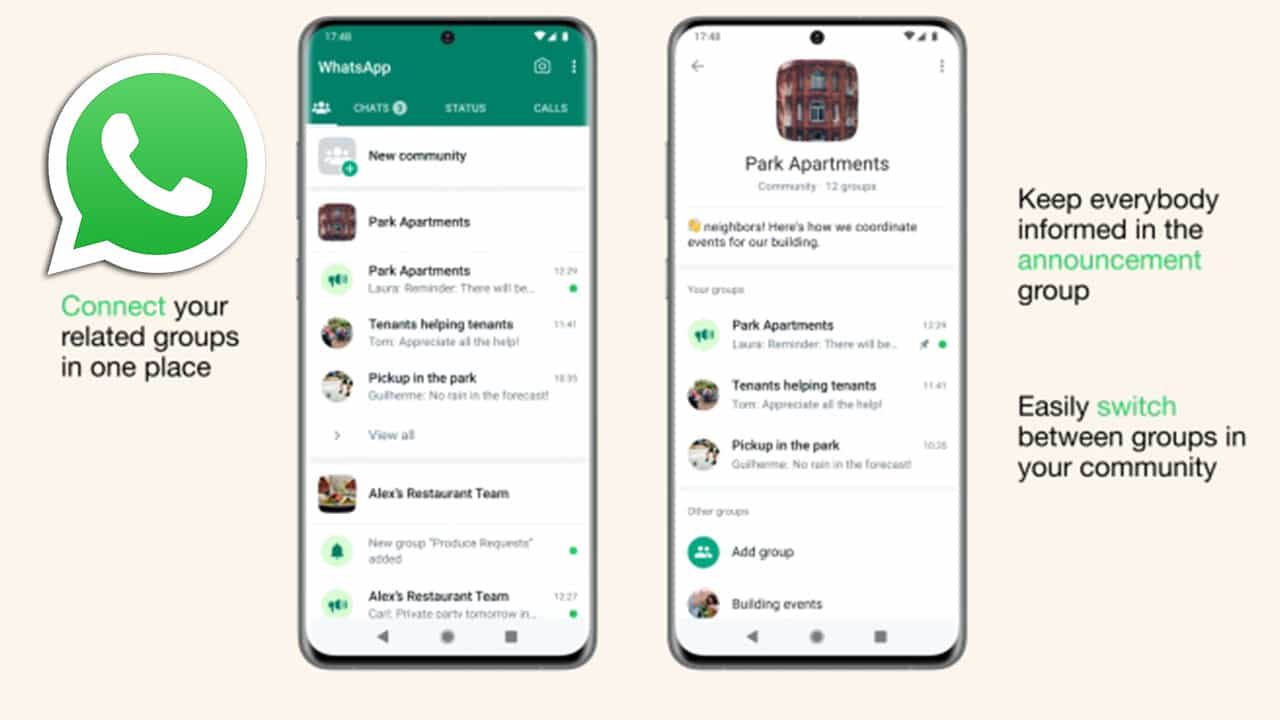
    Communities, a new WhatsApp feature that offers bigger, more organised conversation groups that was first put through testing earlier this year, is now officially available.

    Communities introduce a number of new features to the messaging platform with the goal of enhancing communication and organisation among businesses, clubs, schools, and other private groups. These features include admin controls, support for sub-groups and announcement groups, 32-person voice and video calls, larger file sharing, emoji reactions, and polls.

    Communities itself provide end-to-end encryption and can accommodate groups of up to 1,024 users.

    Emoji reactions, massive file sharing (up to 2GB), and the option for administrators to remove messages are just a few of the features created for Communities that have already made their way to the WhatsApp platform before today’s debut. According to the business, WhatsApp will now enable polls, 32-person video calls, and larger group sizes more widely outside of Communities.

    Due to the fact that both the new feature and Facebook Groups enable features like sub-groups, file sharing, admin functionality, and more, there may initially be some parallels between the two. WhatsApp Communities, however, are designed to be used by people who may already be connected in the real world, unlike Facebook Groups, which are frequently used by dispersed strangers with a shared interest.

    Since WhatsApp is phone number-based, as opposed to Facebook, members of these discussion groups already know one another because they may have swapped phone numbers or at the very least provided their numbers with the group admin. The phone numbers will only be made visible to admins and members of the same sub-groups as you; they will remain concealed from the rest of the Community.

    This aims to strike a compromise between users’ demands for privacy and the necessity of enabling communication amongst group members. For instance, even if you don’t know every parent on your child’s sports team personally, you’re probably at ease talking to them in a small group setting that might be a part of the larger school community.

    In addition, WhatsApp Communities are concealed, in contrast to Facebook Groups, which may be found on the site. You must be asked to join; there won’t be a search or discovery option available.