Tag: Narendra Modi

  • India says didn’t approach Pakistan for talks

    India says didn’t approach Pakistan for talks

    India’s Ministry for External Affairs Spokesperson Anurag Srivastava said that New Delhi did not approach Pakistan with a dialogue offer, as he rejected claims made by Moeed Yusuf — the prime minister’s aide on national security– in a recent interview with an Indian media outlet.

    “The statements made by him [Yusuf] are contrary to facts on the ground, misleading and fictitious. As regards the purported message that was referred to, let me make it clear that no such message was sent from our side,” Srivastava said at a weekly press briefing.

    The spokesperson termed the statement “fictitious and misleading”, saying the claim was made by the Pakistan Tehreek-e-Insaf (PTI) government to “divert attention from domestic failures” and “mislead its domestic constituents by pulling India into headlines on a daily basis”. The Indian official advised Yusuf “to restrict his advice to the establishment and not comment on India’s domestic policies”.

    PM’s Special Assistant on National Security Moeed Yusuf gave an interview to The Wire earlier this week, wherein he claimed that India approached Pakistan with a talk offer. This was the first time a Pakistani government official was interviewed by an Indian outlet since New Delhi annexed Kashmir in August last year.

    During his interview with Karan Thapar, Yusuf set five pre-conditions for the resumption of “meaningful dialogue” with India to resolve all outstanding issues, including the longstanding dispute of Indian occupied Jammu and Kashmir (IoK).

    While he said that Pakistan desired peaceful ties with India and wanted to resolve all issues through dialogue, Yusuf asserted that for any meaningful dialogue to take place between the two neighbours, India has to release all political prisoners in Kashmir, end inhuman blockade and restrictions, rescind domicile law that allows non-Kashmiris to settle in the disputed territory, stop human rights abuses and end state terrorism in Pakistan.

    “My message is peace, my message is talk. But there is an intent and there has to be an enabling environment to talk, Karan. Create that and you will find us willing the next day. Just that one step, you will see my prime minister take two – that’s his promise, he stands by it,” Yusuf told journalist Karan Thapar.

  • The hideous face of India under Modi

    India is known as the ‘world’s largest democracy’ but it is quite apparent that it has become an autocracy under the rule of Prime Minister Narendra Modi. The Modi government has marginalised the minorities, apart from a few honourable exceptions, the Indian media largely behaves like a PR machine for the right-wing government, and the judiciary, too, has become pliant. International human rights organisations are facing the wrath of the Indian government for exposing its real face. Just recently, Amnesty International India announced that it is halting its work in the country after the Indian government froze its bank accounts due to their work. The recent crackdown by the Indian government against human rights organisations and defenders was condemned by 15 international human rights organisations.

    The Babri Mosque verdict was a tight slap in the face of justice. To give a clean chit to all accused in the Babri Mosque demolition case – 32 out of 49 were acquitted as17 had died while the case was still under way – seems to say that nobody demolished the historic mosque. An Indian court said the demolition was not pre-planned despite 850 witnesses, 7,000 documents apart from TV footage and photos of what happened that fateful day. The demolition was televised and led to communal riots, which killed around 2,000 people. From the Ayodhya verdict last year to the Babri Mosque verdict just days ago, the Indian judiciary seems like a proper lackey of the Modi government. The way this verdict was celebrated by the accused, which included former Deputy Prime Minister LK Advani, shows that the verdict was expected.

    India under Modi has changed radically in just six years. The pretense of a secular India is truly over. Communalism in India was always a reality – from the Bombay riots in 92-93 to Gujarat pogrom in 2002, the Muslim minority in India largely lived in fear but at least there were constitutional protections safeguarding their rights. Now, just like the White Supremacists have been empowered in Trump’s America, the Hindutva brigade has been weaponised in Modi’s India. It is fast turning into a Hindu Rashtra. From treating religious minorities like third-class citizens to not giving a hoot about the ethnic minorities, the Indian authorities have shown time and again how shameless they can be.

    A 19-year-old Dalit woman died on Tuesday after she was allegedly gang-raped by four upper-caste men in the state of Uttar Pradesh (UP), where the controversial Yogi Adityanath rules as the chief minister. The details of the gang-rape are horrific: the young victim was beaten to a pulp and left to die. She was hospitalised for two weeks but did not make it in the end. As if the trauma of her death and what led to it was not enough for the victim’s family, the UP police cremated her body in the dead of the night without the permission and presence of her family. The victim’s brother told the BBC that “they took the body away without our permission, without the permission of my parents and cremated her”. He said the family did not even get to see her one last time. Just after this, news broke of a 22-year-old Dalit woman’s death after a gang-rape, this time too in the state of UP.

    India’s descent into fascism was expected under Modi but to witness the authorities being so blatant about it in the 21st century is still shocking. Rolling back Modi’s legacy will take generations. The process should begin before it is too late. 

  • Imran beats Trump, Modi, Putin, others with most views on UN General Assembly speech

    Prime Minister (PM) Imran Khan’s speech at the United Nations General Assembly (UNGA) is the most-watched video among world leaders on the UN’s YouTube with more than 170,000 views since it was uploaded on September 25.

    PM Imran continues to gain popularity at international forums. His recent speech made at the UNGA platform has been declared as the most viewed speech of the UNGA session on the official YouTube channel of the UN.

    According to details, more than 170,000 viewers have seen PM Imran’s UNGA speech thus so far, which is the highest number of any international leadership viewership.

    Coming in second is US President Donald Trump’s UNGA address with close to 140,000 views since it was uploaded on September 22. In third place is Indonesian President Joko Widodo’s speech, which has more than 95,000 views since it was uploaded on September 23.

    Furthermore, Iranian President Hassan Rouhani’s speech got 67,000 views, Indian PM Narender Modi’s speech has 62,000 views, Russian President Vladimir Putin’s speech was viewed by 59,000 persons, and the Chinese President’s speech was watched by 44,000 people. Afghan President Ashraf Ghani’s speech secured only 8,000 views.

    It is worth mentioning here that as many as 2,600,000 people had watched PM Imran’s UNGA speech last year.

    On September 25, the premier virtually addressed the 75th session of the UNGA.

    PM Imran used his UNGA address to warn the international community that India is planning another “ill-conceived misadventure” in a “nuclearised environment,” but Pakistan is ready to “fight for its freedom to the end”.

    He also urged the UN Security Council to play its role in preventing this dangerous conflict, which could jeopardise the entire region.

    WATCH VIDEO:

  • Modi’s Hindu Rashtra

    Modi’s Hindu Rashtra

    This year, August 5 marked the one-year anniversary of occupied Kashmir’s illegal annexation and subsequent lockdown.

    Last year, India changed the special status of the troubled valley to union territories. The gross human rights violations that followed and are still taking place is no secret. Pakistan has tried highlighting the issue internationally.  Unfortunately, the international community is least bothered because of economic reasons; every country wants a share in the Indian market pie.

    The myth of Muslim Ummah was also shattered when except for countries like Turkey and Malaysia, nobody raised voice for the plight of the Kashmiris. The same led to what appeared to be a major foreign policy shift for Pakistan as Foreign Minister Shah Mahmood Qureshi asked Saudi Arabia-led Organisation of Islamic Cooperation (OIC) to stop dragging feet on the convening of a meeting of its Council of Foreign Ministers (CFM) on the Kashmir issue.

    READ: VIDEO: FM Qureshi says Pakistan ready to ‘ditch’ Saudi Arabia for Kashmir’s sake

    Revoking the special status of held Kashmir was a step towards establishing Modi’s Hindu Rashtra. The first five years of Modi paved the way for an India that shattered all foundations of secularism. Modi regime’s six years have resulted in a wave of palpable fear amongst the Muslim minority in India. Modi’s Gujarat — where Muslims were killed as if it was a sport — is now being replicated in other parts of India; from beef lynchings to riots, the Muslim minority in India is being subjugated endlessly.

    Modi chose August 5, 2020, as the day of laying down the foundation of the Ram Mandir in Ayodhya. As the New York Times put it, “In a moment of triumph that India’s Hindu nationalists had worked toward for years, Prime Minister (PM) Narendra Modi on Wednesday set the ceremonial cornerstone for a new Hindu temple at the site of a destroyed mosque in Ayodhya.”

    This gesture was a slap in the face of the Muslim minority of India as well as the last nail in the coffin of Indian secularism. Modi’s Hindu nationalism has destroyed the fabric of Nehruvian secularism. It is a reminder that when a fascist ruler is in power, even strong traditions and constitutions cannot guarantee fundamental rights, human rights, freedom of speech and all other traditions of a free society.

    The cataclysmic shift of the Indian polity towards the right under Modi’s rule is not a surprise. In fact, what was surprising was the denial of Indian liberals when Modi was first elected in 2014. They were of the view that India’s secular traditions and constitution could never be destroyed but many pointed out how Modi’s victory was an indictment of the majoritarianism in India.

    This is happening all over the world. From Trump’s America to Brexit in Britain, the world’s shift to right-wing politics is quite disappointing. We hope that some day, sane voices of India and the world will take a stand against Modi’s fascism.

  • India continues celebrating arrival of Rafale jets that other countries dumped

    As India continues to celebrate the arrival of its Rafale jets, military experts are not only questioning its capabilities against United States (US) aircraft but are also raising questions why the Rafale jets failed to compete in the international arms markets and got dumped by a majority of nations.

    According to foreign media reports, Dassault’s Rafale was not India’s only choice as various other global firms expressed interest in the MMRCA tender. Six renowned aircraft manufacturers competed to bag the contract of 126 jets, which was hailed to be the largest-ever defence acquisition deal of India.

    The initial bidders were Lockheed Martin’s F-16s, Boeing’s F/A-18s, Eurofighter Typhoon, Russia’s MiG-35, Sweden’s Saab’s Gripen and Dassault’s Rafale.

    All aircraft were tested by the IAF and after careful analysis on the bids, two of them — Eurofighter Typhoon and Dassault Rafale — were shortlisted.

    Dassault received the contract to provide 126 fighter jets as it was the lowest bidder and the aircraft was said to be easy to maintain. After Rafale won the contract, the Indian side and Dassault started negotiations in 2012. Though the initial plan was to buy 126 jets, India scaled it down to 36, that too in fly-away condition.

    Despite boasting of awe-inspiring capabilities and selected by India after a mammoth testing & bidding process, the French origin jets didn’t see many buyers. Other than France and India, only Qatar and Egypt are using Rafale jets and that too in very limited numbers.

    As reported earlier by EurAsian Times, Russian aviation experts had claimed that Rafale jets would have been useless against the Chinese Airforce (PLAAF). The maximum speed of the Rafale jet is about Mach 1.8 compared to Chinese J-16s at Mach 2.2.

    The Rafale’s practical ceiling is also lower than the J-16s. Even in engine thrust, the Chinese J-16s aka Russian Su-35s are far superior to the French combat aircraft. Even if the Indian Air Force (IAF) was to deploy all 36 of its newly acquired jets, the technical superiority would still be on the side of China, claimed the Russian expert.

    The Rafale is one of the most expensive aircraft in the international market. India’s deal of 36 jets is worth Rs. 60,000 crores. Experts argue that the high cost is the result of many reasons including general inefficiency in the country’s defence sector, along with the small scale on which the Rafale is being produced in comparison to rival fighters such as the F-18, MiG-29 or F-35 due to which Rafale has not benefitted from economies of scale. This has contributed to its poor performance in the international markets.

    Rafale’s third buyer, India, previously proposed to acquire 126 jets under Make in India and not 36. However, it took five years for even the first five jets to arrive in India after Prime Minister Narendra Modi announced it in April 2015 during his trip to France.

    According to analysts, despite heavy marketing by the makers of Rafale, France’s relatively small and inefficient defence sector seems to have met its limit with the fighter program. The small production lines are unable to produce the aircraft quickly or efficiently and the French budget for research and development is smaller in contrast to the US or Russia.

    The aircraft is priced very steeply and most nations prefer to buy US jets not only because of the technical superiority but also to please the Americans instead of the French. The Rafales have seemingly lost the fight in the international market, despite boasting of excellent qualities.

  • Friendship ended with India, now China is Iran’s best friend?

    Friendship ended with India, now China is Iran’s best friend?

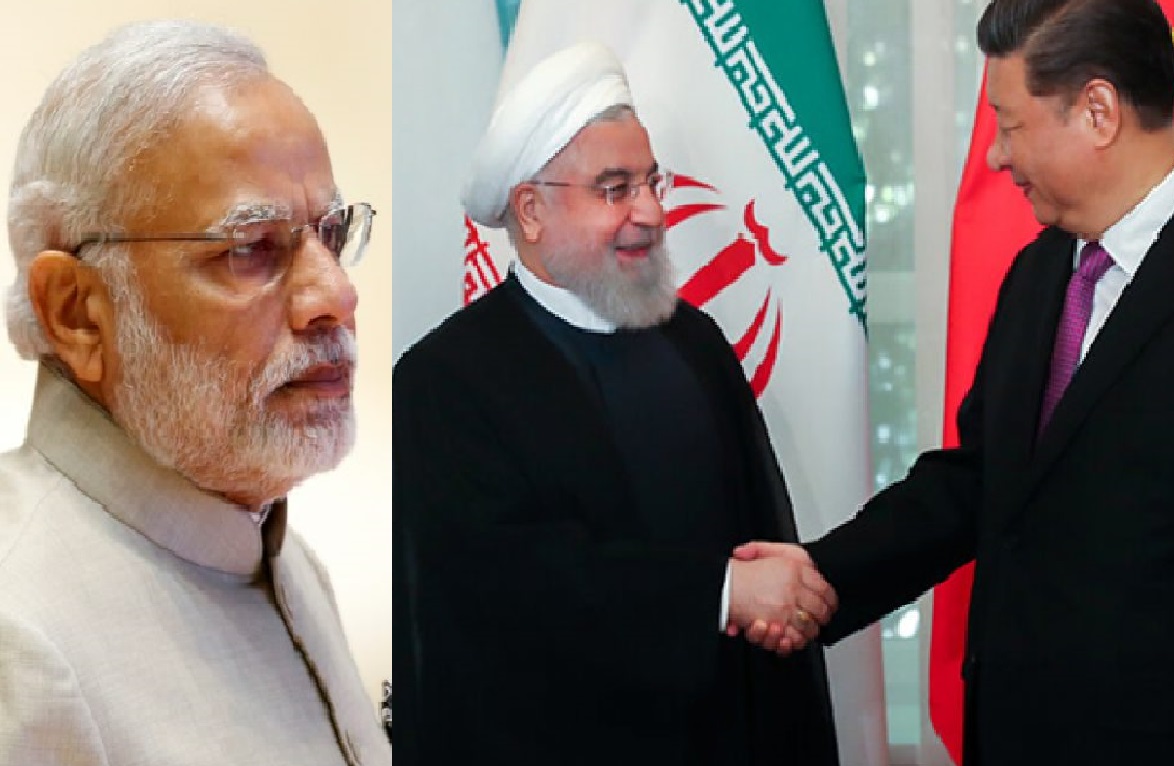
    After being “dropped” from a key rail project in southeastern Iran along the border with Afghanistan, India is also set to lose an ambitious gas field project in the country that had been in the pipeline for the past 10 years. 

    India’s Ministry of External Affairs has said in a statement that Tehran would develop the Farzad-B gas field in the Persian Gulf region “on its own” and might engage India “appropriately at a later stage”.

    Last week, Masoud Karbasian, managing director of National Iranian Oil Company (NIOC), told reporters that a new operator had been roped in to develop the gas field, replacing India’s ONGC.

    The field, estimated to possess 21.7 trillion cubic feet of natural gas reserves, 12.8 trillion cubic feet of natural gas and 212 million barrels of gas condensates, was discovered in 2008 by a consortium of three Indian companies — ONGC, Oil India Limited and Indian Oil Corporation.

    According to the deal, the Indian side was supposed to develop the field but they abruptly stopped work in 2012, following the intensification of sanctions against Iran.

    After sanctions were eased in 2015 following the signing of a nuclear deal between Iran and Western countries, India showed its willingness to return to the project.

    However, things again fell apart amid the reinstatement of US sanctions on Iran in May 2018, which further “discouraged” India from making headway in the project, said sources familiar with the issue who requested not to be named.

    “By May 2018, the two sides had made tremendous progress and agreed on key details of the project,” the sources said. “However, the US sanctions played the spoilsport.”

    The two sides had disagreements among themselves as well, particularly on the number of pipelines to be laid and financial investment in the development plan, according to reports.

    In May 2019, Iran’s oil minister, Bijan Namdar Zanganeh, said his ministry had devised a plan to finance the development of the Farzad-B gas field.

    The NIOC had asked the Indian side to submit a financial plan for the field’s development. However, Tehran was “not impressed” with the plan and asked for a new one, said the sources. India had reportedly made a $5.5 billion investment plan

    In August 2019, after slow progress by the Indian side to submit a new plan, Karbasian said Iran would proceed with another operator for the project.

    India’s External Affairs Ministry, however, said the “follow-up bilateral cooperation” was impacted by “policy changes on the Iranian side”.

    This was, however, not the only blow that Iran has served to India as just earlier this week it had “dropped” India from a rail project after the Indian side showed reluctance to start work due to US sanctions.

    The memorandum of understanding to construct the 628-kilometre railway line from the port city of Chabahar to Zahedan was first discussed between the two sides in May 2016.

    It came on the sidelines of the signing of a trilateral agreement between India, Iran and Afghanistan to develop a transport and trade corridor from India to Afghanistan through the Chabahar port in southeast Iran. The port has been operational since 2016 and has been exempted from US sanctions.

    India’s External Affairs Ministry dismissed the reports that Iran excluded it from the rail project as “speculative,” saying Tehran was to “nominate an authorised entity to finalise outstanding technical and financial issues”. The matter, it said, was “still awaited”.

    “IRCON was appointed by [the] Government of India to assess the feasibility of the project. It was working with CDTIC, an Iranian company under their Ministry of Railways in that regard. IRCON has completed the site inspection and review of the feasibility report,” the ministry said in a statement on Thursday, referring to the state-run Indian infrastructure firm undertaking the project.

    “Detailed discussions were thereafter held on other relevant aspects of the project, which had to take into account the financial challenges that Iran was facing. In December 2019, these issues were reviewed in detail at the 19th India-Iran Joint Commission Meeting in Tehran.”

    An official from Iran’s Ports and Maritime Organisation has also denied the reports. However, he said Iran “has not inked any deal with India” for the construction of the Chabahar-Zahedan railroad.

    Both the developments come amid China-India tensions over a territorial dispute in the Ladakh region and as Beijing, sensing America’s internal political difficulties amid social justice protests and poor COVID-19 response, reportedly approves a $400 billion economic and security deal with Tehran.

    In addition to massive infrastructure investments, the agreement envisions closer cooperation on defense and intelligence sharing, and is rumored to include discounts for Iranian oil. If finalised, China would gain massive influence in this geopolitically critical region.

    The US is likely to push back against this partnership, which threatens its security and energy interests in the Middle East and Eurasia. According to Forbes, it is an open secret that Washington’s foreign policy interests constantly clash with those of Tehran and Beijing.
  • Indian bride and groom cancel wedding after fight over PM Narendra Modi

    A couple in Uttar Pradesh, India reportedly cancelled their wedding because they have different views about Indian Prime Minister Narendra Modi. The bride was of the view that Modi is responsible for India’s economic collapse while the groom disagreed.

    The situation transpired when the bride-to-be and the groom met at a temple to decide how to divide the wedding expenses. The discussion led to India’s present economic condition and the bride-to-be, who is a government employee, held PM Modi responsible for India’s poor economic condition. The groom-to-be, a businessman turned out to be a Modi supporter and disagreed with her.

    The argument turned into a heated discussion after which both of them decided to part ways and called off the wedding.

  • Indian Home Ministry accidentally posts whiskey pictures while advertising cyclone relief efforts

    Indian Home Ministry accidentally posts whiskey pictures while advertising cyclone relief efforts

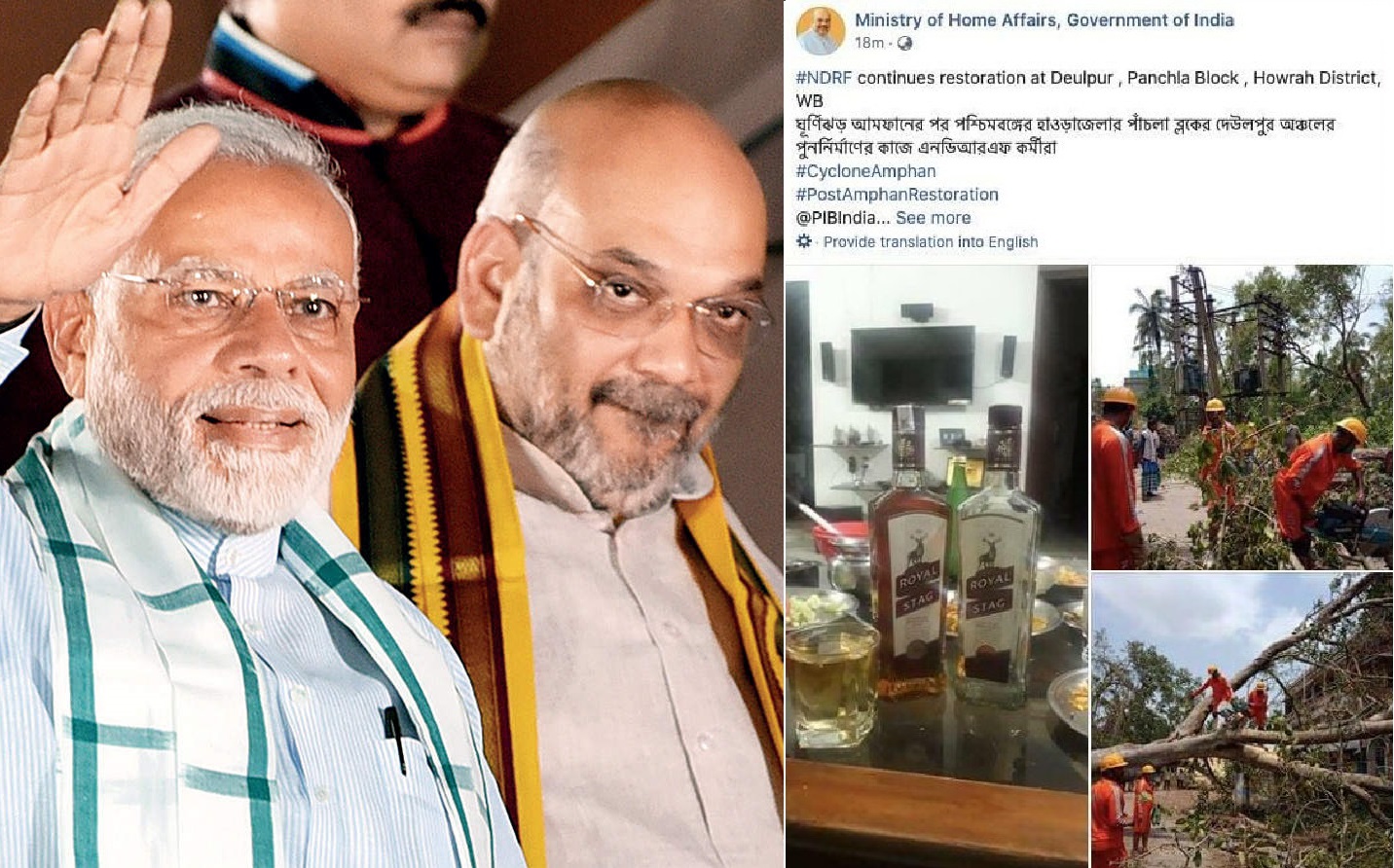
    There was panic in the Indian Ministry of Home Affairs (MHA) after efforts to advertise its relief operations in Cyclone Amphan-hit West Bengal, went awry.

    According to the details, the MHA had taken to Facebook to highlight the work that personnel of the National Disaster Response Force (NDRF), which falls under the ministry, were carrying out in the Trinamool Congress-governed West Bengal.

    However, with ‘work from home’ having its perils, one of the handlers of MHA’s social media accounts inadvertently posted images of two bottles of whiskey and snacks along with those of the rescue and relief work

    While the photos were posted on MHA’s official Facebook around 9 am and were taken off around 30 minutes later, screenshots of the post started doing rounds over social media. The post sparked exasperation and elation in equal measure as some were enraged by the “irresponsible behaviour” and others saw the funny side of the “accident”.

    The MHA refused to comment on who uploaded the picture but reports quoted officials as saying that the ministry was treating it as a case of human error that should not be shown out of proportion.  

    They added that although most officers were enraged at the “callousness”, many other civil servants laughed off the “disaster”.

  • White House unfollows Modi on Twitter amid concerns over India’s treatment of minorities

    White House unfollows Modi on Twitter amid concerns over India’s treatment of minorities

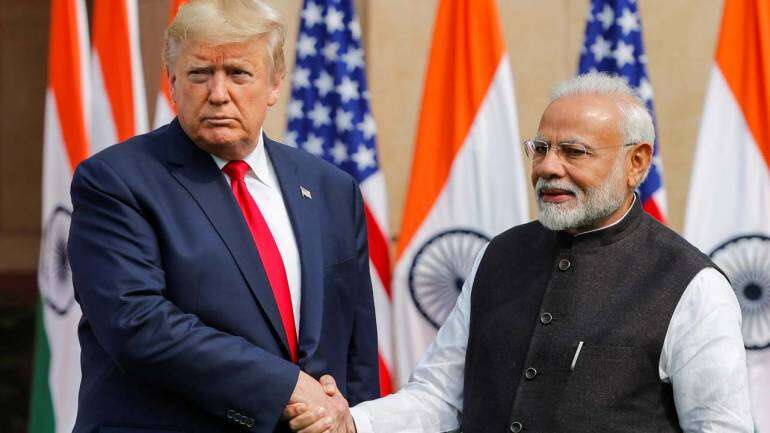
    The White House has unfollowed Prime Minister (PM) Narendra Modi on Twitter, leaving Congress party leader Rahul Gandhi ‘dismayed’ at the American administration’s decision.

    Indian media reported on Wednesday that The White House, which has 22 million followers on Twitter, followed the Indian premier till April 11, unfollowed him recently.

    “The official Twitter account of White House, the residence and workplace of the president of the US, doesn’t follow Indian PM Narendra Modi anymore on the micro-blogging site,” reported Outlook India.

    Modi was the only world leader followed by The White House on Twitter till April 11. Other Indian Twitter accounts unfollowed were those of the president of India, the Indian PM’s Office and the Indian Embassy in Washington D.C.

    The move ‘dismayed’ Congress party leader Rahul Gandhi, who urged India’s External Affairs Ministry to take note of the incident.

    “I’m dismayed by the “unfollowing” of our President & PM by the White House. I urge the Ministry of External Affairs to take note,” tweeted Gandhi.

    The development took place as a US commission recommended India be placed on a list of countries that violate religious freedom.

    The US Commission on International Religious Freedom recommended that India be re-designated as a ‘Country of Particular Concern’ because of the Modi government’s policies and treatment towards the Muslim population.

    “Perhaps the steepest, and most alarming deterioration in religious freedom conditions is in India,” the vice-chair of the USCIRF vice had said after the release of the Commission’s annual report.

    The report also recommended 13 other countries to the State Department for designation as “countries of particular concern” because their governments engage in or tolerate “systematic, ongoing, egregious violations of religious freedom”.

    These include nine that the State Department designated as CPCs in December last year, which were Burma, China, Eritrea, Iran, North Korea, Pakistan, Saudi Arabia, Tajikistan, and Turkmenistan. The five others include India, Nigeria, Russia, Syria, and Vietnam.

    WHAT DOES IT MEAN?

    According to reports, the White House has explained that its Twitter handle typically follows the accounts of officials from host countries for a brief period during a presidential trip to retweet their messages in support of the visit.

    “The White House Twitter account normally follows senior US government Twitter accounts, and others as appropriate. For example, during the time of a presidential visit, the account typically follows for a short time, the host country’s officials to retweet their messages in support of the visit,” a senior administration official told the Press Trust of India.

  • ‘Nawaz Sharif as PM barred Foreign Office from speaking against India,’ ex-diplomat claims

    ‘Nawaz Sharif as PM barred Foreign Office from speaking against India,’ ex-diplomat claims

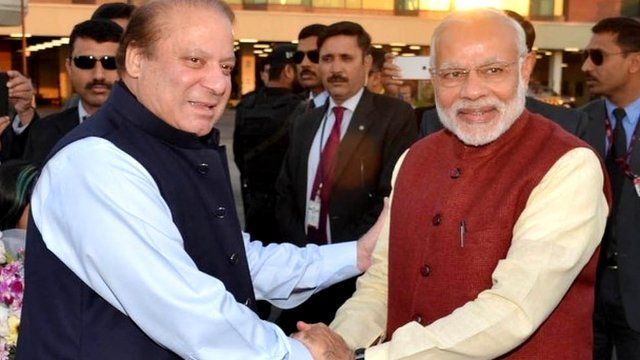
    Former spokesperson for the Foreign Office (FO) Tasneem Aslam has claimed that former prime minister (PM) Nawaz Sharif had barred the FO from commenting against India and its spy Kulbhushan Jadhav, who is currently in Pakistan’s custody.

    “Nawaz Sharif did not want to say anything against India and Jadhav through the Foreign Office,” she claimed during an interview with a YouTube channel being run by journalist Isa Naqvi.

    When asked if Nawaz’s instruction benefited the country, Tasneem, who worked as FO spokesperson twice — from 2005 to 2007 under military ruler General (r) Pervez Musharraf and during the last Pakistan Muslim League-Nawaz (PML-N) government between 2013 and 2017, said it “did not benefit the country” but she did not know “whether it benefited Nawaz’s own interests or not”.

    She said Nawaz had business interests in India and he did not meet Muslim leaders of India-held Kashmir when he visited India as the premier. “Usually, every PM of Pakistan meets Hurriyat leaders but Nawaz Sharif did not meet them when he visited India.”

    Nawaz had visited India in 2014. Aslam further said even in his speech at the United Nations (UN) summit, Nawaz did not talk about India and Jadhav but on the Kashmir issue.

    Meanwhile, PML-N Information Secretary Marriyum Aurangzeb told Dawn that the comments by a retired FO official bore no resemblance to reality. “It is a false and biased expression of an individual’s views, based on her personal predilections.”

    Recalling efforts made by Nawaz to resolve the Kashmir dispute, she said that “the principled manner in which he dealt with the issue of Pakistan’s relations with its eastern neighbour was well documented”.

    Marriyum added that the former premier’s address to the UN General Assembly in 2016 contained the most forceful references ever to the issue of Kashmir and the most powerful condemnation of the atrocities and brutalities of the Indian occupation forces.

    The former diplomat’s statements have not been very well-received by Twitterati either.

    What do you think of Tasneem’s statement? Let The Current know in the comments.