Tag: Narendra Modi

  • Hamza Shehbaz ‘avoids coronavirus’ in meeting with ex-Punjab Assembly speaker

    Hamza Shehbaz ‘avoids coronavirus’ in meeting with ex-Punjab Assembly speaker

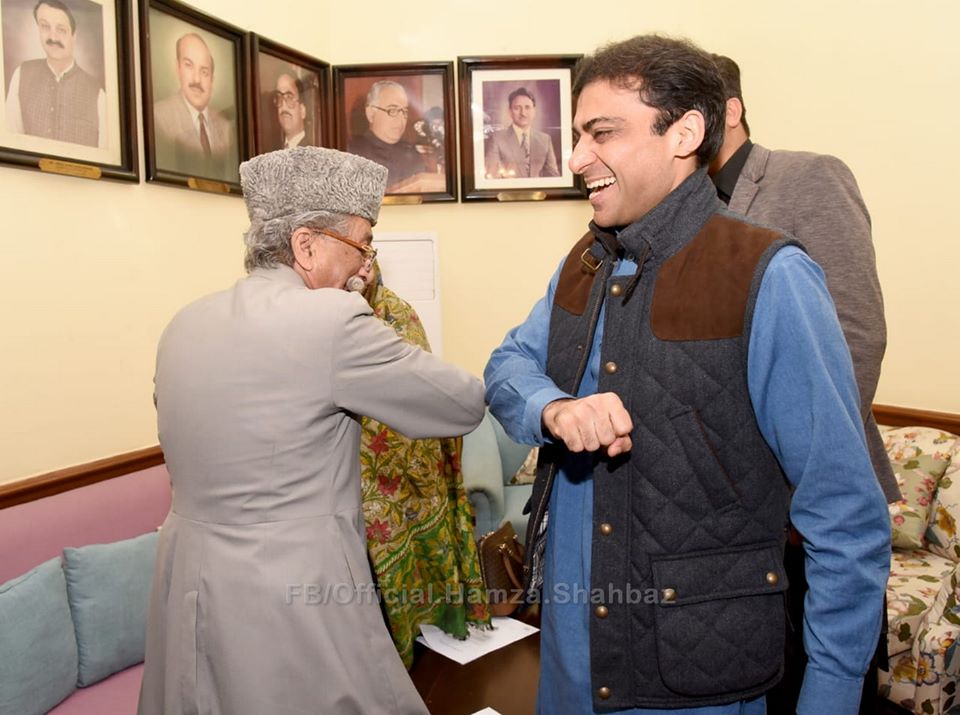
    As the new coronavirus — COVID-19 — continues to spread across the globe and the infections tally in Pakistan reaches 94, many, including Pakistan Muslim League-Nawaz (PML-N) leader Hamza Shehbaz, have been spotted avoiding direct physical contact such as handshakes, and resorting to new, cooler ways of greeting others.

    A viral photo on Monday showed the leader of opposition in the Punjab Assembly (PA) greeting PML-N leader and ex-speaker of the provincial house, Rana Muhammad Iqbal Khan, with an elbow bump instead of a handshake during a meeting in the former’s chamber.

    The two had met on Saturday to discuss the current political and economic situation of the country. PML-N Punjab lawmakers and local leaders were also in attendance.

    While Hamza might be the first prominent Pakistani to be spotted resorting to an elbow bump amid coronavirus fears, he is not the first political leader in the world to be doing so.

    United States (US) President Donald Trump was last week seen elbow bumping health executive Bruce Greenstein following a press conference during which a national emergency in response to coronavirus outbreak was declared.

    Here are a few other leaders avoiding physical contact as per the guidelines of the World Health Organization (WHO):

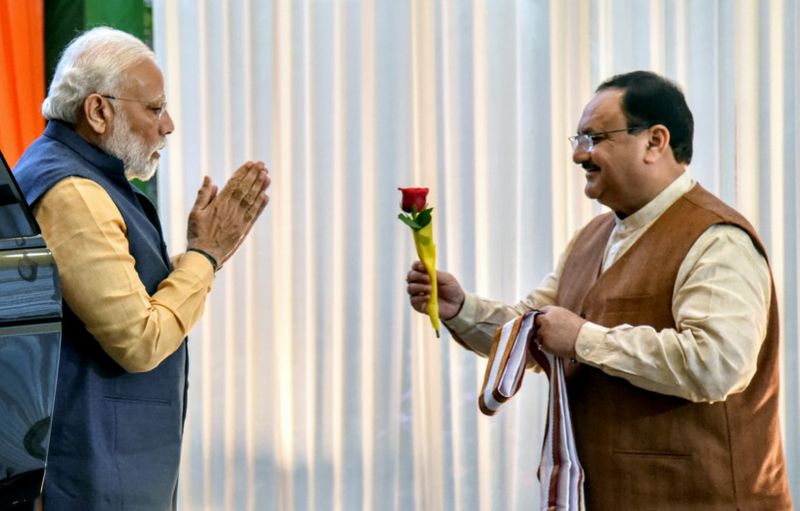
    Indian Prime Minister (PM) Narendra Modi being welcomed by Bharatiya Janata Party (BJP) President JP Nadda as he arrives to attend a party meeting in New Delhi.
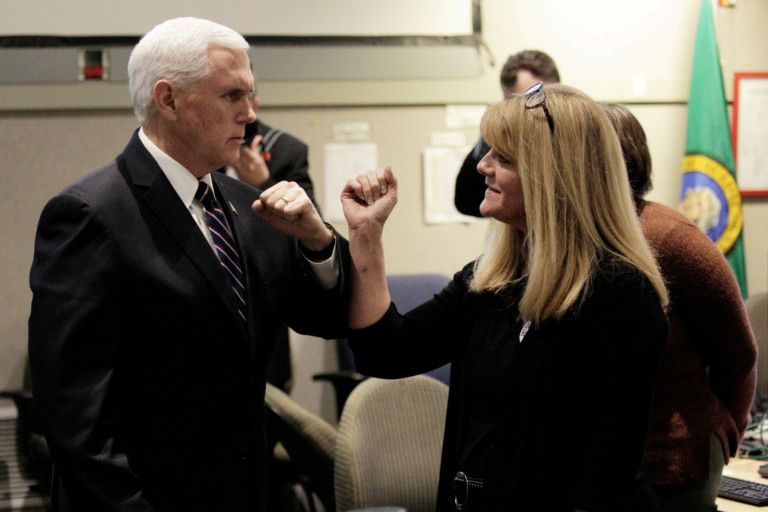
    US Vice President Mike Pence, who heads the government’s coronavirus task force, greets a woman at the Washington State Emergency Operations Center during a tour.
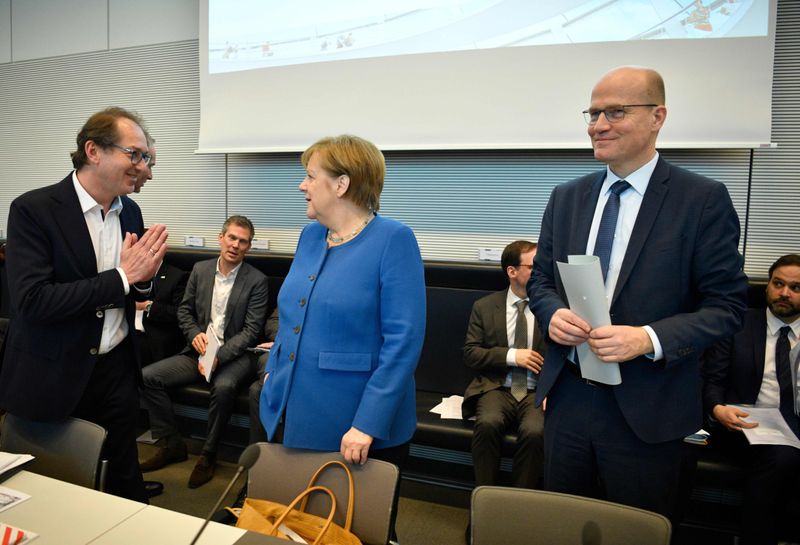
    Union parties leader Alexander Dobrindt greets German Chancellor Angela Merkel in a Buddhist style to avoid a handshake in times of coronavirus.

    Globally, more than 6,000 people have died and more than 156,000 have been infected by COVID-19 as the disease spreads rapidly to new territories.

  • Back to the 40s?

    Back to the 40s?

    While violence against the Muslim community of India is no longer an internal secret of our neighbour, it would be nothing less than hypocrisy to turn a blind eye towards the quality of life of minorities in Pakistan where a majority of them is equally vulnerable due to intolerance rooted in religion or ethnicity.

    When Saadat Hasan Manto finally decided to leave India amid growing communal violence back in the 40s, Indian actor Sunder Shyam Chadda wasn’t very happy with his friend’s decision.

    “Are you going to Pakistan because you think you are a Muslim?” Shyam asked Manto as the former removed the bottle of alcohol from their table.

    “I am a Muslim enough to get killed here,” Manto replied.

    Seven decades later — in the year 2020 — the world’s most populous democracy, under fascist Narendra Modi’s Bharatiya Janata Party (BJP), witnesses similar circumstances as those belonging to India’s minority communities, flee their homes in order to save their lives.

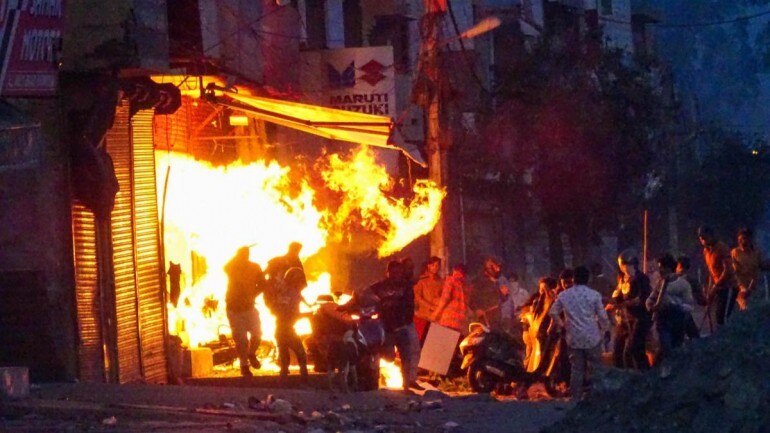
    The recent round of violence against Muslims in India by extremist Hindutva mobs has been the worst with over 40 innocent people losing their lives, mosques being set ablaze and properties of New Delhi’s Muslims being vandalised.

    The situation persisting across Pakistan’s eastern boundaries can be best explained through a mention of suzerainty, under which a single ideology asserts and maintains paramountcy or supremacy over the rest. But the problem in India is further accentuated by the fact that the state’s monopoly over violence has silently been delivered to the goons of the ruling BJP with the promise of targeting Muslims regardless of if they are at home or at a mosque.

    While violence against the Muslim community of India is no longer an internal secret of our neighbour, it would be nothing less than hypocrisy to turn a blind eye towards the quality of life of minorities in Pakistan where a majority of them is equally vulnerable due to intolerance rooted in religion or ethnicity.

    Although analyses suggest the factors that have led to the current upheaval in India are manifold, our focus, for now, will remain on religion since outside India, its importance has been rightly overshadowed by unfolding the neo-liberal agenda New Delhi is trying to implement; for which Hindutva serves as the best medium, and that too in disguise.

    It is nothing but Modi’s model from Gujarat, which is now expanding to Delhi and Ashoknagar.

    Nonetheless, the role of religion in itself cannot be undermined especially in the Indian subcontinent as both in Pakistan and India, religion has remained closely intertwined with politics since even before the partition. And from world-acclaimed statesman Gandhi to today’s fascist Modi, the combination has proved to be lethal while resulting in violence almost every time.

    The use of religion on state-level despite having a secular constitution is to achieve a purposive social order, which in other words is ‘national interest’ based on the exclusion of Muslims and inclusion of corporate and liberal values in society, surprisingly through the conservative ideology of RSS.

    Regardless of the intention behind employing religion in politics, its implications have not been desirable for the general masses, which brings into question the basic understanding of religion. Apart from politics, when religion is examined alone, the underlying principle of religion generally is expounded as that of peace and prosperity.

    Having said that, one inadvertently subscribes to the root word of religion as ‘lig’ and not ‘leg’ where the former means ‘to bind’ while the latter means ‘to gather.’

    Contrary to the broader agreement of religion to be in the greater interest of mankind by making people dependent on each other, the current predominant form of Hinduism in India is that of a certain mindset of people – the Rashtriya Swayamsevak Sangh (RSS) — coming together to serve a ‘holy purpose’ which in this case has become a national interest of BJP’s India.

    In this pretext, the use of religion on state-level despite having a secular constitution is to achieve a purposive social order, which in other words is ‘national interest’ based on the exclusion of Muslims and inclusion of corporate and liberal values in society, surprisingly through the conservative ideology of RSS, which ultimately benefits a handful of people in India by increasing their wealth and stay in power.

    Therefore, while mentioning the Citizenship Amendment Act (CAA), one should always mention its far-reaching effects in the lives of minorities other than Muslims, including Hindus with a working-class background.
  • Indian police mistake wedding for anti-Modi protest, uproot tents

    Indian police mistake wedding for anti-Modi protest, uproot tents

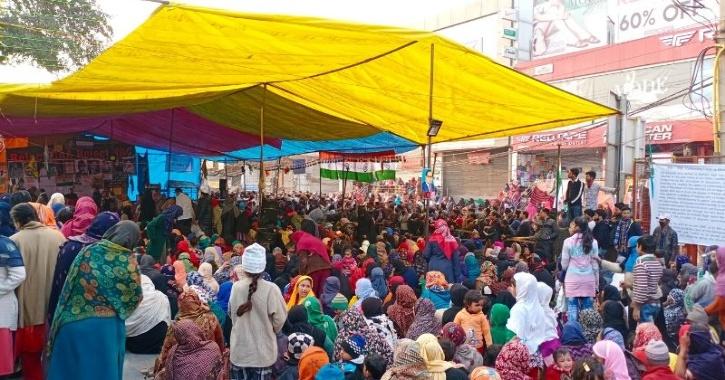
    As anti-Citizens Amendment Act (CAA) and National Register of Citizens (NRC) protests against Prime Minister (PM) Narendra Modi’s government continue across India, Uttar Pradesh (UP) police have disrupted a wedding after mistaking it for a sit-in.

    According to India Times, UP police on Saturday uprooted a tent meant for a wedding in the Mohalla Mirdagan area of Bijnor city. The wedding was scheduled for February 4 and the bride’s father had set up the tent in a vacant land.

    All gifts and other items for the bride were kept in the tent. Police arrived on the spot and assuming that the tent was set up for anti-CAA/NRC protest without permission, started uprooting it. However, after realising the truth, they asked the family to reinstall the tent, reportedly not even helping them.

    The anti-CAA and NRC protests are ongoing protests taking place across India and overseas against the CAA that was enacted into law on December 12, 2019, and the proposals to enact a nationwide NRC. The protests began in Assam, Delhi, Meghalaya, Arunachal Pradesh and Tripura on December 4, and within a few days, spread across India, though the concerns of the protesters vary.

  • Indo-Pak war odds-on if soldiers are attacked in Kashmir again: report

    Indo-Pak war odds-on if soldiers are attacked in Kashmir again: report

    A transnational non-profit organisation, International Crisis Group, has warned that any militant attack on Indian forces in held Kashmir could set off an escalation between Pakistan and India, saying that pro-freedom militants were lying low in the troubled vallet, but they were still active.

    “India’s heavy-handed military operations in Kashmir over the past few years have inspired a new homegrown generation, whose ranks are likely to swell further after the latest repression,” read its report titled “10 conflicts to watch in 2020”.

    Indian fighter planes had violated Pakistani airspace after a pro-freedom militant attack that killed at least 40 paramilitary soldiers in Pulwama on February 19, 2019. In retaliation, Pakistan had shot down two Indian jets over Kashmir on Feb 27, and captured an Indian pilot as well. He, however, was released by Prime Minister (PM) Imran Khan’s government as a “gesture of peace”.

    The Crisis Group, which describes itself as “working to prevent wars and shape policies that will build a more peaceful world” , has warned that any Pulwama-like attack on Indian forces in Kashmir would precipitate Indian action against Pakistan.

    “In a worst-case scenario, the two nuclear-armed neighbours could stumble into war,” the report said.

    The Crisis Group asked New Delhi to lift the communication blackout and release political prisoners in the occupied valley, and asked Pakistan to take action against militants allegedly operating from its soil.

    It further urged the international community to push Pakistan and India for talks “before it is too late”.

  • Pakistan declared ‘more attractive destination for global investors than India’

    An international credit rating agency, Moody’s Investors Service, has upgraded the outlook for Pakistan’s economy from negative to positive, declaring the country a more attractive destination for global investors than India as the latter’s credit outlook downgraded to negative earlier this year, Sputnik News reported.

    According to the agency, upgrade in Pakistan’s status is driven by “Moody’s expectations that the balance of payments dynamics will continue to improve”. On the other hand, it said that India’s outlook downgraded, “on concerns that its economic growth would remain materially lower than in the past”.

    “Moody’s decision to change the outlook to negative reflects increasing risks that economic growth will remain materially lower than in the past, partly reflecting lower government and policy effectiveness at addressing long-standing economic and institutional weaknesses than Moody’s had previously estimated, leading to a gradual rise in the debt burden from already high levels.”

    Meanwhile, Prime Minister (PM) Imran Khan’s Adviser on Finance and Revenue Dr Abdul Hafeez Sheikh said the upgradation of outlook to stable was affirmation of the government’s success in stabilising the country’s economy and laying a firm foundation for robust long term growth.

    The announcement also pushed Pakistan’s stock market above 40,000 points — highest after a gap of 10 months.

    The premier himself has also claimed that over the first four months of the current fiscal year beginning April 2019, Pakistan’s current account deficit fell by 73.5%, as compared to the same period last fiscal year. “The country’s exports of goods and services in October 2019 rose 20 per cent over the previous month and 9.6 per cent over October 2018.”

  • ‘Help me’: Altaf Hussain looks towards Modi for support

    ‘Help me’: Altaf Hussain looks towards Modi for support

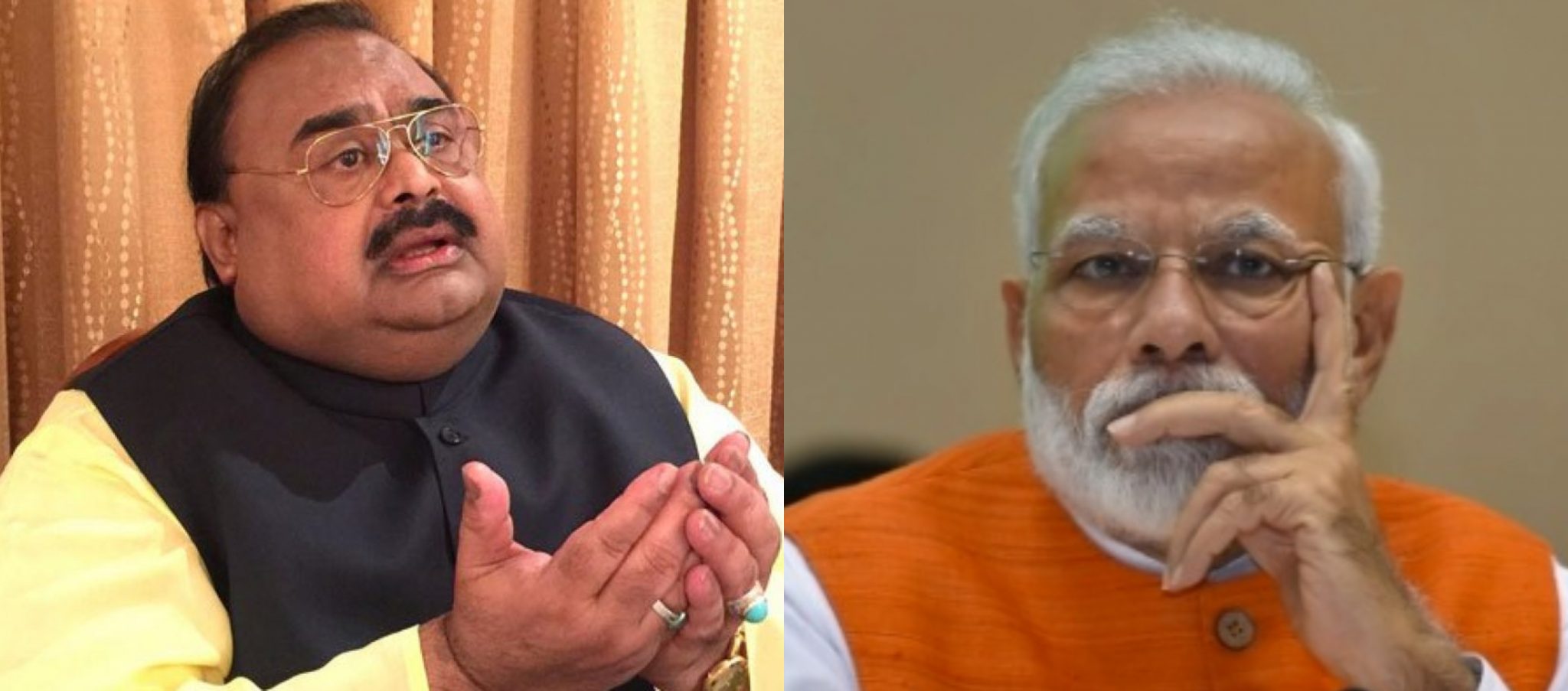
    Mutahidda Qaumi Movement (MQM) founder Altaf Hussain has reportedly requested Indian Prime Minister Narendra Modi to help him by giving him and his companions asylum and financial help.

    According to a report in The News, Hussain made his request in his first ever public speech after the police relaxed his bail conditions.

    In the speech, watched online by thousands of people, the MQM leader said he would like to travel to India because his forefathers are buried there.

    “If India’s Prime Minister Mr Modi allows me to come to India and provides me asylum with my colleagues, I am ready to come to India along with my colleagues because my grandfather is buried there. My grandmother is buried there and thousands of my relatives are buried there in India. I want to go to India to their graves.”

    Hussain, in his speech, alleged that his assets, house and offices were taken over in Karachi after August 22, 2017. He asked the Indian PM to help him with money if he could not provide him asylum.

    In fact, Altaf even supported the decision of the Indian Supreme Court in the disputed Babri Mosque case saying that Modi’s government has the “right to establish Hindu Raaj (rule)” and if Indian politician Asaduddin Owaisi and others did not like India, they should migrate to Pakistan.

    On October 10, Hussain was charged by the UK’s Crown Prosecution Services with the terrorism offence in a case related to his incendiary speech relayed from the UK to his followers in Pakistan in 2016.

    He is due to stand trial in June 2020 and passport remains with the UK police as part of his bail conditions and he is not allowed to apply for any travel document unless permitted by the court.

    Lawyers were now assessing whether Hussain has breached his bail conditions by asking Modi to let him stay in India while he awaits the trial of his case.

  • Modi cancels Turkey visit after President Erdogan supports Pakistan on Kashmir

    Modi cancels Turkey visit after President Erdogan supports Pakistan on Kashmir

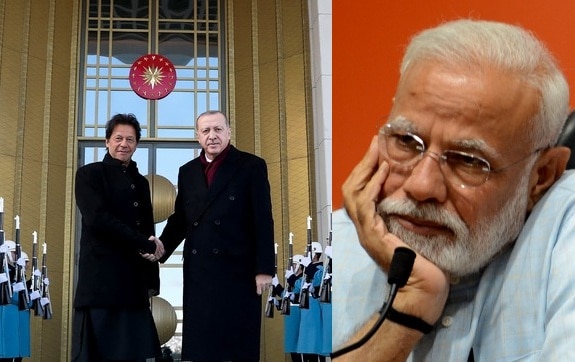
    With Turkish President Recep Tayyip Erdogan openly raising Indian atrocities in Kashmir at the United Nations General Assembly (UNGA) and his country backing Pakistan at the Financial Action Task Force (FATF) meeting in Paris, India has decided to give the cold shoulder to its ties with Turkey.

    According to Khaleej Times, New Delhi has cancelled a two-day official visit to Ankara by Prime Minister (PM) Narendra Modi at the end of this month, which would have been his first stand-alone visit to the country.

    He was to have proceeded to Turkey from Saudi Arabia, where he is going on October 27-28 to attend a mega-investment summit.

    The decision to cancel the visit to Turkey marks a low in relations between New Delhi and Ankara, which have never been very warm. Trade and defence cooperation were among the issues that were to be on the table during Modi’s Ankara visit, which had been agreed to in principle.

    The Ministry of External Affairs was non-committal over the development. “The visit was never finalised so there is no question of cancellation,” reports an official as saying.

    Modi had last visited Turkey during the G20 in Antalya in 2015. He had held a bilateral with Erdogan in Osaka, on the sidelines of the G20 in June this year. The Turkish leader had paid a two-day visit to India in July 2018.

    However, Erdogan’s strong backing of Pakistan’s position on Kashmir and alleging widespread human rights violations by India during his speech at the UNGA last month has not gone down well with India.

    In his speech, Erdogan had raised the issue of UN resolutions on Kashmir and alleged that “eight million people are stuck” in Kashmir due to revocation of special status. He had criticised the international community for failing to pay attention to the Kashmir issue.

    At the end of September, at an event in Turkey to mark the building of a warship for Pakistan, Erdogan also said he would continue to flag the Kashmir issue on the world stage.

    India is known to have cancelled an order for two naval ships it had inked with Turkey, in retaliation of Erdogan’s Kashmir comments.

    At the FATF meeting too, Turkey and Malaysia, along with China, openly backed Pakistan last week, which was invaluable in getting Islamabad a lifeline of four months till February 2020 to “eliminate” money laundering and terrorist financing.

  • ‘Imran Bhai se rishta kya, La Ilaha Illallah’: Held Kashmir abuzz with pro-Imran chants

    ‘Imran Bhai se rishta kya, La Ilaha Illallah’: Held Kashmir abuzz with pro-Imran chants

    Kashmiris’ struggle for independence from the clutches of Indian occupying forces has been reinvigorated ever since Prime Minister (PM) Imran Khan, being their “ambassador to the world”, highlighted the crisis at the United Nations (UN).

    With his address to the 74th session of the UN General Assembly (UNGA) sweeping the troubled valley, an unprecedented wave of hope has compelled the people of the Muslim-majority region to leave their homes regardless of the restrictions imposed by India.

    According to media reports, within less than a week of PM Imran’s speech, Indian occupied Kashmir (IoK) has witnessed over 50 street protests in different districts.

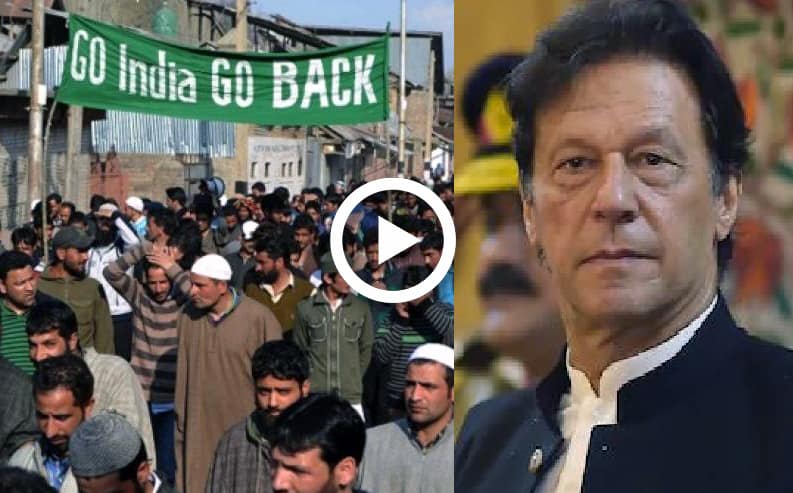
    As part of other protests being held since PM Imran kicked off his Kashmir campaign in the United States (US) last month, a report by BBC Urdu revealed, scores of Kashmiri protestors have taken to streets, raising slogans for freedom and demanding India to “Go back!”

    WATCH VIDEO:

    The streets of IoK are abuzz with chants of “We’re Pakistanis, Pakistan is ours!” and “What do we want? Freedom!” Among other popular slogans that hail PM Imran as a hero are, “Your brother and mine, Imran Khan!”, and “What’s our relation with Imran Khan? La Ilaha Illallah.”

    KASHMIR & IMRAN:

    The long-pending Kashmir dispute on August 5 worsened when PM Narendra Modi-led government abrogated Article 370 of the Indian constitution and robbed the region of its autonomy.

    With Pakistan fearing ethnic cleansing of Muslims in the valley as a result of the move, PM Imran announced becoming the “ambassador of the people of Kashmir to the world”.

    As part of his campaign, the premier has been highlighting Indian atrocities in IoK on different forums, including the UN.

    His entire US trip was dedicated to raising voice for innocent Kashmiris, while the highlight of his maiden UNGA address also remained intense criticism of India for the annexation of IoK and the restrictions imposed on the region under Modi’s rule.

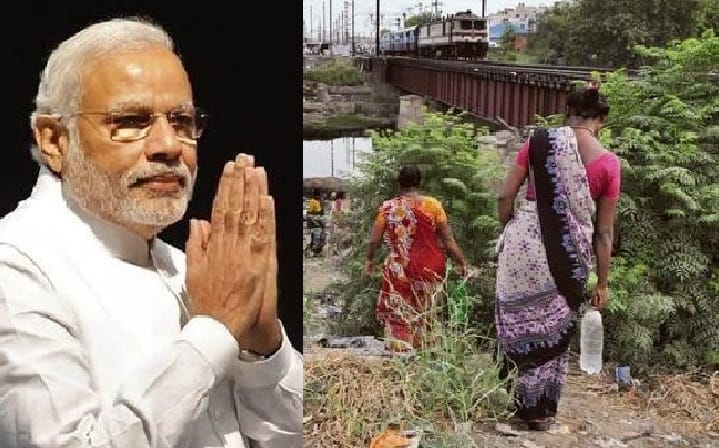
  • Experts question Modi’s claims as millions still relieve themselves in public

    Experts question Modi’s claims as millions still relieve themselves in public

    India is to be declared “open-defecation free” by Prime Minister (PM) Narendra Modi on Wednesday evening, although experts question his bold claim that all 1.3 billion people in the country have access to a toilet, Agence France-Presse (AFP) has reported.

    Modi made his “latrines for all” pledge when he first assumed office in 2014 and is hailing the project’s success as India celebrates the 150th anniversary of the birth of independence hero Mahatma Gandhi, a sanitation champion.

    Since being elected, Modi’s government says it has built almost 100 million toilets, winning the leader plaudits abroad, including an award from the Bill and Melinda Gates Foundation last week.

    In March, the government had said fewer than 50 million people relieved themselves outside, down from 550 million in 2014, with more than 550,000 villages declared open-defecation free.

    However, experts are sceptical over his claims, citing data from rural as well as urban areas.

    “A lot of latrines have been constructed from 2014 to 2018. Latrine ownership increased from about 35 per cent to about 70 per cent,” said Sangita Vyas from the Research Institute for Compassionate Economics (RICE).

    “That increase did accelerate the reduction of open defecation but in December 2018 we estimated about half of the people in the states of Bihar, Madhya Pradesh, Uttar Pradesh and Rajasthan still defecated in the open,” she told AFP, doubting that the shortfall has been made up since.

    Many of the toilets that have been constructed are without a water connection and even when they are connected, cultural barriers stop many Indians from using them, experts say.

    Modi, 69, was set to make the grand announcement in his western home state of Gujarat today evening in front of 20,000 village chiefs.

    He was also due to visit the Sabarmati Ashram in Gujarat, where Gandhi based himself for many years, and where 10,000 jars of treated human faecal matter were to be handed to guests, the Indian Express daily reported.

    The nutrient-rich matter — sun-dried, sieved into a tea leaf-like consistency and packed into the glass jars together with seeds — will then sprout upon watering.

    Before that, Modi early on Wednesday paid his respects to Gandhi, who was assassinated the year after India gained independence from Britain in 1947, at the Raj Ghat memorial in New Delhi.

    He said on Twitter that India was expressing “gratitude to Mahatma Gandhi for his everlasting contribution to humanity. We pledge to continue working hard to realise his dreams and create a better planet”.

    Other events also took place nationwide including in a hospital room in Pune where Gandhi was operated on for appendicitis in 1924.

    As many as 600 prisoners were also set to be released in an amnesty, media reports said.

    Later on Wednesday, a year-long, 14,000-kilometre (8,700-mile) “global peace” march was due to leave Delhi bound for Switzerland and taking in 10 countries.

  • PM Imran second most searched leader at UN General Assembly

    Prime Minister (PM) Imran Khan has become the second most searched personality among the leaders currently in the United States (US) for the 74th session of the United Nations General Assembly (UNGA).

    According to Google Trends, PM Imran has secured the second slot in the list of most searched UNGA leaders on Google, while Indian PM Narendra Modi stands fifth and United States (US) President Donald Trump has topped the list.

    Among other most searched UNGA leaders are British PM Boris Johnson at the third place and Brazilian President Jair Bolsonaro on the fourth. The Brazilian president had recently made headlines after severe criticism over his lack of efforts to protect the Amazon rainforest.