Tag: NEPRA

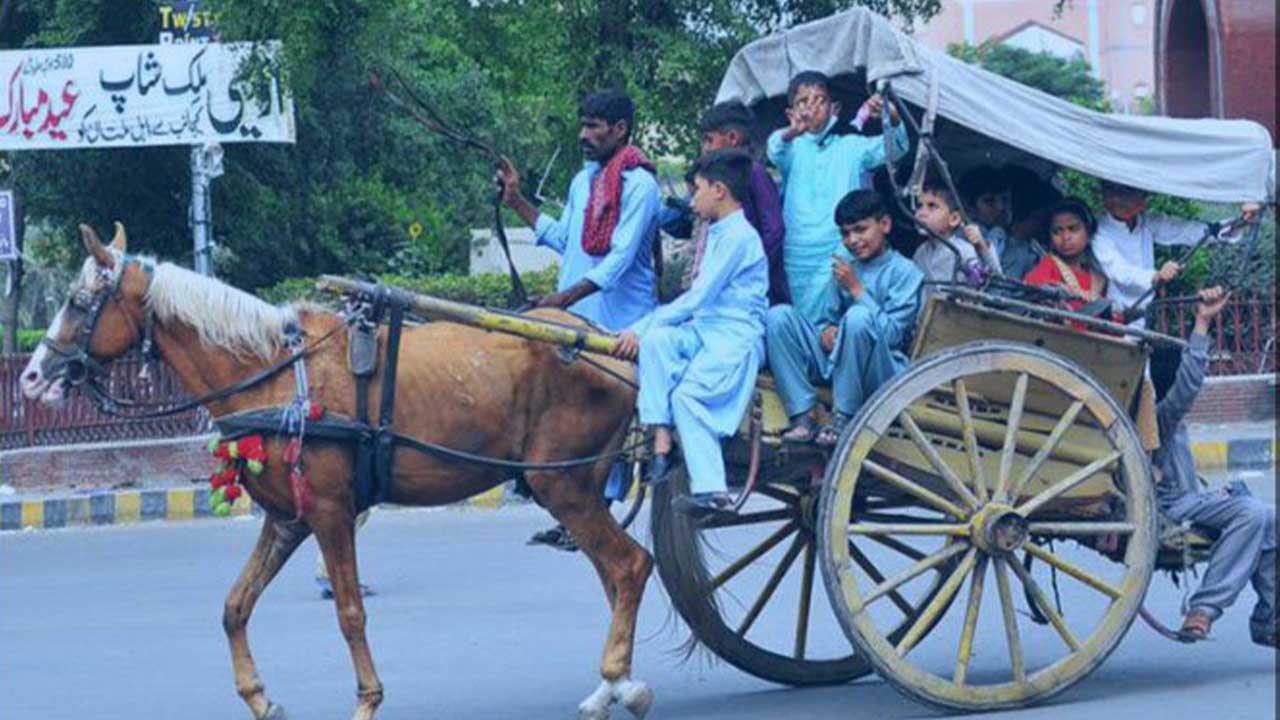
  • Netizens want ‘tangas’ back on roads as petrol hits Rs209.86

    Netizens want ‘tangas’ back on roads as petrol hits Rs209.86

    To meet the International Monetary Fund’s (IMF) conditions, the government has unleashed another big gasoline bomb on the country after another hike of Rs30. In less than a month, the price of petrol has risen by Rs60 to Rs209.86.

    The latest petrol price hike came just hours after the National Electric Power Regulatory Authority (NEPRA) approved a power tariff hike of Rs7.91 per unit.

    In an attempt to save money, a large number of people rushed to nearby petrol pumps to fill up their tanks before midnight. Numerous two-wheelers, as well as sedans and full-fledged SUVs, formed long lines outside gas stations.

    Several traffic bottlenecks were observed in key areas of Lahore, Karachi and Islamabad due to long queues of automobiles.

    Netizens expressed their displeasure on social media platforms, alleging that petrol had become out of reach for the general public.

    Despite hefty price increases that would unleash a strong wave of inflation, Pakistan is still far from reaching an agreement with the IMF which requires a budget agreement for fiscal year 2022-23.

    Petrol now costs Rs209.86 per litre, high-speed diesel (HSD) costs Rs204.15, kerosene oil costs Rs181.94 and light diesel oil costs Rs178.31, thanks to the rise.

    The Finance Minister, Miftah Ismail went on to say that the government is holding talk with the IMF on a daily basis. “We cannot accede to all of their requests, but we must agree on certain aspects”.

    He insisted that the petroleum subsidy announced by former Prime Minister Imran Khan had to be rescinded to avoid financial losses.

    Journalist Kazmi Wajahat described the chaotic scene outside gas stations just before the higher rates went into effect at 12 am.

    The decision to remove the gasoline subsidy should have been made sooner, according to economists, who also warned that the worst is still to come.

    One-unit price of electricity has increased from Rs16.91 to Rs24.82 as a result of the new raise. The hike has been reported to the federal government by Nepra. According to a statement, the increased tariffs will take effect after the government issues its final notification. Recent hike in tariffs has been attributed to the rupee’s depreciation and increased oil prices on the foreign market.
  • Energy crisis worsens, electricity gap surpasses 7,000 megawatts

    Energy crisis worsens, electricity gap surpasses 7,000 megawatts

    The demand for electricity in Pakistan has risen to 28,200 megawatts due to the hot weather, while the supply is only 21,200 megawatts, resulting in a power shortfall of nearly 7,000 megawatts.

    According to well-placed sources, the country currently gets 4,635 megawatts of energy from hydropower, 1,060 megawatts from government thermal power plants, and 9,677 megawatts from IPPs. Additionally, due to a lack of oil, gas, and coal, numerous factories have been shut down.

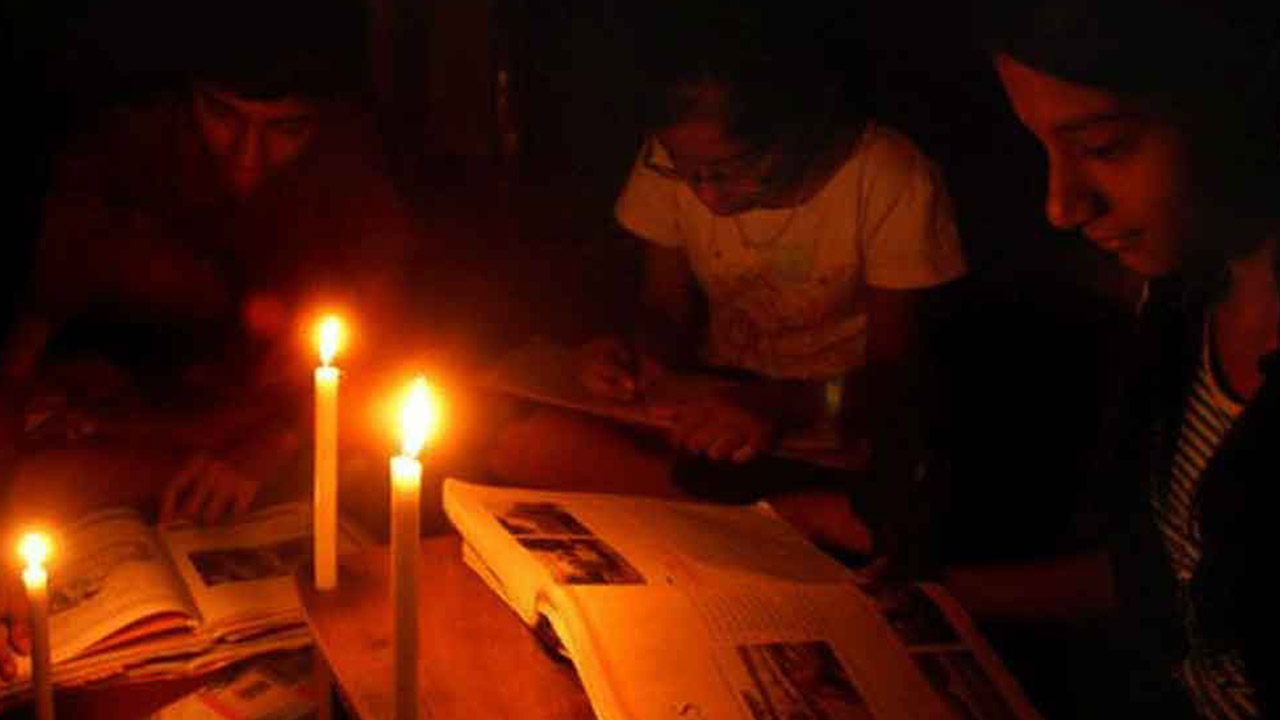
    Several areas of the country are experiencing daily loadshedding of 10 to 12 hours due to the expanding shortfall, which is exacerbated by the hot heat.

    However, in locations with significant line losses, loadshedding lasts longer than 12 hours.

    The scheduled loadshedding technique is not being used due to the lack of data, according to the sources. In Karachi, K-Electric, the city’s sole electricity distribution provider, is imposing daily loadshedding of 9 to 10 hours.

    As per reports, the loadshedding will be resolved within the next several months.

  • Pakistan’s energy crisis worsens, resulting in ten hours of load shedding

    Pakistan’s energy crisis worsens, resulting in ten hours of load shedding

    Due to higher demand and reduced generation caused by fuel shortages, and reduced gas supplies to power plants, Pakistan is experiencing 6-10 hours of electricity load-shedding in various areas.

    As of April 25, generation was 17,976 MW, compared to demand of almost 21,000 MW, indicating a significant discrepancy between demand and generation. IPPs contributed 14,536 MW, Gencos contributed 837 MW, and Wapda hydel contributed 2,603 MW.

    LNG-powered facilities are only receiving 500 MMCFD RLNG against a demand of 690 MMCFD, forcing the system operator, the National Power Control Centre (NPCC), to run furnace oil-fired facilities, which are much more expensive to run than natural gas and RLNG. Due to a lack of gas, Nandipur is working, however, Bhikki is not operating at full capacity.

    Prime Minister (PM) Shahbaz Sharif and former Minister of Energy Hammad Azhar exchanged accusing remarks on Twitter.

    “Mian Nawaz Sharif’s government halted the worst load-shedding in five years,” the Prime Minister declared in a tweet. The PTI administration failed to procure fuel on schedule or fix power plants. As a result, present load shedding is in effect. Power generation costs the population Rs100 billion per month due to inefficient plants. “We’re working on it”.

    Former Energy Minister Hammad Azhar responded to Prime Minister, claiming that “there are only 5 power plants under repair, the most of them are in the private sector”.

    Read more: US launches $23 million project to enhance Pakistan’s power sector

    Two PML-N LNG contracts defaulted in the recent two weeks, resulting in a fuel deficit and prompt system gas diversions. This is a textbook case of poor management that could have been averted.

  • US launches $23 million project to enhance Pakistan’s power sector

    US launches $23 million project to enhance Pakistan’s power sector

    The United States (US) said on Friday that it will launch a four-year, $23.5 million initiative in Pakistan to improve energy sector performance.

    As per United States Agency for International Development (USAID) Mission Director Julie A Koenen, the project intends to boost the volume of green energy in Pakistan’s energy mix.

    The US government is collaborating with the Pakistani government to undertake a four-year $23.5 million power sector reform initiative to address climate change and enhance the amount of renewable energy in Pakistan’s energy mix, through USAID.

    It would also strengthen the management and operations of electricity transmission and distribution networks, boosting the financial viability, dependability, and affordability of Pakistan’s power system by providing technical support to the government and private sector.

    Read more: Pakistani rupee plunges by Rs1.05 against the US dollar

    To increase Pakistan’s energy supply, the US and Pakistan have built three dams: Gomal Zam dam in South Waziristan, Satpara dam in Gilgit Baltistan, and Golen Gol dam in Chitral, Khyber Pakhtunkhwa, adding 143 megawatts of electricity to the national grid and rehabilitated the Mangla and Tarbela dams and three thermal power plants, connecting up to 860 megawatts of commercially-funded wind and solar projects to the national grid.

  • Another hike of Rs4.9 per unit approved in power tariff

    Another hike of Rs4.9 per unit approved in power tariff

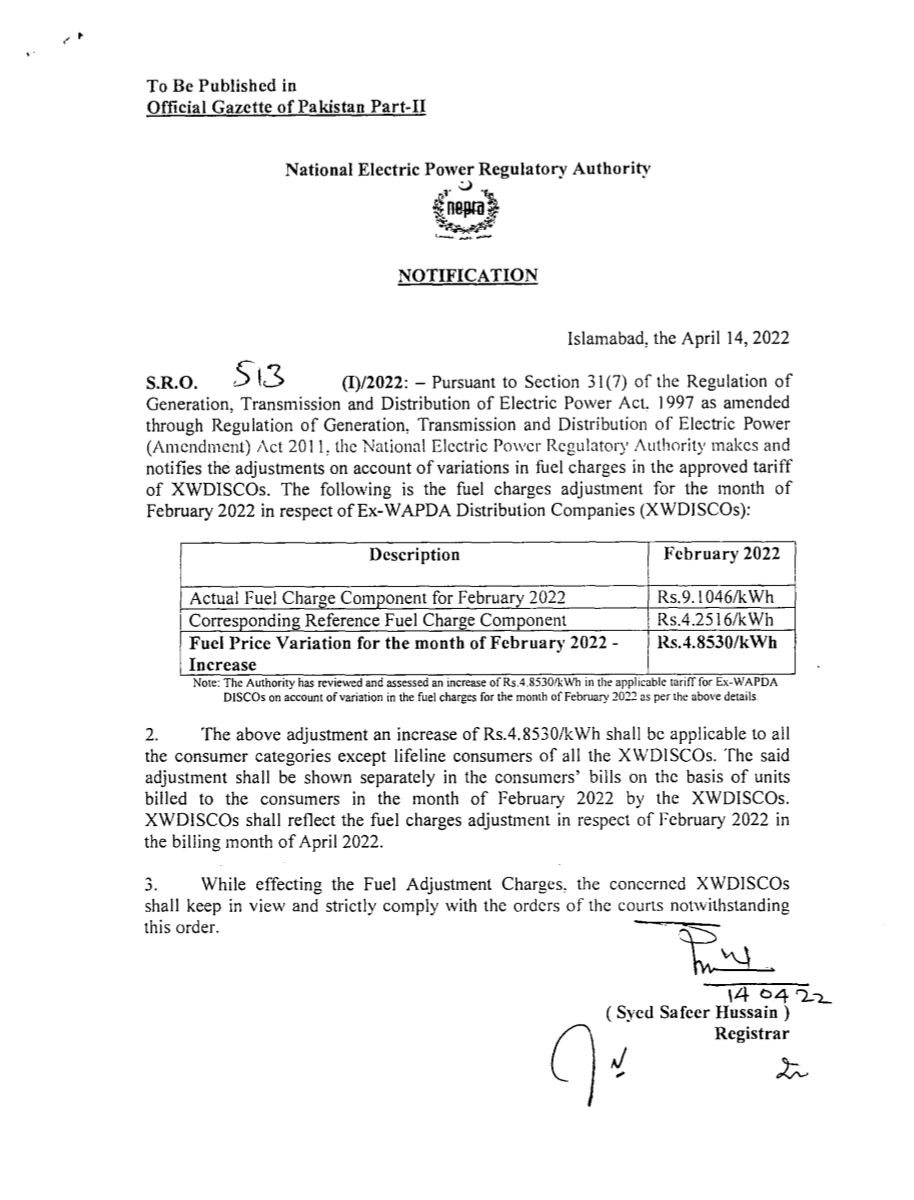
    Owing to the monthly Fuel Cost Adjustment (FCA) for February, the National Electric Power Regulatory Authority (NEPRA) on April 15 increased the price of electricity by Rs4.85 per unit.

    It has also announced an increase in the price of power, stating that the power output in February was more expensive than the previously set fuel price.

    According to the notice, the power distribution companies (DISCOs) will collect the amount from electricity consumers in the April bill. In addition, consumers will be hit with a charge of Rs37.7 billion, excluding general sales tax (GST). However, K-Electric and lifeline customers will be exempt from the hike.

    On March 31, the NEPRA held a hearing to determine the FCA but did not make a decision. The Central Power Purchasing Agency (CPPA) requested that the cost per unit be increased to Rs4.94 by the NEPRA.

    Following the monthly FCA, which only operates for one month, the administration had already hiked the power price to Rs5.95 per unit for the month of January.

    As per NEPRA’s data, the most expensive energy production sources, including High-Speed Diesel (HSD) and Residual Fuel Oil (RFO), were used more than average in the prior months, raising the overall cost of production.

  • Nepra approves Rs1.29 hike in cost per unit for Karachi residents

    On account of monthly Fuel Cost Adjustments (FCA), the National Electric Power Regulatory Authority (NEPRA) raised the cost per unit of power for Karachi residents by Rs1.29.

    It held a public hearing at its headquarters on Karachi Electric’s (KE) request to hike the power tariff under the FCA by Rs3.45 per unit for February. Chairman Tauseef H. Farooqi chaired the public meeting, which was also attended by officials Rafiq Ahmed Sheikh and Engineer Maqsood Anwar Khan.

    According to the officials, KE’s monthly FCA is decided at Rs1.29 per unit based on data analysis.

    The Chairman inquired about Karachi’s load-shedding status and if KE has a gas procurement deal with the Sui Southern Gas Company (SSGC) to address the fuel crisis.

    Load management is only done on feeders with a low recovery rate, according to the latter’s officials, and consumers only have to experience one to one-and-a-half hours of load shedding every day.

    Chairman Farooqui stated that KE’s technology needs to be modernised, and that there should be no load-shedding for bill-paying customers and locations where billing is timely.

    He also mentioned that the NEPRA has posted phone numbers on its website for inhabitants of the city to report any forced load-shedding by any power utility.

    According to the briefing delivered at the meeting, KE’s customers were charged Rs3.28 per unit in January under the FCA. Similarly, the FCA for February was decided to be Rs1.99 lesser than the January billing.

    Muhamad Tanveer, who is a representative of the Karachi Chamber of Commerce (KCCI), denied the FCA, citing that customers are already paying for the January hike and that the FCA should not be transferred to them.

    After reviewing the facts, the NEPRA issued a thorough judgment declaring that the FCA is only levied and set for the month in concern and that it is variable with each hearing depending on the fuel costs for that month.

  • 50 per cent refund for army officers in electricity bills

    50 per cent refund for army officers in electricity bills

    General Headquarters (GHQ) has approached National Electric Power Regulatory Authority (NEPRA) for a 50 per cent rebate to commissioned officers on electricity bills, sources told Bussiness Recorder.

    Director Works and Chief Engineer (DG&CE) said, “Military Engineering Services (MES) is giving 50 per cent refund but on the basis of energy charges instead of variable unit charges. This has curtailed the electricity bills rebate to around 3.5 per cent instead of 50 per cent to Army officers.”

    Previously, a percentage of 50 per cent refund was set for the officers on electricity units consumed. Later, an amendment was made and the bills started to come in the name of the variable and other charges, i.e., variable charges, sale rates of electricity per Kwh, which covers the unit price.

    Last year, the Ministry of Defence (MoD) had drafted a summary for the Cabinet seeking a 50 per cent rebate to commissioned officers on electricity bills and sent it to the Finance Ministry for comments. The ministry of finance then asked MoD to approach NEPRA.

    Electricity prices have been increased about 60 per cent by the government. Another increase of Rs0.95 per unit for consumers is yet to be effective from February 1.

  • Electricity prices increase by Rs 4.30, petrol by Rs.6

    Electricity prices increase by Rs 4.30, petrol by Rs.6

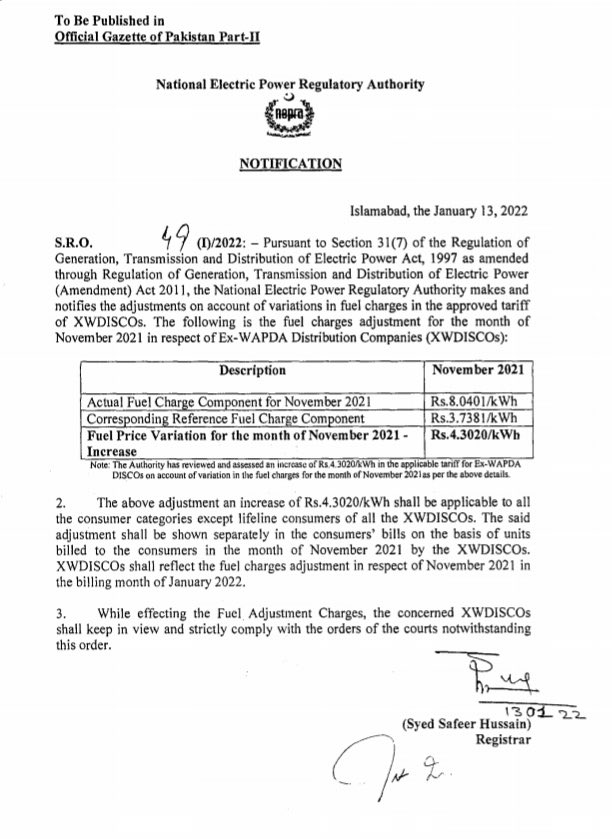
    The National Electric Power Regulatory Authority (NEPRA) has approved the decision to increase power tariff by Rs4.30 per unit on account of fuel cost adjustment (FCA) for November 2021.

    Image

    The adjustment will be shown separately in the consumers’ bills on the basis of units billed to the consumers in the month of November 2021 by the XWDISCOs.

    Similarly, the government is likely to increase the prices of petroleum prices by Rs6 per litre this month. However, the Ministry of Finance is yet to make the final announcement, reports Geo News.

    It is reported that the implementation will be effective from January 16 after consultations with Prime Minister (PM) Imran Khan. Recently, the government on the New Year’s eve had increased the prices of petroleum products to meet the petroleum levy target agreed with the International Monetary Fund (IMF).

    The news came after PM Khan’s statement when he asked his party’s spokespersons to inform the masses that there is no inflation in the country.