Tag: NEPRA

  • Electricity prices likely to rise after NEPRA review

    Electricity prices likely to rise after NEPRA review

    The Central Power Purchasing Agency (CPPA) has filed a request with the National Electric Power Regulatory Authority (NEPRA) to raise the monthly fuel adjustment for January, which could result in a higher electricity price per unit.

    According to the agency’s submission, electricity generation in February reached 9.014 billion units, while 8.762 billion units were supplied to power companies. The price of electricity in January was Rs 12.17 per unit, compared to a reference cost of Rs 10.39 per unit. CPPA has requested an increase of Rs 1.78 per unit for one month.

    NEPRA is scheduled to review the proposal in a hearing on February 26.

    In a separate development, the Lahore High Court (LHC) has asked the federal government to provide a detailed mechanism for determining petroleum product prices.

    The request came during a hearing of a miscellaneous petition filed by the Judicial Activism Panel, which challenged the recent increase in fuel prices. During the proceedings, Justice Khalid Ishaq directed the government to “present the complete methodology behind the pricing,” allowing the court to examine the reasons and procedures for the hikes. Notices were issued to relevant parties, who are required to submit detailed responses at the next hearing.

    Recently, the government raised petrol prices by Rs 5, bringing the rate to Rs 258.17 per liter. The price of high-speed diesel was also increased by Rs 7.32, reaching Rs 275.70  per liter for the next fortnight.

  • PM directs urgent review of NEPRA’s new solar policy to safeguard existing contracts

    PM directs urgent review of NEPRA’s new solar policy to safeguard existing contracts

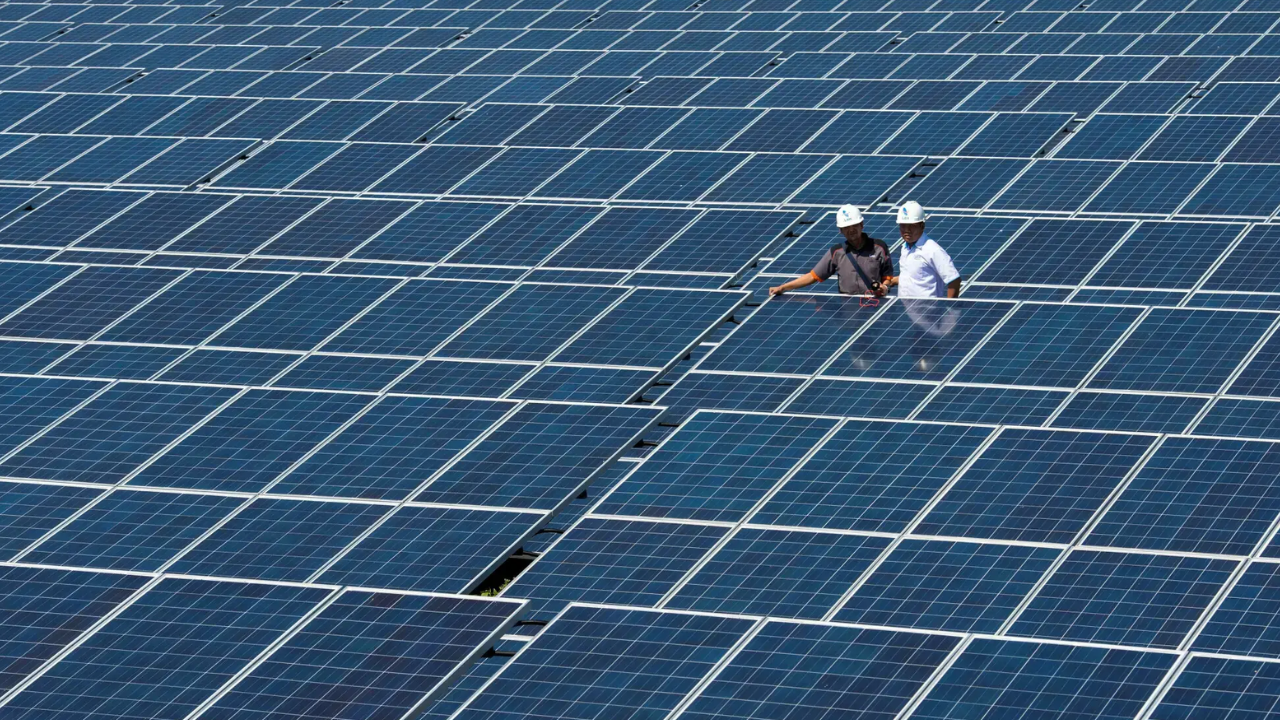
    Prime Minister Shehbaz Sharif has taken immediate notice of the new solar regulations issued by the National Electric Power Regulatory Authority (NEPRA) and directed the Power Division to promptly seek a review to safeguard existing net metering agreements and shield grid consumers from any added financial strain.

    According to a statement from the Prime Minister’s Office (PMO), the prime minister instructed the Power Division to file an appeal before NEPRA without delay. The move is aimed at protecting the rights of current solar consumers and ensuring that all previously signed agreements remain fully intact.

    During the meeting, the prime minister stressed that fairness within the power system must be upheld. He stated that the financial implications associated with solar net metering should not be transferred to the majority of electricity users who rely exclusively on the national grid. 


    Highlighting the scale of the issue, he noted that around 466,000 solar consumers are currently benefiting from net metering, and any policy revision must not unfairly impact more than 37.6 million consumers who depend entirely on grid electricity.

    He further directed the Power Division to develop a comprehensive strategy to ensure the national electricity system remains balanced, sustainable, and equitable for all consumers. 

    The directives were issued during a special high-level meeting chaired by the prime minister in Islamabad to assess NEPRA’s latest solar-related framework and its potential consequences for consumers and the broader power sector.

    The meeting was attended by Deputy Prime Minister and Foreign Minister Ishaq Dar, Federal Ministers Ahsan Iqbal Chatha, Attaullah Tarar, Ali Pervaiz Malik, Sardar Awais Khan Leghari, Minister of State Bilal Azhar Kayani, Adviser on Privatization Muhammad Ali, along with senior officials from relevant departments.

    Officials briefed the prime minister on the anticipated impact of the revised regulatory structure on power sector operations and financial sustainability. The prime minister reiterated that while the government remains committed to promoting renewable energy, policy reforms must maintain system stability, protect investor confidence, and ensure that the costs and benefits of the transition are fairly distributed across the consumer base.

  • Your existing solar contract is NOT at risk under new policy; here’s what really happened…

    Your existing solar contract is NOT at risk under new policy; here’s what really happened…

    The National Electric Power Regulatory Authority (NEPRA) has notified new regulations replacing Pakistan’s net-metering framework with a net-billing system for rooftop solar and other small-scale power producers, while allowing existing prosumers to continue under their current contracts until the end of their agreed term.

    The changes were introduced through the NEPRA (Prosumer) Regulations, 2026, which take effect immediately and repeal the Alternative & Renewable Energy Distributed Generation and Net Metering Regulations, 2015. The new framework applies to solar, wind and biogas systems.

    Under the revised regime, utilities will purchase surplus electricity generated by prosumers at the National Average Energy Purchase Price (NAEPP), currently around Rs11 per unit, while electricity supplied by distribution companies (Discos) will be billed to consumers at applicable tariffs ranging between Rs37 and Rs55 per unit, excluding taxes, surcharges and duties. The unit-for-unit exchange mechanism under net metering has been discontinued for future connections.

    Nepra clarified that existing registered prosumers will continue under their present agreements until expiry of their seven-year contracts. Any renewals or extensions after expiry will fall under the new net-billing framework. New applicants will be offered contracts limited to five years, renewable by mutual consent.

    The regulator notified the rules shortly after holding a public hearing, issuing the same draft without amendments. The notification has prompted claims that net metering has been abolished for all solar consumers, though the regulations maintain the existing contractual protections until expiry.

    Under net billing, electricity exported by a prosumer is sold to the Disco, while imported electricity is charged at the applicable consumer tariff. “In case the billed amount of the units supplied by prosumers exceeds the billed amount of units supplied by Disco, the net billed amount shall be credited against the prosumer’s next billing cycle or shall be paid by the licensee to the prosumer quarterly,” Nepra stated. Discos have not consistently made such payments in previous arrangements.

    For existing prosumers, export units will continue to be valued at Rs26 per unit for the remaining contract period, though credits will now be adjusted monthly instead of over three months. 

    The regulations restrict system size to the consumer’s sanctioned load and bar installations exceeding that limit. Discos are also prohibited from approving new connections if distributed generation capacity connected to a transformer reaches 80 per cent of its rated capacity. Systems of 250kW or above will require a mandatory load flow study.

    Nepra stated that all interconnection costs, including meters and grid upgrades, will be borne by the prosumer. A non-refundable concurrence fee of Rs1,000 per kilowatt has been introduced, and metering must support two-way measurement through bidirectional or dual meters.

    Utilities are required to acknowledge applications for interconnection of distributed generation facilities within five working days, complete technical assessments within 15 days and install interconnection facilities within 15 days after payment. Prosumers must also obtain formal concurrence from Nepra, which the regulator said would be issued within seven working days.

    The Power Division and Nepra have attributed grid pressures and rising capacity charges to the expansion of distributed solar generation. Officials have cited on-grid solar capacity of about 7,000MW and off-grid capacity exceeding 13,000MW, while pointing to widespread use of hybrid systems without meters. The new regulations, however, apply only to metered prosumers.

    Nepra has previously stated that high electricity costs were driving consumers toward decentralised generation. “Compounded by heavy taxes, levies and surcharges, particularly the Debt Servicing Surcharge, these factors collectively inflate electricity costs for consumers. The result is a shifting of consumers towards decentralised or off-grid solutions,” the regulator said in a recent observation.

    The regulations also grant Nepra authority to revise purchase rates during the life of agreements, issue binding directions, demand operational data and impose penalties. Discos retain the right to disconnect systems in cases of faults, non-compliance or maintenance, with or without notice, and prosumers are barred from selling electricity to third parties using the utility network.
  • NEPRA lowers national electricity tariff by 62 paise per unit

    NEPRA lowers national electricity tariff by 62 paise per unit

    The National Electric Power Regulatory Authority (NEPRA) has reduced the national average uniform electricity tariff by 62 paise per unit for the next six months.

    The regulator said in a statement released late Wednesday that distinct consumer-end prices had been established for every distribution companies that was previously under Wapda, taking into consideration their various income requirements as well as permitted transmission and distribution losses.

    For the calendar year 2026, NEPRA set the national average tariff at Rs33.38 per kilowatt-hour, down from Rs34.00 per unit in 2025-26.

    Several distribution companies, including Gujranwala, Quetta, Multan, Sukkur, Hyderabad, Peshawar, Tribal Areas and Hazara Electric Power Companies, had submitted multi-year tariff petitions covering the period from 2025-26 to 2029-30. NEPRA has now determined these tariffs for the upcoming year.

    According to the notification, the rebasing of consumer-end tariffs follows policy guidelines issued by the Ministry of Energy (Power Division) and the federal cabinet’s approval of annual tariff adjustments starting January 1.

    The regulator has communicated the determined tariffs to the federal government for the submission of the uniform tariff application.

    NEPRA’s calculation of the total revenue requirement of the ex-Wapda distribution companies for 2026 stands at Rs3.379 trillion. This includes Rs2.923 trillion for power purchase costs and Rs456.15 billion covering distribution companies’ margins and adjustments from prior years.

    The estimate is based on projected electricity sales of 101,234 gigawatt-hours for the year.

    The regulator’s move aims to reflect cost variations while maintaining separate tariffs for each distribution company, in line with approved policies and projected expenses.

  • Rs1.69 per unit electricity tariff cut on the cards

    Rs1.69 per unit electricity tariff cut on the cards

    Electricity users stand to obtain great financial relief from the federal government as the National Electric Power Regulatory Authority (NEPRA) will hear a petition today, seeking to reduce the power tariff by a respectable Rs1.69 per unit under the fuel cost adjustment (FCA) framework. According to reports, the Central Power Purchasing Agency (CPPA) has filed the aforementioned petition for reduced tariffs in September 2025’s bills.


    Power distribution companies (DISCOs) outlined a drop in fuel charges in July 2025, citing it as the primary reason behind their proposal for the relief. It merits a mention that the relief package has not been approved by Nepra yet, and that Nepra reserves the right to reject the petition or pass a different amount for the reduction in tariffs. 


    Reports reveal that a public hearing will commence today, wherein relevant stakeholders will determine if the amount requested by Discos for the refund is in line with the economic merit order.


    Details included within the petition reveal that domestic electricity generation during July stood at 14,123 gigawatt-hours (GWh) at an average cost of Rs7.781 per unit. This translates into the monthly fuel cost coming out to just Rs109.89 billion. 

    Reports suggest, however, that the per-unit cost of electricity once delivered to discos from power generation sources rose to Rs8.1848 per unit. This was due to a 2.95 percent transmission loss, which resulted in discos receiving only 13,666 GWh of power, down from the 14,123 GWh that were initially generated.


    The cost of Rs8.1848 per unit of electricity also includes a charge of Rs0.275 to cover for Rs3.883 billion in revenue shortfalls that Discos experienced in the previous periods. RLNG-based electricity generation proved to be a costly method of power generation, with the per unit cost standing at a staggering Rs22.03 per unit.


    However, reports suggest that residual furnace oil (RFO)- based power generation remained the least economical method of electricity generation, with a per unit cost of Rs31.053. Conversely, nuclear power plants reportedly managed to generate electricity at a fraction of the price, with the per unit cost sitting at a manageable Rs2.42 per unit. 


    According to the data, coal power plants managed to attain an electricity generation cost per unit of Rs 11.347 and Rs 14.498 for domestic and imported coal respectively. The proposal to reduce pass relief to consumers comes after (NEPRA) announced a quarterly tariff relief of Rs1.8881 per unit earlier this month for the period spanning August 2025 to October 2025.

  • Relief for electric consumers in September bills

    Relief for electric consumers in September bills

    In a bid to pass relief to electricity users, state-owned power distribution companies (Discos) have proposed a Rs1.691 per unit refund in electricity bills for September.

    According to reports, Discos have outlined a drop in fuel charges in July 2025 as the primary reason behind their proposal for the refund.

    The Central Power Purchasing Agency (CPPA) submitted the aforementioned proposal to the National Electric Power Regulatory Authority (NEPRA) as part of the monthly Fuel Charges Adjustment (FCA) framework.

    While the relief package has not yet been approved by NEPRA, reports reveal that a public hearing has been scheduled for August 28, wherein relevant stakeholders will determine if the amount requested by Discos for the refund is in line with the economic merit order.

    Details included within the petition reveal that domestic electricity generation during July stood at 14,123 gigawatt-hours (GWh) at an average cost of Rs7.781 per unit. This translates into the monthly fuel cost coming out to just Rs109.89 billion.

    Reports suggest, however, that the per-unit cost of electricity, once delivered to discos from power generation sources, rose to Rs8.1848 per unit. This was due to a 2.95 percent transmission loss, which resulted in discos receiving only 13,666 GWh of power, down from the 14,123 GWh that were initially generated.

    The cost of Rs8.1848 per unit of electricity also includes a charge of Rs0.275 to cover for Rs3.883 billion in revenue shortfalls that Discos experienced in the previous periods. RLNG-based electricity generation proved to be a costly method of power generation with the per unit cost standing at a staggering Rs22.03 per unit.

    However, reports suggest that residual furnace oil (RFO) based power generation remained the least economical method of electricity generation, with a per unit cost of Rs31.053. Conversely, nuclear power plants reportedly managed to generate electricity at a fraction of the price, with the per unit cost sitting at a manageable Rs2.42 per unit. 


    According to the data, coal power plants managed to attain an electricity generation cost per unit of Rs11.347 and Rs14.498 for domestic and imported coal respectively. The proposal to pass relief to consumers comes after (NEPRA) announced a quarterly tariff relief of Rs1.8881 per unit earlier this month, for the period spanning August 2025 to October 2025.

  • Nepra officers approve large pay raises for themselves

    Nepra officers approve large pay raises for themselves

    Senior officers of the National Electric Power Regulatory Authority (Nepra) have approved large increments in their own salaries and non-income perks. According to reports, this move was in clear violation of the law as they did not get approval from the federal cabinet.

    The timing of the unapproved salary hike is peculiar as the power sector is facing staggering losses because of issues in power distribution and overall management. However, reports have outlined how aside from the timing of the hike, the magnitude of the hike is even more peculiar.

    This is because the latest salary revisions authorized 200 percent raises for certain employees. Reports reveal that the chairperson’s salary ballooned to a whopping 3.25 million rupees while members witness their salary packages grow up to 2.95 million rupees.

    As per standard guidelines, Nepra’s chairman and members are allowed to receive a basic monthly salary between 629000 rupees to 772780 rupees. However, this excludes non-income perks such as utility and accommodation rent allowances which brings up their gross salaries up to a respectable 800,000 rupees to one million rupees.

    Under the revised salary package, the base pay does not vary significantly with only the lower salary bound noticing a slight improvement up to 700,000 rupees from the previous salary of 629000 rupees. However, a ‘regulatory allowance’ has been adjusted into the salary package which raises the gross salary amount by up to 700,000 rupees. As per reports, this colossal regulatory allowance has been modeled after judicial benefits.

    Aside from the allowance increase, Nepra officers were also able to snag provisional reliefs with an associated monetary value of up to 650,000 rupees for 2024, 600,000 rupees for 2023, 116,000 rupees for 2022 and 77,300 rupees for 2021. If these payments have not been made in previous years, it is likely that the officials will receive backdated payments for the aforementioned time period.

    If backdated payments are made, the disbursements of funds to the officials might hurt the national exchequer. The federal budget might witness an imbalance because of the unexpected outflow – as this salary revision was never approved by the federal cabinet.

    This move could potentially worsen the balance of the federal budget which lawmakers in Islamabad might not be particularly thrilled about. Moreover, reports claim that Nepra officials will still continue to collect house rent allowances ranging from 176,000 rupees to 206,000 rupees along with other benefits totaling over 100,000 rupees.

    After the colossal pay hike, analysts are raising concerns regarding the level of financial accountability and transparency surrounding such institutions. As of now, it is not known whether this pay raise will stand or be reversed by federal authorities since Nepra has reportedly not provided any clarifications on the matter.

  • NEPRA approves Rs1.75 per unit tariff hike to recover Rs40 billion

    NEPRA approves Rs1.75 per unit tariff hike to recover Rs40 billion

    The National Electric Power Regulatory Authority (NEPRA) has approved an increase of Rs1.75 per unit in the electricity tariffs for distribution companies (Discos) and K-Electric (KE).

    This increase, aimed at recovering an additional Rs40 billion, will apply to the fourth quarter of FY2023-24 (April-June) under the Quarterly Tariff Adjustment (QTA) mechanism.

    The additional charges will be reflected in consumers’ electricity bills for September, October, and November 2024.

    However, due to the termination of a previous Rs0.93 per unit adjustment for the third quarter (January-March 2023-24), the net increase in bills during this period will effectively be Rs0.82 per unit.

    For KE customers, the federal government will cover the QTA increase through subsidies allocated for FY2024-25, meaning KE consumers will not directly bear this cost.

    In addition, NEPRA has approved a negative adjustment of Rs0.37 per unit under the Fuel Cost Adjustment (FCA) for Discos for the month of July 2024. This reduction will appear in September 2024 bills, except for domestic consumers using up to 300 units per month.

    According to Business Recorder, since an existing FCA charge of Rs2.56 per unit, applied in August 2024 bills, is set to expire, a combined relief of Rs2.93 per unit will be passed on to consumers in their September 2024 bills.

    According to NEPRA, when both adjustments are taken into account, consumers will experience a total relief of Rs2.11 per unit in their September bills.

  • Nepra approves up to 51% increase in electricity prices for residential consumers

    Nepra approves up to 51% increase in electricity prices for residential consumers

    The National Electric Power Regulatory Authority (Nepra) has approved a significant increase of up to 51 per cent in the base electricity rates for residential consumers. This adjustment is part of a new tariff schedule aimed at addressing rising energy costs.

    Under the revised rates, consumers using up to 200 units per month will see their tariffs remain unchanged until September 2024. However, from October 2024 onwards, substantial hikes will take effect, impacting millions of households across the country.

    For protected consumers using up to 100 units monthly, the tariff will rise from the current Rs7.74 to Rs11.69 per kilowatt-hour (kWh), representing a steep 51 per cent increase.

    Similarly, those consuming between 101 and 200 units will face a 41 per cent increase, with rates jumping from Rs10.06 to Rs14.16 per kWh. Notably, over 15.5 million consumers fall into this protected category.

    Non-protected consumers will also bear the brunt of these increases. For those using up to 100 units, the tariff will rise by 43 per cent, escalating from Rs16.48 to Rs23.59 per kWh. For consumption between 101 and 200 units, the rate will increase by 31 per cent, from Rs22.95 to Rs30.07 per kWh.

    For consumers exceeding 200 units, tariff increases will vary between 14 per cent and 26 per cent, effective from July 2024, with no additional changes expected for the rest of the fiscal year. Additionally, fixed charges ranging from Rs200 to Rs1,000 per kWh have been introduced for these categories.

    Nepra conducted a public hearing on 8 July to discuss government requests for an additional burden of over Rs700 billion to be passed on to electricity consumers through an average national tariff increase.

    In its final order, Nepra stated, “The authority has no objection in approving the motion along with the subsequent addendum of the federal government.”

    As a result of these changes, the average base electricity tariff will rise by Rs3.29 per unit, bringing it to Rs33.07—an 11 per cent increase compared to the fiscal year 2023-24. This decision marks a significant shift in the financial landscape for residential electricity consumers across Pakistan.

  • K-Electric seeks increase in base electricity tariff by Rs.10

    K-Electric seeks increase in base electricity tariff by Rs.10

    K-Electric has requested National Electric Power Regulatory Authority (NEPRA) to increase the base electricity tariff in Karachi by Rs 10, taking it from Rs 33 to Rs 44.


    The request is part of K-Electric’s comprehensive investment plan, which includes establishing fourteen new grid stations and laying 550 kilometers of transmission lines in Karachi over the next seven years, reports Samaa.


    An online public hearing on K-Electric’s application was conducted by Nepra on Thursday in which it was laid out that a $2 billion investment strategy for improving the city’s electricity transmission, distribution, and supply system.


    During the hearing, K-Electric’s Director of Communication, Imran Rana assured NEPRA that the increase in the base tariff would not impact Karachi’s electricity consumers due to the uniform electricity rate policy implemented across the country.


    K-Electric emphasised that approving this tariff is crucial for maintaining a stable electricity supply and demand balance in the city.