Tag: pakistan economy

  • Internet shutdown costs 65 billion rupees to Pakistan’s economy

    Internet shutdown costs 65 billion rupees to Pakistan’s economy

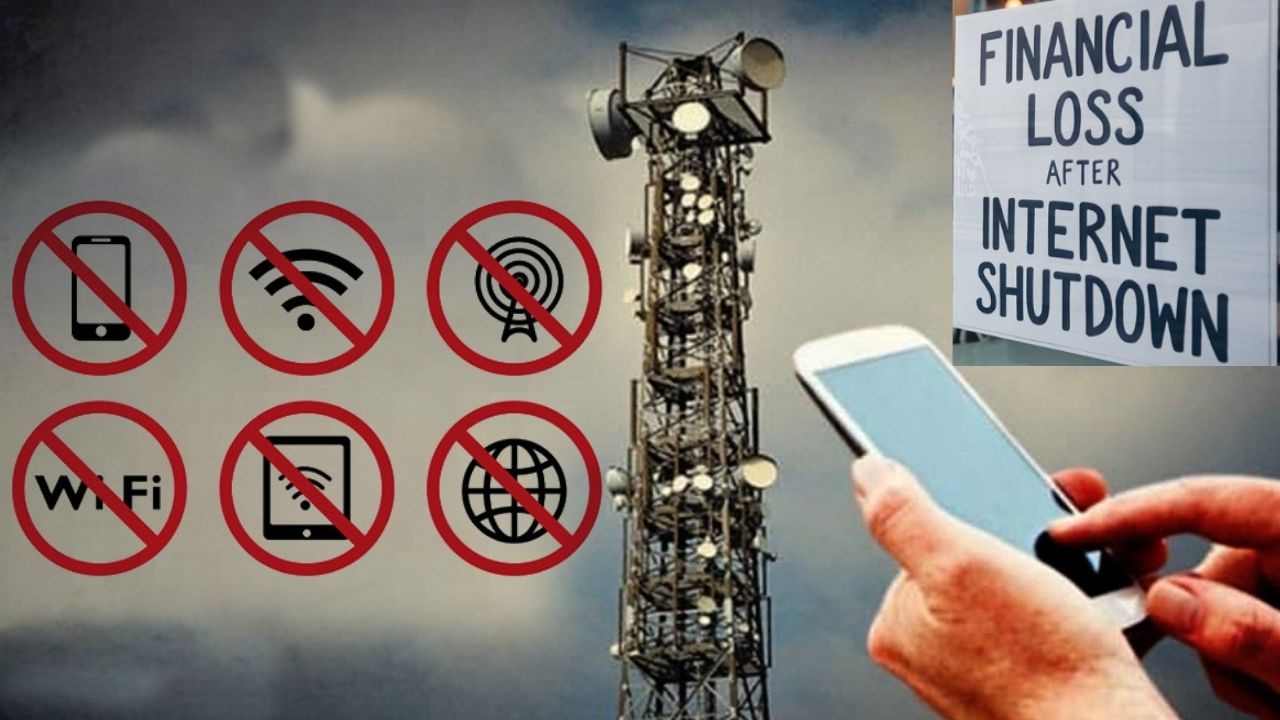
    Pakistan’s economy has suffered a loss of PKR 65 billion in 2023 due to internet shutdowns.

    Statista’s latest data reveals that 8.3 million Pakistanis were affected by the internet outage, which lasted 259 hours.

    Statista is a German online organization that specializes in data collection. It ranked Pakistan seventh in terms of losses in the last financial year.

    Last year, India was one of the top countries with the longest internet shutdowns in the world, with 47 crore users not having access to the internet. This resulted in India being ranked fourth for internet shutdowns.


    “In India – the country that cuts internet access the most – shutdowns have in the past clustered in Kashmir and Rajasthan, where they have been used during protests (and preemptively when protests were expected), but also during exams. In 2023, ethnic tensions in Manipur state led to most targeted shutdowns employed by the government”, states Statista’s official website.

    Internet service in India was highest in Occupied Kashmir and Rajasthan.

    The total list of 25 countries with the most internet shutdowns from top to bottom is Russia, Ethiopia, Myanmar, Iran, India, Iraq, Pakistan, Algeria, Senegal, Azerbaijan, Guinea, Brazil, Mauritania, Yemen, Venezuela, Kenya, Sudan, Syria, Turkey, Gabon, Tanzania, Cuba, Chad, Zimbabwe and Suriname at last in the list respectively.

    Regionally, after 2019, Asia experienced the most disruption cases of internet connections, over 50 percent compared to the rest of the world.
  • Uncertainty surrounds Pakistan’s $7 billion IMF bailout as approval date still not confirmed

    Uncertainty surrounds Pakistan’s $7 billion IMF bailout as approval date still not confirmed

    Pakistan’s much-anticipated $7 billion bailout package has not yet been scheduled for review by the International Monetary Fund (IMF) executive board, with the agenda extending only until August 30, according to the IMF’s recently released calendar.

    In July, Pakistani authorities and the IMF reached a staff-level agreement, potentially paving the way for a 37-month Extended Fund Facility (EFF) valued at SDR 5,320 million (approximately $7 billion).

    However, this agreement hinges on the approval of the IMF Executive Board, which is contingent upon Pakistan securing necessary financing assurances from its development and bilateral partners.

    The proposed programme is designed to build on the hard-won macroeconomic stability achieved in the past year. It aims to strengthen public finances, reduce inflation, rebuild external reserves, and eliminate economic distortions to foster private sector-led growth.

    Despite five weeks having passed since the staff-level agreement, Pakistan has yet to bridge an external financing gap of up to $5 billion.

    This delay has prevented the country from signing the Letter of Intent (LoI) required to formally request the IMF executive board’s approval of the $7 billion package under the EFF programme.

    The LoI is a critical step in requesting the IMF’s endorsement of the 37-month, $7 billion EFF programme. Without this approval, Pakistan cannot proceed with the much-needed financial support.

  • Car financing in Pakistan drops 20% in July amid rising prices and interest rates

    Car financing in Pakistan drops 20% in July amid rising prices and interest rates

    Car financing in Pakistan witnessed a significant decline in July 2024, as soaring vehicle prices and elevated interest rates continued to dampen consumer demand.

    According to the latest data from the State Bank of Pakistan (SBP), car financing fell by 20.06 per cent year-on-year, dropping from Rs285.19 billion in July 2023 to Rs228 billion in July 2024.

    This sharp decrease is largely attributed to a combination of rising interest rates, inflated car prices, stricter loan regulations, and increased taxes on automobile imports and parts.

    Month-on-month, the decline in car financing was relatively modest, with a 1.09 per cent reduction from Rs230.5 billion in June 2024.

    The SBP data also highlighted a decline in consumer financing for house construction, which totalled Rs202.8 billion at the end of July 2024. This marks a 3.94 per cent decrease compared to the same period last year.

    On a monthly basis, house construction financing saw a slight dip of 0.39 per cent, down from Rs203.58 billion in June 2024.

    In contrast, personal financing reached Rs238.95 billion in July 2024. While this represents a year-on-year decrease of 4.51 per cent, it showed a slight uptick of 0.14 per cent from the previous month.

    The impact of rising costs is evident in the automobile market, where even the most affordable vehicles are now out of reach for many consumers.

     For instance, the Suzuki Alto, one of the highest-selling and traditionally considered among the cheapest cars from a reputable brand in Pakistan, now costs over Rs3 million for the top variant, the Suzuki Alto VXL AGS, while the base variant, the Suzuki Alto VX, is priced at Rs2.3 million.

  • Pakistan’s weekly inflation dips slightly amid lower fuel and onion prices

    Pakistan’s weekly inflation dips slightly amid lower fuel and onion prices

    Pakistan’s weekly inflation, as measured by the Sensitive Price Indicator (SPI), registered a slight decline of 0.16 per cent for the combined consumption groups during the week ending on August 15, according to the Pakistan Bureau of Statistics (PBS).

    The SPI for the period under review stood at 322.03 points, down from 322.54 points the previous week. However, compared to the corresponding week last year, the SPI for the combined consumption group saw a significant increase of 16.86 per cent.

    The SPI, with the base year set at 2015-16, covers 17 urban centres and tracks 51 essential items across all expenditure groups.

    For the lowest consumption group, with a monthly expenditure of up to Rs17,732, the SPI witnessed a marginal increase of 0.07 per cent, rising to 311.04 points from 310.83 points in the previous week.

    Similarly, the SPI for the Rs 17,732-22,888 consumption group saw a minimal rise of 0.01 per cent. In contrast, for consumption groups with expenditures ranging from Rs22,889-29,517, Rs29,518-44,175, and above Rs44,175, the SPI declined by 0.05 per cent, 0.10 per cent, and 0.25 per cent, respectively.

    Out of the 51 items monitored during the week, the prices of 19 items (37.25 per cent) increased, 13 items (25.50 per cent) decreased, while the remaining 19 items (37.25 per cent) remained stable.

    The key items that saw a decrease in average prices on a week-on-week basis included onions (4.91 per cent), petrol (3.15 per cent), diesel (2.44 per cent), wheat flour (1.83 per cent), pulse moong (1.81 per cent), chicken (1.57 per cent), bananas (1.36 per cent), LPG (0.90 per cent), sugar (0.59 per cent), potatoes (0.58 per cent), and pulse masoor (0.56 per cent).

    Conversely, items that recorded an increase in their average prices included tomatoes (34.77 per cent), eggs (4.78 per cent), garlic (1.99 per cent), beef (0.88 per cent), cooked beef (0.41 per cent), georgette (0.40 per cent), gur (0.39 per cent), curd (0.32 per cent), and mustard oil (0.28 per cent).

  • Inflation has eroded purchasing power of Pakistanis: Bloomberg

    Inflation has eroded purchasing power of Pakistanis: Bloomberg

    A recent Bloomberg report reveals that Pakistan is facing the highest inflation rate in its region.

    The report explains that the Pakistani government has had to raise energy prices significantly to secure a new programme from the International Monetary Fund (IMF).

    Although inflation has decreased somewhat, electricity bills have risen sharply, now often surpassing household rent. This increase in power tariffs, aimed at meeting IMF conditions and implementing required reforms, has led to widespread protests across the country.

    Bloomberg’s report shows that since 2021, electricity prices in Pakistan have soared by 155 per cent. This surge followed the government’s decision to raise both industrial and retail electricity rates to improve the chances of obtaining IMF loans.

    The rising energy costs have worsened the country’s economic crisis, with inflation around 12 per cent—the highest in Asia—reducing people’s purchasing power and leading to a drop in electricity usage as individuals and businesses turn to solar power.

    In July, following the approval of a $7 billion IMF loan, the average residential electricity price increased by 18 per cent. Many residents now find their electricity bills exceeding their monthly rent, which ranges from $100 to $700, according to Samiullah Tariq, head of research at Pakistan Kuwait Investment Co.

    In response to growing public frustration, Prime Minister Shehbaz Sharif has announced a Rs50 billion ($180 million) subsidy over the next three months to help low-income households cope with the higher energy costs.

    The IMF programme is focused on improving Pakistan’s energy sector through cost reductions and the privatisation of state-owned power companies. The power regulator estimates that Pakistan loses about 16 per cent of its electricity due to theft and inefficiencies in its transmission and distribution systems.

    The Bloomberg report underscores the severity of Pakistan’s economic challenges and the urgent need for effective solutions in its energy sector.

  • Profit margins slashed for select National Savings Schemes

    Profit margins slashed for select National Savings Schemes

    The Central Directorate of National Savings (CDNS) has announced a reduction in profit rates for several of its National Savings Schemes, while rates for other schemes remain unchanged.

    Effective from August 7, 2024, the profit rate for the Savings Account (SA) has been cut by 150 basis points to 19 per cent, down from the previous 20.5 per cent.

    The Short Term Saving Certificates (STSC) will now offer a return of 17.9 per cent, a decrease of 134 basis points from the earlier rate of 19.24 per cent.

    Additionally, the rate for the Sarwa Islamic Saving Account has also been reduced to 19 per cent, reflecting a 150 basis point drop.

    Rates for other National Savings Schemes have been maintained at their current levels.

    The CDNS, Pakistan’s largest financial institution, manages a portfolio exceeding Rs3.4 trillion and serves over 4 million customers through its network of 376 branches across the country, overseen by 12 Regional Directorates.

    The organisation plays a crucial role in generating funds for the government, contributing to budgetary needs and supporting key infrastructure projects.

    Last month, the Monetary Policy Committee (MPC) of the State Bank of Pakistan (SBP) reduced the key policy rate by 100 basis points to 19.5 per cent, marking its second consecutive cut.

    Pakistan’s headline inflation was recorded at 11.1 per cent on a year-on-year basis in July 2024, down from 12.6 per cent in June 2024.

    This represents the lowest Consumer Price Index (CPI) figure since November 2021, when it stood at 11.5 per cent, according to data from the Pakistan Bureau of Statistics (PBS).

  • SBP governor says debt rollovers will ease Pakistan’s FY25 financial burden

    SBP governor says debt rollovers will ease Pakistan’s FY25 financial burden

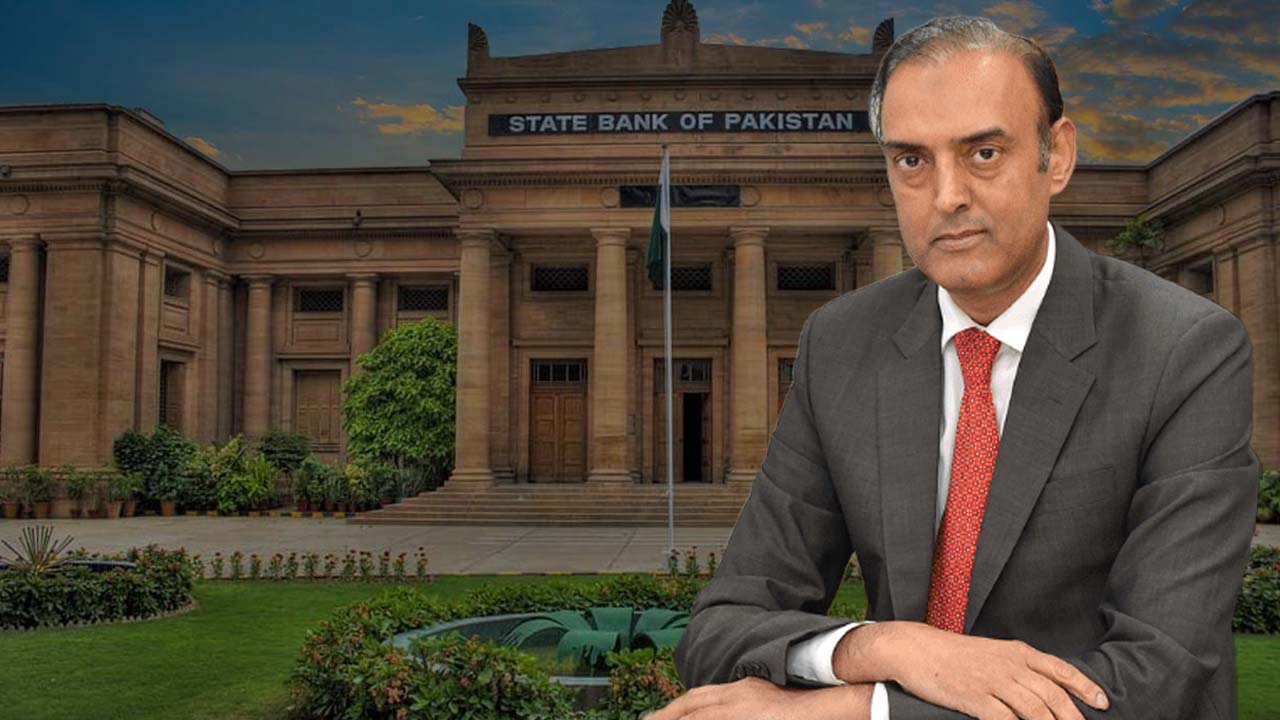
    State Bank of Pakistan (SBP) Governor Jameel Ahmad assured the public on Wednesday that friendly nations will roll over nearly $16 billion of the country’s outstanding debt for the fiscal year 2025.

    This crucial support is expected to provide the government with significant breathing room amid ongoing financial challenges.

    In his testimony before the National Assembly Standing Committee on Finance and Revenue, chaired by MNA Naveed Qamar, Ahmad revealed that Pakistan’s total debt obligations for FY25 amount to $26.2 billion. Following the planned rollovers, the remaining debt to be settled by June next year will be reduced to $10 billion.

    Ahmad also highlighted that the central bank has already repaid $1.5 billion in debt last month, leaving an outstanding amount of $8.5 billion for the rest of the fiscal year.

    Secretary of Finance Imdad Ullah Bosal added that Pakistan is set to receive its first tranche from the International Monetary Fund (IMF) following the rollover of approximately $4 billion in Chinese commercial loans. Additionally, $4.4 billion is expected from the Asian Development Bank and the World Bank.

    The SBP Governor further stated that there is no immediate pressure on external payments, which should contribute to the stability of the Pakistani rupee. He projected that foreign exchange reserves could reach $13 billion by the end of the fiscal year.

    With improved economic conditions, further reductions in the policy rate are anticipated. However, he warned that inflation might rise to 13.5 per cent this fiscal year due to budgetary policies and energy price fluctuations.

    In his presentation, Ahmad outlined a comprehensive five-year plan to the Finance Committee. The plan focuses on restoring price stability, managing the current account deficit, ensuring that foreign exchange reserves cover three months of import needs, and achieving greater financial stability and transparency.

    He noted that GDP growth has been constrained to 3.5 per cent over the past decade and emphasised the need to boost exports by 10 to 15 per cent. Ahmad also assured that there are no restrictions on imports, aiming to foster a more balanced economic growth.

  • Pakistan’s fiscal deficit falls to 6.8% of GDP in FY24

    Pakistan’s fiscal deficit falls to 6.8% of GDP in FY24

    In the fiscal year 2023-2024, Pakistan’s fiscal deficit decreased to 6.8 per cent of GDP, down from 7.7 per cent the previous year, according to data from the Finance Ministry.

    In nominal terms, however, the fiscal deficit expanded to Rs7.21 trillion, up from Rs6.52 trillion the year before. Despite this, the country achieved a primary surplus of Rs952.92 billion, equivalent to 0.9 per cent of GDP, in contrast to a primary deficit of Rs825.53 billion, or 1.0 per cent of GDP, in FY23.

    To address the fiscal deficit, the government secured Rs6.89 trillion through domestic borrowing and an additional Rs320.7 billion through external loans. This compares to the previous year when the entire deficit was covered by Rs7.2 trillion in domestic borrowing, and Rs679.85 billion in external loans were repaid.

    On the revenue side, the government collected Rs13.27 trillion (12.5 per cent of GDP) in FY24, up from Rs9.63 trillion (11.4 per cent of GDP) in FY23. Tax revenue constituted approximately Rs10.1 trillion (9.5 per cent of total revenue), while non-tax revenue amounted to Rs3.18 trillion.

    Government expenditure totalled Rs20.48 trillion (19.3 per cent of GDP) in FY24, an increase from Rs16.15 trillion (19.1 per cent of GDP) the previous year.

    Nearly 90.7 per cent of this expenditure, or Rs18.57 trillion, was allocated to current expenditures, which included mark-up payments (Rs8.16 trillion), defence (Rs1.86 trillion), and pensions (Rs807.8 billion).

  • JPMorgan warns of temporary PKR depreciation despite strong economic conditions

    JPMorgan warns of temporary PKR depreciation despite strong economic conditions

    Despite a robust Balance of Payments (BoP) position, Pakistan may experience a depreciation of the Pakistani rupee (PKR) in the near term due to the finalisation of outstanding dividend payments, according to a recent report from JPMorgan analysts.

    The report suggests that while the PKR is not perceived as overly expensive, analysts are anticipating more favourable foreign exchange (FX) entry points.

    They also noted that although the International Monetary Fund (IMF) has declared the removal of all FX restrictions, there could still be informal barriers affecting the repatriation of dividends.

    Should these informal restrictions be fully addressed at the commencement of the Extended Fund Facility (EFF), it might lead to a moderate increase in the USD/PKR exchange rate over the coming months. However, analysts expect any such increase to be short-lived due to positive BoP conditions.

    The current environment is seen as a promising opportunity for bullish trades in T-bills and bonds, especially with the anticipated large-scale interest rate cuts by the State Bank of Pakistan (SBP).

    Since the beginning of the year, the PKR’s Nominal Effective Exchange Rate (NEER) has strengthened, reflecting improvements in the BoP, such as higher export revenues, stable remittance flows, and a gradual return of financial inflows.

    Although some concerns persist over foreign currency restrictions that might have artificially dampened FX volatility, the IMF’s latest report from May confirms the removal of remaining FX controls as of late January. This has resulted in a stable PKR with no significant premium in the informal or parallel market.

    Moreover, the import bill has increased only gradually, indicating limited pent-up demand. While the Real Effective Exchange Rate (REER) shows signs of potential overvaluation, it remains far from historical extremes and is expected to adjust downwards as inflation moderates.

    Overall, JPMorgan believes that any negative FX adjustments are likely to be minor, provided there is no significant worsening of the current account balance.

  • SBP expected to lower interest rates on Monday as inflation stabilises

    SBP expected to lower interest rates on Monday as inflation stabilises

    The State Bank of Pakistan (SBP) is anticipated to reduce its key interest rate once more during its upcoming policy meeting on Monday.

    This will be the first meeting following the recent staff-level agreement with the International Monetary Fund (IMF) and the announcement of a new state budget, according to analysts.

    Earlier this month, Pakistan and the IMF reached an agreement on a 37-month loan programme. The deal has introduced stringent measures, including increased taxes on agricultural incomes and higher electricity prices, which have sparked concerns among lower and middle-income citizens already struggling with inflation and the potential for increased taxes.

    In June, the SBP lowered its key interest rate by 150 basis points, reducing it from a historic high of 22 per cent. This marked the central bank’s first rate cut in nearly four years, aimed at stimulating economic growth amid a significant decrease in retail inflation. Inflation had dropped to 12.6 per cent in June, down from 38 per cent in May 2023.

    Out of 14 analysts surveyed, only one predicted that the SBP would maintain the current rate of 20.5 per cent. The majority forecast a rate cut, with seven analysts expecting a reduction of 100 basis points, five anticipating a 150 basis points cut, and one predicting a 200 basis points decrease.

    Mustafa Pasha, Chief Investment Officer at Lakson Investments, noted that the anticipated inflationary surge following the budget has not occurred. The central bank had previously cautioned about potential inflationary pressures from the budget, citing insufficient progress on structural reforms to expand the tax base.

    To compensate, the government set a demanding tax revenue target of Rs13 trillion ($47 billion) for the current fiscal year, representing a nearly 40 per cent increase from the previous year, and aims to reduce the fiscal deficit to 5.9 per cent of GDP from 7.4 per cent in the previous year to secure essential IMF funding.

    Pasha added that the clarity on the IMF programme, currency market stability, and steady foreign inflows into domestic debt and equities provide “ample comfort to the SBP to continue easing the policy rate in July and beyond.”