Tag: pakistan economy

  • PM Shehbaz plans shutdown of loss-making govt institutions

    PM Shehbaz plans shutdown of loss-making govt institutions

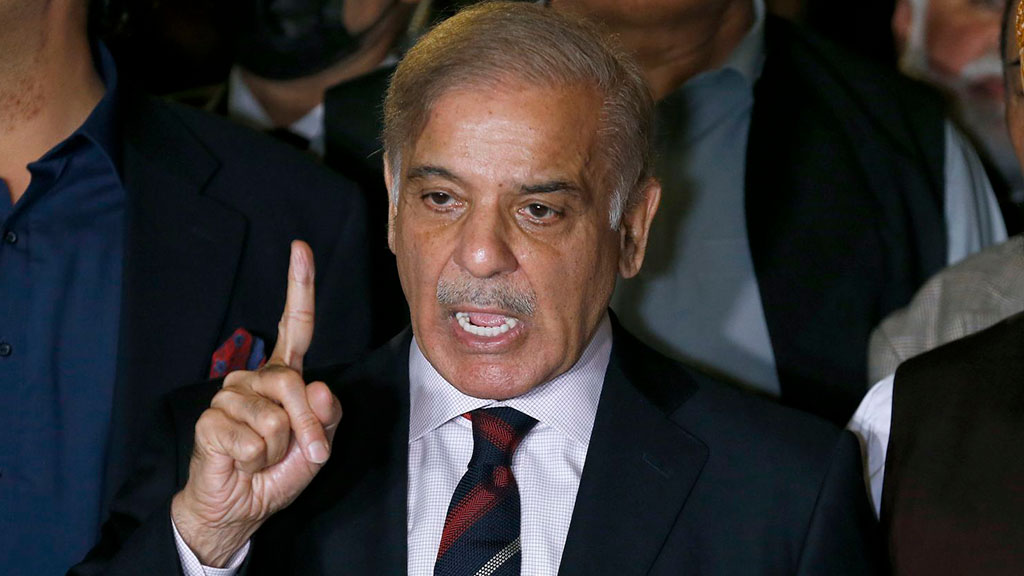
    Prime Minister (PM) Shehbaz Sharif announced on Saturday that government institutions causing substantial financial losses will face closure in the coming months.

    Addressing the nation, the Prime Minister cited the Pakistan Public Works Department as an example, labeling it a financial burden on the nation. “I have made the decision to shut down institutions that drain resources instead of contributing to our progress,” he stated, revealing the formation of a ministerial committee to oversee this process.

    “I will return to you with further updates in the coming months,” PM Shehbaz affirmed, emphasizing the significance of these measures in reducing expenditure and conserving funds.

    Highlighting recent diplomatic achievements, the Prime Minister referenced successful investment commitments secured during his visits to China and the Middle East. He began his address by addressing the situation in Palestine and the issue of Indian illegally occupied Jammu and Kashmir (IIOJK).

    Reflecting on the political landscape, PM Shehbaz discussed the performance of the Pakistan Democratic Movement (PDM) post the removal of former Prime Minister Imran Khan through a vote of no-confidence in 2022.

    Celebrating his government’s completion of 100 days in office, the Prime Minister underscored recent reductions in petrol and diesel prices announced on Friday. “We must foster an environment conducive to investment, business, and education for our talented youth,” he asserted.

    PM Shehbaz stressed the importance of cultivating domestic investment before seeking foreign investments, envisioning Pakistan’s self-reliance and advancement ahead of its neighbors.

    Regarding economic achievements, he pointed to the Pakistan Stock Exchange’s rise to 77,000 points as a testament to the positive reception of the government’s recently unveiled federal budget.

  • Imported mobile phones priced above Rs139,000 to become 25% more expensive

    Imported mobile phones priced above Rs139,000 to become 25% more expensive

    Prepare for a pinch in your pocket as the cost of imported mobile phones is set to rise in Pakistan.

    The Finance Bill 2024 has introduced a hefty 25 per cent sales tax on smartphone imports, along with IMEI registration, as part of the 2024-25 budget.

    This tax applies to phones valued above PKR 139,312 ($500), which includes most high-end and premium models.

    Popular flagships like the Samsung Galaxy S series and upcoming iPhones such as the iPhone 15 and iPhone 14 are among those affected. With their prices already soaring above Rs139,000, this tax increase will hit consumers hard.

    But there’s a twist: the 25 per cent tax only applies to fully assembled phones priced above $500. Phones in various stages of assembly, as well as locally manufactured ones, will still be taxed at 18 per cent, regardless of their value.

    For phones priced below $500, a flat 18 per cent tax rate will be applied, whether they’re fully assembled, partially assembled, or not assembled at all.

    This move is expected to boost government revenue by around Rs33 billion. So, brace yourselves for higher phone bills in the near future.

  • Economic Survey FY24: Pakistan sees economic progress with reduced deficit, stable rupee

    Economic Survey FY24: Pakistan sees economic progress with reduced deficit, stable rupee

    Federal Minister for Finance and Revenue, Senator Muhammad Aurangzeb, announced significant strides in Pakistan’s economic landscape despite numerous challenges.

    Addressing a press conference at the launch of the Economic Survey of Pakistan 2023-24, the minister highlighted a 30 per cent increase in revenue collection, a reduced current account deficit, lower inflation rates, and a stabilised currency.

    Senator Aurangzeb emphasised the remarkable economic turnaround from a previously precarious situation marked by a 0.2 per cent GDP contraction, a 29 per cent rupee depreciation, and dwindling foreign exchange reserves that had dropped to merely two weeks’ worth of import cover.

    He acknowledged the difficulties faced by the large-scale manufacturing sector, primarily due to high-interest rates and energy issues, but noted that the agriculture sector had provided a much-needed boost with bumper crops.

    “The agriculture, dairy, and livestock sectors are poised to remain key drivers of growth in the coming years,” Aurangzeb stated.

    Reflecting on the economic journey of the current fiscal year, Aurangzeb credited Prime Minister Shehbaz Sharif’s leadership and the pivotal decision to engage with the International Monetary Fund (IMF). The signing of a nine-month Standby Agreement with the IMF, he said, was crucial for the country’s progress and economic stability.

    “The decision to approach the IMF has been fruitful, restoring confidence in Pakistan’s economy,” Aurangzeb noted. He underscored the successful conclusion of the IMF’s Stand-By Arrangement (SBA) as evidence of Pakistan’s commitment to economic discipline, which had been acknowledged by the IMF.

    Looking ahead, Aurangzeb mentioned ongoing productive and constructive dialogues with the IMF, focusing on Pakistan’s reform agenda. “This is Pakistan’s program, supported and funded by the IMF,” he said, detailing areas such as tax revenue enhancement, energy sector improvements, power sector reforms, and the privatisation of state-owned enterprises.

    The minister highlighted the dramatic reduction in the Current Account Deficit (CAD) from an estimated $6 billion to just $200 million. He also noted that Pakistan had experienced a current account surplus for three consecutive months, with remittances reaching $3.2 billion in May.

    He attributed the currency’s stabilisation and the decrease in inflation to a series of administrative measures by the caretaker government, including crackdowns on illegal financial activities like Hundi-Hawala, smuggling, and regulating transit trade to Afghanistan.

    Additionally, interventions by the State Bank of Pakistan had curbed market speculation, further contributing to the currency’s stability.

    Senator Aurangzeb concluded on an optimistic note, expressing confidence in the ongoing positive dialogue with the IMF and reaffirming the government’s commitment to achieving Pakistan’s economic goals.

  • Pakistan’s Business Confidence Index increases in May 2024

    Pakistan’s Business Confidence Index increases in May 2024

    The overall Business Confidence Index (BCI) in Pakistan rose to 54.6 in May 2024, according to the 48th wave of the Business Confidence Survey conducted by the State Bank of Pakistan (SBP) and the Institute of Business Administration (IBA).

    This increase was driven by improvements in both the Industry and Services sectors, with the Industry BCI rising by 2.2 points to 52.1 and the Services BCI by 0.7 points to 55.4.

    The headline index, “Overall Business Confidence,” consists of the Current Business Confidence Index (CBCI) and the Expected Business Confidence Index (EBCI). The CBCI, reflecting economic conditions over the past six months, increased by 1.1 points to 51.2 in May 2024.

    Specifically, the Industry CBCI climbed by 2.8 points to 48.3, while the Services CBCI edged up by 0.5 points to 52.1, indicating more positive and neutral views and fewer negative perceptions.

    Looking ahead, the EBCI saw a 1.1-point increase to 58, driven by rises in both sectors. The Industry EBCI grew by 1.6 points to 55.9, and the Services EBCI by 0.9 points to 58.7, with a corresponding shift towards more positive and neutral expectations.

    However, the Purchasing Managers Index (PMI) fell by 0.6 points to 49.3, continuing to stay below the positive zone last seen in June 2022. Four of the five PMI components decreased: total orders by 1.5 points, business activities by 1.0 point, supplier delivery times by 0.6 points, and employment by 0.3 points. Only the quantity of raw material purchases slightly improved by 0.1 points.

    On inflation, expectations significantly dropped by 10.1 points to 56.0, with the Industry and Services sectors both showing decreases of 10.2 and 9.8 points, respectively.

    Employment trends were mixed. The Current Employment Index rose by 1.1 points to 51.2, primarily due to a 1.6-point increase in the Services sector, despite a slight 0.3-point decrease in the Industry sector.

    Conversely, the Expected Employment Index fell by 0.8 points to 55.1, driven by a 1.0-point decline in the Services sector, while the Industry sector showed a marginal increase of 0.1 points.

    Additionally, the Average Current Capacity Utilization (ACCU) in the Manufacturing sector within the Industry sector increased by 4.1 per cent to 67.7 per cent in May 2024.

  • Gold price falls by Rs3,600 per tola to Rs239,400

    Gold price falls by Rs3,600 per tola to Rs239,400

    Gold prices in Pakistan witnessed a significant decrease on Saturday, with the rate of 24-karat gold falling by Rs3,600 per tola. According to the Karachi Sarafa Association, 24-karat gold was priced at Rs239,400 per tola.

    In tandem, the price of 24-karat gold per 10 grammes saw a reduction, now standing at Rs205,247, down by Rs3,086. The decline extended to 22-karat gold, which is now quoted at Rs188,143 per 10 grammes.

    Silver prices also experienced a drop in the domestic market. The rate for 24-karat silver decreased by Rs50, bringing the price to Rs2,750 per tola. Similarly, the price for 24-karat silver per 10 grammes fell by Rs43, settling at Rs2,358.

    On the global stage, spot gold concluded the week at $2,293 per ounce, marking a 1.4 per cent decline over the week. The drop in international gold prices has contributed to the downward trend observed in the local market.

    This decrease in gold and silver prices is reflective of broader economic factors influencing precious metals globally, impacting local market conditions.

  • Govt’s debt rises to Rs5.53 trillion with recent Rs35.4 billion borrowing

    Govt’s debt rises to Rs5.53 trillion with recent Rs35.4 billion borrowing

    The government of Pakistan has secured an additional debt of Rs35.4 billion during the week ending on May 24, 2024, bringing the total net borrowing for the ongoing fiscal year 2024 to Rs5.53 trillion, according to the latest estimates from the central bank.

    Government borrowings this fiscal year have consistently outpaced those of previous years, indicating a persistent reliance on external financing. The borrowing is classified into three primary categories: budgetary support, commodity operations, and other purposes.

    For the week in question, net borrowing for budgetary support amounted to Rs24.52 billion, while loans for commodity operations totaled Rs13.07 billion. Conversely, a net amount of Rs2.19 billion was repaid under the “others” category.

    Cumulatively, for fiscal year 2024, borrowings for budgetary support have reached Rs5.68 trillion. In contrast, there has been a retirement of Rs149.47 billion in loans for commodity operations and Rs5.48 billion for other categories.

    The principal sources of financing for budgetary support are the State Bank of Pakistan and scheduled banks. This fiscal year, the government has repaid a net total of Rs1.07 trillion to the central bank. This repayment includes Rs598.84 billion by the Federal Government, Rs423.28 billion by the Provincial Government, Rs38.19 billion by the AJK Government, and Rs5.16 billion by the GB Government.

    On the other hand, scheduled banks have lent a net total of Rs6.75 trillion. The Federal Government borrowed Rs6.9 trillion from these banks, while the Provincial Government retired Rs151.49 billion.

    This pattern of borrowing underscores the government’s heavy dependence on domestic financial institutions to meet its budgetary needs amidst ongoing economic challenges.

  • FBR surpasses May revenue target with Rs760 billion collection

    FBR surpasses May revenue target with Rs760 billion collection

    The Federal Board of Revenue (FBR) has exceeded its revenue target for May in the fiscal year 2023-24 by collecting Rs760 billion in tax revenues, surpassing the target of Rs745 billion.

    This achievement, announced in a statement by the FBR today, signifies a remarkable 33 per cent growth compared to May 2023.

    In addition to the overall revenue increase, domestic taxes also experienced a significant 33 per cent growth during May.

    “The FBR is poised to achieve the assigned target for the final month of the current financial year, June 2024,” the statement added.

    This positive trend has contributed to an overall revenue growth of 31 per cent for the first eleven months of the current fiscal year, compared to the same period last year.

  • Tomato and onion price hikes push weekly inflation up

    Tomato and onion price hikes push weekly inflation up

    In a significant shift, weekly inflation in Pakistan has increased after seven weeks of consecutive declines.

    The Weekly Sensitive Price Indicator (SPI) for the Combined Group saw a 0.11 per cent week-on-week rise for the week ending May 30, 2024.

    This comes as a 21.4 per cent year-on-year increase compared to the same period last year, according to the Pakistan Bureau of Statistics (PBS).

    The Combined Index stood at 308.52, slightly up from 308.19 the previous week, and significantly higher than the 254.13 recorded a year ago.

    Out of the 51 items monitored, prices for 14 items (27.45 per cent) increased, 14 items (27.45 per cent) decreased, and 23 items (45.10 per cent) remained unchanged.

    Inflation drivers

    Notable price increases during the week were observed in tomatoes (11.25 per cent), onions (3.62 per cent), pulse mash (2.00 per cent), bananas (1.78 per cent), and potatoes (1.23 per cent).

    Conversely, significant price decreases were seen in eggs (6.14 per cent), chili powder (5.73 per cent), LPG (5.40 per cent), garlic (4.02 per cent), and rice IRRI (2.93 per cent).

    The SPI percentage change by income groups revealed increases across all segments, ranging from 0.08 per cent to 0.15 per cent. The lowest income group experienced a 0.09 per cent rise, while the highest income group saw a 0.08 per cent increase.

    On an annual basis, SPI changes showed increases between 14.68 per cent and 24.67 per cent across different income segments, with the lowest income group seeing a 14.68 per cent rise and the highest income group a 19.24 per cent increase.

    The average price of Sona urea was recorded at Rs4,796 per 50 kg bag, reflecting a 0.16 per cent decrease from the previous week but a 55.19 per cent increase from last year.

    Meanwhile, the average price of cement rose to Rs1,237 per 50 kg bag, up 0.30 per cent from the previous week and 9.80 per cent higher than the previous year.

  • UAE pledges $10 billion investment in Pakistan’s key economic sectors

    UAE pledges $10 billion investment in Pakistan’s key economic sectors

    The United Arab Emirates (UAE) has pledged $10 billion for investment in promising economic sectors in Pakistan.

    Pakistani Prime Minister Shehbaz Sharif met with UAE President Sheikh Mohamed bin Zayed Al Nahyan in Abu Dhabi today, according to a post by Pakistan Television (PTV) on X.

    The meeting focused on a wide range of bilateral issues, including cooperation in political, economic, social, cultural, and defence sectors.

    During the discussion, Prime Minister Sharif emphasised the need to enhance existing cooperation and strengthen the strategic partnership between the two nations. He highlighted key areas such as information technology, renewable energy, and tourism as potential fields for increased collaboration.

    Sharif also outlined steps his government has taken to ensure socio-economic stability and boost investor confidence in Pakistan.

    He reaffirmed Pakistan’s commitment to effectively implement investment cooperation agreements in sectors like energy, port operations, wastewater treatment, food security, logistics, minerals, and banking and financial services.

    Sheikh Mohamed bin Zayed Al Nahyan expressed the UAE’s unwavering support for Pakistan and confirmed the UAE’s commitment to investing $10 billion across various sectors in the country, as stated by PTV.

    The Prime Minister expressed his gratitude to the UAE leadership for hosting 1.8 million Pakistani expatriates and underscored Pakistan’s significant human resource potential that could be utilised in diverse sectors.

  • IMF team engages in talks with Pakistan for new $8 billion programme

    IMF team engages in talks with Pakistan for new $8 billion programme

    The International Monetary Fund (IMF) confirmed that it is in discussions with Pakistan regarding a 24th bailout programme under the Extended Fund Facility (EFF), signalling a significant development in the country’s ongoing economic negotiations.

    IMF Communication Director Julie Kozack, during a press briefing, refrained from commenting directly on the status of a staff-level agreement, suggesting that the talks are still in progress.

    She stated, “A mission team led by Nathan Porter is currently meeting with Pakistani authorities to discuss the next phase of our engagement.”

    Kozack elaborated on recent IMF activities in Pakistan, noting that on April 29th, the IMF Executive Board completed the second review of the stand-by arrangement for Pakistan, enabling a disbursement of approximately $1.1 billion.

    “The completion of this review reflects the authorities’ robust policy efforts during the stand-by arrangement, which contributed to stabilising the economy,” she explained.

    Addressing further queries, Kozack indicated that the mission is actively working on the ground and that their findings would be communicated upon the mission’s completion. 

    Pakistan is seeking a substantial $6 to $8 billion bailout package from the IMF over a three- to four-year period to address its financial difficulties.

    The IMF’s technical team arrived in Pakistan on May 10 to engage in discussions regarding the new loan programme and budget preparations.

    These talks come at a critical time for Pakistan, which is grappling with considerable economic challenges, including the failure of a tax amnesty scheme proposed by the IMF. The outcome of these negotiations will be pivotal in determining Pakistan’s economic stability and future financial policies.