Pakistan’s Nida Dar, more popularly known as Lady Lala, was picked in the ICC Women’s T20I team of the year.
The 32-year-old is the only Pakistani player in the 11-member squad led by Australia’s Meg Lanning. The maximum number of players have also been selected from Australia namely Alyssa Healy, Ellyse Perry and Megan Schutt.
Other members in the team include India’s Smriti Mandhana, Deepti Sharma and Radha Yadhav, South Africa’s Lizelle Lee and Shabnim Ismail. Dani Wyatt is the only England player in the team.
Nida Dar made her debut as a bowler in women’s twenty20 match against Sri Lanka in 2010. She took her first five-wicket haul in a match against Sri Lanka in women’s Twenty20 Asia Cup 2018. She was also named as the standout player in the team by the International Cricket Council for the 2018 ICC Women’s World Twenty20 tournament.
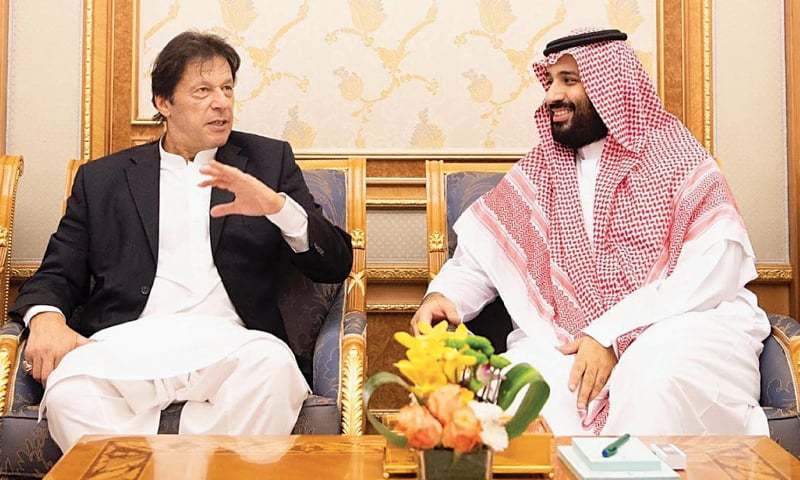
Prime Minister (PM) Imran Khan has cancelled his scheduled visit to Malaysia reportedly after succumbing to pressure from Saudi Arabia and Twitter is not happy about it.
According to reports, Foreign Minister (FM) Shah Mahmood Qureshi will represent Pakistan in the premier’s place at the Kuala Lumpur Summit scheduled for December 18-20, after a meeting between PM Imran with Saudi Crown Prince Mohammad Bin Salman in Riyadh, during which matters related to bilateral relations were discussed.
The Kingdom has reportedly raised serious concerns over the statement of Malaysian PM Mahathir Mohammad, who had recently said that the Muslim countries at Kuala Lumpur Summit would form a new platform to replace the Organisation of Islamic Cooperation (OIC) that he said had failed to deliver on issues faced by the Muslims across the world.
Here’s what politicians and journalists among other Twitterati have to say about PM’s Malaysia decision.
Nuclear power, largest standing, battle-hardened army in the Muslim world. And the Saudis tell us what we can and can't do? Wow.
Backing out from KL Summit: when Malaysia,Turkey, Iran supported Pakistan on Kashmir like a rock, while Modi is so discredited at home & abroad, is very damaging for Pakistan’s core interests on Kashmir + Pakistani Int’l credibility will be in tatters after this shocking U-turn! pic.twitter.com/390nwm4jyV
The only countries that stood by Pakistan on #Kashmir were Malaysia, Turkey and Iran and the Saudi’s get to tell us where our #PM should or shouldn’t go? #ImranKhan should have shown more spine and common sense than this. Who will stand with you the next time? https://t.co/ghG7EZnMrj
And many have termed the move “a failure of Pakistan’s foriegn policy”.
PM @ImranKhanPTI put himself in this awkward position on the foreign policy front by first committing to #KLSummit2019 without much thinking, and then buckling under Saudi pressure. https://t.co/x8Gmvsu795
Meanwhile, Special Assistant to Prime Minister (SAPM) on Information and Broadcasting Dr Firdous Ashiq Awan has said that after his Bahrain visit, the premier will travel to Geneva and return to Pakistan Thursday, following which a final decision regarding his Malaysia trip would be taken.
Prime Minister (PM) Imran Khan has cancelled his scheduled visit to Malaysia following his meeting with Saudi Arabia’s Crown Prince Mohammad Bin Salman in Riyadh, The News reported.
According to reports, Foreign Minister Shah Mahmood Qureshi will be representing Pakistan in the premier’s place at the Kuala Lumpur Summit scheduled for December 18-20, which will also be attended by notable Muslim leaders, including Qatari Emir Sheikh Tamim Hamad Al Thani, Turkish President Recep Tayyip Erdogan and Iranian President Hassan Rouhani.
“Saudi Arabia raised serious concerns over the statement of Malaysian PM Mahathir Mohammad who had recently said that the Muslim countries at Kuala Lumpur Summit would form a new platform to replace the Organisation of Islamic Cooperation (OIC) which he said had failed to deliver on issues faced by the Muslims across the world,” the report quoted sources as saying.
Saudi Arabia and its allies, including the United Arab Emirates (UAE), Kuwait and Bahrain are perturbed over the expected presence of Qatari emir, Turkish president and Iranian president at the summit and fear a new but parallel leadership forum is being developed to undermine Saudi Arabia and its allies, it said.
The report further claimed that the UAE has also raised its concerns over Mahathir’s statement and has requested Pakistan to avoid the Kuala Lumpur Summit that “may trigger a new controversy among the Muslim Ummah”.
“PM Imran was also conveyed concerns by Bahrain’s King Hamad Bin Isa Al-Khalifa over the intentions of the Kuala Lumpur Summit. The premier assured the royals of Saudi Arabia and Bahrain that he would not be a partof any scheme being planned to undermine the Gulf leadership,” sources were quoted as saying.
They said that UAE’s Emir Sheikh Mohammed Bin Zayed Al Nahyan had raised his concerns with Chief of Army Staff (COAS) General Qamar Javed Bajwa three days ago on December 14 as well.
Meanwhile, Special Assistant to Prime Minister (SAPM) on Information and Broadcasting Dr Firdous Ashiq Awan has said decision about Imran Khan’s visit to Malaysia to attend the Kuala Lumpur Summit will be taken according to national interest.
She noted that after his Bahrain visit, the premier will travel to Geneva and return to Pakistan Wednesday, following which a final decision regarding his Malaysia trip would be taken.
Every year dengue fever comes and makes us all worried even though the government is trying to control the deadly virus with initiative like fumigation, surveys to check larvae, public awareness campaigns on television and radio etc. However, the mosquito-borne disease is far from being under control.
But what Singapore has done to fight against dengue is surprising as well as interesting.
Instead of killing mosquitoes, Singapore has set up mosquito factories which produces a new type of mosquito. What happens is when this ‘new kind’ of mosquito goes out and ‘falls in love’ with other mosquitoes, the outside world mosquito will no longer be able to reproduce which means that the mosquito population decreases.
And what’s even more interesting is that this new mosquito does not bite.
It was a cold December morning when Pakistan had woken up to the gloom of having lost Dhaka over four decades ago.
Leaving their abodes, hundreds of thousands – if not millions – had taken to social networks to vent their frustration over the tragedy that until December 16, 2014, was deemed the darkest in the 70-something years history of the country.
Little did they know that 150 coffins, 134 of which were to be the heaviest, were to be lifted later that day; that a tragedy much similar to 2004’s Beslan massacre in Russia, was in the offing.
Six gunmen affiliated with Tehrike Taliban Pakistan (TTP) conducted a terrorist attack on Army Public School (APS) Peshawar at around 10 am. The militants, all of whom were foreign nationals, entered the school and opened fire on staff and children, killing 150, including 134 between the ages of eight and 18.
The attack sparked widespread reactions from across the country, as condemnations from the public, government, political and religious entities, journalists and celebrities, poured in. Imran Khan’s infamous 126-day Islamabad sit-in as a member of the opposition was also called off.
While media reacted strongly to the events as major newspapers, news channels and many commentators called for a renewed and strong action against militants, many countries, international organisations and important personalities also condemned the attack.
Reacting to the carnage at the army-run school, terrorist organisation Al-Qaeda said that “soldiers should be targeted, not their children”.
Today marks five years since wails of the nation broke through the deafening silence of December amid the state’s failure to protect its own; since those at odds vowed to rise above their differences to unite and fight extremism, and since the moment when we started forgetting yet another tragedy.
Although it is believed that memories hanging heaviest are the easiest to recall, it is regrettable how we tend to forget even the ones that hold in their crinkles the ability to change not only our lives as individuals but also the fate of the entire nation.
It is regrettable how we have limited our recalling of these painful memories to certain days such as December 16, without thinking of the families that go through the pain of losing their loved ones, especially minors, all day every day.
Make no mistake as what we argue is not torturing ourselves with the misery that is our own creation, but what we advocate for is realising every day what led to the tragic episode that should’ve defined us for the generations to come.
Because it is regrettable how we were let down, it is regrettable how we let down those 150 innocents, regrettable how we let down millions of others killed because of the failure of the state to protect its citizens, and regrettable how many of us fail to realise there still is time for us to pick ourselves up, dust ourselves off and get back in the saddle.
Here’s to the courageous survivours who beat the cowards five years ago… here’s to the memory of the 150 souls, from the ashes of whom, we must rise.
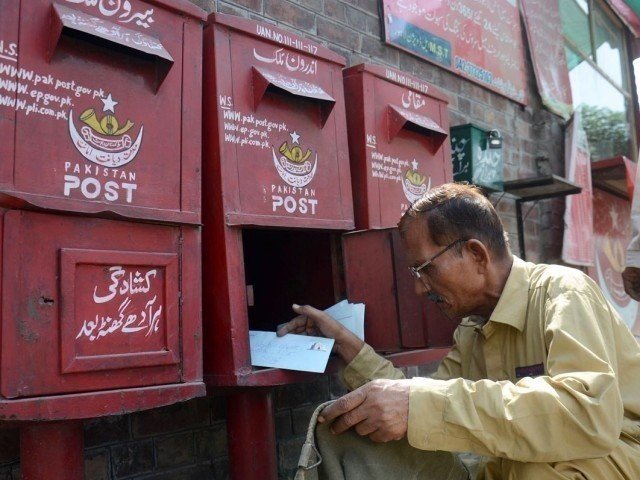
The Pakistan Post has suffered a loss of Rs61 billion in the last 10 years.
According to reports, the Ministry of Postal Services, while presenting statistics regarding organisation’s performance, told the Senate Standing Committee that the institute faced a loss of Rs140 million in year 2008-2009 and this loss swelled to Rs10 billion in 2018-2019.
The ministry while explaining the causes of this huge loss
said that the increase in pay, allowances and pension benefits was a major
contributor to widening gap between expenditure and revenue.
They said that the Finance Division had decreased the rate
of post office commission in Savings Bank Scheme from 1.56% to 0.50% in
October, 2010 which reduced the receipts of the institute.
The panel’s chairman Senator Mian Ateeq observed that the situation of the postal service was no different from the Pakistan International Airlines (PIA) – the national flag carrier –facing huge losses since over a decade.
The chairman also suggested that the operating expenditure
against income must be added as well. While reviewing recruitment discrepancies
during previous regimes, the panel recommended that Pakistan Post must focus on
figures.
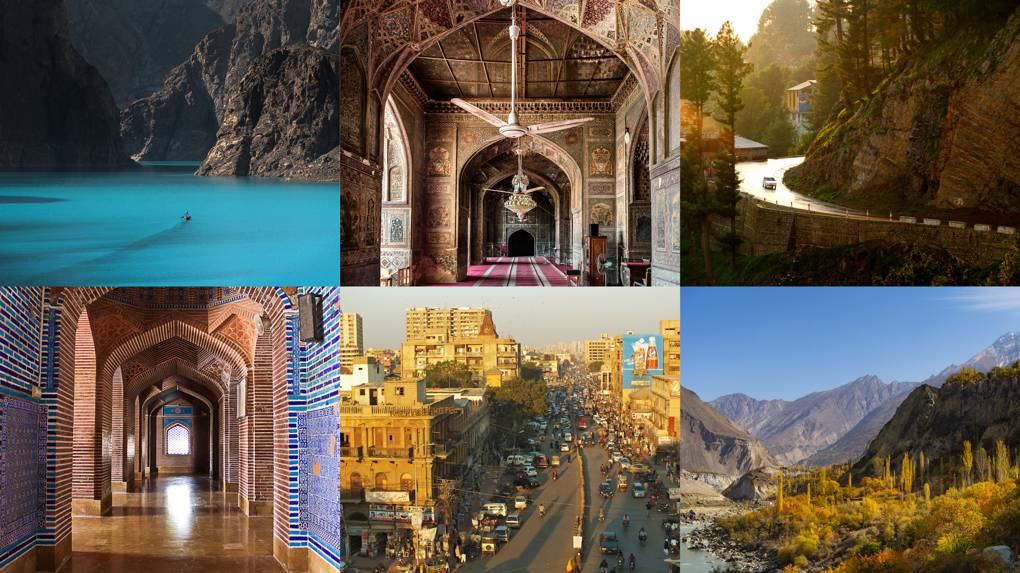
One of the world’s best travel portals, Traveller by Condè Nast, has rated Pakistan as the number one holiday destination for 2020.
The list is compiled by CN Traveller’s “well-travelled editors for the places they’re most excited about – in this instance not just for the next 12 months, but heading into a new decade.”
According to the authors, Pakistan is “the adventure traveller’s must-visit” destination.
Writing about the country, the award-winning magazine said, “Thwarted by tales of terrorism and Taliban rule, Pakistan’s tourism industry has been stymied for the past two decades. But ancient valleys, relaxed visa restrictions and a high-profile royal visit in the offing mean this remarkable country is finally getting the focus it deserves.”
It further read, “Because this is a place of exquisite landscapes, where green spaces are overlooked by towering mountains. In fact, Pakistan has more peaks taller than 22,965ft than China and Nepal combined, making it an almost magnetic spot for adventure travellers and intrepid hikers.”
“Visitors can follow in Michael Palin’s steps while traversing the 12,250ft Shandur Pass, home to the world’s highest polo field, or meet with the Kalash people of the Hindu Kush, famed for their cowrie-shell headdresses and brighter-than-bright embroidery. In Lahore, the sight of 100,000 worshippers crammed into the sandstone 17th-century Badshahi Mosque will leave you breathless, while Mughal-era architectural masterpieces stand resplendent on bustling street corners.”
Founder and CEO of adventure-tour operator Wild Frontiers Jonny Bealby said that Pakistan’s improving tourism was because of “a focus on security measures and the election of Imran Khan, who has vowed to increase international tourist numbers.”
Meanwhile, the royal visit of the Duke and Duchess of Cambridge has also boosted Pakistan’s image as a popular tourist destination.
It is pertinent to mention here that the PTI government is making strong efforts to boost tourism in the country that will not only spread the soft image of Pakistan but also it will also bring the revenue into the country – the opening of the Kartarpur Corridor is proof of that.
Other destinations that featured on the list include Kyoto (Japan), Rijeka (Croatia), Panam, Rabat (Morocco) British Virgin Islands, Frisian Islands, Denmark, Qingdao (China), Lebanon, Portland (Maine, US), Dakar (Senegal), Egadi Islands (Sicily), Paris (France), Siargao (Philippines), Galway (Ireland), Kangaroo Island (Australia), Salvador (Brazil), Armenia (Kyrgyzstan) and Plymouth (UK).
Previously, UK publication The Independent also wrote that travel experts are recommending Pakistan as a must-visit destination for 2020.
“The Duke and Duchess of Cambridge’s visit to Pakistan this autumn put the country back into the spotlight. Plus, it’s now easier to get there from London, thanks to new direct British Airways flights to Pakistan’s capital Islamabad,” read The Independent’s article.
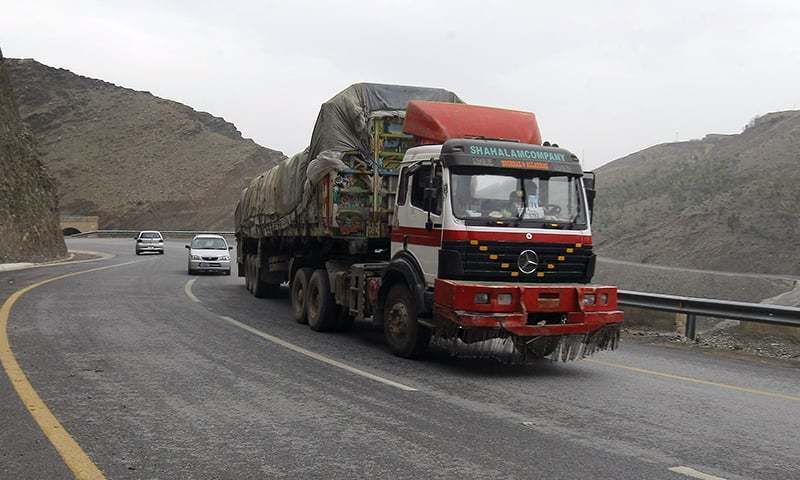
The World Bank has allocated a loan of $406.6 million to Pakistan for the development of the Khyber Pass Economic Corridor (KPEC) Project.
As per reports, Minister for Economic Affairs Hammad Azhar supervised the signing ceremony of the KPEC at the division.
According to the Economic Affairs Division, the project will construct a 48 km long 4-Lane, dual high-speed carriageway from Peshawar to Torkham. This project will boost economic development and improve areas adjoining expressway falling in Khyber Pakhtunkhwa province.
The government is also planning to develop special economic zones around the corridor.
The Khyber Pass has long been one of the most important trade routes and strategic military locations. Settled in the mountains, Khyber Pass divides Pakistan and Afghanistan forming the bridge between Central and South Asia.
Prime Minister (PM) Imran Khan will visit Saudi Arabia on Saturday after recent signals from Riyadh indicate that the kingdom’s leaders were not happy with Imran’s decision to attend Kuala Lumpur summit scheduled to be held in Malaysia later this month, Dawn reported.
According to the details, PM Imran will reportedly reassure Saudi leadership that ties between Pakistan and Saudi Arabia remain firm despite Islamabad’s engagement with other Muslim countries.
The reports further reveal that Saudis are seeing the summit an an attempt by Malaysia to present an alternative to the Jeddah-based Organisation of Islamic Cooperation (OIC) as the progressively dysfunctional OIC works under the de-facto leadership of the Saudis.
Other leaders which are participating in the summit include Turkish President Recep Tayyip Erdogan, Qatari Emir Sheikh Tamim bin Hamad al-Thani, Iranian President Hasan Rouhani among others.
Pakistan has expressed its keenness to attend the summit as the Foreign Office (FO) in its recent statement has said, “The KL summit would provide Pakistan with an opportunity to exchange views and find solutions to challenges facing the Muslim world, particularly the governance, development, terrorism and Islamophobia”.
“The summit will also provide us an opportunity to foster cooperation in diverse areas with the participating countries”, the statement added.
Meanwhile, FO spokesman Dr Mohammad Faisal while responding to questions about PM Imran’s sudden visit to Saudi Arabia has said, “High-level political exchanges between the two countries are the hallmark of this brotherly bilateral relationship. You have witnessed the high frequency of leadership level exchanges, especially since last August”.
Dr Faisal further said, “The PM has undertaken at least three visits to KSA since May this year. Any further information about any future visit will be shared accordingly.”
The Federal Assembly of Switzerland has approved granting Pakistan the access to its financial data, starting from 2021, The News has reported.
As per the details, the Swiss parliament has approved a new batch of 18 countries for automatic exchange of financial information (AEOI), which would allow Pakistani authorities to learn how much money Pakistanis have in Switzerland.
This means that Switzerland will provide details of bank accounts held by their citizens (or those with a fiscal residence in Switzerland). Meanwhile, in return, Switzerland will receive information on banking details of accounts held by Swiss citizens/residents in these partner countries.
The 18 countries include Albania, Azerbaijan, Brunei, Dominica, Ghana, Kazakhstan, Lebanon, Macau, Maldives, Nigeria, Niue, Oman, Pakistan, Peru, Samoa, Saint Martin,Trinidad and Tobago and Vanuatu.
Turkey was also up for consideration, but the Senate decided it was not yet ready for automatic exchange. The country’s recent incursion into Syria created doubts on its ability to guarantee data protection.
Currently Switzerland receives financial data from 75 countries and shares data with 63 countries. This is because they did not either meet data security and confidentiality requirements (Belize, Bulgaria, Costa Rica, Curaçao, Montserrat, Romania, Saint Vincent and the Grenadines, Cyprus) or chose not to receive Swiss data (Bermuda, British Virgin Islands, Cayman Islands, Turks and Caicos Islands).
Recently the Swiss authorities revealed that they had provided details of around 3.1 million bank accounts held by foreigners (or those with a fiscal residence abroad) to their countries of origin or residence. In return, it received information on banking details of around 2.4 million accounts held by Swiss citizens/residents in 75 partner countries.