Tag: PTI

  • PTI leads in Cantonment Board polls, PML-N in second place

    PTI leads in Cantonment Board polls, PML-N in second place

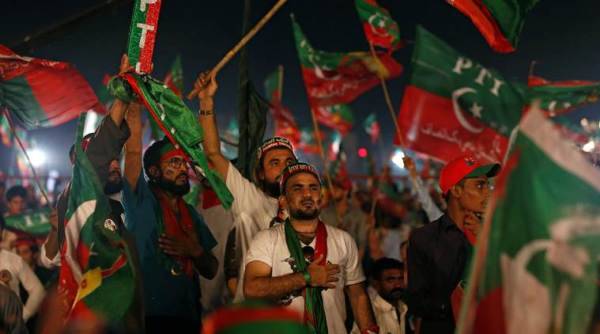
    Pakistan Tehreek-e-Insaf (PTI) emerged as the biggest winner in the Cantonment Board elections held across Pakistan on Sunday, reports Radio Pakistan.

    According to the unofficial results, PTI got 58 seats, while the Pakistan Muslim League-Nawaz (PML-N) scored 51. Independent candidates claimed 49 seats.

    Pakistan People’s Party (PPP) has managed to win 14 seats and Muttahida Qaumi Movement (MQM) got 10 seats. Jamaat-e-Islami (JI) won five seats while Balochistan Awami Party (BNP) got two seats.

    Minister for Information and Broadcasting Fawad Chaudhry in a tweet said the Cantonment Board election results show that the Opposition has left with no standing following a crushing defeat.

    Reacting to the ruling party’s victory, federal Minister for Planning, Development and Special Initiatives Asad Umar said: “Cantonment elections once again show the PTI not only as the largest party but also the only national party.”

    PML-N President Shehbaz Sharif called party leaders and congratulated them on their success in the cantonment polls.

    Province wise results:

    PTI won the most number of seats in Khyber Pakhtunkhwa (KP) — 18 — followed by 28 in Punjab, 14 in Sindh, and three in Balochistan.

    PML-N won big in Punjab, bagging 51 seats, managing only five in KP, three in Sindh, and none in Balochistan. In Lahore, the PML-N bagged 15 of 19 wards.

    PPP was surprisingly unable to defeat PTI in Sindh, instead of tying with them for 14 seats. The remaining three seats were won in KP, meaning none were won in either Punjab or Balochistan.

    Independent candidates scored big in Punjab, bagging 32 seats. They secured nine in KP, seven in Sindh, and four in Balochistan.

    MQM won all of its 10 seats in Sindh, whereas JI won five in Sindh and two in Punjab.

    ANP won two seats in KP, whereas BAP won two in Balochistan.

  • ‘More than half of Pakistanis dissatisfied with govt’s performance on all issues,’ survey reveals

    A survey conducted by lpsos has revealed that “More than half of Pakistanis are dissatisfied with federal government’s performance on all issues.”

    Key results of the survey:

    1 in 2 Pakistanis seem unhappy with the federal government’s performance on dealing with COVID-19; males, top elite, Sindh and Balochistan are even more dissatisfied

    Only 1 in 4 Pakistanis consider the PTI regime to have succeeded in eradicating corruption in Pakistan

    Majority (62%) Pakistanis expressed dissatisfaction with the PTI government’s performance on controlling inflation:

    Majority (53%) Pakistanis are dissatisfied with PTI’s delivery on providing justice, dissatisfaction even higher in less educated Pakistanis.

    Only 1 in 5 Pakistanis think that the current government has been able to eradicate poverty. Same trend prevalent across all segments and provinces:

    The sample size of the survey was 1020, and “random CATI interviews (Computer-assisted telephone interviewing )” were conducted between August 26 to September 2, 2021. The survey was named, “PTI’s three years in Federal Government.

  • 48 per cent Pakistanis happy with PTI’s performance

    48 per cent Pakistanis happy with PTI’s performance

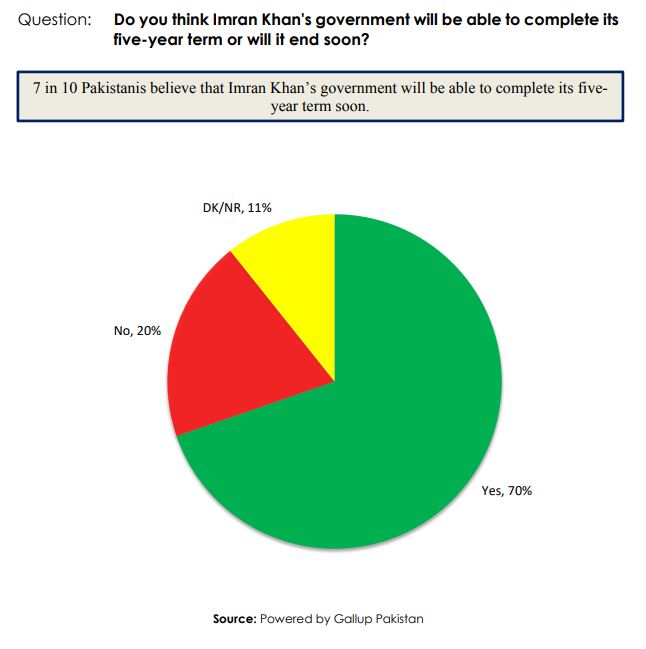
    Seven in 10 Pakistanis believe that the Pakistan Tehreek-e-Insaf (PTI) will complete its five-year term, according to a survey.

    A survey, ‘Gallup Pakistan’ was conducted with over 1200 respondents across urban and rural areas, covering over 100 districts in the country. The sample comprised a cross-section of age and socio-economic classes.

    The survey conducted was based to evaluate the performance of the PTI government.

    Performance of PTI:

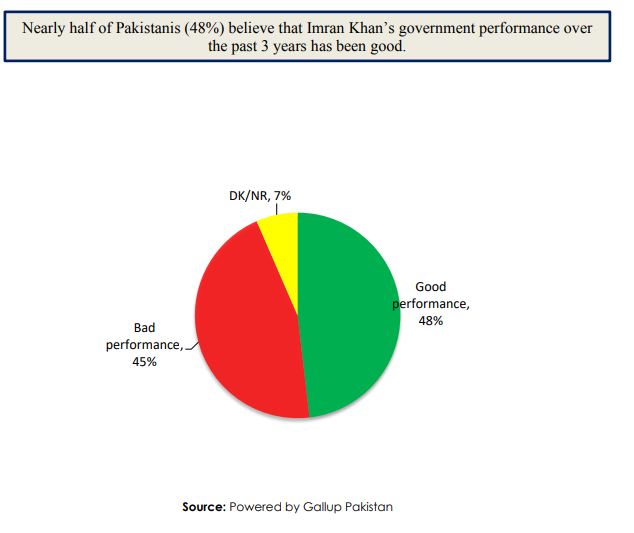
    Public opinion is split on the issue of performance of the PTI government with slightly more than 48 per cent saying performance is good over the past three years. A sizeable 45 percent believe the performance has been bad.

    In the largest province of Punjab, a majority are unhappy and say that Imran Khan’s government’s performance isn’t good. Highest support in Balochistan at 74 per cent rating positively and KP where 62 per cent rated Imran Khan’s performance positively.

    Who is better Imran Khan vs Nawaz Sharif:

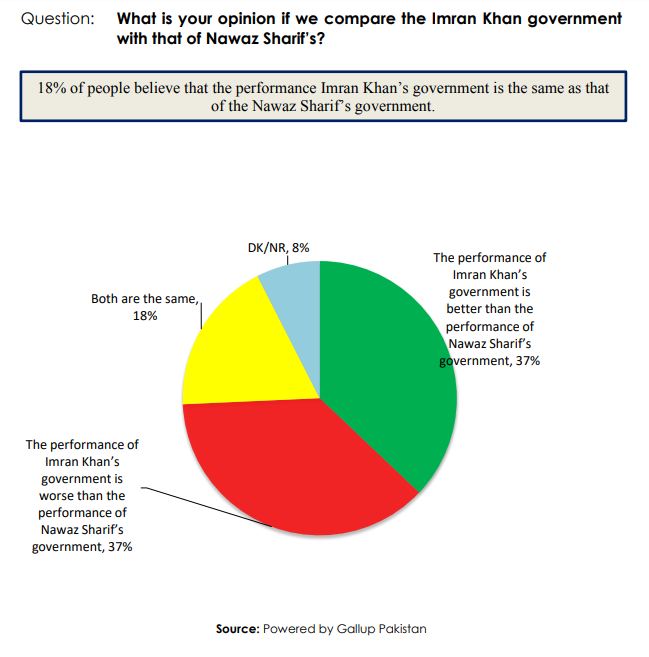
    When the survey crafted a comparison between Khan’s Rule vs Pakistan Muslim League-Nawaz (PML-N) leader Nawaz Sharif rule?

    Public Opinion split equally with 37 per cent each saying Imran Khan rule is better and 37 per cent saying Nawaz Sharif rule was better. 18 per cent of people believe that the performance of PM Khan’s government is the same as that of Nawaz’s.

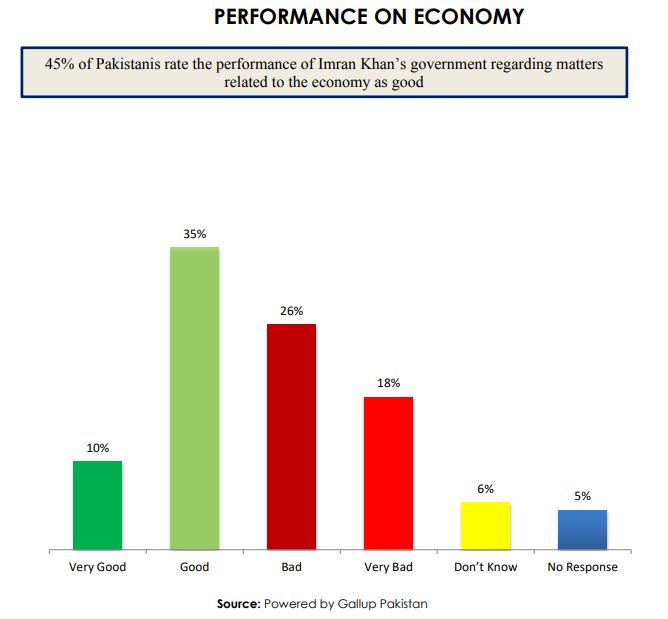
    Economy:

    When it came to the economy, 45 per cent said they were satisfied with where it stands, whereas 44 per cent expressed dissatisfaction.

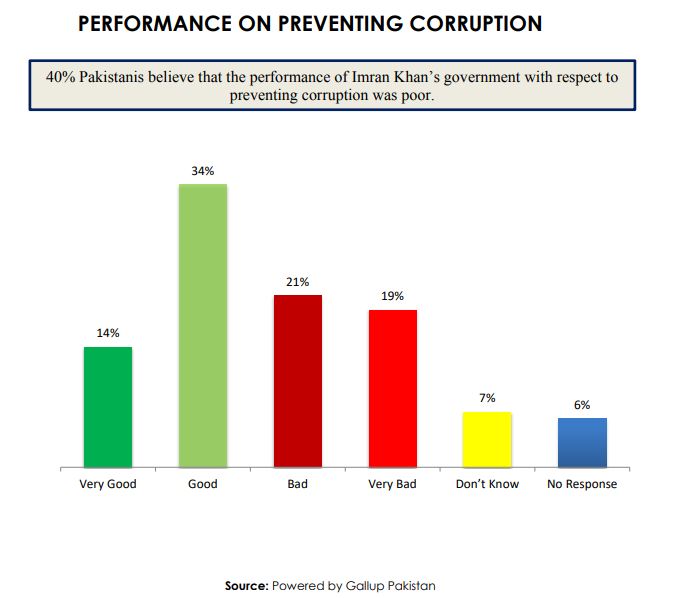
    Prevention of corruption:

    In efforts to prevent corruption, 48 per cent were of the view that the government has been successful, whereas 40 per cent were of the view it has failed.

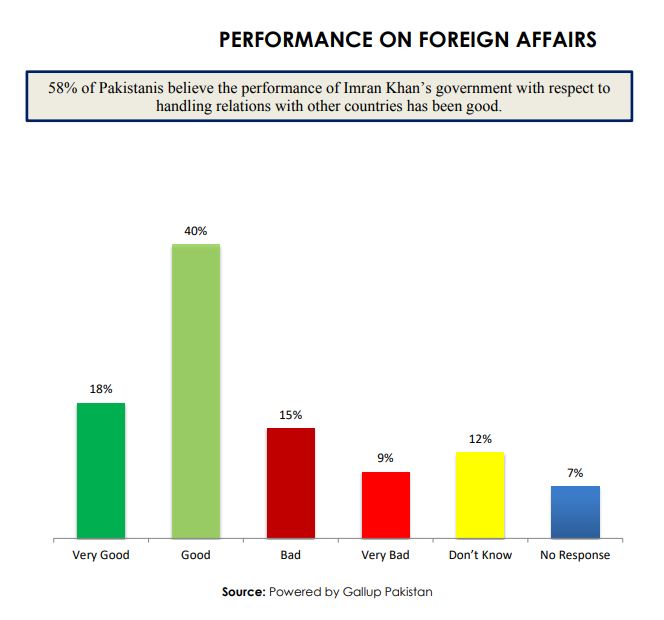
    Performance on Foreign Affairs:

    A majority of Pakistanis, 58 per cent, have also indicated they are satisfied with the government’s foreign policy efforts. Of these, 18 per cent said the performance has been “very good”, while 40 per cent said it has been “good”.

  • Fayyaz Chohan compares PTI to Trump regime for repeated changes in Punjab govt

    Fayyaz Chohan compares PTI to Trump regime for repeated changes in Punjab govt

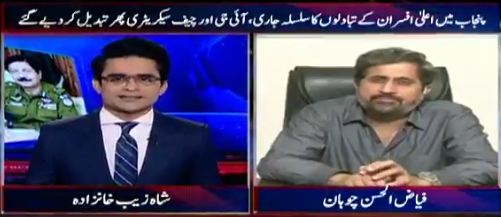
    Spokesperson Punjab Government, Fayyaz-ul-Hassan Chohan, made a comparison between the Pakistan Tehreek-e-Insaf (PTI) with the regime of former United States (US) President Donald Trump.

    “Donald Trump’s administration’s 38 positions were changed around three to six times during his five years in power,” said Chohan while speaking on Geo News programme ‘Aaj Shahzeb Khanzada Kay Sath’.

    Chohan was questioned about the continuous changes in the bureaucracy and police in Punjab.

    “No one from the world except for PTI would have made a comparison with Trump’s regime,” said anchorperson Shahzeb Khanzada.

    Adding to his response, Khanzada said, “Changes in administration should be based on performance. Trump’s regime was blamed that the repetitive changes in his administration were mostly because of his partiality, political disliking, and preferences. PTI too is being blamed for the same reason.”

    In 2018, IG Kaleem Imam was changed over the dispute with Divisional Police Officer (DPO) Pakpatan. Muhammad Tahir was changed because he refused to abide by the instruction on the Model Town case. Amjad Javed Saleemi was changed because he was not cooperating with National Accountability Bureau (NAB) during the leader of the Opposition in the Punjab Assembly, Hamza Shehbaz’s arrest.

    “All the people who have been removed from their positions have been because of personal preferences,” commented Khanzada.

    “If people are being changed for better results, it is fine,” added Fayyaz Chohan.

    “These changes are better than Ahad Cheema, Fawad Hassan Fawad or Dr Syed Tauqir Hussain Shah, who were involved in money laundering, murders and doing things on behalf of the chief minister (CM),” said Chohan.

    “None of the claims against these people were proved by the government. So my question is: what is the criteria to check the performance?” asked Khanzada.

    “I don’t think administrative changes have anything to do with or in any way has an effect on the performance of the government,” said Fayyaz Chohan.

    Yesterday, the federal cabinet approved the appointment of Kamran Ali Afzal as the Punjab chief secretary and Sardar Ali Khan as Punjab inspector general of police (IGP) with immediate effect.

    Afzal is the fifth Punjab chief secretary while Khan is the seventh IGP during the three years of PTI’s government.

    CM Usman Buzdar had reportedly recommended the names.

  • PTI reacts to report on false claims of ministers and govt officials

    PTI reacts to report on false claims of ministers and govt officials

    Journalist Benazir Shah’s exclusive report featured on Geo News highlighted the misleading claims of Pakistan Tehreek-e-Insaf’s (PTI) numerous ministers and government officials.

    Since the PTI came to power in 2018, its lawmakers and officials have made the most of ‘fake news’ and used it to discredit journalists, media organisations, and the party’s opponents.

    “The offending language is often used to distort the truth and to undermine journalism, which aims to keep the powerful in check. When in reality those handing out the label of ‘fake news’ have occasionally stumbled themselves, especially when communicating with the public. A large number of ministers and government officials from the ruling party have fallen for false and misleading claims. In some instances, clarifications are issued, but in others, no corrections have been made to date,” read the report.

    September 2021: Minister of State Ali Muhammad Khan claims that Quaid-e-Azam went to jail

    Claim: Minister of State, Ali Muhammad Khan while speaking on 92 News programme, ‘Hard Talk Pakistan with Moeed Pirzada’ said, “We made the country. In 1947, my grandfather, Muhammad Wakeel Khan, went jail with Quaid-e-Azam.”

    Truth: There is no claim to the fact that the founder of Pakistan was ever arrested.

    August 2021: The ministry of information released a report, which incorrectly flag pro-state tweets as ‘anti-state’

    Claim: A report was released by the Digital Media Wing (DMW) of the Ministry of Information and Broadcasting titled, ‘Anti-State Trends: Deep Analytics Report’. It was deeply misleading and based on assumptions instead of facts.

    “The purpose of this report was to ascertain factual data and to analyse social media trends that were anti-state, Data was collected after analysing Pakistan Twitter Panel from June 2019- August 2021. Those hashtags were marked for data collection where the content of tweets was planned and propagated through a network to spread anti-state trends,” General Manager of the Digital Media Wing (DMW), Imran Ghazali told The Current.

    Truth: The report seemed to declare all the users in the report as anti-state until one prominent journalist reached out to the government and they eventually added the disclaimer after the report was published.

    June 2020: Minister of State Zartaj Gul claimed that ‘Covid-19’ actually has 19-points, hence the name

    Claim: Minister of State for Climate Change, Zartaj Gul, while speaking on PTV said that Covid-19 actually has 19 points, which can be applied to any country to combat coronavirus.

    Truth: Covid-19 is actually a short form for Coronavirus disease.

    June 2020: Prime Minister Imran Khan misquotes Allama Iqbal 

    Claim: In a tweet, Prime Minister (PM) Imran Khan shared an image, which had poetry written on it along with Allama Iqbal’s picture, and wrote, “This poem by Iqbal reflects how I try to lead my life. I urge our youth to understand and absorb the poem of the great Iqbal and I guarantee them that it will release their great God-given potential that we all possess as His greatest creation Ashraf ul Mukhluqat.”

    Truth: PM Khan later tweeted, “I stand corrected – this is not Allama Iqbal’s poem but the message conveyed is what I have stood by and tried to follow.”

    May 2020: Minister Murad Saeed insists the governor of New York wants to follow Pakistan’s model of contact tracing

    Claim: Minister for Communication Murad Saeed, while addressing the National Assembly, said that the governor of New York wanted to follow Pakistan’s model of contact tracing after PM Khan gave the concept of smart lockdown.

    Truth: As per the report published on Geo, not a single briefing of the governor was found stating the claim made by the minister.

    September 2019: Minister of Human Rights Shireen Mazari shares incorrect video

    Claim: Minister of Human Rights Shireen Mazari shared an incorrect video on Twitter and wrote, “Indian occupation forces can’t even bare to see fruit trees live in IOJK – lest the Muslim Kashmiris eat the fruit. Such is the barbarism of the Rogue Modi Govt’s fascist hate-filled mindset. #Kashmir”

    Truth: The video shared was from Himachal Pradesh, 2018 when India, after a court order against illegal forest encroachment, ordered the trees to be chopped.

    May 2019: Minister Fawad Chaudhry claims that the Hubble telescope was sent into space by Suparco

    Claim: Fawad Chaudhry while speaking on Geo News programme, Naya Pakistan said that the Hubble telescope was sent into space by Suparco, the national space agency of Pakistan.

    Truth: Hubble was deployed by NASA.

    However, the ruling party reacted to the report.

  • Ushna, Zarnish and Amanat defend Abrar-ul-Haq for his remarks on young mothers

    Ushna, Zarnish and Amanat defend Abrar-ul-Haq for his remarks on young mothers

    Prominent celebrities have extended their support to Abrar-ul-Haq after Nadia Hussain bashed him for his recent statement on young mothers.

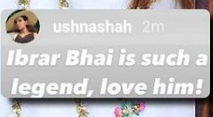
    Ushna Shah took to Instagram and said: “Abrar bhai is such a legend, love him!”

    While Zarnish said if someone says the right thing, it should be appreciated. She said that we should not judge someone’s personal life.

    The Tera Zikar singer, Amanat Ali also shared his opinion on the matter.

    Earlier this week, the singer-turned politician Abrar-ul-Haq criticised young mothers for giving gadgets to children and ignoring their nurturing while singing Baby Shark at a convention to mark Pakistan Tehreek-e-Insaf’s (PTI) three years performance.

    Model-turned actor Nadia Hussain called out the Nach Punjaban singer for his comments on modern day mothers.

  • Pakistan on UK Red List because of Nawaz Sharif, says PTI’s Ali Nawaz Awan

    Pakistan on UK Red List because of Nawaz Sharif, says PTI’s Ali Nawaz Awan

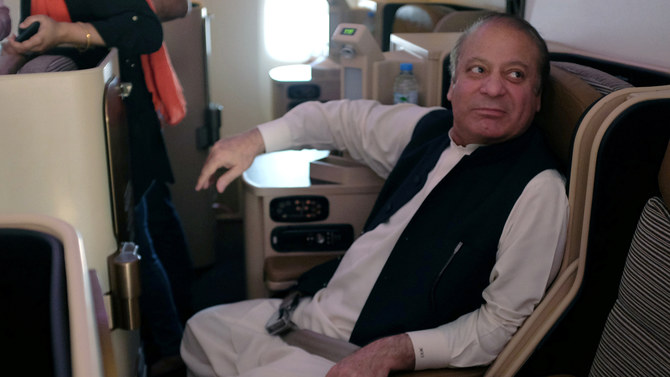
    Speaking to anchorperson Gharidah Farooqi on ‘G For Gharidah’, Prime Minister Imran Khan’s Special Assistant on Capital Development Authority (CDA), Ali Nawaz Awan, said: “Pakistan is on United Kingdom’s (UK) Red List because of Pakistan Muslim League-Nawaz’s (PML-N) leader Nawaz Sharif.”

    Awan said that despite providing all the data and information required by the UK, Pakistan suffered due to Nawaz.

    Awan said that the government was very hopeful that Pakistan would be taken to the amber list but then thrice elected former prime minister Nawaz Sharif attached his fake medical reports along with his extended stay application. Hence the UK decided that if a three-time prime minister can lie, they cannot trust Pakistan and have thus kept us on hold.

    Awan’s argument left the panel laughing. Anchorperson Gharida Farooqi asked Awan as to what connection did the former prime minister’s health have with Pakistan staying on the Red List.

    Awan stressed again that the UK is looking at the fake reports submitted by Nawaz Sharif.

  • PM Khan briefs nation on three years of Naya Pakistan

    PM Khan briefs nation on three years of Naya Pakistan

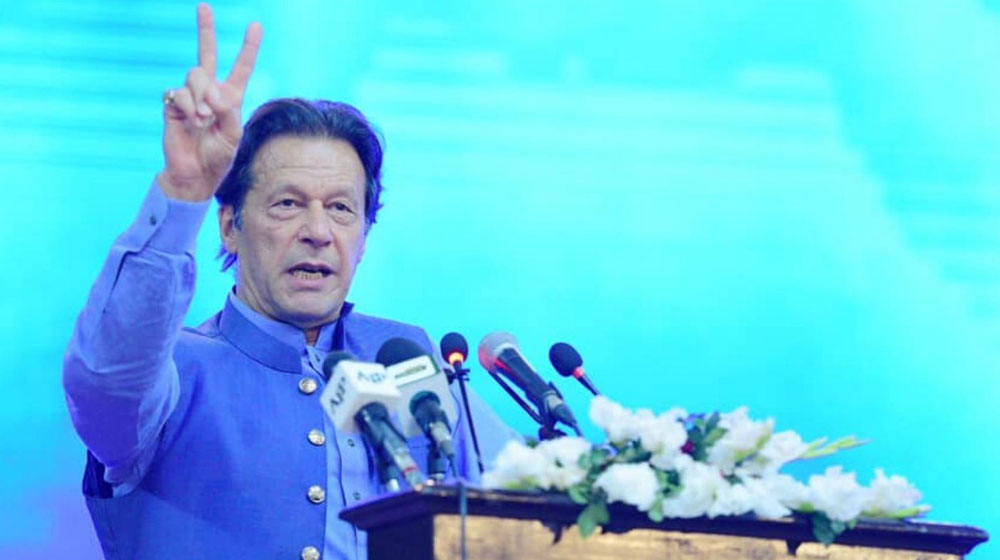
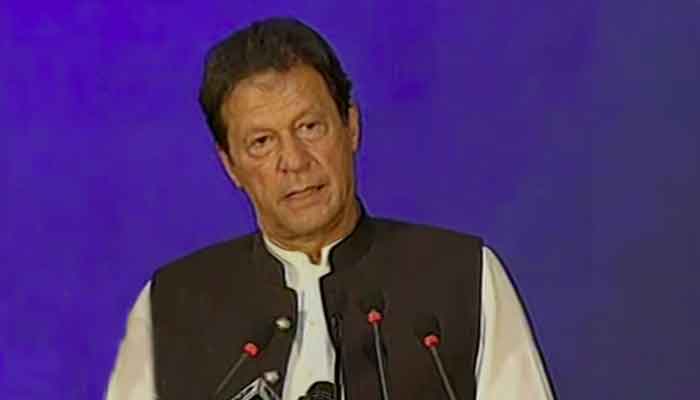
    Prime Minister Imran Khan on Thursday presented a charter of his party’s performance so far at the Jinnah Convention Centre in Islamabad.

    Talking about his career as a cricketer, PM Khan explained how his life as a sportsman, “where there are standing ovations one moment and curses the next”, prepared him for a life of struggles.

    “Until you go through struggles, you cannot do anything big,” the prime minister said. “No leader became big with a shortcut. Quaid-e-Azam was a big leader. He struggled in his life and people will always remember him [for that].”

    Mentioning Pakistan’s clash with India in the aftermath of the Pulwama incident, PM Khan thanked the army for effortlessly protecting the people of Pakistan.

    “I appreciate our army and air force. As they (Indian fighter jets) came into our territory and launched an offensive, we realised the [power] of our army,” said the premier.

    The premier blamed a “mafia” for defaming state institutions. “I also criticised the army in the past,” he said. “Judiciary and army also make mistakes but it doesn’t mean we should [expect] them to topple the democratic government.”

    “We know the Indian lobby is trying hard to defame Pakistan Army. They are implying that the Taliban won because of Pakistan Army.”

    “The NCOC (National Command and Operation Center) team comprising Asad Umar and Dr Faisal [Sultan] took great decisions and we survived the worst of Covid.”

    “In our tenure, Punjab’s anti-corruption has recovered Rs450bn so far,” he claimed. “NAB (National Accountability Bureau), in its 18 years before we came to power, had recovered Rs290bn and in the last three years, they recovered Rs519bn. All hue and cry are because of this reason.”

    The premier reminded his audience of the efforts made to “empower women” in rural areas and stressed the need to educate women, adding that “this is what we are trying to do”.

    “We are also working on inheritance laws to ensure women get their due share in the property,” he added.

  • PTI presents three years’ performance charter

    PTI presents three years’ performance charter

    Pakistan Tehreek-e-Insaf (PTI) released the party’s performance since it came into power three years ago. The party under its manifesto of ‘Justice, humanity, and selflessness’ claims to have served the people of Pakistan.

    Diplomacy:

    From prioritising economic diplomacy to highlighting Kashmir’s cause on all international forums, Pakistan witnessed an increase in its global and regional relevance in the past three years.

    PTI in its past three years has been countering Islamophobia. The party has been a long-term facilitator of the peace process in Afghanistan.

    The party claims to be aggressively active in exposing the Hindutva Agenda.

    Ehsaas programme:

    The Ehsaas programme has emerged as the largest social protection programme in history by benefiting almost half of the country’s population. ‘Ehsaas Emergency Cash’ has been declared as the third largest social protection programme in the world.

    The World Bank has listed the Ehsaas Emergency Cash programme among the top four social protection interventions globally in terms of the number of people covered. The programme distributed cash among 15 million underprivileged families after they suffered financially due to Covid-19 related lockdowns.

    Education:

    As per PTI’s claims, the government has done revolutionary initiatives for the education sector.

    A uniform education system has been introduced in the country under the Prime Minister’s auspices. The Single National Curriculum (SNC) has been approved and made functional in the country for students from Grade 1 through 5. One system of Education for all, in terms of curriculum, medium of instruction, and a common platform of assessment so that all children have fair and equal opportunities when it comes to receiving a high-quality education.

    Climate Change:

    In the climate change battle, Pakistan has emerged as an inspiration to the world over the course of the last three years. Pakistan has devised peculiar strategies to deal with environmental challenges.

    Under the supervision of the Ministry of Climate Change, the PTI government has been devoted to protecting the environment. From working on ‘Pakistan Clean Air Program’ to ‘Sustainable Forest Management’, PTI praised itself for the work it has done in this department.

    Pakistan launched a number of initiatives including a landmark “10-Billion Tree Tsunami” project that earned global acclaim.

    Reformation:

    Completing its three years in power, PTI claims to have done tremendous work for the restoration of green belts of ICT, Anti-Encroachment Drive, enhanced capacity of Panah Gahs, online token tax payment, and claim that they are some of the major achievements of the Interior Ministry.

    Digital Pakistan:

    Taking credit for the digital transformation of state media project, initiated by the Ministry of Information & Broadcasting, in view of the vision of Prime Minister Imran Khan for a Digital Pakistan, PTI states to have done landmark work towards the digitalisation and modernisation of state media.

    Electoral reforms:

    Electoral reforms, electronic voting, and the voting process for overseas Pakistanis have been major projects spearheaded by PTI. The party has successfully launched electronic voting to aid the process of having smooth and transparent elections.

    To promote transparency and prevent fraud in the elections, the government has developed a model of the electronic voting machine and submitted it for testing.

    The government states that it has done historic work to address the problems of overseas Pakistanis.

    Covid-19:

    Shining through its three years, PTI’s Ministry of Science and Technology helped manufacturing of agricultural and police drones, locally manufactured ventilators, PPAs, sanitisers, diagnostic kits, and biomedical equipment for Covid-19 protection.

    National Command and Operation Centre (NCOC) led by Federal Planning Minister Asad Umar did a commendable job combating the deadly virus. Covid-19 exposed the terrible state of the health sector but NCOC managed to prop up systems on a war-footing to cope with the emergency.

  • Three-year report card: PTI’s quest to achieve Naya Pakistan

    Three-year report card: PTI’s quest to achieve Naya Pakistan

    As Pakistan Tehreek-e-Insaf (PTI) goes into its third year of being in power, it becomes imperative to review its scorecard and what they have accomplished so far.

    Prime Minister Imran Khan was voted into power based upon the idea of building a ‘Naya Pakistan’. The voters were inspired by a movement that calls for a more equitable approach to governance, particularly one built around the principles of Riyasat-e-Madina.

    Prior to being elected, PTI promised to carry out extensive reforms pertinent to the state’s welfare should they manage to establish a government.

    Governance:


    The PTI government struggled to define its vision and manifest it into an actionable policy based on clear ideas and directives. The party witnessed a continuous shuffle in its cabinet members and lawmakers, sometimes blaming these frequent reshuffles on lackluster performance and incompetence. Every reshuffle saw the party falling into instability which further weakened the overall party narrative of change and transparency.

    Despite having a majority, PTI failed to execute a much-needed face-lift at a provincial level. One of the ruling party’s promises before forming the government was to “spearhead the creation of a South Punjab province on administrative lines”, which is still a work in progress.

    “We want to make Karachi the urban jewel of Pakistan,” the PTI stated in its manifesto. But despite their promises, several projects have yet to be completed.

    PTI aimed to depoliticise the police by building upon Khyber Pakhtunkhwa’s successful police reform model, which was to be replicated nationally. In their own words, the PTI manifesto acknowledges that the police in Pakistan are ill-equipped, poorly trained, deeply politicised, and chronically corrupt. However, very little has been done to enforce the depoliticisation of law enforcement agencies in order to circumvent these deeply entrenched issues.

    Reforming the civil service through transparent and merit-based recruitment with regional representation was another one of the party’s ambitious objectives. Civil service reform also included performance-based promotions and compulsory training at all requisite levels, providing equal opportunities for career advancement. Work is still underway when it comes to reforming the civil service as well.

    Economy:


    Under PTI governance in its first year, the economic growth rate of the country was 5.5 percent, which proceeded to drop to 1.9 percent. During the party’s second year in power, the country witnessed negative growth due to Covid-19. Pakistan’s debt grew from Rs24 trillion to Rs38 trillion in three years.

    From a deficit of $8.56 billion in the calendar year 2019, the current account balance swung into a surplus of $245 million in 2020. But in the first three months of 2021 it swung back to a deficit of $274m, and then registered a further deficit of $188m in April and $632m in May.

    Health:

    A motion to change the name of Benazir Income Support Programme (BISP) faced resistance from the Opposition and was later abandoned. The party instead placed it under the umbrella of Ehsaas — the PTI’s flagship social safety programme.

    The World Bank has listed the Ehsaas Emergency Cash programme among the top four social protection interventions globally in terms of the number of people covered. The programme distributed cash among 15 million underprivileged families after they suffered financially due to Covid-19 related lockdowns.

    Prime Minister Imran Khan’s federal government expanded the Sehat Sahulat Programme on a nationwide scale.

    Over the past three years, the government has announced the extension of health care coverage to journalists, Islamabad police, the transgender community, overseas labourers, and people with disabilities.

    Covid-19:


    National Command and Operation Centre (NCOC) led by Federal Planning Minister Asad Umar did a commendable job combating the deadly virus. COVID-19 exposed the terrible state of the health sector but NCOC managed to prop up systems on a war-footing to cope with the emergency.

    Education:


    Prime Minister Imran Khan said that his focus will be centered on improving public sector education, including madrassas. He also discussed providing young persons with loans to cultivate and promote entrepreneurship.

    A uniform education system will be introduced in the country next year under the Prime Minister’s auspices. The Single National Curriculum (SNC) has been approved and made functional in the country for students from Grade 1 through 5. One system of Education for all, in terms of curriculum, medium of instruction, and a common platform of assessment so that all children have fair and equal opportunities when it comes to receiving a high-quality education.

    In May 2019, the Ministry for Federal Education started the registration process for madrassas in the country. In October of the same year, the Directorate General of Religious Education (DGRE) was set up.

    The party had promised to provide stipends for female secondary school students and to prioritize the upgrade and establishment of schools for girls.

    The Kamyab Jawan Programme (KJP) was launched in October 2019. It is a small-and-medium-enterprise lending scheme, aimed at stimulating job creation and economic empowerment for young persons.

    Furthermore, the Hunarmand Jawan programme is another PTI initiative that aims to promote economic emancipation amongst young people through high-quality training.

    Accountability:


    Prime Minister Imran Khan has been categorically saying that his government would not interfere with the process of accountability and that “every corrupt individual” would have to face justice irrespective of their status or party.

    The National Accountability Bureau (NAB) has seemingly been the most active throughout PTI’s tenure. The anti-graft body had recovered 484 billion PKR over a span of two years from 2018 to 2020. On the contrary, previous governments had managed to recover a mere 290 billion PKR from 1999 to 2017.

    However, the Supreme Court has criticised NAB for “selectively applying its law on individuals” and said that there is a widespread perception of the NAB laws “being employed as a tool for oppression and victimisation of political opponents by those in power”.

    Freedom of speech:


    The PTI government has been determined to control the media through new laws, which will eventually span electronic, print, and digital media platforms.

    Pakistan has recently been criticized both internally and externally for the issues surrounding freedom of speech within its borders.

    Pakistan ranks at 142 on the Reporters Without Borders (RSF) Press Freedom Index. According to the Pakistan Press Freedom Foundation’s report, Pakistan has witnessed the murders of 72 journalists since 2002. Most of these cases remain unsolved.

    Pakistan Media Development Authority (PMDA) has been described in the Ordinance as “an independent, efficient, effective and transparent authority, which will regulate all forms of media, including digital media”.

    Under the Ordinance, print and digital media organisations will also need a license to operate in the country.

    Media bodies and organisations have vehemently opposed the PMDA and criticised it.

    Electoral Reforms:


    PTI has worked towards electoral reforms with great vigor, stating that electronic voting is the only way to ensure transparency and prevent rigging.

    Electoral reforms, electronic voting, and the voting process for overseas Pakistanis have been major projects spearheaded by PTI. The party has successfully launched electronic voting to aid the process of having smooth and transparent elections.

    On June 10th, the National Assembly passed the Elections (Second Amendment) Bill which pertains to fair, free, and transparent elections through a more contemporary approach to technology.

    PTI sees overseas Pakistanis as an asset to the country and has worked to involve them in the election process.