Tag: PTI

  • IHC summons Toshakhana case records for PTI Chairman’s Trial

    IHC summons Toshakhana case records for PTI Chairman’s Trial

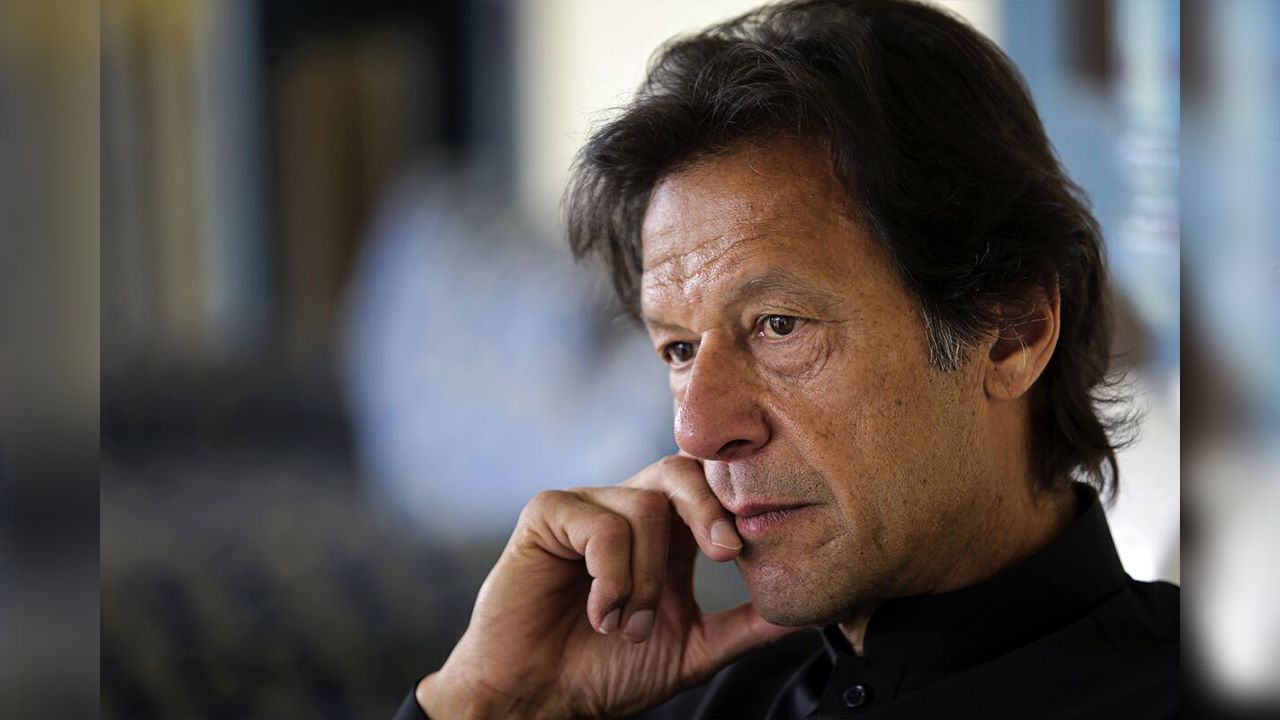
    The Islamabad High Court (IHC) has taken steps to obtain the records of the Toshakhana case involving the imprisoned Pakistan Tehreek-e-Insaf (PTI) chairman, Imran Khan, who is currently serving time in Attock Jail.

    The division bench of the IHC, comprising Chief Justice Aamer Farooq and Justice Tariq Mehmood Jahangiri, issued the directive in response to Imran’s appeal against his conviction in the Toshakhana case.

    In an official statement released today, the IHC has issued an order to the district election commissioner of Islamabad which states, “Notice to the respondent. Office is directed to requisition the record of the learned Trial Court.”

    On August 5, a District and Sessions Court gave a three-year prison sentence to the PTI chairman as part of the Toshakhana criminal case.

    The court also imposed a fine of Rs 100,000 on Imran Khan. Additionally, the former prime minister was prohibited from holding any public office for a duration of five years.

    The court’s verdict emphasized that the former prime minister had knowingly provided false information regarding Toshakhana gifts to the ECP and was found guilty of engaging in corrupt practices.

    Subsequently, he was arrested from his residence in Zaman Park, Lahore, and transferred to Attock Jail.

  • Chronology of Events Leading to No-Confidence Motion Vote

    Chronology of Events Leading to No-Confidence Motion Vote

    Despite the PTI-led government’s efforts to make the no-confidence motion against Imran Khan unsuccessful, the vote occurred on April 10, aligning with the Supreme Court’s orders.

    However, the voting on the motion wasn’t a sudden decision made shortly after an opposition leader’s move. It comprised months of extensive planning to set the motion against the Prime Minister into reality.

    By the end of 2021 — PPP begins convincing PML-N leader Nawaz Sharif to initiate a vote of no confidence against PM Imran Khan.

    November 28, 2021 — PPP’s Khursheed Shah hints at a possible internal shift within the Parliament, stating that the opposition would possess sufficient numerical strength to remove Imran Khan from office.

    December 24, 2021 — Ayaz Sadiq, a leader of PML-N, also endorses that the opposition is inpreparations for an internal shift in power.

    January 11, 2022 — Khawaja Asif, a leader of PML-N, maintains that the government had lost its majority, indicating that a change within the legislature was about to happen.

    January 18, 2022 — PPP chairman Bilawal Bhutto-Zardari states that a vote of no confidence against the senate chairman wouldn’t result in the power shift. He emphasizes that the opposition intends to bring change in leadership at the highest level by aiming to remove the Prime Minister from his office.

    January 21, 2022 — Ayaz Sadiq remarks that the opposition is prepared for a vote of no confidence against the PM, and the timing of this action will be determined at a later stage.

    February 7, 2022 — PML-N and PPP formally consult on a motion of no-confidence against the Prime Minister. PML-N president Shahbaz Sharif assures the party’s readiness for this step under the guidance of Nawaz Sharif. Subsequently, both parties initiate communication with other opposition groups and government allies.

    February 8, 2022 — Shahbaz Sharif introduces the idea of a vote of no confidence against the Prime Minister to MQM-P; Amir Khan, leader of MQM-P, declares to present the proposal to the party’s committee for further discussion.

    February 11, 2022 — Maulana Fazlur Rehman, the chief of the Pakistan Democratic Movement (PDM), speaking on behalf of the opposition, declares the intention to initiate a vote of no confidence against the Prime Minister.

    In the middle of these developments, the government remained dismissive of the risk and openly challenged the opposition to formally present the no-confidence motion.

    February 14, 2022 — Foreign Minister Shah Mahmood Qureshi shares the intention of the government to counter the no-confidence motion through political means, emphasizing the impartiality of the process as the “umpire” is also neutral.

    February 18, 2022 — PMLQ leader Pervaiz Elahi, who was the Speaker of the Punjab Assembly at the time, and MQM-P leader Amir Khan meet to jointly announce their decision to remain aligned with the government and not withdraw their support.

    February 22, 2022 — Interior Minister Sheikh Rasheed challenges the opposition, daring them to gather the support of 172 Members of the National Assembly (MNAs) in their ranks.

    February 23, 2022 (When the Prime Minister departed for his visit to Russia) — Defense Minister Pervez Khattak expresses confidence that the supposed no-confidence motion would not be presented, stating that it was a challenging task to have PTI MNAs in favor of it.

    Assessing the statements, one can conclude that the government did not take the no-confidence motion with a substantial level of seriousness.

    March 8, 2022 — The opposition tables a no-confidence motion against Prime Minister Imran Khan.

    March 9, 2022 — Prime Minister Imran Khan remarks that PPP co-chairman Asif Ali Zardari is hin “gun’s crosshairs”, expressing eagerness for the opposition to bring forth a no-confidence motion against him.

    March 10, 2022 — Bilawal responds to PM Imran Khan’s warning towards Zardari, describing it as “intolerable” and warning the Prime Minister to prepare for the potential repercussions.

    March 10, 2022 — Information Minister Fawad Chaudhry states that the armed forces are aligned with the government.

    March 10, 2022 — Islamabad police starts an operation in Parliament Lodges, resulting in the arrest of over a dozen Ansar-ul-Islam workers and two Members of the National Assembly (MNAs).

    March 11, 2022 — After the release of JUI-F workers and leaders, the party’s leader Fazlur Rehman cancels nationwide protests.

    March 11, 2022 — Sheikh Rasheed announces that the security of Parliament House and Parliament Lodges will be under paramilitary Rangers and Frontier Corps (FC) on the day of the National Assembly vote regarding the no-confidence motion.

    March 11, 2022 — Prime Minister Imran Khan verbally attacks three prominent opposition figures – Fazl, Zardari, and Shahbaz.

    March 12, 2022 — Nawaz Sharif and aggrieved PTI leader Aleem Khan discuss the no-confidence motion in London.

    March 12, 2022 — Sheikh Rasheed and PML-Q leader Moonis Elahi get into verbal exchanges, highlighting growing tensions within the government’s coalition as signs of division become apparent.

    March 13, 2022 — Key ally MQM-P states that they are considering all possible “options” regarding the no-confidence motion.

    March 14, 2022 — PPP and MQM-P reach an agreement to collaborate and work together for the country’s “greater interest.”

    March 15, 2022 — PM Imran Khan declares that the nation is willing to face challenges alongside him instead of endorsing what he referred to as the “three stooges,” indicating someopposition leaders.

    March 16, 2022 — Speaker of the Punjab Assembly, Pervaiz Elahi, asserts that 10-12 lawmakers from the government are under the “safe custody” of the opposition.

    March 18, 2022 — It comes to light that approximately 24 members of the PTI were residing at the Sindh House. The PTI declares it will issue show-cause notices to the dissenting MPs. In response, PTI supporters engaged in violent behavior, forcefully entering Sindh House premises.

    March 21, 2022 — The government submits a reference to the Supreme Court seeking clarification on the interpretation of Article 63(A).

    March 27, 2022 — PM Imran Khan alleges that the opposition’s motion of no-confidence is part of a “foreign-funded conspiracy” designed to remove him from power. These claims were made at a PTI-organized rally in Islamabad.

    March 28, 2022 — The leader of the Opposition in the National Assembly, Shahbaz Sharif, officially tables a no-confidence resolution against PM Imran Khan.

    March 28, 2022 — PTI secures assurance of support from PML-Q as Usman Buzdar steps down, making way for Pervaiz Elahi to be the new chief minister. Meanwhile, the government’s ally BAP sides with the opposition.

    March 28, 2022 — Independent Member of the National Assembly (MNA) from Balochistan, Mohammad Aslam Bhootani, resigns from the ruling coalition and aligns with the opposition.

    March 30, 2022 — PTI’s majority in the National Assembly significantly reduces as MQM-P announces its decision to discontinue its alliance with the government.

    March 31, 2022 — The National Assembly session scheduled for the no-confidence motion against PM Imran Khan postpones till April 3rd.

    March 31, 2022 — PM Imran Khan mentions the US as the sender of a “threatening letter” during a speech to the nation, which he later clarifies as “a slip of the tongue.”

    April 1, 2022 — Both the State Department and the White House jointly reject PM Imran Khan’s allegations.

    April 2, 2022 — On the eve of the no-confidence motion, PM Imran Khan appeals to the youth to demonstrate against what he considers as a “foreign conspiracy.”

    April 3, 2022 — NA Deputy Speaker Qasim Suri dismisses the no-confidence motion, statingit to be “unconstitutional,” and concludes the proceedings. President Arif Alvi dissolves the National Assembly based on PM Imran Khan’s orders. The Supreme Court initiates suo motu notice of the political situation. PM Imran Khan attributes the “threat letter” to US Assistant Secretary of State for South and Central Asian Affairs Donald Lu.

    April 7, 2022 — The Supreme Court reinstates the National Assembly, ruling that the government’s dissolution of the assembly and Qasim Suri’s decision were unconstitutional. The court directs NA Speaker Asad Qaiser to convene a session of the assembly on Saturday.

    April 8, 2022 — Just a day before the scheduled vote on the no-confidence motion, the Prime Minister states that he wouldn’t tolerate the establishment of a “foreign government” and would seek public support if any such thing happens.

    April 9-10, 2022 — PTI’s elected speaker, Asad Qaiser, convenes the session for the vote on the no-confidence motion at 10:30 am. PTI attempts to hinder the vote proceedings throughout the session. However, moments before midnight, Qaiser resigns from his position and passes the speaker’s seat to Ayaz Sadiq, who then presides over the session for the no-confidence motion. Following Sadiq’s assumption of the speaker’s role, 174 members of the opposition cast their votes in favor of the motion, resulting in the removal of Imran Khan from the position of Prime Minister.
  • ‘Governor Raj laga tou shehr band krna hoga’; Sensational revelations from Bushra Bibi’s alleged diary

    ‘Governor Raj laga tou shehr band krna hoga’; Sensational revelations from Bushra Bibi’s alleged diary

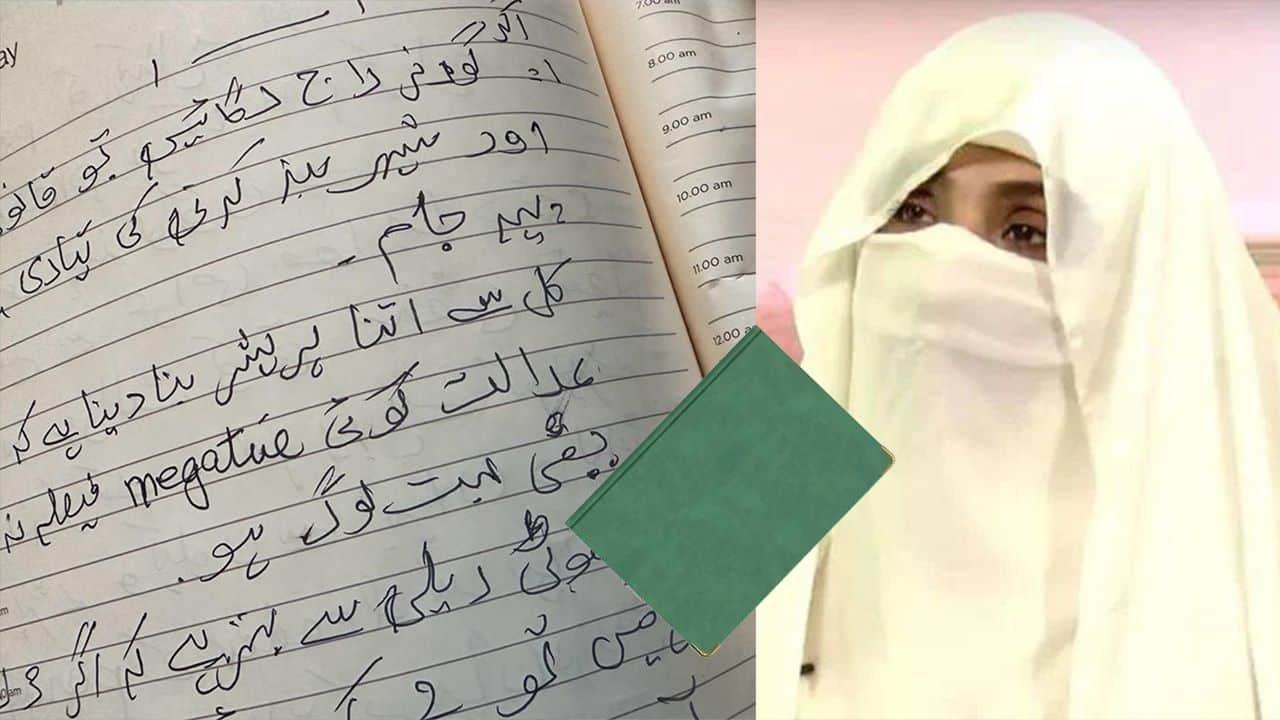
    The influence of Bushra Bibi, wife of the former Prime Minister Imran Khan, in her husband’s politics is much speculated on, however no substantial proof has come to light.

    That all changed on Friday, when a private diary, purportedly written by the former First Lady, turned up in news reports.

    The diary has shocking revelations, including methods of dealing with the administration, military, and judiciary.

    It can be seen clearly from the content of the diary that Bushra Bibi was guiding Chairman Imran Khan in political matters. The matter has generated a debate about the boundaries of spousal involvement in political matters.

    The most shocking finding from the diary is that Bushra Bibi made a plan to mold Imran Khan’s mindset through prayers and persuasive language.

    Furthermore, it appears that Bushra Bibi was involved in formulating PTI’s political strategy based on passages of her diary that were released. According to the diary entries, Bushra Bibi gave instructions to Chairman PTI about how to pray and what phrases to use in order to create an environment that would support PTI’s goals.

    Tactics to put pressure on the military and establishment are mentioned including one sentence that said, “Governer Raj Laga tou Shehr Band Krna Hoga” [If Governor Raj is imposed, cities must be shut down.]

    The diary also calls General Bajwa “Mamu” and suggests ways to put pressure on significant figures and organizations.

  • Khan’s alleged cypher is out

    A report carried by The Intercept, a US publication, says that Imran Khan’s cypher which he blamed for his removal from power, did include American official Donald Lu pressurising Pakistan to oust Khan. The Intercept says it has the cypher.

    The conversation took place during a meeting held on March 7, 2022.

    The meeting between the Pakistani ambassador to the United States and two State Department officials has drawn significant attention, controversy, and rumours in Pakistan.

    On August 5, Khan was given a three-year prison sentence in the Tosha Khana case and was arrested for a second time since being ousted. Khan’s supporters deny the accusations as unfounded.

    One month after the meeting with U.S. officials documented in the leaked Pakistani government document, a no-confidence vote was held in Parliament, leading to Khan’s removal from power.

    The text of the Pakistani cable that the ambassador sent to Islamabad following the meeting has not yet been made public. The cable, internally referred to as a “cypher,” promises improved relations if Khan was ousted and isolation if he was not, The Intercept says.

    An unnamed insider in the Pakistani military who claimed to have no connections to Imran Khan or Khan’s party gave The Intercept access to a
    the document.

    Here is the complete text of the cipher as published in The Intercept:

    “I (the former Pakistani Ambassador to the US) had a luncheon meeting today with Assistant Secretary of State for South and Central Asia, Donald Lu. He was accompanied by Deputy Assistant Secretary of State Les Viguerie. DCM, DA and Counsellor Qasim joined me.

    At the outset, Don referred to Pakistan’s position on the Ukraine crisis and said that “people here and in Europe are quite concerned about why Pakistan is taking such an aggressively neutral position (on Ukraine), if such a position is even possible. It does not seem such a neutral stand to us.” He shared that in his discussions with the NSC, “it seems quite clear that this is the Prime Minister’s policy.” He continued that he was of the view that this was “tied to the current political dramas in Islamabad that he (Prime Minister) needs and is trying to show a public face.” I replied that this was not a correct reading of the situation as Pakistan’s position on Ukraine was a result of intense interagency consultations. Pakistan had never resorted to conducting diplomacy in public sphere. The Prime Minister’s remarks during a political rally were in reaction to the public letter by European Ambassadors in Islamabad which was against diplomatic etiquette and protocol. Any political leader, whether in Pakistan or the U.S., would be constrained to give a public reply in such a situation.

    I asked Don if the reason for a strong U.S. reaction was Pakistan’s abstention in the voting in the UNGA. He categorically replied in the negative and said that it was due to the Prime Minister’s visit to Moscow. He said that “I think if the no-confidence vote against the Prime Minister succeeds, all will be forgiven in Washington because the Russia visit is being looked at as a decision by the Prime Minister. Otherwise, I think it will be tough going ahead.” He paused and then said “I cannot tell how this will be seen by Europe but I suspect their reaction will be similar.” He then said that “honestly I think isolation of the Prime Minister will become very strong from Europe and the United States.” Don further commented that it seemed that the Prime Minister’s visit to Moscow was planned during the Beijing Olympics and there was an attempt by the Prime Minister to meet Putin which was not successful and then this idea was hatched that he would go to Moscow.

    I told Don that this was a completely misinformed and wrong perception. The visit to Moscow had been in the works for at least few years and was the result of a deliberative institutional process. I stressed that when the Prime Minister was flying to Moscow, Russian invasion of Ukraine had not started and there was still hope for a peaceful resolution. I also pointed out that leaders of European countries were also traveling to Moscow around the same time. Don interjected that “those visits were specifically for seeking resolution of the Ukraine standoff while the Prime Minister’s visit was for bilateral economic reasons.” I drew his attention to the fact that the Prime Minister clearly regretted the situation while being in Moscow and had hoped for diplomacy to work. The Prime Minister’s visit, I stressed, was purely in the bilateral context and should not be seen either as a condonation or endorsement of Russia’s action against Ukraine. I said that our position is dictated by our desire to keep the channels of communication with all sides open. Our subsequent statements at the UN and by our Spokesperson spelled that out clearly, while reaffirming our commitment to the principle of UN Charter, non-use or threat of use of force, sovereignty and territorial integrity of States, and pacific settlement of disputes.

    I also told Don that Pakistan was worried of how the Ukraine crisis would play out in the context of Afghanistan. We had paid a very high price due to the long-term impact of this conflict. Our priority was to have peace and stability in Afghanistan, for which it was imperative to have cooperation and coordination with all major powers, including Russia. From this perspective as well, keeping the channels of communication open was essential. This factor was also dictating our position on the Ukraine crisis. On my reference to the upcoming Extended Troika meeting in Beijing, Don replied that there were still ongoing discussions in Washington on whether the U.S. should attend the Extended Troika meeting or the upcoming Antalya meeting on Afghanistan with Russian representatives in attendance, as the U.S. focus right now was to discuss only Ukraine with Russia. I replied that this was exactly what we were afraid of. We did not want the Ukraine crisis to divert focus away from Afghanistan. Don did not comment.

    I told Don that just like him, I would also convey our perspective in a forthright manner. I said that over the past one year, we had been consistently sensing reluctance on the part of the U.S. leadership to engage with our leadership. This reluctance had created a perception in Pakistan that we were being ignored and even taken for granted. There was also a feeling that while the U.S. expected Pakistan’s support on all issues that were important to the U.S., it did not reciprocate and we do not see much U.S. support on issues of concern for Pakistan, particularly on Kashmir. I said that it was extremely important to have functioning channels of communication at the highest level to remove such perception. I also said that we were surprised that if our position on the Ukraine crisis was so important for the U.S., why the U.S. had not engaged with us at the top leadership level prior to the Moscow visit and even when the UN was scheduled to vote. (The State Department had raised it at the DCM level.) Pakistan valued continued high-level engagement and for this reason the Foreign Minister sought to speak with Secretary Blinken to personally explain Pakistan’s position and perspective on the Ukraine crisis. The call has not materialized yet. Don replied that the thinking in Washington was that given the current political turmoil in Pakistan, this was not the right time for such engagement and it could wait till the political situation in Pakistan settled down.

    I reiterated our position that countries should not be made to choose sides in a complex situation like the Ukraine crisis and stressed the need for having active bilateral communications at the political leadership level. Don replied that “you have conveyed your position clearly and I will take it back to my leadership.”

    I also told Don that we had seen his defence of the Indian position on the Ukraine crisis during the recently held Senate Sub-Committee hearing on U.S.-India relations. It seemed that the U.S. was applying different criteria for India and Pakistan. Don responded that the U.S. lawmakers’ strong feelings about India’s abstentions in the UNSC and UNGA came out clearly during the hearing. I said that from the hearing, it appeared that the U.S. expected more from India than Pakistan, yet it appeared to be more concerned about Pakistan’s position. Don was evasive and responded that Washington looked at the U.S.-India relationship very much through the lens of what was happening in China. He added that while India had a close relationship with Moscow, “I think we will actually see a change in India’s policy once all Indian students are out of Ukraine.”

    I expressed the hope that the issue of the Prime Minister’s visit to Russia will not impact our bilateral ties. Don replied that “I would argue that it has already created a dent in the relationship from our perspective. Let us wait for a few days to see whether the political situation changes, which would mean that we would not have a big disagreement about this issue and the dent would go away very quickly. Otherwise, we will have to confront this issue head on and decide how to manage it.”

    We also discussed Afghanistan and other issues pertaining to bilateral ties. A separate communication follows on that part of our conversation”.

    Rana Sanauulah said in his tweet late Wednesday night “It should not be forgotten that Imran Khan Niazi had a copy of the cypher, which he has not returned and has accepted (on record) that he misplaced or lost it. If proven guilty, Khan should be tried under the Official Secret Act”.

  • No role in the selection of Judges: University of Hull

    No role in the selection of Judges: University of Hull

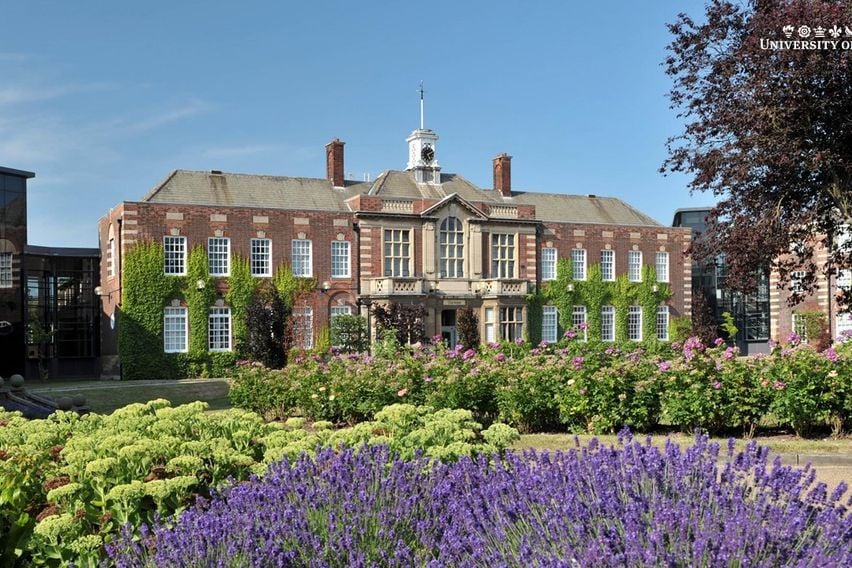
    The University of Hull in Manchester has offered a clarification on the participation of Judge Humayun Dilawar in a training programme at their campus, after supporters of Pakistan Tehreek-e-Insaf (PTI) protested against the university.

    PTI activists have been tagging university to record their objection against the inclusion of Judge Dilawar, who convicted Imran Khan in the Tosha Khana case on August 5, sentencing him to three years imprisonment and disqualification.

    PTI supporters demanded that the judge be expelled from the training session.

    However, Judge Dilawar did not, in fact, fly to the UK out of the blue, as revealed by a statement issued by the university in response to the controversy. The statement says that his participation was a result of being chosen by the Islamabad High Court (IHC) for the training.

    Stressing that the university has been organising training sessions on human rights and the rule of law for Pakistani Judges Since 2014, the university said that it has no role in selecting judges for the training.

    “The current cohort has been selected by the Islamabad High Court, the Peshawar High Court, and the Supreme Court of Pakistan. The University has no role in the selection of judges”.

  • IHC to hear PTI petition about Imran Khan’s transfer to Adiala Jail

    The Islamabad High Court (IHC) will hear a petition asking that former Prime Minister Imran Khan be transferred from Attock Jail to Adiala Jail after the Pakistan Tehreek-e-Insaf (PTI) Chairman was sentenced to three years incarceration in the Tosha Khana case.

    IHC Chief Justice Aamer Farooq will hear the petition today. Earlier, Pakistan Tehreek-e-Insaf (PTI) had filed a petition in the IHC to transfer Imran Khan from Attock Jail to Adiala Jail to get A-class facilities.

    “Keeping in view the petitioner’s social and political status, his education, and his being accustomed to a better living style, the Petitioner was entitled to A-Class facilities in terms of Rule 243 read with Rule 248 of the Pakistan Prison Rules,” the petition read.

    It is also requested in the plea that personal physicians and family members be allowed to meet him.

    Imran Khan’s lawyer said on Monday, after meeting his client in jail, that Imran Khan has been kept in an unhygienic and suffocating environment. However, he stressed that Khan’s morale was high.

  • No shower in washroom aur kamra bhe woh jahan Sazai-e-maut kay qaidiun ko rakha jata hai: Imran Khan’s lawyer reveals details of his cell

    No shower in washroom aur kamra bhe woh jahan Sazai-e-maut kay qaidiun ko rakha jata hai: Imran Khan’s lawyer reveals details of his cell

    Naeem Panjutha, former Prime Minister Imran Khan’s lawyer, has revealed on Monday details of the conditions in which his client is being incarcerated.

    After meeting Khan in Attock district jail, the lawyer said that the behaviour of the jail administration was not satisfactory. He said that Imran Khan is living in a very small jail cell, while the washroom has no shower.

    Naeem Panjutha stated that Imran Khan has been kept in a very unhygienic and suffocating environment. However, Imran Khan was happy with PTI’s victory in Peshawar against JUI-F, the lawyer narrated.

    “Imran Khan’s morale was high,” Panjutha told media personnel outside the jail.

    “If they keep me in more severe condition than this, I’m ready for this too,” Khan reportedly told his lawyer.

    Imran Khan gave a message to the nation from the Jail through his lawyer: “I will not bow down”.

    According to PTI, the police ransacked and tortured the staff in Bani Gala while attempting to arrest Imran Khan. It is also mentioned by the PTI that while arresting Imran Khan, the policeman said “Chal Saday Nal” and “Kapra Pao Aeday mun ty”.

  • India landing on the moon makes us miss Fawad Chaudhry and his wadaa

    India landing on the moon makes us miss Fawad Chaudhry and his wadaa

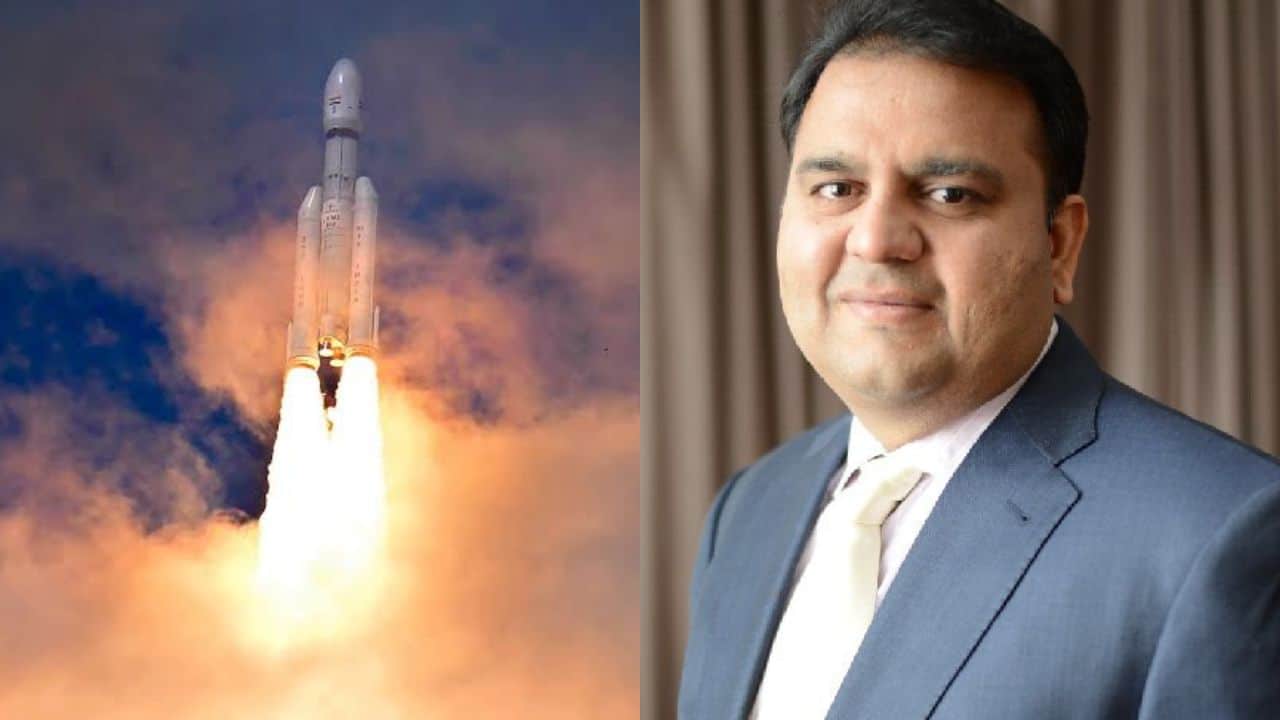
    India’s space agency has shared pictures of their spacecraft Chandrayaan-3, as the rover gets closer and closer to the surface of the planet. BBC revealed that by August 23, Chandrayaan’s rover and lander are due to reach the surface of the earth. It was released from the Satish Dhawan Space Center at Sriharikota in the Andhra Pradesh state on July 14.

    This would be the second time after thirteen years that the country has launched a spacecraft to the moon. The first time was in 2008 after which the discovery of the presence of water molecules in the moon’s atmosphere was made.

    Scientists from the Indian Space Research Agency (ISRO) spoke to the media, stating that Chandrayaan-3 was in “good health”, adding that this was the third time in succession that ISRO had successfully injected a spacecraft into a lunar orbit.

    If the mission is successful this would make India the first country to perform a controlled soft landing near the south pole, and the fourth country after USA, China and the former Soviet Union to achieve a soft landing on the moon.

    Congratulations to India but we do remember how a certain promise was made by the former Information and Broadcasting Minister Fawad Chaudhry, whol announced in a tweet in 2019 that by the year 2022, Pakistan will send their first person to space. He even mentioned that selection for the project was to begin by Feb 2020 after which 25 people will be selected. Kya hua tera wada, wo qasam wo iraada?

  • PTI wants Imran Khan to be transferred to Adiala Jail for A-class facilities

    PTI wants Imran Khan to be transferred to Adiala Jail for A-class facilities

    Pakistan Tehreek-e-Insaf (PTI) has filed an appeal with the Islamabad High Court (IHC) on Monday, asking that party Chairman Imran Khan be transferred to Adiala Jail for A-class facilities.

    According to the petition, “Since childhood, the petitioner is from an affluent family, and later, due to his education, habits, and social and political status in the society, has got accustomed to a better mode of life. He is a graduate of Oxford University, UK, and the captain of Pakistan national Cricket”.

    After a district and sessions court found Imran guilty in the Tosha Khana case on August 5, he was arrested on the same day and taken to Attock Jail.

    Judge Humayun Dilawar sentenced Imran Khan to three years imprisonment and fined him one lac rupees. According to the judgement, “Charges of misdeclaration of assets have been proven against the PTI chairman”.

    Imran Khan’s lawyer, Naeem Haider Panjotha, filed a petition today to transfer Imran Khan to Adiala Jail. It was also mentioned in the appeal that Imran Khan is living in a “small cell of 9 x 11 feet” in Attock Jail.

    A-class prisoners get a 21-inch television, a table and two chairs, a mattress, personal bedding and clothing, while all meals are provided for. However , the prisoner needs to pay for all this. The government is only responsible for giving them security in a high-security ward.


    A-class inmates are kept separate from ordinary prisoners but it is not the same in the case of B-class prisoners.


    Attock district jail has multiple facilities for the prisoners. Prisoners can play Luddo and Carrom board. There is a rehabilitation center in the jail.
    One medical officer and a women medical officer are also available for medical treatment, if needed.

  • Former Prime Minister Imran Khan has been arrested from his Zaman Park residence in Lahore.

    Former Prime Minister Imran Khan has been arrested from his Zaman Park residence in Lahore.

    Police reached the residence of Chairman Pakistan Tehreek-e-Insaf (PTI) after he was sentenced to three years in prison in the Toshakhana case earlier in the day.

    Multiple media reports suggest that Khan will be shifted to Kot Lakh Pat jail in Lahore this afternoon.

    Judge Humayun Dilawar of a sessions court in Islamabad has found former Prime Minister Imran Khan guilty in the Toshakhana case.

    Khan has been disqualified for five years and given a prison sentence for three years.

    He has also been fined Rs100,000. The judgement has also said that if the fine is not paid, the imprisonment can be increased by six months.

    Khan’s lawyer Khwaja Haris was present in the court when the verdict was given out. Earlier, the Supreme Court (SC) rejected former Prime Minister Imran Khan’s petition to pause trial court proceedings in the Toshakhana case.

    The former prime minister went to the apex court when he didn’t get relief from the Islamabad High Court (IHC) in the Toshakhana case.

    Last year, on October 21, the Election Commission of Pakistan (ECP) disqualified Imran Khan in the Toshakhana case for making “false statements and incorrect declarations.”