Tag: Saudi Arabia

  • Saudi Arabia to invest $25 billion in Pakistan over five years: PM Kakar

    Saudi Arabia to invest $25 billion in Pakistan over five years: PM Kakar

    On Monday, Interim Prime Minister Anwaar ul Haq Kakar announced that the Kingdom of Saudi Arabia (KSA) intends to invest a substantial sum of up to $25 billion in Pakistan over the next two to five years.

    During a media briefing, PM Kakar explained that Saudi Arabia’s investment focus will primarily encompass the mining, agriculture, and information technology sectors. This initiative aims to boost foreign direct investment in Pakistan, which is currently facing financial challenges. 

    If this investment materialises, it will mark the largest-ever commitment by Saudi Arabia to Pakistan. The country is grappling with a pressing need for funds to address its trade deficit and repay international loans in the ongoing fiscal year. 

    While specific projects earmarked for Saudi investment were not disclosed during the meeting, Barrick Gold Corp. expressed interest last month in partnering with Saudi Arabia’s wealth fund for the Reko Diq mine in Pakistan. 

    Kakar emphasised that Pakistan holds substantial untapped mineral resources valued conservatively at $6 trillion. Additionally, the government intends to expedite two privatisation transactions, likely involving state-owned power sector entities, within the next six months. There is also a plan to privatise another government-owned company, preferably outside the energy sector. 

    Read more: Business community finds hope as COAS Munir vows to tackle corruption and boost investment  

    It’s worth noting that privatisation efforts in Pakistan have faced challenges in the past, as the sale of state assets is a politically sensitive issue that previous elected governments have largely avoided. 

    Currently, Pakistan is navigating a challenging path to economic recovery under a caretaker administration, following the approval of a $3 billion loan plan by the International Monetary Fund in July, which prevented a sovereign debt default. Islamabad is confronted with a balance of payments crisis and requires substantial funds to rectify its trade deficit and settle outstanding debts. 
  • Business community finds hope as COAS Munir vows to tackle corruption and boost investment 

    Business community finds hope as COAS Munir vows to tackle corruption and boost investment 

     
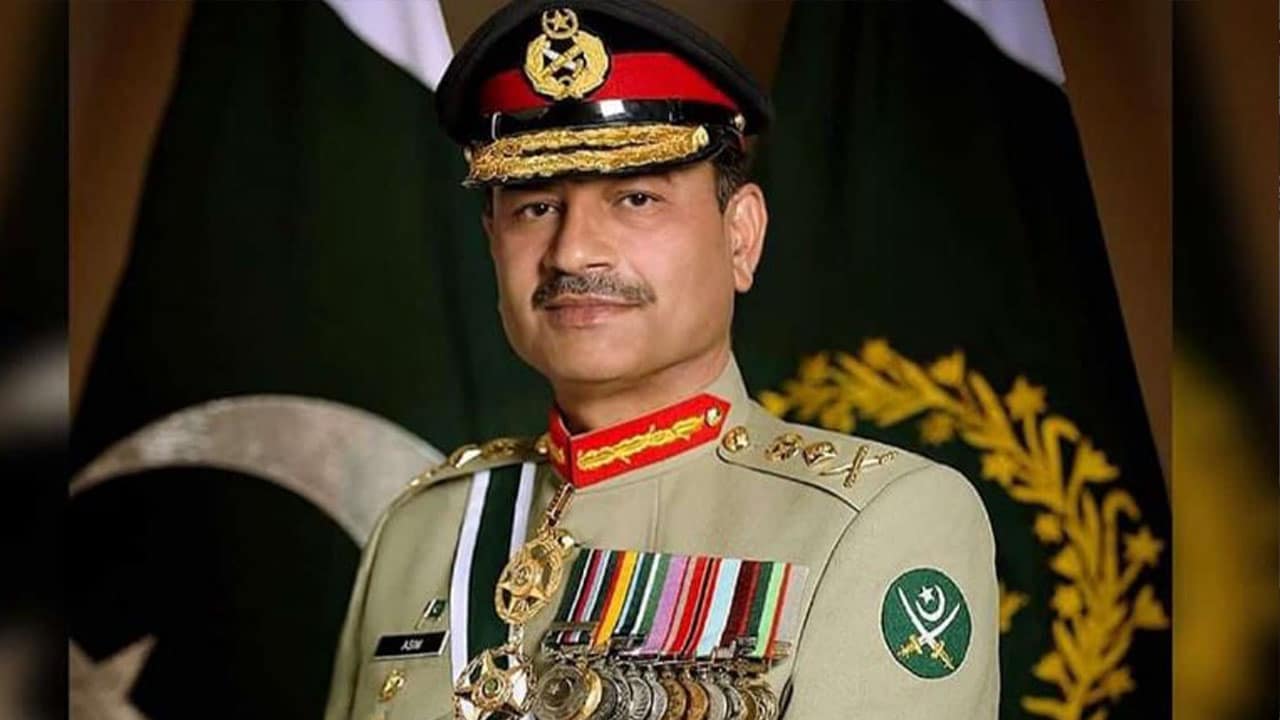
    In response to the pressing economic crisis facing the country, Chief of Army Staff (COAS) General Syed Asim Munir has pledged unwavering efforts to attract foreign investment and rejuvenate the economy, as reported by The News on Tuesday. General Munir made these assurances during a recent extensive meeting with members of the business community, where he engaged openly and candidly with them. 

    During an appearance on Geo News‘ “Aaj Shahzeb Khanzada Kay Sath” programme on Monday, President of the Federation of Pakistan Chambers of Commerce & Industry (FPCCI), Irfan Iqbal Sheikh, expressed optimism following their meeting with the army chief. He revealed that General Munir had conveyed discussions of a potential $25 billion investment from Saudi Arabia, encompassing sectors such as IT, minerals, agriculture, and defence. 

    Highlighting a pivotal development, General Munir disclosed that Saudi Crown Prince Mohammad Bin Salman had committed to depositing $10 billion of this investment in the State Bank of Pakistan (SBP), to be reimbursed in Pakistani rupees or goods, thereby bolstering foreign exchange reserves. 

    General Munir also acknowledged the bureaucratic obstacles hindering investment and emphasised the establishment of a Special Investment Facilitation Council (SIFC) to streamline processes and eliminate bureaucratic impediments. He assured that this initiative would protect investors from interference, bureaucratic hurdles, or legal complications. 

    Irfan Iqbal Sheikh further mentioned that Saudi Arabia and the United Arab Emirates (UAE) had both pledged $25 billion in investments, with Qatar and Kuwait following suit with similar commitments. 

    General Munir expressed determination to combat corruption, particularly by curbing land-grabbing and extortion mafias. To this end, he announced the formation of four task forces to address issues related to the Federal Board of Revenue of Pakistan (FBR), border control, smuggling, and social media, aiming to improve the overall situation. 

    Sheikh stressed that the business community had grown disillusioned but found renewed courage and hope through the army chief’s commitments. 

    Meanwhile, Business Group Chairman Zubair Motiwala noted the distinct approach of General Munir in engaging with traders compared to his predecessors. He highlighted the COAS’s efforts to revive the economy through engagements in Saudi Arabia, the UAE, and upcoming visits to Qatar and Kuwait. 

    Motiwala reported that General Munir had instructed the corps commander to prevent the influx of Iranian diesel into Karachi and issued directives to address land encroachments, corruption, and law enforcement issues. 

    General Munir also emphasised that only registered Afghan refugees would be allowed to stay in Pakistan, while the rest would need to return to their home country. He conveyed Saudi Crown Prince Mohammad Bin Salman’s concerns regarding corruption and bureaucracy in Pakistan. 

    Motiwala further disclosed discussions about the charter of the economy with General Munir, expressing hope that such substantial investments would significantly improve the economic conditions in the country. 

    He also pointed out that state-owned enterprises were incurring significant losses, amounting to Rs1,300 billion, and stressed the need for action, noting that political governments might not fully embrace privatisation but would seek to relieve this burden. General Munir expressed his understanding of the government’s approach to this issue and its commitment to addressing it comprehensively. 

  • Social media giant X faces lawsuit for allegedly assisting Saudi Arabia in human rights abuses

    Social media giant X faces lawsuit for allegedly assisting Saudi Arabia in human rights abuses

    The social media giant formerly known as Twitter, now referred to as X, faces a revised civil lawsuit in the US that accuses it of aiding Saudi Arabia in committing severe human rights violations against its users. This includes allegations of disclosing confidential user data to Saudi authorities at a significantly higher rate than for other countries such as the US, UK, or Canada. 

    According to The Guardian, the lawsuit was originally filed in May by Areej al-Sadhan, the sister of a Saudi aid worker who was forcibly disappeared and later sentenced to 20 years in prison. The case revolves around the infiltration of Twitter by three Saudi agents, two of whom posed as Twitter employees in 2014 and 2015. This infiltration led to the arrest of al-Sadhan’s brother, Abdulrahman, and the exposure of the identities of thousands of anonymous Twitter users, some of whom were reportedly detained and tortured as part of the Saudi government’s crackdown on dissent. 

    The updated lawsuit alleges that Twitter, under the leadership of then-CEO Jack Dorsey, knowingly ignored or had knowledge of the Saudi government’s campaign to identify critics but provided assistance due to financial considerations and its close ties to the Saudi government, a major investor in the company. 

    The lawsuit highlights how Twitter was initially seen as a tool for democratic movements during the Arab Spring, which raised concerns for the Saudi government as early as 2013. 

    These allegations come shortly after Human Rights Watch criticised a Saudi court for sentencing a man to death solely based on his Twitter and YouTube activity. The convicted individual, Muhammad al-Ghamdi, had minimal online presence and was accused of having two accounts with a few followers and tweets, both containing retweets of government critics. 

    The lawsuit claims that Twitter was aware of security risks related to insider access to personal data and ignored red flags. It also alleges that Saudi authorities filed emergency disclosure requests with Twitter to obtain user identity information, often approved promptly. 

    Between July and December 2015, Twitter allegedly granted information requests to Saudi Arabia more frequently than to other countries, including Canada, the UK, Australia, and Spain. 

    Despite becoming aware of FBI concerns about Saudi infiltration, Twitter continued to engage with Saudi Arabia as a crucial regional partner. CEO Jack Dorsey even met with Mohammed bin Salman about six months after the FBI raised the issue. 

    The lawsuit ultimately seeks justice for Areej al-Sadhan’s brother, Abdulrahman, and aims to hold Twitter accountable for its alleged complicity in human rights abuses. 

  • Pakistani citizen goes missing in Jeddah

    Pakistani citizen goes missing in Jeddah

    Pakistani citizen and UK resident Syed Hussain Ali has gone missing in Jeddah, Saudi Arabia, on August 28 while on a transit visa in the Kingdom.

    Ali’s father Syed Asim Ali told The Friday Times that he wrote a letter to the Saudi Ambassador to Pakistan and requested caretaker Prime Minister Anwaar ul Haq Kakar to probe into his son’s disappearance.

    Hussain departed from Lahore on Monday 28 August at 11:40am on Saudi Airlines SV735. He landed in Jeddah at 14:50 pm, local time.

    Hussain had an eighteen hour transit and obtained a visa at the airport to perform Umrah.

    He messaged via WhatsApp using the Wi-Fi of a restaurant and then travelled to Mecca to perform Umrah. He then talked to his parents via Messenger video call from McDonald’s restaurant opposite Haram. This, according to the father, was his last communication, between 12:30-1:00 am.

    Hussain wanted to spend a couple of more hours in the Holy Mosque before his flight from Jeddah to London which was scheduled for 9:05 am.

    According to the father, Hussain was only carrying his laptop, phone, wallet and a change of clothing in his laptop bag.
    “He had only $100 on him and the rest of the expenditures he would pay using his debit and credit card,” Asim said.
    Hussain never boarded his flight to London.

    Asim noted that “Normally he is very communicative. It is very unlike him to not be in touch especially when he may know that we are waiting to hear from him,”

    In the letter to the officials, Asim requested to file a missing persons report.

    However, Properganda has commented under the Instagram news of the disappearance that Hussain has been found. That comment, however, is no longer posted.

  • Pakistan women’s football team set to participate in six-nation tournament in Saudi Arabia next month

    Pakistan women’s football team set to participate in six-nation tournament in Saudi Arabia next month

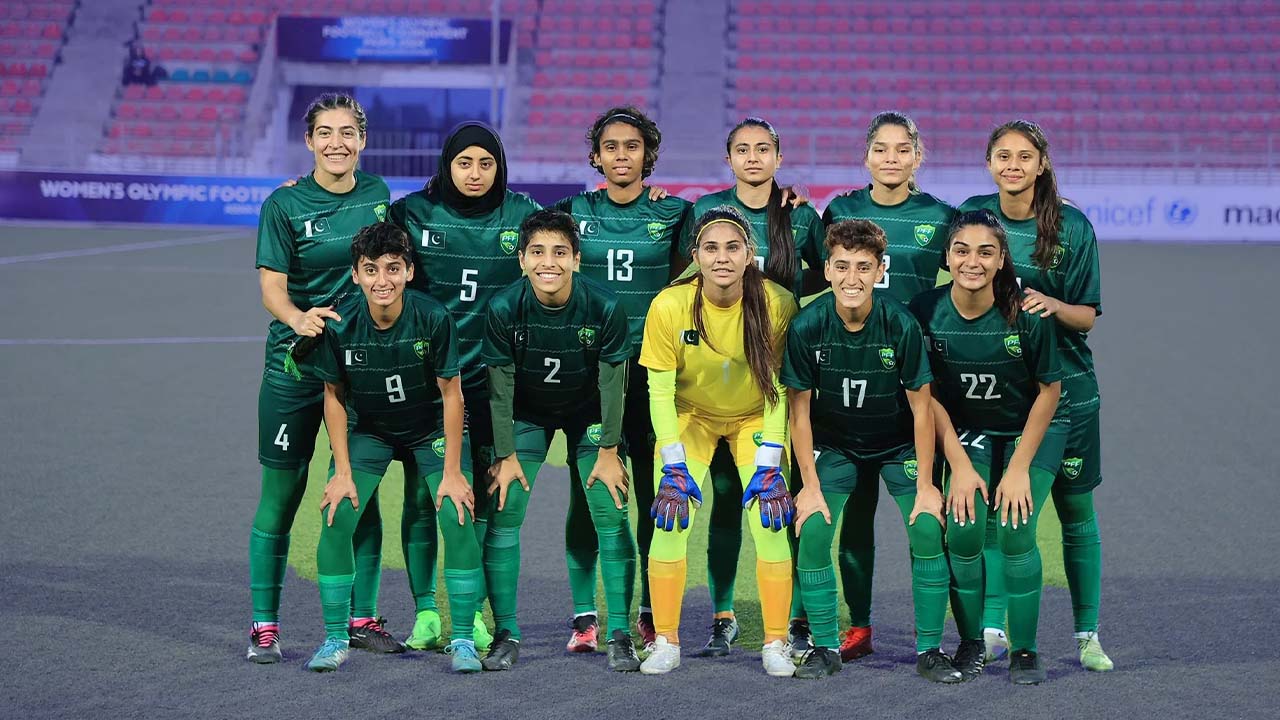
    Pakistan’s women’s football team is set to participate in a six-nation tournament hosted by Saudi Arabia from September 18 to 30, as confirmed by the Pakistan Football Federation (PFF). The tournament will include teams from Saudi Arabia, Lebanon, Laos, Malaysia, and Bhutan. The PFF will soon announce a training camp to prepare the women’s squad for the upcoming event.

    The PFF released a statement mentioning that the Pakistan women’s football team will be part of the six-nation tournament taking place in Saudi Arabia from September 18 to 30.

    In January of this year, Pakistan traveled to Saudi Arabia for a four-nation tournament, competing against Comoros and Mauritius. The team achieved victory against Comoros but lost to Mauritius 2-1. They concluded the tournament on a strong note by drawing 1-1 against Saudi Arabia, which ultimately won the tournament.

    According to Arab News, one of the recent accomplishments of the Pakistani women’s football team was a significant 7-0 triumph over the Maldives in the South Asian Football Federation championship in September 2022. In April of the same year, Pakistan achieved an impressive 1-0 victory over Tajikistan in the qualifiers for the 2024 Paris Olympics.

    This win marked Pakistan’s first major tournament victory since resuming regular international football in September 2022, following a lengthy break. Previously, the team had secured victories mainly in friendly matches or exhibition tournaments such as the Four-Nation Cup in Saudi Arabia.

  • Pakistan invites Saudi Arabia to invest in key sectors like agriculture, IT, and energy

    Pakistan invites Saudi Arabia to invest in key sectors like agriculture, IT, and energy

    Prime Minister (PM) Shehbaz Sharif has extended a warm invitation to companies from Saudi Arabia, encouraging them to explore exciting investment prospects in various sectors such as agriculture, mining, technology, energy, and more.

    This friendly call was made during a meeting with Saudi Arabia’s Vice Minister for Foreign Affairs, Waleed Abdulkarim El Khereji, held in Islamabad.

    To boost economic partnerships, PM Shehbaz highlighted the creation of a Special Investment Facilitation Council (SIFC). This council is designed to simplify and speed up potential investments from countries in the Gulf Cooperation Council (GCC), with a special focus on enhancing collaborations with Saudi Arabia.

    PM Shehbaz also expressed heartfelt appreciation for Saudi Arabia’s timely financial support, particularly in the aftermath of natural disasters like floods. He acknowledged the Kingdom’s crucial role in helping Pakistan work towards a stable economy.

    He emphasised the importance of the visit by the Saudi delegation, underscoring the shared interest and eagerness on both sides to elevate their long-standing friendly relations to a practical and mutually beneficial economic partnership.

    In a significant earlier announcement, PM Shehbaz revealed plans to auction gifts from the Toshakhana. The funds generated from this auction will be directed towards the well-being of underprivileged individuals, especially those who are orphaned and vulnerable.

  • Sending heart emojis to women online can land you in jail in Kuwait and Saudi Arabia

    Sending heart emojis to women online can land you in jail in Kuwait and Saudi Arabia

    In a surprising move, Kuwait and Saudi Arabia have both passed laws that criminalise the sending of heart emojis via WhatsApp and other social networking sites, considering it an act of incitement to debauchery and harassment, respectively.

    According to Kuwaiti lawyer Haya Al Shalahi, individuals found guilty of sending heart emojis in Kuwait may face severe consequences. A conviction of this offence could lead to up to two years of imprisonment, along with a fine not exceeding 2,000 Kuwaiti dinars.

    Likewise, in Saudi Arabia, the consequences are equally harsh. Sending ‘red heart’ emojis on WhatsApp may result in a jail term ranging from two to five years, accompanied by a fine of 100,000 Saudi Riyals, as per Saudi law.

    Saudi cybercrime expert Al Moataz Kutbi highlighted that certain images and expressions used in online conversations, like red hearts, could be deemed harassment within the country’s jurisdiction. The act might lead to a lawsuit being filed by the aggrieved party, turning it into a serious offence.

    Moreover, for repeat offenders in Saudi Arabia, the financial penalty could escalate to a staggering 300,000 Saudi Riyals, coupled with a maximum imprisonment of five years.

    The rationale behind these strict measures is to combat online harassment and protect individuals from potentially harmful or inappropriate content shared through emojis. Authorities in both countries view such seemingly innocuous expressions as having the potential to incite indecent behaviour or cause emotional distress to recipients.

    As social media and messaging platforms continue to play a significant role in modern communication, governments are increasingly taking measures to regulate online interactions and enforce cyber laws. Individuals in Kuwait and Saudi Arabia are now urged to exercise caution in their online communication to avoid potential legal consequences.

    It remains to be seen how these laws will be enforced and how they will impact digital communication practises in both nations. In the meantime, citizens are encouraged to be aware of these recent legal developments and adapt their online behaviour accordingly.

  • Dar credits govt’s prudent economic policies as Pakistan’s forex reserves rise to $14 billion

    Dar credits govt’s prudent economic policies as Pakistan’s forex reserves rise to $14 billion

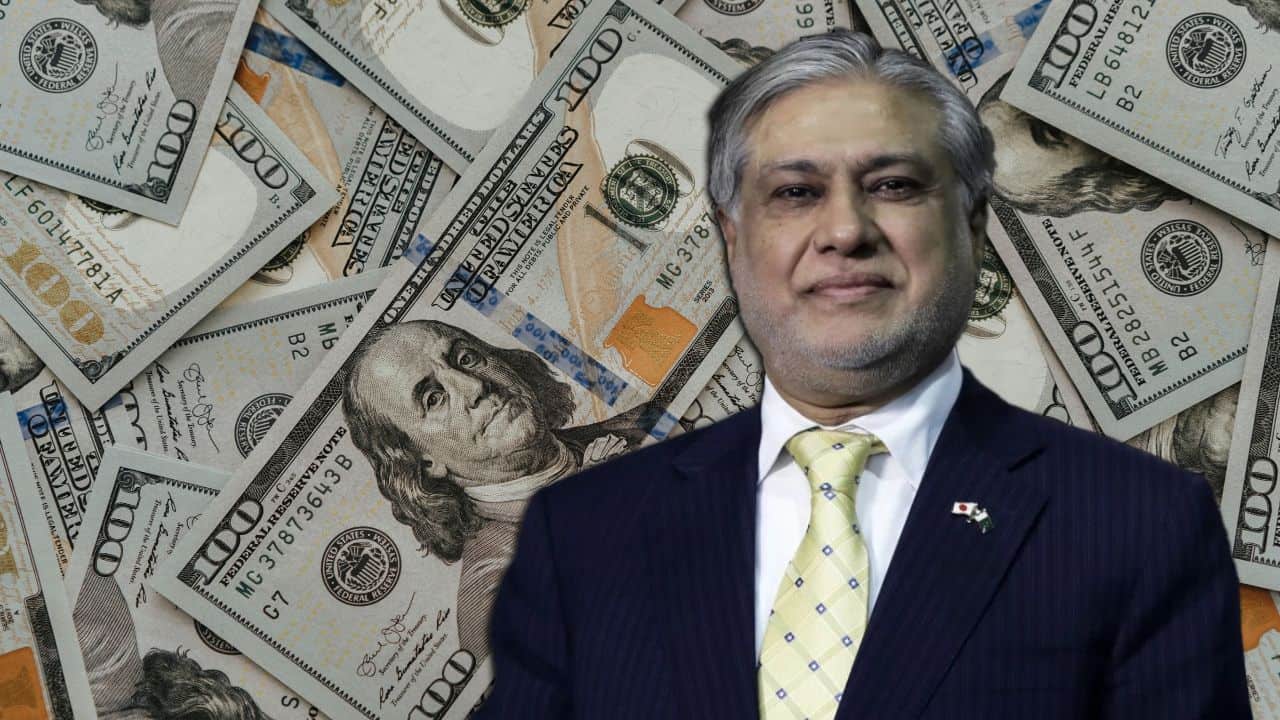
    In a recent Senate session, Finance Minister Ishaq Dar announced that Pakistan’s foreign exchange reserves have witnessed a significant increase, rising from $8 billion to an impressive $14 billion. He attributed this remarkable growth to the government’s prudent economic policies and the unwavering support received from friendly nations, including Saudi Arabia, Qatar, and China.

    Dar said that China played a pivotal role in bolstering Pakistan’s financial position. Recognising Pakistan’s adherence to all technicalities regarding loan repayment, China graciously agreed to roll over the country’s loans. This move from China came as a testament to Pakistan’s commitment to fulfilling its financial obligations.

    Speaking about the nation’s economic future, Dar urged all political forces to unite and collaborate on a charter for the economy. The proposed charter aims to tackle the country’s financial challenges collectively, serving as a guiding framework to lead Pakistan out of the current financial crisis.

    Addressing a specific issue, the Finance Minister expressed concern over Pakistan International Airlines (PIA) annual loss of approximately Rs70 billion. He attributed this financial setback to an irresponsible statement made by a former minister during the previous regime. Dar highlighted the need for careful and responsible statements from leaders, as they can have far-reaching consequences for the national flag carrier.

    In a piece of encouraging news for the aviation sector, the minister also shared that the Pakistan Airports Authority Bill 2023 is on track to be implemented. Once enacted, this bill will pave the way for the resumption of PIA’s operations in Europe. The move is expected to bolster the airline’s revenue and contribute positively to the nation’s economic growth.

  • Pakistan’s foreign exchange reserves rise to $8.4 billion

    Pakistan’s foreign exchange reserves rise to $8.4 billion

    Foreign exchange reserves held by the State Bank of Pakistan (SBP) have surged by over $4 billion following a deposit of $1.2 billion from the International Monetary Fund (IMF).

    As per data shared by the central bank, Pakistan has also received $1 billion from the UAE and $2 billion from Saudi Arabia, resulting in a significant increase in the SBP’s foreign exchange reserves, which now stand at $8.4 billion.

    During a televised address earlier today, Finance Minister Ishaq Dar stated that Pakistan’s foreign exchange reserves are projected to reach approximately $13-$14 billion by July 14.

    He emphasised that Pakistan is experiencing a resurgence in development and prosperity. Minister Dar acknowledged the instrumental role played by Prime Minister Shehbaz Sharif in reaching an agreement with the IMF, highlighting the unwavering support provided by the economic team throughout the intricate process.

    It is noteworthy that the International Monetary Fund granted approval for a $3 billion loan to Pakistan, subsequent to the signing of a staff-level agreement last month.

  • Pakistan’s foreign exchange reserves boosted by $2 billion deposit from Saudi Arabia

    Pakistan’s foreign exchange reserves boosted by $2 billion deposit from Saudi Arabia

    Pakistan’s central bank has received a significant financial boost of $2 billion from Saudi Arabia, as announced by Federal Minister Ishaq Dar. This infusion of funds will greatly bolster the country’s low foreign exchange reserves.

    During a media briefing on Tuesday, Dar expressed gratitude, stating, “Our brother nation, Saudi Arabia, has deposited $2 billion into the account of the State Bank of Pakistan (SBP).” He further emphasised that this contribution will directly enhance Pakistan’s foreign exchange reserves.

    At the close of last week, the SBP’s forex reserves grew by $393 million to reach $4.463 billion, primarily due to official government inflows. Over the past two weeks, the SBP’s reserves have surged by $937 million. However, it is important to note that these reserves still only cover approximately a month’s worth of imports.

    Dar stated, “These $2 billion will be reflected in the SBP’s reserves by the week ending 14th July.” The finance minister also commended the Saudi government, specifically King Salman and Crown Prince Mohammad bin Salman, for their instrumental role in this gesture of support. Dar extended heartfelt appreciation to the leadership of the Kingdom of Saudi Arabia for depositing $2 billion with the SBP and expressed optimism about future positive economic developments. He declared that Pakistan’s economic situation has nearly stabilised and is poised for growth.

    This development follows the recent announcement by the International Monetary Fund (IMF) that its staff and Pakistani authorities have reached an agreement on policies backed by a $3 billion, nine-month Stand-By Arrangement (SBA). The staff-level agreement is pending approval by the IMF Executive Board, with a decision expected on 12th July.

    Read more: Pakistan commits to 4% annual profit on $2 billion deposit from Saudi Arabia

    Nathan Porter, IMF Mission Chief to Pakistan, stated, “The new SBA builds upon the authorities’ efforts under Pakistan’s 2019 EFF-supported program, which expires at the end of June.” The new IMF arrangement, viewed as highly favorable for the government and economy amidst the ongoing crisis, extends Pakistan’s commitment to the lender well into the second half of fiscal year 2023-24. Moreover, it represents an upgrade from earlier expectations of receiving $1.1 billion following the ninth review.

    Experts have consistently emphasised the critical nature of resuming the IMF bailout package for Pakistan, a cash-strapped South Asian economy grappling with a balance of payments crisis. In addition to mitigating risks of potential default, the funding from the international lender is expected to pave the way for additional inflows from Pakistan’s multilateral and bilateral partners.