Tag: State Bank of Pakistan

  • Open market: PKR gains Rs30 against US dollar in just four days

    Open market: PKR gains Rs30 against US dollar in just four days

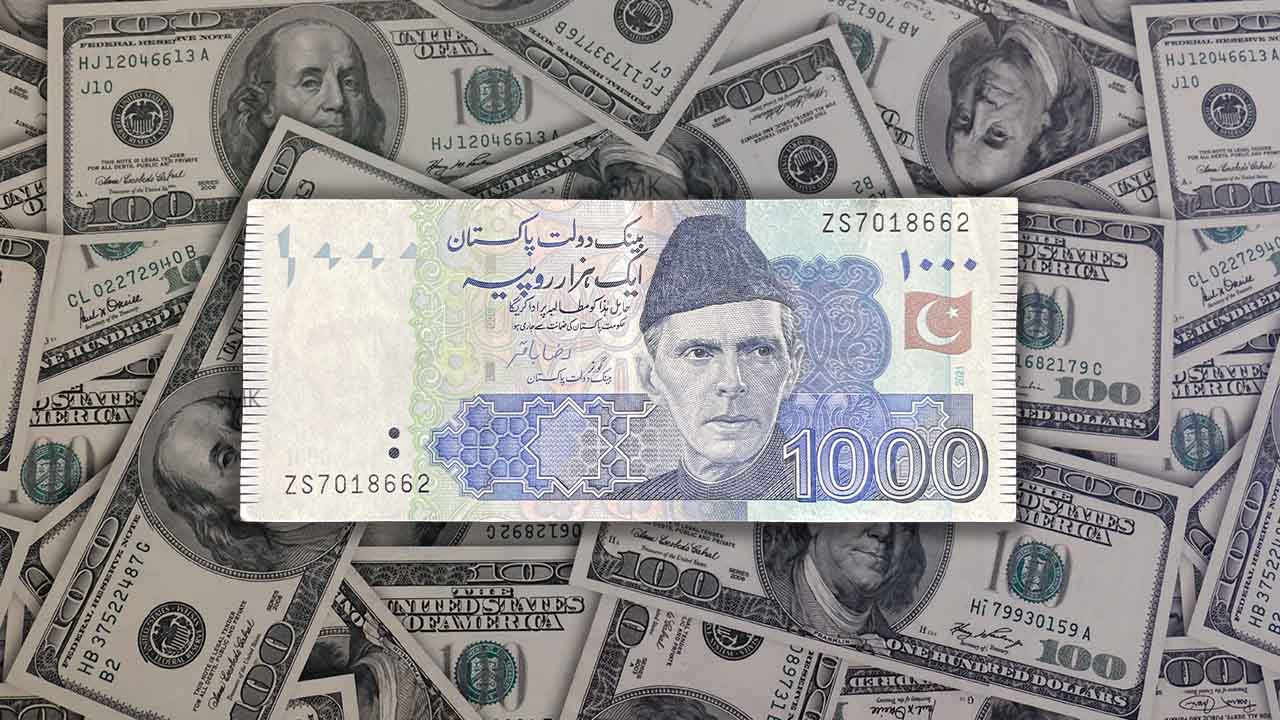
    The Pakistani rupee (PKR) has shown remarkable strength, appreciating by 4 rupees against the US dollar (USD) in the open market, with current quotes at 301/305 around noon. In just four days, the PKR gained an impressive 30 rupees (9.97 per cent), moving from PKR 331 to PKR 301 against the USD.

    Simultaneously, in the interbank market, PKR appreciated by 2 rupees in today’s session, quoted at 302.74/302.84, following a similar gain in the previous interbank session, reducing the gap between the interbank and open market to 0.57 per cent.

    This surge in the local currency is attributed to reforms by the State Bank of Pakistan (SBP) in the exchange companies sector. These reforms aim to consolidate exchange companies into a single category with a well-defined mandate and higher capital requirements, also encouraging banks to establish wholly owned exchange companies.

    An ongoing crackdown against speculators, hoarders, and smugglers has further boosted sentiment, reducing the disparity between the open market and interbank rates below the IMF’s recommended threshold.

    The black market for Hawala/Hundi has also seen a significant decline in dollar rates. Previously, rising demand for dollars due to speculation and smuggling had widened the gap between open market and interbank rates, exceeding IMF recommendations.

    The government’s initiatives effectively curb speculative activities in the open market without interbank intervention. Further improvements are expected if similar measures are taken against gold smuggling, as individuals may opt for smuggled gold investments in the absence of dollar access.

  • Rising debt levels: Pakistan’s national debt surpasses Rs61 trillion

    Rising debt levels: Pakistan’s national debt surpasses Rs61 trillion

    The federal government has witnessed a substantial increase in its total debt, which has surged to nearly Rs62 trillion. This significant escalation is primarily attributed to the government’s strategic borrowing from both domestic and foreign sources, a measure aimed at covering the fiscal deficit.

    According to The News, data from the State Bank of Pakistan (SBP) reveals that as of July 2023, the total debt of the government stands at Rs61.75 trillion. This figure reflects a substantial year-on-year increase of 22.11 per cent, compared to Rs50.57 trillion recorded in July 2022. Furthermore, on a month-on-month basis, the government’s debt exhibited a 1.49 per cent increase from Rs60.84 trillion in June 2023.

    The surge in the debt burden can be predominantly attributed to the government’s reliance on domestic and foreign borrowing mechanisms to address fiscal deficits.

    Breaking down the composition of the debt, data from the central bank highlights that a significant portion of Rs39.02 trillion is domestically sourced, representing a notable year-on-year growth of 24.08 per cent. This domestic debt comprises Rs29.59 trillion in long-term debt and Rs9.29 trillion in short-term debt. The remaining Rs22.73 trillion is external in nature.

    By the close of July 2023, the government’s long-term debt had escalated by 24.44 per cent year-on-year to Rs29.59 trillion when compared to the figure of Rs23.78 trillion recorded in the same period a year earlier. In parallel, short-term debt exhibited a substantial year-on-year increase of 27.14 per cent as opposed to Rs7.31 trillion in July 2022.

  • Pakistani rupee snaps 10-day depreciation streak against US dollar with 0.02% gain

    Pakistani rupee snaps 10-day depreciation streak against US dollar with 0.02% gain

    The Pakistani rupee (PKR) finally terminated its ten-session depreciation streak against the US dollar on Friday as the local currency concluded trading at Rs305.47 versus the greenback. The State Bank of Pakistan (SBP) reported a modest appreciation of Re0.07, or 0.02 per cent, when compared to the previous day’s closing rate.

    Thursday had marked a historic low for the PKR, with a closing rate of Rs305.54 against the US dollar in the inter-bank market. This decline had raised concerns about the currency’s stability and its impact on the nation’s economy.

    However, the SBP made a significant announcement on Friday. It categorically rejected reports circulating in the media about an emergency meeting of the Monetary Policy Committee (MPC). The central bank termed these reports as completely baseless and emphasized that it would be premature to forecast the future policy rate.

    According to the central bank, only the MPC, an independent statutory body, holds the authority to make decisions regarding the policy rate. The next scheduled meeting of the MPC is set for September 14, 2023.

    Internationally, the US dollar has faced challenges as it attempts to maintain its winning streak against major currencies. Traders are closely monitoring the pivotal monthly US jobs report, which is expected to shape Federal Reserve policy in the coming months.

    The US dollar index, which measures the currency against a basket of six developed-market peers including the euro, sterling, and yen, saw a slight decline of 0.05 per cent to 103.58 on Friday. This marks a cumulative decline of 0.53 per cent for the week.

    Additionally, oil prices, a significant indicator of currency parity, remained above $87 a barrel. Crude prices are showing signs of snapping a two-week losing streak, driven by expectations of tightening supplies.

    The Pakistani economy remains closely tied to global economic developments, making these currency fluctuations and international economic indicators crucial for policymakers and market participants. The nation will continue to monitor these trends closely in the days and weeks ahead.

  • SBP likely to hike key policy rate by up to 300 basis points next month

    SBP likely to hike key policy rate by up to 300 basis points next month

    The Monetary Policy Committee (MPC) of the State Bank of Pakistan (SBP) will likely meet at its upcoming meeting to decide on the key policy rate, and the market anticipates a possible rate increase of up to 300 basis points.

    According to the analysts contacted by the Brecorder, the SBP is likely to increase the rate from its current historic high of 22 per cent. As per the advance calendar issued in July, the SBP is currently slated to hold its MPC meeting on September 14.

    Notably, the central bank has previously taken the initiative to declare changes in its key policy rate through ’emergency’ meetings, similar to what occurred in June.

    Market speculation hints that the central bank might adopt a more patient approach this time, making an emergency meeting less probable.

     Tahir Abbas, the Head of Research at Arif Habib Limited (AHL), foresees a rate hike ranging between 100 and 150 basis points.

    He emphasised, the inflation rate is projected to remain elevated not only in August but also in the upcoming months. Furthermore, the persistent depreciation of the currency might compel the SBP to push interest rates upwards.

    Abbas added, “We expect a policy rate hike of around 100-150 bps.”

    In a previous report, AHL stated that headline inflation is expected to climb higher in August, surpassing the 28.3 per cent figure recorded in July 2023.

  • Pakistani rupee ends the day at another record low of Rs305.54 versus US dollar, losing Rs1.09

    Pakistani rupee ends the day at another record low of Rs305.54 versus US dollar, losing Rs1.09

    The Pakistani rupee (PKR) persisted in encountering downward pressure against the US dollar, with a recorded depreciation of 0.36 per cent. The day concluded with the rupee settling at Rs305.54, having incurred a loss of Rs1.09 in the interbank market, as reported by the State Bank of Pakistan (SBP).

    In the preceding session, the rupee had concluded at a historic low of Rs304.45 against the US dollar in the inter-bank market.

    IMF deviation risks dollar inflow halt

    In a session of the Senate Standing Committee on Finance held on Wednesday and chaired by Senator Saleem Mandviwalla, interim Finance Minister Dr Shamshad Akhtar conveyed that the interim government’s financial leeway for subsidies was limited. However, she mentioned that a proposal was being deliberated upon to discontinue electricity provisions for privileged segments.

    Dr Akhtar voiced apprehension that a deviation from the International Monetary Fund’s (IMF) stipulations could lead to a halt in dollar inflows, exacerbating the economic challenges facing the nation. She acknowledged that certain governmental actions had adversely affected the economic landscape. She specifically noted that the Federal Board of Revenue’s revenue collection was not meeting expectations while expenditures remained elevated.

    The Senate committee expressed its reservations about the escalating exchange rate fluctuations, the unprecedented cost of electricity, and the 22 per cent interest rate, all of which collectively pose difficulties for existing businesses to sustain and prosper.

    As a pivotal gauge of currency equilibrium, oil prices moderated on Thursday in response to data indicating a decline in China’s manufacturing activity. Additionally, investors were attentively awaiting the forthcoming US personal consumption expenditure report scheduled for later in the day.

    KSE-100 crash

    Moreover, the Pakistan Stock Exchange (PSX) remained firmly under the control of bears on Thursday as the benchmark index experienced a substantial drop of nearly 4 per cent, reflecting concerns about the country’s deteriorating economic situation.

    Investors responded with a sense of panic to the escalating rupee-dollar parity, choosing to divest from shares due to apprehensions surrounding an imminent economic crisis.

    Right from the commencement of trading, the KSE-100 index experienced a sharp decline, plummeting by over 1,700 points and breaching the 45,000 level. A prevailing negative sentiment among investors is preventing the index from making any headway into positive territory.

  • Pakistani rupee hits new all-time low of Rs304.445 after declining by Rs1.38 against US dollar

    Pakistani rupee hits new all-time low of Rs304.445 after declining by Rs1.38 against US dollar

    In the interbank session held on Wednesday, the Pakistani rupee (PKR) exhibited a decline of 1.39 rupees against the US dollar (USD). The closing exchange rate for the day stood at Rs304.445 per USD, in contrast to the concluding rate of Rs303.052 per USD observed in the preceding session.

    Throughout the trading day, the currency displayed a fluctuation, reaching an intraday high bid of Rs304.75 while also touching a low ask of Rs304.6.

    On a parallel note, within the open market, Exchange Companies set the buying rate for the dollar at Rs320 and the selling rate at Rs323.

    In the ongoing fiscal year, the Pakistani rupee has experienced a depreciation of 18.45 rupees against the dollar, amounting to a 6.06 per cent decrease. Concurrently, within the current calendar year, the PKR has depreciated by 78.01 rupees, reflecting a substantial decline of 25.63 per cent.

  • High interest rates and taxes lead to 20.90% drop in car financing in Pakistan

    High interest rates and taxes lead to 20.90% drop in car financing in Pakistan

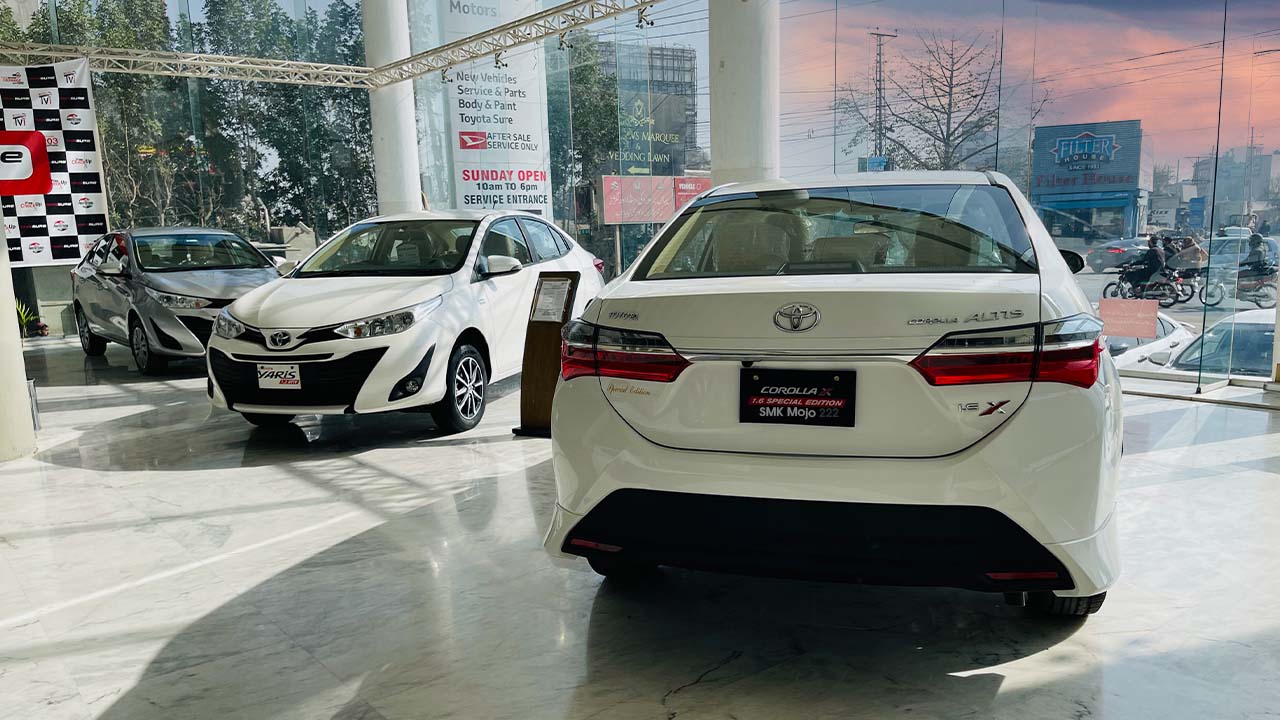
    In a notable shift, the landscape of automobile financing in Pakistan has undergone a substantial transformation, with figures from the State Bank of Pakistan (SBP) indicating a significant decline. The data, released by SBP, unveils a marked decrease in car financing, plummeting to Rs285.19 billion in July 2023. This represents a notable 20.90 per cent year-on-year (YoY) decrease and a 2.91 per cent month-on-month (MoM) decrease when compared to the figures from July 2022, which stood at Rs360.55 billion, and June 2023, which registered at Rs293.73 billion.

    The primary contributors to this downward trajectory are multi-faceted. Firstly, the imposition of higher interest rates has played a pivotal role in reshaping the car financing landscape. Additionally, the surge in car prices has also contributed significantly to this downturn. Moreover, regulatory restrictions governing the acquisition of loans have created a notable barrier, further impacting the market. Furthermore, the imposition of elevated taxes on the import of automobiles and their integral parts has compounded the challenges faced by the automobile financing sector.

    Contrastingly, in a separate but related sphere, consumer financing for house building displayed a contrasting narrative. SBP’s data reveals that by the conclusion of July 2023, consumer financing for house building registered at Rs211.11 billion, marking a commendable 4.82 per cent YoY increase. According to Mettis Global, this uptick can largely be attributed to SBP’s proactive measures to stimulate the housing and construction sector within the nation. However, in terms of monthly changes, the figures remained relatively static, with a minor decline of 0.57 per cent.

    Meanwhile, financing for personal use, amounting to Rs250.24 billion, experienced a marginal 0.09 per cent YoY decrease. Similarly, on a monthly basis, financing within this category saw a slight downturn of 0.95 per cent. Consequently, the cumulative credit extended to consumers in various segments reached Rs851.22 billion during the assessment month. This overall credit value reflected a notable 4.70 per cent YoY decline and a 0.99 per cent MoM reduction.

    Furthermore, the credit scenario within the private sector depicted a nuanced picture. Outstanding credit to the private sector encountered a minor 0.06 per cent YoY decrease and a slightly more pronounced 1.12 per cent MoM reduction, resting at Rs8.19 trillion in July 2023. In contrast, loans granted to the manufacturing sector exhibited an encouraging 1.12 per cent YoY increase, amounting to Rs4.48 trillion during the review period. However, on a monthly scale, the loans within the manufacturing sector dipped by 1.44 per cent MoM.

    In summation, the marked decline in car financing, as evidenced by SBP’s recent data, underscores the multifaceted challenges that the automobile financing sector in Pakistan is currently grappling with. While interest rates, car prices, and regulatory curbs have contributed to this downward trend, other sectors such as house building and manufacturing loans have demonstrated distinct trajectories. As the nation navigates through these financial dynamics, stakeholders remain vigilant in monitoring and adapting to these evolving circumstances.
  • Pakistani rupee’s fall continues, settles at new record low of Rs301 against US dollar

    Pakistani rupee’s fall continues, settles at new record low of Rs301 against US dollar

    The Pakistani rupee continued its unsettling descent, marking a fresh all-time low against the US dollar, with a settlement at Rs301 in the inter-bank market on Friday. As reported by the State Bank of Pakistan (SBP), the local currency reached the 301 mark, experiencing a decline of Re0.78 or 0.26 per cent.

    On the preceding day, the rupee concluded at a historic low against the US dollar, reaching a settlement of Rs300.22.

    On the global front, the US dollar achieved its highest position in over two months on Friday, poised for its sixth consecutive week of gains, as financial markets eagerly awaited a speech by Federal Reserve Chair Jerome Powell to gain insights into the trajectory of monetary policy.

    The dollar index, a measure of the US dollar’s strength against six other major currencies, witnessed a 0.019 per cent increase, reaching 104.11, the highest level since June 7. With a 2 per cent increase in August, the index is poised to end its two-month losing streak.

    Oil prices, a pivotal gauge of currency equilibrium, surged by over 1 per cent on Friday due to the firming of the dollar, as anticipation built ahead of a highly awaited speech by the head of the US Federal Reserve. This speech is expected to provide insights into the future of interest rates.

  • SBP’s forex reserves drop by $125 million to $7.93 billion after debt repayments

    The State Bank of Pakistan (SBP) revealed that its foreign exchange reserves decreased by $125 million within a week, now totalling $7.93 billion as of August 18. This is part of the country’s overall liquid foreign reserves of $13.25 billion. Commercial banks in Pakistan also hold $5.32 billion in net foreign reserves.

    This drop in reserves is due to debt repayments. Specifically, during the week ending August 18, 2023, the SBP’s reserves went down by $125 million, reaching $7,930.3 million due to these debt payments.

    Previously, the SBP’s foreign exchange reserves had increased by $12 million the week before. However, this increase was followed by a decline in the central bank’s reserves, which had previously decreased for three weeks in a row, primarily due to debt repayments.

    While the SBP’s reserves received a boost in July from the first installment of about $1.2 billion from the International Monetary Fund (IMF) as part of a new $3 billion stand-by arrangement, they are now under pressure due to debt repayments, increased import payments after eased restrictions, and a lack of new inflows.

    Regarding Pakistan’s financial situation, the current account, which had been in surplus for four straight months, posted a deficit of $809 million in July, the highest since October 2022.

    At the same time, the Pakistani rupee hit a new record low, falling below Rs300 against the US dollar in the inter-bank market on Thursday. The rupee settled at Rs300.22 against the US dollar, showing a decrease of Re0.58 or 0.19 per cent, as reported by the State Bank of Pakistan.

  • Pakistani rupee slides to Rs297.13 against US dollar on first day of the week, losing Rs1.35

    Pakistani rupee slides to Rs297.13 against US dollar on first day of the week, losing Rs1.35

    The Pakistani rupee (PKR) continued its decline against the US dollar on the first working day of the week. PKR went down by 0.45 per cent, which is about Rs1.35, and closed the day at Rs297.13 in the interbank market, as reported by the State Bank of Pakistan.

    This shows that over the past five trading sessions, the Pakistani rupee has lost a total of Rs8.64. It’s important to note that on the previous Friday, the rupee had closed at Rs295.78 after losing 0.86 paisas, which is about 0.29 per cent.

    Looking at last week, from Tuesday to Friday, the Pakistani rupee experienced a significant loss of Rs7.29. This indicates a period of notable fluctuation for the rupee in the foreign exchange market.