Tag: State Bank of Pakistan

  • Pakistan’s auto sector records 98% sales growth in March despite high prices

    Pakistan’s auto sector records 98% sales growth in March despite high prices

    Despite high car prices, Pakistan’s auto sector has seen a growth of 98 per cent in March, selling about 7,201 units compared to 3,642 units sold in the previous month. The increase has provided a ray of hope to the auto sector, which has picked up some pace after several months.

    However, car sales, including sales of non-Pakistan Automotive Manufacturers Association (PAMA) vehicles, plunged 68 per cent in March compared to the same month last year, due to non-production days and a decline in purchasing power.

    The monthly growth is due to better volumetric sales of Pak Suzuki Motor Company (PSMC) and Indus Motors, which increased by 475 per cent and 6 per cent respectively on a month-on-month basis. Arif Habib Limited also stated that due to rising inflationary pressure, consumers have switched to affordable vehicles of below 1000cc, which increased by 423 per cent.

    Despite the recent growth, fears of a slowdown still exist due to measures taken by the State Bank of Pakistan (SBP) to curb imports, resulting in production limitations as auto assemblers require prior permission to import completely knocked-down (CKD) units and raw materials.

    Sales of all other variants of cars, jeeps, tractors, pick-ups, three-wheelers and two-wheelers have also witnessed a year-on-year decline in March 2023, according to data released by PAMA a day earlier.

    In the first nine months of fiscal year 2022-23, 85,776 units were sold, down 50 per cent from 172,612 units sold during the same period in FY22. Sales of 1300cc and above cars were recorded at 2,913 units, down 67 per cent compared to the same month of the previous year’s sales of 9,280 units. In March 2023, 1,000cc cars recorded sales of 964 units, including 475 units of Suzuki Cultus and 489 units of Suzuki WagonR, against 2,410 units in the same month last year.

    Further breakdown of the data reveals that below 1000cc vehicles recorded a sale of 3,324 units, lower by 70 per cent than 11,109 units sold last year. Suzuki’s new Alto sold 2,542 units in March 2023 compared to 9,814 units in March 2022.

    Buses and trucks saw a decrease to 308 units in March from 565 units in the same month last year, while sales of jeeps and pick-ups decreased to 2,150 units from 4,403 units sold during the same period last year. Sales of tractors dropped to 2,984 units from 5,651 units in March 2022, while sales of rickshaws and motorbikes also decreased to 84,307 units in March against 151,010 units in the same period last year.

    PSMC recorded a jump of 475 per cent on a monthly basis to 5,628 units primarily due to the availability of CKD parts amid an easing of LC issues, while Indus Motors reported an increase of 6 per cent month-on-month to 1,912 units in March. However, Honda Car (HCAR) sales declined by 49 per cent month-on-month to 835 units in March due to the closure of the plant for 23 days on account of CKD issues.

    Hyundai sales were down 34 per cent month-on-month, with Tucson down 46 per cent month-on-month to 380 units and Sonata down 40 per cent month-on-month to 118 units in the period under review.

  • Pakistani rupee falls to historic low of Rs288.43 against dollar

    Pakistani rupee falls to historic low of Rs288.43 against dollar

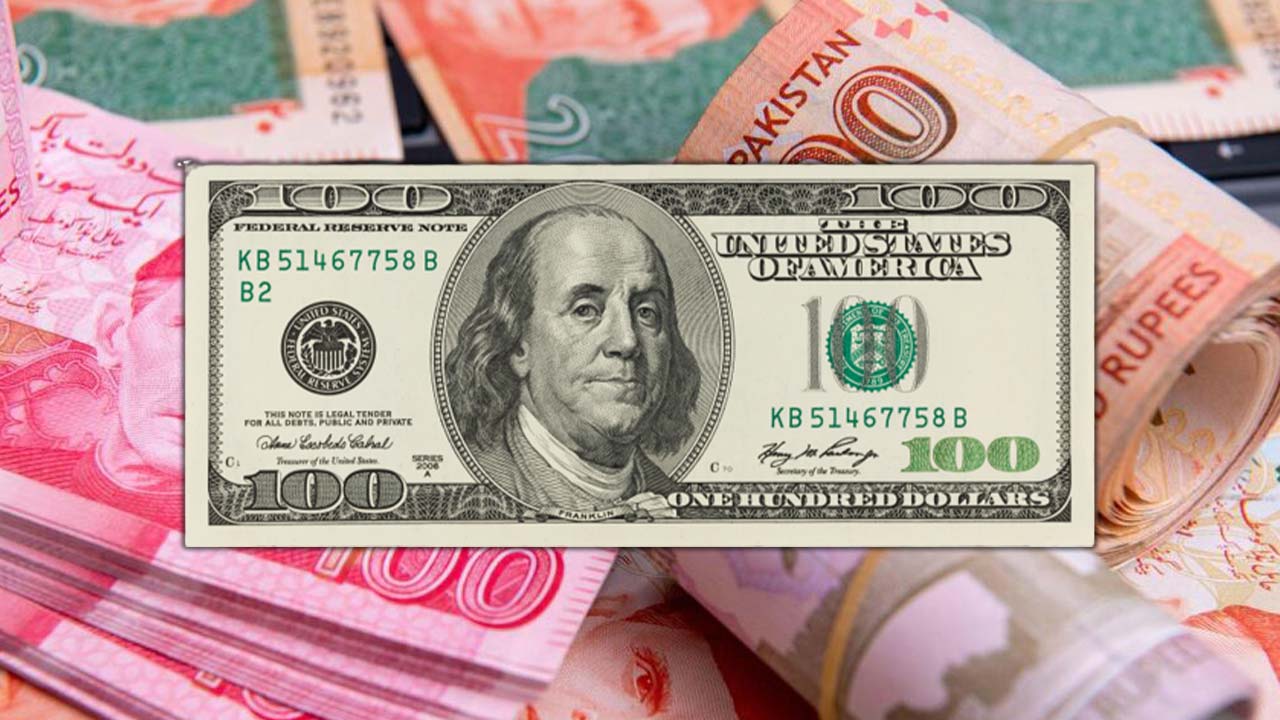
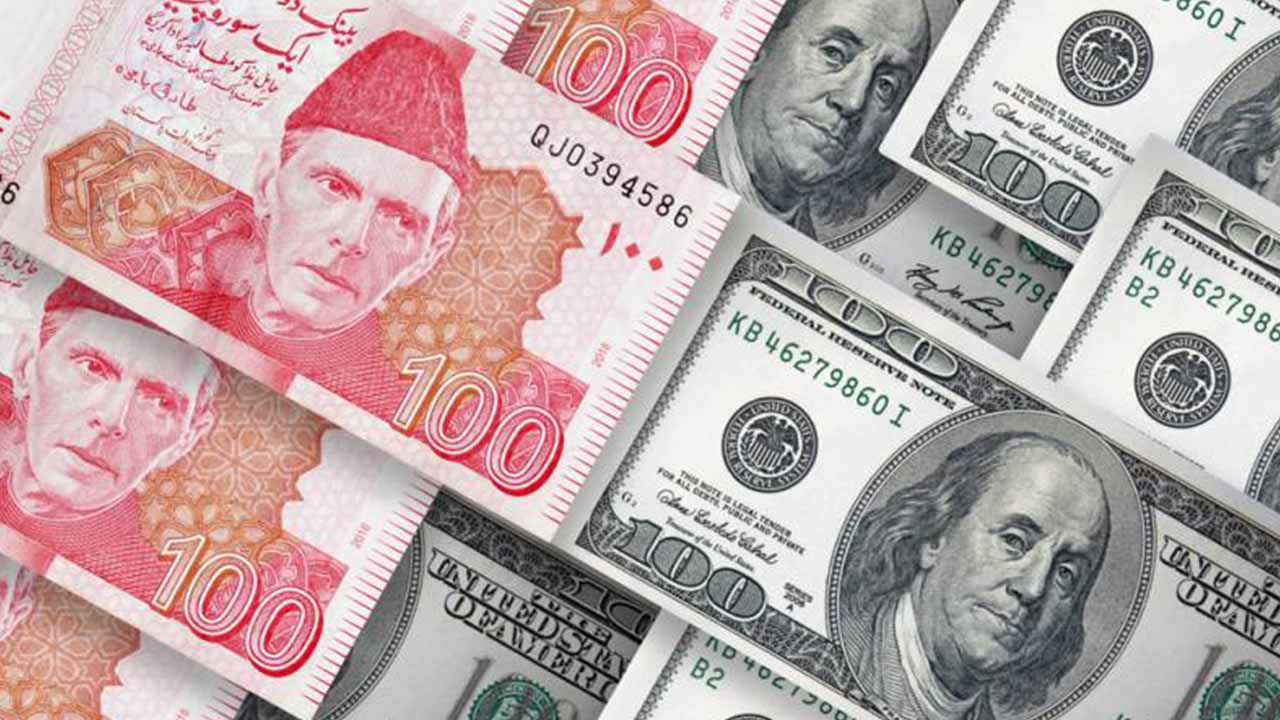
    On Wednesday, the Pakistani rupee (PKR) reached a new record low, falling to Rs288.43 against the US dollar in the interbank market.

    The State Bank of Pakistan (SBP) reported that the rupee slid by Rs1.34 against the greenback before closing at Rs288.43. Meanwhile, the Forex Association of Pakistan (FAP) has reported that the selling rate of the dollar in the open market was recorded at Rs295.

    This comes after the rupee had closed at Rs287.09 per US dollar the day before, with the greenback trading at over Rs291 in the open market. Additionally, on April 5, the rupee had closed at Rs287.85 per US dollar, while the greenback was trading at over Rs293 in the open market.

    Experts suggest that the drop in the rupee’s value can be attributed to various factors such as economic challenges, political uncertainty, and depleting foreign exchange reserves.

    It is worth noting that a staff-level agreement between the International Monetary Fund (IMF) and Pakistan was scheduled to take place on February 9.

  • FBR report exposes $7.19 million illegal smartphone imports

    FBR report exposes $7.19 million illegal smartphone imports

    According to an official report from the Federal Board of Revenue (FBR), mobile phones worth $7.19 million have been imported into Pakistan illegally without opening letters of credit (LCs) or using the banking channel.

    The report also states that despite an unannounced ban by the State Bank of Pakistan (SBP) on the import of mobile phones and their accessories, 52 Goods Declarations (GDs) worth $8.65m were cleared between December 2022 and February 2023.

    The mobile phones were imported in Completely Build Up (CBU) condition and only $1.46m was paid legally out of Pakistan through the banking channel. The remaining $7.19m was illegally transferred out of Pakistan. The FBR report does not provide details about the mode of payment made to suppliers in Dubai for the import of these mobile phones.

    The Pakistan Telecommunication Authority (PTA) has stated that manufacturers imported over 190,000 mobile phones in CBU condition under a facility allowed to them. However, despite restrictions set by the banking sector on imports, some companies are still reportedly importing mobile phones under their manufacturing license.

    The import of smartphones has increased, especially after at least 30 manufacturing units in Pakistan halted production due to import restrictions.

  • Pakistani rupee drops to Rs287.09 versus US dollar

    Pakistani rupee drops to Rs287.09 versus US dollar

    In Monday’s interbank market, the Pakistani rupee experienced a substantial decrease against the US dollar. The State Bank of Pakistan (SBP) reported that the local currency closed at Rs287.09, down by Rs2.44 or 0.85 per cent.

    Last week, the rupee had already depreciated by 0.3 per cent, closing at Rs284.65. During the week, the currency fell in four of the five sessions, with the only gain on Thursday, the day when an official from the finance ministry announced that the International Monetary Fund (IMF) had received a financing assurance from Saudi Arabia.

    The recent drop in the value of the Pakistani rupee is partially due to the delay in the confirmation of funding from a friendly country. The staff-level agreement between Pakistan and the IMF is taking time solely because of this delay. The financing confirmation is crucial to bridge

    Pakistan’s external account gap and meet the last condition of the IMF. Until then, the currency is likely to remain under pressure.

    Meanwhile, globally, the US dollar began the week strongly after the release of US jobs data indicating a tight labour market. This firming up of expectations has led to predictions that the Federal Reserve will again raise interest rates at its meeting next month.

    In the currency market, the dollar index, which measures the US currency against six major peers, rose 0.225 per cent to 102.25, recovering from the two-month low of 101.40 that the index touched last week.

    Additionally, oil prices, a key indicator of currency parity, stabilised on Monday after rising for three consecutive weeks. This was due to looming supply cuts from Saudi Arabia and other OPEC+ producers, which balanced concerns about weakening global growth that may dampen fuel demand.

  • Overseas Pakistanis send home remittances worth $2.5 billion, marking a seven-month high

    Overseas Pakistanis send home remittances worth $2.5 billion, marking a seven-month high

    According to data from the State Bank of Pakistan (SBP), remittances sent by overseas Pakistanis to their home country hit a seven-month high of $2.5 billion in March, which is attributed to Ramadan and Eid-ul-Fitr.

    Compared to the prior month of February, the inflow of workers’ remittances increased by 27 per cent, but it was 11 per cent lower than March 2022. The legal channels for sending funds to family members were used more frequently, resulting in comparatively high inflows as the difference between the interbank and open market rates decreased.

    Samiullah Tariq, the head of research at Pakistan-Kuwait Investment Company, described the increase as a positive sign. He explained that the kerb and interbank rates have minimal differences. Furthermore, the historical trend suggests that overseas Pakistanis send record-high remittances ahead of Eid festivals each year. The Ministry of Finance predicts that remittances will “further improve due to positive seasonal and Ramadan factors.”

    The central bank reported that the cumulative inflow of $20.5 billion during the first nine months of the fiscal year 2022-23 led to a 10.8 per cent decrease in remittances compared to the same period last year. In addition, it is important to note that this month’s remittances have surpassed the trade deficit data of the Pakistan Bureau of Statistics (PBS), increasing the possibility of a current account surplus.

    The Ministry of Finance also highlighted in its monthly outlook report that the current account deficit is expected to remain on the lower side due to the economic factors contributing to the figures. It should also be noted that the SBP trade deficit data point is usually even lower than the PBS trade deficit.

  • Govt increases profit rates on national saving schemes following record policy rate hike

    Govt increases profit rates on national saving schemes following record policy rate hike

    In response to increasing policy rates, the Pakistani government has announced significant raises in profit rates for all national savings schemes (NSS) from April 10, 2023. This decision follows the State Bank of Pakistan’s (SBP) considerable increase in the policy rate to a record 21 per cent in its recent Monetary Policy Committee meeting to combat inflation.

    The Finance Division announced on Friday, through a notification issued under Rule-II of the Pensioners’ Benefit Accounts Rules, 2003, that the rate of profit on deposits made in Pensioners’ Benefit Accounts and Behbood Savings Certificates will be 16.56 per cent per annum from April 10, 2023, until further notice.

    Additionally, the rate of profit on deposits made in Shuhada’s Family Welfare Account will be 16.56 per cent per annum from April 10, 2023, until further notice.

    The Central Directorate of National Savings (CDNS) has also increased the profit rate on Defence Saving Certificates from 9.29 per cent to 14.87 per cent. The profit rate on Regular Income Certificates has been raised to 12.84 per cent of the total investment.

    Similarly, the profit margin on the three-year Special Saving Certificates and Special Savings Account has been increased to 17 per cent for the first five profits and to 17.8 per cent for the sixth profit. Furthermore, the return on Saving Accounts (running accounts) has been raised to 18.5 per cent. However, it’s worth noting that there will be a deduction of Withholding Tax and Zakat as per the rules.

  • Pakistan records 17% increase in exports to Afghanistan, SBP data shows

    Pakistan records 17% increase in exports to Afghanistan, SBP data shows

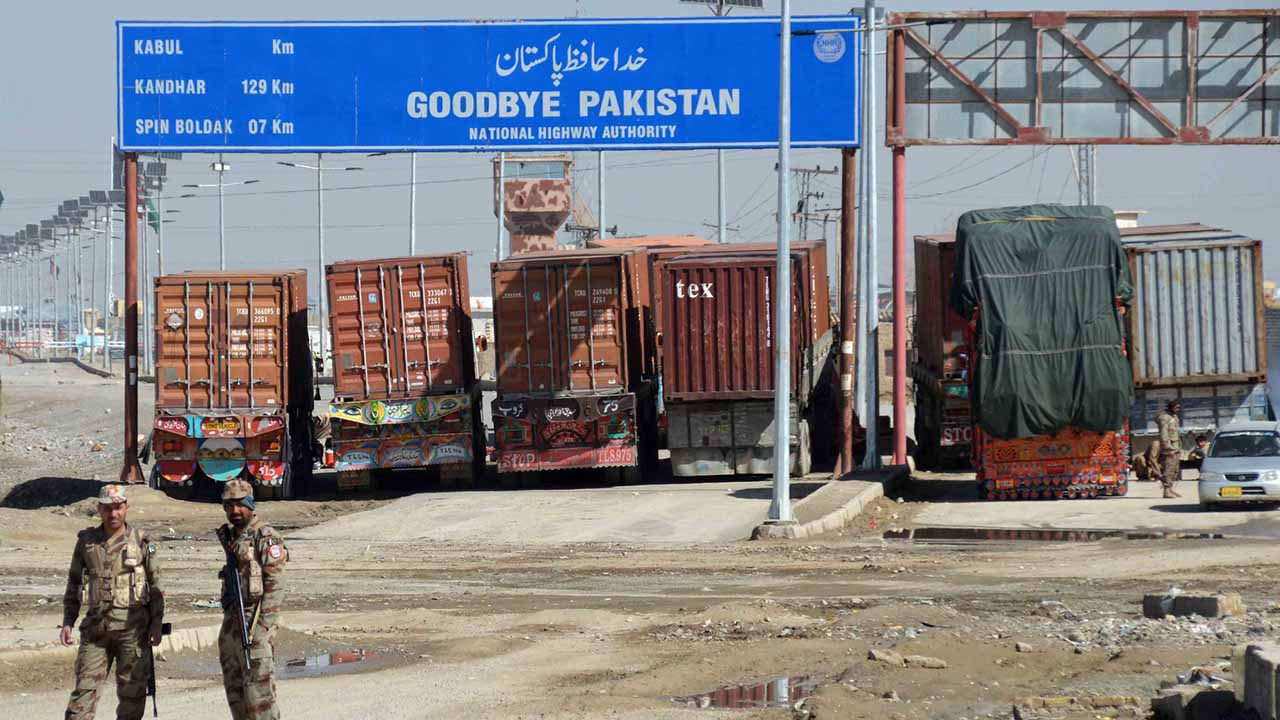
    According to a report by the State Bank of Pakistan (SBP), Pakistan’s export of goods and services to Afghanistan has increased by 17.02 per cent during the first eight months of the current fiscal year (2022-23) compared to the corresponding period of the previous year.

    From July-February (2022-23), overall exports to Afghanistan reached US $346.522 million, while during the same period last year, exports were recorded at US $296.109 million, showing a growth of 17.02 per cent.

    Furthermore, the year-to-year basis also showed an increase of 60.49 per cent in exports to Afghanistan, rising from US $38.222 million in February 2022 to US $61.345 million in February 2023. Meanwhile, on a month-on-month basis, exports to Afghanistan also rose by 82.58 per cent during February 2023, reaching US $61.345 million, compared to US $33.598 million in January 2022.

    In contrast, Pakistan’s exports to other countries decreased by 9.65 per cent during the eight months, dropping from US $20.632 billion to US $18.639 billion, according to SBP data.

    The imports from Afghanistan into Pakistan during the period under review were recorded at US $13.540 million, which was a significant decrease of 88.65 per cent compared to last year’s US $119.328 million in July-February (2021-22).

    Year-on-year, imports from Afghanistan also dropped by 98.89 per cent, from US $13.723 million in February 2022 to US $0.151 million in February 2023. However, on a month-on-month basis, imports from Afghanistan increased by 11.02 per cent during February 2023, reaching US $0.136 million, compared to US $0.122 million in January 2022.

    Overall, the imports into Pakistan also witnessed a decrease of 21.02 per cent, from US $47.336 billion to US $37.388 billion, according to SBP data. Based on the trade figures, the trade of goods and services with Afghanistan witnessed an 88.35 per cent increase in surplus during the period under review compared to the previous year, with a recorded surplus of US $332.982 million against US $176.781 million during the last year.

  • State Bank of Pakistan expected to raise key policy rate to record-high

    State Bank of Pakistan expected to raise key policy rate to record-high

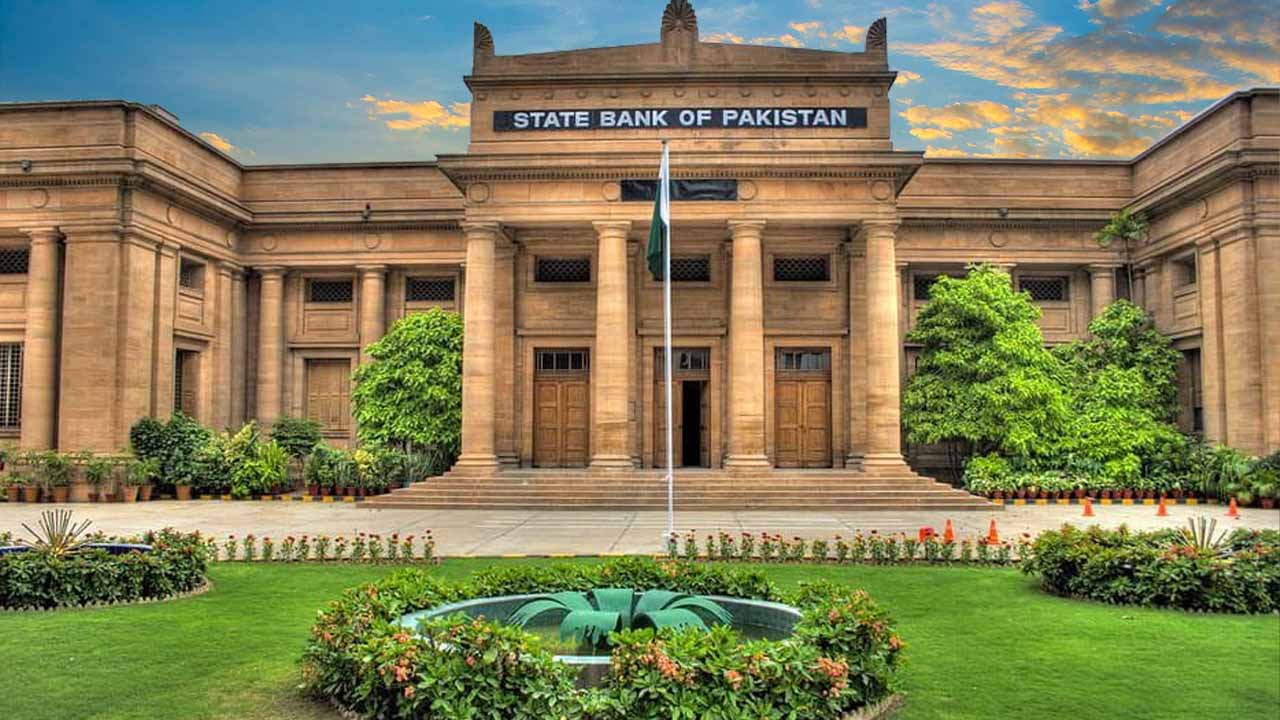
    The State Bank of Pakistan (SBP) is expected to raise its policy rate by a significant 100-200 basis points in light of the country’s economic situation and historically high inflation reading. Financial analysts anticipate the Monetary Policy Committee to increase its key policy rate to 21-22 per cent at the review today (April 4) to curb inflation. This decision is expected to discourage private-sector borrowing since an increase in currency in circulation can drive inflation up.

    In March, the central bank raised its key rate by a massive 300 basis points to a record-high level of 20 per cent, surpassing market expectations to meet the International Monetary Fund’s requirements for the release of its pending bailout funds. The country recorded historic high inflation at 35.4 per cent in March on an annualized basis, with core inflation, excluding energy and food prices, increasing to 18.6 per cent in urban areas and 23.1 per cent in rural areas.

    The market’s reaction to surging inflation is evident from the recent rise in bond market rates driven by investors’ bullish outlook. According to a survey conducted by Arif Habib Limited, 57.7 per cent of respondents expect the policy rate to increase. Of these respondents, 30.8 per cent are predicting a rate hike of 100bps and 26.9 per cent foreseeing a rate hike of 200 bps. Meanwhile, 42.3 per cent of respondents believe that the policy rate will remain unchanged at 20 per cent.

    The expected increase in the policy rate will make bank financing even more expensive, reduce demand for foreign financing for imports, and help address the fast decline in foreign exchange reserves, which have dropped to critically low levels at $4.2 billion. The cash-strapped country is undertaking key measures to secure IMF funding, including raising taxes, removing blanket subsidies, and artificial curbs on the exchange rate. While the government expects a deal with the IMF soon, media reports suggest that the agency expects the policy rate to be increased.

    Initially, the MPC meeting was scheduled for April 27, according to the six-month advance calendar issued by the central bank in December 2022. However, the SBP called an off-cycle review last month and brought forward the April meeting. The revival of the IMF loan program will help attract $3-4 billion from multilateral and bilateral creditors, including the IMF, and stabilize foreign exchange reserves over the short term.

  • Weekly inflation jumps over 46% as wheat flour prices reach all-time high in Pakistan

    Weekly inflation jumps over 46% as wheat flour prices reach all-time high in Pakistan

    The price of wheat flour has hit an all-time high, and this has caused weekly inflation to surge by 1.80 per cent week-on-week and 46.65 per cent year-on-year.

    The Pakistan Bureau of Statistics has attributed this rise in the sensitive price indicator to the increase in prices of several items, including wheat flour, tomatoes, potatoes, and bananas, among others. On the other hand, the PBS has noted a decrease in the prices of chicken, chilli powder, and LPG, among others.

    The increase in the price of wheat flour is due to the government’s change in subsidy mechanism, shifting from general subsidy to a targeted subsidy through the Benazir Income Support Programme. This change has led to a 42 per cent increase in the price of a 20kg bag of wheat flour, which has now reached an all-time high of Rs2,586. As we head into Ramadan, food prices are expected to continue rising, and the March 2023 CPI is expected to come in at 35.5 per cent on a YoY basis.

    Sticky inflation numbers, along with the stalled International Monetary Fund programme, have pushed the State Bank of Pakistan to raise its benchmark interest rate by 300 basis points to a 26-year high. The central bank is expected to raise the policy rate by another 100bps to 21 per cent in its upcoming monetary policy committee meeting on April 4. This rate hike is expected to spread massive poverty among the population.

  • Toyota IMC announces shutdown of production plant once again due to parts shortage

    Toyota IMC announces shutdown of production plant once again due to parts shortage

    Indus Motor Company Limited (INDU), the company known for assembling and selling Toyota-brand vehicles in Pakistan, has announced the temporary shutdown of its production plant from March 24 to March 27 due to raw material and component shortages.

    In a notice to the Pakistan Stock Exchange (PSX), Indus Motor cited difficulties in opening Letters of Credit (LCs) for raw materials by banks, which have caused a disruption in the supply chain of the company and its vendors.

    As a result, the company is unable to continue its production activities due to insufficient inventory levels. This is the second time this year that Indus Motor has announced the shutdown of its plant, with the first being from February 1 to February 14 due to an inventory shortage.

    The CEO of Indus Motor, Ali Asghar Jamali, had previously acknowledged the challenges facing the local auto industry, including the restrictions on Completely Knocked Down (CKD) kits, which have resulted in manufacturers operating at only 40-45 per cent of their capacity.

    The auto industry in Pakistan is heavily reliant on imports and has been affected by the State Bank of Pakistan’s (SBP) restrictions on the opening of LCs, following a sharp depreciation of the rupee.

    The SBP has imposed restrictions on imports due to the country’s low foreign exchange reserves, which has resulted in operational hindrances for many industries, including the auto sector.

    Although the SBP withdrew import restrictions in January, many industries are still struggling due to the dollar shortage.