Tag: State Bank of Pakistan

  • SBP expected to increase interest rates again on IMF insistence

    SBP expected to increase interest rates again on IMF insistence

    The State Bank of Pakistan (SBP) is reportedly considering increasing the interest rate by 2 per cent during the upcoming Monetary Policy Committee (MPC) meeting in a bid to unlock the International Monetary Fund (IMF) programme.

    This follows failed negotiations between the Shehbaz Sharif-led government and the IMF, with the latter demanding that Pakistan raise the interest rate by 4 per cent due to its belief that inflation is lower in Pakistan as per the interest rate.

    The SBP had already increased the interest rate by 2 per cent, but now the IMF is reportedly pressuring Islamabad to raise it again by 2 per cent. The MPC is scheduled to meet on April 4 to review the interest rate as per the IMF’s demand.

    According to The News, the SBP has reportedly agreed to raise the interest rate by 2 per cent in accordance with the Fund’s demands. On March 2, the SBP raised the monetary policy rate by 300 basis points to 20 per cent due to a deterioration in inflation outlook and expectations amid recent external and fiscal adjustments.

  • SBP issues commemorative coin of Rs50 to celebrate golden jubilee of Senate of Pakistan

    SBP issues commemorative coin of Rs50 to celebrate golden jubilee of Senate of Pakistan

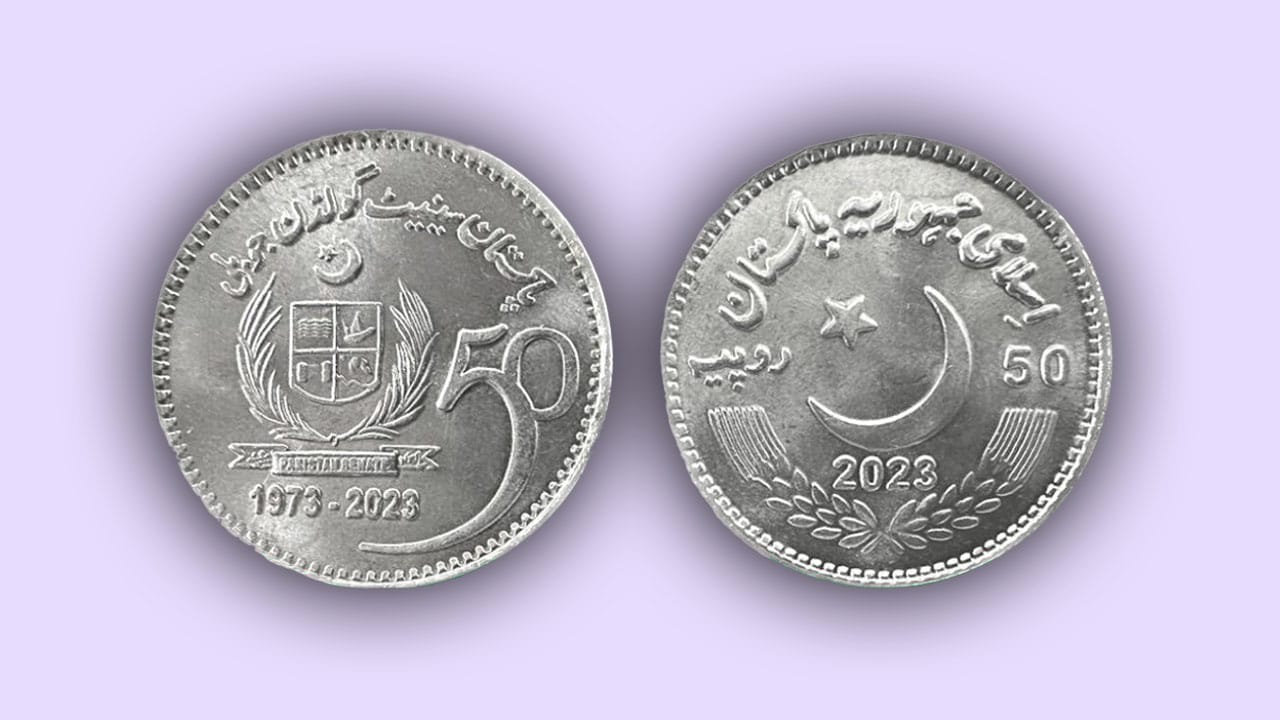
    The Federal Government of Pakistan has authorised the State Bank of Pakistan (SBP) to issue a commemorative coin of Rs50 to celebrate the Golden Jubilee of the Senate of Pakistan in 2023.

    The coin, which has a round shape milled with a dimension of 30.0 mm, weight of 13.5 grammes, and Cupro-Nickel metal contents (Copper 75 per cent & Nickel 25  per cent), shall be issued through the exchange counters of all field offices of SBP Banking Services Corporation starting from March 17, 2023.

    The Senate of Pakistan, also known as Aiwan-e-Bala Pakistan and constitutionally referred to as the House of the Federation, is the upper legislative chamber of the bicameral parliament of Pakistan. As a permanent House with equal representatives from all provinces of the country, the Senate symbolizes continuity in national affairs.

    The issuance of the commemorative coin is a fitting tribute to the Golden Jubilee of the Senate of Pakistan and underscores the significance of this occasion. It is expected to serve as a lasting reminder of the Senate’s contribution to Pakistan’s democratic process and its role in shaping the country’s political landscape.

  • Pakistani rupee reverses marginal gains, closes at Rs281.61 against US dollar

    Pakistani rupee reverses marginal gains, closes at Rs281.61 against US dollar

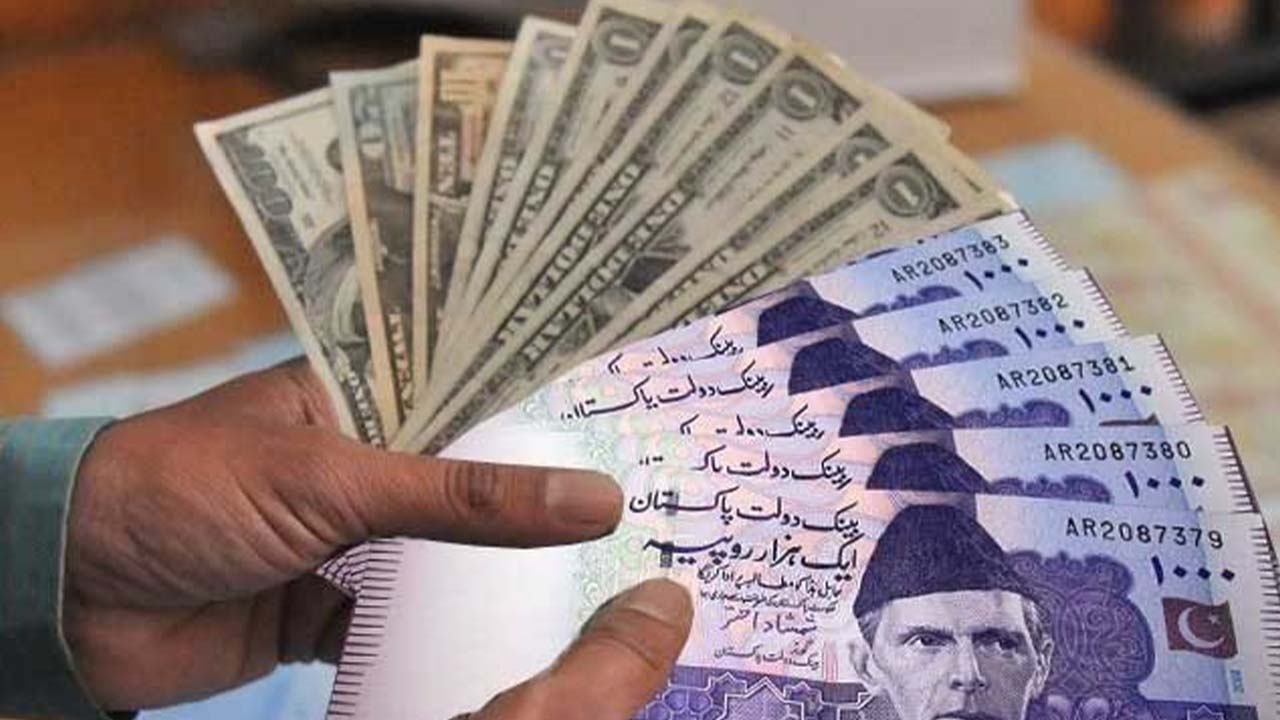
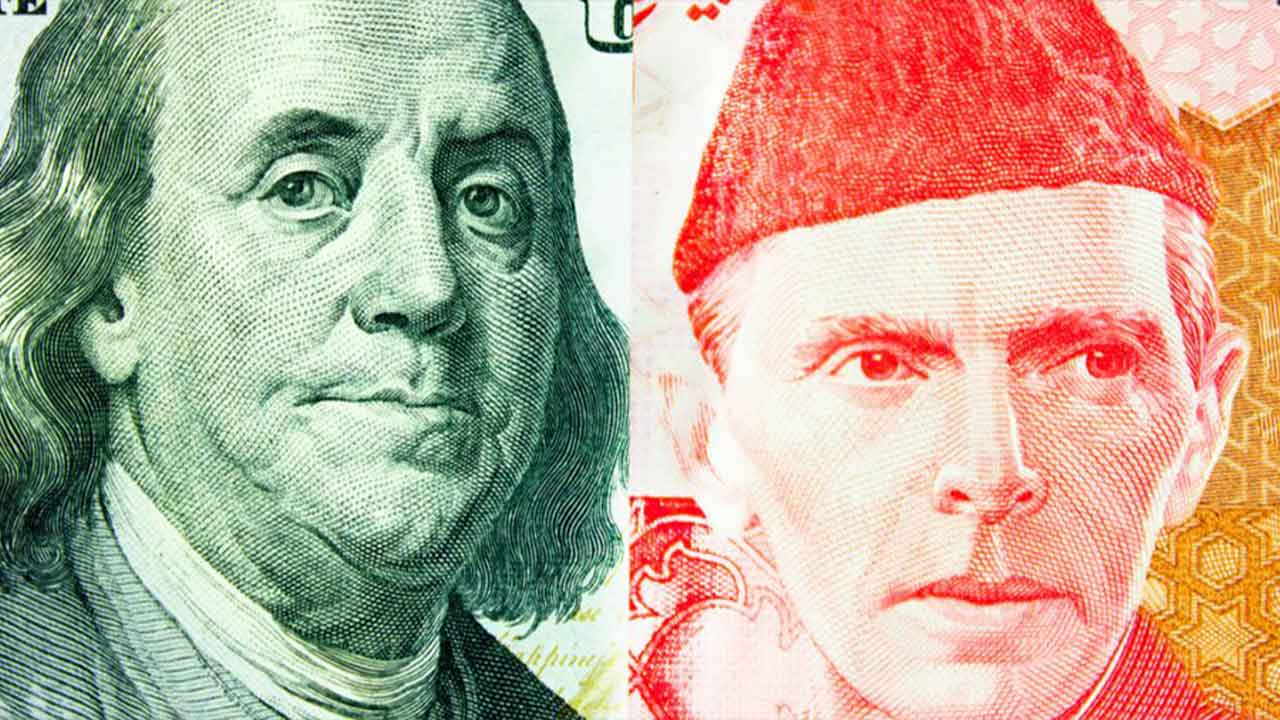
    On Monday, the Pakistani rupee faced renewed pressure against the US dollar, declining by 0.30 per cent in the inter-bank market after posting marginal gains on Friday. According to the State Bank of Pakistan (SBP), the rupee settled at Rs281.61, representing a decrease of Re0.84.

    Despite the rupee having found some relief on Friday with a 0.54 per cent appreciation in the inter-bank market, the currency had depreciated by 0.82 per cent against the US dollar during the previous week.

    The SBP has received inflows from China, which have provided support to critical levels of foreign exchange, but concerns over the delay in the International Monetary Fund (IMF) programme have continued to impact sentiment.

    Miftah Ismail, former Federal Finance Minister, suggested on Sunday that Pakistan should ensure 15 per cent tax on Gross Domestic Product (GDP) and 15 per cent exports to GDP in order to avoid the need for IMF programs.

    Internationally, the US dollar experienced a sharp decline on Monday due to the sudden collapse of Silicon Valley Bank (SIVB). The US government announced various measures on Monday to mitigate the impact of the bank’s collapse, including ensuring access to deposits for SVB customers and depositors of New York’s Signature Bank.

  • Pakistan’s Petroleum Division eyes discounted Russian crude oil amid high global prices

    Pakistan’s Petroleum Division eyes discounted Russian crude oil amid high global prices

    Petroleum Division is attempting to purchase Russian crude oil for approximately $50/barrel, which is at least $10/barrel below the price ceiling imposed by G7 countries on this valuable commodity originating from Russia because of its conflict with Ukraine. Presently, crude oil is being sold internationally for $82.78/barrel.

    Officials participating in the virtual negotiations with Russia have disclosed that Moscow is primarily focused on fulfilling all prerequisites, such as deciding on the method of payment, shipping costs with premium, and insurance expenses, before entering into an agreement with Pakistan. These officials, who requested anonymity, revealed that Russia will respond regarding the discount on the base price after the prerequisites are finalized. They also stated that shipping the crude oil from Russian ports will take 30 days, resulting in a $10-15/barrel increase due to transportation costs.

    The talks between Moscow and Islamabad are progressing positively, with the expectation that a government-to-government deal on Russian crude oil imports will be finalized by the end of March. When asked, officials stated that the government has decided not to disclose the payment method to Russia for crude oil imports, but authorities are considering using Pakistan National Shipping Corporation (PNSC) ships or Russian tankers for transportation.

    An official cautioned that the landed cost of Russian crude must be considered because the crude vessel will arrive in 30 days, leading to a per barrel shipping cost of $10-15. They added that Moscow has not agreed on the discount yet, and the maximum discount may be offset by the crude oil’s shipping costs.

    State Minister Musadik Malik had previously claimed that Pakistan would receive a 30% discount on Russian crude oil during a press conference. The government plans to import one Russian crude oil ship to test the landed cost compared to the existing cost of crude being imported from Abu Dhabi National Oil Company (ADNOC) of the United Arab Emirates and Saudi Aramco.

    According to Geo, the Petroleum Division secretary is currently in Karachi to further discuss the import of Russian crude oil to process it for finished products with the top management of Pak-Arab Refinery Company Limited (PARCO), Pakistan State Oil (PSO), Pakistan Refinery Limited (PRL), and other refineries. If the test ship’s cost is low enough to bring down the prices of petroleum, oil, and lubricants, Pakistan will approve Russian oil cargos within a month.

    Due to a US dollar liquidity crunch, Pakistan will pay Russia in the currencies of friendly countries such as China, Saudi Arabia, and the UAE. The officials revealed that the ship carrying Russian crude will be insured by the National Insurance Company Limited (NICL) and Pakistan Reinsurance Company Limited (PakRE). The State Bank of Pakistan (SBP), which was previously hesitant about transactions with Russian banks due to G7 restrictions, has now expressed a willingness to communicate with the Russian counterpart bank regarding a payment mechanism for oil imports in three currencies other than dollars.

  • State Bank of Pakistan’s foreign exchange reserves rise to $4.3 billion after Chinese loan

    State Bank of Pakistan’s foreign exchange reserves rise to $4.3 billion after Chinese loan

    Pakistan’s foreign exchange reserves held by the State Bank of Pakistan (SBP) have exceeded $4 billion after the country received a $500 million loan from the Industrial and Commercial Bank of China (ICBC).

    In a weekly bulletin, the SBP reported a rise in foreign exchange reserves by $487 million, boosting the total to $4,301 million as of 3 March, providing an import cover of around a month. This was part of the ICBC’s $1.3 billion facility, which followed another loan of $700 million from the China Development Bank.

    These loans were essential as Pakistan has not received funds from any other country, except China, while the $350 billion economy struggles to revive its stalled International Monetary Fund (IMF) program.

    There are $7 billion of repayments due in the coming months, including a Chinese loan of $2 billion due in March. According to Geo, experts believe that the Pakistan rupee, which has fallen to a historic low of Rs282.30 against the dollar in the interbank market, can only recover to Rs265 if the situation improves.

    Meanwhile, the government has imposed restrictions on imports due to a shortage of dollars, which has resulted in the partial closure of textile and automobile manufacturers, raising fears of unemployment.

  • SBP governor says import restrictions will be eased after completion of IMF review

    SBP governor says import restrictions will be eased after completion of IMF review

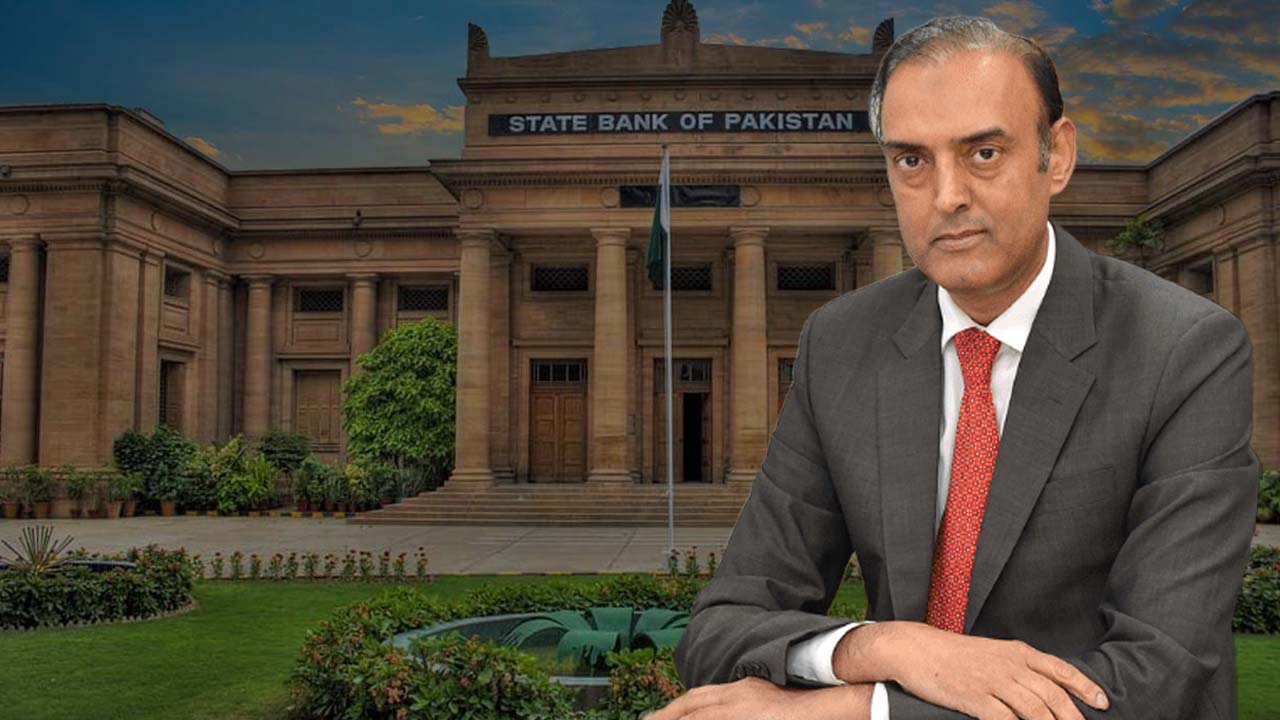
    During a briefing to the Senate Standing Committee on Finance, State Bank of Pakistan (SBP) Governor Jameel Ahmed projected that the current account deficit for the ongoing fiscal year would be $7 billion, which is lower than the budgetary target of $10 billion. He attributed the lower deficit to measures taken to control imports, which he said could not continue for a longer period of time. Ahmed stated that import compression would ease after the completion of the International Monetary Fund (IMF) review.

    Ahmed also mentioned that the low inflows due to the delay in the IMF review, higher commodity prices in the international market, and the Ukraine-Russia war are major reasons behind pressure on the external account and an increase in inflation. However, he clarified that an increase of 300 per cent basis points in the policy rate was not made on the demand of the International Monetary Fund (IMF), and that the Staff Level Agreement (SLA) is close to being finalized with the Fund.

    Regarding the outflow of $2.4 billion on account of debt repayment in the first half of the current fiscal year compared to $6.3 billion inflow for the same period a year ago, Ahmed said that the decline in inflows was due to the pending review of the IMF program. He hoped that budgeted inflow would materialize after the completion of the review in the second half, thereby increasing foreign exchange reserves.

    Ahmed also mentioned that the pressure of inflation will remain for two to three months and the average inflation this year will be 26.5 per cent. He added that remittances have decreased by $2 billion and are projected at $29 billion for the ongoing fiscal year against over $31 billion for the last fiscal year. There was also a decline of 7.4 per cent in exports as the country did not have exportable goods due to flood and a decrease in the export of rice. Vegetables and fruit exports have also declined by 48 and 37 per cent respectively.

    According to The News, the committee expressed concern over the fluctuation of the dollar and said that it was the responsibility of the regulator to maintain the actual price of the dollar and take measures against black marketing and smuggling. The committee sought details of the amount of dollars smuggled to Afghanistan in the recent period. The committee members recommended seriously addressing the issue of the difference between the dollar rate in the open market and the inter-bank. The chairman of the committee recommended that instead of rupee trade with Afghanistan, either be replaced with the dollar or barter trade because trade with Afghanistan in rupee is also contributing to the external account pressure.

    Senator Mohsin Aziz highlighted that the remittances, the FDI, and the exports have been on a decline, whereas the country’s debt was increasing. He also said that imports compression and policy rate were hurting the industry and exports, and exporters are unable to compete in the global market with regional players due to government policies.

    In response to the issue of refusal of LCs to importers of pharmaceutical ingredients, the SBP said it was fully supporting the import of above articles and imports of pharma industry have considerably increased in the month of February and the first seven days of March 2023.

  • Another IMF condition met as Pakistan imposes 25% sales tax on luxury items

    On Tuesday, the federal cabinet led by Prime Minister Shehbaz Sharif approved the imposition of a 25 per cent sales tax on luxury items, fulfilling a condition set by the International Monetary Fund (IMF) for the revival of the $7 billion Extended Fund Facility (EFF) that had been stalled for months.

    The cabinet approved the 25 per cent general sales tax (GST) on luxury items through a circulation summary. The Federal Board of Revenue will issue a formal notification in the coming days, and the new rate will be applicable from March 1.

    The list of items subject to the 25 per cent GST includes aerated water and juices, imported cars, mobile phones, pet food, sanitary and bathroom wares, carpets (excluding Afghanistan), chandeliers and lighting devices or equipment, chocolates, cigarettes, confectionery items, corn flakes, cosmetics, shaving items, tissue papers, crockery, decorative devices, doors and window frames, fish, footwear, fruits and dry fruits, furniture, home appliances (CBU), luxury leather jackets and apparel, mattress and sleeping bags, frozen or processed meat, musical instruments, arms and ammunition, shampoos, sunglasses, tomato ketchup and sauces, and travel bags and suitcases.

    The federal government also imposed a 25 per cent GST rate on locally manufactured luxury vehicles of 1,400cc and above. The FBR has estimated that it will collect an additional Rs15 billion in taxes through the enhanced GST rate of 25 per cent in the four-month period.

    According to sources, Pakistan and IMF held virtual negotiations on Monday to revive the loan program that had been stalled for months. During the meeting, the lender expressed satisfaction with the country’s measures, while Pakistan insisted on early finalization of the staff-level agreement.

    The negotiations were moving positively as the Fund did not place any new demands during the virtual session. The State Bank of Pakistan (SBP) informed IMF representatives about the estimated collection of foreign exchange reserves of $10 billion until June, and sources claimed that Pakistan had achieved future targets before the staff-level agreement.

    It is worth mentioning that the government has expedited the implementation of IMF demands to unlock the loan tranche for the country’s economic recovery.
  • Pakistani rupee gains against US dollar amidst hopes for IMF deal

    Pakistani rupee gains against US dollar amidst hopes for IMF deal

    Pakistani rupee on Monday gained against the US dollar due to two key developments: the country secured $500 million from the Industrial and Commercial Bank of China and there was optimism around a potential deal with the International Monetary Fund (IMF).

    During intraday trading, the local currency witnessed an increase of Rs3.46 against the greenback in the interbank market, with the exchange rate at around 11:45 pm being Rs275.

    However, last week the rupee made even greater gains against the US dollar. The State Bank of Pakistan reported a 2.38 per cent appreciation, equivalent to Rs6.63, in the interbank market, with the local unit closing at Rs278.46 on Friday.

    According to the General Secretary of the Exchange Companies Association of Pakistan (ECAP), Zafar Paracha, the hype around the earlier dollar appreciation was caused by the country’s financial institutions and international players manipulating rates.

    Paracha noted that the destabilized currency damages Pakistan’s image and discourages foreign direct investment and local investors. He anticipated that with the IMF agreement and inflows from friendly countries, the dollar should remain in the range of Rs260 to Rs265.

    He also highlighted that Pakistan’s political condition has been impacting the dollar rates, which is a new phenomenon. He mentioned that increasing Pakistan’s tax base, not tax rates, is crucial, and the government should reduce expenditures and subsidies given to elites.

    According to Geo, there is hope for a deal with the IMF, with a government official expressing optimism about striking a deal, and another official expecting to reach a staff-level agreement with the IMF in the coming days, although the Fund has not provided a timeframe for finalizing the agreement.

  • Pakistani rupee bounces back after steep decline against dollar

    Pakistani rupee bounces back after steep decline against dollar

    During the early hours of trading on Friday, the Pakistani rupee (PKR) saw a significant recovery against the US dollar, with an increase of 4.51 per cent. The inter-bank market quoted the PKR at Rs272.78 by 11:50 am, representing an increase of Rs12.31 against the US dollar.

    This follows a steep decline of 6.66 per cent or nearly Rs19 to settle at an all-time low of Rs285.09 against the US dollar on Thursday.

    On Thursday, the State Bank of Pakistan’s Monetary Policy Committee (MPC) raised the key policy rate by 300 basis points (bps) to 20 per cent, aiming to curb inflation.

    The committee also emphasized the need for energy conservation measures to ease pressure on the external account and meet import requirements. The MPC expects this decision to stabilize inflation expectations and bring it to a medium-term target of 5 per cent-7 per cent by end-FY25.

    Globally, the US dollar eased back from a 2-1/2-month high against the yen on Friday, and weakened toward its first weekly loss since January against major peers. This comes as traders tried to gauge the path for Federal Reserve policy.

    According to Geo, the dollar index, which measures the currency against the yen, euro, and four other major peers, fell 0.11 per cent to 104.85, from its peak of 105.36 earlier this week. The index has decreased by 0.36 per cent since last Friday.

    Meanwhile, oil prices, a critical currency parity indicator, dropped on Friday, but remained poised for a weekly gain due to renewed optimism regarding China’s demand recovery, outweighing concerns over growing crude inventories in the US and tighter monetary policy in Europe.

    This is an intraday update.

  • All economic indicators moving in right direction: Dar dismisses rumors of Pakistan’s default

    All economic indicators moving in right direction: Dar dismisses rumors of Pakistan’s default

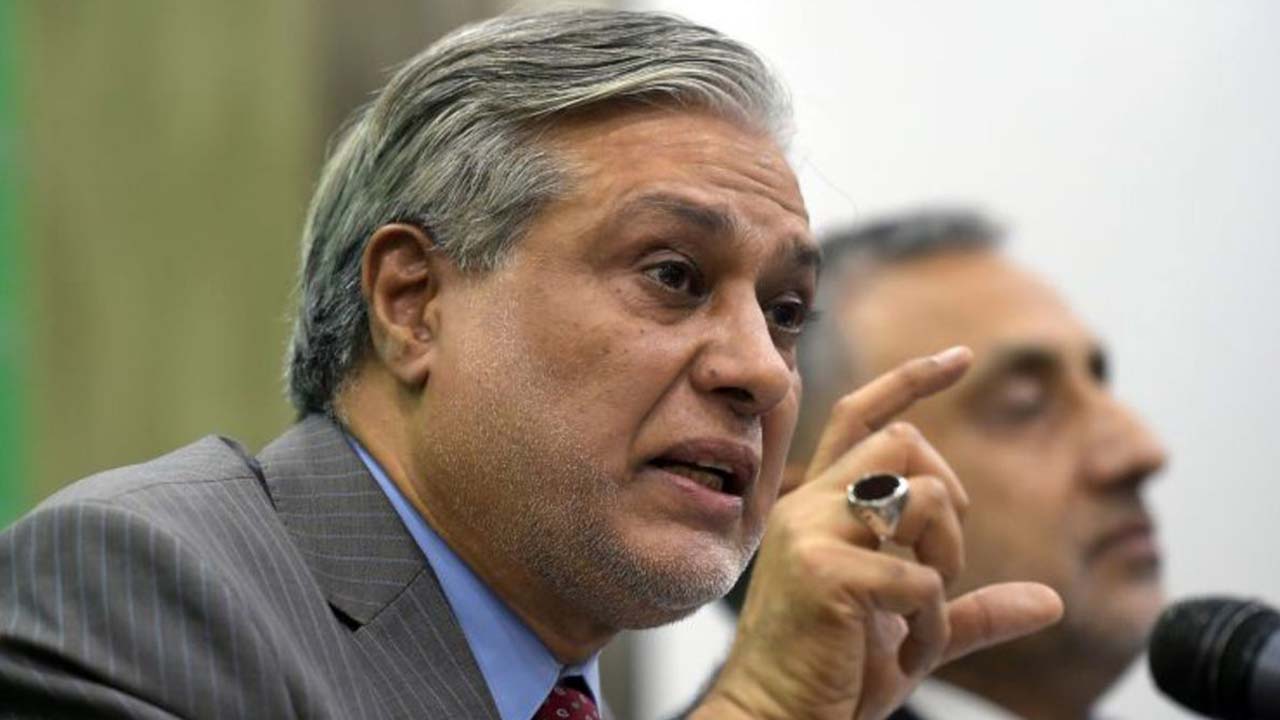
    According to the announcement by Pakistan’s Federal Finance Minister Ishaq Dar, negotiations between Pakistan and the International Monetary Fund (IMF) are about to conclude, and a staff-level agreement is expected to be signed soon.

    The minister also dismissed rumours of Pakistan defaulting as completely false and stated that all economic indicators are moving in the right direction. He highlighted that the State Bank of Pakistan’s foreign exchange reserves have increased and that foreign commercial banks have started extending facilities to Pakistan.

    However, the Pakistani rupee has plunged to a new all-time low of Rs290.18 against the US dollar in the interbank market, which is causing concern among importers who are panic buying dollars while exporters are reportedly withholding selling the greenback in anticipation of a higher exchange rate.

    It is reported that the IMF wants the value of the rupee in the interbank market to match its value in the black currency market.