Tag: State Bank of Pakistan

  • Pakistan’s rice exports surge 74.8% to record $3.68 billion in FY24

    Pakistan’s rice exports surge 74.8% to record $3.68 billion in FY24

    Pakistan’s rice exports soared by 74.8 per cent year-on-year, reaching a record $3.68 billion in the fiscal year 2023-24, according to data from the State Bank of Pakistan (SBP) released on Friday.

    This significant increase was attributed to India’s stringent export restrictions during the same period.

    In comparison, Pakistan’s rice exports stood at $2.11 billion in the previous fiscal year, with an average of $2.31 billion annually over the past five years.

    India’s measures to curb rice exports in 2023, which continued into 2024 to stabilise domestic prices ahead of the general elections in April-May, played a crucial role in this surge.

    As a result of New Delhi’s export limitations, Pakistan emerged as the primary beneficiary, achieving record rice exports this year. Overall, Pakistan’s total goods exports for FY24 reached $31.09 billion, marking an 11.5 per cent increase from $27.88 billion in FY23.

    The food sector, notably rice, was the second-largest contributor to total exports, with the food group’s export value rising by 49.5 per cent year-on-year to $7.08 billion.

    India is now considering easing its export restrictions, which may include lowering the floor price for basmati rice exports and replacing the 20 per cent export tax on parboiled rice with a fixed duty, according to government sources cited by Reuters. This adjustment aims to help India maintain its market share against Pakistan.

    India initially banned non-basmati white rice exports in July 2023 due to concerns over reduced output from the El Niño weather pattern and imposed restrictions on other rice grades.

    “With rice supplies significantly exceeding local demand, it’s crucial to reduce stockpiles to prevent spoilage. The most effective solution is to lift export restrictions,” stated B.V. Krishna Rao, president of the Rice Exporters Association (REA).

    As of July 1, India’s rice stocks at state warehouses reached an all-time high of 48.51 million metric tons, nearly 19 per cent more than the previous year, according to the Food Corporation of India.

    Additionally, the Indian government is reviewing the export ban on non-basmati white rice after assessing the progress of rice planting, with farmers having planted 11.6 million hectares of rice paddy so far this season, up 20.7 per cent from the same period last year.
  • SBP-held forex reserves surge by $18.6 million to $9.42 billion

    SBP-held forex reserves surge by $18.6 million to $9.42 billion

    The latest figures from the State Bank of Pakistan (SBP) reveal a slight increase in the country’s foreign exchange reserves. During the week ending July 12, 2024, SBP’s reserves grew by $18.6 million, marking a 0.20 per cent rise to reach $9.42 billion.

    In parallel, Pakistan’s overall foreign reserves, including both SBP and commercial banks, increased by $58.8 million, or 0.40 per cent, totaling $14.7 billion.

    Commercial banks in Pakistan also saw a rise in their reserves, which grew by $40.2 million, or 0.77 per cent, reaching $5.28 billion.

    Since the start of the fiscal year, SBP’s reserves have grown by $34.2 million, reflecting a 0.36 per cent increase. Notably, in the current calendar year alone, reserves have surged by $1.2 billion, representing a notable 14.63 per cent rise.

    These developments signify positive momentum in Pakistan’s foreign exchange reserves, contributing to a more stable economic outlook for the nation.

  • SBP data reveals govt borrowed Rs8.3 trillion from banks in FY24

    SBP data reveals govt borrowed Rs8.3 trillion from banks in FY24

    The Pakistani government significantly increased its domestic borrowing in the fiscal year 2023-24, according to the latest data from the State Bank of Pakistan (SBP). This period saw the government borrowing Rs8.3 trillion from scheduled banks, a substantial rise from Rs3.6 trillion in FY23 and Rs3.3 trillion in FY22.

    The Federal Government accounted for the bulk of this borrowing, taking Rs8.56 trillion, while the Provincial Government retired Rs261.27 billion. The two primary sources of budgetary support financing are the SBP and scheduled banks.

    In FY24, the government repaid a net amount of Rs694.85 billion to the central bank, bringing the net borrowing figure to Rs7.49 trillion. Government sector borrowings are categorized into three main areas: budgetary support, commodity operations, and others.

    For FY24, the net borrowing for budgetary support stood at Rs7.61 trillion. In contrast, there was a net retirement of Rs107.59 billion for commodity operations and Rs6.18 billion for other categories.

    This notable increase in domestic debt highlights the government’s reliance on internal sources to manage its fiscal requirements amid challenging economic conditions.

  • Pakistan’s central govt debt hits record Rs67.82 trillion in May 2024

    Pakistan’s central govt debt hits record Rs67.82 trillion in May 2024

    In May 2024, the central government’s total debt reached a record high of Rs67.82 trillion, marking a 15.01 per cent increase compared to Rs58.96 trillion a year earlier, according to data released by the State Bank of Pakistan (SBP).

    Sequentially, the central government debt also rose by 2.62 per cent from April 2024, when it stood at Rs66.08 trillion.

    This significant year-on-year rise in debt is mainly attributed to increased borrowing from both domestic and foreign sources, aimed at managing the fiscal deficit.

    According to details provided by the SBP, the majority of the debt was domestic, amounting to Rs46.21 trillion. This includes Rs36.6 trillion in long-term debt, Rs9.52 trillion in short-term debt, and an additional Rs86.79 billion raised through Naya Pakistan Certificates.

    Comparing year-on-year figures, the domestic debt showed a substantial increase of 24.7 per cent, with sequential growth of 3.88 per cent.

    By the end of May 2024, the government’s long-term debt had risen by 24.14 per cent year-on-year to Rs36.6 trillion, up from Rs29.48 trillion recorded a year earlier, with a month-on-month increase of 3.91 per cent.

    Similarly, short-term debt saw a notable increase of 28.09 per cent year-on-year, reaching Rs9.52 trillion in the review period.

  • Pakistan faces ‘one of the deadliest debt traps in the world,’ warns Ex-SBP governor

    Pakistan faces ‘one of the deadliest debt traps in the world,’ warns Ex-SBP governor

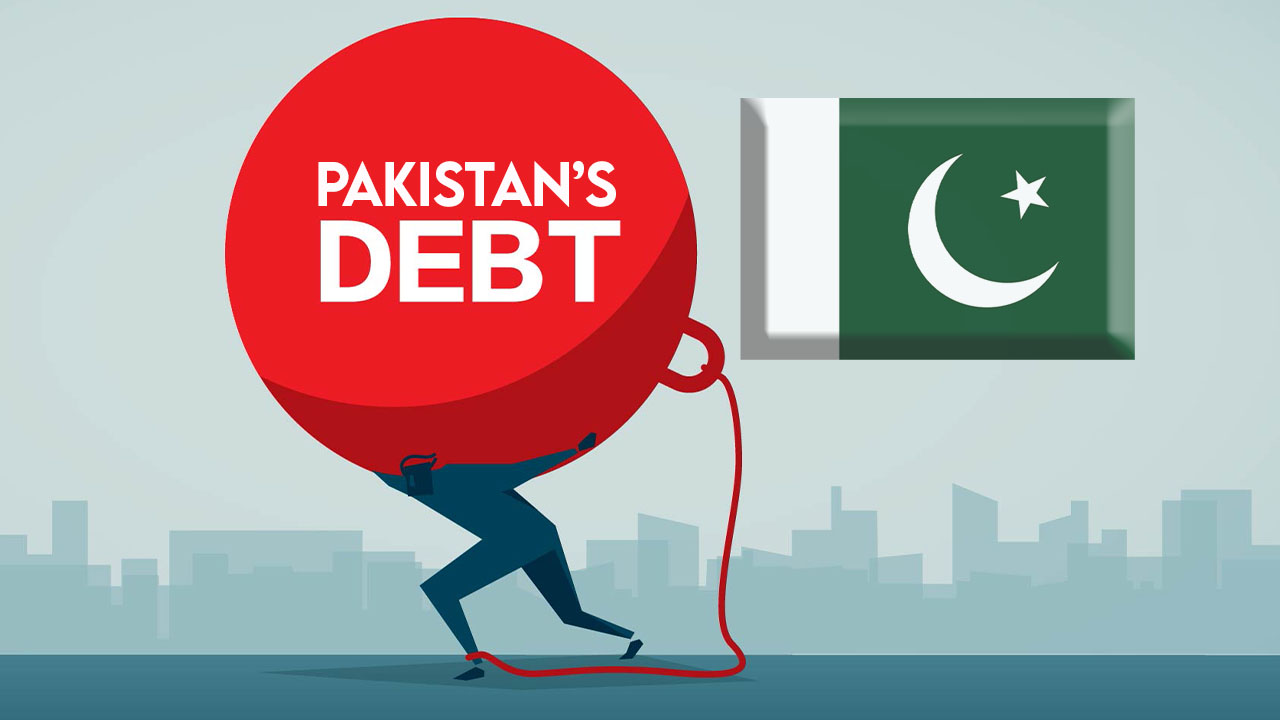
    Dr Murtaza Syed, former Governor of the State Bank of Pakistan, has raised significant concerns about Pakistan’s alarming debt situation, describing it as one of the most severe debt traps globally.

    In a series of tweets, he highlighted the country’s excessive borrowing and criticized the misuse of funds on non-productive expenses, leading to a situation where servicing the debt takes precedence over crucial developmental and climate-related investments.

    According to Dr Syed, Pakistan currently spends more on servicing its debt than any other country globally, a burden that is expected to persist for years. This high debt servicing obligation has necessitated heavy taxation and severely limited resources for essential social expenditures, such as education and health.

    He pointed out that Pakistan’s spending on interest payments vastly exceeds allocations for education and health, indicating a prioritization that hampers human capital development and public health.

    Citing data from the UNCTAD, Dr Syed highlighted that Pakistan’s government spends a disproportionate amount of its revenue on interest payments, second only to Sri Lanka. This financial strain not only constrains immediate social spending but also impedes long-term economic growth by limiting investments in infrastructure and other critical sectors.

    Despite fluctuations in global interest rates, Dr Syed emphasized that Pakistan’s debt burden remains among the highest globally, indicating a systemic issue rather than a temporary financial challenge.

    He cautioned that even with potential increases in government revenue, a significant portion would still be consumed by interest payments, further squeezing resources available for developmental initiatives.

    In conclusion, Dr Syed proposed a strategic restructuring of Pakistan’s debt to alleviate the fiscal pressure and redirect funds towards sustainable development and climate resilience.

    This, he argued, would require a balanced approach, avoiding over-reliance on taxation and instead focusing on optimizing debt management strategies to foster economic stability and social progress in Pakistan.

  • Pakistan’s forex reserves decline by $63.3 million to $9.09 billion

    Pakistan’s forex reserves decline by $63.3 million to $9.09 billion

    The State Bank of Pakistan (SBP) has reported a marginal decline in the nation’s foreign exchange reserves, indicating a decrease of $63.3 million or 0.69 per cent week over week (WoW) to $9.09 billion, according to data released on Thursday.

    The central bank attributed this downturn primarily to debt repayments. In a statement issued by the SBP, it was highlighted that during the week ending May 24, 2024, SBP reserves experienced a $63 million decrease to reach $9.09 billion, primarily due to external debt repayments.

    Similarly, Pakistan’s overall reserves witnessed a decrease of $270 million or 1.85 per cent WoW, amounting to $14.32 billion. Furthermore, commercial banks saw a decline in reserves by $206.7 million or 3.81 per cent WoW, totaling $5.22 billion.

    Despite these fluctuations, the current fiscal year has seen a remarkable increase in SBP-held reserves, amounting to $4.63 billion or 103.6 per cent.

    This surge follows Pakistan’s attainment of the International Monetary Fund’s (IMF) Stand-By Arrangement (SBA) of approximately $3 billion by the end of June last year.

    This arrangement not only bolstered the nation’s reserves but also facilitated access to additional multilateral and bilateral funding.

    Furthermore, the ongoing calendar year has witnessed a notable increase of $872.5 million or 10.61 per cent in reserves, reflecting continued efforts to stabilise and strengthen Pakistan’s economic position.

  • Pakistan’s debt climbs by Rs276.55 billion to Rs4.78 trillion

    Pakistan’s debt climbs by Rs276.55 billion to Rs4.78 trillion

    Pakistan’s government incurred an additional debt of Rs276.55 billion during the week ending April 26, 2024, according to the State Bank of Pakistan’s weekly report.

    This brings the total net borrowing for the current fiscal year to a staggering Rs4.78 trillion, underscoring a trend of elevated borrowings compared to previous years.

    The government sector’s borrowings are categorised into three main segments: budgetary support, commodity operations, and others.

    During the latest week, the bulk of the borrowing went towards budgetary support, which accounted for Rs230.84 billion.

    Meanwhile, commodity operations contributed Rs45.76 billion to the debt increase, while the “others” category saw a retirement of Rs54.82 million.

    Looking at the cumulative figures for the ongoing fiscal year, budgetary support borrowings have now reached Rs5.07 trillion, with commodity operations showing a net retirement of Rs283.57 billion, and others indicating a net retirement of Rs2.64 billion.

    The government’s financing primarily comes from two sources: the State Bank of Pakistan (SBP) and scheduled banks.

    This fiscal year, the government has paid off a net sum of Rs735.22 billion to the SBP, with the Federal Government contributing Rs425.15 billion to the total.

    Provincial governments collectively retired Rs294.54 billion, while the governments of Azad Jammu and Kashmir (AJK) and Gilgit-Baltistan (GB) retired Rs17.89 billion and borrowed Rs2.36 billion, respectively.

    In contrast, scheduled banks have lent out a net total of Rs5.8 trillion. Of this amount, the federal government borrowed Rs5.96 trillion, while the provincial governments retired Rs159.99 billion.

    These figures point to the government’s continued reliance on borrowing to manage fiscal operations.

    Analysts are concerned about the sustainability of this trend, suggesting that it could pose risks to the country’s economic stability if not carefully managed.

  • Pakistan receives final installment of IMF’s $3 billion SBA

    Pakistan receives final installment of IMF’s $3 billion SBA

    Pakistan has received the final tranche of $1.1 billion from the International Monetary Fund (IMF) as part of its $3 billion Stand-By Arrangement (SBA), the State Bank of Pakistan (SBP) announced on Tuesday.

    The disbursement follows the IMF’s successful completion of its final review of Pakistan’s economic reform programme supported by the 9-month SBA.

    The SBP said in its statement that the Special Drawing Rights (SDR) of 828 million, equivalent to approximately $1.1 billion, had been received on April 29, 2024, and would be reflected in the central bank’s foreign exchange reserves for the week ending May 3, 2024.

    As of April 19, the central bank’s foreign exchange reserves stood at $7.981 billion.

    Prime Minister Shehbaz Sharif welcomed the latest disbursement, stating that it would contribute to greater economic stability in Pakistan.

    He highlighted that the SBA was critical in preventing the country from defaulting on its external liabilities. 

    Pakistan’s government is now focused on securing a larger and longer Extended Fund Facility (EFF) to achieve sustained macroeconomic stability.

    The prime minister has already signalled his intention to pursue another IMF programme to ensure the continuity of economic growth and fiscal discipline.

    On Sunday, Prime Minister Shehbaz Sharif met with IMF Managing Director Kristalina Georgieva on the sidelines of the World Economic Forum Special Meeting in Saudi Arabia.

    During the meeting, the prime minister reiterated his government’s commitment to implementing structural reforms, maintaining strict fiscal discipline, and following prudent policies that would support macroeconomic stability and sustainable economic growth.

    Pakistan is seeking additional support to maintain the economic gains made during the current SBA and to continue its positive economic growth trajectory.

  • Overseas workers’ remittances surge to $3 billion in March

    Overseas workers’ remittances surge to $3 billion in March

    In March 2024, Pakistan witnessed a significant surge in the influx of overseas workers’ remittances, reaching a notable milestone of $3 billion.

    This remarkable figure reflects a remarkable 31.3 per cent increase on a month-on-month basis compared to February 2024, when the remittances stood at $2.25 billion.

    The latest data released by the State Bank of Pakistan (SBP) unveiled this positive trend, highlighting the pivotal role remittances play in Pakistan’s economic landscape.

    Year-on-year comparisons also underscored the upward trajectory, with a 16.4 per cent increase noted in March 2024 compared to the same month in the previous year, when remittances amounted to $2.54 billion.

    Such consistent growth in remittances holds significance beyond mere monetary figures, as these funds contribute substantially to bolstering the country’s external account and fueling economic activity.

    Moreover, they serve as a crucial supplement to the disposable incomes of remittance-dependent households, enhancing their financial resilience.

    In a broader fiscal context, the first nine months of Fiscal Year 2024 witnessed a steady rise in workers’ remittances, totaling $21.0 billion.

    This marks a modest 0.9 per cent increase compared to the corresponding period in the previous fiscal year, where remittances amounted to $20.8 billion.

    Such stability and growth in remittances underscore the resilience of Pakistan’s overseas workforce and their commitment to supporting their families and homeland.

    Breaking down the sources of these remittances, Overseas Pakistanis in Saudi Arabia emerged as leading contributors, with remittances totaling $703.1 million in March 2024.

    This represents a substantial 30 per cent increase compared to the previous month and a noteworthy 24 per cent increase year-on-year.

    Similarly, remittances from the United Arab Emirates (UAE) witnessed a remarkable surge, jumping by 43 per cent on a monthly basis to reach $548 million in March, reflecting a 34 per cent increase compared to the same period last year.

    The United Kingdom also played a significant role in this surge, with remittances soaring to $462 million in March 2024, marking a notable 33 per cent increase compared to February 2024.

    Meanwhile, remittances from the European Union exhibited a robust 19 per cent monthly growth and a 6 per cent year-on-year improvement, amounting to $315 million in March 2024.

    Overseas Pakistanis in the United States also contributed significantly, send`ing $373 million in March 2024, reflecting an 18 per cent increase compared to the previous year and a substantial 30 per cent increase month-on-month.

  • Pakistan’s forex reserves surge to $8.02 billion, SBP data shows

    Pakistan’s forex reserves surge to $8.02 billion, SBP data shows

    The latest data released on Thursday revealed a noteworthy surge in the foreign exchange reserves held by the State Bank of Pakistan (SBP), marking an increase of $105 million over the course of a week, reaching a total of $8.02 billion as of March 15.

    In addition to the SBP’s reserves, the total liquid foreign reserves for the country now stand at $13.4 billion, with commercial banks accounting for $5.38 billion of this amount.

    Despite the significant boost, the central bank did not provide specific details regarding the reason behind this increase.

    However, it did report that during the week ending on March 15, SBP’s reserves climbed by $105 million to reach $8,017.9 million, indicating a positive trend.

    The previous week had also witnessed an increase in Pakistan’s central bank reserves, albeit a smaller one, amounting to $17 million.

    In a pivotal development, Pakistani authorities successfully concluded negotiations with the International Monetary Fund (IMF) on the second and final review of the $3 billion Stand-By Arrangement (SBA).

    As per the agreement reached, pending approval by the IMF’s Executive Board, an additional access of $1.1 billion under the SBA will become available.

    This anticipated inflow from the IMF is expected to further bolster the country’s reserves and serve as a promising sign for its struggling economy.