Tag: Supreme Court

  • Fearing Taliban, Afghan singers go to Court against deportation

    Fearing persecution In Taliban’s Afghanistan, Afghan singers residing in Pakistan have filed a plea against the government’s deportation plan in Peshawar High Court. The three petitioners are Hashmatullah Omed, Rafi Hanif, and Hameed Shahdai, accompanied by a large number of Afghan singers and musicians who are claiming that they have lived in Pakistan for years as refugees.

    The bench at the PHC consists of Justice Abdul Shakoor and Justice Syed Arshad Ali. It directed the deputy attorney general Hazrat Said to file a reply on behalf of the federal government to the petition filed by the singers.

    The petitioners’ counsel, Mumtaz Ahmad, informed the court that almost four identical petitions had been filed before the Supreme Court of Pakistan against the forced repatriation of Afghans. He also suggested that it would be appropriate for the high court to wait for the outcome of those petitions in the top court and to decide the instant plea in light of that decision. The traditionally conservative Taliban government has inadvertently forced these artists to take refuge in Pakistan with their families like many others. They are registered by the UN refugee agency, given a token number, and their cases are under process. They requested the court to issue directives to the government to allow them to live unbothered with their refugee status in Pakistan.


    The same question was asked to Sarfraz Bugti, interim Interior Minister of Pakistan, to which he responded that such individuals need to opt for a proper procedure of asylum.


    The government, however, is in no mood to retract their decision. In a recent statement made by an official in an interview with the Tribune, it was reiterated that the aim is to repatriate all the illegal Afghans- almost 1.7 million in a year. Certain people will be allowed to stay in Pakistan before their settlement in USA, UK, and Canada only on the request made by these countries who have promised asylum to these Afghans. They have been informed by Pakistan to speed up the process.

  • He’s gone, but Supreme Court to decide death penalty case against Musharraf

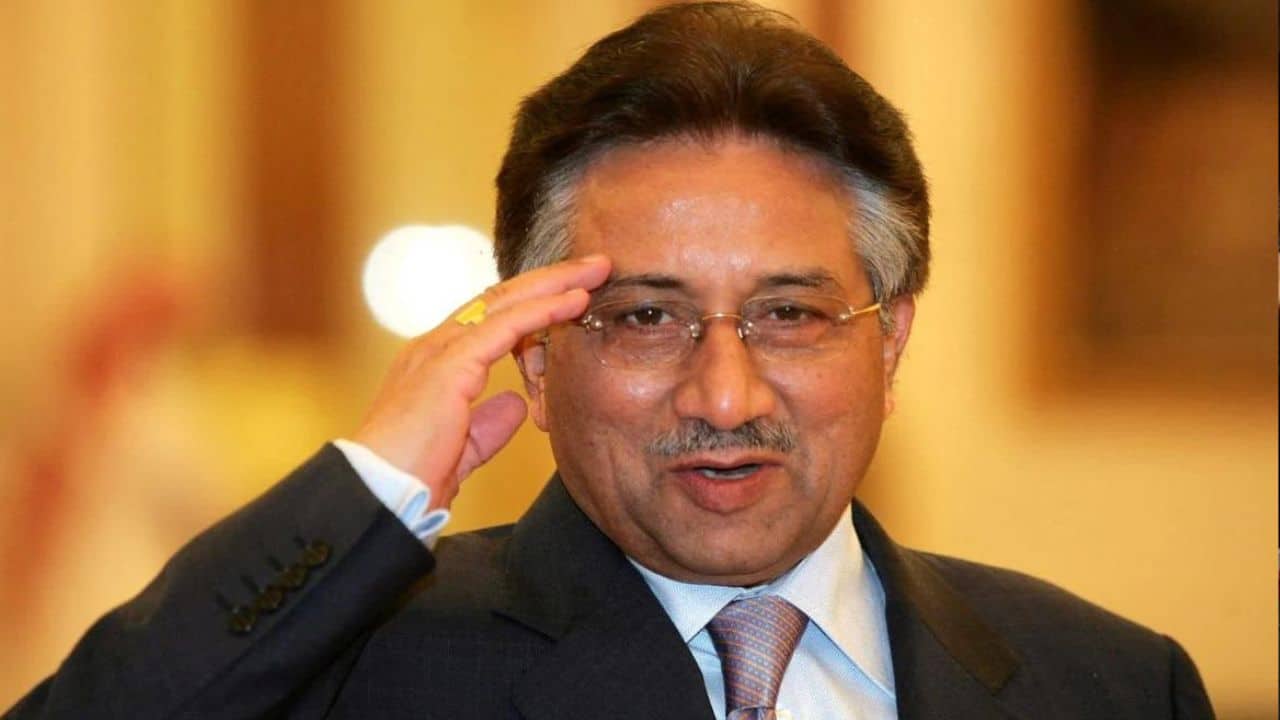
    He’s gone, but Supreme Court to decide death penalty case against Musharraf

    The Supreme Court of Pakistan is set to begin hearing a series of appeals on November 10, including those filed by the late former President, retired General Pervez Musharraf, in an attempt to overturn his death sentence, as per Dawn.

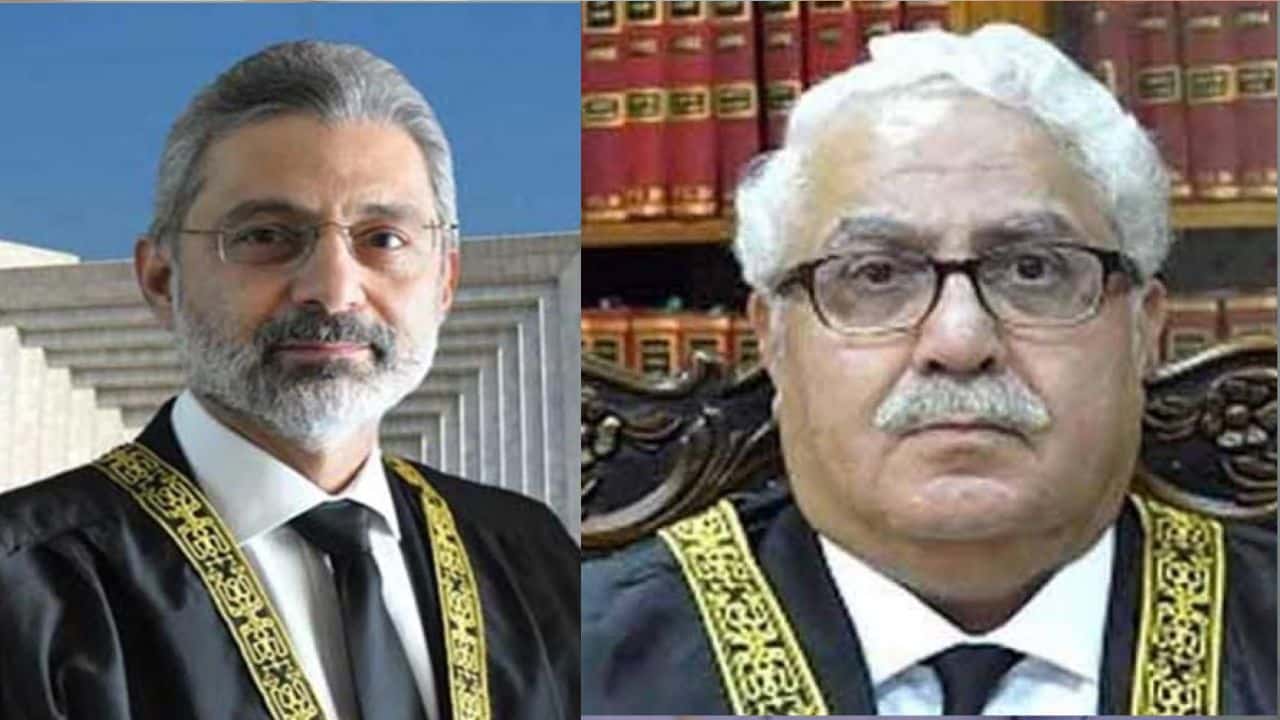
    A four-judge bench, headed by Chief Justice of Pakistan (CJP) Qazi Faez Isa, along with Justice Syed Mansoor Ali Shah, Justice Aminud Din Khan, and Justice Athar Minallah, will preside over the hearings.

    Represented by his counsel Salman Safdar, the late General filed an appeal requesting the annulment of the conviction, citing a trial process that was conducted in violation of the Constitution and the Code of Criminal Procedure (CrPC) 1898.

    The appeal seeks a suspension of the judgment in the interest of justice and fair play.

    The petition highlights Musharraf’s military career and claims that the trial for a constitutional crime was conducted in an unconstitutional manner.

    In a separate development, the Sindh High Court Bar Association contested the Lahore High Court’s decision on January 13, 2020, which deemed the Special Court’s decision unconstitutional.

    The association has appealed to the Supreme Court to reinstate the conviction for subverting the Constitution.

    Presented by counsel Rasheed A. Razvi, the appeal argues that the high court’s verdict is legally flawed, alleging a misinterpretation of evidence and failure to appreciate the material presented by the prosecution during the trial.

    Additionally, the appeal asserts that the high court neglected to acknowledge that the material presented by the prosecution before the Special Court was not denied by Gen Musharraf at any stage of the case.

    It further argues that the verdict contradicts established principles of the Qanoon-e-Shahadat Order, stating that unchallenged facts are deemed admitted by the parties and do not require further proof.

    The petition asserts that the high court’s decision contradicts the precedent set by superior courts and the Supreme Court, referencing the 2019 Lahore High Court Bar Association case.

    A special court in Islamabad found former military ruler retired Gen Pervez Musharraf guilty of high treason and handed him a death sentence under Article 6 of the Constitution on December 17, 2019.

    This was the first time in Pakistan’s history that a military chief has been declared guilty of high treason and handed a death sentence. The verdict was split 2-1.

    Article 6 of the Constitution says: “Any person who abrogates or subverts or suspends or hold in abeyance, or attempts or conspires to abrogate or subvert or suspend or hold in abeyance the Constitution by use of force or show force or by any other unconstitutional means shall be guilty of high treason.”

    The three-member bench of the special court was headed by Peshawar High Court Chief Justice Waqar Ahmad Seth and comprising Justice Nazar Akbar of the Sindh High Court (SHC) and Justice Shahid Karim of the Lahore High Court (LHC).

  • How politicians are reacting to election date

    How politicians are reacting to election date

    The Election Commission of Pakistan (ECP) told the Supreme Court of Pakistan (SC) that general elections will take place on February 11, 2024. Different political leaders of multiple political parties reacted to the announcement of election date.

    Pakistan People’s Party (PPP) senior leader Qamar Zaman Kaira told SAMMA TV that the announcement of the election date has helped to end uncertainty in Pakistan politics.


    “The date announcement was necessary so political parties could start the political process. In fact, the PPP has launched the electoral campaign process. Let’s end the uncertainty,” Kaira said.

    Pakistan Tehreek-e-Insaf (PTI) lawyer, Barristor Syed Ali Zafar, said in a tweet that, “Supreme Court has said once date of election given it will be written in stone and shall not be changed. After the meeting between President and ECP, the date will be announced hopefully today. This could be a historic and game changing decision by SC. Constitution is supreme.”

    On the other hand, the Pakistan Muslim League-Nawaz (PML-N) declared the announcement of election’s date a good development.

    PML-N leader Muhammad Zubair said that it’s a good thing that ECP is conducting elections on February 11, 2024.

    “There was uncertainty related to the election in the country. It is written very clearly in the constitution regarding the election,” he said.

    Jamiat Ulama-e-Islam (JUI-F) leader Hafiz Hamdullah also said that his party is ready for elections. “Now the ECP has told the apex court that elections will be held on February 11,” he added.

    Muttahida Qaumi Movement-Pakistan (MQM-P) also stated that conducting elections is a responsibility of ECP. MQM-P’s leader, Amin ul Haq, said that the election date announcement is a good omen and would take the country ahead.

  • Zardari Accountability Court mein hazir hon

    Zardari Accountability Court mein hazir hon

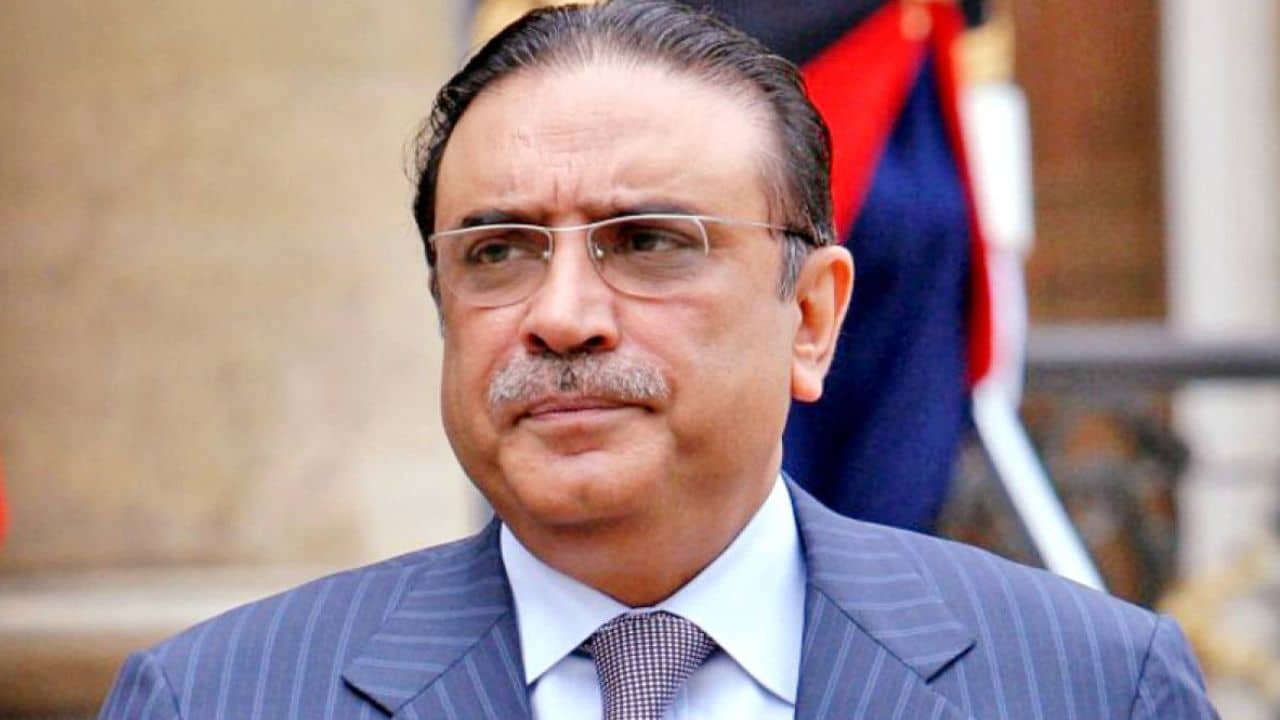
    Former president and Pakistan Peoples Party (PPP) co-chairman Asif Ali Zardari has been summoned by an accountability court in Islamabad in connection with the Thatta water supply case.

    The court, headed by Judge Mohammad Bashir, has also summoned several other individuals, including Ijaz Ahmed Khan, former secretary to the Sindh government, Hassan Ally Memon, former head of the committee responsible for procurements related to the water supply scheme, Khawaja Abdul Ghani Majeed, CEO Omni Group, Menahel Majeed, spouse of Khawaja Abdul Ghani Majeed and others to appear on December 15.

    The case revolves around allegations of illegal contract awards to private contractors.

    Earlier this year, proceedings in the case had been halted due to changes in the National Accountability Ordinance (NAO).

    The case was among dozens of references transferred from accountability courts because of the amendments made in the National Accountability Ordinance (NAO) by the PDM coalition government headed by then-prime minister Shehbaz Sharif.

    These amendments were struck down by the Supreme Court on September 15.

    This development comes as the latest in a series of legal battles for Zardari, who was indicted in the water supply reference back in October 2020, as part of the broader fake bank accounts case.

    The reference specifically focuses on the alleged award of a contract by the special initiative department for the Thatta water supply scheme to a private contractor.

    The accountability court has directed the National Accountability Bureau (NAB) to ensure the reference is properly presented before the appropriate forum.

  • Chief Justice calls meeting of Supreme Judicial Council

    Chief Justice calls meeting of Supreme Judicial Council

    The Chief Justice of Pakistan, Qazi Faez Isa, has called a meeting of the Supreme Judicial Council (SJC) on Friday at 11.30 a.m. as per Maryam Nawaz of Geo News.

    The meeting will focus on addressing complaints lodged against several high-ranking judges, including Justice Sayyed Mazahar Ali Akbar Naqvi.

    Notably, this will mark the first SJC meeting under the leadership of CJP Isa, following a gap of over three years since the previous moot. The council, chaired by CJP Isa, includes two other senior judges of the highest court, namely Justice Tariq Masood and Justice Ijaz Ul Ahsan.

    The SJC holds the exclusive authority to dismiss judges from superior courts based on various charges.

    Apart from Justice Naqvi, there have been grievances filed against other judges of the superior court.

    The primary agenda for tomorrow’s meeting is likely to be the consideration of a complaint against Justice Naqvi.

    Justice Masood, senior judge of the Supreme Court and member of SJC, had submitted his legal opinion on the misconduct complaints filed against apex court Justice Naqvi in September this year, according to The News.

    Several misconduct complaints were filed against Justice Naqvi during the tenure of former chief justice Umar Ata Bandial who referred the matter to Justice Tariq Masood for examination and legal opinion.

    Initially, the misconduct complaint against Justice Naqvi was filed with the SJC by a Lahore-based lawyer Muhammad Dawood. Later on, Pakistan Bar Council (PBC) also announced that they were going to file a complaint against the senior judge.

    PBC Vice Chairman Haroon Rashid lodged a misconduct complaint against Justice Naqvi after an audio leak implied discussions regarding the manipulation of a case before a specific bench or judge, involving former Punjab chief minister Pervaiz Elahi.

    Earlier this year, in April, senior judges of the Supreme Court, Justice Isa and Justice Masood, had urged former CJP Bandial to convene an SJC meeting to address the misconduct complaints against Justice Naqvi.

    In a joint letter to all SJC members, the judges emphasized the importance of ensuring the impartial investigation of the complaints to uphold the judiciary’s integrity and the judge’s reputation.

  • Out of 687 staff members, only 45 women are employed in the Supreme Court

    Out of 687 staff members, only 45 women are employed in the Supreme Court

    New details reveal that among the total staff members of 687 in the Supreme Court, only 45 are women.

    The information came to light as a judicial order directed Supreme Court Registrar Jazeela Aslam to give details on staff following a petition filed in 2019, appealing the Right of Access to Information Act 2017 and Article 19-A of the Constitution.

    The apex court reportedly has 894 sanctioned positions at the moment but 207 of them are vacant and 687 employees were working as of September 25.

    146 are employed on a daily wage basis.

    84 new positions have been created since January 2017.

    The details also reveal that out of all the 45 women working in the apex court, 33 hold regular positions while 12 are contingent employees.

    Additionally, only two people with disabilities and two transgenders are employed.

  • Supreme Court declares trial of civilians in military courts null and void

    Supreme Court declares trial of civilians in military courts null and void

    The Supreme Court (SC) on Monday has declared trials of civilians in military courts null and void.

    A five-member bench of the Supreme Court has announced its decision on applications challenging the military trial of civilians involved in the May 9 riots.

    In the short verdict, the court ordered that 102 individuals detained under the Army Act should face trial in civilian courts. It additionally dictated that any trial of a civilian in a military court is considered invalid.


    The apex court’s bench — headed by Justice Ijaz Ul Ahsan, and comprising of Justice Munib Akhtar, Justice Yahya Afridi, Justice Sayyed Mazahar Ali Akbar Naqvi and Justice Ayesha Malik — heard petitions filed by PTI chief Imran Khan and others on Monday.


    The Attorney General of Pakistan (AGP), Mansoor Usman Awan, completed his arguments and he had focused on jurisdiction of military courts to try civilians under the Army Act.


    The day before, the federal government had notified the top court that military trials of civilians had already begun.

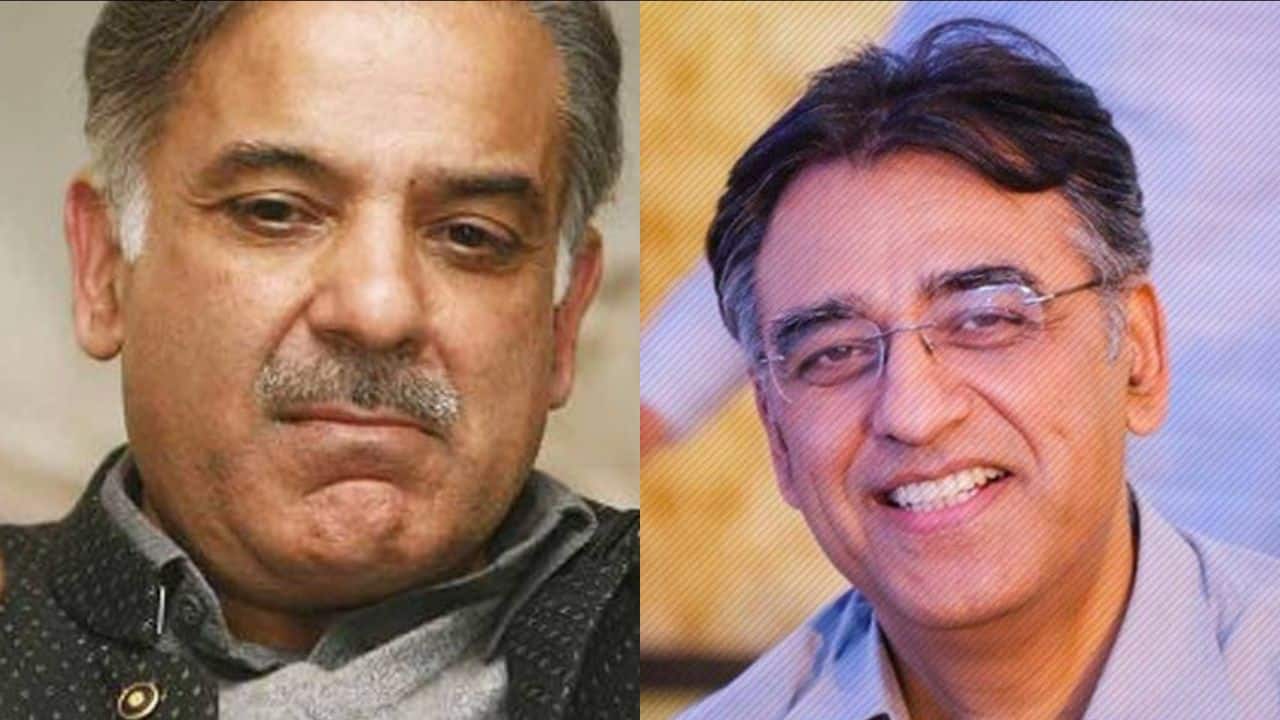
  • ‘Why is Shehbaz happy if the judgment is against Nawaz’ asks Asad Umar

    ‘Why is Shehbaz happy if the judgment is against Nawaz’ asks Asad Umar

    The Supreme Court (SC) has on Wednesday evening issued a verdict in favour of the SC (Practice and Procedure) Act, 2023, dismissing petitions challenging its validity.

    The decision was upheld by 10-5 majority. However, by an 8-7 decision, the majority of judges decided against the provision of law wherein retrospective right of appeal was given in the Act.

    Key Provisions of Act

    The act makes a number of significant changes to the way the Supreme Court operates. These include:

    • Requiring a three-member committee of senior judges, including the CJP, to approve all suo moto notices.
    • Establishing a transparent process for the formation of benches for hearing crucial constitutional issues.
    • Giving parties the right to appeal to the Supreme Court within 30 days of a final order from a lower court.
    • Requiring the apex court to hear applications alleging urgency or requesting interim relief within 14 days of filing.

    Reaction to the decision

    Former Prime Minister and President of _ (PML-N) Shehbaz Sharif welcomed the decision.

    “The Supreme Court’s verdict regarding the Practice and Procedure Act 2023 is a welcome step,” he wrote on X (formerly Twitter)

    Interestingly, when Asad Umar, PTI’s former secretary general, was asked about the judgment, he stated that it was the right decision but was intrigued to know if Nawaz Sharif would come back after the decision or not.

    “My question is, everyone is saying this is not a good judgment for Nawaz Sharif, why is Shehbaz Sharif liking this decision so much? I’m just asking an innocent question,” he said while talking to the media on Thursday morning.

    The verdict has caused a rift in the legal world. The decision, which involves Article 184(3), has led to intense discussions about what it means for the PML-N leader, Nawaz Sharif.

    As per Dawn, lawyer Mohammad Ikram Chaudhry explained that in cases where no review has been filed, it’s possible to request a “condonation of delay,” which means the court might accept an appeal or application even if it’s late.

    Mohammad Akram Sheikh noted that according to the law, a review must be requested within 30 days of the judgment. He mentioned that in some cases, the highest court has allowed for delays but stressed that the applicant would need to provide a valid reason for the delay.

    Senior lawyer Raja Inam Ameen Minhas mentioned that the Supreme Court Bar Association has an ongoing review petition against the disqualification of politicians. He argued that since the matter of disqualification is still under consideration, it’s “still appealable.”

    Barrister Zafarullah Khan, the former special assistant on law to the ex-PM, pointed out that the Supreme Court’s decision wouldn’t affect Mr. Sharif’s cases because he wasn’t seeking relief from the highest court. Instead, he intends to pursue his appeals against convictions, which would eventually reach the Supreme Court.

    Some lawyers believe that the decision is a setback for Nawaz Sharif, who recently planned to return to Lahore after spending four years in London.

    The decision declared Section 5(2) of an act as ultra vires, meaning that the lifetime disqualification in the Panama case remains in effect.

    Lawyer Abdul Moiz Jafferi questioned who really won in this matter.

    Lawyer Usama Khawar Ghumman argues that Nawaz Sharif and Jehangir Tareen can still contest elections.

    “Despite Supreme Court’s decision to strike down retrospective rights of appeal, Nawaz Sharif & Jehangir Tareen can, in the short run, contest elections due to the PDM-led Parliament’s amendment to Section 232 of the Election Act, 2017,” he wrote on X (formerly Twitter).

  • Supreme Court upholds Practice & Procedure Act 2023

    Supreme Court upholds Practice & Procedure Act 2023

    The Supreme Court (SC) has issued a verdict in favour of the SC (Practice and Procedure) Act, 2023, dismissing petitions challenging its validity.

    Headed by Chief Justice Qazi Faez Isa, the SC full bench consisted of Justice Sardar Tariq Masood, Justice Ahsan, Justice Syed Mansoor Ali Shah, Justice Akhtar, Justice Yahya Afridi, Justice Aminuddin Khan, Justice Naqvi, Justice Jamal Khan Mandokhel, Justice Mazhar, Justice Ayesha, Justice Athar Minallah, Justice Rizvi, Justice Waheed and Justice Musarrat Hilali.

    The decision was upheld by 10-5 majority.

    While reading out the order, CJP Isa noted that five members of the full court bench — Justice Ijazul Ahsan, Justice Munib Akhtar, Justice Sayyed Mazahir Ali Akbar Naqvi, Justice Ayesha A Malik, and Justice Shahid Waheed — had opposed the law.

    The decision on the SC (Practice and Procedure) Act, 2023, case was delivered after the completion of all arguments. Attorney General Mansoor Awan presented a comprehensive case in favor of the act, leading to the full court’s decision in support of the legislation.

    The SC (Practice and Procedure) Act, 2023, has been a subject of considerable debate and legal scrutiny, with various petitions seeking its annulment. However, the apex court has preserved the Act, emphasising its continued relevance in the legal system.

    However, by an 8-7 decision, the majority of judges have decided against the provision of law wherein retrospective right of appeal was given in the Act.

    The Supreme Court (Practice & Procedure) Act, 2023, which has been at the centre of legal debate and judicial proceedings, introduced several crucial provisions, reshaping the functioning of the Supreme Court of Pakistan:

    1. Sou Motu Notice: The Act granted the power of taking suo motu notice to a three-member committee, consisting of senior judges, including the Chief Justice. This provision aimed to facilitate the initiation of legal proceedings in the apex court and ensure transparency. It also included the right to appeal.
    2. Constitution of Benches: According to the Act, every case, matter, or appeal brought before the Supreme Court would be heard and decided by a bench formed by a committee comprising the Chief Justice and the two most senior judges. Decisions of the committee would be made by a majority vote.
    3. Original Jurisdiction: When exercising the apex court’s original jurisdiction, the Act mandated that any matter invoking the use of Article 184(3) must first be presented before the committee.
    4. Interpretation of the Constitution: In cases where the interpretation of the Constitution was necessary, the Act stipulated that the committee would assemble a bench consisting of no fewer than five Supreme Court judges.
    5. Right to Appeal: In instances where a decision was made by a Supreme Court bench exercising Article 184(3) jurisdiction, the Act allowed for an appeal to be filed within 30 days of the bench’s order. This appeal would be scheduled for a hearing within a period not exceeding 14 days.
    6. Retrospective Right of Appeal: The Act also extended the right of appeal retrospectively to individuals who had been affected by an order made under Article 184(3) before the commencement of the SC (Practice and Procedure) Act, 2023, provided that the appeal was filed within 30 days of the Act’s implementation.
    7. Choice of Counsel: Parties involved in legal proceedings were granted the right to select their counsel for filing a review application under Article 188 of the Constitution.
    8. Urgency and Interim Relief: The Act outlined that any application claiming urgency or seeking interim relief in a case, appeal, or matter would be scheduled for a hearing within 14 days from the date of filing.
  • Court reserves verdict on Practice and Procedure Act 2023

    Court reserves verdict on Practice and Procedure Act 2023

    The Supreme Court (SC) has reserved its decision on petitions that challenge the 2023 SC (Practice and Procedure) Act, which restricts the authority of the Chief Justice of Pakistan.

    Chief Justice of Pakistan (CJP) Qazi Faez Isa led the full-court bench consisting of Justice Sardar Tariq Masood, Justice Ijaz Ul Ahsan, Justice Syed Mansoor Ali Shah, Justice Munib Akhtar, Justice Yahya Afridi, Justice Aminuddin Khan, Justice Sayyed Mazahar Ali Akbar Naqvi, Justice Jamal Khan Mandokhel, Justice Muhammad Ali Mazhar, Justice Ayesha A Malik, Justice Athar Minallah, Justice Syed Hasan Azhar Rizvi, Justice Shahid Waheed, and Justice Musarrat Hilali are hearing the case.

    “We will discuss amongst ourselves [now]. If there is a consensus, then we will announce it, otherwise, the decision will be reserved,” Chief Justice of Pakistan (CJP) Qazi Faez Isa said at the end of today’s hearing.

    During the hearing, the CJP emphasised the importance of maintaining a harmonious relationship between the Parliament and the SC.

    “Do not pit the Parliament and Supreme Court against each other,” he remarked, insisting on the idea of “live and let live”.

    “Why do we see each other’s institutions negatively? Why can’t it be said that one institution legislated for the betterment of another?” CJP Isa questioned.

    All the petitioners, including all political parties, concluded their arguments in today’s hearing. The Attorney General of Pakistan (AGP), Mansoor Usman Awan, also gave his arguments today.