Tag: Supreme Court

  • ‘My condition is like the setting sun’: CJ bids emotional farewell

    ‘My condition is like the setting sun’: CJ bids emotional farewell

    The Chief Justice of Pakistan (CJP), Umar Atta Bandial, was overwhelmed with emotions during his farewell address to the officers and staff of the Supreme Court.

    The outgoing Chief Justice compared himself to the setting sun and said that, “Nine years have passed well with you as a Supreme Court judge, now my condition is like the setting sun. You people have time now, all of you should work with your full dedication.”

    He further said that the country is facing economic and other challenges, stressing that when everyone is united, this crisis will not remain.

  • Court verdict will not affect Nawaz’s return to Pakistan, says Ata Tarar

    Court verdict will not affect Nawaz’s return to Pakistan, says Ata Tarar

    Attaullah Tarar, deputy secretary general of Pakistan Muslim League-Nawaz (PML-N), has stated that the Supreme Court’s (SC) ruling on the National Accountability Bureau (NAB) amendments will not have an impact on party head Nawaz Sharif’s planned return to Pakistan on October 21.

    No case, said Tarar during press conference “is a hindrance in his way of returning to Pakistan,” as there is overwhelming evidence that former Prime Minister Nawaz Sharif is an innocent.

    “Nawaz’s return date remains the same. The date has been announced. He is coming back on the same date,” Tarrar insisted.

    He also said that the former prime minister didn’t disobey any law when it came to Toshakhana gifts. On the other hand, chairman Pakistan Tehreek-e-Insaf (PTI) Imran Khan sold state gifts and made profit out of them, Tarar mentioned.

    Following the Supreme Court’s decision in the NAB law amendments case on Friday, it is anticipated that some 2,000 NAB cases, including those at the reference, complaint verification, inquiry, and investigation levels, will be reinstated.

    According to the report, Asif Ali Zardari, a former president, and six former prime ministers—Muhammad Nawaz Sharif, Shaukat Aziz, Yusuf Raza Gilani, Raja Pervez Ashraf, Shahid Khaqan Abbasi, and Shehbaz Sharif—are among suspects in cases that stand to be reinstated.

  • Court fails to recognise legislative authority of parliament: Justice Mansoor Ali Shah

    Court fails to recognise legislative authority of parliament: Justice Mansoor Ali Shah

    In a 2-1 majority decision, the Supreme Court (SC) invalidated changes made by parliament to the National Accountability Bureau (NAB) regulations. Justice Mansoor Ali Shah commented that the decision failed to recognise the legislative authority of parliament.

    Imran Khan, the leader of the Pakistan Tehreek-e-Insaf (PTI), received approval on Friday from a three-member SC panel for his appeal challenging amendments made to the country’s accountability legislation under the previous administration, which was led by the Pakistan Democratic Movement (PDM).

    The majority decision, according to the verdict, found the petition against the NAB changes valid, reopening all closed inquiries submitted to the anti-graft body.

    “The majority judgement has also fallen short to appreciate that what Parliament has done, Parliament can undo; the legislative power of the Parliament is never exhausted,” Justice Shah said in his dissenting note.

  • Supreme Court orders restoration of corruption cases against politicians

    Supreme Court orders restoration of corruption cases against politicians

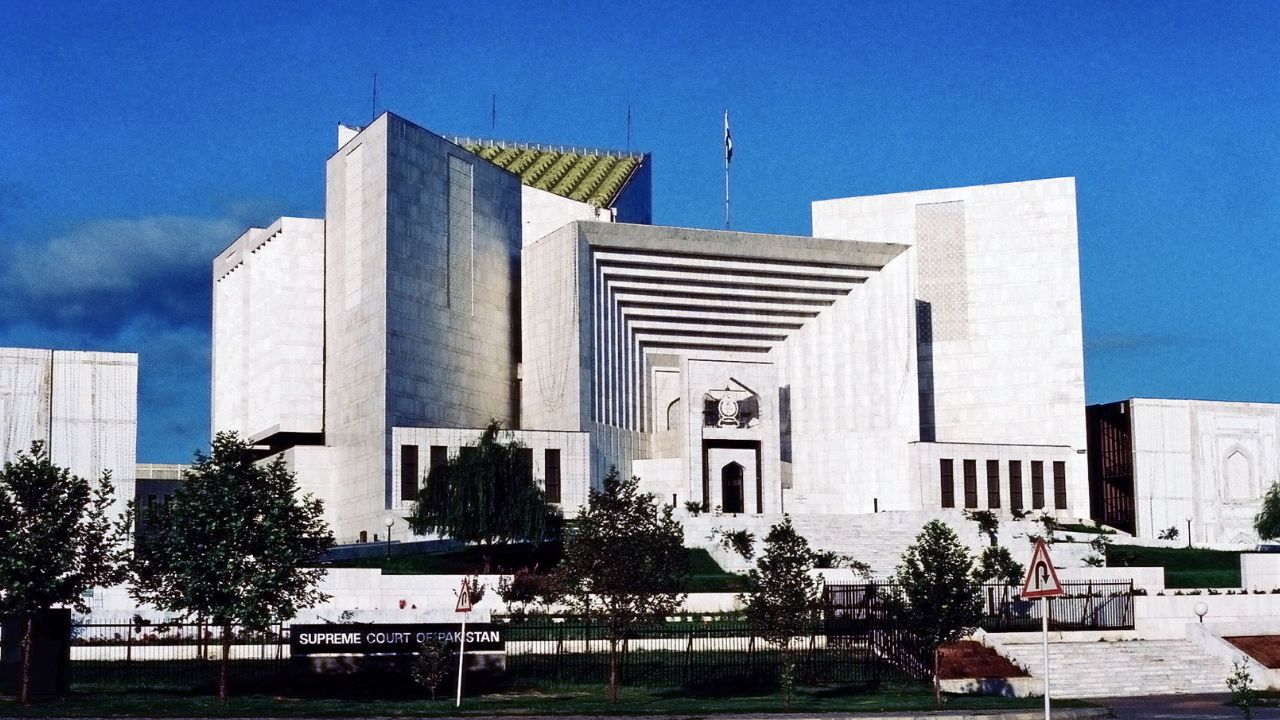
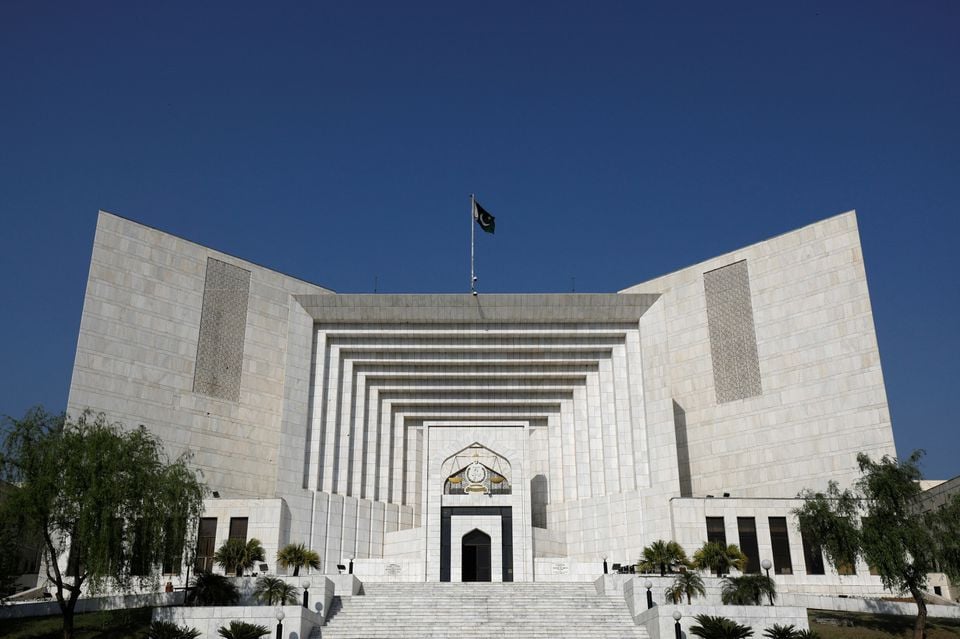
    The Supreme Court (SC) on Friday struck down recent amendments made to the National Accountability Ordinance (NAO), 1999, during the tenure of the previous Pakistan Democratic Movement (PDM)-led government. A three-member SC bench headed by outgoing Chief Justice Umar Ata Bandial, and comprising of Justice Mansoor Ali Shah and Justice Ijazul Ahsan, conducted 53 hearings on Pakistan Tehreek-e-Insaf (PTI) Chairman Imran Khan’s petition against the changes made to the National Accountability Bureau (NAB) Ordinance under the National Accountability (Second Amendment) Act 2022.

    Today’s 2-1 majority verdict has resulted in the restoration of corruption cases against public office holders, which were closed down following the NAB amendments. The ruling specifically reinstated the NAB clause pertaining to the Service of Pakistan.

    In June 2022, former prime minister and PTI Chairman Imran Khan approached the top court to challenge the amendments to the NAB laws, contending that they will “virtually eliminate any white-collar crime committed by a public office holder”.

    On September 5, the SC reserved its verdict in the case. “My retirement is near, [we] will give a decision before retirement. We will soon announce a short and sweet verdict of the case,” said CJ Bandial.

    According to today’s SC verdict, the petition by PTI Chairman against NAB amendments was declared admissible by the majority decision, restoring all closed inquiries filed with the anti-corruption body. The top court has ordered restoring all graft cases worth less than Rs500 million that were closed down after the amendments.

    According to The Express Tribune, former prime minister Shehbaz Sharif was a major beneficiary of the amendments. Other beneficiaries include former Prime Minister Nawaz Sharif, former President Asif Ali Zardari, Maulana Fazlur Rehman, Maryam Nawaz, Faryal Talpur, Ishaq Dar, Khawaja Asif, Khawaja Saad Rafiq, Rana Sanaullah, Javed Lateef, Makhdoom Khosro Bakhtiar, Amir Mehmood Kayani, Akram Durani , Saleem Mandiwala, Noor Alam Khan, Nawab Aslam Riasani, Dr Abdul Malik Baloch, Nawab Sanaullah Zehri, Barjees Tahir, Nawab Ali Wasan, Sharjeel Memon, Anwarul Haq Kakar, Liaqat Jatoi, Amir Maqam, Goram Bugti, Jaffer Mandokhel and G-B Governor Syed Mehdi Shah.
  • Judges disagreement only on constitutional cases coming to court: CJP Bandial

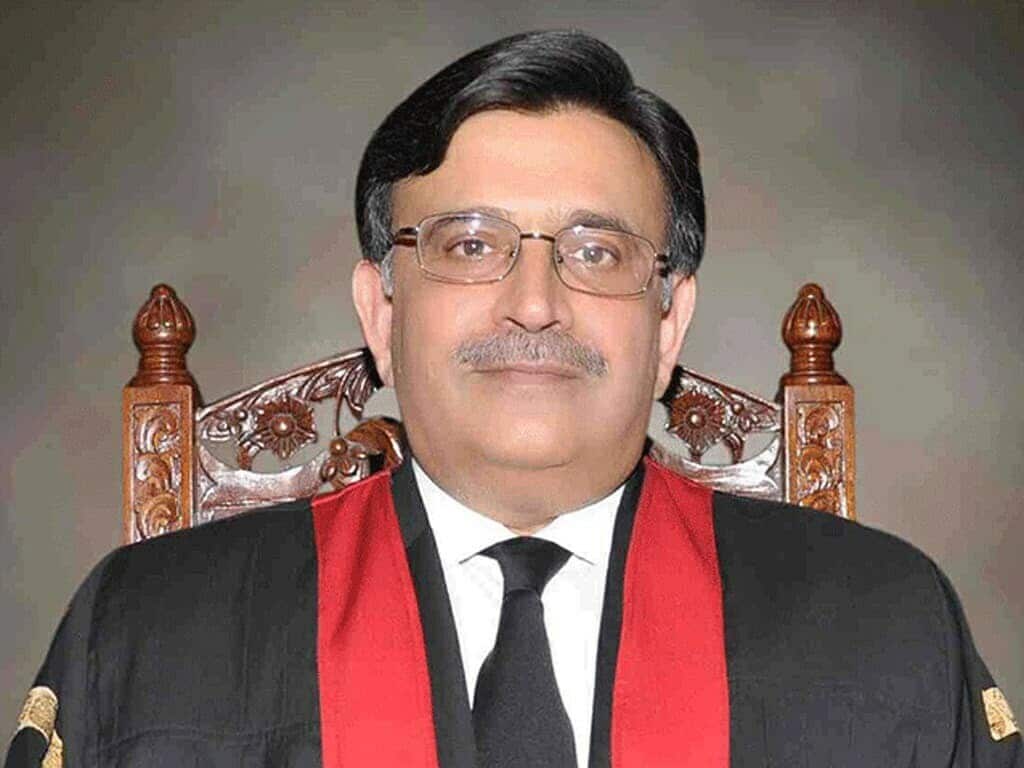
    Chief Justice of Pakistan (CJP) Umar Atta Bandial has said on Wednesday that judges of the apex court only disagree on whether constitutional cases should come to the Supreme Court (SC) or not.

    While addressing a ceremony hosted by the Supreme Court Bar Association (SCBA) in his honour, the Chief Justice said that judges only disagree on whether constitutional cases should come directly to the apex court or not. “There is no contradiction amongst us on constitutional principles,” he stated, emphasizing that the apex court and judiciary are the protectors of the constitution.

    A large numbers of lawyers along with nearly all SC judges attended the farewell dinner ceremony, however, Justices Yahya Afridi and Mazahar Ali Akbar Naqvi didn’t attend the event.

    CJP Bandial is going to retire on September 16, while Justice Qazi Faez Isa will be the next CJP, joining office on September 17.

  • Chief Justice sacrificed judiciary’s reputation for mother-in-law, says Maryam Nawaz

    Chief Justice sacrificed judiciary’s reputation for mother-in-law, says Maryam Nawaz

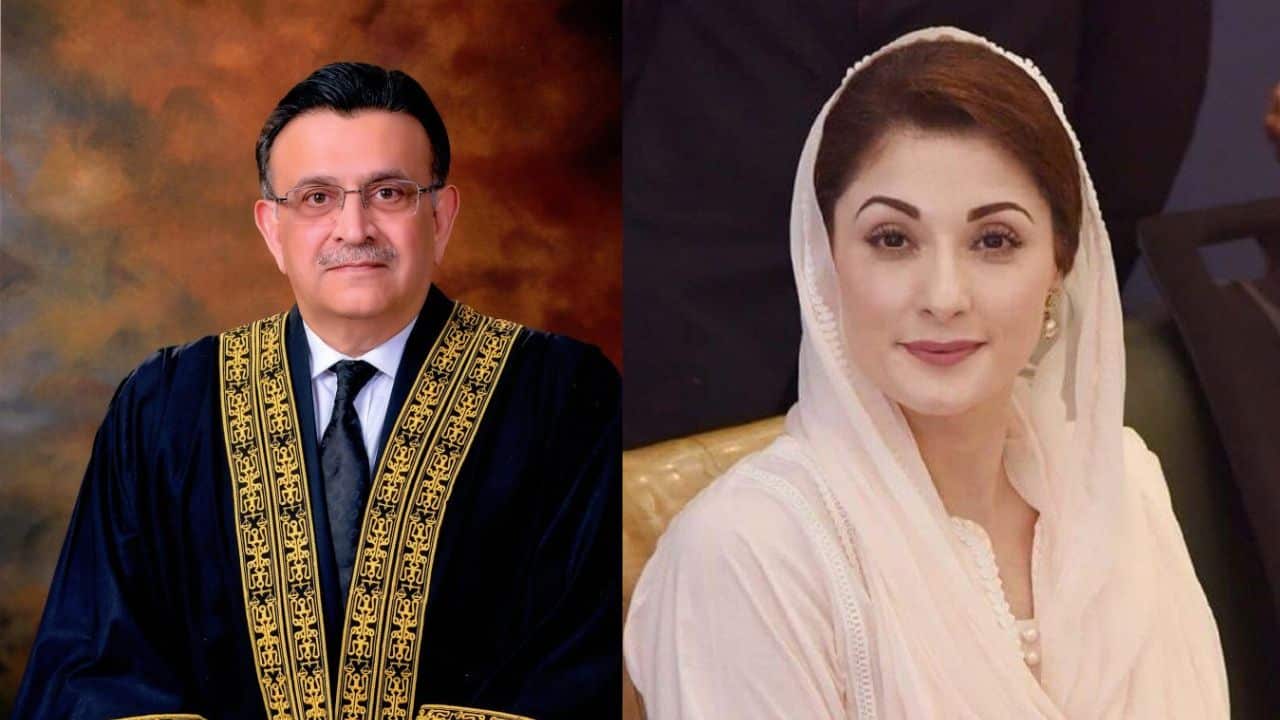
    While harshly criticizing the judges’ remarks in the audio leaks case, Maryam Nawaz said that the Chief Justice of Pakistan (CJ) Umar Atta Bandial has sacrificed the judiciary’s reputation for his mother-in-law.


    Taking to X ( formerly Twitter) on Friday, Maryam Nawaz wrote, “Umar Atta Bandial Sahib and like-minded people sacrificed the reputation of the judiciary for the sake of mother-in-law. Sorry”

    The Supreme Court of Pakistan has rejected the objections of the former Pakistan Democratic Movement (PDM) government against a five-member bench hearing the alleged audio leaks case.

    The five-member larger bench, led by the Chief Justice of Pakistan, Umar Atta Bandial, and comprising Justice Ijazul Ahsen, Justice Munib Akhtar, Justice Syed Hassan Azhar Rizvi, and Justice Shahid Waheed, was formed earlier this year, in May.

    The PDM government had filed a civil miscellaneous application (CMA) to the top court, requesting that CJP Bandial, Justice Ahsan, and Justice Akhtar bow out from the five-member larger bench hearing the case.

    The short verdict announced by Justice Ahsan on Friday said that the objections of the PDM government against the judges were the same as an “attack on the independence of the judiciary”.

    The SC reserved its decision on the PDM government’s petition of June 6.

    The government, in its CMA, said: “Chief Justice Umar Ata Bandial, Justice Ijazul Ahsan, and Justice Munib Akhtar should not listen to the audio leak case,” the petition appealed, adding that the “three respected judges should refuse to sit in the five-member larger bench.”

    “In the circumstances, till the next date of hearing, the operation of the impugned notification No.SRO.596(I)/2023 dated 19.05.2023 issued by the Federal Government is suspended as is the order dated 22.05.2023 made by the Commission and in consequence thereof proceedings of the Commission are stayed”, Chief Justice Umer Ata Bandial had announced in a short order.

  • PM Kakar nahi jantay kisko mil rahi hai muft bijli?

    PM Kakar nahi jantay kisko mil rahi hai muft bijli?

    Interim Prime Minister Anwaar ul Haq Kakar recently gave a statement that only Wapda’s employees, including retired ones, get free electricity and there is no such facility available for anyone else including judges. This statement is factually incorrect.

    Truth is that not only utility bills (including electricity bills) of the serving judges of the Supreme Court and High Courts are paid by the government, but the retired ones also get free electricity of up to 2000 units a month in case of an ex-SC judge and 800 units a month in case of a former high court judge, as per Ansar Abbasi’s report for Geo news.

    Not only this, the president and prime minister also enjoy free utilities including free electricity without any limits but in the case of the ex-president, he is provided 2000 units a month of electricity at the cost of taxpayers’ money.

    President’s Salary, Allowance and Privileges Act, 1975 as amended in 2018 says in Section 7 that the actual charges for electricity and gas consumption shall be paid in each year to the president. After retirement, the president also gets gas to the extent of monthly consumption of 10 HM3 and water, all paid by taxpayers.

    Chairman of National Accountability Bureau (NAB) also enjoys similar facilities as those of a Supreme Court judge, including free electricity. There is no confirmation of what the prime minister has claimed about services’ chiefs.

    In October 2020, Justice Faez Isa and his wife released income tax and asset details in which it was clearly written that post-retirement benefits of a Supreme Court judge include 2000 units of electricity, 25 HM of gas, water and 300 litres of petrol per month.

    High Court Judges (Leave, pension, privileges) order 1997 not only talks about the payment by government for provision of electricity gas and water but also says in Section 28 that a judge on retirement and after his death, the spouse shall be entitled to certain benefits including 800 units of electricity per month as well as 25 HM3 of gas per month.

    All those quasi-judicial public offices including the offices of NAB chairman, federal ombudsman etc where retired judges, or retired civil servants are appointed, the residence utility bills are also paid from the public funds.


    According to a NAB document, “i) Chairman NAB shall be entitled without payment of rent to the use of a residence provided by the Government throughout his term of office maintained at Government expenses with all utilities to be paid on actual basis by the Government. ii) In case of non-availability of Government accommodation or the Chairman chooses to reside in a private residence, the expenses on maintenance and all utilities as per actual, will be paid by the Government, in addition to house rent allowance.”

  • Court throws out ECP review petition against May 14 election decision

    Court throws out ECP review petition against May 14 election decision

    The Supreme Court (SC) on Thursday threw out the review petition of the Election Commission of Pakistan (ECP) about the May 14 polls order, The News has reported.

    “The court will intervene whenever there is a constitutional violation,” Chief Justice Umar Ata Bandial said.

    In April 2023, a three-member bench of the apex court headed by CJP Bandial, comprising Justice Ijaz Ul Ahsan and Justice Munib Akhtar declared the decision of the ECP to hold elections on October 8 instead of April 30 “illegal” and directed the ECP to hold elections in Punjab on May 14.

    In its 14-page petition, ECP said that the apex court should review its decision as the court “doesn’t have the authority to give the date of elections”.

    “Such powers exist elsewhere under the Constitution but certainly not lie in a court of law,” the ECP had said, citing various legalities and reasons behind its statement.

  • ‘Weakened arm muscles’; Bushra Bibi requests court to ensure Imran’s safety in jail

    ‘Weakened arm muscles’; Bushra Bibi requests court to ensure Imran’s safety in jail

    Bushra Bibi, the wife of former prime minister Imran Khan, has submitted an affidavit to the Supreme Court (SC) on Friday, requesting the court to address the conditions in which her husband is incarcerated in at Attock Jail.

    After meeting with her husband on August 22, Bushra Bibi submitted the affidavit to the court through advocate Hamid Khan.

    In her affidavit, she raised questions about Imran Khan’s health, stating that there are evident signs of drastic weight loss and weakened arm muscles.

    She also expressed concerns that her husband’s life is at risk because of his age of 70, requesting immediate action to ensure Imran Khan’s safety.

  • SC strikes down Review of Judgement law two days after NA dissolution

    SC strikes down Review of Judgement law two days after NA dissolution

    The Supreme Court (Review of Judgments and Orders) Act 2023 was declared “unconstitutional” by the apex court’s unanimous decision on Friday, just two days after the National Assembly was dissolved.

    The law was interpreted by some legal analysts as a way back into active politics for former Prime Minister Nawaz Sharif and Jahangir Khan Tareen.

    Both Nawaz Sharif and Jahangir Tareen were disqualified under Article 62 of the Constitution. After today’s decision, both politicians can’t challenge their disqualification in the apex court.

    Chief Justice Umar Ata Bandial headed the three-member bench, comprising Justice Ijazul Ahsan and Justice Munib Akhtar. The bench announced the decision today (Friday) after six hearings dating from June 7 to June 19.

    During the hearing of the case, Pakistan’s Attorney General (AGP), Mansoor Usman Awan, requested that the court rejects pleas against the law. On the other hand, Pakistan Tehreek-e-Insaf (PTI) lawyer Ali Zafar, said that changes in the court’s power were not possible only through legislation but also required constitutional amendments.

    The CJP read out the verdict while the AGP and other lawyers were present in court.

    CJP Umar Atta Bandial said that the Supreme Court Review Act is “unconstitutional”. He further added that the detailed order would be issued later.

    The detailed 87-page long order said, “repugnant to and ultra vires the Constitution, being beyond the legislative competence of the Parliament.”

    It is also mentioned in the order that “It is accordingly struck down as null and void and of no legal effect”.

    Hamid Mir has also said that “From the timing of the decesion, it seems that Nawaz Sharif has been targeted”.