The United Arab Emirates (UAE) announced on Tuesday that it would withdraw its remaining forces from Yemen, describing the move as voluntary and aimed at ensuring the safety of its personnel.
The announcement followed Saudi Arabia’s backing of a call demanding the UAE exit the country within 24 hours.
“In light of recent developments and their potential implications for the safety and effectiveness of counterterrorism missions, the Ministry of Defence announces the termination of the remaining counterterrorism personnel in Yemen of its own volition, in a manner that ensures the safety of its personnel and in coordination with the concerned partners,” the UAE Ministry of Defence said on X.
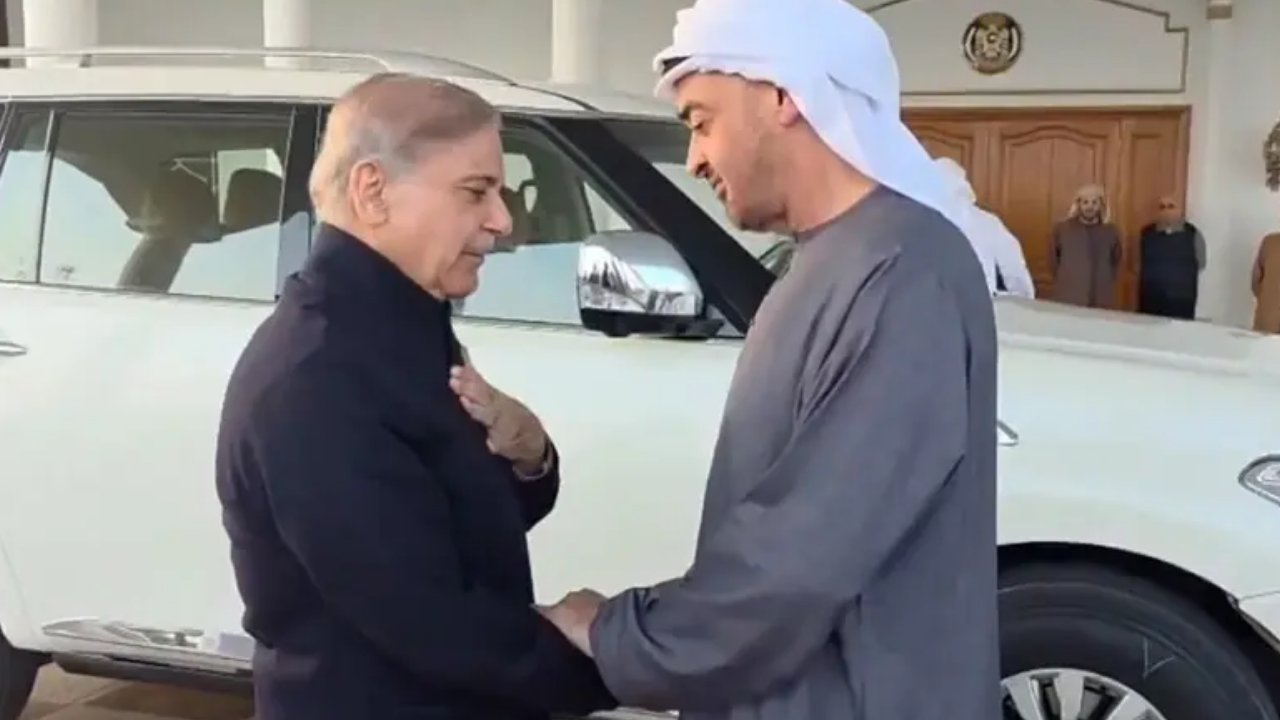
On the same day, Prime Minister Shehbaz Sharif met UAE President Sheikh Mohamed bin Zayed Al Nahyan in Rahim Yar Khan. The meeting was held at Sheikh Zayed Palace, with Deputy Prime Minister and Foreign Minister Ishaq Dar, Information Minister Attaullah Tarar, and other officials present.
According to a press release from the Prime Minister’s Office (PMO), the leaders carried forward discussions from Al-Nahyan’s first official visit to Pakistan last Friday.
They reviewed cooperation in trade, IT, energy, minerals, and defence. PM Shehbaz emphasized the need for a significant increase in bilateral trade and thanked the UAE for hosting 2.1 million Pakistanis, who contribute to relations between the two countries.
Meanwhile, tensions between the UAE and Saudi Arabia intensified. The UAE rejected Saudi claims that it had supplied weapons to a Yemeni separatist group, stating, “The shipment in question did not contain any weapons, and the vehicles unloaded were not intended for any Yemeni party.”
Saudi Arabia described a UAE-backed separatist advance as a threat to its national security, calling Abu Dhabi’s actions “highly dangerous.”
The Saudi-led coalition carried out airstrikes on what it described as a UAE weapons shipment for separatist forces in Yemen, targeting combat vehicles and equipment at the port of Al-Mukalla.
Following the strikes, Yemen’s presidential council declared a 90-day state of emergency and annulled a security pact with Abu Dhabi after forces of the Southern Transitional Council (STC) seized territory.
The STC opposed the decision, warning it could lead to “new confrontations.” Riyadh urged Abu Dhabi to cut off support for Yemeni groups.
Amid these regional developments, Pakistan continued its diplomatic engagement with the UAE. The two countries share close diplomatic, economic, and cultural ties, strengthened by historical connections and a large expatriate community.
This week, Pakistan and the UAE carried forward discussions from recent leadership-level meetings, including multiple memoranda of understanding signed this year.