Author: AFP

  • Iran vows to punish Israel for deadly strike on embassy compound

    Iran vows to punish Israel for deadly strike on embassy compound

    Tehran (AFP) – Iran warned arch foe Israel on Tuesday that it will punish an air strike that killed seven Revolutionary Guards, two of them generals, at its consular annex in Damascus.

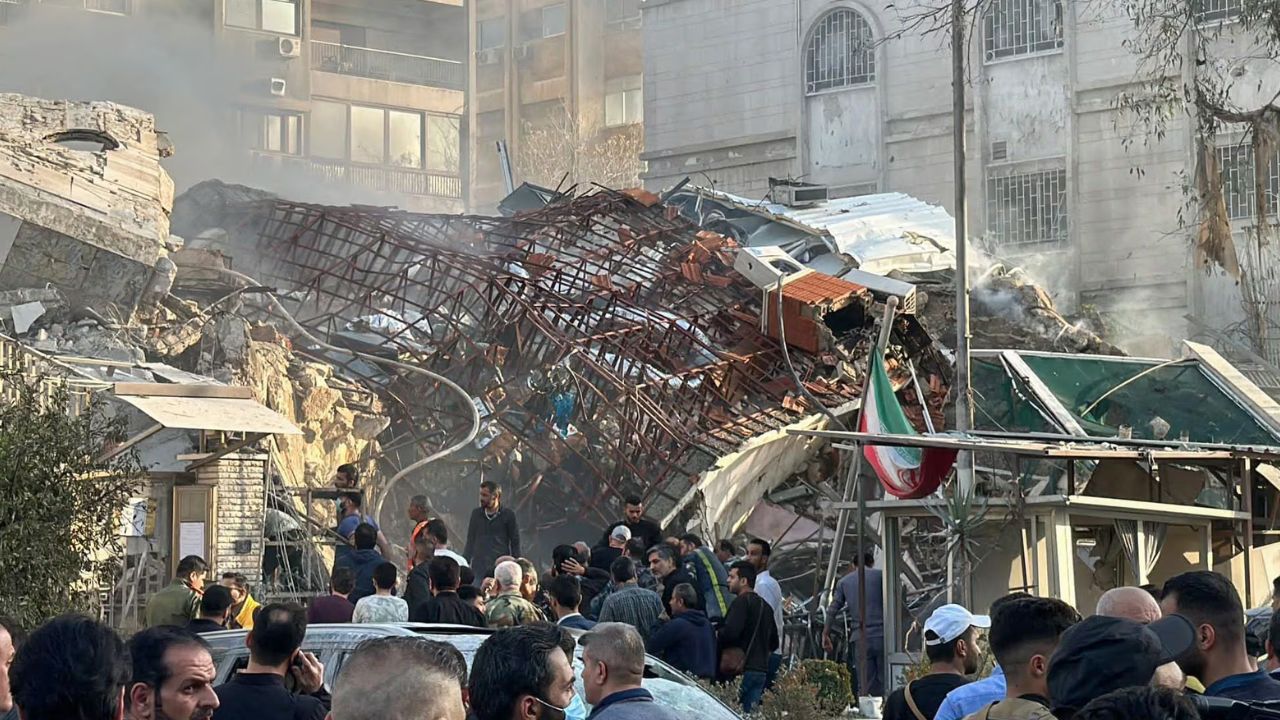
    Four other people were also reported killed in Monday’s strike which levelled the five-storey building adjacent to the Iranian embassy and further stoked tensions already running high as the Gaza war nears the end of its sixth month.

    Israel declined to comment on the strike, which fuelled Middle East tensions.

    Iran’s supreme leader Ayatollah Ali Khamenei vowed that Israel would be punished.

    “The evil Zionist regime will be punished at the hands of our brave men. We will make them regret this crime and the other ones,” Khamenei said in a message published on his official website.

    President Ebrahim Raisi condemned the attack as a “clear violation of international regulations” which “will not go unanswered”.

    “After repeated defeats and failures against the faith and will of the Resistance Front fighters, the Zionist regime has put blind assassinations on its agenda in the struggle to save itself,” Raisi said on his office’s website.

    The UN Security Council is to discuss the strike later Tuesday at a meeting requested by Syrian ally Russia.

    The strike on the annex killed seven Revolutionary Guards, including two commanders of its Quds Force foreign operations arm, Brigadier Generals Mohammad Reza Zahedi and Mohammad Hadi Haji Rahimi, Iranian offiials said.

    Zahedi, 63, had held a succession of commands in the force in a Guards career spanning more than four decades.

    A Britain-based monitor of the more than decade-old conflict in Syria, the Syrian Observatory for Human Rights said the strike killed “eight Iranians, two Syrians and one Lebanese — all of them fighters.”

    Iran’s ambassador to Syria, Hossein Akbari, told Iranian state TV that the attack “was carried out by F-35 fighter jets” which fired six missiles at the building.

    Only the gate of the building was left standing after the attack, with a sign reading “the consular section of the embassy of Iran”.

    Windows were shattered within a 500-metre (550 yard) radius and many parked cars were damaged by the blast.

    The adjacent facade of the Iranian embassy is decorated with a large portrait of Qasem Soleimani, a longtime Quds Force chief who was killed in a US drone strike just outside Baghdad airport in January 2020.

    ‘Important message to US’

    Iran’s foreign minister said Israel’s main backer the United States also bore responsibility for the strike, even though an unidentified US official quoted by Axios insisted Washington “had no involvement” or advanced knowledge of it.

    Amir-Abdollahian said on X that the ministry had summoned a diplomat from the Swiss embassy, which looks after US interests in Iran, to hear its protest.

    “An important message was sent to the American government as the supporter of the Zionist regime. America must be held accountable,” he said in the post.

    Iran’s allies around the region and beyond voiced support for its position.

    “China condemns the attack,” foreign ministry spokesperson Wang Wenbin said, adding “the security of diplomatic institutions cannot be violated, and Syria’s sovereignty, independence and territorial integrity should be respected”.

    The Iraqi foreign ministry condemned the attack as a “flagrant violation of international law” and warned of “more chaos and instability” in the region.

    Lebanon’s Iran-backed Hezbollah group warned Israel would pay for killing Guards commanders. “This crime will not pass without the enemy receiving punishment and revenge,” Hezbollah said in a statement.

    Russia blamed the Israeli air force for the “unacceptable attack against the Iranian consular mission in Syria”.

    Palestinian group Hamas condemned the strike, which it described as a “dangerous escalation”.

    Israeli genocide in Gaza has killed nearly 33,000 people in Gaza, mostly women and children, according to the territory’s health ministry.

    Iran-backed groups in Iraq, Lebanon, Syria, and Yemen have since carried out a series of attacks on Israeli and Western targets.


  • Japan’s royal family makes Instagram debut

    Japan’s royal family makes Instagram debut

    Japan’s royal family is now on Instagram but don’t expect any candid selfies from its official account, which went live Monday in a cautious social media debut for the ancient monarchy.

    The first 19 posts are formally staged photos and videos of Emperor Naruhito and Empress Masako carrying out royal duties at recent public appearances. Nonetheless, more than 160,000 users have followed the Imperial Household Agency (IHA) account, which was announced a week ago but set to private until Monday.

    The Japanese monarchy has mythological origins stretching back more than two millennia and any public criticism of the emperor remains taboo in the country. By joining social media, the institution hopes to spark interest among younger generations about what the imperial family does, an IHA spokesperson confirmed to AFP.

    But, perhaps predictably, the posts under the Instagram handle kunaicho_jp contain no behind-the-scenes juice. Strictly factual captions explain what the emperor did on what day, from meeting foreign dignitaries to admiring bonsai trees, with comments moderated.

    The account does not follow any other users and has so far not ventured into Instagram Stories. “The IHA is on Instagram! I thought it was an April Fools’ prank!” one X user wrote in reaction to the launch. 

    “When I heard the IHA created an Instagram account, I quickly checked it out. But of course, the emperor wouldn’t post ‘today’s lunch (heart emoji)’ or anything like that,” wrote another. Some users joked it was good the royals had chosen the more “civilised” Instagram over X, formerly Twitter. 

    Naruhito ascended the Chrysanthemum throne in 2019 in a tradition-laden ceremony after his highly popular father became the first emperor to abdicate in over two centuries. Other monarchies have created social media accounts, including Britain’s royals, who have recently been at the centre of a storm of rumours and conspiracy theories.

    The manipulation of a family photograph the palace released to the media-fuelled online speculation over the whereabouts of Catherine, Princess of Wales, who later revealed she had been diagnosed with cancer.

  • Google to delete incognito search data to end privacy suit

    Google to delete incognito search data to end privacy suit

    San Francisco (AFP) – Google has agreed to delete a vast trove of search data to settle a suit that it tracked millions of US users who thought they were browsing the internet privately.

    If a proposed settlement filed Monday in San Francisco federal court is approved by a judge, Google must “delete and/or remediate billions of data records” linked to people using the Chrome browser’s incognito mode, according to court documents.

    “This settlement is an historic step in requiring dominant technology companies to be honest in their representations to users about how the companies collect and employ user data, and to delete and remediate data collected,” lawyer David Boies said in the filing.

    A hearing is slated for July 30 before Judge Yvonne Gonzalez Rogers, who is to decide whether to approve the deal that would let Google avoid a trial in the class-action suit.

    The settlement calls for no cash damages to be paid but leaves an option for Chrome users who feel they were wronged to sue Google separately to get money.

    The suit originally filed in June of 2020 sought at least $5 billion in damages.

    “We are pleased to settle this lawsuit, which we always believed was meritless,” Google spokesman Jorge Castaneda said in a statement.

    “We are happy to delete old technical data that was never associated with an individual and was never used for any form of personalization.”

    The object of the lawsuit was the “Incognito Mode” in the Chrome browser that plaintiffs said gave users a false sense that what they were surfing online was not being tracked by the Silicon Valley tech firm.

    But internal Google emails brought forward in the lawsuit demonstrated that users using incognito mode were being followed by the search and advertising behemoth for measuring web traffic and selling ads.

    The lawsuit, filed in a California court, claimed Google’s practices had infringed on users’ privacy by intentionally deceiving them with the incognito option.

    The original complaint alleged that Google had been given the “power to learn intimate details about individuals’ lives, interests, and internet usage.”

    “Google has made itself an unaccountable trove of information so detailed and expansive that George Orwell could never have dreamed it,” it added.

    The settlement requires Google, for the next five years, to block third-party tracking “cookies” by default in Incognito Mode.

    Third-party cookies are small files which are used to target advertising by tracking web navigation and are placed by visited sites and not by the browser itself.

    No cookies?

    Google earlier this year began limiting third-party cookies for some users of its Chrome browser, a first step towards eventually abandoning the files that have raised privacy concerns.

    Google announced in January 2020 that it would begin eliminating third-party cookies within two years, but the start has been delayed several times amid opposition from web media publishers.

    Cookies have recently been subject to greater regulation, including the European Union’s General Data Protection Regulation introduced in 2016 as well as regulations in California.

  • Israeli PM vows to ban Al Jazeera broadcasts

    Israeli PM vows to ban Al Jazeera broadcasts

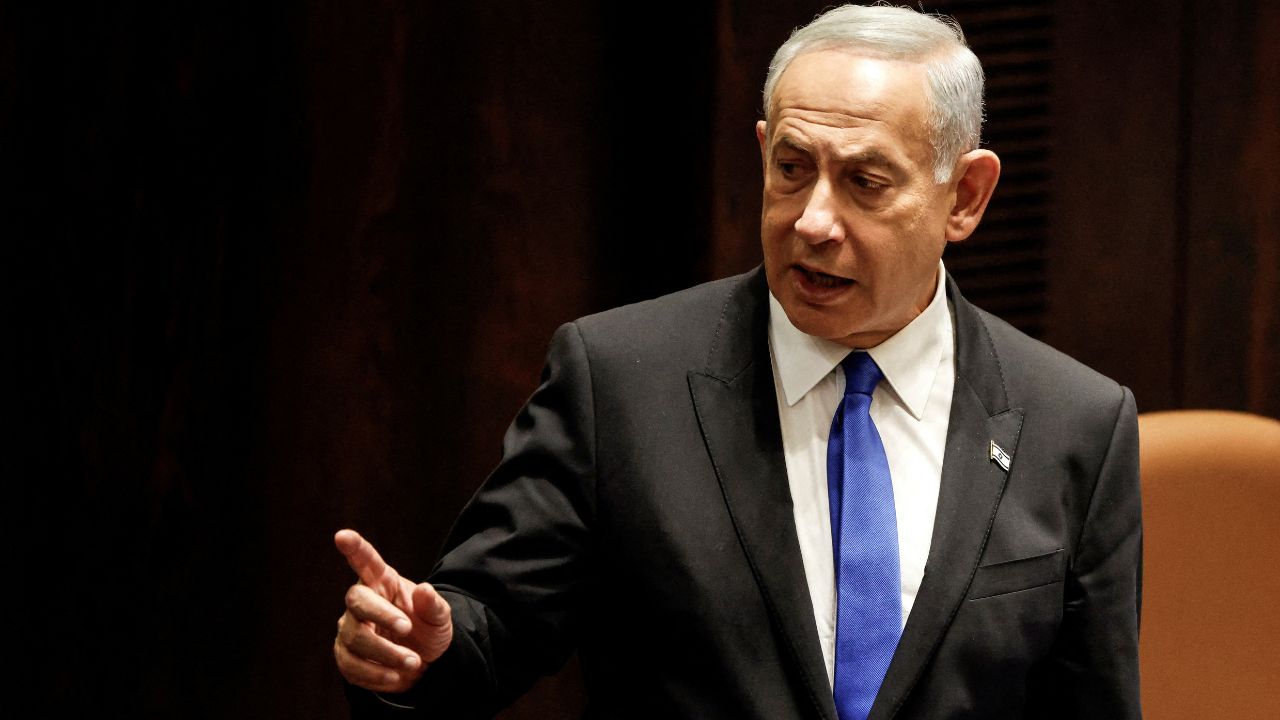
    Israeli Prime Minister Benjamin Netanyahu pledged Monday to use a fresh national security law passed by parliament to ban news channel Al Jazeera from broadcasting in the country.

    The law, passed on Monday by 70 votes to 10, grants top ministers the power to ban broadcasts by foreign channels deemed a national security threat and to shut their offices.

    Netanyahu was quick to single out Qatar-based channel Al Jazeera, with which his government has a long-running feud that predates Israeli genocide in Gaza.

    “The terrorist channel Al Jazeera will no longer broadcast from Israel. I intend to act immediately in accordance with the new law to stop the channel’s activities,” Netanyahu said on X, formerly Twitter.

    The broadcaster slammed the ban as “part of a series of systematic Israeli attacks to silence Al Jazeera”, including the killing of one of its most prominent journalists in the region while covering an Israeli raid in May 2022.

    In a statement, the network said Netanyahu had launched a “frantic” and “disgraceful” campaign of accusations against the network, vowing to continue its “bold” coverage of the war.

    Two network correspondents have been killed during the conflict and the broadcaster’s office in the besieged Palestinian territory has been bombed.

    The New York-based Committee to Protect Journalists said the law “contributes to a climate of self-censorship and hostility toward the press, a trend that has escalated since the Israel-Gaza war began”.

    At least 95 journalists and media workers have been killed since the war began after an unprecedented attack by Hamas on October 7, according to the group, marking “the deadliest period for journalists since CPJ began gathering data in 1992”.

    In January, Israel said an Al Jazeera staff journalist and a freelancer killed in an air strike in Gaza were “terror operatives”.

    The following month, it accused another journalist with the channel who was wounded in a separate strike of being a “deputy company commander” with Hamas.

    Al Jazeera has fiercely denied Israel’s allegations and accused it of systematically targeting Al Jazeera employees in the Gaza Strip.

    Hamas said in a statement that the ban showed that Israel “desperately seeks to obscure the truth of its heinous crimes”.

    White House spokeswoman Karine Jean-Pierre said “if it is true, a move like this is concerning”.

    Broadcasting in both English and Arabic, Al Jazeera bills itself as the “first independent news channel in the Arab world”.

    Launched in Doha in 1996, the network says it has more than 70 bureaus around the globe, with 3,000 employees and an audience in 430 million homes.

    Qatar, which funds Al Jazeera, also serves as a base for Hamas leader Ismail Haniyeh.

    Tensions between Israel and Al Jazeera have only grown since the latest Israel-Hamas conflict erupted on October 7.

    Al Jazeera’s bureau chief in Gaza, Wael al-Dahdouh, was wounded in an Israeli strike in December that killed the network’s cameraman.

    His wife, two of their children and a grandson were killed in the October bombardment of central Gaza’s Nuseirat refugee camp.

    His eldest son was the Al Jazeera staff journalist killed in January when a strike targeted a car in Rafah.

    Israel has launched a relentless air and ground campaign after October 7 that has reduced much of Gaza to rubble and killed at least 32,845 people, mostly women and children, according to the Gaza health ministry.

  • NGO World Central Kitchen says seven of its workers killed in Israeli strike in Gaza

    NGO World Central Kitchen says seven of its workers killed in Israeli strike in Gaza

    An Israeli strike killed several people working for US-based charity World Central Kitchen in the Gaza Strip on Monday, according to the organization’s founder.

    World Central Kitchen “lost several of our sisters and brothers in an IDF air strike in Gaza. I am heartbroken and grieving for their families and friends and our whole WCK family,” chef Jose Andres posted on social media site X.

    Earlier, the Gaza health ministry had said the bodies of four foreign aid workers and their Palestinian driver were brought to the hospital in the central town of Deir el-Balah after an Israeli strike targeted their vehicle.

    Hamas said in a statement that the aid workers included “British, Australian and Polish nationalities, with the fourth nationality not known”, and that the fifth person killed was a Palestinian driver and translator.

    US National Security Council spokesperson Adrienne Watson said the White House was “heartbroken and deeply troubled by the strike.”

    “Humanitarian aid workers must be protected as they deliver aid that is desperately needed, and we urge Israel to swiftly investigate what happened,” she wrote on X.

    The Israeli military said in a statement that it was “conducting a thorough review at the highest levels to understand the circumstances of this tragic incident”, adding that it had been “working closely with WCK” in the effort to provide aid to Palestinians.

    At the Al-Aqsa Hospital in Deir el-Balah, an AFP correspondent saw five bodies with three foreign passports lying nearby.

    Australian Prime Minister Anthony Albanese on Tuesday confirmed one of the killed aid workers was Australian national Zomi Frankcom.

    “This is completely unacceptable. Australia expects full accountability for the deaths of aid workers,” Albanese said

    World Central Kitchen has been involved in delivering the aid arriving by boat from Cyprus, and in the construction of a temporary jetty in Gaza.

    Gaza has been under a near-complete blockade since October 7, with the United Nations accusing Israel of preventing deliveries of humanitarian assistance urgently needed by all 2.4 million Palestinians.

    UN agencies have warned repeatedly that northern Gaza is on the verge of famine, calling the situation a man-made crisis because aid lorries are backed up on the Egypt-Gaza border awaiting long checks by Israeli officials. Israel has denied responsibility.

    Israeli genocide in Gaza has killed at least 32,845 people, mostly women and children, according to the health ministry in Gaza.

  • In a first, two First Ladies at presidential palace in a Senegal

    In a first, two First Ladies at presidential palace in a Senegal

    In the closing moments of the electoral campaign, Senegal’s president-elect Bassirou Diomaye Faye stepped onto the stage holding the hands of both his wives Marie and Absa.

    It was an unprecedented sight in the national politics of the West African country and a clear choice by the first-round winner who promises radical change.

    Polygamy is a traditional and religious practice firmly anchored in the culture of Senegal where the overwhelming majority is Muslim.

    Marie Khone, who until now had never been in the spotlight, comes from the same village as 44-year-old Faye. They married 15 years ago and have four children.

    He married his second wife Absa just over a year ago.

    “It’s the ultimate recognition of the tradition of polygamy at the top of the state, with a situation that will reflect Senegalese reality,” sociologist Djiby Diakhate said.

    Many men praise the practice while women tend to remain “mistrustful”, he added.

    Polygamy has long stirred controversy and the public appearance by BDF, as he is known, with his two wives at his side cheered on by thousands of his supporters has made it a top talking point in the media, online and at home, sparking diverse reaction.

    “Being a second wife suits me better than being a first,” well-known singer Mia Guisse said proudly in a video that recently went viral.

    Reputed sociologist Fatou Sow Sarr said on X, formerly Twitter, that “polygamy, monogamy, polyandry are matrimonial models determined by the history of every nation”.

    “These models are now in competition with homosexual marriage,” he added, in a country where homosexuality is punishable by between one and five years in jail.

    “I really think that the West has no legitimacy to judge our cultures,” Sarr added in a follow-up message on X.

    Nevertheless, many Senegalese women say they find polygamy hypocritical and unfair, while the UN Human Rights Committee said in a 2022 report that it amounted to discrimination against women and should be ended.

    – ‘Totally new’ situation –

    In her 1979 novel “So Long a Letter”, Senegalese author Mariama Ba was fiercely critical of polygamy, depicting the pain and loneliness of a woman after her husband took a second, younger wife.

    Many popular TV series in recent years, like “Mistress of a Married Man” or “Polygamy”, have explored the ups and downs of family life in polygamous households.

    Former culture minister and history professor Penda Mbow said the matrimonial situation at the presidential palace now is “totally new”.

    “Until now, there was only one First Lady. This means the entire protocol must be reviewed,” he added.

    Polygamy is widespread in Senegal particularly in rural areas and is considered a way of widening one’s family.

    Islam permits men to take up to four wives providing they have the financial means. In such a case, it calls for equal, alternating time spent with the wives, of between two and three days.

    – ‘Strong signal’ –

    Many marriages are not registered in Senegal, making it difficult to say exactly how many are polygamous.

    But according to a 2013 report by the national statistics and demographics agency, 32.5 percent of married Senegalese people were in a polygamous union.

    The average age of the women at the time of their marriage was 40.4 years old and 52.9 for men, the report said.

    Diakhate, the sociologist, said Faye had sent a “strong signal so that other men also accept their polgygamy and so that they demonstrate transparency like him”.

    He said there was “undoubtedly a will” to end hidden polygamy- known in the Wolof language as Takou Souf — which he added would be “a good thing for the economy of the country and for the matrimonial situation”.

    In response to detractors, the incoming president, who won 54.28 percent in the March 24 vote, shows nothing but pride in his family situation.

    “I have beautiful children because I have wonderful wives. They are very beautiful. I give thanks to God they are always fully behind me,” he said during the presidential race.

  • Israel pulls out of Al-Shifa hospital after killing civilians, destroying buildings

    Israel pulls out of Al-Shifa hospital after killing civilians, destroying buildings

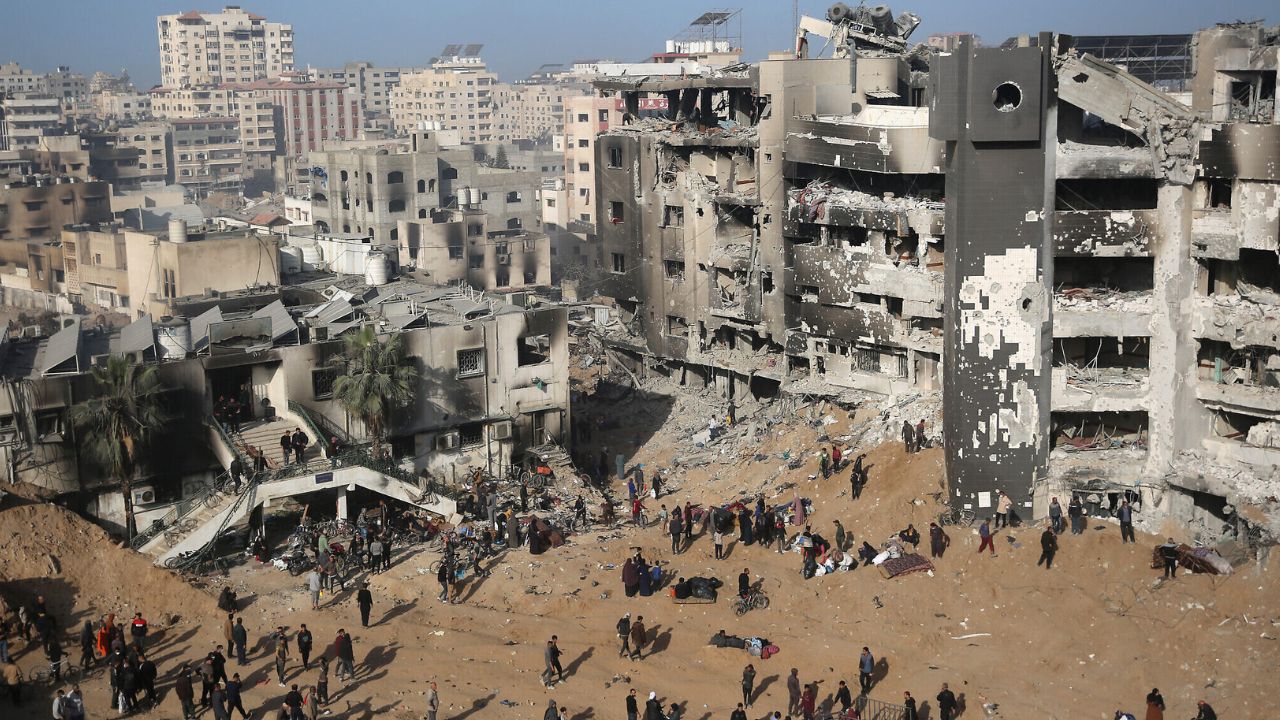
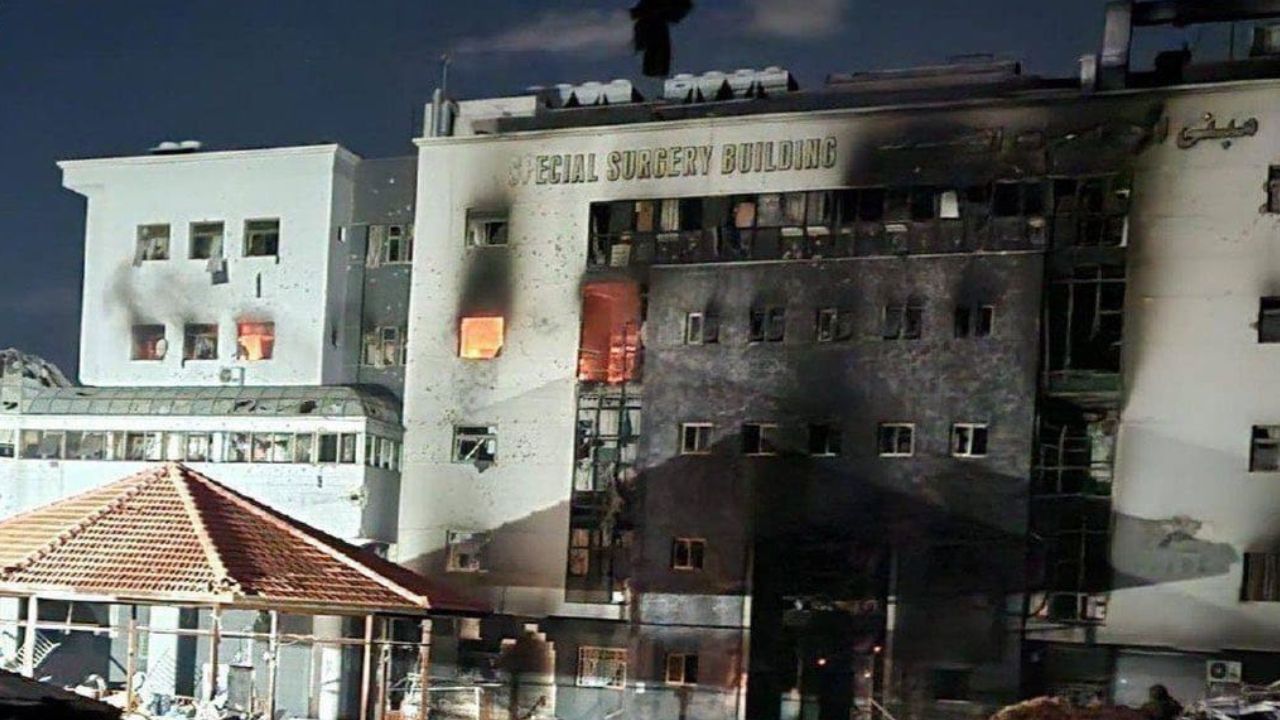
    Israeli forces on Monday pulled out of Gaza’s largest hospital complex after an intensive two-week military operation, leaving behind charred buildings and bodies strewn at the sprawling complex.

    Israel said it had battled Palestinian militants hiding inside Gaza City’s Al-Shifa Hospital, killed at least 200 fighters and recovered large stockpiles of weapons, explosives and cash.

    The health ministry in Gaza said that, after heavy Israeli air strikes and tank fire, “the scale of the destruction inside the complex and the buildings around it is very large”.

    “Dozens of bodies, some of them decomposed, have been recovered from in and around the Al-Shifa medical complex,” the ministry said, adding that the hospital was now “completely out of service”.

    A doctor told AFP more than 20 bodies had been recovered, some crushed by withdrawing vehicles.

    Israeli attacks have also flared around other Gaza hospitals almost six months since October 7 attacks which have destroyed swathes of the besieged coastal territory.

    The Hamas government press office said the army had blown up more than 20 houses within 24 hours in the main southern city of Khan Yunis, where battles have raged around the Nasser and Al-Amal hospitals.

    Israel destroys hospital

    Over the past two weeks, the Israeli army carried out what it labelled “precise operational activity” at the Al-Shifa complex, before declaring on Monday that the forces had withdrawn.

    The scene left behind was one of devastation, with windows blown out, concrete walls blackened and volunteers carrying away shrouded corpses across the sandy wasteland.

    Dozens of air strikes and shelling had hit the area around the complex in the morning, in heavy fire which the Hamas government media office said served to provide cover for the withdrawing troops and tanks.

    The army has in recent days released footage of its fighters moving through the hospital’s corridors, and pictures of large numbers of assault rifles, grenades and other weapons it said were recovered from the maternity ward.

    The military has said 200 Hamas fighters were killed in fighting in and around Al-Shifa.

    Hamas has denied operating from Al-Shifa and other health facilities.

    An Israeli strike also hit “a tent camp” inside central Gaza’s Al-Aqsa hospital compound, killing four people, said World Health Organization chief Tedros Adhanom Ghebreyesus on social media platform X.

  • New Palestinian government gets wary greeting

    New Palestinian government gets wary greeting

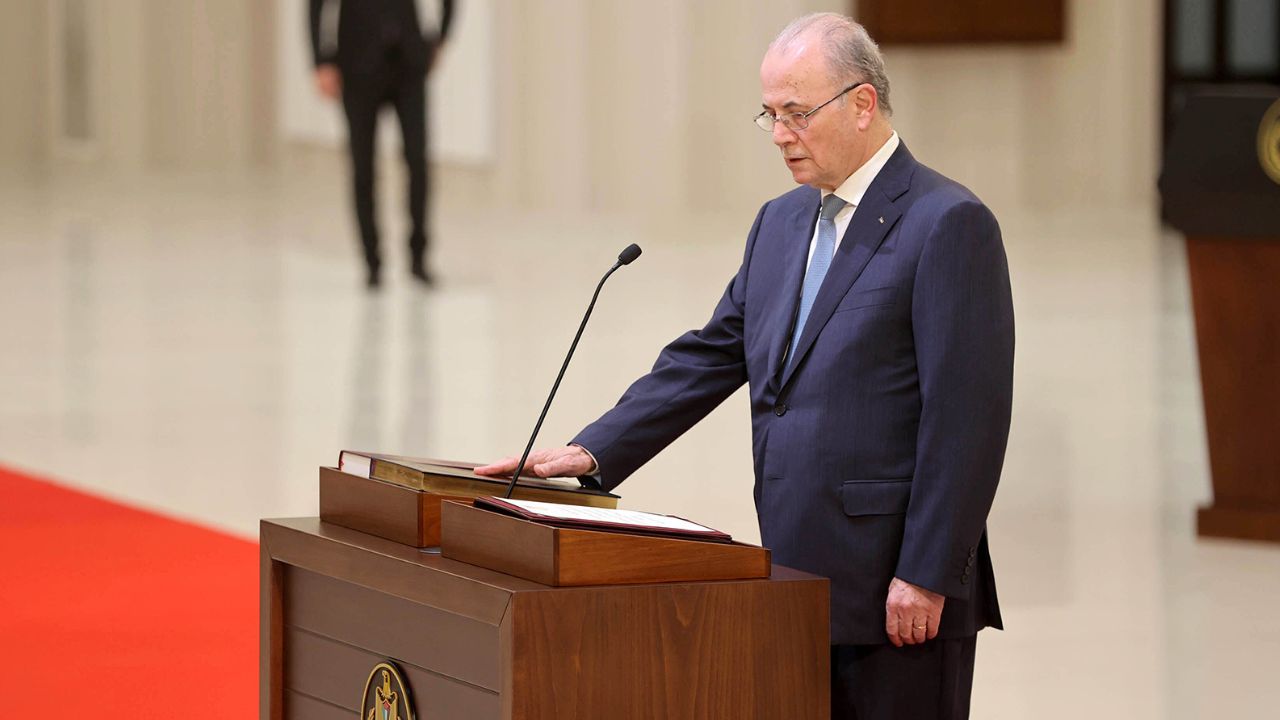
    Ramallah (Palestinian Territories) (AFP) – A new Palestinian government that contains both Gazans and four women was sworn in Sunday, but was already facing scepticism from its own people.

    The Palestinian Authority led by Mahmud Abbas is under pressure from Washington to prepare to step into the breach in the aftermath of the Gaza war and undertake reforms.

    Newly-appointed prime minister Mohammed Mustafa said his government’s “top national priority” was ending the war as he named his new team.

    He said his cabinet “will work on formulating visions to reunify the institutions, including assuming responsibility for Gaza”.

    President Abbas, 88, is being nudged by the United States to shake the creaking authority up so it can reunite the occupied West Bank and the devastated Gaza Strip under a single rule after the war.

    The Palestinian Authority has had almost no influence over the Gaza Strip since Hamas took power there in 2007 from Abbas’s Fatah party.

    Secretary of State Antony Blinken urged Abbas to make “administrative reforms” when the two men met in January.

    Abbas’s Ramallah-based administration has been hamstrung by Israel’s decades-old occupation of the West Bank and his own unpopularity.

    Mustafa, an economist and longtime Abbas advisor, said the “reconstruction” of the Palestinian territories was his main goal, with Gaza in ruins after six months of Israeli bombardment in retaliation for the October 7 attack.

    His new cabinet is made up of 23 ministers and includes four women and six ministers from Gaza, among them former Gaza City mayor Maged Abu Ramadan who has been given the health portfolio.

    Among the new female faces is Varsen Aghabekian, a Palestinian-Armenian academic who will work alongside Mustafa in the foreign ministry, which he also controls.

    ‘Deepen divisions’

    The premier, who previously worked for the World Bank, said the thorny issue of Israeli-annexed east Jerusalem was also a top priority along with the “fight against corruption”.

    But many doubt whether the Palestinian Authority — which has been dogged by divisions, corruption scandals and the authoritarian tendencies of its ageing leader — can be a credible player in any future deal.

    Ali Jarbawi, a former PA minister and political scientist, said it faces massive challenges on all fronts.

    “It is broke and it’s in debt and can’t pay its salaries, so it needs immediate financial support,” he said.

    And it needs to be accepted by both Palestinian factions — Fatah which controls the West Bank and Hamas in Gaza.

    “Thirdly it needs a political horizon, from the international community, and a commitment to the two-state solution,” Jarbawi said.

    And none of that can happen unless the “Israeli government, the army and settlers in the West Bank ease the pressure” on Palestinians, he added.

    Senior Hamas member Bassem Naim criticised Abbas’s policies.

    “His hijacking of the unified Palestinian decision-making” is dangerous for “our cause at this very critical stage in the history of our people,” he told AFP.

    He said Hamas “proposed sitting down for the sake of national dialogue and rebuilding the political system… but Abbas blocked all these attempts.”

    Hamas, Islamic Jihad and the Marxist Popular Front for the Liberation of Palestine issued a joint statement earlier this month declaring that Mustafa’s appointment would only deepen Palestinian divisions.

    People on the streets of Ramallah, where the authority is based, were equally sceptical.

    “Changing the government will not solve anything because change to us comes only from the outside,” said Suleiman Nassar, 56.

    “We know very well that any minister or any Palestinian government will not get in without an American or Israeli” approval he said.

  • Bulgaria, Romania take first steps into Europe’s visa-free zone

    Bulgaria, Romania take first steps into Europe’s visa-free zone

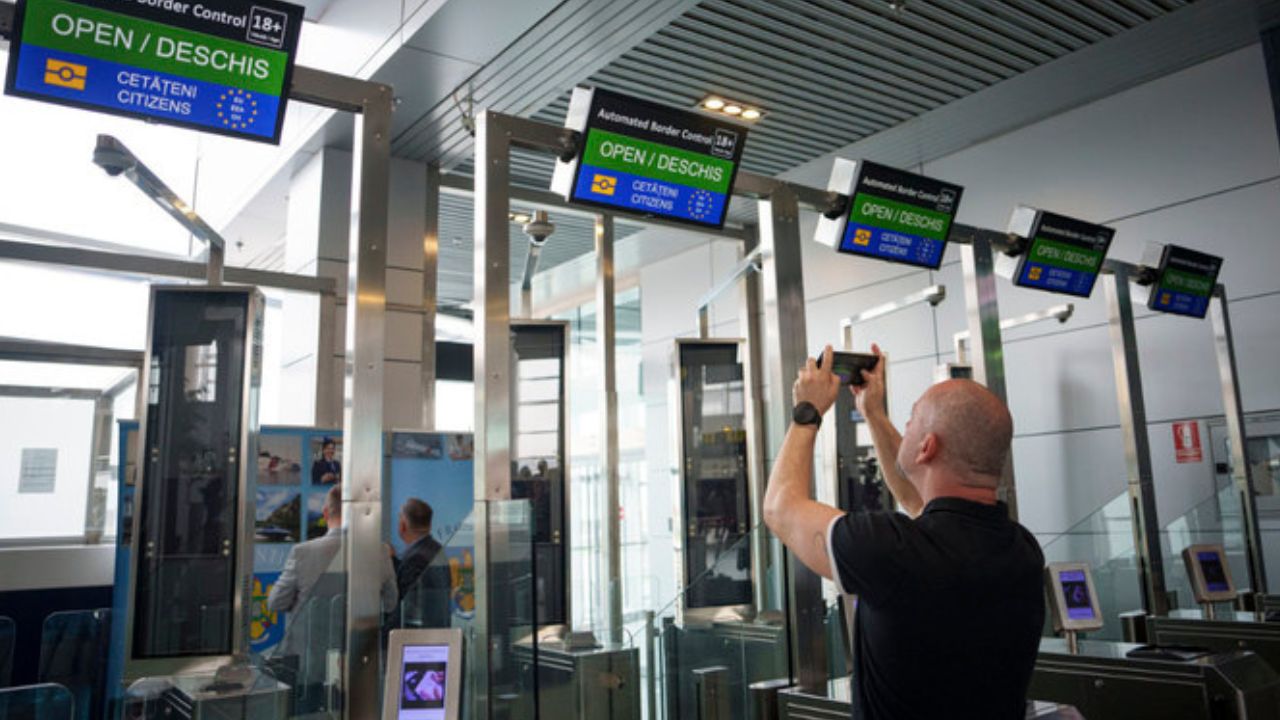
    Bucharest, Romania – Bulgaria and Romania joined Europe’s vast Schengen area of free movement on Sunday, opening up travel by air and sea without border checks after a 13-year wait.

    A veto by Austria however means the new status will not apply to land routes, after Vienna expressed concerns over a potential influx of asylum seekers.

    Despite the partial membership, the lifting of controls at the two countries’ air and sea borders is of significant symbolic value.

    Admission to Schengen is an “important milestone” for Bulgaria and Romania, symbolising a “question of dignity, of belonging to the European Union”, according to foreign policy analyst Stefan Popescu.

    “Any Romanian who had to walk down a lane separate from other European citizens felt being treated differently,” he told AFP.

    Ivan Petrov, a 35-year-old Bulgarian marketing executive who lives in France, said he was enthusiastic about less stressful travelling and the time he would be able to save.

    “This is a great success for both countries, and a historic moment for the Schengen area — the largest area of free movement in the world,” EU chief Ursula von der Leyen said in a statement Saturday.

    “Together, we are building a stronger, more united Europe for all our citizens.”

    And they were 29

    With Bulgaria and Romania arriving joining Sunday, the Schengen zone will comprise 29 members — 25 of the 27 European Union member states as well as Switzerland, Norway, Iceland and Liechtenstein.

    Romania’s government said Schengen rules would apply to four sea ports and 17 airports, with the country’s Otopeni airport near the capital Bucharest serving as the biggest hub for Schengen flights.

    More staff including border police and immigration officers will be deployed to airports to “support passengers and detect those who want to take advantage to leave Romania illegally”, it added.

    Random checks will also be carried out to catch people with false documents and to combat human trafficking.

    Bulgaria and Romania both hope to fully integrate into Schengen by the end of the year, but Austria has so far relented only on air and sea routes.

    Croatia, which joined the EU after Romania and Bulgaria, beat them to becoming Schengen’s 27th member in January 2023.

    Created in 1985, the Schengen area allows more than 400 million people to travel freely without internal border controls.

    ‘Irreversible process’

    While some have reason to celebrate, truck drivers, faced with endless queues at the borders with their European neighbours, feel left out.

    Earlier this month, one of Romania’s main road transport unions the UNTRR called for “urgent measures” to get full Schengen integration, deploring the huge financial losses caused by the long waits.

    “Romanian hauliers have lost billions of euros every year, just because of long waiting times at borders,” secretary general Radu Dinescu said.

    According to the union, truckers usually wait eight to 16 hours at the border with Hungary, and from 20 to 30 hours at the Bulgarian border, with peaks of three days.

    Bulgarian businesses have also voiced their anger over the slow progress.

    “Only three percent of Bulgarian goods are transported by air and sea, the remaining 97 percent by land,” said Vasil Velev, president of the Bulgarian Industrial Capital Association (BICA).

    “So we’re at three percent in Schengen and we don’t know when we’ll be there with the other 97 percent,” he told AFP.

    Bucharest and Sofia have both said that there will be no going back.

    “There is no doubt that this process is irreversible,” Romanian Interior Minister Catalin Predoiu said this month, adding it “must be completed by 2024 with the extension to land borders”.

    ani-vs-anb/jj/js

    © Agence France-Presse

  • Stop the war on Gaza; thousands in Israel call for end to war on Palestinian Land Day

    Stop the war on Gaza; thousands in Israel call for end to war on Palestinian Land Day

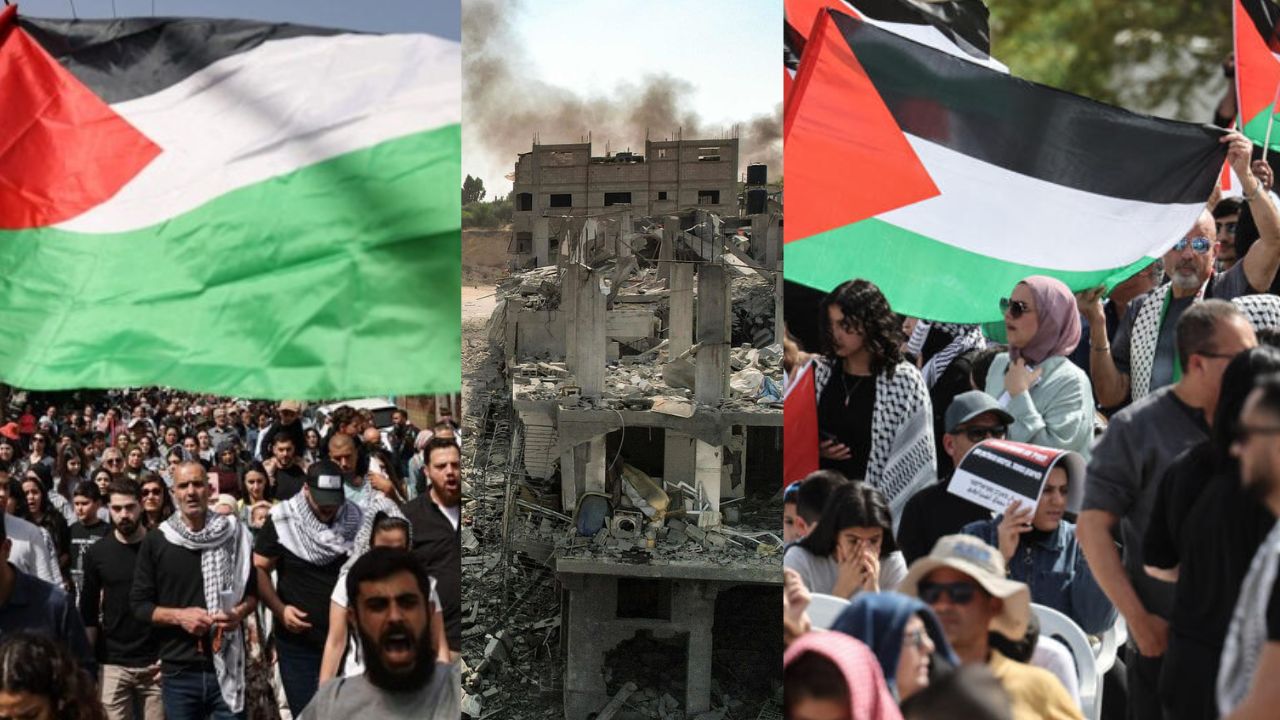
    The protesters, led by Arab members of the Israeli parliament, marched through the northern town of Deir Hanna waving Palestinian flags and carrying banners reading: “Stop the war on Gaza”.

    Most of the demonstrators were Arab citizens of Israel-Palestinians who evaded displacement during the 1948 war that led to Israel’s creation and who, with their descendants, now constitute around 21 percent of its population.

    A smaller contingent of Jewish Israelis joined the rally, some carrying signs reading: “Jews and Arabs refuse to be enemies”.

    Land Day commemorates protests and a strike on March 30, 1976 against a decision by the Israeli authorities to seize large swathes of land in the northern Galilee region.

    Israeli police fired at demonstrators, killing six people, and the government plan was subsequently dropped.

    “On this day 48 years ago, our people thwarted the project to confiscate our lands with their protests… and they embodied an important and prominent milestone in history,” Deir Hanna town council chief Saeed Hussein said in a speech in its main square.

    “48 years have passed, yet the machine of death and displacement persists… the attempt to erase our national identity and seize our lands continues.”

    Israel’s Arab citizens suffer higher rates of unemployment, poverty, and crime than Jewish Israelis.

    Community leader and former lawmaker Mohammed Barakeh said Israeli Arabs were still facing “displacement and repression”.

    “This flesh that burns in Gaza is ours and the women murdered in Gaza are our sisters,” he said, denouncing what he described as a “genocide” in the Palestinian territory.

    Since the war broke out nearly six months ago, Israel’s Arab citizens say they have experienced growing hostility from the government and from other Israelis.

    The war began on October 7 resulted in 1,160 deaths in Israel, mostly civilians, according to an AFP tally of Israeli official figures.

    Israel’s retaliatory campaign has killed at least 32,705 people, mostly women and children, according to Gaza’s health ministry.

    Eyal, a 33-year-old Jewish Israeli activist, said he joined the rally in solidarity with Arabs.

    “We demand an end to the massacres by the Israeli government in Gaza and an end to the war on Gaza,” he said, asking to be identified by his first name only.