Author: AFP

  • Israel’s Netanyahu approves new Gaza ceasefire talks

    Israel’s Netanyahu approves new Gaza ceasefire talks

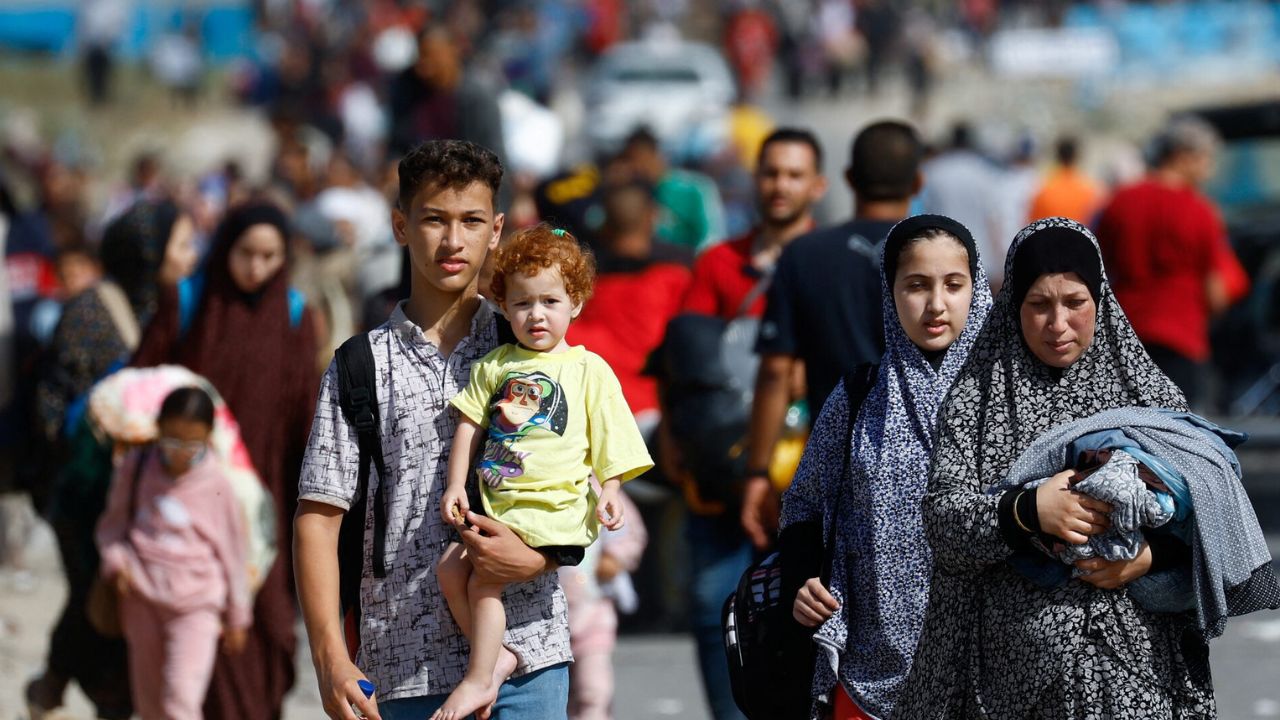
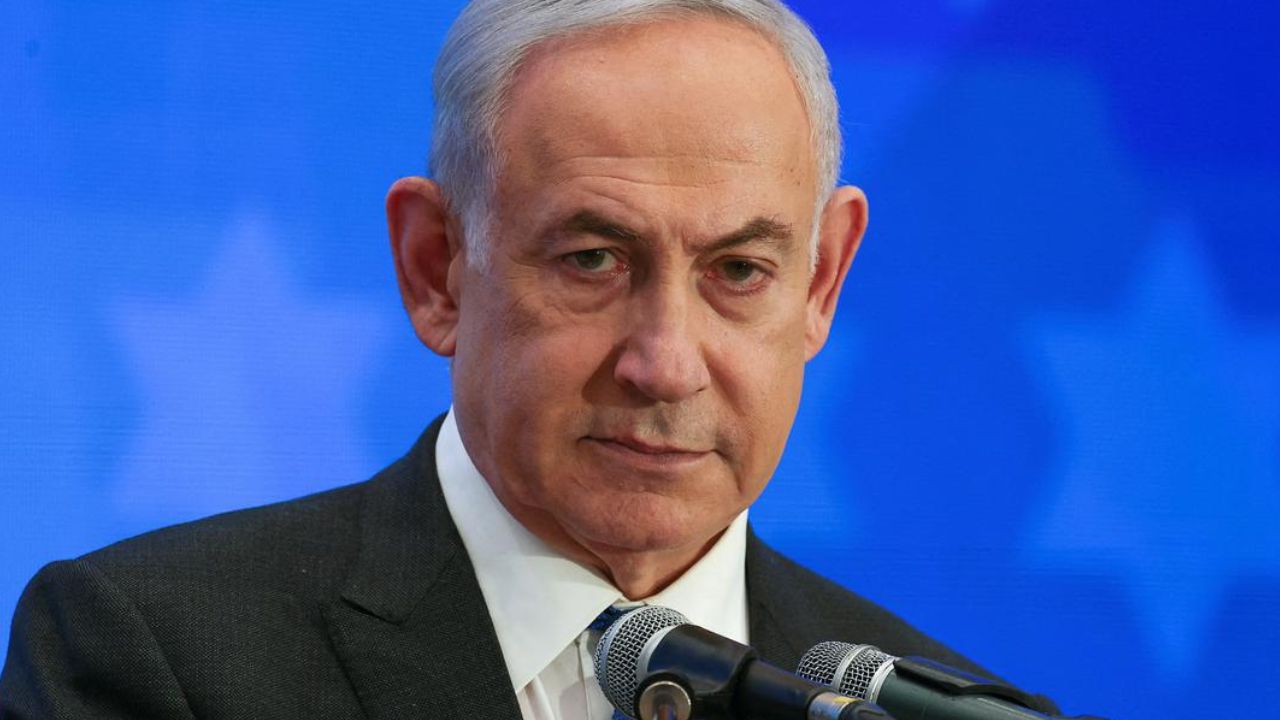
    Palestinian Territories – Israeli Prime Minister Benjamin Netanyahu gave the go-ahead Friday for a new round of talks on a Gaza ceasefire, a day after the world’s top court ordered Israel to ensure aid reaches desperate civilians.

    But despite a binding UN Security Council resolution earlier this week demanding an “immediate ceasefire”, fighting raged on unabated in Gaza Friday, including around its few functioning hospitals.

    The health ministry said dozens of people were killed overnight.

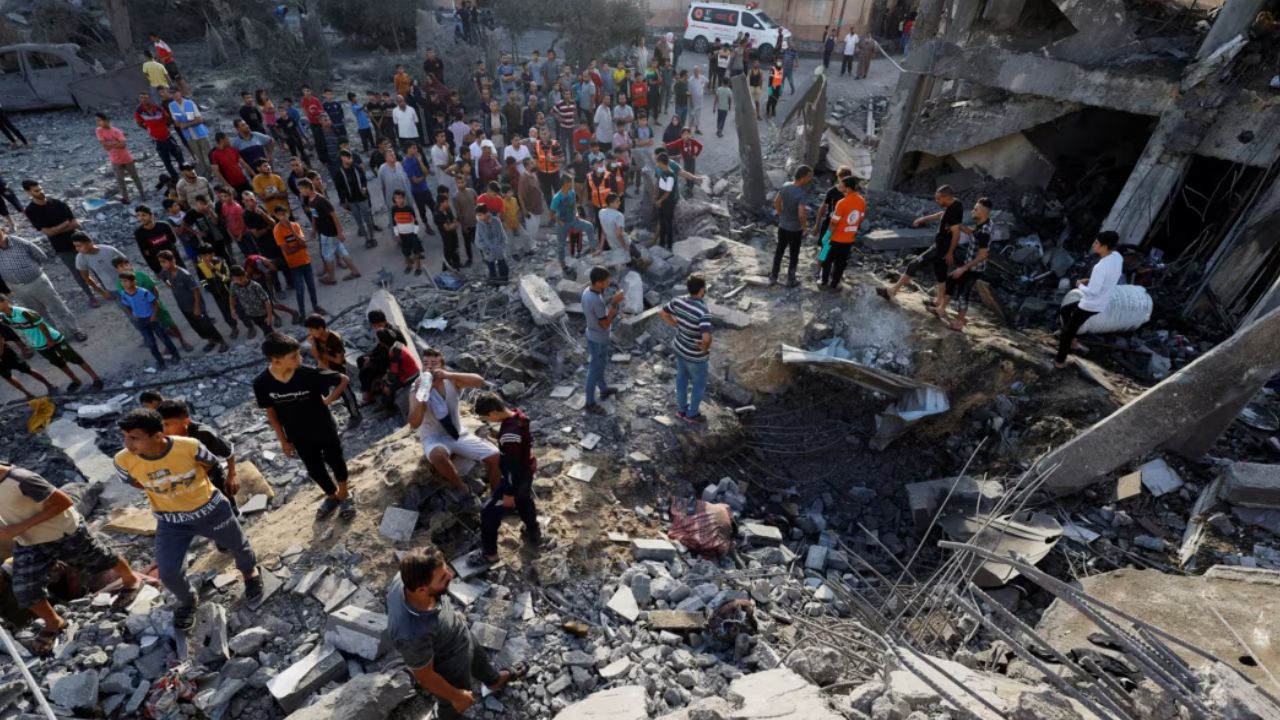
    Among them were 12 people killed in their home in the southern city of Rafah, which has been bombed repeatedly ahead of a threatened Israeli ground operation.

    Men worked under the light of mobile phones to free people trapped under the debris, AFPTV images showed.

    Regional fallout from the conflict also flared, with Israel saying it killed a Hezbollah rocket commander in Lebanon and a war monitor saying that Israeli air strikes killed several Hezbollah fighters in Syria.

    Netanyahu’s office said new talks on a Gaza ceasefire and hostage release will take place in Doha and Cairo “in the coming days… with guidelines for moving forward in the negotiations”.

    Those talks had appeared deadlocked in recent days despite a major push by the United States and fellow mediators Egypt and Qatar to secure a truce in time for the Muslim fasting month of Ramadan, now more than half way through.

    – Famine ‘setting in’ –

    In its ruling, the International Court of Justice (ICJ) in The Hague said it had accepted South Africa’s argument that the further deterioration of the humanitarian situation in Gaza required Israel to do more.

    “Palestinians in Gaza are no longer facing only a risk of famine, but… famine is setting in,” it said.

    Philippe Lazzarini, head of the UN agency for Palestinian refugees, said the ruling was “a stark reminder that the catastrophic humanitarian situation in the Gaza Strip is man-made (and) worsening”.

    A UN-backed report released last week warned that half of Gazans are feeling “catastrophic” hunger and projected imminent famine in the territory’s north.

    The Israeli defence ministry body responsible for Palestinian civil affairs (COGAT) hit back on Friday, alleging the assessment contained inaccuracies and questionable sources.

    The ICJ had ruled in January that Israel must facilitate “urgently needed” humanitarian aid to Gaza.

    The latest binding ruling by the court, which has little means of enforcement, came as Israel’s military said it was continuing operations in Gaza’s largest hospital Al-Shifa for a 12th day.

    Fighting around Gaza hospitals

    The United Nations says Gaza’s health system is collapsing “due to ongoing hostilities and access constraints”.

    Israel’s military accuses Hamas of hiding inside medical facilities, using patients, staff and displaced people for cover — charges the militants have denied.

    On Friday the army said it was “continuing precise operation activities in Shifa Hospital” where it began a raid early last week.

    Troops first raided Al-Shifa in November, but the army says Palestinian militants have since returned.

    About 200 militants have been killed during the latest Al-Shifa operation, it said.

    In north Gaza’s Shati refugee camp, Amany, a 44-year-old mother of seven, described how it felt to live under relentless Israeli bombardment.

    “Explosions and air strikes go on throughout the night, it’s petrifying,” she said. “I feel like I’m living a continuous nightmare that doesn’t want to end.”

    Netanyahu said on Thursday that troops “are holding the northern Gaza Strip” and also the southern city of Khan Yunis, amid heavy fighting.

    Near Al-Amal Hospital in Khan Yunis, troops carried out “targeted raids on terrorist infrastructure”, killing dozens in combat backed by air support, the army said on Thursday.

    Israeli tanks have also surrounded another Khan Yunis health facility, the Nasser Hospital, the Gaza health ministry said.

    Syria, Lebanon strikes

    Israel’s intensified attacks in Gaza have killed at least 32,623 people since October 7, mostly women and children, according to health ministry figures.

    Palestinian militants also seized about 250 hostages. Israel believes about 130 remain in Gaza, including 33 who are presumed dead.

    Since the Gaza war began, Israel has increased its strikes in Syria, targeting army positions and forces including Lebanon’s Hezbollah movement.

    A Britain-based war monitor, the Syrian Observatory for Human Rights, said Israeli air strikes killed seven Hezbollah fighters.

    The Israeli military said it killed the deputy commander of Hezbollah’s rocket unit in south Lebanon, Ali Abdel Hassan Naim, in an air strike.

    Israeli Defence Minister Yoav Gallant toured the army’s northern command on Friday “to closely examine another successful termination like the one that was executed this morning”, he said in a post.

    Gallant said the army would keep up its operations against Hezbollah, and its leader Hassan Nasrallah was to blame for the consequences, including members killed and wounded.

    “We will make them pay a price for every attack that comes out from Lebanon,” he said.

    Recent days have seen an uptick in deadly exchanges, and the White House has called on both Israel and Lebanon to put a high priority on restoring calm.

    burs-kir/hkb

    © Agence France-Presse
  • Heatwaves to last longer amidst climate change

    Heatwaves to last longer amidst climate change

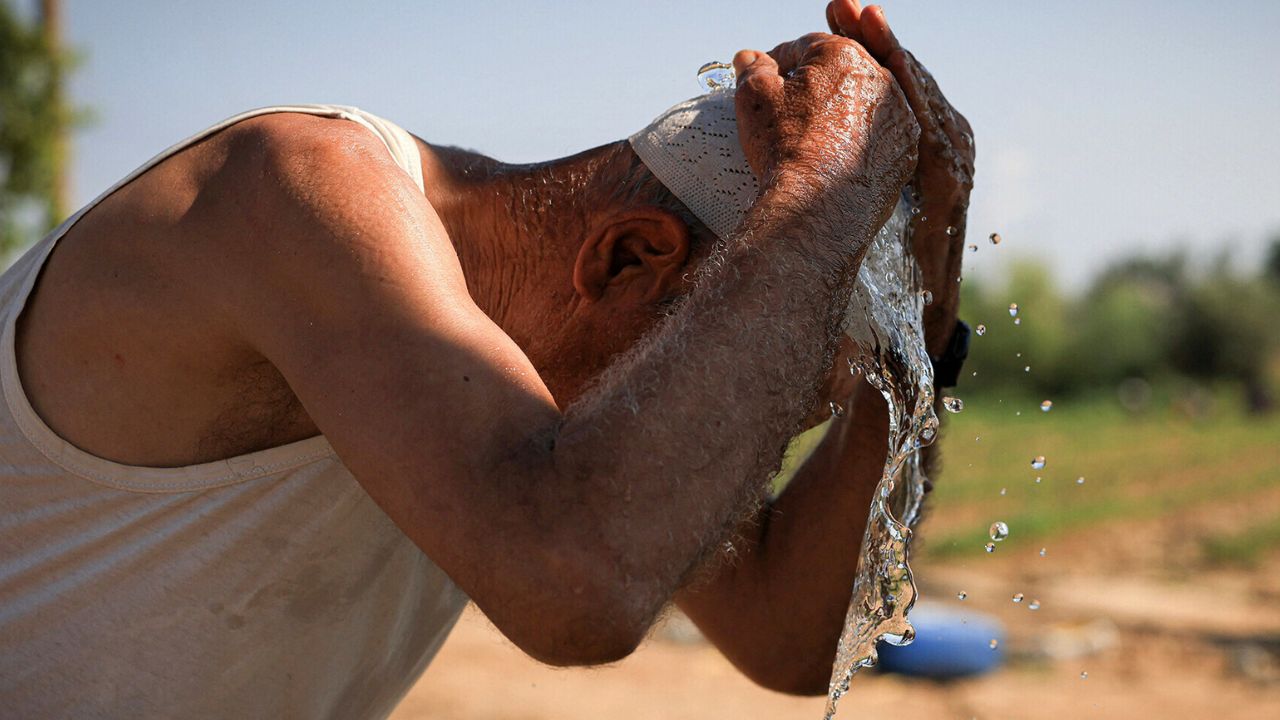
    Climate change is causing heat waves to slow to a crawl, exposing humans to extreme temperatures for longer than ever before, a study published in Science Advances said Friday.

    While previous research has found climate change is causing heat waves to become longer, more frequent and more intense, the new paper differed by treating heat waves as distinct weather patterns that move along air currents, just as storms do.

    For every decade between 1979 to 2020,  researchers found heat waves slowed down by an average of five miles (eight kilometers) an hour per day.

    “If a heatwave is moving slower, that means heat can stay in a region longer, so that has effects on communities,” senior author Wei Zhang of Utah State University told AFP.

    The researchers divided the world into three dimensional-grid cells and defined heat waves as a million square kilometer zones where temperatures reached at least the 95th percentile of the local historical maximum temperature. They then measured their movement over time in order to determine how fast the hot air was moving.

    They also used climate models to determine what the results would have looked like absent human-caused climate change, and found manmade factors loomed large.

    “It’s pretty clear to us that a dominant factor here to explain this trend is anthropogenic forcing, the greenhouse gas,” said Zhang.

    The changes have accelerated in particular since 1997 and in addition to human causes, weakening upper atmospheric air circulation may play a part, the paper said.

    The duration of heat waves also increased, from an average of eight days at the start, to 12 days during the last five years of the study period.

    “The results suggest that longer-traveling and slower-moving large contiguous heat waves will cause more devastating impacts on natural and societal systems in the future if GHG keep rising, and no effective mitigation measures are taken,” the authors wrote.

    Zhang said he was worried by the disproportionate impacts on less-developed regions.

    “In particular, cities that don’t have enough green infrastructure or not many cooling centers for some folks, in particular for the disadvantaged population, will be very dangerous,” he warned.

    la-ia/mdl

    © Agence France-Presse

  • Bangladesh opens mosque for transgender hijra community

    Bangladesh opens mosque for transgender hijra community

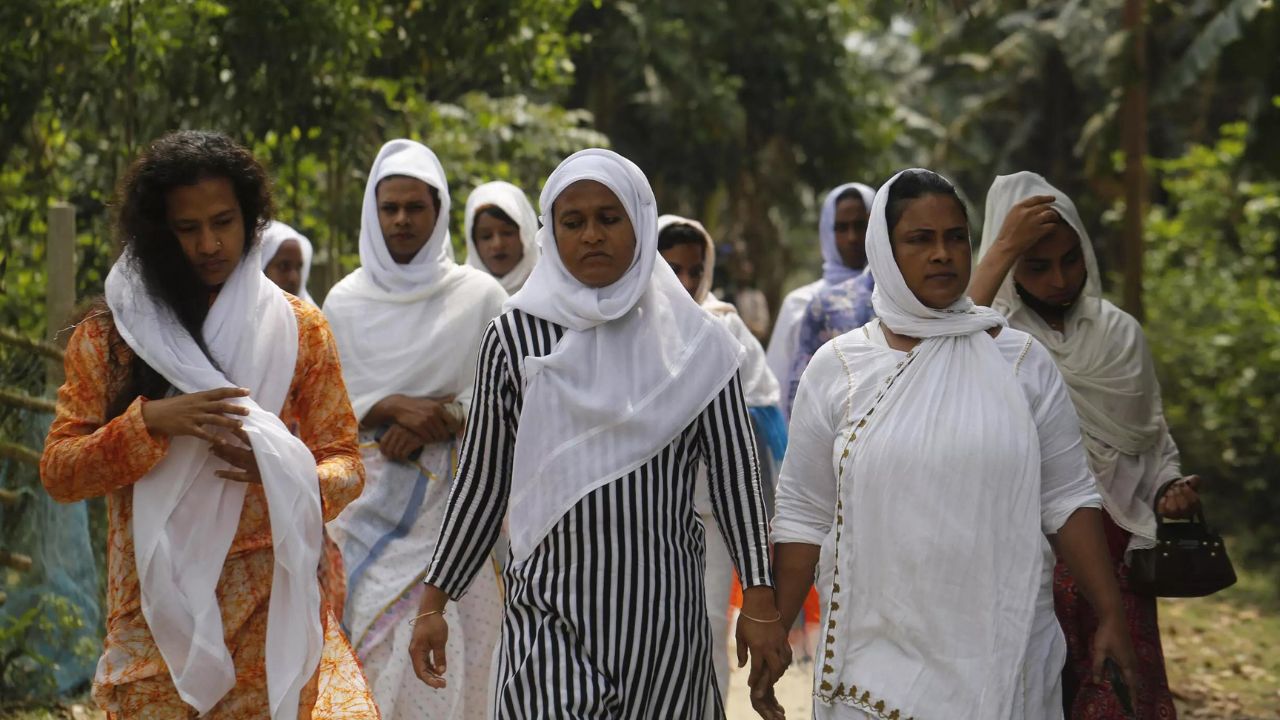
    Mymensingh (Bangladesh) (AFP) – Kicked out of other prayer services, members of Bangladesh’s transgender hijra community have been welcomed at a new mosque in the Muslim-majority nation with the promise of worship without discrimination.

    The humble structure — a single-room shed with walls and a roof clad in tin — is a new community hub for the minority, who have enjoyed greater legal and political recognition in recent years but still suffer from entrenched prejudice.

    “From now on, no one can deny a hijra from praying in our mosque,” community leader Joyita Tonu said in a speech to the packed congregation.

    “No one can mock us,” added the visibly emotional 28-year-old, a white scarf covering her hair.

    The mosque near Mymensingh, north of the capital Dhaka on the banks of the Brahmaputra river, was built on land donated by the government after the city’s hijra community were expelled from an established congregation.

    “I never dreamt I could pray at a mosque again in my lifetime,” said Sonia, 42, who as a child loved to recite the Koran and studied at an Islamic seminary.

    But when she came out as hijra, as transgender women in South Asia are commonly known, she was blocked from praying in a mosque.

    “People would tell us: ‘Why are you hijra people here at the mosques? You should pray at home. Don’t come to the mosques,’” Sonia, who uses only one name, told AFP.

    “It was shameful for us, so we didn’t go,” she added. “Now, this is our mosque. Now, no one can say no.”

    ‘Like any other people’

    Hijra have been the beneficiaries of growing legal recognition in Bangladesh, which since 2013 has officially allowed members of the community to identify as a third gender.

    Several have entered Bangladeshi politics, with one transgender woman elected mayor of a rural town in 2021.

    But hijra still struggle for basic recognition and acceptance, lacking property and marriage rights.

    They are also often discriminated against in employment and are much more likely to be victims of violent crime and poverty than the average Bangladeshi.

    Hardline Islamist groups have also lashed out at the recognition of transgender Bangladeshis in school textbooks, leading rallies to demand the government abandon its push to include them in the curriculum.

    Mufti Abdur Rahman Azad, founder of a hijra charity, told AFP that the new mosque was the first of its kind in the country.

    A similar endeavour planned in another city was stopped last month after a protest by locals, he added.

    Dozens of local hijra women donated time and money to build the Dakshin Char Kalibari Masjid for the Third Gender, which opened this month.

    It also has a graveyard, after a local Muslim cemetery last year refused to bury a young hijra woman inside its grounds.

    The mosque’s imam, Abdul Motaleb, 65, said that the persecution of the hijra community was against the teachings of his faith.

    “They are like any other people created by Allah”, the cleric told AFP.

    ‘No one can be denied’

    “We all are human beings. Maybe some are men, some are women, but all are human. Allah revealed the Holy Koran for all, so everyone has the right to pray, no one can be denied.”

    Motaleb said that other Bangladeshis could learn from the faith and strength of the hijra.

    “Since I have been here at this mosque, I have been impressed by their character and deeds,” he said.

    The new mosque is already tackling prejudice. Local resident Tofazzal Hossain, 53, has offered Friday prayers there for a second week in a row.

    He said living and praying with the hijra community has changed his “misconceptions” about them.

    “When they started to live with us, many people said many things,” he told AFP.

    “But we’ve realised what people say isn’t right. They live righteously like other Muslims”.

    Tonu hopes to expand the simple mosque to be big enough to cater for more people.

    “God willing, we will do it very soon,” she told AFP.

    “Hundreds of people can offer prayers together.”

  • No change in Gaza since UN ceasefire vote: MSF

    No change in Gaza since UN ceasefire vote: MSF

    The MSF medical charity lamented Thursday that nothing had changed on the ground in genocide ravaged Gaza since the United Nations Security Council resolution this week demanding an “immediate ceasefire”.

    After more than five months of war, the UN Security Council for the first time Monday demanded an immediate ceasefire in Gaza after Israel’s ally the United States, which vetoed previous drafts, abstained.

    That resolution demanded an “immediate ceasefire” for the ongoing Muslim holy month of Ramadan, leading to a “lasting” truce.

    But since then, “we haven’t seen any change after this resolution on the ground,” Christos Christou, MSF’s international president, told AFP in an interview.

    “We haven’t seen any impact in… people’s lives there every day; we haven’t seen an impact in our world, (and the) ways of delivering the humanitarian aid,” he said.

    “The situation remains the same.”

    And Christou stressed that MSF’s demands also remained unchanged.

    What was needed, he said, was an immediate and lasting ceasefire, a halt to all attacks on medical installations and personnel, and “unhindered humanitarian aid in Gaza”.

    For now, he acknowledged that “our efforts are just a little drop in the ocean of needs”.

    MSF still has local and international staff working in the few hospitals that are still functioning in Gaza.

    The organisation is among other things working to care for women after they undergo a caesarian section.

    He pointed out that in many cases, women who gave birth via a caesarian section were “literally kicked out of the hospital after a couple of hours because there were no beds”.

    “MSF has increased the capacity of beds in order to offer at least some quality of care to these women,” he said.

    Israel’s intensified attacks have killed at least 32,552 people, mostly women and children, according to the health ministry in Gaza.

    Christou said MSF was “extremely worried” about Israeli plans to push its ground offensive into Rafah, Gaza’s southernmost city which is packed with some 1.5 million people, many of them displaced from other parts of the territory.

    “This would be really catastrophic.”

  • ‘Just staggering’: UN says households waste one billion meals a day

    ‘Just staggering’: UN says households waste one billion meals a day

    Paris, France – Households around the world threw away one billion meals every single day in 2022 in what the United Nations on Wednesday called a “global tragedy” of food waste.

    More than $1 trillion worth of food was binned by households and businesses at a time when nearly 800 million people were going hungry, the UN’s latest Food Waste Index Report says.

    It said that more than 1 billion tonnes of food — almost one fifth of all the produce available on the market — was wasted in 2022, most of it by households.

    “Food waste is a global tragedy. Millions will go hungry today as food is wasted across the world,” Inger Andersen, executive director of the UN Environment Programme, said in a statement.

    Such wastage was not just a moral but “environmental failure”, the report said.

    Food waste produces five times the planet-heating emissions of the aviation sector, and requires huge tracts of land be converted for growing crops that are never eaten.

    The report, co-authored with non-profit organisation WRAP, is just the second on global food waste compiled by the UN and provides the most complete picture to date.

    As data collection has improved the true scale of the problem has become much clearer, said Clementine O’Connor from UNEP.

    “The more food waste you look for, the more that you find,” she told AFP.

    Billion meals binned

    The report said that the “billion meals” figure was a “very conservative estimate” and “the real amount could be much higher”.

    “For me, it’s just staggering,” Richard Swannell from WRAP told AFP.

    “You could actually feed all the people that are currently hungry in the world — about 800 million people — over a meal a day just from the food that is wasted every single year.”

    He said bringing together producers and retailers had helped reduce waste and get food to those who need it, and more such action was needed.

    Food services like restaurants, canteens and hotels were responsible for 28 percent of all wasted food in 2022, while retail like butchers and greengrocers dumped 12 percent.

    But the biggest culprits were households, which accounted for 60 percent — some 631 million tonnes.

    Swannell said much of this occurred because people were simply buying more food than they needed, but also misjudging portion sizes and not eating leftovers.

    Another issue was expiration dates, he said, with perfectly good produce being trashed because people incorrectly assumed their food had gone off.

    A lot of food, particularly in the developing world, was not so frivolously wasted, but instead lost in transportation or spoiling because of a lack of refrigeration, the report said.

    Contrary to popular belief, food waste is not just a “rich country” problem and can be observed across the world, the report said.

    Hotter countries, too, generated more waste, possibly due to higher consumption of fresh foods with substantial inedible parts.

    ‘Devastating effects’

    Businesses also underestimate the cost of wasting food to their bottom line because it was cheap to dump unused produce in landfill.

    “It’s quicker and easier to throw it away at the moment because the waste fee is either zero or very low,” O’Connor said.

    Food waste had “devastating effects” on people and the planet, the report said.

    Converting natural ecosystems for agriculture is a leading cause of habitat loss yet food waste takes up the equivalent of nearly 30 percent of the world’s farming land, the report said.

    “If we can reduce food waste across the entire of the supply chain, we can… minimise the need to have land set aside that’s growing stuff that’s never used,” Swannell said.

    It is also a key driver of climate change, generating up to 10 percent of annual greenhouse gas emissions.

    “If food waste was a country, it would be the third biggest emitter of greenhouse gas emissions on the planet behind the US and China,” Swannell said.

    But people rarely think about it, he said, despite the opportunity to “reduce our carbon footprint, reduce our greenhouse gas emissions, and save money, simply by making better use of the food that we’re already buying”.

  • Iran sentences police officer to death for killing protester

    Iran sentences police officer to death for killing protester

    An Iranian court has sentenced a police chief in northern Iran to death after he was charged with killing a man during mass protests in 2022, local media reported Wednesday.

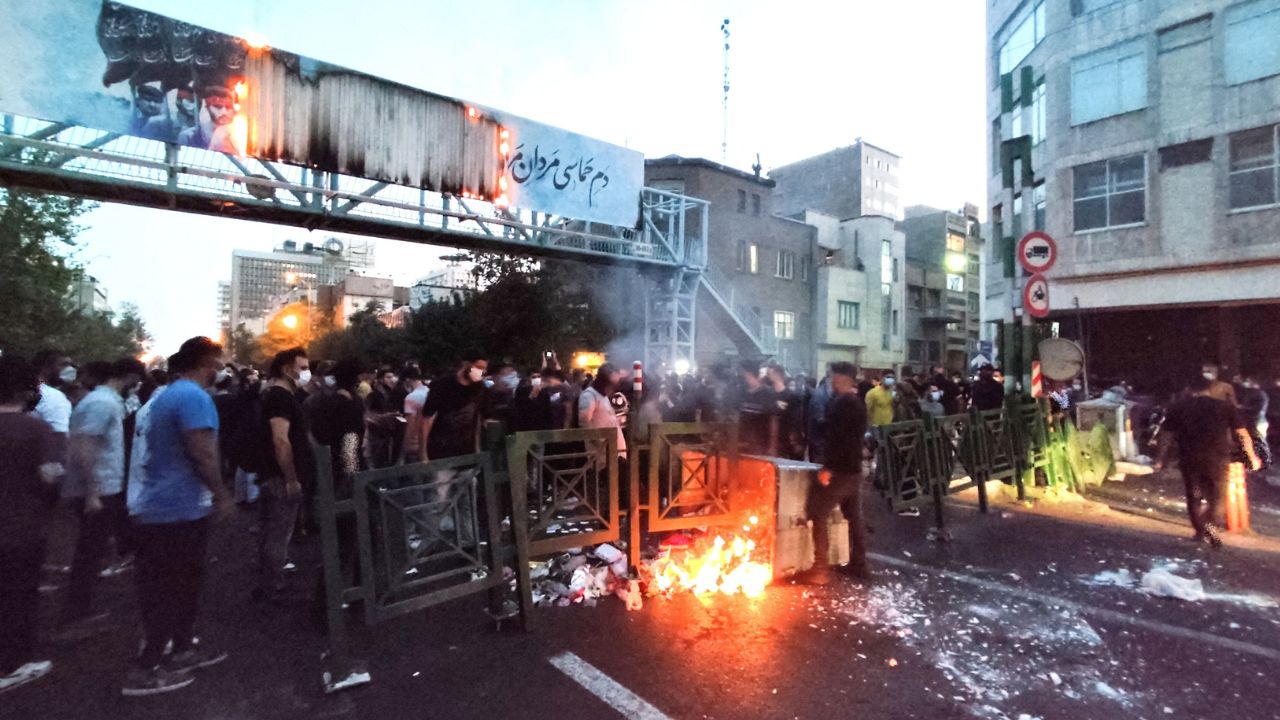
    Local police chief Jafar Javanmardi was arrested in December 2022 over the killing of a protester during the widespread demonstrations sparked by the death of Mahsa Amini in custody.

    Iranian Kurd Amini, 22, died in custody in September that year following her arrest for allegedly violating the country’s strict dress code for women.

    Javanmardi was sentenced to death “in accordance with the Islamic law of retribution, known as the ‘qisas’ law, on the charge of premeditated murder”, the lawyer for the victim’s family, Majid Ahmadi, told the reformist Shargh daily.

    The protestor, Mehran Samak, 27, succumbed to injuries he sustained after being hit by shotgun pellets during a rally in the northern city of Bandar Anzali on November 30, 2022.

    Rights groups based outside of Iran said Samak was shot dead by Iranian security forces after honking his car horn in celebration of Iran’s loss to the United States in the 2022 World Cup held in Qatar while at the Amini protest.

    The defeat eliminated Iran from the football tournament and drew a mixed response from government supporters and opponents.

    The lawyer, Ahmadi, said at the time that the police official was charged with “violating the rules for firearms usage, resulting in the death of Samak”.

    In mid-January, the judiciary’s Mizan Online website said the Supreme Court had annulled a death sentence and referred the case to another court.

    Gilan province, where Bandar Anzali is located, was a flashpoint of the nationwide protest movement that shook Iran.

    Hundreds of people were killed during the months-long protests, including dozens of security forces, while thousands were arrested and nine men were executed in cases linked to the demonstrations.

  • Pakistan steps up security for Chinese workers after bombing

    Pakistan steps up security for Chinese workers after bombing

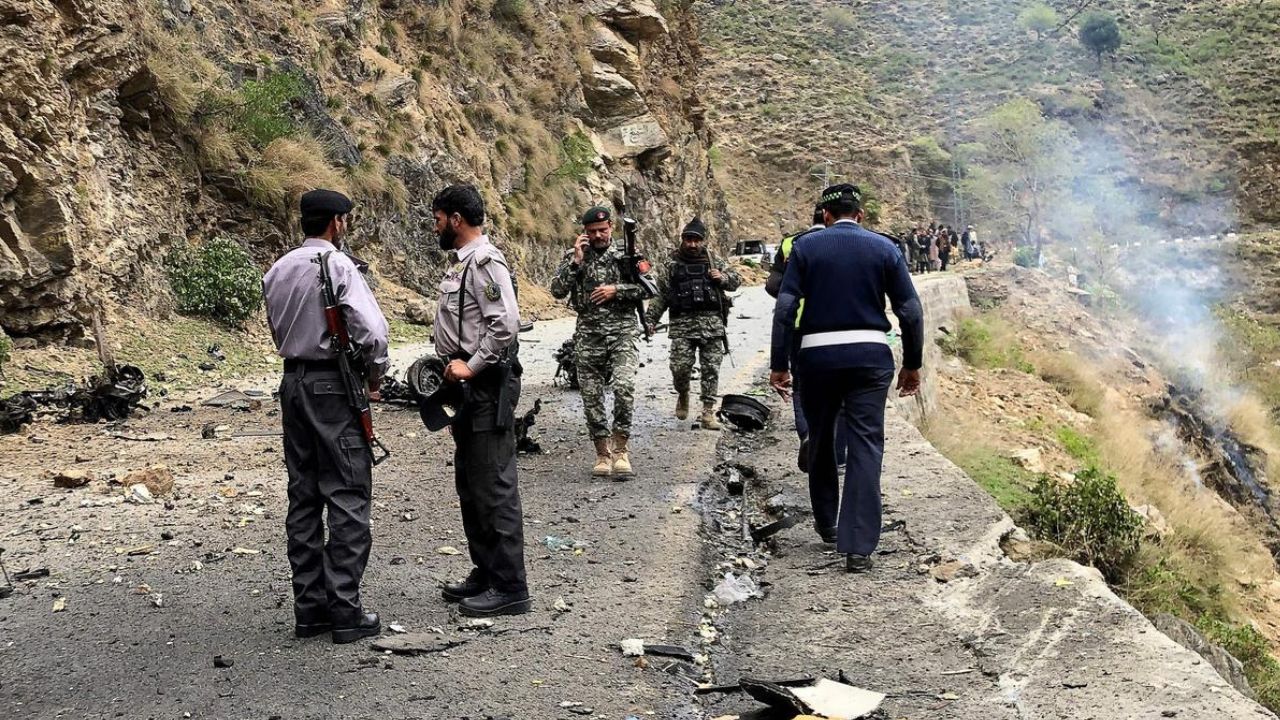
    Pakistan ramped up security guarding Chinese engineers building Beijing-linked projects in the nation’s northwest, an official said Wednesday, a day after five workers were killed in a suicide bombing.

    Beijing is Islamabad’s closest regional ally and Pakistan has benefitted from billions of dollars of investment in recent years, but has struggled to guarantee the safety of Chinese migrant workers.

    The five Chinese engineers — plus their Pakistani driver — were killed while travelling between Islamabad and a hydroelectric dam construction site in Dasu, in northwestern Khyber Pakhtunkhwa province.

    A high-ranking official from the provincial interior ministry told AFP on Wednesday that at the more than two-dozen sites hosting Chinese engineers in Khyber Pakhtunkhwa security was stepped up.

    “Directives have been issued to all law enforcement agencies to enhance security for Chinese nationals and all other foreigners,” he said on condition of anonymity.

    “Instructions have also been given to foreign nationals to restrict their movements.”

    Information minister Attaullah Tarar told a press conference in Islamabad that security procedures would be reviewed “with a focus on identifying and addressing any gaps”.

    Meanwhile, further details emerged about the attack, which has yet to be claimed by any militant group.

    Local police officer Bakht Zahir said the five engineers killed near the city of Besham included four men and a woman, and that the bomber targeted the middle vehicle in a convoy of 12.

    “The suicide bomber rammed his vehicle into the convoy in the middle, detonating himself, causing the Chinese engineers’ vehicle to fall into a 180-foot-deep (55-metre) ravine and catch fire,” he said.

    Pakistan’s domestic chapter of the Taliban is the most active militant threat in the region, but the group’s spokesman denied involvement in a statement late Tuesday.

    China has inked more than two trillion dollars in contracts around the world under its Belt and Road investment scheme, with billions pouring into neighbouring Pakistan and aiding its crumbling economy.

    Since 2015, power plants, ports and transport projects have been under construction by joint Pakistani-Chinese teams in remote parts of the South Asian nation.

    But Chinese workers have frequently been targeted by militants hostile to outside influence, with some complaining Pakistanis are not getting a fair share of wealth from the huge projects.

    Tuesday’s attack came just days after militants attempted to storm offices of the Gwadar deepwater port in the southwest, considered a cornerstone of Chinese investment in Pakistan.

    It sparked a flurry of diplomatic activity at the Chinese embassy in Islamabad, with Prime Minister Shehbaz Sharif and the foreign and interior ministers offering condolences in quick succession.

    China’s foreign ministry declared the countries “iron-clad friends” but asked Pakistan to “take effective measures to ensure the safety and security of Chinese nationals, projects, and institutions”.

  • Jailed Indian opposition politician to run capital from cell

    Jailed Indian opposition politician to run capital from cell

    A senior Indian opposition politician will run the capital from his prison cell, a senior aide said Tuesday, facing down growing calls by rivals demanding he resign.

    Arvind Kejriwal, chief minister of New Delhi and a key leader in an opposition alliance formed to compete against Prime Minister Narendra Modi in upcoming elections, was arrested on Thursday in connection with a long-running corruption probe.

    Atishi Marlena Singh, New Delhi’s education minister and fellow member of Kejriwal’s Aam Aadmi Party (Common Man Party, AAP), said “statutory and constitutional provisions” allowed him to remain in his post while behind bars.

    “We are very clear that Arvind Kejriwal will remain the chief minister of Delhi,” Singh, 42, told AFP.

    “If he were to resign when there’s been no trial and no conviction, it opens up the route for other opposition chief ministers to be removed,” she added.

    India’s main financial investigation agency, the Enforcement Directorate (ED), which arrested Kejriwal, has launched probes into at least four other state chief ministers or their family members.

    All the investigations involve political opponents of Modi’s ruling Bharatiya Janata Party (BJP).

    While Modi enjoys high levels of support among his backers, critics accuse him of using law enforcement agencies to intimidate opposition leaders.

    Kejriwal, 55, denies the charges against him.

    His supporters, who held a rally in the city on Tuesday demanding his release, say charges against him are politically motivated and aimed at sidelining challengers of Modi ahead of the polls.

    Modi’s political opponents and international rights groups have long sounded the alarm on India’s shrinking democratic space.

    “All the centre has to do is file some fake cases, and then the ED goes and arrests them”, according to Singh.

    Nearly a billion Indians will vote to elect a new government in six-week-long parliamentary elections starting on April 19, the largest democratic exercise in the world.

    Many analysts see Modi’s re-election as a foregone conclusion, partly due to the resonance of his assertive Hindu-nationalist politics with members of the country’s majority faith.

    Hundreds of BJP loyalists held a rival march through New Delhi on Tuesday, chanting support for Modi and demanding Kejriwal resign.

    “You can run a gang from jail but not a government,” BJP lawmaker Manoj Tiwari told the crowd. “A government cannot be run from prison”.

    In February, Jharkhand state’s chief minister Hemant Soren was arrested and jailed on corruption charges.

    Soren, who denies all charges, resigned and handed power to a colleague.

  • Teens in Gaza hoping to be killed to end their ‘nightmare’: UN

    Teens in Gaza hoping to be killed to end their ‘nightmare’: UN

    The situation in genocide-ravaged Gaza is so desperate that teenagers are now saying they hope to be swiftly killed to escape the “nightmare”, a spokesman for the UN children’s agency said Tuesday.

    “The unspeakable is regularly said in Gaza,” said James Elder, spokesman for the United Nations children’s agency UNICEF.

    Speaking to journalists in Geneva via video message from Rafah in southern Gaza, he said the agency had on Monday held a meeting with adolescents.

    Several said they were “so desperate for this nightmare to end that they hoped to be killed”, he said.

    Israel’s intense attacks in Gaza have killed at least 32,333 people, most of them women and children, according to the health ministry.

    The UN has warned that Gaza is facing a looming famine, spurring increasingly urgent appeals for Israel to open up more border crossings and to stop hampering the movement of aid through the Palestinians territory.

    The Israelis “have a right to control. They inspect every single gram, litre, kilo of whatever goes into Gaza,” Jens Laerke, spokesman for the UN humanitarian agency, told reporters.

    “But they cannot say that once it’s inside, we leave it with you. They must create this enabling environment that allows us to move it around.”

    “We need to dispel this notion that their obligation with getting aid in somehow stops with getting a few trucks, a fraction of what is needed, across the border,” he said.

    “That is not correct.”

    Elder meanwhile pointed out that the Israelis had denied a quarter of the 40 mission requests to the north since the beginning of the month.

    “Now there is an existing old crossing point that could be used in the north 10 minutes from where those people are putting their hands to their mouth pleading for food,” he said, referring to the Erez Crossing.

    “10 minutes. Open that and we could turn this humanitarian crisis around in a matter of days. But it remains closed.”

    “Let’s be clear, life-saving aid is being obstructed, lives are being lost, dignity is being denied.”

  • Countries at UN rally behind expert who accused Israel of ‘genocide’

    Countries at UN rally behind expert who accused Israel of ‘genocide’

    GENEVA: The UN expert who concluded Israel was committing acts of genocide in the Gaza Strip received broad support at the United Nations on Tuesday, with countries speaking up to back her and her report.

    Francesca Albanese, the special rapporteur on human rights in the Palestinian territories, told the UN Human Rights Council that countries should impose an arms embargo and sanctions on Israel.

    Expanding in person on her report released on Monday, Albanese said Israel was characterising the entire Gazan population as “targetable, killable and destroyable,” and had ostentatiously laid bare its “genocidal intent” to “rid Palestine of Palestinians.”

    Dozens of diplomats, mostly representing Arab and Muslim countries but also Latin America, took the floor to defend her mandate and her work.

    Pakistan, speaking for the Organization of Islamic Cooperation, backed her call for sanctions and an arms embargo.“We commend your courage in documenting… acts amounting to genocide in Gaza,” Islamabad’s representative said.

    “The occupation force’s dangerous and ruthless push for a final solution to the Palestinian question is plain for all to see, as its forces encircle Rafah like vultures and its ravenous land grab continues unabated in the West Bank.”

    Egypt, speaking for Arab group countries, affirmed their support for Albanese’s mandate and said they were gravely concerned about Israel’s “structured and systematic attack to make the Gaza Strip uninhabitable.”

    And Qatar, on behalf of the Gulf Cooperation Council, thanked Albanese for her report and demanded the international community “put an end to genocide being perpetrated by the Israeli war machinery.”

    In her speech, Albanese told the top UN rights body that Israel had “destroyed Gaza.”

    “When genocidal intent is so conspicuous, so ostentatious, as it is in Gaza, we cannot avert our eyes: we must confront genocide, we must prevent it and we must punish it,” she said.

    “The genocide in Gaza is the most extreme stage of a long-standing settler-colonial process of erasure of the native Palestinians.”

    Special rapporteurs are independent experts appointed by the Human Rights Council, although they do not speak on behalf of the UN.

    In response, Russia said it was “horrified” by Israel’s military operation that had seen “civilian infrastructure targeted” while China said it was was ready to facilitate peace talks.

    The European Union called for “proper and independent investigations on all allegations” and while appalled by the civilian death toll it recognized Israel’s right to self-defense.

    Albanese’s speech concluded to applause in the chamber. Israel was not present, nor was its chief ally the United States.

    Israel has long been harshly critical of Albanese, and on Monday immediately rejected her report as an “obscene inversion of reality.”

    The United States called her mandate “biased against Israel.”

    In the rights council on Tuesday, the only firm support for such positions came from non-governmental organizations.

    The World Jewish Congress said Albanese’s mandate “seeks to entrench divisions and a one-sided narrative instead of pursuing a balanced and inclusive approach.”

    The European Union of Jewish Students said Albanese’s “resignation is imperative” for the council to retain any credibility on issues concerning Israel and the Palestinian territories.

    Israel’s genocide in Gaza has killed at least 32,400 people in the besieged Strip, most of them women and children, according to the health ministry in the territory.