Author: Ibraheem Sohail

  • China rolls over $3.4 billion allowing Pakistan to meet IMF reserves target

    China rolls over $3.4 billion allowing Pakistan to meet IMF reserves target

    With just a day remaining until the start of fiscal year (FY) 2025-26, China has reportedly rolled over a staggering $3.4 billion in debt to cash-strapped Pakistan. According to reports, two senior government officials have revealed details surrounding the rollover agreement that will boost Pakistan’s foreign exchange reserves.

    Under the condition of anonymity, officials reveal that Beijing has decided to refinance a whopping $1.3 billion in commercial loans. Moreover, details from reports indicate that China also rolled over $2.1 billion, which the State Bank of Pakistan (SBP) has held in its reserves for the past three years.

    Pakistan has reportedly received additional funds, totalling $1.5 billion, from multilateral sources and commercial banks in the Middle East. Of the aforementioned amount, $500 million was received under multilateral financing agreements with $1 billion from Middle Eastern banks.

    The federal government has not released an official statement on China rolling over Pakistan’s debt. However, the claims made by the officials, if true, spell great news for Pakistan as it will help the cash-strapped country meet a critical condition laid out by the International Monetary Fund (IMF).

    The IMF had stipulated that Pakistan shore up its foreign reserves up to $14 billion by the end of FY 2024-25. Until last week, Pakistan was on track to meet this requirement. However, recent reports documented a large outflow of funds from the SBP’s reserves.

    The SBP’s foreign exchange reserves took a staggering hit on June 27, falling by approximately $2.7 billion. As per reports, this caused SBP reserves to decline to a three-year low of $9.064 billion.

    Analysts outlined how SBP reserves had fallen far short of the revised target of $14 billion for fiscal year (FY) 2024-25. According to data released by the SBP on June 26, the sharp drop occurred in the week ending June 20 and was primarily attributed to large external debt repayments.

    However, the refinancing and rollover agreement with China has allowed the SBP to avoid failing to meet the IMF’s reserves criteria. While Pakistan managed to boost its reserves prior to China’s rollovers, without the last-minute external assistance, SBP reserves would sit at $12.664 billion at the close of FY 2024-25, $1.3 billion below the IMF’s target.
  • Stock market hits record high on improved investor sentiment

    Stock market hits record high on improved investor sentiment

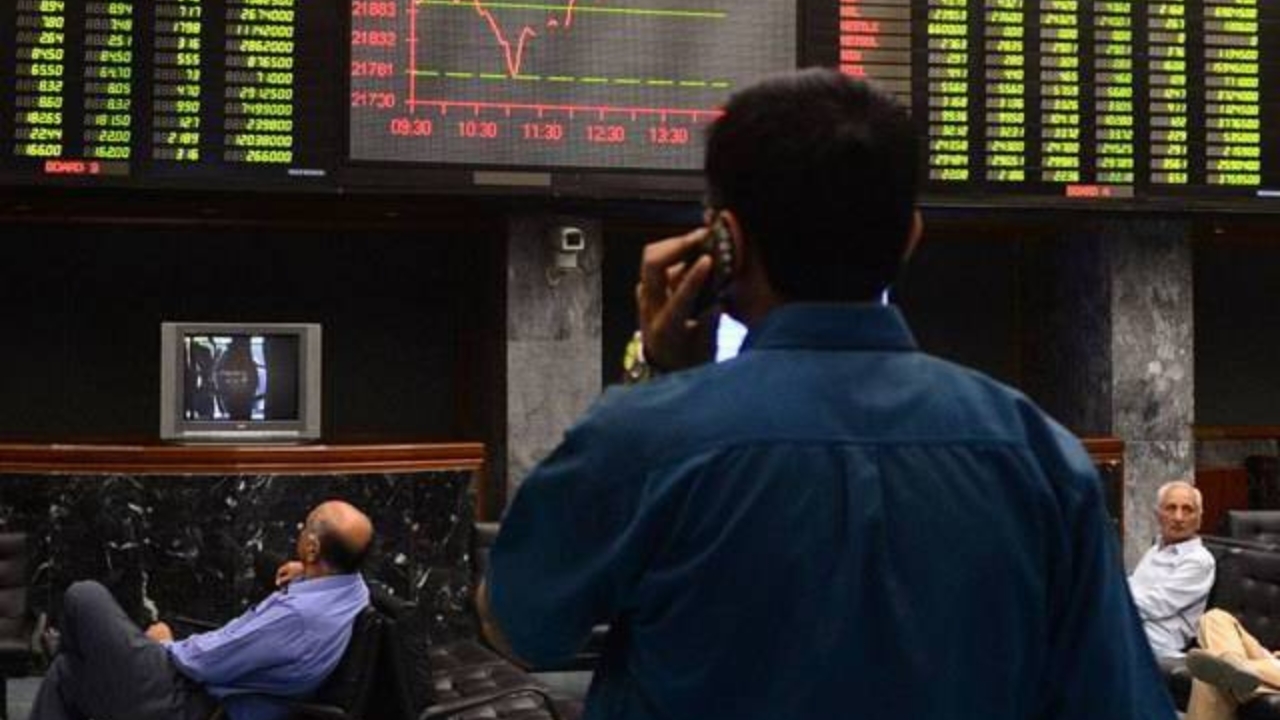
    The Pakistan Stock Exchange (PSX) witnessed a massive 2330-point rally, allowing the benchmark index of the exchange, KSE-100 index, to cross 125,000 points, setting a new all-time high. According to reports, shares climbed rapidly on Friday as investors rearranged their portfolios before the start of fiscal year (FY) 2025-26.

    The market witnessed a surge because of large foreign inflows, improved investor sentiment and strong institutional buying. It merits a mention that Pakistan reportedly managed to get $3.1 billion in commercial loans along with $500 million in multilateral funding, which likely improved investor sentiment.

    These developments caused the index to open in the green in the early hours of the day, with the upwards momentum continuing until closing hours. The KSE-100 index reached an intraday high of 125,285.05 points. The index peaked at approximately 2:36 PM, after which the market closed at a lower, yet respectable, 124,379.06 points.

    For reference, the KSE-100 closed at 122,046.46 points on Thursday, after which the index recorded a growth of 1.91 percent during trading hours on Friday, leading to a 2,332.60 point rise. The market displayed a slowdown around 9:15 AM as the KSE-100 hit its intraday trading low of 122,222.69 points.

    All 17 indexes listed on the exchange remained in the green with the All-share index (ALLSHR) growing by 1.80 percent, which translates into a 1,376.60 point rise in the index. Unlike the KSE-100, which tracks the performance of the 100 largest and most liquid companies, the ALLSHR index records the performance of all publicly listed companies on the PSX.

    A number of companies witnessed a rise in share prices, with First Equity Modaraba (FEM) and Intermarket Securities Limited (IMS) winning big, to the tune of growth rates that sat at 21.65 percent (FEM) and 15.63 percent (IMS). 

    However, not every publicly listed stock witnessed an improvement, as many companies witnessed sharp declines. Of these declining companies, the one that fared the worst during intraday trading was B.F. Modaraba (BFMOD), which posted a 9.92 percent decline in its position.

    Analysts predict that the 122,000 point level will emerge as a key support level while the 127,000 point level could be the resistance level during the upcoming trading week. Recent reports have outlined the trend for the period following the coming week, suggesting that the KSE-100 index could cross 165,000 points by December 2025, owing to a drop in interest rates and an improved state of the wider economy.

  • State-owned enterprises record Rs342 billion loss in six months

    State-owned enterprises record Rs342 billion loss in six months

    Pakistan’s State-Owned Enterprises (SOEs) have recorded a loss of Rs342 billion in six months. According to reports, SOE losses coupled with unfunded pension liabilities have surpassed a staggering Rs7.5 trillion. 


    Analysts have outlined how large the aforementioned liabilities are, drawing comparisons to highlight that they are over seven times larger than the budget for the Public Sector Development Programme (PSDP). Reports reveal that the Ministry of Finance informed the Cabinet Committee on State-Owned Enterprises (CCoSOEs) that total SOE losses have reached a whopping Rs5.8 trillion.


    For reference, SOE losses alone account for approximately 33.14 percent of the federal budget approved for fiscal year (FY) 2025-26. Analysts have pointed out how these losses are likely to keep climbing unless the federal government privatizes loss making SOEs.


    According to data from the Finance Division’s Central Monitoring Unit’s performance review, SOE’s tacked on an additional Rs342 billion to the total loss amount during the first half of FY 2024-25. Reports suggest that circular debt in the oil, gas and power sectors has jumped up to Rs4.9 trillion despite a considerable hike in electricity and gas rates over the past three years.


    The uncontrolled rise in debt has resulted in disruptions in the cash flows of loss making SOEs. It merits a mention that SOEs recorded losses despite being given over Rs600 billion in support during the first half of FY 2024-25. According to reports, the aforementioned financial support, that was extended to the SOEs, came in the form of loans, grants, subsidies and other means.


    SOEs’ unfunded pension liabilities have climbed up to Rs1.7 trillion. For reference, an unfunded pension liability is the shortfall between the money a pension fund has on hand and the total amount it owes to retirees. Reports reveal that unfunded pension liabilities are not registered on federal books.


    Aside from issues pertaining to fiscal mismanagement, the cabinet committee was reportedly brought to speed regarding instances of misgovernance. As per reports, these instances of misgovernance include substandard disclosure practices as per the IFRS Section 30 and non compliance with regulatory requirements.


    Finance Minister Muhammad Aurangzeb, who was chairing the CCoSOEs meeting, voiced his concerns surrounding the staggering Rs1.9 billion daily average loss incurred by SOEs. He also expressed intent to reform the power sector as circular debt from the sector is creating fiscal problems for Islamabad.

  • Mobile phone imports record sharp decline

    Mobile phone imports record sharp decline

    Mobile phone imports into Pakistan recorded a staggering 16.31 percent decline during the first eleven months of fiscal year (FY) 2024-25 compared to the corresponding period in FY 2023-24. 

    Data released by the Pakistan Bureau of Statistics (PBS) revealed that a whopping $1.356 billion worth of phones entered the country during the first eleven months of FY 2024-25. The import bill for phones during the same period in FY 2023-24 stood at an alarmingly high $1.62 billion.

    As per reports, mobile phone imports in May 2025 logged an even sharper drop on a year-on-year (YoY) basis, declining by a colossal 35.83 percent. Meanwhile, the imports amounted to $157.592 million in May 2024, falling to just $101.131 million during the same month in 2025.

    Data from the PBS indicates that month-on-month (MoM) imports declined in May 2025 as well, falling by 19.61 percent. This translated into the mobile phone import bill witnessing a MoM drop of $23.972 million. 

    The import of mobile phones detrimentally impacts local manufacturers and assemblers. However, it merits a mention that a vast array of mobile phones are not manufactured locally and can only be sourced via imports.

    A popular example of such phones is the iPhone, which is more expensive than most other mobile phones. Its higher price could be a contributing factor to the large mobile phone import bill.

    Currently, the price of the iPhone 16 rests at $799 in the US, which translates to about Rs227,000. Similarly, the iPhone 16 Pro’s price sits at $999, which converts to approximately Rs284,000.

    It merits a mention that the figures above are retail prices that US consumers face, and prices are likely to be much higher in the domestic market as imports face duties.  

    The mobile import bill might worsen with the launch of Apple’s latest phone, the iPhone 17, which is expected to be priced higher in the domestic market as opposed to its price in the US. According to reports, the latest iPhone model could cost approximately Rs573,999 in the domestic market.

    However, the price might fall in the domestic market if Pakistan reduces tariffs. According to reports, authorities may reduce tariffs as part of negotiations with the US to avoid a 29 percent reciprocal tariff.

  • SBP reserves plunge by $2.7 billion to hit three-year low

    SBP reserves plunge by $2.7 billion to hit three-year low

    The State Bank of Pakistan’s (SBP) foreign exchange reserves took a staggering hit, falling by approximately $2.7 billion in a single week. As per reports, this caused SBP reserves to decline to a three-year low of $9.064 billion.

    Analysts have outlined how current SBP reserves fall far short of the revised target of $14 billion for fiscal year (FY) 2024-25. According to data released by the SBP on Thursday, the sharp drop occurred in the week ending June 20 and was primarily attributed to large external debt repayments.

    As per financial analysts, Islamabad may have remained unable to extend or roll over commercial loans. Reports reveal that a large chunk of the repayment amount was put toward repaying commercial borrowing debt. 

    Analysts cite higher penalties for rolling over existing commercial debt as a likely possibility for the steep drop in reserves. As per reports, an extension on the repayment could have come with stricter conditions. 

    The SBP had recently adjusted its reserves target for FY 2024-25 from $13 billion to $14 billion. Earlier reports indicated that China intended to grant a rollover to Pakistan worth approximately $1.8 billion. 

    Prior to the sharp fall in SBP reserves, Finance Minister Muhammad Aurangzeb claimed that reserves would cross $14 billion by the close of FY 2024-25. Moreover, the IMF had been assured by Pakistani authorities that reserves will stand at $13.9 billion at the start of FY 2025-26.

    Currency market experts were stunned by the sudden transaction as well, stating that the market did not expect the payment to be made at the end of the outgoing FY. 

    While the SBP faced a setback from the unexpected outflow of reserves, reports suggest that it has received inflows of $3.6 billion in commercial and multilateral loans during the current week, which will be included in the reserves data for the week ending June 27.

    This will bring up total reserves to $12.664 billion. Data from reports reveals that this will result in Pakistan falling $1.3 billion short of the target.

    Reports indicate that the SBP remained active, purchasing dollars from the open market during the current fiscal year. Some analysts peg the amount bought by the SBP to sit between $6 to $8 billion. The SBP made the aforementioned interventions to meet the reserve requirements set by the International Monetary Fund (IMF).

  • Pakistan urges US firms to explore untapped mineral wealth

    Pakistan urges US firms to explore untapped mineral wealth

    Federal Minister for Energy Ali Pervaiz Malik called on US companies and firms to tap into Pakistan’s mineral deposits in a bid to increase foreign direct investment (FDI) inflows. According to reports, the aim is to encourage investors to enter into joint ventures and public-private partnerships during the Opportunities in Pakistan’s Mining Sector – Unlocking Mineral Potential webinar.

    Key officials from the Ministry of Energy, SIFC representatives and US diplomats attended the webinar, which was reportedly broadcast from the head office of Oil and Gas Development Company Ltd (OGDCL). The event was held jointly by the US Embassy in Pakistan and the Ministry of Energy. Both parties organised the webinar to boost bilateral economic ties and investment opportunities in the mining sector.

    The Energy Minister outlined Pakistan’s vast deposits of coal, copper, gold, and other rare elements, highlighting the country’s commitment to facilitating investment by international parties seeking to tap into its mineral resources. He outlined how the Special Investment Facilitation Council (SIFC) and the Government of Pakistan would seek to ease the process of investing in the country.

    According to the minister, Pakistan possesses a vast amount of key minerals which can be used to facilitate a green transition. Moreover, he highlighted the federal government’s renewable energy goals as central to both its climate objectives and economic future, adding that the shift toward a green economy will be supported by the mining of essential minerals.

    However, it is unclear how the extraction of non-renewable fuels, such as coal, will be used for a green transition. Nevertheless, leveraging Pakistan’s mineral deposits could bring in much-needed foreign exchange for cash-strapped Pakistan. 

    Reports suggest that the Energy Minister shed light on mineral discoveries in Khyber Pakhtunkhwa’s Waziristan region and Balochistan’s Chaghi district.

    US Chargé d’Affaires Natalie Baker stated it is “the right time for US investors to explore and engage” in Pakistan’s undeveloped mineral deposits. Speaking about the outlook of Pakistan’s mining sector, she remarked that the US sees “great promise in this sector.”

    According to reports, Chargé d’Affaires also pledged the US Embassy’s support in helping American businesses in the region, assuring that the US intend to establish “win-win partnerships.”

  • Gold prices steady amid easing geopolitical tensions

    Gold prices steady amid easing geopolitical tensions

    Mimicking movements in the international market, gold prices in Pakistan held steady on Wednesday. According to reports, easing tensions in the Middle East weakened the yellow metal’s appeal as a safe haven asset.


    Historically, gold has been perceived as a credible store of value and investors typically flock to it during periods of political or economic turmoil. However, with fears surrounding a possible escalation between Iran and Israel now cooling off, both global and domestic prices have stabilized.


    In the domestic market, gold prices registered only a slight increase. According to the All Pakistan Sarafa Gems and Jewellers Association (APSGJA), the price of one tola 24k gold rose by Rs300, bringing the rate to Rs354,665 per tola. The price of 10-gram gold also edged up by Rs258 causing 10-gram rates to settle at Rs304,068. 


    Reports indicate that the rise in gold rates comes after a sharp drop on Tuesday, when prices plunged by Rs3,800 per tola. A director at a reputable commodities institution outlined how international prices on Wednesday fluctuated between a low of $3,311 per troy ounce and a high of $3,337 troy ounce. 


    Moreover, the director highlighted that “the overall sentiment was weak”. Analysts have pointed out how gold may record a further drop if it dips below the $3,290 per troy ounce support level.


    As per reports, the short term outlook for gold has turned bearish, largely due to the reduction in geopolitical risk. However, a minor rebound could be witnessed once the correction levels settle.


    The decline in gold prices came alongside a drop in oil prices, which also responded to easing geopolitical tension. With Israel appearing to accept a ceasefire proposal and no immediate signs of escalation from either belligerent countries, risk premiums on both gold and oil have thinned.


    The 12-day Iran-Israel conflict drove oil prices to a five-month high. Gold prices also experienced a sharp hike following initial strikes on June 12.  The hike in global oil prices detrimentally impacted the global economy, causing capital markets across the region to take a hit, including the Pakistan Stock Exchange (PSX).


    Meanwhile, the Pakistani rupee posted a marginal gain, appreciating by five paisa in the inter-bank market, closing at Rs283.72 against the dollar, compared to Rs283.77 a day earlier. It merits a mention that an appreciation of the rupee causes gold prices to drop as gold prices are denominated in dollars.

  • China likely to roll over $1.8 billion in loans

    China likely to roll over $1.8 billion in loans

    China has signalled a possible rollover of $1.8 billion in Pakistani debt for two years, which is about half the amount Islamabad initially requested. However, reports reveal that securing the rollovers could help the cash-strapped country stay on track with the International Monetary Fund (IMF) program.

    According to reports, Pakistani officials had asked for an extension on multiple loans from the Export-Import (Exim) Bank of China. These loans include buyer credit, preferential buyer credit and concessional loans. However, Chinese authorities declined to include the buyer’s credit in the deal.

    Reports now suggest that the concessional and preferential loans, amounting to a staggering $1.8 billion, could be officially rescheduled by the first month of fiscal year (FY) 2025-26. 

    The aforementioned loans were reportedly taken for development projects and are separate from Pakistan’s commercial borrowing from Chinese lending institutions.

    According to details, Islamabad aimed to delay repayments on Exim Bank loans due between October 2024 and September 2027. However, Beijing refused to include loans from the COVID period in rollover discussions.

    China reportedly suggested that Pakistan focus on loans maturing between September 2025 and September 2027, a proposal the Finance Ministry declined. Additionally, China wants the rescheduled loans to be denominated in Chinese yuan instead of the dollar.

    According to reports, Exim Bank also asked Pakistan to exclude buyer’s credit loans from the request to move the process forward. This condition resulted in the reduced amount now under consideration.

    Pakistan initially wanted relief on a whopping $3.4 billion in debt from China to help fill the funding gap identified by the IMF. Reports reveal that the IMF had identified a $5 billion external financing shortfall over the $7 billion extended fund facility program’s three-year span.

    If China agrees to roll over the debt, it would be the second time the country has agreed to defer Pakistani debt within two years. Back in July 2023, former Finance Minister Ishaq Dar had announced the rescheduling of $2.43 billion worth of loans from the Exim Bank for another two-year term.

    Pakistan’s foreign reserves recently dropped below $10 billion after paying off a $2.1 billion commercial loan to China last week. However, with China expected to refinance three loan packages totalling $3.7 billion, reserves are likely to bounce back to nearly $14 billion.

    According to reports, Finance Minister Muhammad Aurangzeb has said reserves will cross $14 billion by the close of FY 2024-25. The IMF has assured that Pakistan’s reserves will stand at $13.9 billion by then.

  • World Bank, ADB pledge $544m for Balochistan

    World Bank, ADB pledge $544m for Balochistan

    The World Bank (WB) and Asian Development Bank (ADB) have committed a combined $544 million to support development initiatives in Balochistan. According to reports, the funds aim to focus on initiatives surrounding education, water access, and women’s financial inclusion.

    The ADB has granted a $350 million loan for a major initiative aimed at helping women in Pakistan access financial services. Moreover, reports reveal that the WB has approved $194 million in funding for two separate projects in Balochistan.

    Of the aforementioned WB projects, a $100 million education program, titled “GRADES”, is being designed to improve learning outcomes and enrolment, especially at the childhood and primary levels. Reports indicate that this program could reach a staggering 250,000 children across Balochistan.

    This project reportedly includes steps like starting early childhood education in more areas, adding double shifts to accommodate more students, building climate-resilient study spaces, and offering safer transport options. 

    According to reports, the project aims to focus on teacher training, with 5,000 teachers set to receive professional development. Moreover, 400 scholarships will go to female students training to become teachers, which could encourage more women to enter the education sector.

    Najy Benhassine, the World Bank’s Country Director for Pakistan, outlined how the bank remained “committed to supporting Balochistan through strategic investments in infrastructure and human development.”

    Reports reveal that WB Project Team Lead Inga Afanasieva also highlighted how the initiative goes beyond classrooms as the program intends to build resilience against disasters and ensure early education systems are more sustainable and accessible.

    The World Bank’s second project in the province, namely the Balochistan Water Security and Productivity Improvement Project (BWSPIP), is getting $94 million in financial support. It’s centred on improving access to water in the Talli, Nari, and Lehri river basins of the Kachi Plain, as well as Quetta. 

    Data from reports suggests that about half a million people are expected to benefit from basic water supply improvements, with an additional 80,000 gaining access to infrastructure that is climate resilient.

    As per reports, this initiative will work on flood protection, water availability for farming and daily use, and making water delivery systems more reliable. The broader goal is to improve agricultural productivity and provide more economic stability for smallholder and tenant farmers.

    Task Team Lead Carolina Dominguez Torres reportedly outlined how the BWSPIP is “in line with Pakistan’s Resilient Recovery Framework” and that the program could improve the lives of many in Quetta, especially farmers and women.

  • Stock market witnesses rally after Iran-Israel ceasefire

    Stock market witnesses rally after Iran-Israel ceasefire

    The Pakistan Stock Exchange (PSX) witnessed a massive 6550-point rally, pushing the benchmark KSE-100 index past the 122,500-point mark. According to reports, shares climbed rapidly on Tuesday as investor confidence soared after US President Donald Trump announced a ceasefire between Iran and Israel.

    Prior to the ceasefire, investor confidence remained subdued amid rising tensions in the Middle East. The KSE-100 retreated by over 10,000 points, from its record high of 126,718.28 points on June 12 to just 116,167 points on Monday.

    News of the ceasefire caused the index to open in the green in the early hours, with the momentum continuing into the day. As of publishing, the KSE-100 index reached an intraday high of 122,725.21 points. The index peaked at 12:34 PM, after which profit-taking took hold of the market. 

    For reference, the KSE-100 closed at 116,167.47 points on Monday, after which the index recorded a growth of 5.64 percent on Tuesday, leading to a 6556.33 point rise when the index hit its intraday high. The market witnessed a massive bull run after the KSE-100 hit its intraday low of 120,369.53 points at 9:32 AM.

    All 17 indexes listed on the exchange remained in the green with the All-share index (ALLSHR) having grown by 4.54 percent, by 1:25 PM, translating into a 3,291.22 point rise. Unlike the KSE-100, which tracks the performance of the 100 largest and most liquid companies, the ALLSHR index records the performance of all publicly listed companies on the PSX.

    According to data from the PSX, many companies witnessed a rise in share prices, with First Treet Manufacturing Modaraba (FTMM) and First Prudential Modaraba (PMI) winning big, to the tune of growth rates that sat at 20.20 percent (FTMM) and 16.05 percent (PMI).

    However, not every publicly listed stock saw gains, as many witnessed sharp declines. Of these declining companies, the one that fared the worst during intraday trading was Crescent Cotton Mills Limited (CCM), with a 10.00 percent decline in its position.

    Recent reports have suggested that the KSE-100 index could cross 165,000 points by December 2025, owing to a drop in interest rates and an improved state of the wider economy. These factors have created a business-friendly environment, lending weight to analysts’ claims.