Author: Ibraheem Sohail

  • Indian media in tailspin over Pakistan’s crypto breakthroughs

    Indian media in tailspin over Pakistan’s crypto breakthroughs

    In a bid to accelerate the adoption and regulation of virtual assets, the federal government announced the formation of the Pakistan Virtual Assets Regulatory Authority (PVARA) last week. According to reports, the body will serve as an independent regulator, responsible for aligning guidelines laid out by the Financial Action Task Force (FATF) and other international practices.


    However, Indian media reports have portrayed Pakistan’s positive developments in a negative light. One such report claimed that Pakistan’s dealings with US-based firms, namely World Liberty Financial (WLF) and Fr8Tech, surrounding virtual assets, were attempts to “curry favour with political players in Washington”.


    Moreover, Indian reports push a political narrative, suggesting that the military forces will soon take over the country’s digital asset landscape. The report claims that the virtual asset bodies will soon be dominated by military officials, just as the 36 active-duty officers “reportedly” control the Special Investment Facilitation Council (SIFC).


    However, it merits a mention that PVARA was created by formal democratic channels, with no evidence of military involvement. A statement from the Ministry of Finance (MoF) last week stated that the federal cabinet’s approved the “summary” for the regulatory body.


    The report also brings to light questions by “sceptics” regarding Pakistan’s ability to afford a digital transformation, as it suggests that Pakistan’s decision to allocate 2,000 MW of power to bitcoin miners and AI data centres was met by fierce resistance from the International Monetary Fund (IMF). However, Pakistan’s Power Division and the IMF jointly rubbished these claims as no formal objection had been logged by the international lender.


    While India criticises Pakistan’s crypto adoption, the integration of digital assets into the economic structure of Pakistan could result in the creation of high-tech jobs while potentially boosting foreign direct investment (FDI) levels.


    Reports have that the FDI might grow by billions of dollars, along with the federal government witnessing a sizable surge in revenue as well. As per Finance Minister Muhammad Aurangzeb, this allocation of excess power will translate into investments and innovation.


    Currently, several power plants in Pakistan are operating below capacity, causing them to be a liability. However, since crypto mining and AI data centres consume large amounts of electricity, redirecting excess power could eliminate these liabilities while simultaneously generating revenue.


    The US’s shift towards working with Pakistan on virtual asset initiatives seems to have left India isolated on the global digital asset stage.

  • Automobile sales record triple-digit growth rates

    Automobile sales record triple-digit growth rates

    The domestic automobile industry saw a strong recovery in fiscal year (FY) 2024–25, with growth reportedly reaching triple digits across multiple segments. According to reports, the surge in demand for automobiles comes amid an improvement in Pakistan’s macroeconomic indicators.

    Data released by the Pakistan Automotive Manufacturers Association indicates that car sales witnessed a staggering 38 percent spike, with 112,203 units sold during FY 2024-25. This number sat at just 81,579 units during FY 2023-24.

    This surge in demand resulted from a significant drop in interest rates. The year-over-year (YoY) growth in car sales can be attributed to lower inflation and interest rates, which have made purchasing cars more affordable. Inflation rates have fallen to single digits while interest rates have declined from an extortionate 22 percent to a reasonable 11 percent.


    The breakdown of automobile sales suggests that sport utility vehicles (SUVs), pickups, vans, and light commercial vehicles reportedly logged an impressive 61 percent growth in sales. This allowed for sales of these vehicle types in FY 2024-25 to climb from 22,250 units in FY 2023-24 to 33,820 units in FY 2024-25.


    Truck sales witnessed a meteoric 103 percent spike, rising to 4,444 units compared to 2,187 units in the corresponding period the year prior. Data from reports suggests that 788 buses were sold in FY 2024-25, allowing bus sales to log a whopping 74 percent YoY growth rate.


    According to reports, motorbike and rickshaw sales jumped to a colossal 1.518 million units, translating into a 32 percent jump. In FY 2023-24, this figure sat at just 1.150 million units, indicating a revival of consumer confidence and ultimately, demand for vehicles.


    An analyst at a leading Pakistani brokerage house has revealed that car, jeep, pickup and LCV sales managed to climb up to 21,773 units after a 47 percent jump in month-on-month demand. 


    Reports credit the increase in general sales tax (GST) on automobiles from 12.5 percent to 18 percent for the sudden uptick in MoM automobile sales growth rate.


    However, it merits a mention that not every segment witnessed robust growth rates in sales volume. Tractor sales dipped in FY 2024-25, falling from 45,911 units in the previous fiscal year to just 29,192 units. Reports suggest that a drop in the income generated by farms led to weak rural demand.

  • Bad news for solar net meter owners

    Bad news for solar net meter owners

    In a bid to reduce electricity bill surcharges, the Power Division is reportedly attempting to push the federal cabinet to lower the returns on solar net metering. Power Minister Awais Leghari will present a new plan to the federal cabinet in the coming weeks to increase the time it takes for solar net meter owners to break even on their investment.

    Reports suggest that this move will result in the break-even for solar investments jumping from one and a half years to up to three years. Speaking at a news conference, the minister also highlighted that the Power Division had moved a summary for cabinet approval, which would lock in wheeling charges for the coming periods.


    For reference, wheeling charges are fees levied by Discos for the use of their infrastructure to transport electricity from a generation source to the end consumer. Reports suggest that finalising the rules will allow Pakistan to move towards a competitive power trading market.


    According to the minister, Islamabad is looking to offer over 6,000 megawatts (MW) of surplus power at competitive rates, particularly to ventures involving crypto mining and data centers. This is not the first time the government has attempted to provide surplus power to industries at lower rates, as in June 2025, Pakistani authorities reportedly attempted to get a waiver for surplus power capacity to be provided at reduced rates. As per reports, the waiver would have created provisions for 7000 megawatts (MW) of electricity.


    Islamabad’s motivation behind the provision of power at lower rates lies in increasing economic output, as lower power rates for new entrants would yield higher industrial output.


    However, the IMF did not support this scheme as it believes that the current state of the economy is a direct consequence of the distribution of similar allowances in the past. As such, the minister has revealed that negotiations with the International Monetary Fund (IMF) on the matter are currently in progress.


    According to the minister, selling off excess power to industries while simultaneously controlling the growth of net-meter solar installations could give relief to the consumers. However, it merits a mention that despite these measures, electricity tariffs will not fall, only stabilising instead.


    Analysts have outlined how the termination of power purchase agreements (PPA) could alleviate the issue of surplus power, reducing financial strain on consumers.

  • Bitcoin hits all time high amid global tech rally

    Bitcoin hits all time high amid global tech rally

    Following a surge in technology stocks and a revival of global capital markets, Bitcoin hit a new all-time high on Wednesday. Data from reports indicates that Bitcoin soared past $112,000 after witnessing a 1.9 percent increase in its price.

    This has allowed Bitcoin, the largest cryptocurrency, to break its previous record, reportedly set in late May. Reports credit a surge in the capital markets for the gains in the digital asset space. California-based technology giant Nvidia logged immense gains, briefly touching $4 trillion in market capitalisation – the first company to reach this milestone.

    Gains experienced by Nvidia allowed the National Association of Securities Dealers Automated Quotations (NASDAQ) composite to close at a record high as well. Reports suggest that this has caused investor confidence to surge, prompting larger investments into higher-risk appetite assets such as cryptocurrencies.

    Reports claim that this phenomenon is common, as bitcoin and other digital assets are tied to sentiments in the capital market. Thus, a higher investor risk appetite usually translates to digital assets as well. CoinMarketCap’s (CMC) Crypto Fear and Greed Index readings lend weight to this trend. 

    The CMC Crypto Fear and Greed Index, which ranges from 0 to 100, helps indicate the state of the market, with lower values indicating extreme fear, consequently, leading to sell-offs and vice versa for higher values.

    As of publishing, the Crypto Fear and Greed Index reading sits at 58 points, indicating a significant increase in risk appetite from just 24 hours ago when the index recorded a reading of just 52 points. 

    Data from reports indicates that despite investors parking billions of dollars into the cryptocurrency within just a few weeks, Bitcoin’s climb up to its record high has remained controlled. Gains have remained stagnant over the past month, reportedly averaging just two percent.

    However, the increase in Bitcoin’s price could accelerate in the coming periods as the United States (US) Congress is reportedly looking to pass legislation regarding cryptocurrencies.

    As of publishing, the price of Bitcoin rests around $111,278.71; however, analysts believe that upon “crypto week’s” arrival in Washington, the price could cross the $120,000 resistance level. Pakistan could benefit greatly from these developments as the Pakistan Crypto Council recently announced the formation of the country’s first-ever government-led Strategic Bitcoin Reserve.

    In his keynote speech at Bitcoin Vegas 2025 in Las Vegas, United States, PCC’s Chief Executive Officer Bilal Bin Saqib outlined the intentions behind creating a crypto wallet, highlighting how holding digital assets by the state was “not for sale or speculation, but as a sovereign reserve signalling long-term belief in decentralised finance.”

  • No 20.5 percent tax on cash sales transactions, FBR confirms

    No 20.5 percent tax on cash sales transactions, FBR confirms

    An official from the Federal Board of Revenue (FBR) has reportedly rubbished claims circulating on the media regarding the imposition of a staggering 20.5 percent tax on cash sales transactions exceeding Rs200,000. According to reports, these false claims came about after lawmakers introduced an amendment in the Finance Bill 2025.


    Earlier this week, reports incorrectly claimed that for cash sales transactions larger than Rs200,000, the FBR would charge an “additional tax” of 20.5 percent on the entire amount. This means that for a cash sale transaction of Rs200,001, the FBR would have generated approximately Rs41,000 in revenues. Similarly, tax revenues for cash sales amounting to Rs500,000 and Rs1 million would have allowed the FBR to generate Rs102,500 and Rs205,000.


    This resulted in widespread panic in business communities, causing companies and firms to issue notifications to their customers to ensure that any transactions made were in compliance with the aforementioned amendment.


    The actual amendment intends to disallow 50 percent of claimed expenditures on the sales of goods valued over Rs200,000. However, it merits a mention that this disallowance is reportedly applicable only on transactions utilizing cash and non-banking methods as a mode of payment per single invoice. 


    This law is expected to increase the taxable income of businesses, which could allow for the FBR to witness a surge in revenues. However, the move will decrease profit margins for businesses that are compliant with taxation laws.


    FBR Chairman Rashid Mahmood Langrial outlined that the aforementioned law could not be withdrawn by the federal government at this point in time. Reports indicate that he told the Senate Standing Committee on Finance that that the National Assembly Standing Committee on Finance had approved the law and that changes can only be made in Finance Bill 2026.


    Aside from garnering disapproval from the wider business community, Senator Sherry Rehman reportedly commented on how the PPP is not in favor of the aforementioned law.


    Reports cite a senior official from the FBR who stated that the revenue watchdog has not deemed cash sales transactions exceeding Rs200,000 as “high risk”. Instead, the measure aims to increase the usage of banking channels to make transactions. 


    As an example of how the new disallowance framework will function, consider a business that sold goods exceeding Rs200,000 in value to a customer that cost it only Rs50,000 to produce. Under the older tax regime, the entire Rs50,000 would have been excluded from taxable income. However, the new amendment results in only Rs25,000 being disallowed, causing taxable income to rise by Rs25,000.

  • Which large company is interested in purchasing PIA?

    Which large company is interested in purchasing PIA?

    Pakistan International Airlines Corporation Limited (PIACL) may finally get privatised as Lucky Cement Limited (LUCK) has reportedly announced its participation in a consortium seeking to purchase a majority stake in the airline. According to reports, the consortium also includes notable companies such as Metro Ventures (Private) Limited, Hub Power Holdings Limited, and Kohat Cement Company Limited.

    Reports indicate that the consortium has already put forth a Statement of Qualification and Expression of Interest to acquire 51 percent to 100 percent of PIACL. The consortium intends to acquire managerial control of the airline as well.

    Reports reveal the Privatisation Commission has already qualified and shortlisted a number of parties, including the aforementioned consortium, to partake in legal, financial and technical analyses on PIACL. Following the shortlisting process and the completion of analyses by interested parties, a competitive bidding process is expected to follow.

    Reports suggest that the bidding process will follow privatisation laws and that authorities are expected to ensure that no party is given an unfair advantage in the privatisation process. However, neither the consortium nor Lucky Cement have made a binding agreement with the federal government to purchase a stake in PIACL.

    It merits a mention that Pakistan International Airlines (PIA) recently posted its first profit after logging losses for 21 consecutive years. PIA logged an operational profit of Rs3.9 billion in 2024, with net profit remaining at a healthy Rs2.26 billion.

    A spokesperson from PIA claimed that the airline enjoyed an operating margin of over 12 percent. According to the spokesperson, the national carrier’s financial performance was in line with that of some of the best airlines in the world. PIA has been able to achieve this feat after making major changes to its business operations and structure.

    These changes allowed PIA to lift the suspension that had been placed on its flights to major destinations, such as Europe and the United States. This moratorium on PIA’s services came about as a direct consequence of a post-crash speech by then-Minister Ghulam Sarwar, who had claimed without any evidence that 40 percent of PIA’s pilots were flying with fraudulent licenses. Sarwar’s speech detrimentally impacted the airline’s credibility, and the airline lost its goodwill with customers, which it had earned over the years. 

    With PIA having regained its reputation and working tirelessly to adhere to security regulations, it has regained the right to fly lucrative routes to Europe. Moreover, the airline continues to lease out its slots to airports to which it is barred from flying, such as London Heathrow airport. 

    In addition to boosting revenues, the airline has focused on cutting costs, as reports indicate that annual expenditures fell considerably during 2024. PIA was able to slash its manpower while suspending flight operations to non-profitable routes. These developments have allowed investors to perceive the airline as a good investment.

  • ADB cautions Pakistan on fiscal policy goals

    ADB cautions Pakistan on fiscal policy goals

    The Asian Development Bank (ADB) has warned Pakistan that expanding the tax base without raising the compliance level through effective enforcement is unlikely to generate increased revenue. The policy guide issued by ADB indicates that efforts to widen the tax base without focusing on compliance often fail to produce optimal fiscal gains.

    Instead of boosting revenues, such fiscal policies tend to result in higher administrative costs, as per the policy guide. The ADB’s report highlighted the need for lawmakers to compare the benefits of both improving compliance and increasing the tax base.

    Reports suggest that Pakistan should focus on increasing compliance with domestic tax laws over expanding the tax net. Data from recent reports suggests that illicit cigarette manufacturing operations alone are causing the national exchequer to lose approximately Rs300 billion to Rs1 trillion. 

    If the Federal Board of Revenue (FBR) had been successful in getting the tobacco industry to comply with tax laws, the Rs1.08 trillion shortfall in the tax watchdog’s revenue in fiscal year (FY) 2024-25 could have been plugged.

    The ADB’s report highlighted the need for lawmakers to compare the benefits of both improving compliance and increasing the tax base.

    According to the policy guide, pursuing an expansion of the tax net should be considered if non-revenue benefits, such as improvements in the availability of economic data and economic formalisation are greater than the incurred administrative costs. 

    Reports have outlined how domestic revenue from taxation has remained at an abysmal three to four percent of Gross Domestic Product (GDP) for approximately a decade despite a threefold increase in the number of registered filers. 

    The number of filers has tripled over the 2007 to 2019 period without any notable revenue increases. The reason is that the majority of new filers report either a very low or no taxable income. ADB thus outlines that increasing the number of filers does not translate into a boost in tax revenues.

    The ADB’s observation holds weight as tax revenues remain stagnant despite Pakistan’s formal economy having grown by approximately 200 percent between 2014 and 2021. Reports have revealed that the ADB believes that Pakistan needs to conduct a “strategic reassessment” of its fiscal policy objectives.

  • Govt announces new body to regulate digital assets

    Govt announces new body to regulate digital assets

    In a bid to accelerate the adoption and regulation of virtual assets, the federal government has announced the formation of the Pakistan Virtual Assets Regulatory Authority (PVARA). According to reports, the body will serve as an independent regulator, responsible for aligning guidelines laid out by the Financial Action Task Force (FATF) and other international practices.

    According to reports, the PVARA will also monitor, license and oversee the operations of virtual asset service providers (Vasp). A statement from the Ministry of Finance (MoF) outlined how the federal cabinet approved the “summary” for the regulatory body’s creations, dubbing it as “a landmark step towards establishing a comprehensive legal and institutional framework for overseeing the country’s rapidly growing digital assets ecosystem”.

    Furthermore, the MoF’s statement highlighted how PVARA will set “technical standards” and “coordinate compliance” with international bodies such as the World Bank (WB) and the International Monetary Fund (IMF). The statement also revealed that the newly created body will reduce countrywide cyber risks associated with virtual asset transactions, oversee anti-money laundering protocols and supervise public protection systems.

    It indicates Pakistan’s crypto-related developments showcase an intent to become a virtual asset hub in South Asia. The statement holds weight as Pakistan has taken a vast array of measures to establish itself as a leader in the digital asset race.

    In recent crypto-related developments, the Pakistan Crypto Council (PCC) revealed Pakistan’s first-ever government-led Strategic Bitcoin Reserve. PCC’s Chief Executive Officer (CEO) Bilal Bin Saqib made the announcement during a keynote speech at Bitcoin Vegas 2025 in Las Vegas, United States.

    The PCC’s CEO delivered his speech to a crowd including high-profile attendees such as United States Vice President JD Vance, Donald Trump Jr and Eric Trump. Reports reveal that the PCC’s CEO is attempting to encourage investment inflows into domestic crypto markets.

    Recent reports suggested that in order to facilitate the inflow of crypto-related investments, Pakistani authorities greenlighted the allocation of 2,000 megawatts (MW) of power to individuals who would set up crypto mining operations in the country. However, the International Monetary Fund (IMF) expressed displeasure over the provision of surplus power at uneven rates to different segments of Pakistani society.

    Data from reports suggests that the government intended to provide crypto miners with electricity at eight to nine rupees per unit. For reference, the base rate stands at a significantly higher Rs24 to Rs25 per unit, showcasing the magnitude of savings bitcoin miners would have enjoyed.

  • Stock market closes at record high because of favourable taxes

    Stock market closes at record high because of favourable taxes

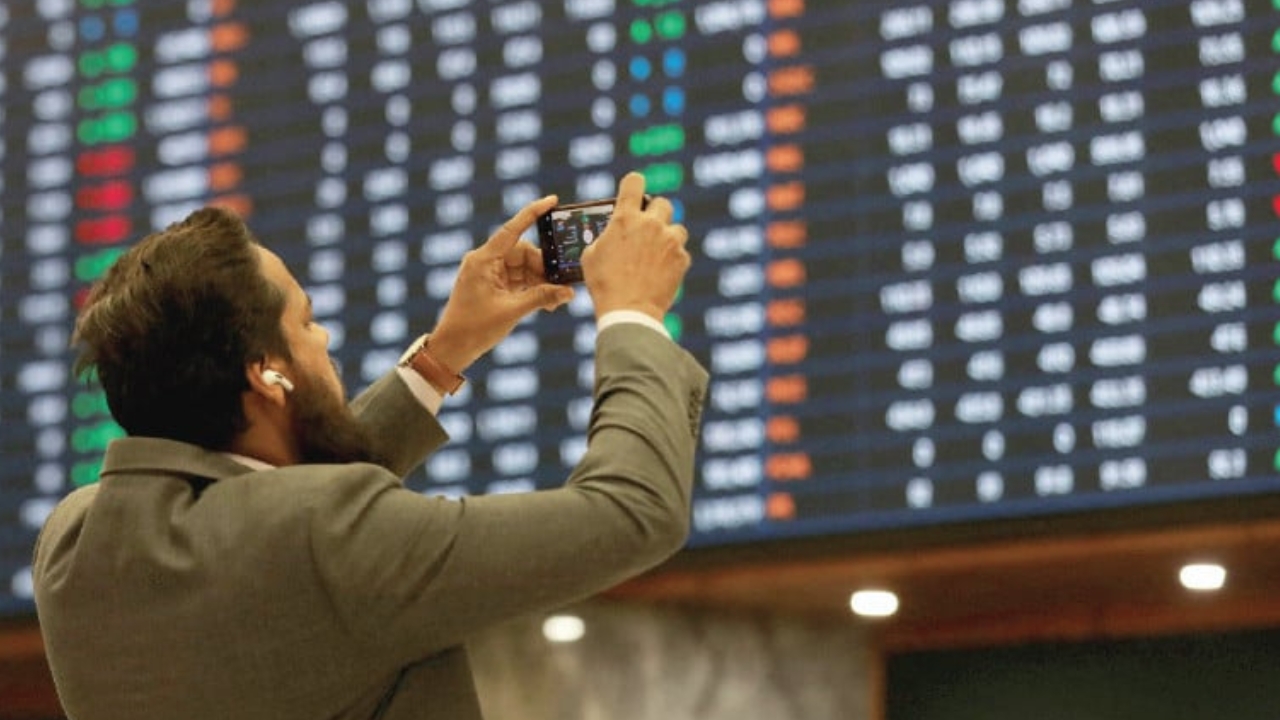
    The Pakistan Stock Exchange (PSX) witnessed a massive 1,421-point rally, allowing the benchmark index of the exchange, KSE-100 index, to cross 125,700 points, setting a new all-time high. According to reports, shares climbed rapidly on Monday as bullish sentiments caused the market to witness a “record-setting rally for the seventh consecutive session”.

    The director of a reputable securities firm reportedly outlined the bull run witnessed by the KSE-100 index stems from taxation policies favouring equities. It merits a mention that national savings schemes have also witnessed a cut in their rates of return, drawing investments into the PSX.

    Investor sentiment witnessed a boost because of the aforementioned developments, allowing the KSE-100 index to open in the green in the early hours of the day, with the upward momentum continuing until closing hours. The index reached an intraday high of 133,862.01 points. The index peaked at approximately 12:25 PM, after which the market closed at a lower, yet respectable, 133,370.14 points.

    For reference, the KSE-100 closed at 131,949.06 points on Friday, after which the index recorded a growth of 1.08 percent during trading hours on Monday, leading to a 1,421.08-point rise. The market displayed a slowdown around 9:32 AM as the KSE-100 hit its intraday trading low of 132,467.12 points.

    All 18 indexes listed on the exchange remained in the green with the All-share index (ALLSHR) growing by 1.23 percent, which translates into a 1,011.90 point rise in the index. Unlike the KSE-100, which tracks the performance of the 100 largest and most liquid companies, the ALLSHR index records the performance of all publicly listed companies on the PSX.

    A number of companies witnessed a rise in share prices, with Crescent Jute Products Limited (CJPL) and Colony Textile Mills Limited (CTM) winning big, to the tune of growth rates that sat at 17.18 percent (CJPL) and 11.09 percent (CTM). 

    However, not every publicly listed stock witnessed an improvement, as many companies witnessed sharp declines. Of these declining companies, the one that fared the worst during intraday trading was Popular Islamic Modaraba (PIM), which recorded a sharp 9.88 percent downward correction after being a top gainer in the previous trading session.

    The trading volume of regular stocks stood at a colossal 1,096,574,477 shares, translating into a total value of approximately 54.5 billion rupees.

  • Revenues from electricity bills record Rs110 billion fall

    Revenues from electricity bills record Rs110 billion fall

    The Federal Board of Revenue (FBR) generated Rs490 billion in revenues in fiscal year (FY) 2024-25 from Withholding Tax (WHT) and General Sales Tax (GST) from electricity bills. According to reports, these revenues have declined by approximately 20 percent on a year-on-year basis, falling by Rs110 billion from FY 2023-24.

    Reports indicate that the drop in revenue from electricity bills is a direct consequence of a fall in total power usage. As per the data, during the first nine months of FY 2024-25, total power usage by consumers recorded a sharp 3.6 percent decline.

    Total power usage fell from a respectable 83,109 GWh to just 80,111 GWh during the aforementioned period. Data from reports suggests that industrial electricity usage logged a sharp fall too, falling to 21,082 GWh in FY 2024-25  from 28,830 GWh in FY 2023-24.

    It merits a mention that Pakistan’s power capacity exceeds usage. Recent reports have outlined how excess capacity continues to place financial strain on users of the national grid as idle power plants continue to receive capacity payments. According to the latest Economic Survey, Pakistan’s total power generation capacity was projected to rise to a staggering 46,605 megawatts (MW) before the start of fiscal year (FY) 2025-26.

    The current capacity payment burden stands at an extortionate Rs12 to Rs15 per unit. Details from reports suggest that the financial strain of capacity payments is more pronounced during winter months as electricity demand plummets to as low as 12,000 MW. However, users of the national grid cannot use up excess power even in the summer months.

    During the first nine months of FY 2024-25, power consumption remained at 80,111GWh, whereas electricity generation dwarfed consumption, standing at 90,145GWh. The breakup of power consumption reveals that households, industries, commercial users and the agriculture sector use up 49.6 percent, 26.3 percent, 8.6 percent and 5.7 percent, respectively.

    It merits a mention that the federal government has attempted to boost power consumption levels up by getting a waiver that would allow surplus power capacity to be provided at a lower rate. As per reports, the waiver would have created provisions for 7,000 megawatts (MW) of electricity.

    Islamabad’s motivation behind the provision of power at lower rates lies in increasing economic output. This is because lower power rates to new entrants would yield higher industrial output.

    However, the International Monetary Fund (IMF) did not support the scheme as it believed that the current state of the economy is a direct consequence of the distribution of similar allowances in the past.