Author: Ibraheem Sohail

  • Power minister rules out raising threshold of protected power slab to 300 units

    Power minister rules out raising threshold of protected power slab to 300 units

    Addressing the National Assembly on Monday, Federal Minister for Power Sardar Awais Ahmad Khan Leghari stated that the government cannot raise the threshold for the protected power category. According to reports, the federal government would require a staggering Rs275 billion in subsidies to increase the threshold from 200 to 300 units.

    While this change remains unfeasible under the current budget, the 6 minister highlighted the government’s efforts to provide affordable electricity to low use power users. He outlined that charges for households consuming up to 200 units a month had fallen by 60 percent over the last nine months. According to reports, this segment of electricity users receive a sizable subsidy to reduce the financial burden of high electricity bills on them.

    While responding to a question in the National Assembly, the Power Minister revealed that 18.3 million of the 35 million electricity users nationwide are receiving power subsidies. These figures suggest that over 52 percent of electricity users benefit from subsidies provided by the federal government.

    Data from reports suggests that the subsidy rate for electricity users consuming 100 to 200 units stands at 70 percent. However, the subsidy rate jumps significantly for users consuming 100 units or less, as their subsidy rate stands at 90 percent.

    Moreover, while replying to a question posed by a Member of the National Assembly (MNA) regarding the provision of subsidized power to cryptocurrency mining operations in Pakistan, the Power Minister revealed that no power had been offered to mining companies at subsidized rates. Earlier this year, the federal government had allocated 2,000 megawatts of surplus power to crypto mining and to power artificial intelligence data centres. 

    However, reports indicate that the Power Minister has clarified that no legal framework regarding power rates or tariff had been approved for crypto ventures. According to the minister, the federal government had introduced a power package for the industrial sector without subsidies to increase competitiveness.

    Reports suggest that this package was going to allow exporters to boost their performance in the international market. As per the details, a staggering 7,500 Megawatts (MW) of extra power was available for the package, which could be used to improve grid stability. However, this move was to be made after discussions with the International Monetary Fund (IMF) and other development partners concluded.
  • Pakistan ready to kick India’s basmati rice off US shelves amid steep tariffs

    Pakistan ready to kick India’s basmati rice off US shelves amid steep tariffs

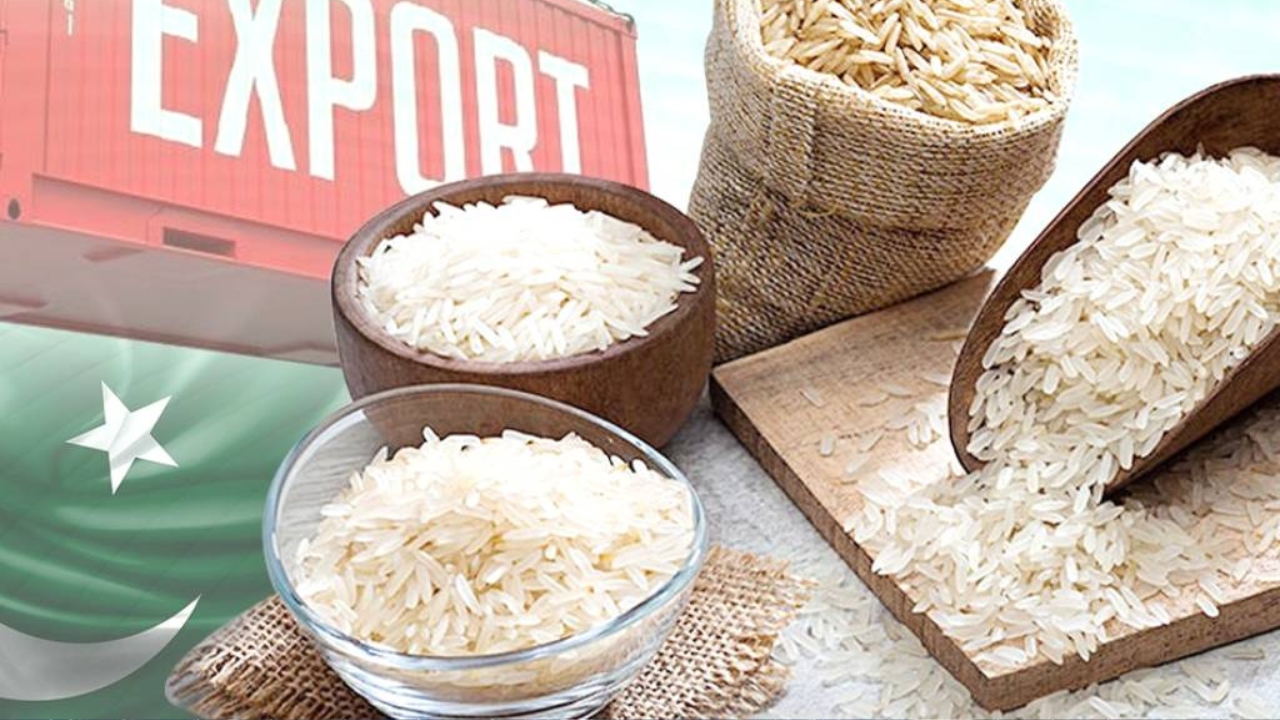
    US President Donald Trump’s imposition of a 50 percent tariff on Indian goods has opened the door for Pakistan to capture a bigger share of the American market. The US trade flows are reportedly already shifting away from India, creating new export opportunities for Pakistan, particularly in basmati rice.

    According to data from a global trade platform, 24 percent of Pakistan’s basmati rice was exported to the US between November 2023 and October 2024, with the country importing a staggering 1,519 shipments of rice from Pakistan.

    The US imports rice from Asian countries, as locally produced rice differs greatly in aroma and quality. According to the US Department of Agriculture (USDA), rice imports have increased over the past three decades, rising from just seven percent of the domestic market in 1993 to a sizable 25 percent by 2023.

    The USDA expects a growth in the demand for rice imports in the coming periods. The US sources over 60 percent of these imports from Asia, with Thailand, India, and Pakistan serving as top exporters of rice to the economic hegemon. 

    However, with US-India tensions heightening, mainly because of India’s economic ties with Russia, Pakistan could outcompete India on American shelves. Currently, India’s basmati rice faces a 50 percent tariff as opposed to the 19 percent tariff that Pakistani rice imports into the US bear.

    Reports have highlighted how this gives Pakistan a clear pricing advantage over India in the US market. Details from Indian media outlets have revealed that India’s basmati rice exports to the US could plunge by a whopping 80 percent. 

    This is because the price of importing India’s basmati rice into the US has soared to a staggering $1,800 per metric ton. For reference, the price of India’s basmati rice to US customers is now over 24 percent higher compared to importing rice from Pakistan, as Pakistani basmati rice is priced at roughly $1,450 per metric ton.

    US retailers and importers have already begun sourcing their basmati rice from Pakistan, instead of India, as its prices are unmatched compared to India. Reports suggest that customers have welcomed the change too, citing a retail worker who outlined that Pakistan’s basmati rice is “already popular” in the US. 

    Data from the Rice Exporters Association of Pakistan (REAP) indicates that Pakistan exported over 772,000 tons of basmati rice in fiscal year (FY) 2023-24, allowing for export revenues of $876.9 million. However, this number could grow significantly in Pakistan’s favour, as the odds and tariffs are stacked against India.

  • Supertax cut on the cards as govt mulls relief for manufacturers

    Supertax cut on the cards as govt mulls relief for manufacturers

    The federal government is expected to reduce the super tax rate on the manufacturing sector in the upcoming industrial policy. According to reports, the government intends to slash the rate to just five percent over the next four years.

    Reports suggest that in the fifth year, authorities intend to scrap the super tax entirely, allowing industries to benefit greatly. As per the details, the tax will only be removed if the primary balance remains positive. For reference, the primary balance is the difference between a government’s total revenue and its non-interest expenditures.

    However, it merits a mention that this plan is still subject to the International Monetary Fund’s (IMF) approval. As per reports, the draft of the new industrial policy includes initiatives to assist the manufacturing sector.

    A key proposal intends to increase the minimum threshold for super tax in the manufacturing sector from just Rs200 million to Rs500 million. Moreover, the policy draft reportedly advises increasing the threshold for levying a 10 percent supertax from Rs500 million to Rs1.5 billion.

    Reports have outlined how the policy draft will likely result in only larger manufacturers bearing the super tax, allowing smaller manufacturers to avoid bearing its burden. The aforementioned developments are not final as the policy draft still has to be approved by the federal cabinet later this month.

    According to reports, the policy draft has highlighted measures to revive industrial units and rationalize taxes that the manufacturing sector has to bear. Moreover, authorities intend to introduce a bankruptcy framework to help underperforming businesses restructure more efficiently.

    Access to credit facilities on easier terms is also expected to be granted to manufacturers to support industrial activities. Reports reveal that the policy draft includes plans to increase investment inflows while also boosting the competitiveness of Pakistan’s manufacturers in global markets.

    If authorities remain successful in creating an environment that favours manufacturers, Pakistan could witness a sizable uptick in export earnings, which could close the gap in Pakistan’s balance of trade deficit.

    This could help increase Pakistan’s current account surplus, which stood at $2.1 billion for fiscal year (FY) 2024-25. While the surplus was primarily achieved because of the $38 billion in remittance inflows Pakistan was able to attract, the current account surplus could grow significantly with an uptick in export earnings.

  • Govt anticipates uptick in investment inflows following Pak-US tariff deal

    Govt anticipates uptick in investment inflows following Pak-US tariff deal

    Following the conclusion of a successful bilateral tariff deal with the US, the federal government of Pakistan anticipates a sizable uptick in investment inflows directed towards Pakistan’s mines and minerals sector. According to reports, Islamabad expects mineral exports, especially copper exports, to jump significantly.


    Commerce Minister Jam Kamal Khan’s latest report to the National Assembly has also revealed that the US expressed interest to invest in mining operations in Pakistan during Pak-US negotiations or reciprocal tariffs. As per the Commerce Minister, it would be “advantageous to export value-added copper (refined) to the US market” as copper exports from Pakistan have not been hit with the 50 percent tariff which other elements such as iron, steel and aluminium have been slapped with.  


    Moreover, the Commerce Minister indicated that Pakistan possessed sizable mineral deposits which it could leverage to reduce its balance of trade deficit with its trading partners. The Minister also claimed that Pakistan ranked fifth in terms of copper reserves. However, it merits a mention that this “rank” was likely based on Pakistan’s broader resource potential. In terms of proven reserves, Pakistan actually ranks 18th, with 12.3 million metric tons, according to data from reports.


    The minister has suggested that copper is in high demand in the international market as it is a critical component in technologies such as renewable energy devices and electric vehicles. Reports reveal that despite possessing a sizable amount of reserves, they have remained largely untapped owing to suboptimal investment levels into mining infrastructure and processing facilities.


    Currently, Pakistan exports the vast majority of its copper ore directly to China, causing the country to miss out on potential exports to the US, the Middle East, and Europe. According to the Commerce Minister, Pakistan could capitalize on the high demand and consequently highlighted “the need for strategic development in the mining sector”.


    He suggested that Pakistan could increase its competitiveness in the global market by investing into technologies that will unlock efficient exploration and extraction of minerals. The Minister’s report revealed that the federal government, in collaboration with the US, would play a key role in transforming Pakistan’s mining sector.


    Reports suggest that the Geological Survey of Pakistan has already been ordered to conduct geological mappings to discover untapped reserves. As per the Commerce Minister, Pakistan will focus its efforts to transition from exporting raw ores to exporting refined copper, alloys, rods, and bars, which will reportedly allow it to attain higher economic benefits from its mineral reserves.

  • Remittances surge to $3.214 billion in July

    Remittances surge to $3.214 billion in July

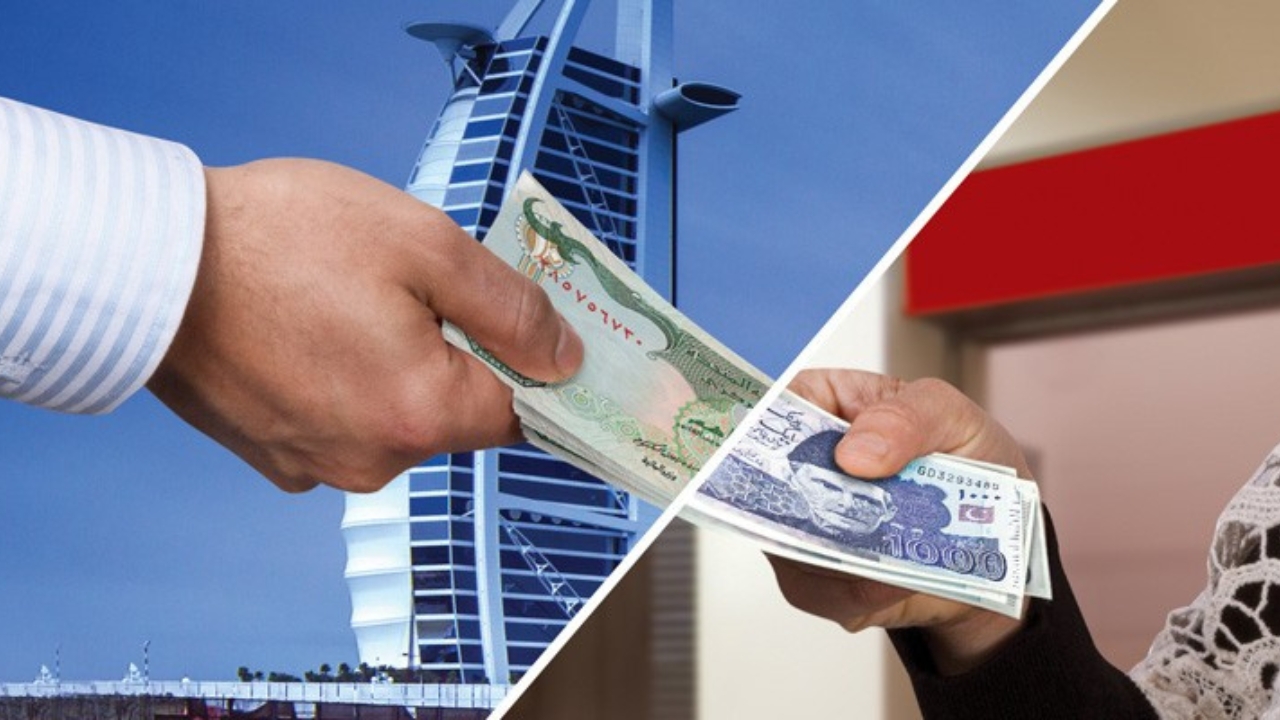
    Pakistan received $3.214 billion in remittances in July, marking a 7.4 percent year-on-year increase and continuing the upward momentum in inflows.

    According to reports, remittances rose despite the federal government’s move to reduce incentives for commercial banks handling such inflows. Commercial banks raised concerns regarding the reduction in incentives, suggesting that their profit margins may take a severe hit.

    However, reports indicate that the cut in incentives for banks is unlikely to restrict the flow of remittances, and banks are expected to make sizable profits from them. Data from the State Bank of Pakistan (SBP) has revealed that remittances in July fell by 5.6 percent on a month-on-month basis; however, reports reveal that market sentiment remains positive.

    The largest sum of remittances in July came from the Kingdom of Saudi Arabia (KSA), with Pakistani expatriates sending back $823.7 million. This translates into an 8.4 percent increase in remittance inflows from the country on a YoY basis. Remittance inflows from the UAE, UK, and other Gulf Cooperation Council countries amounted to $665 million, $450.4 million and $296 million, respectively.

    As per the data from reports, the strongest growth in remittance inflows came from European Union (EU) countries, increasing by a respectable 21 percent in July and allowing for $424.4 million to flow into Pakistan. 

    While the large inflows contribute to Pakistan’s macroeconomic indicators, analysts have warned against relying on remittances to build foreign exchange reserves. Remittance inflows can fall drastically, as they did by 10.2 percent from the US in July, falling to just $269.6 million.

    In fiscal year (FY) 2024-25, Pakistan received a staggering $38.3 billion in remittance inflows, marking a 27 percent increase on a YoY basis. However, the SBP has increased the remittance target to $40 billion in FY 2025-26.

    As per reports, both the SBP and the federal government claim that remittances will continue to grow in the coming months, which explains the cut in incentives for commercial banks to attract remittances.

    Remittance inflows serve to provide liquidity of foreign currencies to the market. Reports reveal that the SBP was able to purchase a whopping $9 billion from the open market throughout FY 2024-25, owing to the increase in dollar liquidity provided by remittance inflows.

  • Are you eligible to receive free solar panels from Sindh govt?

    Are you eligible to receive free solar panels from Sindh govt?

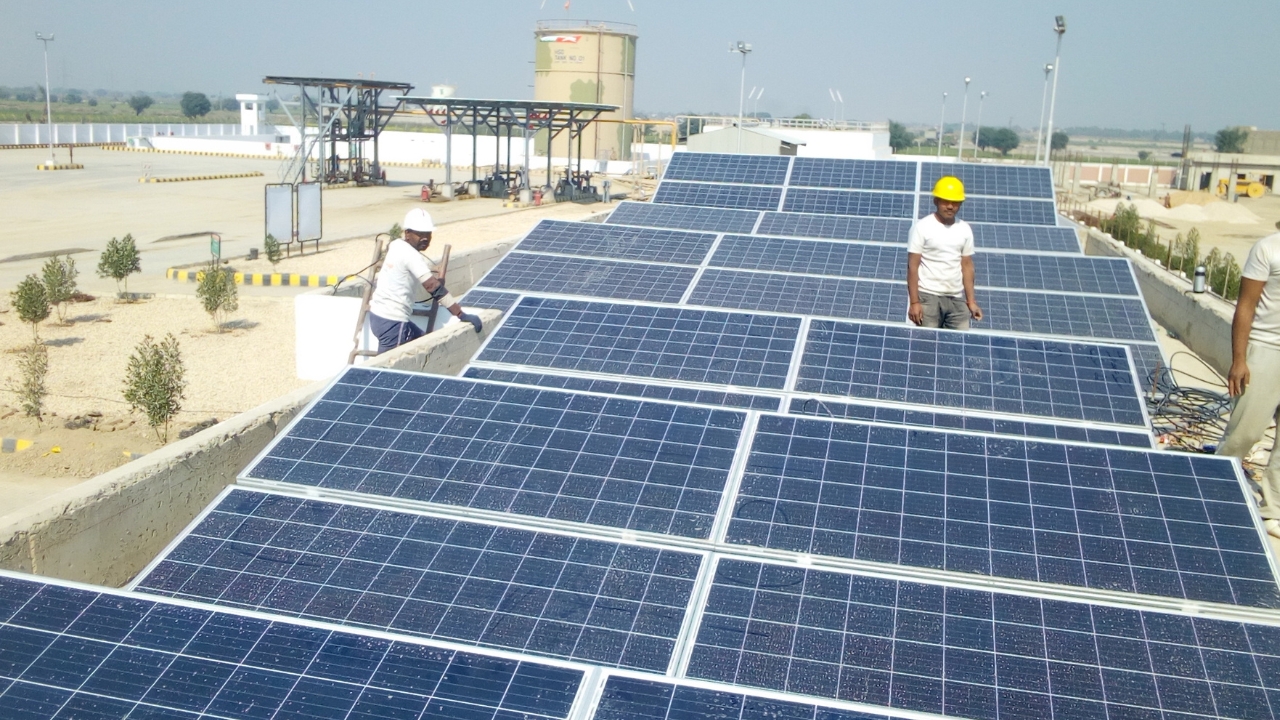
    In a bid to shield underprivileged individuals from the financial strain of high electricity bills, the Sindh government has announced the provision of free solar systems to eligible consumers. According to reports, the eligibility criteria includes electricity users who consume fewer than 100 units of power per month.


    It merits a mention that only those consumers whose electricity usage has remained below 100 units per month over the past six months are eligible to receive the free solar systems. Data from reports suggest that this initiative will allow approximately 130,000 families to benefit from the installation of free solar systems, protecting them from high electricity bills.


    If applications balloon past the number of available slots, reports indicate that the provincial government will utilize a lottery system to determine who gets the free solar panels. Moreover, reports have outlined that individuals who have previously been granted a solar system as per a different government scheme will not be able to apply for the aforementioned scheme.


    As per the details, the scheme intends to develop alternative sources of power, while offering relief to financially vulnerable families in Sindh. Individuals who intend to apply for the program must do so before August 20, 2025.


    Aside from submitting the program application form, which needs to be verified by the applicant’s Union Council (UC) Chairman or a gazetted officer, applicants will also have to submit a copy of their Computerized National Identity Card (CNIC) and a recent electricity bill. According to reports, no unverified forms will be accepted for processing.


    Reports have revealed that once applicants have filled out the form, they must submit it to the office of the Sindh Energy Department, Project of Home Solar System (On-Grid).


    While this measure by the Sindh Government intends to provide relief to all electricity users in the province, the federal government has recently provided a great relief package to electricity users across the nation. Earlier this week, the National Electric Power Regulatory Authority (NEPRA) announced a quarterly tariff relief of Rs1.8881 per unit. 


    According to reports, this adjustment will provide consumers with a relief package totalling a whopping Rs55.87 billion. Details from a press release on Thursday revealed that the tariff adjustment will remain in place during the period spanning August 2025 to October 2025 and will be applicable to both users of the national grid and K-Electric customers.

  • PSX on track to maintain record-setting spree for sixth consecutive session

    PSX on track to maintain record-setting spree for sixth consecutive session

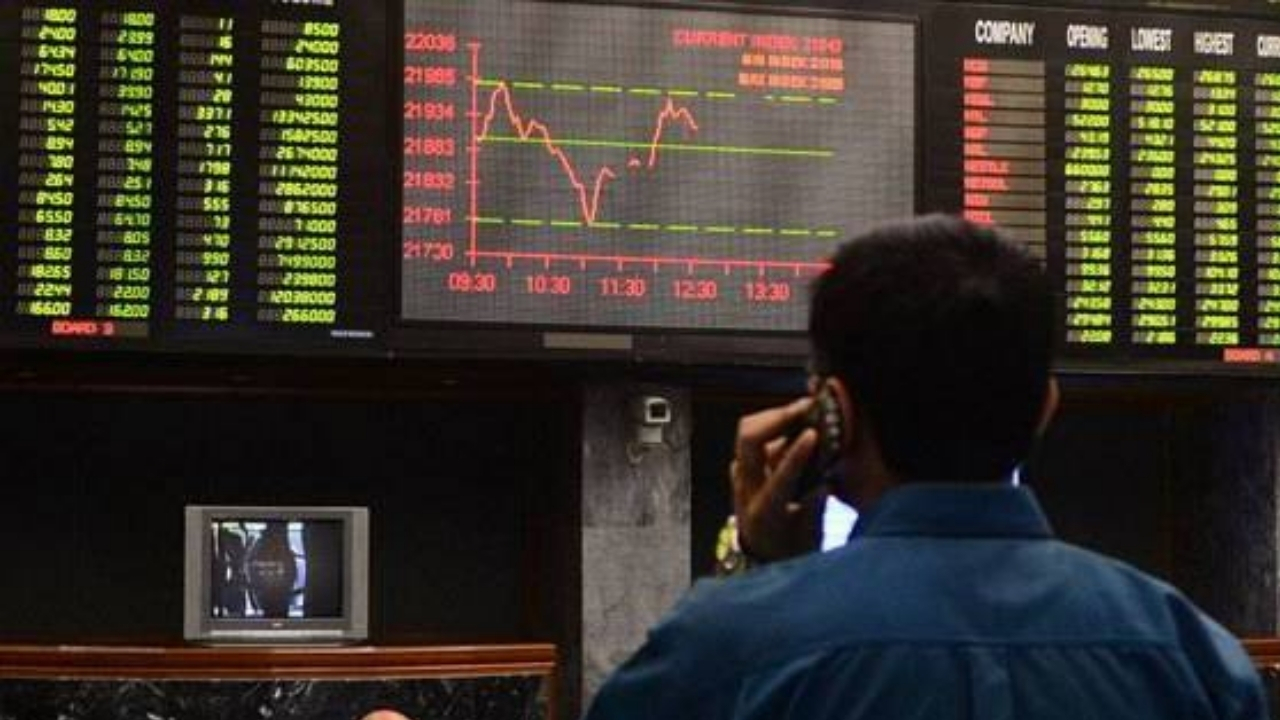
    The Pakistan Stock Exchange (PSX) seems to be on track to maintain its record-setting spree for the sixth consecutive session as a boost in investor confidence continued the upward momentum on Friday. As of publishing this report, the benchmark index  KSE-100, crossed the 146,000 point resistance level after gaining over 500 points since trading hours began.

    According to reports, the market has been witnessing a rally because of strong buying from domestic mutual funds. Moreover, reports have also credited the exchange’s exceptional performance to potential positive impacts on Pakistani companies as the 50 percent tariff rate on India imposed by American President Donald Trump rolls into action. 

    The developments caused the index to open in the green in the early hours of the day, later reaching an intraday high of 146,451.33 points. The index peaked at approximately 9:27 AM, after which the market witnessed a minor sell off, causing the index to fall to about 146,190 points as of publishing. 

    For reference, the KSE-100 closed at 145,647.13 points on Thursday, after which the index recorded a growth of 0.37 percent during the early hours of the day on Friday, leading to a 543.53 point rise.

    The market displayed a slowdown around 11:09 AM as the KSE-100 hit its intraday trading low of 145,468.57 points. However, a recovery of 722 points was witnessed following the intraday trading low, allowing the index to bounce back immediately.

    Of the 18 indexes listed on the exchange, 17 remained in the green with the All-share index (ALLSHR) growing by 0.42 percent as of publishing. The ALLSHR index recorded a climb of 378.22 points after trading hours began. Unlike the KSE-100, which tracks the performance of the 100 largest and most liquid companies, the ALLSHR index records the performance of all publicly listed companies on the PSX.

    A number of companies witnessed a rise in share prices, with First IBL Modaraba (FIBLM) and Paramount Spinning Mills Limited (PASM) winning big, to the tune of growth rates that sat at 13.66 percent (FIBLM) and 12.08 percent (PASM).

    However, not every publicly listed stock witnessed an improvement, as many companies witnessed sharp declines. Of these declining companies, Khairpur Sugar Mills Limited (KPUS) posted a 9.93 percent decline in its position.

    According to the director of a reputable securities company the KSE-100 index could cross 165,000 points by the middle of FY 2025-26, owing to low interest rates and an improved state of the wider economy.

  • NEPRA dishes out relief package of Rs55.87 billion, approves Rs1.89 per unit tariff adjustment

    NEPRA dishes out relief package of Rs55.87 billion, approves Rs1.89 per unit tariff adjustment

    Consumers of the national grid can breathe a sigh of relief, as the National Electric Power Regulatory Authority (NEPRA) has announced a quarterly tariff relief of Rs1.8881 per unit. According to reports, this adjustment will provide consumers with a relief package totalling a whopping Rs55.87 billion.

    Reports indicate that NEPRA made this decision based on requests from Ex-Wapda Distribution Companies (X-DISCOs). Details from a press release on Thursday revealed that the tariff adjustment will remain in place during the period spanning August 2025 to October 2025. 

    As per reports, the approved uniform quarterly tariff adjustment will apply to consumers of both the national grid and K-Electric (KE). However, it is worth noting that prepaid and Lifeline customers are not eligible for the relief provided under this adjustment.

    Under the current uniform tariff policy, a standard electricity rate is applied nationwide in accordance with rules set by NEPRA and the federal government. As such, power distribution companies (DISCOs) do not have the authority to independently alter the tariff rates.

    Reports indicate that requests for changes in the tariff rate must be submitted by the DISCOs, after which they undergo public hearings and scrutiny before approval. The hearing for the request that led to the approval of the quarterly tariff adjustment was held earlier this week.

    While DISCOs pushed for the financial relief unlocked by the quarterly tariff rate adjustment, it merits a mention that a recent report by the Auditor General of Pakistan implicated eight DISCOs in a staggering financial fraud case amounting to Rs244 billion. According to reports, the Discos overcharged users to hide the true magnitude of power theft, line losses and major operational inefficiencies.

    The Auditor General’s report indicates that Electric Supply Companies of Islamabad (Iesco), Lahore (Lesco), Hyderabad (Hesco), Multan (Mepco), Peshawar (Pesco), Quetta (Qesco), Sukkur (Sepco), and Tribal Areas (Tesco) grossly overbilled consumers from 2023-24. As per the data, consumers were overbilled for a staggering 900 million units of power.

    Details from the audit suggest that five discos overcharged consumers by a whopping Rs47.81 billion in a single month. Reports reveal that 278,649 consumers faced higher bills as a result of this action by these discos.

  • Govt’s Rs250 dollar target falls flat as greenback holds steady at Rs284

    Govt’s Rs250 dollar target falls flat as greenback holds steady at Rs284

    The federal government’s efforts to bring the dollar back down to Rs250 have reportedly failed, as the greenback continues to trade above Rs280. According to reports, during recent meetings held in the federal capital, authorities made efforts to push the exchange rate down to Rs250 per dollar.

    Stakeholders present at the aforementioned meetings included currency dealers, commercial banks, and jewellers. However, it merits a mention that the participants of the meeting reportedly deemed the target unrealistic and dismissed it.

    Stakeholders present at the meetings included currency dealers, commercial banks, and jewellers who reportedly deemed the target unrealistic and dismissed it.

    While the federal government has not met its target exchange rate of Rs250 per dollar, the rupee has posted marginal gains in previous trading sessions. This appreciation can be attributed to the crackdown against the smuggling of dollars out of the country.

    Data from reports suggests that since July 23, the rupee has appreciated by a respectable Rs3 against the greenback. As per the details, this appreciation has been recorded by both open and interbank markets.

    According to reports, the gain did not bring the market rate in line with official expectations, as one US dollar continued to trade at Rs282.87 in the interbank market despite the rupee’s appreciation.

    The rate is reportedly even more unfavourable to the official target in the open market, with one US dollar being quoted at a rate of Rs285.15. Moreover, currency dealers have reported shortages of foreign currencies such as the pound, euro and dollar.

    A fall in the availability or supply of a particular currency can result in an increase in its value against others. In this case, it is against the rupee. Reports suggest that a black market for currency exchange has resurfaced, offering rates higher than those set by the Exchange Companies Association of Pakistan (ECAP).

    As per reports, this problem extends into the interbank market as banks permitted by the State Bank of Pakistan (SBP) to sell dollars to importers are setting higher exchange rates. Moreover, these banks are also favouring their own clients over others, which explains the difficulty certain importers have faced in obtaining a letter of credit (LC) for amounts as small as $500,000.

    Despite its best efforts, the federal government will not be able to reduce the exchange rate back down to Rs250 per dollar. Reports indicate that the rupee may appreciate “into the Rs270s” against the dollar; however, this gain is expected to be temporary, as it is not considered sustainable.

  • Malik Riaz, Bahria Town linked to Rs1.12 billion money laundering scheme

    Malik Riaz, Bahria Town linked to Rs1.12 billion money laundering scheme

    Information Minister Attaullah Tarar has made a startling revelation, accusing real estate tycoon Malik Riaz and Bahria Town of involvement in large-scale money laundering. These claims add to the number of legal troubles Riaz is already facing, according to reports.

    In a televised press statement, the information minister revealed that a raid conducted by the Federal Investigation Agency (FIA) led to the discovery of documents he described as ‘incontrovertible proof’ of Malik Riaz and Bahria Town’s corruption. The evidence suggests that the real estate mogul was involved in a staggering Rs1.12 billion money laundering scheme.

    According to details, the FIA raided Safari Hospital in Rawalpindi, which was being used as a front office for maintaining records and storing cash. The minister stated that Bahria Town staff present at the hospital attempted to “burn some of the records” when the FIA began its raid.

    The hospital’s “ambulances were being used to transport the money and records” to avoid arousing the suspicion of authorities, the minister added.

    During the raid, officers were able to link the two individuals present at the scene, who were running the hawala and hundi operation, to the chief financial officer of Bahria Town. The information minister alleged that Bahria Town’s senior leadership was operating a large-scale “money laundering racket through which amounts were being sent abroad”.

    While the Rs1.12 billion money laundering scheme is already colossal, the information minister suggested the actual scale is even greater, stating, “there will be more amounts besides the Rs1.12bn that will come forth.”

    According to the minister, the hospital was used to send billions of rupees out of the country, causing significant harm to Pakistan’s economy. The federal government is expected to continue its crackdown on money laundering schemes allegedly operated by Bahria Town, as the FIA reportedly has information on the individuals involved.

    The information minister has urged all those implicated to “turn themselves in.” It merits a mention that neither Bahria Town nor Malik Riaz has responded to the minister’s statements.