Author: Ibraheem Sohail

  • Punjab’s debt drops by Rs24.8bn

    Punjab’s debt drops by Rs24.8bn

    Punjab’s total government debt decreased by 24.8 billion rupees during the second quarter of the fiscal year (FY) 2024-25, marking a 1.5 percent decline. As per reports, this reduction occurred as exchange rate movements favoured the rupee and resulted in an overall improvement in the province’s debt situation.

    By the end of December 2024, Punjab’s debt stock stood at a controlled 1,654 billion rupees — a significant improvement from the staggering 1,678.8 billion rupees recorded in September. Report data reveals that the bulk of this amount came from external loans, totalling a colossal 1,652.5 billion rupees, while domestic debt remained minimal at just 1.5 billion rupees.

    Punjab’s debt-to-GDP ratio during this period witnessed a slight improvement, dropping from 2.49 percent in the previous quarter to the current value of 2.46 percent. According to reports, this decline was driven by foreign exchange gains amounting to a significant 12.1 billion rupees.

    These gains resulted from the depreciation of the Special Drawing Rights (SDR), the Chinese Yuan, and the Japanese Yen against the rupee. For reference, the SDR is a basket of five currencies.

    In addition, provincial authorities managed to lower Punjab’s net borrowing by a respectable 12.7 billion rupees, thereby reducing its debt burden. This could be a result of the austerity measures prescribed by the International Monetary Fund (IMF).

    However, these figures may be misleading, as the Government of Punjab is liable to cover loans taken by certain government entities that are not included in official debt records. These guarantees were reportedly worth a whopping 103 billion rupees, of which a large portion was reserved for the purchase of wheat under the federally supported Cash Credit Limit (CCL) program.

    Foreign currency loans make up the largest portion of the province’s debts, exposing the province to exchange risk. The ‘risk’ can impact the payable loan values both positively or negatively depending on changes in the rupee’s value. For instance, an appreciating rupee is beneficial for Punjab because provincial loans are denominated in foreign currencies.

    71 percent of Punjab’s debts were USD-denominated, followed by SDR-denominated (21 percent), Japanese Yen (five percent), Chinese Yuan (two percent), and one in all the other currencies. This structure exposes the province to exchange risk, as a potential depreciation of the rupee can add value to its liabilities.

    However, reports outline that fixed interest covers 73 percent of the overall debt stock of the province, which offers some protection against exchange rate fluctuations. Nonetheless, Punjab’s preference to receive credit denominated in foreign currencies guarantees that exchange volatility will remain a serious issue looming over its fiscal stability.
  • Textile export growth rate rebounds after three-month slump

    Textile export growth rate rebounds after three-month slump

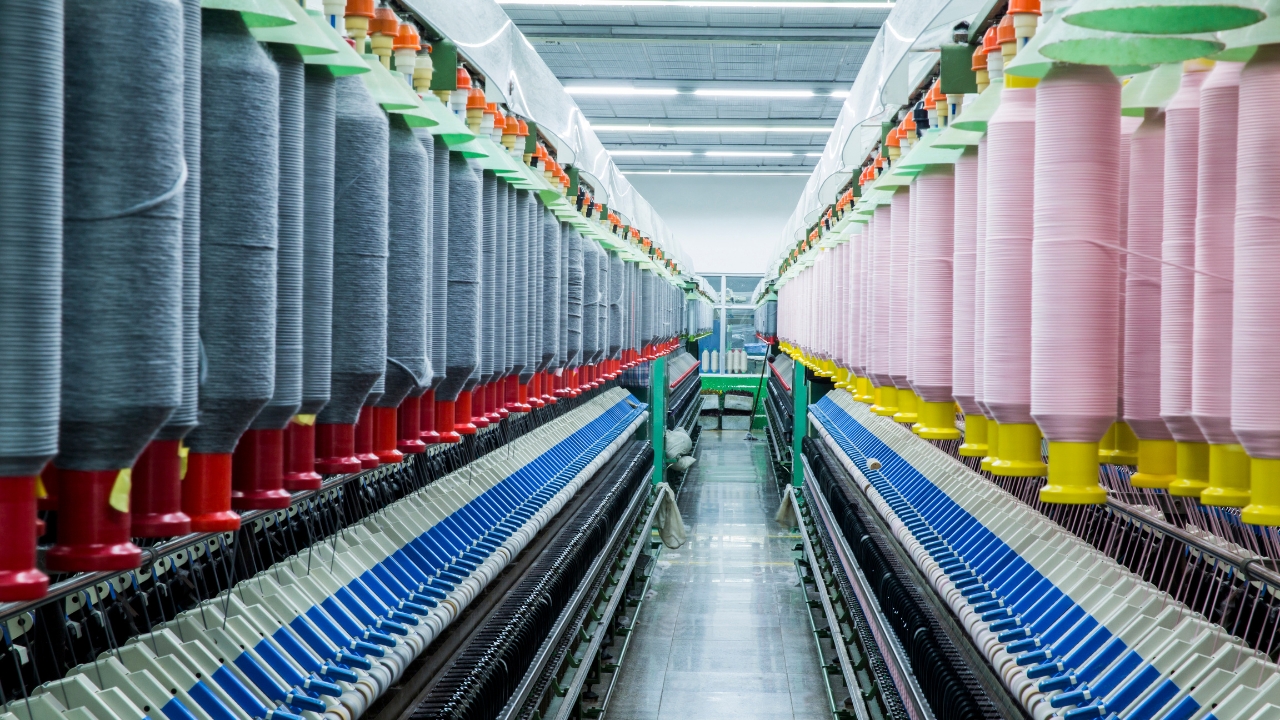
    Exports in the textile sector surged by a whopping 15.85 per cent in January 2025 compared to the same period a year ago. As per newly released data from the Pakistan Bureau of Statistics (PBS), textile export growth in the past month is merely a continuation of the rapid growth rates that the sector has seen in the first half of the Fiscal Year (FY) 2024-25.

    The data shows that growth rates sat at 13 percent in August, 17.92 percent in September, 13.11 percent in October, 10.81 percent in November and reached a low of 5.55 percent in December. Previously, some analysts were concerned about a steady decline in growth rates from September 2024.

    However, export growth has recovered significantly, posting impressive double-digit growth rates – as per reports, exporters had predicted this growth rate in previous periods.

    The recovery of Pakistani textile exports is being attributed to the disruption in supply Bangladeshi producers have experienced. According to reports, the aforementioned disruptions have allowed Pakistani textiles to experience a surge in demand in the international market.

    For reference, textile and clothing exports sat at a conservative $1.45 billion in January 2024, whereas the corresponding export value for January 2025 improved to an impressive $1.68 billion.

    The first seven months of FY 2024-25 managed to bring in $10.77 billion in export revenue – A stark improvement from $9.74 billion over the corresponding months of the previous FY.

    Export revenues are crucial for cash-strapped Pakistan to keep the economy afloat. Without the textile sector’s contributions, the trade deficit would undoubtedly widen, leaving Pakistan’s economy in a vulnerable state.

    This is because the textile sector is responsible for bringing approximately 60 percent of all export revenues into the country. Moreover, the sector makes significant contributions towards the nation’s gross domestic product (GDP) while employing a sizable number of individuals.

    While data from PBS paints an optimistic picture, there are multiple issues plaguing the sector. The textile sector is under threat as approximately 187 mills recently shut down in Punjab alone.

    According to reports, a lack of sensible economic planning and flawed policies have trapped the textile sector in a quagmire. For example, a policy mandates that industrialists pay extortionate rates to purchase power since policymakers have adjusted capacity charges and line losses into industry electricity bills.

    Analysts have commented on how it makes little intuitive sense for industrialists to cover line loss charges when power theft in industrial areas remains minimal.

  • Islamabad switches gears, focuses on privatising Discos instead of PIA

    Islamabad switches gears, focuses on privatising Discos instead of PIA

    In November 2024, Islamabad failed to sell the national flag carrier to private entities, receiving only a measly 10 billion rupees from the owner of Blue World City – A real estate developer. According to reports, Islamabad has decided to momentarily shift the privatisation process of Pakistan International Airlines (PIA) to the second phase.

    The reasoning behind this move is to allow lawmakers and authorities to concentrate on the privatisation efforts surrounding power distribution companies (Discos). Reports reveal that Islamabad’s top priority is to sell off Discos despite analysts claiming that the government should take some time to oversee relevant actions to prepare for the process.

    Pakistan’s consideration of privatising Discos was discussed by domestic authorities with a World Bank (WB) delegation that is currently visiting the cash-strapped country. Reports revealed that the WB delegation comprises a team of executive directors who are in town to go over economic reforms which Islamabad plans to enact.

    The privatisation efforts are part of these reforms and fall under the umbrella of the Country Partnership Framework (CPF). The CPF was inked last month, unlocking a staggering $20 billion in indicative assistance from the WB.

    As per data from reports, the WB has divided this loan amount into two parts for Pakistan. Under the CPF, $14 billion will be provided in ‘concessional loans’ and will have advantageous terms for Pakistan. The rest of the loan, amounting to $6 billion, will be given to Pakistan at higher interest rates.

    Both the WB and Pakistan are expected to engage with each other in implementation workshops, as active collaboration could allow for the CPF to mature and meet its objectives successfully.

    After temporarily sidelining PIA’s privatisation efforts to the second phase, policymakers have moved Disco privatization up to phase one of the plan. The Minister for Economic Affairs, Ahad Khan Cheema, reportedly revealed to the visiting WB team that other State-Owned Entities (SOEs) will also be privatised in phase two.

    Privatisation has historically been viewed as a negative activity by the general public. However, these loss-making institutions are the root cause of the excessive taxes that citizens must bear to keep public industries up and running.

    If the taxes from Pakistanis are not enough, the government has to borrow funds to finance these industries to keep them operational. Ultimately, the burden of the interest falls upon citizens once again once the loans reach maturity.

    Ahad Khan outlined how about a third of the SOEs were ‘strategic’ assets, with the remaining assets being available to be put up on the auction block. As per reports, the minister conveyed to the WB delegation about Islamabad’s aims to privatize upwards of 50 SOEs within three to four years.

  • PIA plans to lease London Heathrow slots to Saudia

    PIA plans to lease London Heathrow slots to Saudia

    Pakistan International Airlines’ (PIA) efforts to comply with safety standards have not yet convinced the United Kingdom (UK) to open its doors to the airline. As such, PIA has reportedly contacted Airport Coordination Limited (ACL) to lease out two of its slots which it still holds at London Heathrow.

    According to reports, the slots will pass on to Saudia, formerly known as Saudi Arabian Airlines, which will run flight operations using PIA’s slots during Summer 2025. The decision surrounding PIA’s eligibility to operate flights to the UK rests with the UK’s Department for Transport and Civil Aviation Authority.

    The aforementioned entity carried out an examination of Pakistan’s aviation security protocols and is expected to disclose its decision regarding PIA’s eligibility by the middle of March 2025.

    Pakistan’s consideration to lease out these slots indicates a lack of confidence in regaining flying rights to the UK. This is because according to the time frame, PIA could operate flights a month before it actually leases the slots over to Saudia.

    Currently, PIA is leasing out its slots to obtain monetary gains as it can’t fly to and from the airport during those slots. Various airlines such as Turkish Airlines, Saudia and Vietnam Airlines have been renting the slots from PIA to expand the scope of their own operations in the UK market.

    PIA has been relying on this tactic to keep landing rights to Heathrow airport while it waits for the relevant regulatory authorities to give it the green light for the resumption of flight operations.

    After PIA flight 8303 crashed in Karachi, the company lost the rights to fly to various high traffic destinations such as the UK, United States (USA), Canada and the European Union (EU). Aviation Minister Khawaja Muhammad Asif recently conceded that the national carrier had lost “hundreds of billions” of rupees over the past four and a half years because of these profitable routes remaining closed off to Pakistani airlines.

    The moratorium in PIA’s services to Europe came about as a direct consequence of a post-crash speech by then-minister Ghulam Sarwar, who had claimed without any evidence that a staggering 40 percent of PIA’s pilots were flying with fraudulent licenses. Mr. Sarwar’s speech detrimentally impacted the airlines credibility and the airline lost its goodwill with customers which it had earned over the years.

    The Pakistani national carrier was recently able to comply with the safety standards of the European Union Aviation Safety Standards (EUASA) after four grueling years. However, the airline is still not allowed to operate flights to the UK and USA.

    Not all hope is lost for PIA though as reports have revealed that the airline intends to take back its leased slots for its own flights if restrictions are removed.

  • Nepra officers approve large pay raises for themselves

    Nepra officers approve large pay raises for themselves

    Senior officers of the National Electric Power Regulatory Authority (Nepra) have approved large increments in their own salaries and non-income perks. According to reports, this move was in clear violation of the law as they did not get approval from the federal cabinet.

    The timing of the unapproved salary hike is peculiar as the power sector is facing staggering losses because of issues in power distribution and overall management. However, reports have outlined how aside from the timing of the hike, the magnitude of the hike is even more peculiar.

    This is because the latest salary revisions authorized 200 percent raises for certain employees. Reports reveal that the chairperson’s salary ballooned to a whopping 3.25 million rupees while members witness their salary packages grow up to 2.95 million rupees.

    As per standard guidelines, Nepra’s chairman and members are allowed to receive a basic monthly salary between 629000 rupees to 772780 rupees. However, this excludes non-income perks such as utility and accommodation rent allowances which brings up their gross salaries up to a respectable 800,000 rupees to one million rupees.

    Under the revised salary package, the base pay does not vary significantly with only the lower salary bound noticing a slight improvement up to 700,000 rupees from the previous salary of 629000 rupees. However, a ‘regulatory allowance’ has been adjusted into the salary package which raises the gross salary amount by up to 700,000 rupees. As per reports, this colossal regulatory allowance has been modeled after judicial benefits.

    Aside from the allowance increase, Nepra officers were also able to snag provisional reliefs with an associated monetary value of up to 650,000 rupees for 2024, 600,000 rupees for 2023, 116,000 rupees for 2022 and 77,300 rupees for 2021. If these payments have not been made in previous years, it is likely that the officials will receive backdated payments for the aforementioned time period.

    If backdated payments are made, the disbursements of funds to the officials might hurt the national exchequer. The federal budget might witness an imbalance because of the unexpected outflow – as this salary revision was never approved by the federal cabinet.

    This move could potentially worsen the balance of the federal budget which lawmakers in Islamabad might not be particularly thrilled about. Moreover, reports claim that Nepra officials will still continue to collect house rent allowances ranging from 176,000 rupees to 206,000 rupees along with other benefits totaling over 100,000 rupees.

    After the colossal pay hike, analysts are raising concerns regarding the level of financial accountability and transparency surrounding such institutions. As of now, it is not known whether this pay raise will stand or be reversed by federal authorities since Nepra has reportedly not provided any clarifications on the matter.

  • Domestic debt rises despite State Bank’s profit injection

    Domestic debt rises despite State Bank’s profit injection

    Islamabad’s domestic debt ballooned by a staggering 2.5 trillion rupees in the first half of Fiscal Year (FY) 2024-25. According to reports, the federal government has had to rely on credit to finance state operations despite the State Bank of Pakistan (SBP) sharing its profits with the government.

    As per data from the SBP, the government’s domestic debt surged from a controlled 47.724 trillion rupees at the start of FY 2024-25 to a whopping 50.193 trillion rupees by the end of December 2024.

    Analysts have grown worried as debt rose in the first half of the current FY, even with the SBP lending its support to Islamabad for budgetary purposes. More concerningly, rising debt levels indicate Islamabad’s possible deviation from the International Monetary Fund (IMF) ‘s prescribed austerity measures, as the federal government is not strictly holding a contractionary fiscal policy.

    While it may seem that the SBP’s 2.7 trillion rupee profit would help the government’s finances, reports claim that debt levels rose instead. Analysts outline how the supply of liquidity allowed borrowing levels to remain controlled despite earlier estimates predicting Islamabad would incur a lower amount of debt.

    According to data, the growth in debt can be attributed to low revenue collection levels coupled with a rise in government expenditures. With respect to revenue, the FBR fell short of its revenue target by a colossal 386 billion rupees in January 2025.

    As per reports, the shortfall can be attributed to a fall in tax receipts. The use of technology could significantly streamline FBR processes, allowing officials to achieve the revenue target for fiscal year (FY) 2024-25, which currently sits at an ambitious 12.9 trillion rupees.

    However, for now, revenue shortfalls require the government to borrow money to plug the federal budget deficit. In an effort to shield the economy from the growing debt burden, Finance Minister Muhammad Aurangzeb is attempting to expand the tax net and improve revenue collection levels – which could reduce the government’s dependence on loans.

    While growing debt levels might seem threatening at first glance, the government appears to have raised these funds on somewhat beneficial terms. During the first half of FY 2024-25, the government issued long-term debt via auctioning ‘Pakistan Investment Bonds’, as this will result in infrequent payments to creditors.

    Banks purchased these bonds that had longer maturity periods because of falling interest rates. Interest rates have plummeted by a staggering 1,000 basis points in the past seven months as the SBP slashed interest rates after enjoying successes in its battle against inflation.

  • Significant drop likely in fuel prices

    Significant drop likely in fuel prices

    Prices of petroleum products might witness a significant decline on Saturday for the upcoming two weeks. As per reports, fuel prices can drop from 2.5 rupees to nine rupees per litre, depending on the type of fuel in consideration.

    Experts’ speculation hinges on the fall in petroleum prices in international markets. Over the past two weeks, brent prices declined by two dollars per barrel to settle at a modest $74.5.

    This spells great news for Pakistan as pressures on the import bill are likely to be alleviated. Historically, the cash-strapped nation has been a net importer of petroleum-based products. Data from recent years revealed that Pakistan’s largest imports were Petroleum Gas ($7.56 Billion), Refined Petroleum ($6.47 Billion) and Crude Petroleum (4.78 Billion).

    According to reports, the ex-depot petrol price is expected to fall by a conservative 2-2.5 rupees per litre. Kerosene and light diesel oil prices are reportedly projected to follow a similar trend as they are likely to fall by 3.45 rupees to five rupees per litre.

    However, unlike kerosene and petrol, high-speed diesel (HSD) might fall by a liberal of nine rupees per litre. However, these are only estimates, and real prices could vary marginally from these values.

    Analysts claim that a decline in the international market is responsible for lower petroleum prices. Reports reveal that the import duty on petrol declined from $8.8 per barrel to a more manageable $7.75 per barrel. Additionally, the ex-refinery cost of kerosene witnessed a fall, allowing the prices of the commodity to drop.

    The average price of petrol fell by a conservative $0.9 per barrel while HSD prices tanked – falling by $3 per barrel. However, unlike the fall in import premium on petrol, reports claimed that authorities did not alter premiums on diesel.

    The fall in petroleum prices is likely to spur economic activity across various sectors. For instance, the transportation sector has fuel as a primary input and, thus, requires vast quantities of the commodity. With prices projected to fall, these businesses could witness a decline in operational costs and, ultimately, a rise in profit margins once prices drop.

    Moreover, the agricultural sector relies heavily on fuel to run water pumps and tractors. If fuel prices fall, it will be cheaper for farmers to grow their yields. This outcome could allow consumers to witness relief as farmers may choose to revise prices to capture more buyers.

    With prices of foodstuffs rising because of abnormally large vegetable and rice exports to Bangladesh, consumers in the domestic economy are likely to welcome lower prices for a change.

  • RLNG prices to rise for Sui companies: OGRA

    RLNG prices to rise for Sui companies: OGRA

    The Oil and Gas Regulatory Authority (OGRA) notified consumers about a two percent upward revision in the prices of Regasified Liquefied Natural Gas (RLNG). According to reports, this development will impact RLNG prices for customers of Sui Southern Gas Company Ltd (SSGCL) and Sui Northern Gas Pipeline Ltd (SNGPL).

    The rise in prices for SSGCL is a result of OGRA approving increases in the company’s system losses from an abysmal 13 percent to an even worse 16.16 percent. For SNGPL, system losses did not rise liberally as OGRA revised losses from 8 percent to 8.6 percent.

    The sale price of RLNG supplied by SSGCL at the transmission stage rose by over half a percent per unit to $10.65 per unit. Moreover, RLNG prices were even higher at the distribution stage, rising from $12.60 per unit to $12.67 per unit, which translates into a price hike of 0.57 percent.

    Conversely, SNGPL reportedly recorded an increase in the price of RLNG, which was $0.23 per unit at the transmission stage and $0.236 per unit at the distribution stage.

    While these price hikes may seem minor at first glance, one must consider the volume of domestic gas consumption. The magnitude of Pakistan’s gas consumption volume can be analysed once data from the International Energy Agency (IEA) is considered.

    As per the IEA, Pakistan produced 854,568 tera joules of natural gas. However, domestic production has historically not been able to keep up with consumption as gas imports skyrocketed by 1527 percent from 2014-2022. The tragedy here is that experts are predicting that the increase in RLNG prices will not even significantly benefit both sui gas companies as system losses continue to worsen.

    Instead of any entity enjoying great financial gains from price hikes, the economy is projected to bear the brunt of system losses instead. The industrial sector in Pakistan relies heavily on natural gas for the production of key chemicals that are used to produce fertilizers and manufacture plastics.

    Pakistan is a net importer of fertilisers, and the increase in prices could reduce the competitiveness of locally produced fertilisers. The agricultural sector could consider substituting local fertilisers in favour of cheaper imported fertilisers.

    As per reports, LNG importers and port authorities already enjoy considerable profit margins, and these could rise if domestic industries switch to purchasing imported LNG for production purposes instead.

    Moreover, the plastic manufacturing sector might struggle once gas prices rise. Many are speculating that the ones hit hardest by the gas hike will be the small to medium-sized plants operating in either Sindh or Balochistan.

  • Pakistan-Turkiye trade agreement faces review post delegation’s visit

    Pakistan-Turkiye trade agreement faces review post delegation’s visit

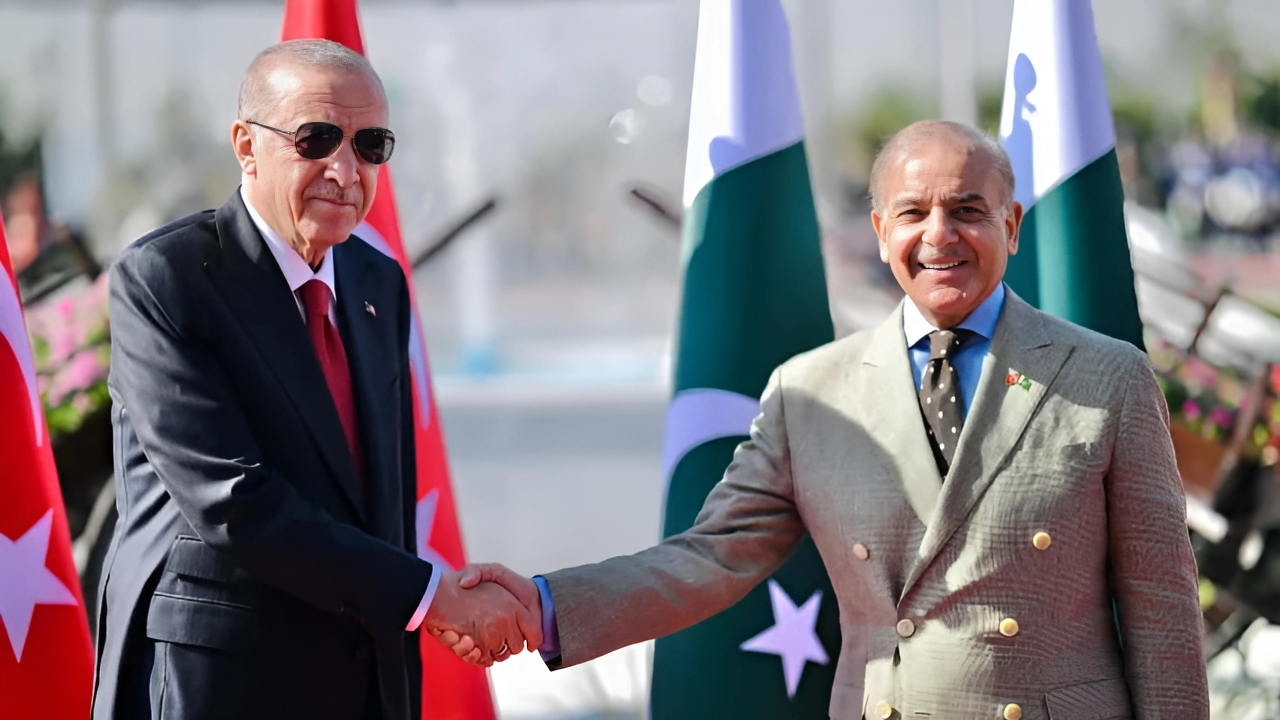
    Business communities in Pakistan and Turkiye might witness a surge in bilateral commercial activities following Turkish President Erdogan’s visit to Pakistan with his delegation. According to an official announcement, Commerce Minister Jam Kamal Khan met with Turkish Trade Minister Professor Dr Omer Bolat at the Turkiye-Pakistan business forum held in Islamabad.

    Reports reveal that officials from both countries outlined the importance of working on the current preferential trade agreement. Revisions to this agreement could remove commercial hurdles and red tape between the two countries, allowing business communities from both countries to reach their true potential.

    Jam Kamal and Omer Bolat considered improving the D8 Preferential Agreement. If the agreement undergoes positive changes, trade among its signatory countries could experience a significant boost.

    Pakistan’s economy could see large inflows in the form of foreign direct investment (FDI) from Turkiye if the agreement is improved. This is because Omer Bolat highlighted the eagerness of Turkish investors to park their funds in Pakistani ventures and businesses.

    However, FDI levels from Turkiye are not as high as they could be, as investors have reportedly faced significant issues when investing their money in Pakistan. This is likely to change as the Turkish delegation is attempting to boost economic ties between both nations.

    According to reports, the delegation’s trip to cash-strapped Pakistan will include the signing of 21 agreements. These agreements can significantly support domestic projects in important sectors such as infrastructure, defence, education, tourism, services, and IT.

    Turkiye’s investments in local businesses could allow Prime Minister Shehbaz Sharif’s Uraan Pakistan project to reach its targets. Uraan Pakistan aims to achieve $60 billion in annual exports from the IT, manufacturing, agriculture, mineral, manpower and blue economy sectors.

    Reports reveal that Islamabad outlined its unwavering commitment to support the opening of additional avenues of FDI into the country. Moreover, the federal capital reaffirmed its commitment to further ease doing business by ‘streamlining’ business activities.

    Jam Kamal mentioned the importance of the Special Investment Facilitation Council (SIFC) in the creation of a streamlined investment process for foreign countries. However, it might be beneficial for the commerce minister to look into Omer Bolat’s claims that Turkish investors are facing difficulties in investing their money in Pakistan.

    Reports claim that Turkiye is planning trade fairs that could boost Pakistan’s exports. The beneficiaries of these fairs are likely to be rice farmers that export Basmati rice, as rice of the aforementioned variety is not traded to the extent they could be under current trade agreements.

  • Pakistan’s textile sector faces challenges amid high costs, policy concerns

    Pakistan’s textile sector faces challenges amid high costs, policy concerns

    Pakistan’s largest export revenue generators are under threat as approximately 187 textile mills have shut down in Punjab. According to reports, a lack of sensible economic planning and flawed policies have trapped the textile sector in a quagmire.

    Economic analysts suggest that Pakistan’s textile industries, especially those in Karachi and Faisalabad, have the potential to grow rapidly. If policymakers focus on forming prudent policies for the sector, business owners in the industry could experience a revival.

    Many believe this to be imperative, as leaving textile mills to fail might result in serious drawbacks for Pakistan’s wider economy. There is merit to this claim as the textile sector brings in approximately 60 percent of export revenue and contributes about 8.5 percent to the Gross Domestic Product (GDP). The sector helps the cash-strapped economy to narrow the trade deficit.

    According to reports, many initiatives can be implemented to support textile millers in their hour of need. For instance, the state can assist the sector by introducing textile tax courts, funding research and development projects, and setting up development banks that specifically cater to the needs of the textile sector.

    Admittedly, the aforementioned initiatives require some level of monetary investment by governmental bodies. However, lawmakers in Islamabad could utilise their powers to assist the sector in a manner that will support it without deviating from their contractionary fiscal policy.

    Lawmakers could consider revising the energy costs that textile millers have to face. As per a Zone chairman of the All Pakistan Textile Mills Association (APTMA), high power costs are detrimentally impacting Pakistani textile millers’ ability to compete in the international market.

    According to reports, the zone chairman outlined how industries are being supplied electricity at approximately 39 rupees per unit. However, industries can actually be supplied electricity at a manageable 26 rupees per unit.

    The reason behind industrialists purchasing power at extortionate rates is the concept of adjusting capacity charges and line losses into the electricity bills of said industries. Analysts have commented on how it makes little intuitive sense for industrialists to cover line loss charges when power theft in industrial areas remains minimal.

    More concerningly, reports have revealed how commercial setups are facing power charges as high as 60 rupees per unit. Aside from industrial and commercial units bearing the brunt of high electricity costs, cotton farmers have started going out of business because of the textile sector’s increasing reliance on imported cotton.

    The reason why millers and ginners prefer to buy imported cotton is that it arrives duty-free in the country, while local cotton farmers are subjected to an 18 percent General Sales Tax (GST). If the economy is to be protected, Islamabad will have to mobilize resources to protect the textile sector and other ancillary industries attached to it.