Author: Ibraheem Sohail

  • PM’s meetings with Azerbaijan officials could bring in $2bn investments

    PM’s meetings with Azerbaijan officials could bring in $2bn investments

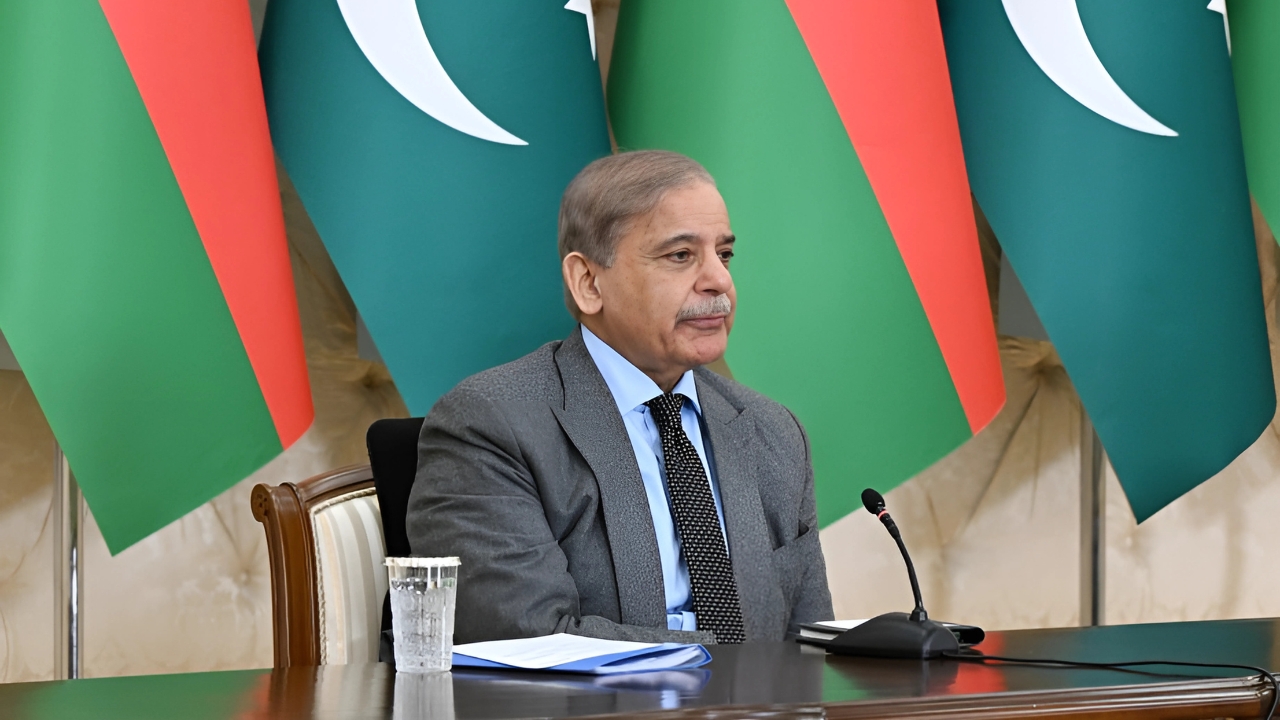
    Prime Minister Shehbaz Sharif discussed expanding bilateral trade with Azerbaijan’s President Ilham Aliyev. According to reports, a staggering $2 billion in investments could pour into Pakistan as a result of the boost in economic ties with the Central Asian country. 

    Along with the agreement to promote commercial activities between both economies, both premiers discussed supporting joint defence production ventures.

    In a conversation with Shehbaz Sharif, Ilham Aliyev reportedly outlined his willingness to visit Islamabad around April of this year. The reason for his planned visit is to formalise the agreed-upon investment arrangements officially.

    As per credible reports, Shehbaz Sharif oversaw the signing of a plethora of economic agreements, notably the Sale and Purchase of LNG cargoes related to the Master LNG Sale and Purchase Agreement.

    Moreover, officials from Pakistan’s Frontier Works Organization (FWO) and Pakistan State Oil Company (PSO) inked an agreement with Azerbaijan’s national State Oil Company. The aforementioned agreement pertained to bilateral cooperation on the Machike-Thallian Tarujabba White Oil Pipeline Project.

    Currently, bilateral trade value sits at a measly $40 million, which Shehbaz Sharif believes does not adequately display the true strength of the ties between both ‘brotherly’ countries.

    On the occasion, Prime Minister Shehbaz underscored the need to enhance the bilateral trade, as the current trade of $40 million hardly reflected the strong relationship between the two brotherly countries. He spoke to the Pakistan-Azerbaijan Business Forum in Baku, discussing the need to expand commercial activities between both countries.

    Moreover, he thanked Ilham Aliyev for removing import tariffs on Pakistan’s basmati rice. The removal of the aforementioned import duties spells great news for Pakistani farmers as they could now secure lucrative export contracts with Azerbaijan-based importers.

    This could help plug the gap in the cash-strapped nation’s trade deficit, which has historically remained high. Additionally, a rise in export revenues could help keep the rupee stable as it has over the last year.

    Shehbaz Sharif highlighted that tackling high tariffs could allow for trade to reach respectable levels. However, his claim about trade volume rising by a colossal $1.96 billion seems extremely ambitious. For reference, the rise represents an improvement of 4,900 percent from the current bilateral trade position.

    However, he claimed that it was possible if relevant stakeholders put their ‘acts together’. Four Memorandums of Understanding (MOU) have already been signed, marking the start of a potential rise in trade volume. The majority of the MOUs pertain to the oil sector.

    Under one of the MOUs, Pakistan’s northern areas will be equipped with pipeline infrastructure as currently, under 33 percent of total oil is transported via Pipelines in Pakistan.

  • PIA flights to UK likely to resume soon: reports

    PIA flights to UK likely to resume soon: reports

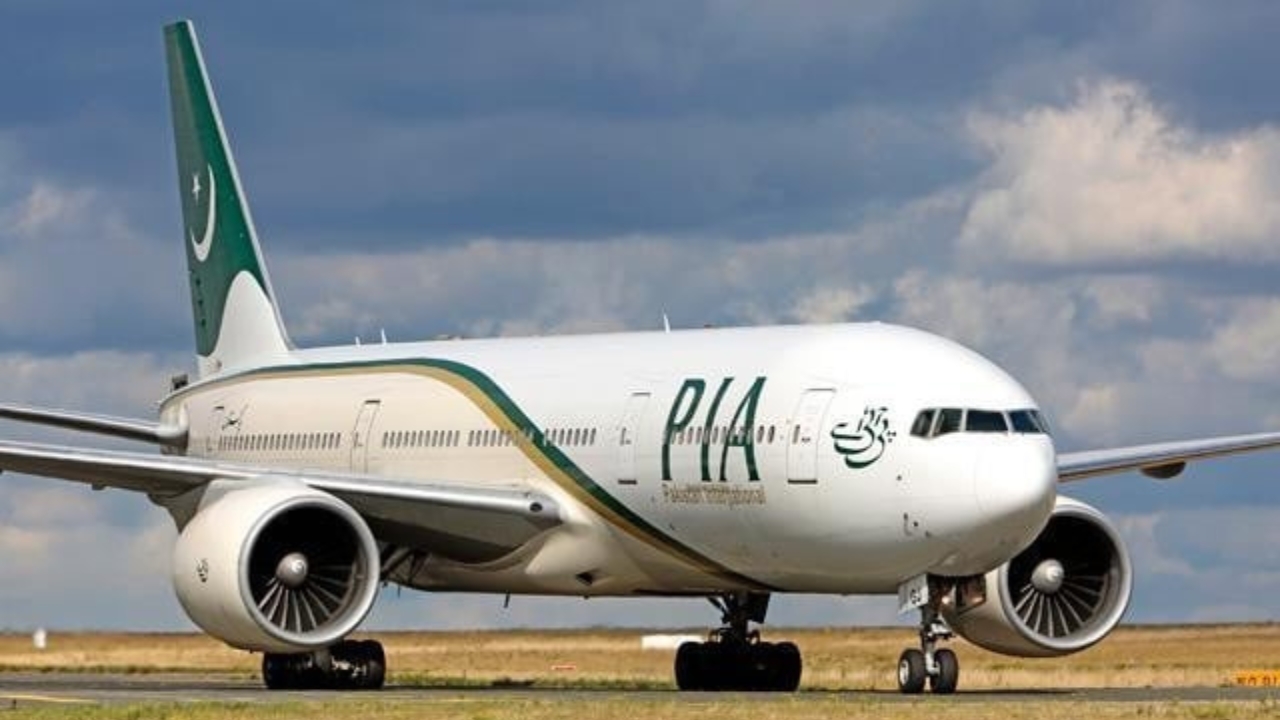
    After a nearly five-year ban, the UK aviation authority may lift its restrictions on Pakistan International Airlines (PIA), allowing direct flights to UK airports. As per reports, officials from PIA have already started planning the reopening of the national carriers’ Islamabad-Manchester route from March 28.

    While PIA is reportedly set to receive the greenlight to resume flight operations, the official decision is still in the pipeline and will become official once UK regulators clear PIA’s status. In early January 2025, PIA resumed operations in Europe after flight PK-749 took off from Islamabad bound for Paris, carrying 330 passengers and 14 crew members.

    The moratorium on PIA’s services to Europe came about as a direct consequence of a post-crash speech by then-minister Ghulam Sarwar, who had claimed without any evidence that 40 percent of PIA’s pilots were flying with fraudulent licenses. Mr. Sarwar’s speech detrimentally impacted the airline’s credibility, and the airline lost its goodwill with customers, which it had earned over the years.

    Nevertheless, after PIA flight 8303 crashed in Karachi, the company lost the right to fly to various high-traffic destinations such as the United States, Canada, European Union (EU) and notably, the UK. However, PIA seems to be coming alive again as countries are beginning to trust PIA’s safety measures once again.

    As per reports, a transport safety review board from the UK is set to discuss PIA’s aviation status by the middle of March. PIA, after implementing various reforms to update its security measures, strongly believes that the board will remove the suspension that has kept PIA’s aircraft off of British airports since 2020.

    The national carrier is reportedly ready to operate flights as soon as approval is granted. According to a PIA spokesperson, airline executives are waiting for an official notification from the UK’s Department of Transport.

    If approved to fly to the UK, PIA’s chances of getting privatized might rise significantly. This is because bidders previously did not see the airline making significant revenues. However, Pakistan-UK routes are extremely lucrative given the size of the Pakistani diaspora residing within the UK. This could boost the profitability of the company, making it seem more attractive to potential buyers.

    Furthermore, if PIA gets the green light, Manchester will not be the only city the airline will fly to. According to reports, while the national carrier will fly to Manchester during the initial phase, it plans to quickly resume operating flights to London and Birmingham.

    To prepare for the potential flights, airline officials have reportedly issued quotations for catering, crew accommodation, and ground handling.

  • Pakistan-IMF talks could bring $1.2 billion in climate funding

    Pakistan-IMF talks could bring $1.2 billion in climate funding

    A delegation from the International Monetary Fund (IMF) has begun reviewing Pakistan’s request to receive approximately $1.2 billion in funding to counter climate issues. Discussions started on Monday in the federal capital, Islamabad, and will extend into next month.

    According to reports, the IMF’s delegation is expected to collaborate with the ministries of climate change, water resources, planning, petroleum and finance. Moreover, disaster management agencies and provincial governments will also get a chance to discuss outstanding matters with the IMF’s technical team.

    Mahir Binici, the IMF’s resident representative in Islamabad, commented on the duration of the discussions. According to Mahir, Islamabad-IMF talks on the issue of additional funding are expected to take approximately three weeks.

    Reports claim that the IMF is expected to conduct a policy review next week to evaluate how well Pakistani authorities have performed as per guidelines set under the existing seven-billion-dollar Extended Fund Facility (EFF). The review team for the EFF program is expected to arrive by the middle of March for discussions.

    This team will also assess Islamabad’s request to aid the cash-strapped country by creating a Resilience and Sustainability Facility (RSF). RSF funding is allocated to countries that dedicate efforts to enact ‘high quality’ reforms which will foster resilience against climate catastrophes.

    This spells great news for Pakistan – A country plagued by violent earthquakes and destructive flooding. Furthermore, the terms of the loan are beneficial as it has a 10-year grace period while being much cheaper than EFF loans.

    Authorities have already suggested that natural disaster-prone countries invest one percent of their gross domestic product (GDP) in building resilience against climate issues. According to the IMF, the aforementioned investments could mitigate 33 percent of the negative growth impact of a violent natural disaster.

    The Ministries of Planning and Finance have reportedly made arrangements to complete the Climate-related Public Investment Management Assessment to help prepare future budgets under IMF and World Bank-prescribed guidelines.

    The Ministries of Planning and Finance have reportedly made arrangements to complete the Climate-related Public Investment Management Assessment which will prepare future budgets under IMF and World Bank-prescribed guidelines.

    Many criticise authorities because they believe Pakistan is losing its grip on its own fiscal policy because of the debt burden the economy carries. Forming federal budgets after receiving the green light from international lenders does little to dispel the aforementioned criticism, instead validating it.

    Lawmakers recently proposed an electricity tariff cut. However, analysts highlighted how the IMF blocked a similar proposal in the near past. However, while many do not consider loans to be a viable solution in the long term, there is little cash-strapped Pakistan can do under existing economic circumstances.

    Nevertheless, Pakistan has been successful in achieving most of the prescribed targets which international lenders had set for it. As per reports, a major requirement that remains incomplete surrounds Islamabad’s amendments to the Sovereign Wealth Fund (SWF).

  • IMF all-praise for govt’s efforts towards corruption assessment

    IMF all-praise for govt’s efforts towards corruption assessment

    The International Monetary Fund (IMF) has commented on Islamabad’s dedication to the Governance and Corruption Diagnostic Assessment (GCD), appreciating the federal government’s efforts and planning to continue the ongoing partnership with the cash-strapped nation.

    According to reports, the IMF recently sent out a scoping mission to Islamabad to go over the foundations of the GCD at the behest of the federal government. The mission was led by Joel Turkewitz, senior counsel at the IMF’s legal department, who was in Islamabad from February 6 to 14.

    The mission, IMF said, aimed to study corruption and governance weaknesses surrounding six core state functions. Reports revealed that these core state functions were anti-money laundering and countering the financing of terrorism (AML-CFT), central bank governance and operations, financial sector oversight, market regulation and rule of law.

    IMF’s official statement said that its delegation collaborated with several officials and entities from Pakistan, including the auditor general, Securities and Exchange Commission of Pakistan (SECP), Finance Division, the Federal Board of Revenue (FBR), Supreme Court of Pakistan (SCP) and the Ministry of Law and Justice.

    However, reports said, IMF’s interactions were not limited to state entities only as it also collaborated with business associations and global partners.

    Despite the global lender’s appreciation, Pakistan is not yet in the clear as IMF’s team is set to once again visit Pakistan within the year to collect additional information regarding weaknesses negatively impacting the country’s governance and corruption metrics.

    In 2024, Pakistan scored an abysmal 27 points on the corruption perceptions index. For reference, the index ranges from 0 to 100 with a score of 0 indicating rampant corruption and 100 reflecting the complete absence of corruption from institutions.

    According to data, Pakistan’s ranks as the 135th most corrupt country in the world. This helps explain the IMF’s interest in reforming the country’s systems to pave the way for a fairer and more transparent system. The IMF also intends on exploring the possible economic effects of these vulnerabilities in their assessment.

    Currently, two IMF “policy-level” delegations are set to visit Pakistan. The first of these will go over the climate resilience project that could unlock $1 billion in funding for the project. The other delegation will visit the cash-strapped country to review the $7 billion Extended Fund Facility Program that Pakistan is currently a part of.

    The IMF is also supposed to review Islamabad’s proposal to slash the extortionately high power tariffs. However, a similar proposal was recently rejected by the IMF.

  • Popular ‘illegal’ cigarette brands costing govt Rs300 billion a year: report

    Popular ‘illegal’ cigarette brands costing govt Rs300 billion a year: report

    An Institute for Public Opinion Research (IPOR) study has revealed that a staggering 54 percent of cigarettes brands in the country were operating illegally, resulting in the national exchequer failing to realize approximately Rs300 billion in taxes and duties per annum.

    The IPOR study revealed that of the 413 cigarette companies in Pakistan, just 19 of them were “fully compliant” with the rules and regulations of the Track and Trace System (TTS) while only 13 cigarette brands held the partially compliant status.

    Cigarette companies are mandated by the law to display Graphical Health Warnings (GHW) on their packaging, however, a staggering 95 brands failed to feature such warnings. Moreover, cigarette packaging from 286 companies does not possess either the tax stamp or the GHW showing their blatant disregard for the law.

    GHW are usually considered to lower cigarette demand and consumption that spells bad news for vendors. The fall in demand stems from the warnings on the packaging making cigarette consumption less appealing — since they clearly report the risks associated with smoking.

    An executive director at IPOR outlined how the survey studied cigarette sales at over 1,500 points of sale (POS) in 19 districts. TTS was introduced in 2021 as a measure to crackdown against the illegal cigarette trade. However, the measure has proven to be largely ineffective.

    More concerningly, the situation has deteriorated in the absence of any meaningful law enforcement action against non-compliers. As of 2009, all cigarette packaging was supposed to prominently display GHW’s, but cigarette companies continue to supply their cigarettes in packaging that does not comply with these regulations.

    In the local market, many continue to buy ‘khullay’ cigarettes nullifying the effect of warning labels. Moreover, it is tough to regulate such sales especially in a cash-based economy allowing vendors to get away with tax evasion.

    These companies are cheating the national exchequer out of funds that it could have received. A whopping 332 companies were found to be in violation of the legal minimum price of cigarettes (Rs162.25 per packet) often selling packs for a measly Rs40 per pack. This results in large revenue losses for cash-strapped Pakistan.

    Non-compliance is much worse in rural localities as opposed to urban ones. Furthermore, it is tough to crackdown on the sale of cigarettes that are smuggled in, leaving tax authorities with little information on where their efforts should be focused first.

  • Drop in electricity prices likely as govt plans slashing tariff

    Drop in electricity prices likely as govt plans slashing tariff

    Islamabad has presented a plan aiming to slash the baseline power tariff by eight to 10 rupees per unit. As per reports, this plan was introduced by the federal government in an attempt to address rising concerns regarding the growing levels of circular debt.

    Through this new plan, Islamabad will be able to reduce the debt stock by a staggering 130 billion rupees via repayments. According to reports, these repayments will create some financial breathing room, allowing authorities to provide consumers with cheaper electricity.

    Moreover, this plan is set to cut down on current financial losses which the electricity sector is facing. The repayment of debt allows the debtor entity to face lower interest payments in the long run, which ‘saves’ money. The government aims to pass on these savings to the general public in the form of tariff cuts.

    Pakistani industries have been struggling because of the surge in electricity prices. Data reveals that power costs have surged by a colossal 155 percent since 2021 because of the government introducing extortionate hikes in electricity tariffs.

    Islamabad started levying the aforementioned taxes to help it attain financial support from the International Monetary Fund (IMF). Over the years, however, it has detrimentally affected many industries, especially Pakistan’s breadwinner industry: Textiles.

    The textile sector, which is responsible for bringing in over 50 percent of the cash-strapped nation’s export revenues, had been relying on Captive Power Plants (CPPs) instead of the national grid because of the difference in price. However, despite the negative impact of high electricity tariffs, many analysts agree that it was the need of the hour since Pakistan needed immediate assistance to prevent imminent default on its outstanding liabilities. 

    According to reports, an IMF review mission is expected to visit Pakistan at the beginning of March 2025. Lawmakers intend to present the plan to reduce electricity costs to IMF executives.

    This is not the first time Islamabad has attempted to provide relief to the general public from the sky-high electricity bills. The government’s previous proposal to provide respite by slashing electricity prices was met with rejection from the IMF which makes many analysts wonder if this proposal will be approved.

    Borrowing from international lenders frequently comes with restrictions resulting in the government losing the power to make sweeping changes to fiscal policy. The IMF blocking power cost cuts partially explains the historical distaste the general public has for the international lending agency. 

    While Islamabad’s proposed tariff cuts may never be realised, consumers and businesses alike did receive a two rupee relief in electricity rates for January 2025.

  • PM reviews measures to meet $60bn export target

    PM reviews measures to meet $60bn export target

    In an effort to propel Pakistan out of the economic quagmire it finds itself in, Prime Minister (PM) Shehbaz Sharif outlined measures that could boost export revenues to a staggering $60 billion within five years. As per reports, this development came about as the PM chaired a meeting on current measures set to increase exports.

    He has directed his economic team to develop reforms surrounding tariff structures, which could help propel the economy through export growth. Current tariff rates are extortionate, and according to PM Sharif, they should be reduced to support transnational commercial activities.

    However, if the cash-strapped nation is to implement such tariff reforms, the national exchequer might witness a fall in its tariff income inflows in the short run. This is because tariffs and duties on imports allow Islamabad to collect revenues, which will allow the country to augment its fiscal budget.

    Moreover, a reduction in tariffs on imports could result in pressures on the rupee which might cause a devaluation of the national currency. This will be a severe setback for industries and the government alike, as the rupee has stayed relatively stable over the past year, ushering in an era of prosperity.

    PM Shehbaz Sharif outlined that the new tariff reforms should not hurt the economy as they should serve to boost industrial production levels. This spells great news for industries that have imported goods as a major input, as cheaper imports may allow them to produce their own products more cost-effectively, thus boosting competitiveness among domestic sectors.

    Additionally, Shehbaz Sharif reiterated the importance of the IT, agriculture and service sectors. Export-led economic growth is the mantra of the Prime Minister’s Uraan Pakistan project.

    In a bid to boost exports, he issued directives to reform the governance process surrounding the Export Development Fund for the Development of Export Industries. If his directives are followed and implemented, Uraan Pakistan might just leave the drawing board and make tangible improvements to the economy.

    During the meeting, the PM was updated on the steps being taken to reform the Ministry of Commerce (MoC) and meet Uraan Pakistan’s export target of $60 billion within five years. The MoC has been exerting itself to boost exports over the past year.

    Jam Kamal Khan recently set up Pakistan’s first-ever single-country ‘Made in Pakistan’ exhibition in Jeddah. According to reports, more such exhibitions are on the horizon, which may allow Pakistani exporters to secure lucrative export contracts.

  • Gold’s joyride speeds uphill, reaching Rs308,000 per Tola

    Gold’s joyride speeds uphill, reaching Rs308,000 per Tola

    The seemingly never-ending joyride of gold prices upward continues as gold prices recently summited a new peak of 308,000 rupees per tola – after experiencing a 3,800 rupee price spike. Moreover, reports reveal that the 10-gram rates have surged to 264,060 rupees.

    Reports reveal that central banks across the world are making an active effort to build up their gold reserves, which has significantly contributed to the astronomical rise in gold prices that have been experienced recently.

    Towards the end of 2024, central banks collectively purchased a staggering 333 tons of the precious metal, which marked a 54 percent year-on-year rise in central bank gold purchases. Notable purchases have been witnessed from the People’s Bank of China, the National Bank of Poland, and even The Reserve Bank of India.

    The logic behind the rise in gold prices because of the aforementioned reasons is hidden in the market forces of supply and demand. Since large entities such as central banks are purchasing the commodity in bulk, it raises demand, whereas supply simply can’t keep up – as exploration and mining operations are time-consuming.

    While central banks remain the largest driver of gold demand, smaller independent investors have also invested in the commodity. Speculative forces suggest that prices will surge past $3,000 per ounce.

    According to the All Pakistan Sarafa Gems and Jewellers Association (APSGJA), international gold prices are facing inflationary pressures because of US President Donald Trump’s threats to impose an extortionate 25 percent tariff on certain trade goods and commodities. This has reportedly resulted in gold prices rising by $34 since Tuesday to reach $2,944 per ounce.

    Rising tariffs reduce the demand for the goods and services of the country against which tariffs are being levied. As such, the value of its currency falls accordingly because of the fall in demand for its goods. People are purchasing gold in order to safeguard their cash holdings from depreciating in value because of tariffs.

    For reference, on 1 January 2024, 10-gram gold and one-tola gold rates reportedly stood at a conservative 188,357 rupees and 219,700 rupees. However, geopolitical and economic factors have caused prices to surge by 75,703 rupees (10-gram) and 88,300 rupees (one tola).

    While rising gold prices spell great news for those who jumped on the bandwagon, when it was still slow, they are detrimental to certain businesses. For instance, chairman Mohammad Arshad of the All Pakistan Jewellers Manufacturers Association has revealed a severe decline in jewellery purchases as prices continue to rise.

    As per reports, small to medium gold jewellery makers have not been receiving orders and sit idle. If this situation persists, it could push a large number of business owners out of the jewellery-making industry.

  • SOE losses soar to Rs851bn in 2023-24: report

    SOE losses soar to Rs851bn in 2023-24: report

    A shocking report was released on Wednesday by the Ministry of Finance (MoF) revealing that total losses of State Owned Enterprises (SOE) stood at a staggering 851 billion rupees during 2023-24. Moreover, the combined debt stock of SOE’s sits dangerously high at 9.2 trillion rupees.

    According to financial experts, the accumulated debt stock is approximately equal to the entirety of revenues generated by the Federal Board of Revenue (FBR) which reflects poor financial management on the part of the directors who run these SOEs in question.

    These findings came about from the Aggregate Annual Report of SOE’s which is compulsory under the current International Monetary Fund (IMF) programme which cash strapped Pakistan is a part of. As per the MoF, a few public entities generated meagre profits which were then invested in Pakistan’s Sovereign Wealth Fund (PSWF).

    However, the gains from these investments were not enough to offset the losses causing the MoF to report a whopping net aggregate loss of 521.5 billion rupees. Moreover, the entities that generated the profits were left with strained cash flows as their money was used to assist loss making firms.

    Collectively, the worst contributors to the colossally high loss value were companies in the power sector. These companies routinely cause losses which the general public has to shoulder. Islamabad is well acquainted with this fact as SOEs from the power sector significantly hurt the national exchequer.

    However, the single largest loss was experienced because of the National Highway Authority (NHA) which stood close to 300 billion rupees. Combined, the SOEs wiped out 2.5 trillion rupees in economic value.

    These losses were experienced despite a surge of 5.26 percent in the total revenues of the aforementioned SOEs. However, a closer look at their finances reveal that they faced a total net loss surge of 89 percent which translates into 13.5 trillion rupees. The losses were contained via federal grants and subsidies which reduced the aggregate loss value by an impressive 14 percent.

    Many analysts consider privatisation to be a feasible avenue to save the national exchequer from the burden of inefficient SOEs. This might be the only way to effectively follow a contractionary fiscal policy to appease international lenders – as this will show creditors that Pakistan is willing to stringently follow austerity measures.

    It is not yet clear how privatisation will be received yet as the book value of SOE assets grew by an enviable 6.37 percent on a year on year basis to 38.434 trillion rupees. On the other hand, Return on Equity (ROE), is negative sitting at an abysmal value of negative 0.5 percent. However, it is likely that the value could turn green once a profit maximising firm acquires these SOEs.

  • Sugar to sell at Rs130/kg during Ramzan

    Sugar to sell at Rs130/kg during Ramzan

    Members of the Pakistan Sugar Mills Association (PSMA) have decided to supply sugar to customers at a subsidized rate of just 130 rupees per kg throughout Ramzan. As per reports, this sugar will be available to the general public at specific sale points across Pakistan.

    The sugar industry has pledged to aid federal and municipal authorities in ensuring economical sugar prices for the public during the holy month of Ramzan. According to a spokesperson from PSMA, sugar prices are determined by market forces such as supply and demand. However, a handful of speculators spread false information to distort the market and artificially inflate prices for personal monetary gain.

    This practice causes financial harm to consumers, farmers and the wider economy. In many cases, sugar is not a final good, as other industries use the commodity as an input in their production processes. The confectionery industry can serve as an example of this phenomenon, and it faces rising input costs when sugar suppliers manipulate the prices, causing profit margins to drop considerably.

    For the aforementioned reasons, PSMA has implored the government to take stringent action against such individuals or entities. If authorities can successfully crack down on such activities, the sugar market might be stabilised.

    Sugar exports have been prohibited by authorities during the ongoing crushing season, which has resulted in local sugar prices dropping compared to last year’s prices when sugar exports were uninhibited. According to reports, industrialists claim that domestic sugar manufacturers produce some of the cheapest sugar in the international market despite a multitude of factors working against them.

    These factors are reportedly extortionate taxation rates, high production costs and low sugar recovery rates. Despite the odds stacked against domestic producers, the cost of imported sugar exceeds 200 rupees per kg.

    The reason behind Pakistan’s ‘competitive’ prices is supply-side issues facing the world’s top sugar industries. For instance, Brazil, one of the leading exporters of commodities, is experiencing crop shortages. Similarly, sugar crop yields in India also face issues.

    Given the global developments surrounding sugar production, it might have been beneficial for Pakistan to export the commodity instead. While the restrictions on sugar exports could be chalked up as a missed opportunity for cash-strapped Pakistan, exports would have undoubtedly caused prices to rise during Ramzan.

    Sugarcane manufacturers have witnessed sugarcane prices rise beyond last year’s Minimum Support Price (MSP) to a staggering 600 rupees per maund. Coupling increasing prices with the high interest rates which mills have to face has resulted in an explosion in the cost of sugar.