Author: Ibraheem Sohail

  • Surge in private sector lending as banks issued credit to avoid taxes

    Surge in private sector lending as banks issued credit to avoid taxes

    A record number of loans were issued to the private sector within the first half of fiscal year (FY) 2024-25, with the textile sector receiving the majority of this credit.

    According to reports, the textile sector recieved the majority of this newly issued credit.

    Despite being the largest borrower, the textile sector revealed that 40 percent of spinning mills have shut down. The halting of operations cannot be attributed to the lack of credit alone, as government policies are also responsible.

    According to the All Pakistan Textile Mills Association (APTMA), the closing down of approximately 40 percent of spinning mills was for a multitude of reasons, one of them being the reported 18 percent sales tax on inputs, which is considered the primary reason for the closures.

    Furthermore, the association outlined the dire effects of closures on Pakistan’s economy, as exports will be hurt. There is merit to this claim as the textile sector currently brings in the lion’s share of export revenues for the cash-strapped country.

    As per reports, the flow of loans from banks to non-financial institutions was the highest during the first half of FY 2025 as opposed to bank loans during the last three years.

    Analysts are speculating that the result of the loan injections will become apparent during the next 1-1.5 years. The time duration, however, is not explicitly specified as financial experts are not aware of where the loan amounts have been invested.

    Banks have been lending vast amounts of credit as they aim to avoid an additional tax of 15 percent which Islamabad was keen to impose. Banks were facing this tax as a result of low Advance-to-Deposit Ratios (ADR), which they had to correct by December 2024 to 50 percent.

    ADR refers to the fraction of funds banks have lent out to the private sector. Low levels of credit being extended to the private sector were hampering the growth of businesses, which could translate into a stagnation of the economy.

    Another reason for the rise in the issuance of loans is the slashing of interest rates by nine percent since June 2024. Reports reveal that banks have injected a staggering 1.467 trillion rupees into non-bank financial institutions (NBFI). The corresponding amount for the same period last year stood at just 1.398 trillion rupees. This translates into a rise in the issuance of loans by approximately five percent.

    During the first half of FY 2025, conventional bank lending reached 722 billion rupees, while Islamic Bank lending crossed 625 billion rupees.

    Islamabad has been borrowing less than the maturity amount as per reports. This has allowed for funds to be allocated to private-sector projects instead.

  • ‘Uraan Pakistan’: Ahsan Iqbal stresses boosting private sector confidence

    ‘Uraan Pakistan’: Ahsan Iqbal stresses boosting private sector confidence

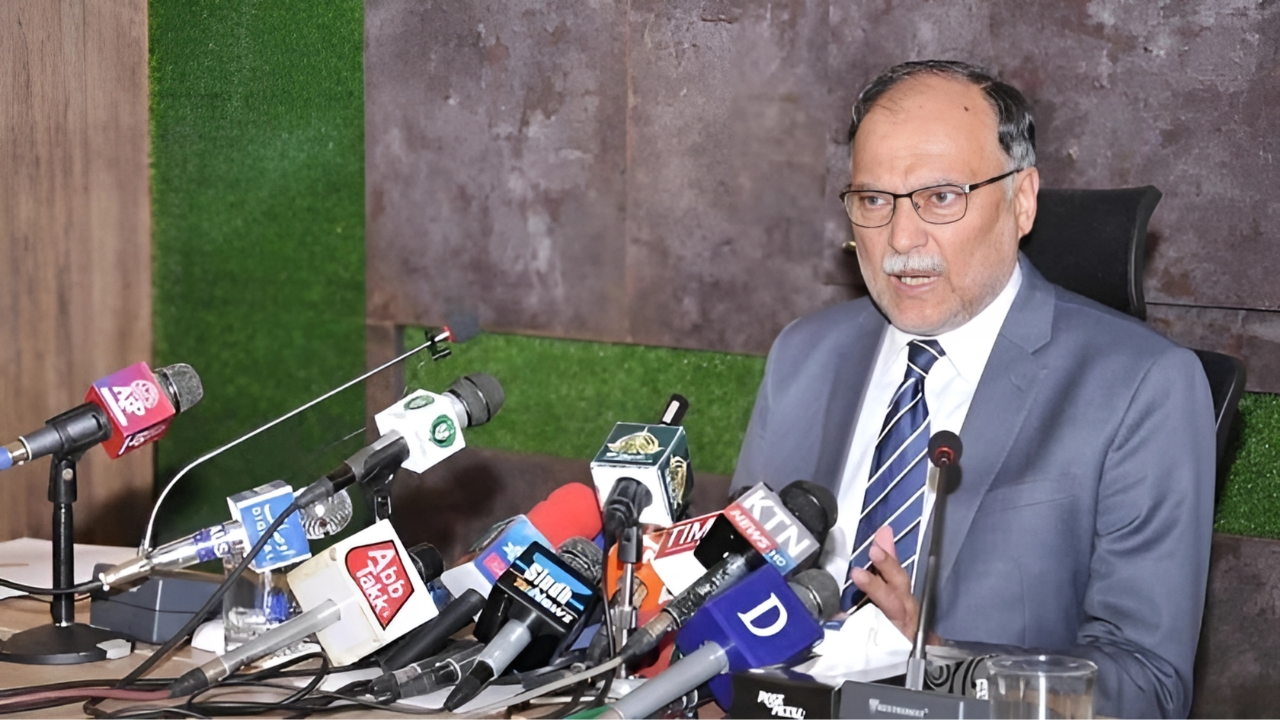
    Planning and Development Minister Ahsan Iqbal met with members of the Overseas Investors Chambers of Commerce and Industry. He outlined the policies Islamabad is committed to following to assure foreign investors of Uraan Pakistan’s success.

    In a press conference, the minister highlighted how three similar plans had failed in the past because of political instability and inconsistency in following the plan’s roadmap. He announced that to make Uraan Pakistan a success, it is imperative to create a politically stable environment where investors do not fear ‘policy reversals’ every one to two years.

    He further highlighted the success of the federal government’s macroeconomic policies, which he claims brought about economic stability. Economic indicators lend credibility to his claim as inflation rates remain largely controlled while the GDP is beginning to grow again.

    He also commented on how fluctuating exchange rates in previous periods restricted investors from even carrying out investment feasibility studies. However, he outlined how foreign investors were now returning to Pakistan because of the stability which the rupee has displayed over the past year.

    The Minister highlighted Islamabad’s intent to initiate a phase of economic growth. He pointed out that growth would only be possible if the government actively designed policies which would restore the confidence of the private sector.

    Informing the press of the government’s progress, Ahsan Iqbal announced that a mechanism has been set up where a group will actively review problems faced by the business community and investors every month. He also said that businesses will be informed of policies and steps will be taken to remove any ‘bottlenecks’ that investors face.

    Stressing the importance of public-private engagement, he said that this plan would be the first step towards Pakistan’s larger goal of attaining economic growth.

    Ahsan Iqbal mentioned that the government was looking into ways to leverage Pakistan’s low cost of production to “accelerate export-led development”. He reiterated one of Islamabad’s objectives: To double exports in the next five years.

    Currently, Pakistan has a low average national income relative to developed economies, allowing Islamabad to attract significant investments. For instance, South Korea recently expressed its interest in shifting its industrial base from East Asia to Pakistan.

    With the World Bank’s 20-billion-dollar loan package, Uraan Pakistan has the financial backing it needs to bring about actual economic change. Funding from supranational institutions and Ahsan Iqbal’s commitment to fostering an environment conducive to business growth might allow Islamabad to follow Uraan Pakistan’s roadmap.

  • Pakistan records massive agricultural export growth amid rising local prices

    Pakistan records massive agricultural export growth amid rising local prices

    The agricultural sector exported a large volume of raw food during the first half of the current Fiscal Year (FY) 25. According to reports, food exports surged to $3.96 billion from July to December 2024-25, representing a 13.83 percent growth from the same period last year.

    Despite prices of raw food rising significantly, food export volumes have grown consistently over the past 17 months, with rice exports being the main driver of agriculture-based export revenue.

    However, local consumers are suffering as they have to pay higher prices amid the existing gaps between the level of supply and demand. Recent trade agreements with Bangladesh have raised the level of demand for agricultural produce in Pakistan, causing prices to rise.

    Reports have revealed that rice exports grew by 14.5 percent on a year-on-year basis to settle at a respectable $1.87 billion. Data from the Pakistan Bureau of Statistics revealed that higher rice shipments boosted food exports as farmers exported a staggering 416,491 tons of basmati rice alone during the first half of FY 25.

    This represented a growth of 30.62 percent in the export volume of the commodity. Basmati rice also brought in a staggering $433 million, which translates into an 18 percent growth in export value.

    Similarly, non-basmati rice displayed positive growth in terms of export value and quantity. As per reports, the export quantity of non-basmati rice grew by 17.35 percent to settle at 2.643 million tons. Rice export values over the corresponding period rose by approximately 14 percent, causing export revenues from the commodity to surge past $1.4 billion.  

    Pakistani exporters’ largest clients are markets in the European Union and the United Kingdom. However, with Commerce Minister Jam Kemal Khan working tirelessly to boost export revenues, new avenues for bilateral trade have opened up, resulting in Pakistani rice being sold in Bangladeshi markets as well.

    While this spells great news for Islamabad, as export revenues stabilise the exchange rate, consumers are likely to suffer. As per reports, prolonged export growth has caused the average price of basmati rice to rise from just 150 rupees per kg to an astronomical 400 rupees per kg.

    Experts are predicting that the gap in Pakistan’s trade deficit is expected to improve as rice is not the only commodity that has experienced a rise in export volumes. During the first half of FY 25, the volume of sugar exports rose from just 33,101 tons to a whopping 632,804 tons, representing a colossal 1,811 percent increase in sugar exports.

  • FBR orders cars costing taxpayers billions, parliamentary panel calls for cancellation of order

    FBR orders cars costing taxpayers billions, parliamentary panel calls for cancellation of order

    A Parliamentary panel has asked Prime Minister Shehbaz Sharif and Finance Minister Muhammad Aurangzeb to immediately halt the purchase of cars for the Federal Board of Revenue (FBR). The panel has criticised the purchase as ‘scandalous’ because the FBR is to be rewarded despite being responsible for a revenue shortfall of approximately 384 billion rupees in Fiscal Year (FY) 25.

    The purchase aims to acquire over one thousand motorcars for FBR officers to improve their operational efficiency. The request for the purchase of 1,010 cars was made by FBR chairman Rashid Mehmood Langrial and was approved by Shehbaz Sharif.

    In a meeting presided over by Saleem Mandviwalla of the Pakistan People’s Party (PPP), the Senate’s Standing Committee on Finance implored both Shehbaz Sharif and Muhammad Aurangzeb to reverse the purchase orders which the FBR had made. Reports reveal that the tax watchdog had given the order to a single car assembler without including any other manufacturers via a bidding process.

    Critics have pointed out that the purchase agreement seems suspicious, while the Standing Committee has said that Islamabad should stop so that the federal government can be spared from further ‘embarrassment’.

    The issue was initially brought to light by Senator Faisal Vawda, who lambasted the purchase order as the FBR had displayed poor performance in its duties. According to reports, Vawda said that the purchase of cars, which will cost the national exchequer a staggering six billion rupees, could only be justified if the FBR could recoup at least half of the tax shortfall of 384 billion rupees.

    He said that FBR officials only deserve the cars if they can cut down on the revenue shortfall and should be penalised instead of rewarded if they fail to do so. The senator even went so far as to call the whole purchase agreement ‘a scam’ as only Honda Atlas had been considered.

    He pointed out how the purchase order and approval from the Economic Coordination Committee (ECC) were issued on the same day. According to Faisal Vawda, this indicates the possibility that no other car assembler had even been considered, let alone been given the opportunity to bid for the contract.

    Senator Vawda lamented the purchase, saying that the “doors to corruption have been opened”. This comment was passed as he explained how Toyota Indus had been offering a lower rate with greater features to the government, such as greater fuel efficiency along with a longer after-sale warranty.

    According to reports, the FBR decided to purchase from Honda as they were only allowed to purchase vehicles up to 1300cc, while Toyota’s cars were 1328cc. He also remarked how the FBR had not even considered other car assemblers, such as Nissan and Hyundai.

  • Business owners raise alarms over rising port charges at Karachi Port

    Business owners raise alarms over rising port charges at Karachi Port

    Business owners from numerous industries are raising concerns regarding rising port charges at Karachi Port Trust (KPT). According to reports, the Minister for Maritime Affairs, Qaisar Ahmed Shaikh, asserted that the government will ensure that port operations remain cost-effective.

    The Minister received these concerns in a meeting he presided over in Islamabad on Wednesday. He commented on Islamabad’s commitment to creating an atmosphere conducive to business and economic growth.

    He conceded that the cargo charges at the port were indeed rising and outlined how important it was to reduce the running costs of port operations. Qaisar Ahmad also highlighted how important cost-effectiveness was in ensuring that Pakistan’s trade operations remain competitive.

    Both the Chambers of Commerce and Industry hosted the meeting after receiving numerous complaints regarding the high port charges at KPT. Reports revealed that yarn traders and other business associations outlined the rising cost of doing business in the country because of rising charges.

    Various government officials attended the meeting and agreed on the need to mitigate the financial burden that business owners were facing. The complainants commented on how the higher port charges were reducing their export competitiveness while also detrimentally impacting importers because the higher prices cut into their profit margins.

    The meeting focused on revising port tariffs to make sure that KPT’s costs are in line with those charged by other ports in the region. Officials also expressed the need to reduce delays at the port while increasing operational efficiency at the port, as per reports.

    KPT officials at the meeting revealed information which implied that they were likely not to be blamed for the higher costs. KPT-operated berths have lower cumulative charges compared to other berths at Karachi Port, which are operated by foreign parties. Currently, Dubai Port operates one of the two berths at Karachi Port, while KPT manages the other.

    KPT officials also asked the complainants to elaborate on the issues they faced, likely to determine which side was to be blamed for the higher costs. However, reports claim that business owners who attended the meeting, most of them via a digital link, were not able to clarify which berths were charging them higher fees.

    Business owners, however, will send additional details of their complaints to the ministry. This will likely give them enough time to figure out and update their complaints to include which berths their cargoes have been docking at.

    According to reports, however, the KPT delegation agreed to continue to provide high-quality service to their customers while also rationalising port charges.

  • Crackdown on black money: FBR’s push for real estate tax reforms

    Crackdown on black money: FBR’s push for real estate tax reforms

    Islamabad is cracking down on the use of black money in real estate dealings. Reports confirmed that the National Assembly Standing Committee on Finance and Revenue supported the Federal Board of Revenue (FBR) in this endeavour.

    Authorities have formed a sub-committee to discuss the proposed tax amendment bill with all the stakeholders. The meeting between the committee and the FBR was chaired by MNA Naveed Qamar, who reviewed the bill. He formed the sub-committee to ensure the resolution of any outstanding issues between the FBR and relevant stakeholders.

    The sub-committee will get the Revenue division to work with the Association of Builders and Developers (ABAD) to iron out a timeline for the application of the bill. According to reports, officials on the committee will submit their report within ten days to pinpoint all of the things that might affect the real estate market.

    State Minister for Finance and Revenue Ali Pervaiz Malik told the committee that the proposed bill would place restrictions on non-filers and on activities such as buying vehicles and properties or parking funds in the Pakistan Stock Exchange (PSX).

    The PSX declined by 600 points on Tuesday, which analysts are claiming might be the result of panic selling by non-filers ahead of the passing of the bill.

    Ali Pervaiz told the committee that this would strengthen the FBR as it would increase tax compliance because of the bill’s passage. This is because a larger number of businesses operating in the grey market will register themselves and join the tax net.

    The committee was reportedly told that ‘half of Pakistan’s’ run on black money. This is especially true for the real estate sector, which remains inflated because of corrupt officials and business owners using it to wash their money. As per reports, the FBR and tax officials have now been authorised to hire 1600 auditors to ensure that non-filers comply with tax laws.

    FBR chairman Rashid Mahmood Langrial instructed the committee that authorities will now target high-income individuals first in an attempt to crack down on tax evasion. He mentioned that businesses refuse to register under the sales tax regime in order which is proved by the fact that a measly 42000 people have filed their sales tax returns.

    The new laws, however will authorise FBR officials to block transactions involving tax evasion and black money. According to the FBR chairman, non-filers will also not be able to purchase any property valued at more than 10 million rupees.

  • K-Electric’s liable to pay Rs.225 billion to govt: Power division

    K-Electric’s liable to pay Rs.225 billion to govt: Power division

    Islamabad claims that K-electric owes over 225 billion rupees to the national exchequer, with approximately 83 percent of this amount comprising a markup on principle liability.

    K-electric faces a staggering 186.5 billion rupees in markup fees, over their liability of just 38.8 billion rupees. However, K-electric also claims additional receivables from the government.

    Currently, both entities are engaging in talks to draw up a plan for the direction and magnitude of the repayment amount. Resolving the repayment matter via negotiations concerns the areas that K-electric serves. If the talks require K-electric to pay the extortionate amount, the company’s cash flows could get strained.

    Reports indicate that loss-related inefficiencies in the power sector deteriorated by a whopping 35 percent. Coupling this with K-electric’s expected repayments, players in the energy sector could try to increase the price of electricity. This spells bad news for businesses as electricity prices are already sky-high because of the 155 percent rise in tariffs over the past three years.

    In its monthly report, the power division revealed that circular debt in the power sector dropped by 11 percent in November 2024 compared to the same period in 2023. The new circular debt stands at 2.381 trillion rupees making it more manageable for Islamabad compared to the old value of 2.678 trillion rupees.

    Payables to fuel suppliers, power producers and debt parked in PowerHolding Ltd fell significantly as per reports. The fall in debt stems from the inflated quarterly tariff and fuel price adjustments, which allowed for an ‘over-collection’. Furthermore, various adjustments collected an additional 234 billion rupees due to prior year recoveries.

    According to the power division’s report, K-electric’s owes a total of 59 billion rupees to the national exchequer. Accounting for markups, the power division claimed 225 billion rupees in receivables from the company.

    The report further elaborated that payables to power producers dropped by approximately 12 percent from 1.8 billion rupees in November 2023 to 1.6 trillion rupees in November 2024. This drop indicates that the power sector has reduced its debts compared to the past year, showing Islamabad’s commitment to improving the financial health of the power sector.

    However, the debt report has revealed that inefficiencies faced by power distributors (Discos) were responsible for a staggering loss of 94 billion rupees during the first month of FY 25. If discos continue to operate at such losses, the next debt report might witness an increase in circular debt instead.

  • Proposed digital service tax hike: A threat to E-Commerce growth

    Proposed digital service tax hike: A threat to E-Commerce growth

    A new bill could cause businesses with e-commerce operations to suffer as lawmakers in Islamabad are considering imposing a 20 percent income tax on offshore digital services. According to reports, the government might also introduce a ten-year prison sentence for individuals who commit tax fraud and allow ‘junior’ Federal Board of Revenue (FBR) officials to arrest suspects at their discretion.

    Islamabad could, as a result, grant FBR officers the authority to request that certain individuals be placed on the Exit Control List (ECL) while under investigation, allowing authorities to stop suspects from leaving the country before the resolution of their cases.

    It could also be beneficial for the government, which has long struggled with individuals fleeing the country during or prior to their investigation. 

    A notable example is the escape of Deputy Commissioner Tashfeen Alam of Naushahro Froze, who fled Pakistan to Azerbaijan after potentially embezzling two billion rupees from the budget allocated to the Sukkur-Hyderabad motorway.

    According to reports, officials from the government have revealed that Islamabad is considering increasing the penalties for non-filers and those who commit tax fraud. This development is not a surprise, as Prime Minister Shehbaz Sharif and Finance Minister Muhammad Aurangzeb have developed a hostile stance against all those who deliberately refuse to comply with taxation laws.

    If the proposed changes take effect, authorities will also prevent individuals who are restricted from making property transactions and purchasing motor vehicles from buying tractors.

    Reports have claimed that the bill only needs the approval of the Pakistan Peoples Party (PPP) to get passed. One of the proposals of the bill might financially hurt e-commerce stores in Pakistan.

    The government’s decision to consider doubling the income tax rate on digital service fees might raise the costs of online advertising, website maintenance and email marketing. This might be financially unsustainable for small e-commerce stores that utilise these services. 

    A significant number of businesses run on slim margins as a result of the high level of competition in certain industries. For example, businesses that could be hurt are those that provide undifferentiated goods and services via their e-commerce stores. These include goods such as basic clothing and electronic accessories.

    Business owners who are under investigation and need to travel extensively for work may also find their operations severely hindered. The government might have to consider relaxing the conditions that place such business owners on the ECL, as this could inadvertently hurt Pakistan’s economy.

  • 114 percent rise in profit repatriation: A threat to Pakistan’s financial stability?

    114 percent rise in profit repatriation: A threat to Pakistan’s financial stability?

    The repatriation of profit on foreign investments rose by 114 percent in the first half of the current Fiscal Year (FY) 25. As per reports, profit repatriation was restricted in FY 24 as the cash-strapped nation could not afford to run its foreign reserves down.

    Islamabad, however, was forced to loosen the restriction on the outflow of foreign currency because of conditions set by the International Monetary Fund (IMF). Furthermore, foreign investors who had parked their funds in the country also found the financial restrictions to be harsh, as they frequently lamented Islamabad’s policy regarding repatriation.

    The United Kingdom ranked first in terms of profit repatriation with an outflow of $423.7 million. China, which has a vested economic interest in Pakistan, ranked fourth, contributing only $91 million to the outflow figure.

    While it seems like a good idea to restrict outflows during Pakistan’s time of crisis, financial experts have commented that it is only a temporary fix. The removal of these restrictions could encourage foreign investors as Pakistan will seem like an attractive destination for investments.

    Islamabad has been attempting to attract foreign investors but with little success. Various initiatives have been set up, including Uraan Pakistan, which aims to increase the country’s investment levels.

    Data released by the State Bank of Pakistan (SBP) revealed that during July-December FY 25, the outflows stood at a staggering $1.215 billion. This leaves the SBP with a reserve amount close to $11.5 to $12 billion, according to reports.

    The reserves are alarmingly low for Pakistan as they are only enough to cover Pakistan’s import needs for 2.5 months. This reveals the country’s long-standing economic weakness, which stems from negative net export revenues.

    The SBP wants to achieve its target reserve of $13 billion by the end of FY 25. However, with outflows growing, the SBP’s vision to grow its reserves may remain just that: A vision.

    Furthermore, outflows could detrimentally impact the exchange rate, causing the rupee to weaken. This could reverse the progress of foreign reserve growth as import controls and restrictions on profit repatriation have previously played a key role in reserve growth.

    This hurt the importers the most, as a depreciated rupee could procure fewer goods and services at previous prices. If importers choose to absorb the extra costs, causing their profit margins to shrink, the impact could worsen.

    Another segment of the business community that will suffer are firms with debt denominated in foreign currencies. These companies will now have to foster higher profitability to be able to meet their rising interest payments. The interest payments will rise as a fall in the rupee’s value will require more currency to make payments.

  • Proposed tax bill: Stricter non-filer measures set for review

    Proposed tax bill: Stricter non-filer measures set for review

    A bill concerning tax laws is set to be reviewed on Tuesday by the National Assembly Standing Committee on Finance. If the legislation gets passed, non-filers will suffer as stringent restrictions will be imposed upon them.

    These restrictions will effectively block out non-filers from purchasing or registering any vehicles except for those that are 800cc or less. Furthermore, they will be unable to trade on the stock exchange over certain thresholds and will not be able to purchase property past a set limit.

    The restriction on stock market trading is expected to cause a slight slowdown in the Pakistan Stock Exchange (PSX) as a sizable amount of daily trades are made by non-filers.

    In order to appease the International Monetary Fund (IMF), Islamabad has remained unrelenting in its crusade against non-filers and tax evaders. Prime Minister Shehbaz Sharif and Finance Minister Muhammad Aurangzeb have been leading the anti-non-filer campaign in an attempt to boost tax collection levels.

    According to reports, higher withholding tax rates on non-filers are not to be eliminated immediately. Rather, a phased reduction is to be followed once the bill passes.

    If the bill passes, non-filers will find their ability to perform financial transactions to be severely hindered. Lawmakers in Islamabad expect financial institutions such as banks to cooperate to ensure that the bill remains effective.

    Motor vehicle manufacturers are expected to suffer, as the bill might drop their sales volumes. Analysts predict that this may result in revenue levels for car giants such as Toyota Motors and Honda. The primary reason behind this is that these automobile companies manufacture cars that are above 800cc.

    While the bill seems like a surefire way of boosting tax collection levels by restricting the activities of non-filers, experts are outlining how they might dodge the system. For instance, the passage of the bill may cause non-filers to register cars and property that they purchase in the name of their family members. Such loopholes have historically weakened the effectiveness of tax collection improvement schemes.

    However, the bill might pose significant challenges for businesses. According to reports, the bill will allow Chief commissioners of Inland Revenue to seal business premises and seize the assets of businesses that do not comply with taxation rules on the spot.

    Business owners may now have to hire professional auditors to ensure that their operations are compliant with tax laws, thereby raising costs. More seriously, however, some analysts are outlining how granting sweeping powers to commissioners may cause a serious drop in business confidence as assets could get seized arbitrarily.