Category: Business

  • Pakistan receives final installment of IMF’s $3 billion SBA

    Pakistan receives final installment of IMF’s $3 billion SBA

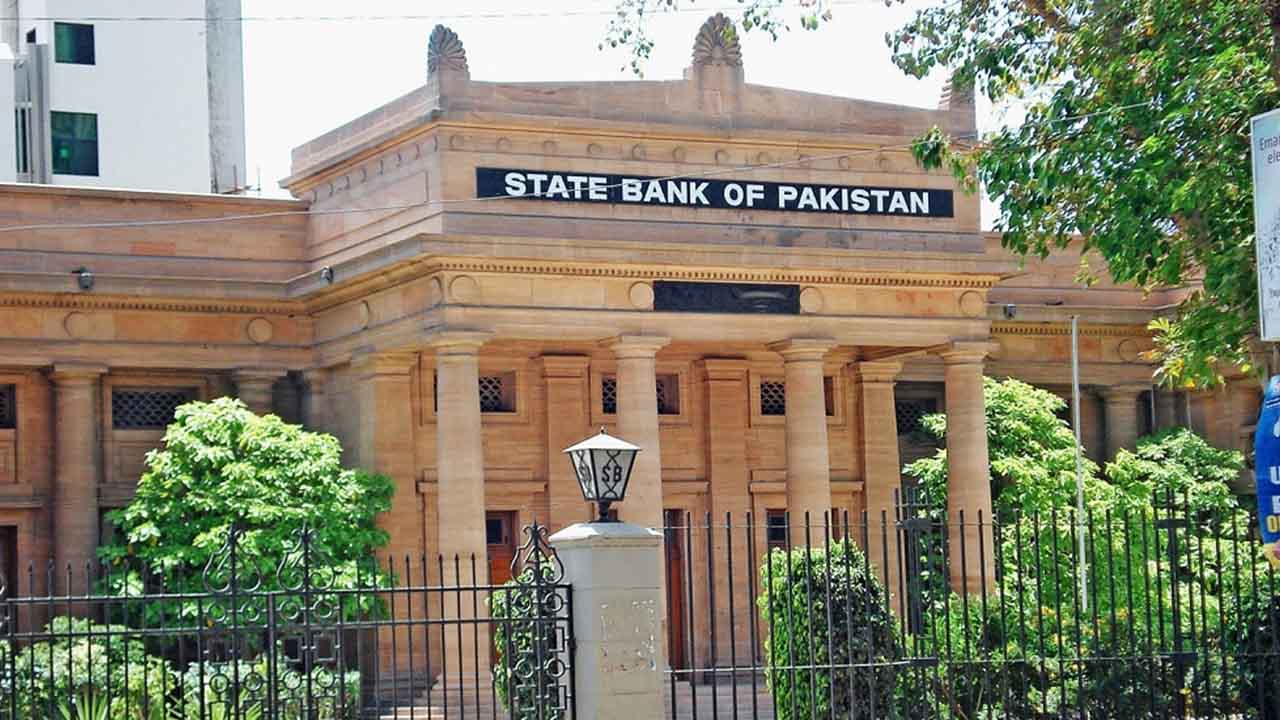
    Pakistan has received the final tranche of $1.1 billion from the International Monetary Fund (IMF) as part of its $3 billion Stand-By Arrangement (SBA), the State Bank of Pakistan (SBP) announced on Tuesday.

    The disbursement follows the IMF’s successful completion of its final review of Pakistan’s economic reform programme supported by the 9-month SBA.

    The SBP said in its statement that the Special Drawing Rights (SDR) of 828 million, equivalent to approximately $1.1 billion, had been received on April 29, 2024, and would be reflected in the central bank’s foreign exchange reserves for the week ending May 3, 2024.

    As of April 19, the central bank’s foreign exchange reserves stood at $7.981 billion.

    Prime Minister Shehbaz Sharif welcomed the latest disbursement, stating that it would contribute to greater economic stability in Pakistan.

    He highlighted that the SBA was critical in preventing the country from defaulting on its external liabilities. 

    Pakistan’s government is now focused on securing a larger and longer Extended Fund Facility (EFF) to achieve sustained macroeconomic stability.

    The prime minister has already signalled his intention to pursue another IMF programme to ensure the continuity of economic growth and fiscal discipline.

    On Sunday, Prime Minister Shehbaz Sharif met with IMF Managing Director Kristalina Georgieva on the sidelines of the World Economic Forum Special Meeting in Saudi Arabia.

    During the meeting, the prime minister reiterated his government’s commitment to implementing structural reforms, maintaining strict fiscal discipline, and following prudent policies that would support macroeconomic stability and sustainable economic growth.

    Pakistan is seeking additional support to maintain the economic gains made during the current SBA and to continue its positive economic growth trajectory.

  • Pakistan’s inflation eases with further decline expected in coming months

    Pakistan’s inflation eases with further decline expected in coming months

    Pakistan’s headline inflation is expected to range between 18.5 per cent and 19.5 per cent in April 2024, with further deceleration projected in the coming months.

    The Finance Division’s ‘Monthly Economic Update and Outlook’ attributes the downward trend to a favourable base effect, improved domestic supply chains, and administrative measures.

    In March, headline inflation stood at 20.7 per cent, down from 23.1 per cent in February. Despite this easing, the government faces challenges, such as rising crude oil prices on the international market, leading to increased domestic gasoline prices. To offset this, the government has lowered wheat flour prices and imposed stricter controls.

    The Finance Division notes moderate recovery during the first nine months of the fiscal year, with growth in agriculture, a decrease in inflationary pressures, and stability in external accounts. The large-scale manufacturing (LSM) sector also shows positive signs, thanks to improved agricultural output and export demand.

    However, the report acknowledges challenges in fiscal management due to rising expenditure pressures from higher markup payments. To maintain stability, fiscal consolidation is required.

    The State Bank of Pakistan’s Monetary Policy Committee (MPC) recently kept the key policy rate at 22 per cent, citing ongoing risks to inflation from global oil prices and anticipated budget measures. The MPC’s goal is to bring inflation down to 5-7 per cent by September 2025.

    Pakistan’s broader economic struggles include pressure on external accounts and low foreign exchange reserves.

    The International Monetary Fund’s (IMF) $3-billion Stand-By Arrangement (SBA) has provided some relief, but Pakistan is seeking a longer-term programme with the IMF for economic stability and growth.

  • KIA Stonic EX+ price slashed by Rs1.5 million in Pakistan

    KIA Stonic EX+ price slashed by Rs1.5 million in Pakistan

    Lucky Motor Corporation (LMC) has announced a significant reduction in the price of the KIA Stonic EX+ in Pakistan, a move that comes amid sluggish sales for the popular car model.

    The company, presenting the price cut as a “celebratory limited-time offer,” revealed on Monday that the new price for the Stonic EX+ is Rs4,767,000—a substantial drop of Rs1,513,000 from its previous cost of Rs6,280,000.

    The announcement closely follows the recent price reduction of KIA’s compact SUV, the Sportage, which saw a decrease of up to Rs300,000.

    This sequence of price adjustments indicates a possible market trend towards more affordable pricing in response to consumer demand and purchasing power in Pakistan’s automotive sector.

    LMC’s official statement noted that the price reduction is part of the company’s celebration of five years of CKD (completely knocked down) operations in Pakistan. The company expressed gratitude for customer support and explained that the price revision is intended to mark this milestone.

    “As we complete 5 years of our CKD operations, we are filled with gratitude for your unwavering support and thank you for your help in achieving this significant milestone in Pakistan. To mark this occasion, we are thrilled to introduce a celebratory limited-time price offer on our beloved Kia Stonic,” the statement read.

    However, industry experts suggest that the price drop might be driven by sluggish sales and lower offtake of the vehicle, rather than purely by celebratory reasons.

    The timing of the price revision, coming on the heels of another significant price reduction, raises questions about the broader market dynamics and the company’s strategy to boost sales.

    The new pricing for the KIA Stonic EX+ is set to take effect on April 29, 2024, and customers will likely watch closely to see if this move leads to a resurgence in the vehicle’s popularity in the Pakistani market.

  • SBP holds key policy rate at 22% for seventh consecutive time

    SBP holds key policy rate at 22% for seventh consecutive time

    The State Bank of Pakistan (SBP) announced on Monday that it is maintaining its key policy rate at 22 per cent, marking the seventh consecutive meeting with no changes to the rate.

    The Monetary Policy Committee (MPC), in its meeting, discussed ongoing macroeconomic stabilisation measures.

    The committee noted that these measures have contributed to noticeable improvements in both inflation and the external economic position. This comes against a backdrop of moderate economic recovery.

    The MPC’s statement following the meeting acknowledged that, while inflation has begun to improve, it remains high.

    The committee also mentioned that global commodity prices seem to have stabilised, indicating resilience in global economic growth.

    However, the committee highlighted a number of uncertainties. It pointed out that recent geopolitical events have created additional uncertainty in the global economic outlook.

    Additionally, the upcoming budgetary measures might affect short-term inflation trends.

    Given these factors, the MPC concluded that the current monetary policy stance should be maintained to achieve its inflation target of 5 to 7 per cent by September 2025.

  • Pakistan’s mobile phone imports soar by 181% amid local manufacturing challenges

    Pakistan’s mobile phone imports soar by 181% amid local manufacturing challenges

    Pakistan’s mobile phone imports surged by 181.26 per cent during the first nine months (July-March) of the fiscal year 2023-24, reaching $1.301 billion, according to the Pakistan Bureau of Statistics (PBS). 

    This significant increase is in stark contrast to the $462.700 million recorded during the same period in the previous fiscal year.

    Despite this year-long surge, March 2024 saw a slight decline in mobile phone imports on a month-on-month (MoM) basis, with imports totaling $153.051 million, a 4.87 per cent decrease from February 2024’s $160.90 million.

    However, on a year-on-year (YoY) basis, mobile phone imports experienced a remarkable 930.92 per cent growth in March 2024, as compared to $14.846 million in March 2023.

    The overall telecom imports also reflected similar trends. During the first nine months of the fiscal year, total telecom imports reached $1.623 billion, representing a 117.90 per cent increase from $744.971 million during the same period of the previous fiscal year.

    On a YoY basis, telecom imports rose by 422.58 per cent, totaling $189.042 million in March 2024 compared to $36.175 million in March 2023. However, on a MoM basis, telecom imports saw a slight decline of 1.13 per cent in March 2024, down from $191.201 million in February 2024.

    Meanwhile, local manufacturing and assembling of mobile handsets continued to be an area of focus. During the first two months (January-February) of the calendar year 2024, local plants manufactured or assembled 6.1 million mobile handsets, which included 2.78 million 2G and 3.35 million smartphones. 

    This was in stark contrast to the 0.3 million units that were imported commercially during the same period.

    In February 2024, local plants manufactured or assembled 3.83 million mobile handsets, significantly higher than the 0.06 million units imported commercially. 

    Notably, the Pakistan Telecommunication Authority (PTA) reported that 60 per cent of mobile devices on the Pakistan network are smartphones, while the remaining 40 per cent are 2G.

    Despite robust local manufacturing efforts, official data indicated that local manufacturing and assembling of mobile handsets declined by around four per cent during the calendar year 2023. 

    This decline is attributed to challenges in importing mobile phone accessories due to restrictions on the opening of letters of credit (LCs). 

    Nonetheless, commercial imports of mobile handsets increased during this period, suggesting a shift in strategy to meet the demand for mobile phones in the face of supply chain disruptions.

    The data presents a complex picture of Pakistan’s mobile phone industry, with significant growth in imports and shifts in local manufacturing dynamics. 

    The continued growth in imports highlights the demand for mobile technology, while local manufacturing faces challenges that could shape the future of the telecom sector.

  • Petrol, diesel prices in Pakistan likely to drop as global oil prices decline

    Petrol, diesel prices in Pakistan likely to drop as global oil prices decline

    In a potential relief for Pakistanis grappling with inflation, the government is expected to reduce petrol prices for the first half of May 2024, following a dip in global oil prices.

    According to reports, petrol prices could drop by around Rs3.75 per litre, with a final announcement scheduled for midnight on April 30, 2024.

    This price cut, if implemented, is a response to a recent decline in international petroleum product prices, with a drop of $1.86 to $107.16 per barrel observed.

    High-speed diesel (HSD) prices are also likely to be adjusted, with a reduction of around Rs7.85 per litre anticipated, owing to a $4.3 per barrel decrease in global prices.

    Additionally, the stability of the Pakistani rupee against the US dollar has contributed to the downward trend.

    Since the previous fortnight, the local currency has remained steady at a weighted average rate of approximately Rs278.38 per USD.

    However, these figures are subject to change, as there are still three more trading sessions before the final pricing announcement.

    Fluctuations in the global market and exchange rate movements could impact the final decision.

    In the last pricing update, the government increased petrol prices by Rs4.53 to Rs293.94 per litre, while high-speed diesel saw an increase of Rs8.14 to Rs290.38 per litre.

    The upcoming price adjustments, if confirmed, could provide some relief to consumers affected by inflationary pressures.

  • No plans for fixed tax on solar power, says Power Division

    No plans for fixed tax on solar power, says Power Division

    The Power Division has dismissed recent media reports suggesting that the government is imposing a fixed tax on solar power.

    According to a notification released by the Information Ministry today, these reports are unfounded and inaccurate.

    The Power Division clarified in a statement that there is no substance to the claims about a fixed tax on solar power.

    It highlighted that neither the Central Power Purchasing Agency nor the Power Division has submitted any summary to the government proposing such a measure.

    The statement highlighted that the Net Metering Policy of 2017 was designed to encourage the use of alternative energy sources, contributing to a significant increase in solar energy adoption.

    This rapid solarization is seen as a positive trend, aligning with the government’s objectives to promote clean energy.

    The Power Division also mentioned that any proposed changes or amendments to current policies are aimed at alleviating financial burdens on the economically disadvantaged.

    It stressed that protecting the interests of the 152,000 net metering consumers remains a priority.

  • Gold price drops by Rs600 per tola in Pakistan following global rate decline

    Gold price drops by Rs600 per tola in Pakistan following global rate decline

    Gold prices in Pakistan experienced a notable decrease on Saturday, mirroring a similar downward trend in international markets.

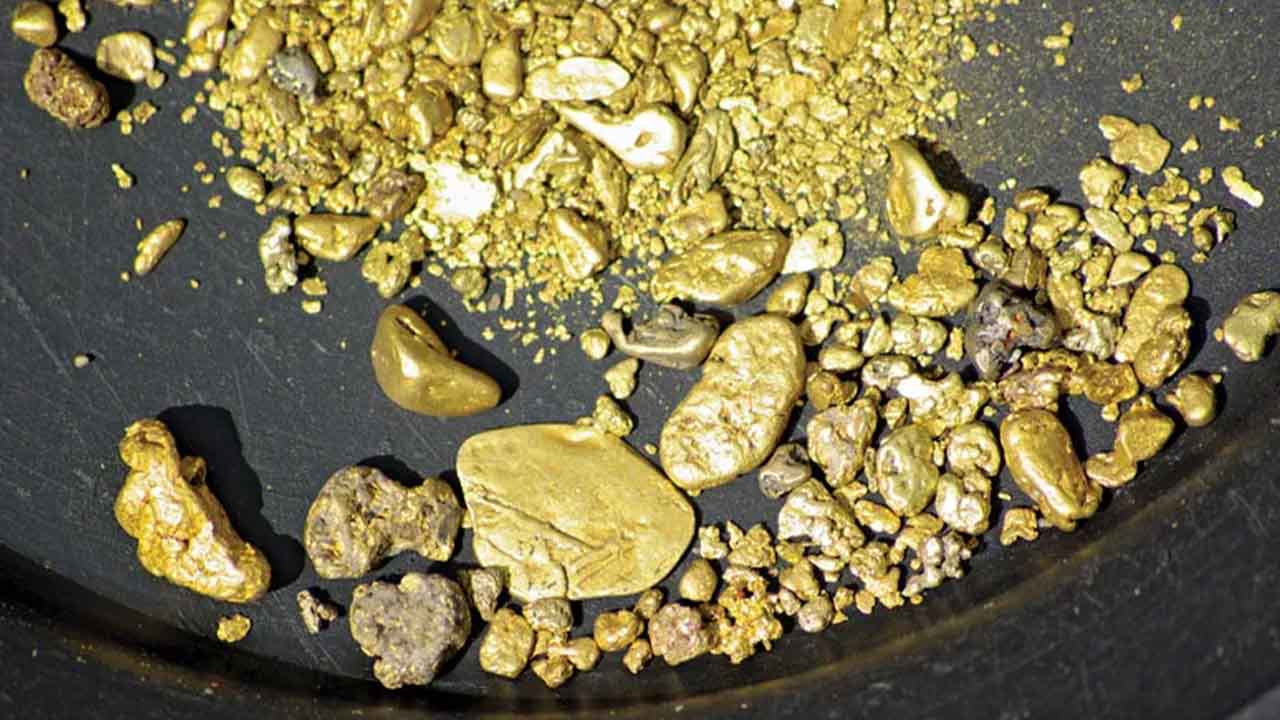
    The cost of gold per tola dropped by Rs600, settling at Rs244,400. This decline came after a recent surge in prices, adding a new dynamic to the local market’s fluctuations.

    Similarly, the price for 10 grammes of gold fell by Rs514, concluding the day at Rs209,534, according to the latest data released by the All Pakistan Gems and Jewellers Sarafa Association (APGJSA).

    These changes reflect the sensitive nature of gold prices to international trends and the inherent volatility in the market.

    Friday had seen a significant uptick in gold prices, with an increase of Rs2,500 per tola.

    This rapid shift highlights the unpredictable nature of gold valuations, influenced by a myriad of factors including global economic conditions, currency exchange rates, and market speculation.

    On the international front, gold prices also faced a downturn on Saturday, with a reported drop of $6 per ounce.

    The APGJSA noted that the international rate for gold was set at $2,337 per ounce, including a premium of $20.

    This shift in global pricing further underscores the interconnectedness of gold markets and their impact on local prices.

    While gold prices experienced a dip, silver rates remained steady, with the per tola rate holding at Rs2,650.

    The stability in silver pricing contrasts with the more volatile gold market, providing a level of consistency for those investing in precious metals.

    Just a week prior, gold prices in Pakistan had reached an all-time high, with the rate per tola hitting Rs252,200.

    The recent fluctuations are a stark reminder of the dynamic and often unpredictable nature of the precious metals market, where international trends can have a significant impact on local pricing.

  • SBP likely to hold interest rate at record 22% amid IMF negotiations

    SBP likely to hold interest rate at record 22% amid IMF negotiations

    The State Bank of Pakistan (SBP) is expected to maintain its record 22 per cent interest rate at its upcoming policy meeting on Monday.

    This marks the seventh consecutive meeting with rates held steady, as Pakistan navigates discussions with the International Monetary Fund (IMF) for a new long-term funding arrangement.

    The central bank’s decision comes ahead of an IMF Executive Board meeting to discuss a $1.1 billion disbursement, the final tranche of a $3 billion Stand-By Arrangement.

    A Reuters poll of 14 analysts predicts the SBP will hold its rate, though there are mixed forecasts within the group.

    Four analysts anticipate a 100-basis-point (bps) cut, while two expect a 50-bps cut. Eight believe the SBP will cut rates before securing a new IMF programme.

    The central bank’s next Monetary Policy Committee (MPC) meeting is scheduled for June 10, potentially before Pakistan’s expected new IMF agreement.

    Finance Minister Muhammad Aurangzeb mentioned that discussions with the IMF for a longer-term programme will begin next month, aiming for a staff-level agreement by early July.

    Pakistan’s last rate hike was in June 2023 to combat inflation and meet IMF requirements. Consumer Price Index (CPI) data for March showed a 20.7 per cent increase from the previous year, with a peak of 38 per cent in May.

    However, inflation is slowing, partly due to the “base effect,” with April’s CPI expected to be around 17.5 per cent, according to businessman Arif Habib.

    The SBP’s monetary policy decisions will consider various factors, including inflation trends and geopolitical tensions affecting fuel prices.

    Tahir Abbas, head of research at Arif Habib Limited, suggests rates won’t be cut until a new IMF programme is in place.

    Looking ahead, Mustafa Pasha, Chief Investment Officer at Lakson Investments, predicts a small rate reduction in the current quarter, with significant cuts in the September quarter.

    According to Business Recorder, this is driven by the need to roll over approximately 6.7 trillion rupees in domestic treasury bills in late 2024 and expected stabilization in inflation and foreign exchange inflows.

    He forecasts that the interest rate could settle around 17 per cent by December.

  • Major seizure: RTO Rawalpindi destroys 25 million smuggled cigarettes

    Major seizure: RTO Rawalpindi destroys 25 million smuggled cigarettes

    The Regional Tax Office (RTO) Rawalpindi carried out a significant operation on Thursday to destroy a large quantity of illicit, smuggled, counterfeit, and non-duty-paid cigarettes. The estimated value of the destroyed products was approximately Rs194 million.

    The event, held at Chakbeli Road in Rawalpindi, involved the destruction of 2,585 packrites, which equates to 25,580,000 cigarette sticks.

    Chief Commissioner of RTO Rawalpindi, Tehmina Aamer, presided over the ceremony as the Chief Guest.

    The event was attended by several key stakeholders, including members of the World Health Organization (WHO) and officers from the Federal Board of Revenue (FBR).

    During the ceremony, the participants were briefed on the entire process, from the initial confiscation of illicit tobacco and tobacco products to their eventual destruction, in accordance with the law.

    Following the briefing, the distinguished guests collectively set fire to the seized cigarettes, effectively destroying them.

    This operation underscores the RTO Rawalpindi’s commitment to combatting the illegal trade of tobacco products and ensuring compliance with national and international regulations.

    The destruction of these illicit cigarettes also serves as a reminder of the ongoing efforts to protect public health and maintain the integrity of the country’s tax and revenue system.