Category: Business

  • In Pictures: Pakistan unveils its first electric car with 210km range

    In Pictures: Pakistan unveils its first electric car with 210km range

    Except for Pakistan, electric vehicles have gained massive popularity throughout the world. A few imported cars that are available in the local market are pricey and out of the range of the average person.

    Now that Pakistan’s first electric automobile has been launched with some outstanding features, things are set to change.


    On Independence Day, Pakistan’s first electric vehicle prototype, the NUR-E 75, was displayed on August 14.

    The battery in the car will have a 35kWh capacity with a range of 210 kilometres after being fully charged.

    NUR-E 75 will save a significant amount of fuel, contribute to the fight against climate change, and maintain economic prosperity, claims Dr Khurshid Qureshi, founder and chairperson of the Distinguished Innovation, Collaboration & Entrepreneurship (DICE) Foundation, who developed the prototype.

    It has a maximum speed of 120km/h, tyre size of 16 inches, a ground clearance of 190mm, and a charging capacity of 220V in eight hours, with fast charging also available.

    Dr Qureshi claimed that the production of the car has three stages: the first involved industrial design, production, and launch; the second involved expanding production to include sedans and SUVs, small commercial trucks, and EV platform export; and the third involves exporting the cars.

    Read more: Cheapest new cars to buy in Pakistan

    The completely working prototype, EV NUR-E 75, is ready for testing and regulatory approval, he said, adding that manufacturing started in 2019. Meanwhile, design work on a rolling platform that will be utilised for multiple vehicle segments is in progress.

    The little hatchback’s maximum output is 80 kW (108 horsepower), and its 35 kWh battery can travel 210 km without the air conditioner on.

    He emphasised that the vehicle, given to Pakistan as a gift for its diamond jubilee, would play a significant role in the context of the environment and climate change and help us transition away from the use of non-renewable fuels.

  • SBP unveils Rs75 commemorative banknote

    SBP unveils Rs75 commemorative banknote

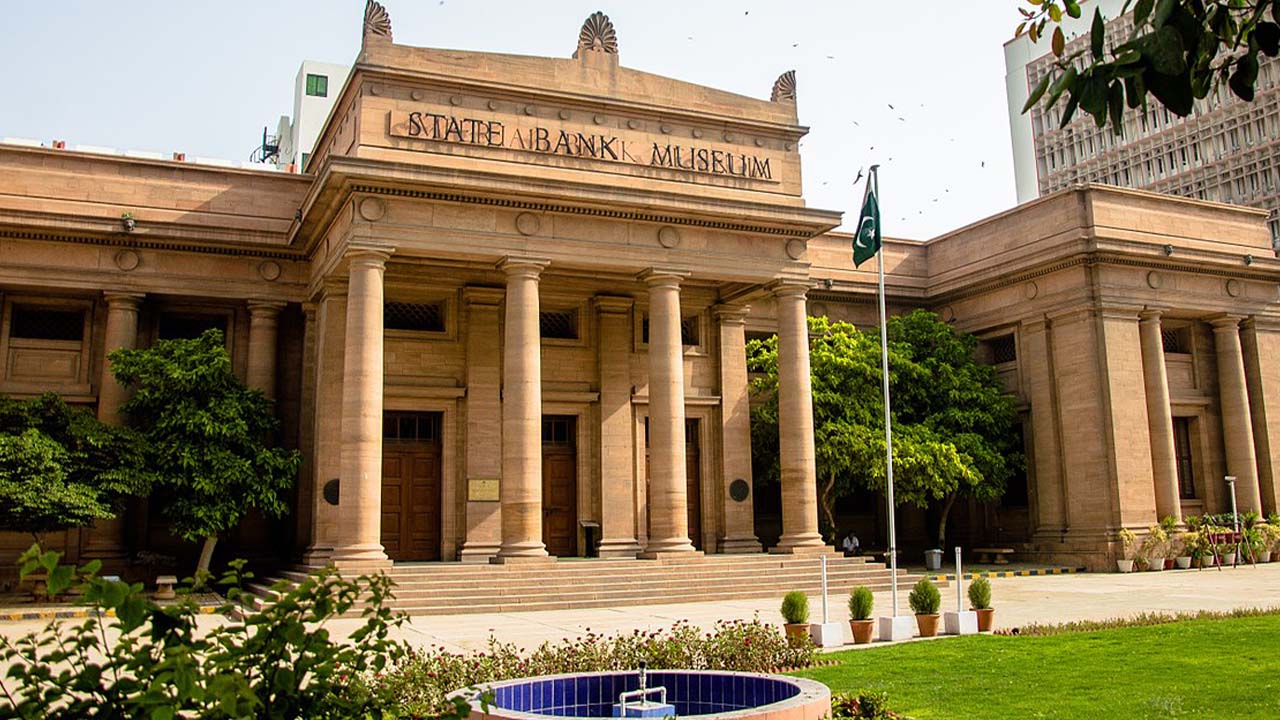
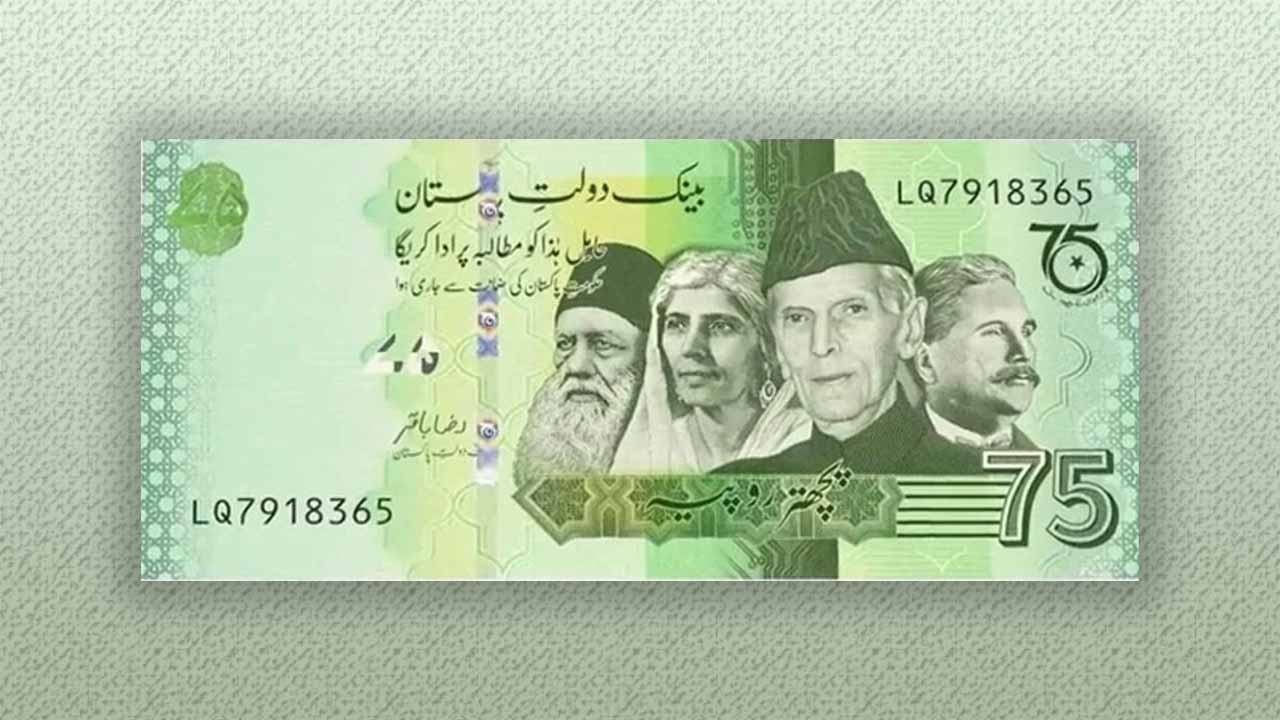
    To commemorate 75 years of Pakistan’s independence, the State Bank of Pakistan (SBP) presented the Rs75 commemorative banknote on Sunday during a ceremony conducted at the SBP Museum.

    The banknote was unveiled by the acting Governor of SBP Dr Murtaza Syed.

    Dr Murtaza made the following observation after the introduction of the commemorative banknote and flag-hoisting ceremony: “While the issuance of coins and postal stamps is a regular and recurring element to honour days of national importance.”

    The former SBP governor Dr. Raza Baqir has signed the banknote, which would be available to the general public from September 30.

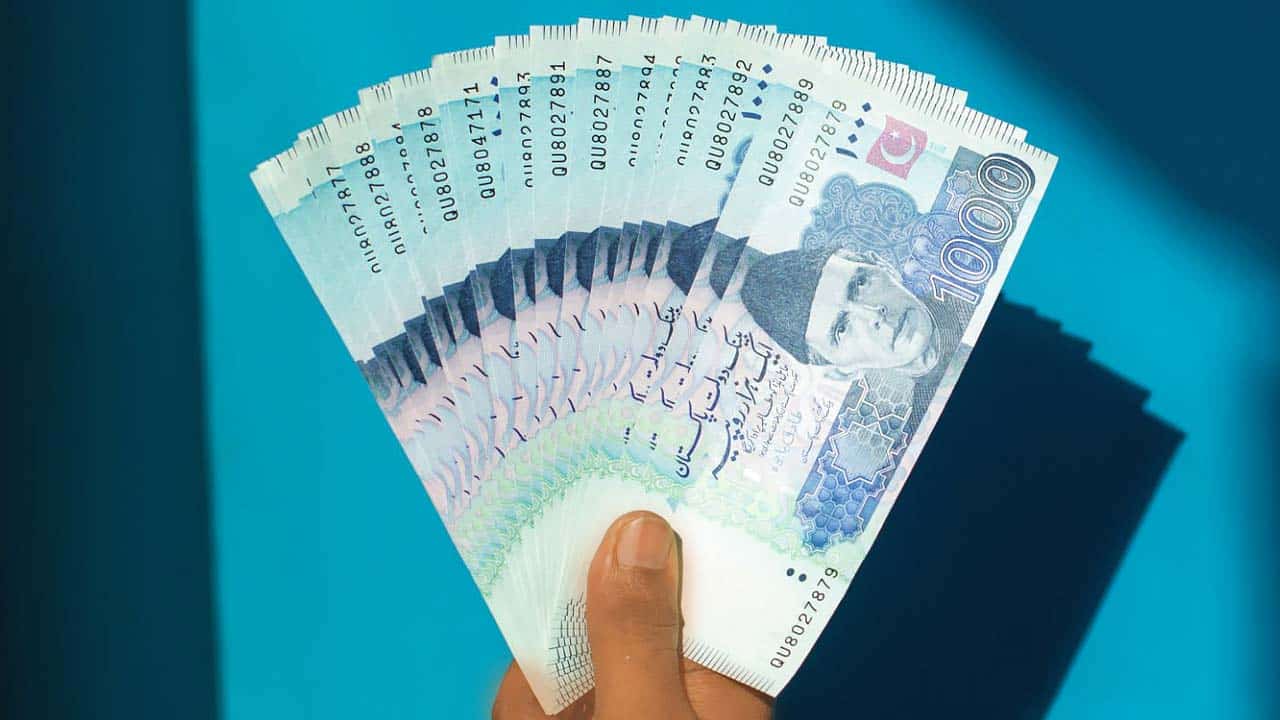
    The colour of the banknote is primarily green, with hints of white and yellow. Green is a symbol of prosperity and development that also draws on Pakistan’s Islamic heritage. White, on the other hand, highlights the diversity of religions among its residents.

    The front of the note has portraits of the Quaid-e-Azam Muhammad Ali Jinnah, Sir Syed Ahmed Khan, Allama Muhammad Iqbal, and Mohtarma Fatima Jinnah.

    The images of the Markhor and Deodar trees on the reverse reflect Pakistan’s dedication as a nation to combating climate change and its effects.

    The Markhor and Deodar trees are both representations of the destruction caused by these changes and need immediate action to stop and reverse environmental degradation.

    Speaking at the event, Dr Syed remarked, “The SBP Finance Department went above and above to quickly complete this vital project, and I applaud their efforts.”

    The central bank has now released two notes of this type, including the Rs75 note. In the past, to commemorate Pakistan’s Golden Jubilee, the SBP released the first and, to date, only commemorative banknote in 1997.

    To commemorate the nation’s centennial of independence, children with disabilities also participated and sang national patriotic songs during the ceremony.

  • Amazon bans more than 13,000 Pakistani seller accounts for  fraudulent activities

    Amazon bans more than 13,000 Pakistani seller accounts for fraudulent activities

    According to reports, Amazon has suspended more than 13,000 Pakistani seller accounts over suspicions of fraud.

    Due to government backing through Pakistan Post’s many programmes to promote the cottage industry and boost Pakistan’s exports, the trend of small business owners choosing to become Amazon Sellers has been steadily increasing over the past few years.

    Mian Chanuu and Sahiwal, two cities in Punjab, have reportedly been designated as fraudulent red zones by Amazon because vendors based there have been discovered engaging in fraudulent activities, according to GVS.

    According to sources, Amazon has also blacklisted IP addresses from Mian Channu, therefore users from these areas are now using Dubai or the computers of other customers to access their accounts.

    When a buyer orders merchandise from a phoney Amazon seller, sellers use the Kabootar technique or false tracking. Two different websites offer fake tracking services.

    However, such merchants notify the buyers that it will take 15 to 20 days to deliver their goods. Typically, Amazon credits the amount to sellers within 14 days. Since the customer believes the sellers, there are no complaints made, and after 14 days, Amazon pays the money to the seller.

    Read more: Leaks reveal iPhone 14 could be the best model ever

    Actual buyers never receive their things, and the dishonest vendors profit. According to reports, sellers profit significantly from this Kabootar scam.

    On the other hand, carding is the main activity of those who register for an account on a dark web website. Such individuals purchase compromised cards from such websites for $100 to $200 with all pertinent information, such as the card number, expiration date, and Card Verification Value (CVV).

    These cards are used by these vendors to purchase and resell prepaid gift cards. They can avoid being caught by the authorities in this manner.

  • Pakistan receives Letter of Intent from IMF, moving closer to $1.17 billion tranche

    Pakistan receives Letter of Intent from IMF, moving closer to $1.17 billion tranche

    The International Monetary Fund (IMF) has sent Pakistan the Letter of Intent (LoI), bringing the disbursement of the $1.17 tranche for the combined seventh and eighth review closer.

    Pakistan will approve the Lol and return it to the IMF. The Extended Fund Facility will now be revived right after IMF board’s approval.

    The IMF team and the Pakistani government came to a staff-level agreement (SLA) in July for the conclusion of the combined seventh and eighth tranche.

    The international lender estimates that after the Executive Board approves it, around $1,177 million will become accessible, bringing the program’s total payouts to almost $4.2 billion.

    But according to a report from last month, before the multilateral lender provides Pakistan with new funding, it was also looking to determine the level of commitment from other sources.

    The Washington-based lender wants to make sure that Pakistan won’t experience a funding shortfall following the IMF loan.

    For Pakistan, which is desperately seeking dollar inflows in the face of declining foreign exchange reserves, the IMF support is essential in addition to other forms of finance.

  • SBP’s foreign exchange reserves dropped to $7.83 billion

    SBP’s foreign exchange reserves dropped to $7.83 billion

    Owing to debt payments, the State Bank of Pakistan’s (SBP) foreign exchange reserves fell to $7.83 billion as of August 5 from $8.385 billion in the last week.

    It is worth noting that this is the lowest level in over three years, according to figures released by the SBP.

    Pakistan’s overall foreign exchange reserves were $27.067 billion as of August 2021 but fell to $13.561 billion as of August 5, 2022.

    The most recent figures on the country’s foreign exchange holdings came when the reserves were quickly running out due to a $6 billion IMF programme that was stalled and the country was experiencing a lack of external funding.

    Due to debt payments and a lack of external finance, the central bank’s foreign reserves decreased by $555 million or 6.6 per cent every week.

    To reach $13.561 billion, Pakistan’s total liquid foreign reserves decreased by $648 million, or 4.6 per cent, and its commercial banks’ holdings fell by $5.730 billion, or 1.6 per cent.

    The SBP’s reserves are sufficient to cover imports for just over a month, according to The News. The reverse decline was brought on by paying off foreign debt.

    According to the central bank, debt repayments may slow down over the following three weeks of this month.

    On the other hand, the Pakistani rupee continued its upward trend against the US dollar for the ninth day, adding Rs3.38 to trade at Rs215.50 in intraday trade on Friday. The KSE-100 index likewise witnessed an increase of 386 points.

  • IMF to send Letter of Intent soon to release $1.17 billion tranche

    IMF to send Letter of Intent soon to release $1.17 billion tranche

    The International Monetary Fund’s (IMF) agreement with Pakistan to release two tranches totaling $1.17 billion as part of a loan facility that was stalled is nearing completion, as the Letter of Intent (LoI) from the fund may arrive in a few days.

    Pakistan is likely to receive the LoI, which the governor of the State Bank of Pakistan (SBP) and the Finance Minister, Miftah Ismail, will jointly sign, according to The News.

    The IMF mission leader had to rush to Australia for a personal engagement, according to senior officials at the Finance Ministry, thus the Fund was likely to submit the LoI “anytime soon.”

    The IMF board would also discuss adding $1 billion to a $6 billion programme agreed upon in 2019 at its meeting scheduled for August 24.

    The government may impose higher taxes on cigarettes, tobacco leaves, fertiliser, and other items in order to appease the IMF.

    Additional taxes are being considered for a variety of sectors. Through a Presidential Ordinance, tax rates on cigarettes and the processing of tobacco leaf might be increased.

  • Pakistani rupee gains Rs2.13 to close at Rs221.91

    Pakistani rupee gains Rs2.13 to close at Rs221.91

    In line with improved market sentiment, the Pakistani rupee (PKR) kept strengthening versus the US dollar, closing at Rs221.91 on Wednesday in the inter-bank market.

    According to the State Bank of Pakistan (SBP), the local currency appreciated by 0.96 per cent or Rs2.13 against the dollar to settle at Rs221.91.

    The uptick on Wednesday marked the seventh straight rebound for the currency, which last month touched an all-time low of Rs239.94 against the US dollar. Since then, it has increased by almost 8 per cent.

    Pakistani rupee significantly increased last week, rising 6.8 per cent to settle at Rs224.04 in the interbank market.

    The rupee maintained its strength throughout the week as Pakistan reported a smaller trade deficit and a significantly lower import bill in July, relieving pressure on the currency that had previously been battered by the dollar.

    The International Monetary Fund (IMF) also stated that the board meeting is tentatively scheduled for late August once adequate financing assurances are confirmed.

    An official source in Abu Dhabi later emphasised in a public statement the UAE’s plan to invest $1 billion in Pakistani businesses across a range of economic and investment sectors, bringing Pakistan one step closer to closing what the IMF refers to as a financial gap.

    Market analysts anticipate significant growth in the upcoming days, assuming Pakistan manages to arrange its finance requirements.

  • Leaks reveal iPhone 14 could be the best model ever

    Leaks reveal iPhone 14 could be the best model ever

    While a number of smartphone manufacturers are cutting back on their flagship shipments, Apple is quite confident about its upcoming range of the iPhone 14.

    The Cupertino-based business has reportedly informed its vendors that the iPhone 14 series will sell more units than it had planned, increasing the total number of units it will make from 90 million to 95 million.

    The iPhone 14 may be the best iPhone ever made for a number of reasons, as the higher-end iPhone 14 Pro and Pro Max models are rumored to come with some significant changes, including improved camera capabilities with a new 48MP lens, a new pill-shaped and hole-punch notch replacement, and a faster A16 chip.

    According to a recent article from the Taiwan Economics Times, Apple anticipates that the iPhone 14 series would perform better than expected in terms of sales.

    As a result, it has instructed its suppliers to create and ship 5 per cent more iPhones than originally anticipated, or 95 million units instead of the first expected 90 million.

    The highest-end iPhone 14 Pro Max will have the greatest stock, according to the report, which cites sources. This shouldn’t be shocking considering how popular the iPhone 13 Pro Max was as well.

    As a result of the current political confrontations between China and Taiwan, earlier reports from July hinted that the projected September release of the iPhone 14 series might be delayed.

  • Retailers in Lahore continue to overcharge for food items

    Retailers in Lahore continue to overcharge for food items

    Lahore residents are forced to pay high prices for basic food items since a number of store owners refuse to sell basic items at the government-recommended price list.

    Those who complain about price violations are asked to shop elsewhere where the items are offered at legal prices.

    The price of chicken was recently cut by Rs5 per kg to Rs226 per kg, which is being sold at Rs250–Rs280 per kg. The price of chicken meat was decreased by Rs8 per kg, to Rs339 per kg, while it is being sold at Rs360–Rs600 per kg.

    Although cucumber farm prices were reduced by Rs35 and maintained at between Rs35 and Rs37 per kg, they are now being sold for over double that amount. Cucumber is currently available for Rs70-Rs80 in different areas of Lahore.

    Local lemon prices increased by Rs10 per kg and were set at Rs180–Rs185 per kg. The price per kg is between Rs220 and Rs240. The price of pumpkin was reduced by Rs85 per kg and set at Rs65–Rs68 per kg. Still, it is priced between Rs80 and Rs100 per kg.

    Originally priced at Rs75–Rs80 per kg, tomato A-grade is selling for Rs120–Rs140 per kg.

  • Pakistan to overcome $4 billion external financing gap soon: SBP

    Pakistan to overcome $4 billion external financing gap soon: SBP

    In the midst of intense pressure on foreign currency reserves, Pakistan will soon close its $4 billion shortfall in external finance with the assistance of friendly nations under IMF conditions, according to Acting Governor of the State Bank of Pakistan (SBP) Dr Murtaza Syed.

    He also acknowledged that inflation will continue to be higher for the ensuing 11 to 12 months, which is why the central bank was aiming for an average inflation target of 18 to 20 per cent for the current fiscal year 2022–2023

    According to The News, acting SBP Governor Dr. Murtaza Syed stated that Pakistan has already met its gross external financing requirements of $34 to $35 billion.

    However, Islamabad is also attempting to secure confirmation of $4 billion in inflows from friendly nations like Saudi Arabia, the UAE, and Qatar. According to him, these extra dollar inflows will be used to boost foreign currency reserves and build a safety net in case of a crisis-like circumstance.

    He resisted providing a specific timeline but assured that the $4 billion finance deficit will be closed quickly. He argued that urgent attempts were being made by the government and IMF high-ups to secure confirmation from their respective nations.

    Denying that the scenario was similar to Sri Lanka, he praised Bangladesh and claimed that nation performed properly, chose to return to the IMF, and also increased utility costs while maintaining enough levels of foreign exchange reserves.

    Speaking of increasing inflation, he believed that supply interruptions abroad had set the way for a global super cycle of commodities, leaving Pakistan with no choice but to concentrate on agriculture productivity in order to secure food security.

    According to Murtaza Syed, people would have to deal with this challenging moment because there is no immediate magic wand to manage increased inflation. He said that while it is a challenging time, there is no alternative way to prevent the country from entering a more challenging situation if nothing was done.

    According to the official, the SBP has loosened the cash margin requirements for opening L/Cs for imports and offers incentives to individuals who do so. According to him, the IMF opposed trade restrictions and took action to prevent the depletion of foreign exchange reserves.

    The current pressure on foreign reserves is now anticipated to end within the next two months. He also promoted energy saving as a way to ease the burden of high import costs.

    The senior official believed that as long as the economy’s structural issues persisted, Pakistan will continue to see boom and bust cycles. He gave a recent example in which the nation’s GDP increased by 6 per cent, indicating that the overheating of the economy led to imbalances known as the budget deficit and current account deficit. Although a recession is not imminent, he continued, the economy must be managed carefully.