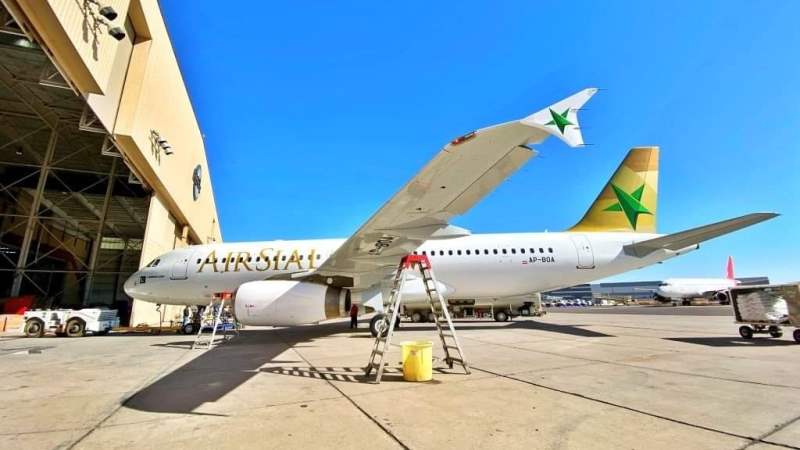
After a months-long delay due to the coronavirus pandemic, AirSial is finally here. The private airline owned by the Sialkot Chamber of Commerce and Industry will start its operations from next month, and its first Airbus A320-200 plane has already arrived in Sialkot this Sunday.
AirSial was among six new airlines that had applied to the Civil Aviation Authority (CAA) for regular public transport (RPT) licences in 2018. However, following the issuance of the permit, it had faced an uncertain future after its launch scheduled for May 2020 was indefinitely postponed due to the coronavirus pandemic among other reasons.
But, the arrival of its fleet from the US means the private airline is all-set to launch its flights operations. Meanwhile,
reports also claim that PM Imran Khan will inaugurate the private airline on Dec 9, but the operations would be started much later. It will operate flights between Karachi, Lahore, Islamabad, Sialkot and Peshawar before expanding operations to the other cities.
Initially, the airline’s operations will rely on three Airbus A320-200s, which have been leased from AerCap, the world’s largest independent aircraft leasing company, based in Dublin, Ireland.
According to an AirSial official quoted by Dawn, two more aircraft would arrive soon in Sialkot, one of them on Dec 3, to join the new airline’s fleet.
Reacting to the development, cricketer Shoaib Malik, who hails from Sialkot, said it was a “proud moment for everyone in Sialkot, who has been a part of the process”.
Snapchat is rolling out a new tool for its application to feature popular videos, called Spotlight and is offering $1 million a day to creators of top-performing posts. To earn the money, video submitters to Spotlight don’t have to have large followers or even have public profiles. Instead, an algorithm will determine what to show Snapchat users based on how often others view their content.
The new feature will help Snapchat in a competitive market for posting entertaining videos online, dominated by Facebook, Instagram and Google’s YouTube, with China-based ByteDance Ltd.’s TikTok rising fast among younger audiences. Snap Chief Executive Officer Evan Spiegel has eschewed public metrics, such as likes and follows, that drive the market for influencers, the most-followed users on photo-sharing apps.
Social media platforms are striving to attract the makers of quality content. TikTok plans to spend more than $1 billion in the US in the next three years on video-makers. Instagram has been paying some of TikTok’s top stars to test out its TikTok copycat feature, ‘Reels’. Instagram also recently started for the first time sharing revenue on video ads with creators, as YouTube does.
Snap shares have almost tripled this year to a record $45.38 earlier this month as young people turn to Snapchat to message friends videos during the coronavirus. The app also features television shows and magazines designed for a young audience on mobile. ‘Spotlight’ will initially launch in the US, Canada, Australia, New Zealand, the UK, Ireland, Norway, Sweden, Denmark, Germany, and France.
Pakistan has joined the Digital Cooperation Organization (DCO) as a founding member.
The organisation has been established under an initiative of the Kingdom of Saudi Arabia that has also invited other countries to join as founding members, including Bahrain, Egypt, Jordan, Kuwait and the UAE.
The organisation was launched at a virtual event on Thursday, hosted by Saudi Arabia Minister of Communication and Information Technology Abdullah Al-Swaha. Foreign Minister Makhdoom Shah Mahmood Qureshi participated with a video statement.
The foreign minister noted that the creation of DCO would cater to the growing need for international cooperation and collaboration in the digital domain at a time when the digital economy is estimated to be worth over $11 trillion and set to expand further in the aftermath of the COVID-19 pandemic.
The organisation will offer a platform to promote the global digital agenda in the scientific, health, educational, commercial, social, agricultural, investment and security spheres.
Continuing with the previous day’s momentum, Pakistani Rupee gained another 81 paisas against the United States Dollar (USD) in the interbank on Wednesday.
According to a State Bank of Pakistan (SBP) tweet, USD opened at Rs160.09 and closed at Rs159.28. The local currency had gained Re0.96 against the greenback on Tuesday.
Money dealers in the market attributed this rally of rupee against USD to encouraging economic indicators as well as the global downfall of the greenback. On the other side, they added, importers are being careful in buying goods from their foreign suppliers owing to the second wave of COVID-19.
On Tuesday, rupee had weakened against USD. The buying rate of USD was Rs160.4 while it was sold at Rs161.2 at the opening of trading in Pakistan’s currency market on November 24.
Other currency rates had then been recorded as follows:
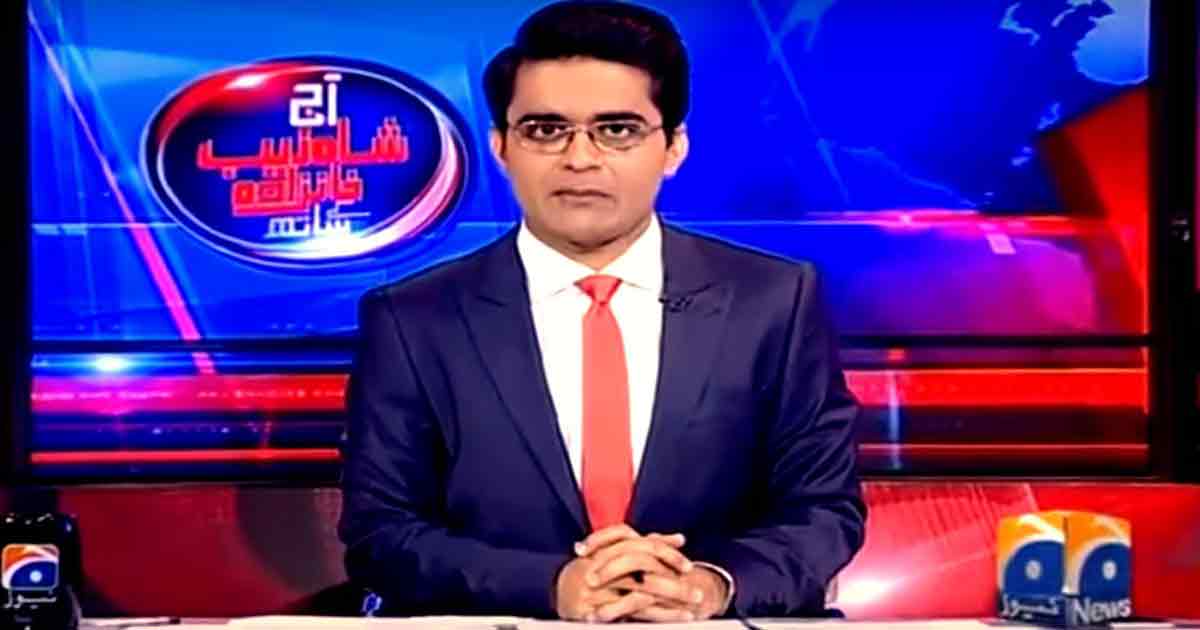
Whopping losses of Rs122 billion were inflicted to the national exchequer in the petroleum sector alone due to fallout of illogical delays and misguided decisions, but the prime minister (PM) and his teammates are not prepared to disclose as to who benefitted from the damage, journalist Shahzeb Khanzada has claimed.
During his show on Geo News, the journalist claimed deliberate falsehood was spread in the media by ministers and the special advisers who, instead of owning the decisions, hold the media, bureaucracy or the past governments responsible.
While he also accused the government of losing taxpayers’ money to the tune of Rs400 billion in wheat and sugar scandals and taking no action against the ministers responsible, Khanzada raised the question about delayed purchase of Liquefied Natural Gas (LNG) in August and September.
“In July, the LNG was available at 5.7 per cent for August but the government instead of timely tender purchased the commodity in August at the inflated rates of 9.3 per cent that turned out to be $5 million more expensive and the next bid further heaped a loss of $2.5 million. The same was repeated in the purchase of LNG for September in August.”
He said it was available at 6.9 per cent but the timely decision was delayed and then suddenly in September it was decided to purchase the cargo which cost 10.8 per cent. These two cargos alone cost the country Rs1.5 billion. When Special Adviser to Prime Minister (SAPM) Nadeem Babar was asked about it, he blamed K-Electric and accused it of suddenly raising the August and September demand instead of raising advance warning of depleting stocks.
When Federal Minister for Power and Petroleum Omar Ayub was asked if he did not know of the required demand in time, he said the power utility had not intimated of the demand and the load shedding duration in Karachi was increasing prompting the federal government to release their stocks for K Electric.
But, according to Khanzada, the true picture is entirely different from that being stated.
In the last few years, there were differences between the government and the K-Electric due to non-negotiation of a new agreement, The News reported. The power utility kept on demanding gas from the Sui Southern Gas Company (SSGC) on the basis of allocation. But the government denied that on the pretext that there was no prior agreement. The confusion led to a severe power crisis in Karachi.
Back in April 2018, the Cabinet Committee on Energy decided that the Karachi power utility be provided 130 MMCFD gas from the SSGC and 60 MMCFD LNG. Under the agreement, K-Electric kept getting 190 MMCFD since 2018. But SAPM Nadeem Babar and Federal Minister Omar Ayub erroneously claimed that the sudden raising of demand by the Karachi power utility in August and September forced them to tender expensive gas.
MMCFD stands for million standard cubic feet per day.
The anchor maintained the federal government provided K-Electric 198 MMCFD LNG in June, and 121 MMCFD LNG in July but reduced it to 73 MMCFD LNG in August and 66 MMCFD LNG in September. This clearly shows that the K Electric had not suddenly raised the demand in August and September but the government in fact had reduced the amount of gas supply. Not only this was far reduced than the amount given during June and July but was equivalent to the gas supply provided in August and September last year.
There was no justification for purchasing the LNG late in those months, Shahzeb maintained. The prime minister must ask his cabinet why the treasury was inflicted massive loss of Rs 1.5 bn because of this incompetency. Khanzada said when in June the petroleum crisis emerged why the government failed to import the fuel. Both SAPM Nadeem Babar and Federal Minister Omar Ayub blamed fuel companies and announced a thorough probe the results of which are still awaited. Due to this, the refineries had run out of furnace oil stocks and there was nothing left for K-Electric. Here once again the responsibility was lumped on the Karachi power utility.
In January 2019, the government banned the import of furnace oil and the PM ordered cheaper power generation through coal and LNG. It was decided that if need arise the K-Electric would be asked to procure furnace oil from the refineries. Against this scenario, K Electric could not have imported the furnace oil on its own. Furthermore due situation emerging out of Covid-19, the refineries had run short of furnace oil. Primarily, it was the responsibility of the government to monitor the fuel stocks. They must have imported LNG when it was cheaply available globally.
In June, the second LNG terminal was running only at its 45 per cent capacity but the government did nothing. In April, the K-Electric had informed the government in advance of its requirement of 120,000-tonne furnace oil for June.
But in June, the demand was increased to 130,000 tonne furnace oil but the PSO only provided 69,000 tonnes as the refineries had run short of furnace oil. In June 2019, PSO had provided 113,000 tonne furnace oil.
The PSO had informed the Ministry of Petroleum of the increased demand by K Electric on June 2, 2020, while reminding it of the May 19 directive by the Ministry of Petroleum to the refineries to supply maximum furnace oil.
But to this day, there has been no confirmation about it nor the allocation was increased. The PSO had intimated the Ministry of Petroleum of the impending crisis due to shortage of furnace oil, but it was not imported.
Similarly, the LNG was available at rock bottom prices but even that was not imported, causing power and fuel crisis in the country leading to losses running into billions of rupees, Khanzada said. He said the criticality of the situation forced the government to import furnace oil in panic at the last moment.
The anchor said ever since the inauguration of the PTI government, this was not the first time the gas crisis had occurred, but the central government ministers blamed the K Electric and the Sindh government for it.
In 2018 winters, a similar gas crisis had created severe problems for the people, but the government did not import the LNG in time nor it owed its responsibility for it and by blaming the MDs of the SNGPL and SSGC instead sacked them. This negligence led to power production using expensive furnace oil in 2018. In Dec 2018, the power sector was given 200 MMCFD gas which generated only 1,200 MW power instead of the needed 2,600MW. Furthermore, 1,600MW was produced by furnace oil which increased its daily consumption from 4,200 tonnes to 18,000 tonnes. The expensive power generation caused a loss of Rs 10 billion. When the then Minister for Petroleum Ghulam Sarwar was asked that though the SSGC and SNGPL MDs were sacked but if the Ministry of Petroleum and Ministry of Power had “in time “raised gas demand or if the two MDs had to import LNG on their own, Sarwar conceded that the meeting was held late in December.
Today the situation is being repeated in exactly the same manner and expensive power is being generated by furnace oil. Omar Ayub is continues to be the Minister for Oil and Power, while Ghulam Sarwar’s portfolio has been changed to that of aviation. He has, however, struck disaster with the national airline and the pilots. Nothing has changed, no responsibility has been affixed on the members of the cabinet.
Even today cheap LNG is available globally. In July, once again expensive power was generated from furnace oil at 18 month high rates and even then the gas is not available for bitter winters.
Khanzada said that from October to January one million tonnes furnace oil needs to be imported, expensive power would be generated, forex would be wasted with an additional loss of Rs25 billion.
GOVT RESPONDS:
Reacting to the report on Wednesday, PM’s petroleum aide said that LNG terminals are being run on full capacity while arrangements are being made to import around 1,300 cubic feet of LNG to meet domestic needs.
The special assistant said that it’s unfortunate that a negative media campaign is being run against the government about LNG through fudged statistics.
Addressing a press conference along with Information Minister Shibli Faraz, he said that the present government has imported 35 cargo ships of LNG in the last 27 months at a 20 per cent low rate as compared to expensive LNG agreements signed by the Pakistan Muslim League-Nawaz’s (PML-N) previous government with Qatar.
Babar said that the government has also allowed the private sector to construct LNG terminals in the country and two companies have shown their readiness to establish these facilities in Pakistan. In addition, he said that the last PML-N government had established two LNG terminals with the government’s guarantee of running these facilities, inflicting a huge loss to the treasury.
Federal Minister of Science and Technology Fawad Chaudhry, announced a special programme of animation and video games certification to encourage young people to be part of the multi-billion dollar gaming industry.
اگر آپ کو پڑھنے سےدلچسپی نہیں اور فون پر ویڈیو گیمز سےرغبت ہے تو تیاری رکھیں @MinistryofST ویڈیو گیمز پروگرامنگ کا خصوصی پروگرام لارہی ہے تا کہ ہم 90 ارب ڈالر کی اس انڈسٹری کاحصہ بن سکیں، Animation اور ویڈیو گیمز سرٹیفیکیشن پروگرام نوجوانوں کیلئے Game ہی نہیں Game Changer ہوں گے
The minister said that they are looking to make people a part of the $900 million programming industry. He said that this new programme is especially targeted at those uninterested in studying and looking into video game development instead. According to him, the certification program should prove to be a “game-changer” for many. The tweet does not reveal any details, but since the Minister talks about Smartphone games, we can expect the program to lean more towards phone apps and games.
The new initiative will be providing animation and video games certification programmes to young people in order to boost the local gaming industry.
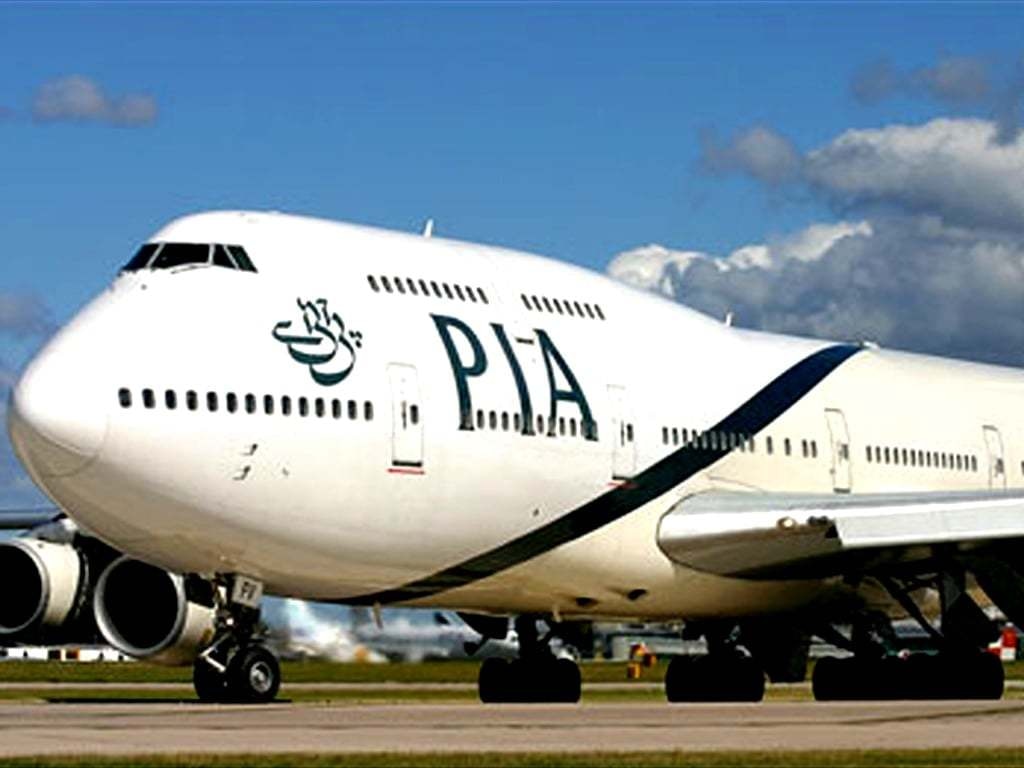
Pakistan has approved funding of about $81 million in cash to support flagship carrier Pakistan International Airlines’ planned voluntary redundancy scheme, which could affect thousands of jobs.
The loss-making carrier has been looking to reduce costs, particularly since the impact of the pandemic, as well as the fallout from a fake pilot credentials scandal.
PIA is aiming to cut roughly one-third of its workforce, Reuters reported, which would reduce the airline’s headcount to roughly 7,000-7,500 employees from the around 11,000 staff PIA said it employed in its 2019 annual report.
The government has approved Rs12.87 billion ($81.46 million) in funding for the airline to move forward on the voluntary retirement scheme, the news agency reported.
In a statement on Tuesday, the government said: “After … discussion, it was decided to approve, in principal, the voluntary separation from service scheme for PIA.”
PIA said it was looking to reduce its aircraft to employee ratio to 250 employees per aircraft. PIA spokesman Abdullah H. Khan said the scheme was part of the airline’s plan to restructure and bring employee numbers closer to industry standards.
“Employees will be offered an attractive voluntary separation scheme and people would have 14 days to avail (themselves of) the offer,” Khan told Reuters.
The targeted staff ratio is high compared with neighbouring India, where Air India has roughly 130 employees per aircraft, based on Indian government data.
In a business plan submitted to the government last year, PIA said it was looking to have fewer than 5,500 people working on 45 aircraft – or fewer than 125 employees per aircraft – by 2021.
The government statement on Tuesday gave no further details on the redundancy scheme or how many pilots or other categories of staff would be affected.
Earlier this year, the government said PIA had a total of 434 pilots. Some of their jobs have been terminated in an ongoing process of investigating their credentials.
The pilot scandal has tainted Pakistan’s aviation industry and stung PIA, which has been barred from flying to Europe and the United States after dozens of its pilots were named by the country’s own civil aviation regulator for holding allegedly “dubious” licences.
Pakistan’s pilots union, which raised questions on the investigation, cast doubts over the voluntary redundancy scheme.
“I think this scheme will fail as it would take two and half years to complete,” Captain Salman Riaz, president of the Pakistan Airline Pilots Association, told Reuters in a message.
PIA’s move comes as other airlines globally cut costs sharply amid travel restrictions and a collapse in global air travel during the pandemic.
The owner of Master Tiles is on the Federal Board Revenue (FBR) radar for spending Rs2 billion on the wedding ceremony of his son.
The wedding ceremony that had attracted media attention for its extravagant style also featured several Pakistani celebrities in addition to a troupe of foreign gymnasts.
Subsequently, a probe was conducted by the FBR into the “service providers involved in the lavish arrangements” to detect possible tax evasion. The document shared by the FBR said that Rosa Blanca Country Club, the venue of baraat located on Raiwind Road in Lahore, was paid Rs150 million for the premises.
The FBR inquiry said that the private company doesn’t have an NTN (national tax number) at all, adding that there’s a strong reason to suspect that the entity was not paying taxes at all.
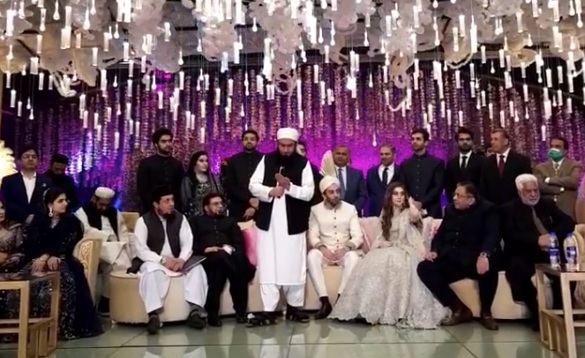
The wedding organisers supposedly paid Rs5.5m to singer Rahat Fateh Ali Khan, while singers Atif Aslam was paid Rs5m for gracing the mehndi night. Cleric Moulana Tariq Jameel was reportedly paid Rs1m for solemnising the marriage ceremony.
K-5 Concepts — event manager that managed baraat decor– was paid Rs15-20m as per FBR. It was also accused of tax evasion along with Rosa Blanca. Qasim Yar Tiwana, the event manager, was paid Rs15-20m for the decor of the baraat. According to FBR, Tiwana declared Rs216,743 as income from business in the tax year 2019.
Whimsica I Parties and United Events and Services were paid Rs10m each for decor, whereas Ahsan Habib also received Rs10m in payments for walima decorations.
Photographers and videographers also provided their services for hefty amounts. Irfan Ahsan was paid approx Rs3m, Mobeen Studios charged Rs2m, Osman Pervaiz received Rs3-3.5m, while Ahmad Fayyaz charged Rs1m for photography at mehndi and baraat.
Shazray Khalid and Winc by Nadia charged Rs1m each for makeup services.
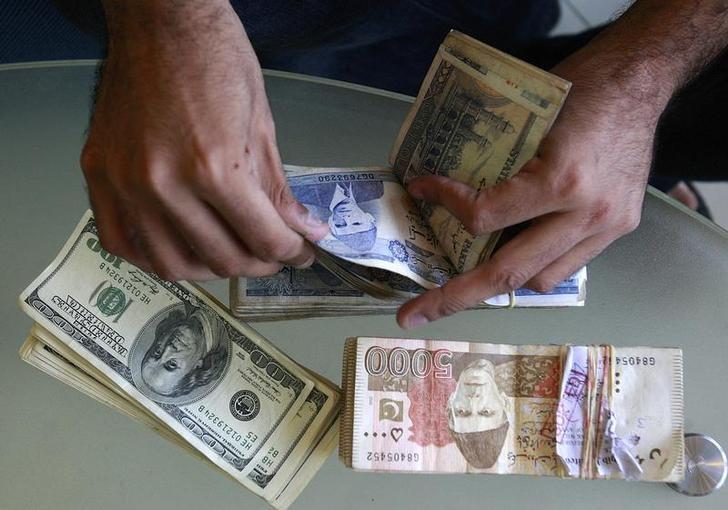
Since October, the Pakistani Rupee has continued to gain ground against the US Dollar, becoming the third best-performing currency of the Asian continent.
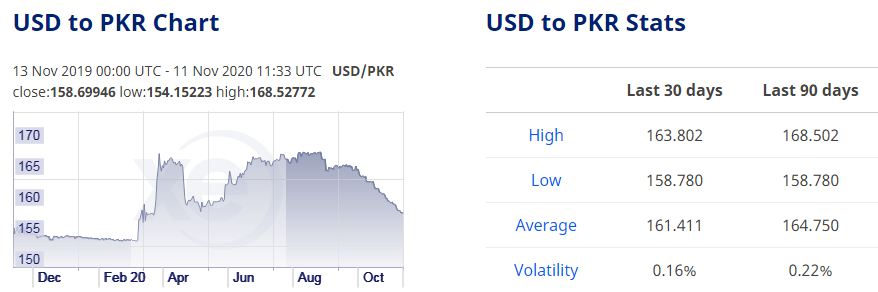
After a month-long depreciation against the rupee, the US dollar is being sold at 158.69 in the interbank market as of Nov 10. Only South Korean and Indonesian currencies have performed better than the PKR that has seen 3.1% appreciation over the past four weeks.
Following a deal with the International Monetary Foundation (IMF) by the Imran-led government in May 2019, the PKR had taken a nosedive against USD. It was being sold at 110 in April 2018, and by July 2020, 1USD was equivalent to PKR169. However, since Aug, the dollar has been shedding weight against the PKR and other foreign currencies.
Money dealers in the market attributed this rally of rupee against the US dollar to encouraging economic indicators as well as the global downfall of the greenback. On the other hand, importers are also being careful in buying goods from their foreign suppliers owing to the second wave of coronavirus, they claimed.
Forex Association of Pakistan President Malik Bostan quoted by a local media outlet said the dollar will likely to depreciate further amid an increase in exports. He sounded hopeful of the PKR’s appreciation against the USD, saying the strong economic outlook of Pakistan will help boost its foreign exchange reserves.
He said that Pakistan’s reliance on the dollar may also reduce — that would result in a stronger PKR, as China and Pakistan are now looking to trade in Yuan, the Chinese currency. Pakistan’s biggest import bills come from China.
The Federal Board of Revenue (FBR) has sent a notice to Master Tiles Director Sheikh Muhammad Iqbal, asking him to explain the source of income after he spent millions on a lavish wedding ceremony.
The notice was served by Gujranwala’s chief commissioner of Inland Revenue with regard to extravagant expenditure made on the marriage ceremony of the daughter of Master Tiles director and the son of the owner of a superstore chain, Jalal sons.
A notice, under section 176 of the Income Tax Ordinance, 2001, has been issued to the above in order to ascertain withholding tax and legal action will be taken accordingly, reported Pakistan Today.
At the wedding, Rose Blanca Club Lahore provided catering, KSC Concept were the event planners, Irfan Ahsan provided photography, while Rahat Fateh Ali Khan provided the entertainment. The wedding had been trending on social media the past week for being grand and extravagant.
The four-day festivities, which were attended by several celebrities and notable personalities, culminated in a one-of-a-kind valima which featured performances by Turkish gymnasts.
Several notable personalities including celebrities and politicians were spotted at the wedding. Among those present on the baraat were Special Assistant to Chief Minister Punjab on Information Dr Firdous Aashiq Awan and Maulana Tariq Jameel.
Maulana Tariq also conducted the nikkah ceremony of the bride and groom.