Category: Business

  • SBP reserves jump $261m to $13.4bn

    SBP reserves jump $261m to $13.4bn

    The State Bank of Pakistan has witnessed a 1.98 per cent increase in its foreign exchange reserves after an influx of $261 million during the week ending on December 31, 2020.

    According to the data issued by the central bank on Thursday, the current exchange reserves stand at $13.4 billion as of now. The state-run news agency, APP, reported that overall liquid foreign currency reserves, including net reserves held by the banks, SBP excluded, stood at $20,512.1 million.

    Net foreign reserves held by commercial banks clocked in at $7.09 billion. According to the State Bank, the increase came on the back of official inflows of the government.

    On Wednesday, the Pakistan Stock Exchange (PSX) gained over 500 points to cross the 45,000-point threshold for the first time since May 2018. According to the reports, “Exploration & production and oil & gas marketing sectors rebounded strongly, whereas cement and fertilizer sectors continued with previous day’s positive momentum.”

    “International crude oil prices jumped significantly on the conclusion of agreement among OPEC+ countries, which became the basis for an uptick in E&P stocks. Cement sector leaped on the expectation of an increase in cement price in the northern region, while banking sector contributed positively in anticipation of annual results.”
  • Stocks hold gains to cross 45,000 points threshold for first time since May 2018

    The Pakistan Stock Exchange (PSX) gained over 500 points on Wednesday to cross the 45,000-point threshold for the first time since May 2018.

    Global equity markets also showed a positive trend. Profit reported that the buying activity was observed across the board. According to the newspaper, “Exploration & production and oil & gas marketing sectors rebounded strongly, whereas cement and fertilizer sectors continued with previous day’s positive momentum.”

    “International crude oil prices jumped significantly on the conclusion of agreement among OPEC+ countries, which became the basis for an uptick in E&P stocks. Cement sector leaped on the expectation of an increase in cement price in the northern region, while banking sector contributed positively in anticipation of annual results.”
    Express Tribune reported that the trading volumes lifted to 664.5million shares due to strong investors’ interest. The market outlook also remained positive due to the government’s decision to settling circular debt with the independent power producers (IPPs), though partially.

    Moreover, the petroleum product sales that rose in double digits also helped the bullish trend. “Oil sales were up 16% to 1.59 million tons in December 2020 compared to 1.37 million tons in the same month of 2019,” the report said.

    It further stated that the State Bank of Pakistan’s report on the Pakistani economy also played a role in rallying the stock market. According to the central bank, the economic activity in the country has been largely restored to pre-coronavirus levels in the first quarter of the current financial year.

  • Govt okays Rs16/kg hike in LPG prices; petrol prices also up by Rs2.31

    Govt okays Rs16/kg hike in LPG prices; petrol prices also up by Rs2.31

    The government has approved a hike of Rs2.31 and Rs1.80 in the prices of petrol and diesel, respectively, for the month January, while the price of the Liquified Petroleum Gas (LPG) has also been increased by Rs16 per kg.

    “While considering relief for the people, Prime Minister Imran Khan approved the minimum possible increase in prices of petroleum products against OGRA’s [Oil and Gas Regulatory Authority] recommendations,” a Prime Minister’s Office (PMO) press release said.

    OGRA had sought an increase of Rs10.68 in petrol price and Rs8.37 in diesel price, whereas it asked the government to increase the price of kerosene oil by Rs10.92 and light diesel oil (LDO) by Rs14.87; the government however reduced it by Rs3.36 and Rs3.95, respectively.

    Meanwhile, OGRA notified a hike of Rs16 per kilogramme in the prices of Liquefied Petroleum Gas (LPG), effective from today, which comes as another blow for the public already facing high inflation.

    According to OGRA’s notification, the LPG prices are raised by Rs16/kg. With the increase, the LPG cylinder for domestic users will be up by Rs188 and commercial users by Rs722.

    It may be noted here that the consumers are already facing a shortage of gas nationwide and have to rely on LPG cylinders instead.

  • EU refuses to lift ban on PIA, seeks safety audit of CAA

    EU refuses to lift ban on PIA, seeks safety audit of CAA

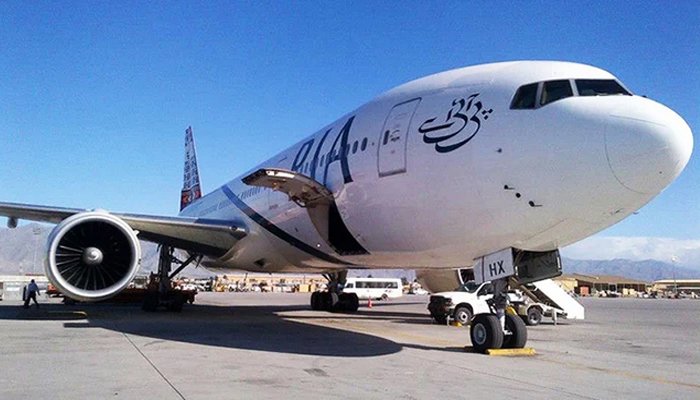
    The European Union Aviation Safety Agency (EASA) has decided to retain a ban on the Pakistan International Airlines, saying it will not be lifted until a complete safety audit of the Civil Aviation Authority (CAA).

    In response to a request by PIA CEO Arshad Malik, wherein he sought temporary suspension of the ban, the EU agency said the CAA will have to fulfill the pre-conditions if it wanted the ban to be lifted.

    Profit reported a letter by EASA as saying: “Regarding a lack of confidence in certification and oversight activities performed by the Pakistani CAA, which was the second aspect that led to the suspension of Third Country Operator Authorisation, the investigation performed by the European Commission and by the ICAO [International Civil Aviation Organization] has not yet been concluded.”

    “Consequently, as all preconditions to lift the suspension are not met and, as an audit will be necessary, the agency decided not to revoke your Third Country Operator (TCO) authorisation but to extend the suspension period by additional three months.”

    On Saturday, Ghulam Sarwar, the aviation minister, had claimed that the ban on PIA flights to Europe would be lifted soon. The EU banned the PIA flights in July after claims that the PIA pilots had fake licences.

  • Govt mulls Rs3.3 hike in power tariff to meet IMF demand

    Govt mulls Rs3.3 hike in power tariff to meet IMF demand

    The government is likely to hike power tariff by Rs3.30 per unit in line with the International Monetary Fund (IMF) conditions to get the programme rolling that has been suspended since Feb 2020.

    Daily Jang quoted a senior government official, saying the increase in the power prices will be made before the start of the next year and the government will take measures to take the masses into confidence over the move.

    The IMF bailout was availed by the Pakistan Tehreek-e-Insaf (PTI) in 2019 to provide crucial support to fast depleting foreign exchange reserves. But the package was suspended at the start of this year.

    Pakistan has to return $4.4 billion on account of foreign commercial loans during the current fiscal year for which it desperately needs the money from the monetary fund. It has also already returned $2bn to Saudi Arabia and will return $1bn soon to clear the Saudi debt.

    Earlier this week, Pakistan secured a $1.7 billion (Rs272 bn) debt relief agreement to help offset the financial headwinds sparked by the coronavirus pandemic.

    The deal provided a moratorium on debt payments for large swathes of the current fiscal year and help ease the cash-strapped country’s massive financial obligations.

    “The Government of Pakistan has successfully negotiated and concluded rescheduling agreements with 19 bilateral creditors, including members of the Paris club,” the Ministry of Economic Affairs said in a statement.

  • Motorway police introduces anti-sleep device for drivers

    In a bid to curb traffic accidents, the National Highways and Motorway Police has introduced an alarm-like device to keep drivers from falling asleep at the steering wheel, and claims that it will significantly reduce the rate of accidents on the motorway.

    The device is designed to be worn on their ears and has sensors that set off an alarm if and when a driver’s head tilts forward due to drowsiness. The alarm is a loud beep that sounds off near the ears of the driver. As reported by a motorway policeman who demonstrated the use of the device in a video, it actually costs Rs. 750 but will be made available for public use at Rs. 300 with the help of an unnamed donor.

    The policeman also informed the media that the department will introduce the device in coordination with the traders associations and local administrations. He added that roadside stalls will be placed in each area to sell the device to the public. The motorway police department affirmed that most of the accidents on the motorway are caused by drivers who fall asleep while driving, because of which hundreds of citizens lose their lives on a regular basis. It added that the new devices can be worn by both drivers and passengers to prevent such catastrophes.

  • Creditors reschedule loans worth Rs272bn

    Creditors reschedule loans worth Rs272bn

    Pakistan has secured a $1.7 billion (Rs272 billion) debt relief agreement to help offset the financial headwinds sparked by the coronavirus pandemic, officials have said.

    The deal, following months of negotiations with creditors, will provide a moratorium on debt payments for large swathes of the current fiscal year and help ease the cash-strapped country’s massive financial obligations.

    “The Government of Pakistan has successfully negotiated and concluded rescheduling agreements with 19 bilateral creditors, including members of the Paris club,” the Ministry of Economic Affairs said.

    The ministry described the deal as ‘timely’ that will help save the ‘lives and livelihoods of millions’. Pakistan’s economy was already on life support before officials began shuttering large segments of the economy in the spring as a range of lockdown measures were rolled out to fight the spread of the coronavirus.

    Prime Minister Imran Khan has repeatedly called for debt forgiveness from international donors as tax revenues cratered, inflation soared, the currency was devalued, and fiscal deficits widened.

    In June, Pakistan was named as one of a handful of countries to secure a moratorium on debt repayments from the Paris Club in an effort to ease the economic impact of the coronavirus crisis. 

  • Naya Pakistan: PM appoints former Silicon Valley, IBM executive as special tech zones chief

    Naya Pakistan: PM appoints former Silicon Valley, IBM executive as special tech zones chief

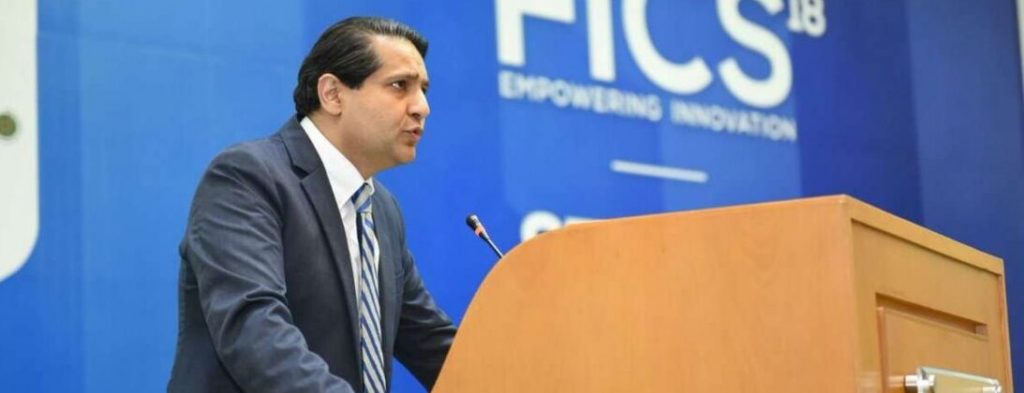
    Prime Minister (PM) Imran Khan has appointed Amer Ahmed Hashmi as chairperson for the Special Technology Zones Authority (STZA).

    According to the ordinance passed on Dec 2 for the establishment of Special Technology Zones Authority, the new authority will focus on the growth of scientific and technological ecosystem in the country, primarily by fostering the development of technology zones and high-tech industrial parks, thereby contributing to the acceleration of the evolution of the national system of innovation.

    Headquartered in Islamabad, the federal body will help promote the global competitiveness of the domestic technology sector, as well as provide institutional and legislative support to attract foreign direct investments in the high-tech sector.

    Amer Ahmed Hashmi

    The prime minister would serve as the president of the Board of Governors of the STZ Authority.

    As a global strategist, IT executive, and entrepreneur, Amer Hashmi possesses diverse global experience in organisational leadership with companies like IBM and MCI Systemhouse. He was the founding CEO of Si3 – Pakistan’s pioneering technology outsourcing firm that helped stimulate IT systems integration in public and private organizations in Pakistan. His work has been featured in Forbes Asia, Businessweek & Financial Times UK.

    Hashmi spent the last 10 years building a knowledge ecosystem in his capacity as advisor and chief strategy officer at National University of Sciences & Technology (NUST).

    He was also the chairman of executive committee of NUST Science & Technology Park and founding president of the Global Think Tank Network (GTTN).

    Hashmi is a graduate of York University, Toronto, and has been trained in several technical and specialised programmes, including executive leadership on ‘Innovation for Economic Development’ from Harvard’s Kennedy School of government.

  • Vehicle prices to finally come down in Pakistan?

    Vehicle prices to finally come down in Pakistan?

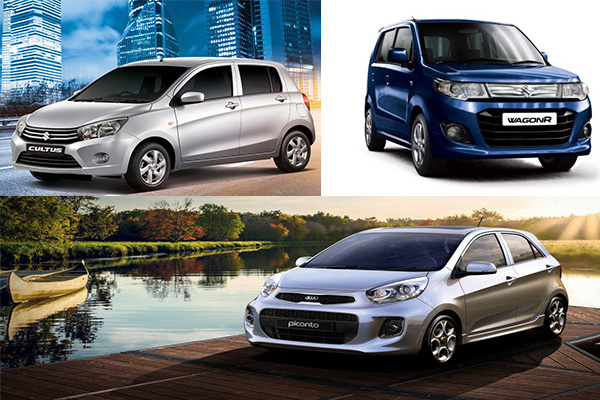
    Federal Minister for Science and Technology Fawad Chaudhry has said that car prices in Pakistan will be reduced in the coming days.

    Speaking to Geo News on Wednesday, Fawad said that the prices of cars in Pakistan have increased immensely over the past few years. However, the Economic Coordination Committee (ECC) has approved the Electric Vehicle Policy — which will end the monopoly of car manufacturers in the country.

    The minister maintained that the Electric Vehicle Policy is crucial for urban cities like Lahore and Karachi, as over 35% of air pollution in these cities is caused by emission of smoke from vehicles.

    Speaking about other initiatives taken by the government, the minister said that three major mobile phone companies would soon start operations in Pakistan and that the ECC has also approved the mobile manufacturing policy, he added.

    He said that these are great achievements accomplished during the “Made in Pakistan campaign”, and in near future, the country will be manufacturing its own vehicles and mobile phones.

  • 77% Pakistanis believe country is heading in wrong direction: survey

    At least 77 per cent Pakistanis believe that the country is heading in the wrong direction, whereas 23 per cent think there’s nothing wrong with Pakistan, said a survey by research company IPSOS.

    According to The News, the survey was conducted in the first week of December and over 1,000 people participated in it. “The findings were released on Tuesday for the last quarter (Q4) of 2020 and compared with people’s responses from the same period a year ago,” it added.

    Last year, 21 per cent people believed that Pakistan was on the right track, while 79 per cent contested this view.

    This year, 36 per cent said that their current personal financial situation was weak, while 51 per cent said it was neither strong nor weak, and 13 per cent said they were in a strong financial position.

    In comparison with the results of the last year, the people are in a better financial position: the data showed that 38 per cent believed that their financial situation was weak, 5 per cent viewed it as strong, and 57 per cent said it was okayish.

    Meanwhile, on province-wise assessment, the report found that a “poor financial situation” featured in almost all the provinces and inflation ranked number 1 among the list of top four contributors.

    “In Sindh, the second-highest contributor was viewed to be unemployment (20 per cent), followed by COVID-19 (17per cent) and poverty (16 per cent). In Punjab, 23 per cent people felt the province’s poor financial situation was due to unemployment, 8 per cent thought it was due to COVID-19 and 14 per cent believed poverty played a key role,” the newspaper stated.

    Meanwhile, in Khyber Pakhtunkhwa about 18 per cent believed the poor financial situation was the result of unemployment, 12 per cent viewed coronavirus and 8 per cent felt it was poverty that was behind the province’s financial situation.

    Similarly, in Balochistan about 25 per cent responded by blaming unemployment, a mere 2 per cent felt COVID-19 played a role, and 25 per cent felt it was poverty that has led to the province’s dismal state of financial affairs, said reports.