Category: Business

  • Hundreds of importers, officials involved in tax evasion scandal: whistleblower

    Hundreds of importers, officials involved in tax evasion scandal: whistleblower

    In its latest crackdown against tax evasion, the Federal Board of Revenue (FBR) has decided to pursue legal action against individuals and entities for tampering with customs declarations. Reports reveal that 463 importers collaborated with officials from both Pakistan Revenue Automation Limited (PRAL) Pakistan Single Window (PSW) to carry out the tax evasion scheme.

    Moreover, 106 clearing agents aided the tampering process which affected more than 2300 customs declarations. According to reports, the operation caused the national exchequer to remain unable to realize approximately 14 billion rupees in revenues.

    Details regarding the case surfaced after a whistleblower documented the manipulation of customs declarations by importers to avoid tax payments. Reports claim that the whistleblower is a former PRAL employee and that his confession helped uncover the fraud that had been going on for close to five years.

    The whistleblower is in hot waters with the law themselves as they face multiple corruption charges. However, some believe that their testimony was crucial to reveal the crime.

    The FBR recently posted a colossal revenue shortfall of 386 billion in the first half of fiscal year 2024-25. Had these importers been filing their taxes lawfully, this shortfall could have been approximately 3.63 percent narrower.

    As per reports, the tax evasion scheme initially began in January 2020 and quickly enveloped a vast array of officials given the amount of money that could be made by defrauding the FBR. Officials helped importers evade taxes by preying on weaknesses that they had identified in the Web-Based One Customs (WeBOC) and PSW systems.

    Under Pakistan’s legal framework, transshipment goods declarations (TGDs) are to be converted to ‘Home Consumption’ GDs at dry ports. However, officials abused the system by altering TGDs by changing the values, quantities and even product classification codes of imported goods to avoid duties on customs.

    Reports claim that the fraud was mainly perpetrated at dry ports with tampered TGDs being a pressing issue in Peshawar (1,671 tampering instances) and Lahore (522 tampering instances). However, the fraud is not limited to the aforementioned cities as the tax evasion scheme enveloped operations in Islamabad, Multan, Sialkot and Quetta.

    While tampering with GDs is a publishable offense under Pakistan’s law, the gains from assisting tax evasion schemes are particularly alluring for public officials – which cause the FBR to face revenue losses. The FBR has directed the Directorate General of Post Clearance to audit declarations and calculate the monetary value of the damage the scheme had on the entity’s revenue stream.

  • Pakistan Railways pulls in record revenue by improving customer service

    Pakistan Railways pulls in record revenue by improving customer service

    Pakistan Railways has managed to pull in a record 88 billion rupees in revenue in 2024. As per reports, the implementation of widespread upgrades allowed the entity’s revenues to post a 40 percent year-on-year (YoY) growth rate.

    Upgrades include the addition of 10 new trains, service upgrades such as dining lounges and premium bathrooms, along with an increase in coach capacity. Moreover, the railway administration has increased daily operations to 100 while simultaneously boosting capacity to 19 coaches per train.

    Railway authorities are focusing on providing improved customer service to boost revenues. Following the new customer-centric approach, the entity has improved its menu, and after introducing new meals, the menu now includes north of 40 food items.

    According to credible reports, changes to the menu have so far been limited to major train lines such as Khyber Mail and Tezgam Express. Many believe that an improvement in food items offered on less popular train lines could boost the demand for those routes, allowing Pakistan railways to realize higher revenues.

    The introduction to state-of-the-art airconditioned bathrooms at Lahore’s railway station is the first of many bathroom upgrades. Reports indicate that the entity plans to incorporate these ‘executive’ washrooms across 13 major stations. The provision of and the commitment to provide these services have generated a positive customer response.

    A recent government performance review revealed that the entity generated a respectable 33 billion rupees in just the first five months of fiscal year (FY) 2024-25. Compared to the corresponding period last year, revenues have grown by an impressive 14 percent.

    The figures for the period from February to December 2024 reveal that Pakistan Railways was able to rake in over 80.5 billion rupees. Reports indicate that a whopping 42.65 billion rupees were made from offering fares and other services to passengers, while freight services were responsible for 27.85 billion rupees in inflows. Data from the review suggests that the entity was able to make an additional 10.04 billion rupees from miscellaneous sources.

    Revenues over the same period in 2023 were low, sitting under 68.5 billion rupees. Operational efficiency has witnessed drastic improvements, too. This is because punctuality rates have reportedly gone from a measly 63 percent in 2019 to a respectable 82 percent.

    Some believe that the digitalisation of certain processes, such as fuel management, has proved to be beneficial for the entity. Data from reports suggests that the digitalisation process, coupled with the transfer of electricity meters to power distribution companies, has resulted in the entity saving a staggering 2.5 billion rupees.

  • Surplus electricity to be used for crypto mining

    Surplus electricity to be used for crypto mining

    The wave of crypto has taken Islamabad by storm as authorities have begun working on initiatives to boost blockchain-based data centres and crypto mining. According to credible reports, Pakistan is gearing up to direct surplus power in the national grid towards crypto mining to develop its infant crypto industry.

    This electricity will be provided to entities running crypto operations at economical prices, allowing for the sector to witness growth. As per reports, the Power Division has discussed the revision of electricity tariffs for the country’s infant industries.

    Relevant stakeholders have been approached to discuss these revisions, as the power division does not intend to offer subsidies to utilise the surplus power in the system. Moreover, authorities want to revise tariffs in such a manner that capacity payments fall considerably.

    Crypto mining operations could significantly reduce the issues Pakistan’s power sector is facing – especially those pertaining to excess power. Data from verified reports reveals that Bitcoin miners dedicate a staggering 60-70 percent of total revenues to pay for the electricity bills that the operation incurs.

    Given Pakistan’s power surplus, both crypto miners and the power sector could benefit from successful collaboration. However, the national grid may not be suitable for miners, given how such operations require a steady supply of power over extended periods.

    Moreover, bitcoin mining at large is an extremely electricity-intensive operation. Reports place the annual electricity consumption of global mining operations at a staggering 130 terawatt-hours (TWH).

    For perspective, the electricity consumption for overall mining operations is so large that it dwarfs even the power consumption of advanced economies – such as the Netherlands. Owing to its electricity-intensive nature, many countries have instated bans on Bitcoin mining to combat local power deficits and rising environmental issues.

    In 2021, China officially cracked down on their domestic bitcoin mining industry by banning the activity altogether. However, with Pakistan embracing the crypto wave and the crackdown other countries have imposed on their cryptosystems, investments could pour in.

    Chinese entities interested in mining could set up in Pakistan, bringing foreign direct investment (FDI) inflows into the country. This spells great news for cash-strapped Pakistan as FDI levels plummeted by 45 percent in February 2025.

    As per reports, the power division remains committed to offering tariffs to ‘emerging’ sectors. However, many believe that crypto operations could fuel capital flight and boost corruption in the country. This is because it is not easy to monitor international money transfers – as the crypto space is highly decentralised and has few regulatory checks in place.

  • Private sector lending records sharp fall

    Private sector lending records sharp fall

    The volume of credit being issued to the primate sector has witnessed a sharp fall as neither banks nor borrowers seem interested in relying on loans to fuel business growth. As per credible reports, this lack of interest persists despite the State Bank of Pakistan’s (SBP) massive 1,000 basis point cut in interest rates, which occurred gradually over seven months.

    Independent analysts have voiced concerns regarding revenue generation and economic growth, as low lending could cause the domestic economy to stagnate. According to reports, both economic growth and revenue have displayed signs of underperformance.

    Data released by the SBP has revealed that private-sector lending dropped to an abysmal 563 billion rupees by March 2025. Comparing these figures to December 2024, this figure stood at a respectable 1.98 trillion rupees.

    A suboptimal level of credit has been issued to the private sector over the past three years. Reports from credible sources have labelled credit growth as ‘extremely poor’ – a fact which is evident upon consideration of the negative impact on growth, which stands at a low 1.7 percent.

    Analysts have compared the abysmally low growth rates to the annual population growth, which dwarfs the economy’s growth rate by 2.4 percent.  An uptick in private sector borrowing levels often results in the expansion of business operations, creating many employment opportunities.

    However, reports claim that the converse is true in Pakistan, and a rise in unemployment levels could soon be witnessed. For Islamabad, this matter is especially alarming as the national average unemployment rate already sits at an uneasy 7.5 percent.

    A further increase in unemployment rates because of low growth rates could exacerbate the persisting economic issues that plague Pakistan. As per a recent report from the United Nations Development Program (UNDP), a staggering 47 percent of Pakistani’s live below the poverty line.

    The federal government intended to target a growth rate of 2.5 to 3 percent for FY 2024-25; however, suboptimal borrowing levels have not allowed the economy to grow per the expectations of economic analysts. 

    Some believe that a further reduction in interest rates by the SBP could allow the economy to rebound; however, the SBP may refrain from further cuts as it has to ensure that inflation does not run rampant as it did in 2023.

  • Petroleum exports almost double after witnessing astronomical rise

    Petroleum exports almost double after witnessing astronomical rise

    Pakistan’s oil import bill has witnessed meagre growth over the first eight months of Fiscal Year (FY) 2024-25. Data from the Pakistan Bureau of Statistics reveals that over the aforementioned period, a 1.2 percent growth was posted by the oil import bill.

    As per credible reports, the oil import bill for the first eight months of FY 2024-25 now rests at $10.71 billion – Up from the previous value of $10.58 billion over the same period last year.

    Historically, Pakistan has been a net importer of petroleum products, with few exports recorded in the commodity. However, Pakistan has exported a vast array of petroleum products during the current FY because of higher crude oil imports into the country.

    Higher imports of the commodity have allowed domestic refineries to scale up and manufacture a higher volume of petroleum-based products. Exports of petroleum products have surged by a staggering 96 percent during the first eight months of the current fiscal year from a conservative $183.33 million to $358.15 million.

    Analysts believe that this surge in exports could assist the economy’s growth as an improvement could be witnessed in Pakistan’s trade balance. For Pakistan, which has historically run large trade deficits, especially with its oil-rich trading partners, this export growth could imply a potential narrowing of the trade deficit in the coming years.

    Compared to the first eight months of the last fiscal year, during which Pakistan recorded no exports of crude petroleum, exports of the commodity have reportedly spiked to a whopping 40,552 tons. Exports of petroleum top naphtha have surged by an astronomical 113.77 percent on a year-on-year basis to settle at their current volume of 44,571 tons.

    Some believe that rising export levels of petroleum products imply that the domestic demand for such products has not kept up with production. According to data from PBS, the output for all 11 petroleum products grew by 2.47 percent compared to last year’s production levels.

    Data shows that domestic production of high-speed diesel (HSD) grew by 6.21 percent. HSD is a major input in Pakistan’s agricultural and transport sectors, and given the agrarian nature of the economy, increasing HSD production implies that the country could move towards self-reliance.

    Furnace oil production posted a growth of 19.74 percent at the start of the second half of FY 2024-25. If domestic refineries continue to operate as they currently are, exports of petroleum products could continue to witness the steady growth they have enjoyed over the past few months.

  • Eid Collection 2025 by Ideas by Gul Ahmed – Your Guide to Festive Fashion & Luxe Living

    Eid Collection 2025 by Ideas by Gul Ahmed – Your Guide to Festive Fashion & Luxe Living

    Eid is more than just a festive occasion—it’s a chance to embrace your individuality, showcase your style, and celebrate with confidence. Whether you’re searching for the perfect Eid dress, the latest Pakistani Eid dresses, or elegant home accessories to enhance your space, the Gul Ahmed Eid Collection 2025 has everything you need for a stylish and memorable celebration.

    This year, Eid dress designs are all about sophisticated details, rich fabrics, and effortless elegance. From ready to wear dresses for those who love convenience to unstitched ensembles that allow for custom tailoring, this collection has something for every woman. And to complete your look? A signature perfume for men and women that leaves a lasting impression.

    Find Your Perfect Look – Women’s Eid Collection 2025

    Every woman has her own unique style, and her Eid outfit should reflect that. Whether you love traditional grace, contemporary minimalism, or a mix of both, there’s an outfit designed just for you.

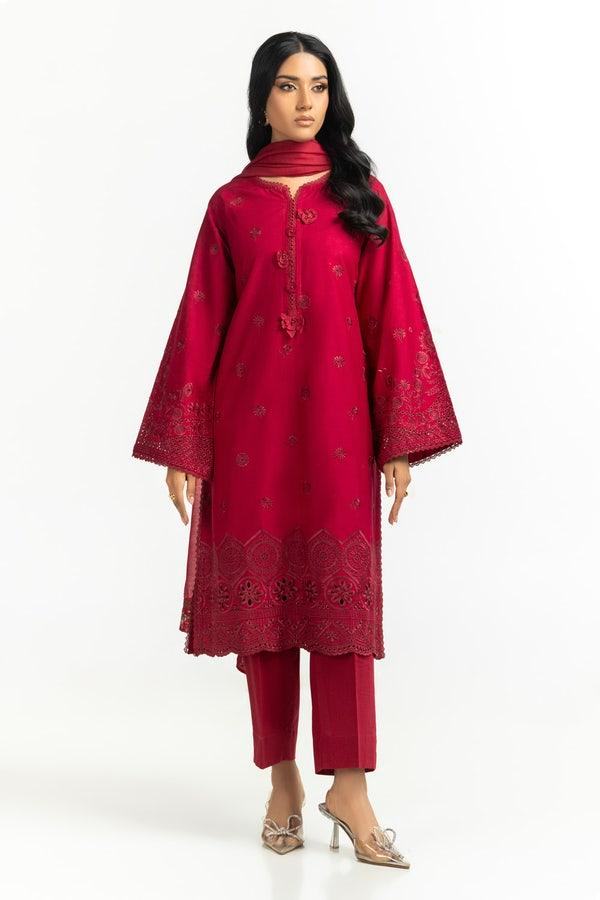
    ·         For the woman who loves classic elegance – A 3-piece embroidered cotton jacquard suit in a bold red hue, featuring intricate embroidery on the neckline and sleeves, finished with a beautifully textured jacquard dupatta. A refined choice for those who love sophistication with a festive touch.

    ·         For the trendsetter who loves a modern touch – Elevate your Eid look with a stunning 3-piece suit in luxurious paper cotton. Adorned with exquisite gold and lacquer prints, the shirt front and sleeves feature intricate handwork, adding a touch of refined elegance. Paired with a matching back, a dyed trouser with a beautifully printed border, and a gracefully flowing gold and lacquer-printed paper cotton dupatta, this outfit effortlessly blends tradition with contemporary sophistication.

    ·         For the one who adores effortless glamour – Step into sophistication with a 3-piece unstitched embroidered chiffon suit in a rich brown shade. The detailed embroidery on the front and sleeves, combined with a soft chiffon dupatta, creates a flawless balance of charm and elegance.

    Style Meets Comfort – Ready to wear Dresses for Eid

    If you love hassle-free fashion, Gul Ahmed’s ready to wear collection is here to make your Eid effortless and chic. No tailoring stress, just stunning outfits ready to be worn.

    ·         For the woman who loves subtle sophistication – An embroidered ready to wear shirt in off-white, tailored in a comfortable silhouette with 3D floral detailing. Paired with a printed cotton silk dupatta, this look radiates timeless elegance.

    ·         For a bold festive statement – A red cambric embroidered co-ord set, designed in a structured fit with intricate embroidery and a floral-embellished neckline. A perfect blend of tradition and trend.
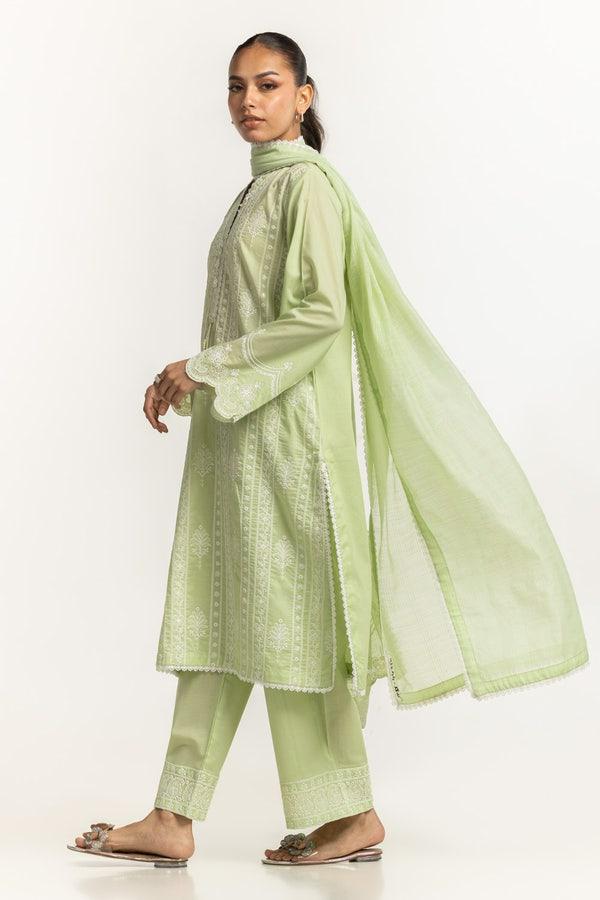
    ·         For a refreshing summer look – Celebrate in style with this intricately embroidered Chikankari cambric suit in a serene light green hue. Featuring a relaxed-fit V-neckline adorned with subtle embellishments and tassels, along with delicately embroidered sleeves, this ensemble exudes effortless elegance. Paired with matching trousers and ready to be styled with a coordinating dupatta, it’s the perfect choice for festive summer gatherings.
    Beyond Fashion – Transform Your Home with Ideas Home

    Eid isn’t just about dressing up—it’s about creating a space that feels warm, welcoming, and stylish. With the Ideas Home collection, elevate your interiors effortlessly.

    ·         Upgrade your bedding game with the Lavender Bloom Quilt Cover Set, designed to bring effortless elegance to your space. Crafted from wrinkle-resistant, easy-care fabric, this non-iron bedding collection saves you time while maintaining a polished and luxurious look. Perfect for busy households, it blends practicality with serene lavender hues to create a dreamy and relaxing bedroom atmosphere.

    ·         Dine in style – The Checks Woven Table Runner brings a touch of refinement to any dining setup, making your meals feel as special as your celebrations.

    ·         Make a statement with decor – The Rose Dust Pillow Cover Set adds a pop of personality to any room, proving that bold details can transform your home just as much as your wardrobe.

    Complete Your Look with the Perfect Fragrance

    No festive look is complete without the right perfume—a scent that defines your personality and leaves a lasting impression.

    ·         For the woman who dreams big – Adore Bliss Perfume is a floral sweet blend with whipped cream, jasmine, and sandalwood, creating a soft yet confident aura.

    ·         For a bold, unisex scent – Liquid Gold Perfume is an amber woody fragrance featuring passion fruit, jasmine, cinnamon, and deep floral accords, settling into rich patchouli and labdanum for an unforgettable impression.

    ·         For a fragrance that embodies fun and innocence, Baby Shark Pink is the perfect choice for kids. With fruity top notes of juicy pear and delicate floral hints of rose, this light and refreshing scent lasts all day, keeping little ones feeling fresh and joyful as they play.

    This Eid, Make a Statement

    Eid fashion isn’t just about looking good—it’s about feeling unstoppable. This season, let your Eid dress reflect your personality, your power, and your confidence.

    Whether you choose ready to wear dresses, elegant Eid dress designs, or timeless Pakistani Eid dresses, the Gul Ahmed Eid Collection 2025 has something for everyone.

    Shop the latest trends online at www.gulahmedshop.com or visit a store to find your perfect fit.

    Celebrate in style. Own your moment. Be unforgettable.
  • PSX reaches record high as bull run helps benchmark index cross 119,000 points

    PSX reaches record high as bull run helps benchmark index cross 119,000 points

    The Pakistan Stock Exchange (PSX) achieved an all-time high as a bull run allowed the KSE-100, the benchmark index of the PSX, to reach an intraday high of 119,421.81 points. The index peaked at 9:48 AM after which profit taking took hold of the market causing the market to close at a respectable 118,769.77 points.

    For reference, the KSE-100 closed at 117,974 points on Wednesday after which the index recorded a growth of 0.67 percent during trading hours on Thursday allowing for a 795.75 point rise. The market displayed a slowdown around 12:30 PM as the KSE-100 hit its intraday trading low of 118,444.03 points before recording a swift recovery to its current position.

    Most indexes remained in the green with the All-share index (ALLSHR) experiencing a 0.82 percent growth rate which translates into a 600.67 point gain for the index. Unlike the KSE-100, which tracks the performance of the 100 largest and most liquid companies, the ALLSHR index records the performance of all publicly listed companies on the PSX.

    Data from the PSX reveals that ALLSHR index has shot up by a staggering 68.5 percent over just one year with the KSE-100 recording an even greater rise of 80.69 percent over a one year period – a growth rate which many would categorize as nothing short of meteoric. Moreover, the Year-to-Date (YTD) change for ALLSHR and KSE-100 index were recorded improvements, sitting at 2.02 percent and 3.16 percent respectively.

    A vast array of companies witnessed a rise in share prices with Sally Textile Mills Limited (STML) and Jubillee Spinning & Weaving Mills Ltd (JUBS) winning big – to the tune of growth rates that sat at 11.11 percent (STML) and 10.87 percent (JUBS).

    However, not every publicly listed stock witnessed an improvement as many companies witnessed sharp declines. Of these declining companies, the one that fared the worst during intra-day trading was First Capital Securities Corporation (FCSC) which posted a 16.85 percent decline in its position.

    Trading volume of regular stocks stood at an impressive 667,875,803 shares translating into a total value of over 38.5 billion rupees. As per credible reports, the bull run was fueled by strong domestic ‘institutional buying’ along with a possible solution of Pakistan’s power sector’s circular debt in the works.

    Moreover, independent investors also believe that the disbursement of over $1 billion from the International Monetary Fund (IMF) under the Extended Fund Facility (EFF) is on the horizon. Given the aforementioned reasons, investors have parked their funds into stocks as they foresee great returns in the near future.

  • Bilateral ties to witness boost after Pak-Saudi talks

    Bilateral ties to witness boost after Pak-Saudi talks

    In a bid to strengthen bilateral ties, a high-level delegation from Pakistan met with key officials from the Kingdom of Saudi Arabia (KSA). As per credible reports, both sides have agreed to stay committed to improving joint efforts to address regional challenges.

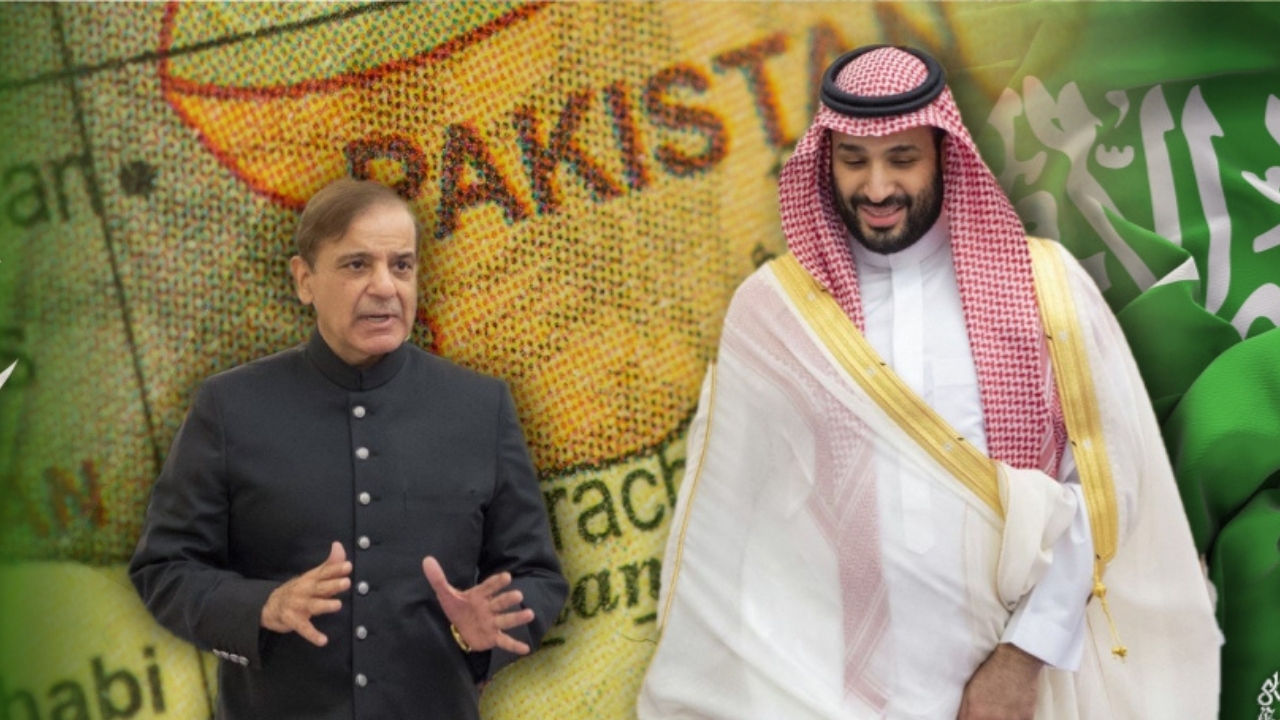
    Leading the Pakistani delegation, Prime Minister (PM) Shehbaz Sharif landed in Jeddah for a four-day visit to KSA. According to reports, he intends to discuss further avenues of collaboration with his Saudi counterparts across a vast range of sectors.

    As per reports, the Pakistani delegation comprises various high-profile members including Chief of Army Staff General Asim Munir, Deputy Prime Minister and Foreign Minister Ishaq Dar, Chief Minister of Punjab Maryam Nawaz, along with a slew of federal ministers and notable high-ranking state officials.

    In a meeting with KSA’s Crown Prince Mohammed bin Salman (MBS), Shehbaz Sharif outlined the cooperation between both countries while highlighting the importance of economic ties. The Pakistani premier, in a post on X (formerly Twitter), discussed the successful nature of his meeting with MBS and revealed that both leaders had gone over ways to improve security collaboration and boost trade and investment levels.

    Shehbaz Sharif’s statements regarding boosting ties with the Middle Eastern kingdom represent the gravitational pull KSA has on Pakistan’s economy. According to reports, PM Sharif aims to take Pakistan-KSA “relations to new heights and transform them into a mutually beneficial economic partnership.”

    Aside from sharing a common religion, both countries are largely on the same page when it comes to matters pertaining to geopolitics and military coordination. However, this codependence isn’t just limited to economic cooperation, as both sides have interests vested in the other’s economy.

    Analysts believe that Pakistan-KSA ties have disproportionately benefitted cash-strapped Pakistan – which frequently finds itself on the receiving end of Saudi aid. Moreover, Pakistan has historically sourced a great deal of petroleum from the Middle Eastern country, allowing for a steady supply of fuel in the country.

    In exchange, Pakistan has worked with KSA on joint military ventures. Both leaders have outlined the need to concentrate on enhancing bilateral trade and investment. This spells great news for Pakistan, which witnessed its foreign direct investment (FDI) levels plummet by a staggering 45 percent in February 2025.

    In an effort to boost inflows of FDI into Pakistan, Shehbaz Sharif outlined Pakistan’s investment-friendly climate and policies, which would facilitate investors from the KSA. Reports reveal that Pakistan’s delegation invited Saudi businesspersons to consider investing in Pakistani initiatives under the Special Investment Facilitation Council (SIFC).

  • PIA’s second privatization attempt underway as govt moves to offload shares

    PIA’s second privatization attempt underway as govt moves to offload shares

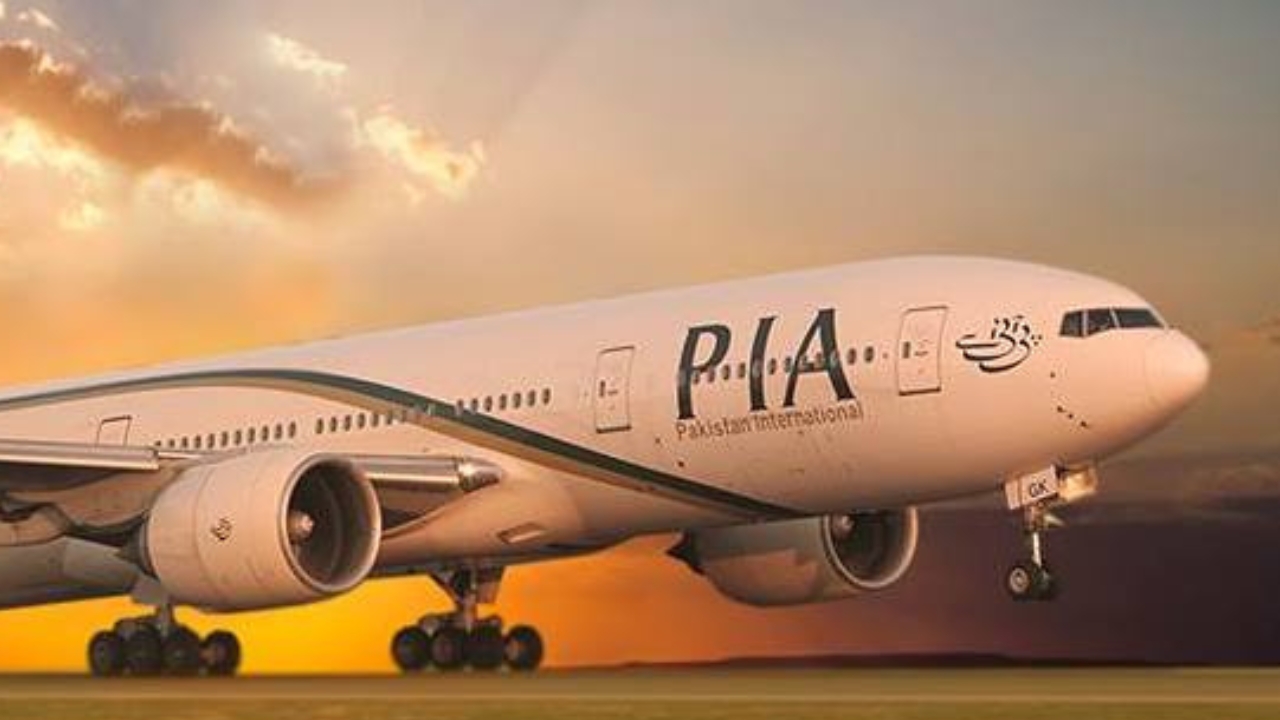
    In an attempt to sell off loss-making State Owned Enterprises (SOEs), the board of the Privatisation Commission has advocated for authorities to pursue selling off most of the government’s shares in Pakistan International Airlines (PIA). As per credible reports officials are also exploring a partial sale of the SOE as opposed to privatising it entirely.

    As per a press statement, Muhammad Ali, the advisor to the Prime Minister on matters pertaining to privatisation, has reportedly suggested the Cabinet Committe on Privatisation, to sell off 51 to 100 percent of PIA’s equity that is currently held by the federal government. If the committee acts on Muhammad Ali’s advice, Islamabad will lose managerial control over the company.

    However, the decision on the amount of equity the government is willing to give up will be decided after key officials and authorities engage with potential investors. The government recently attempted to privatise the national carrier which remained unsuccessful as many of the six chosen parties were hesitant to partner with the government due to its excessive control over decisions. 

    If the government can successfully negotiate the sale of over 50 percent of the company, reservations regarding the government making decisions will dissipate – as private entities will gain decision making power. These reservations hold merit as officials running the national carrier, arguably, have a bad track record when decision making is concerned. The bloated workforce is one of the many administrative inefficiencies PIA faces. 

    However, privatising PIA has become a matter of great urgency in the past few weeks. As per credible reports, Islamabad has to privatise PIA to appease the International Monetary Fund (IMF) as the government has made assurances to the international creditor that it will sell off the airline by July 2025. 

    While the general public has historically been against privatisation of PIA, it could relieve significant pressures on the national exchequer. Since PIA is owned by the government, any losses that the company incurs has to be borne by the government. These costs are ultimately borne by taxpayers who have to finance PIA’s losses to keep it operational.

    However, many believe that the government may have to sell the company without the liabilities that the company has accrued over time. While this may attract more buyers, it could result in tax payers being stuck with a 45 billion rupee charge – an amount that could take years to pay off.

  • World Bank approves $102 million for microfinance project

    World Bank approves $102 million for microfinance project

    In a bid to improve and foster resilience in Pakistan’s microcredit schemes, the World Bank (WB) has authorised Islamabad to receive $102 million in financing. As per credible reports, the international lender has approved the loan to insulate the microfinance sector from climate shocks.

    The WB’s delegation to Islamabad revealed in a news release that the aforementioned financing would fall under the umbrella of the Resilient and Accessible Microfinance (RAM) project. This spells great news for cash-strapped Pakistan as these funds may allow the country to equip itself to face its chronic climate issues.

    A team from the WB recently went over possible reforms that could help revitalise Pakistan’s economy. According to reports, the WB team outlined possible venues for privatisation along with the willingness to extend financial assistance to approximately $20 billion.

    The WB’s country director for Pakistan, Najy Benhassine, claimed that microfinance was a key financial instrument that could help economically vulnerable households in the country. As per reports, he outlined the need for microfinance in Pakistan’s rural areas, highlighting how the provision of such services could boost the sector’s resilience.

    There is merit to this claim as expanding the user base would allow for more individuals to rely on the microfinance sector – effectively entrenching itself in the economy as a vital service. Najy announced how the RAM project was just part of the wider 10-year Country Partnership Framework (CPF).

    If the project is implemented as per the roadmap laid out by the WB, approximately 1.89 million Pakistanis will benefit from improved microfinance coverage. As per reports, 1 million of the 1.89 million Pakistanis will be women – particularly those residing in rural areas with low income.

    Moreover, the WB’s project could also benefit approximately 350,000 young people who are in financially vulnerable positions. Reports claim that coverage will improve as, under the project, microfinance entities are subject to receive financial assistance along with aid to guarantee that these entities do not fail when severe climate emergencies result in financial issues.

    The project could significantly assist small businesses in areas struck by calamities, and ‘recovery loans’ are to be issued to stabilise businesses struck by a disaster. Moreover, small farmers may also be eligible to receive financial assistance under the program.

    According to reports, the framework was developed in light of the widespread destruction of the floods that caught the country off-guard in 2022.