Category: Business

  • Mr. Hasan Mansha, Chairman, Hyundai Nishat Motor Private Limited

    Mr. Hasan Mansha, Chairman, Hyundai Nishat Motor Private Limited

    Accelerating into the Future

    I extend my heartfelt New Year’s greetings to our customers, employees, and everyone who supports Hyundai Nishat.


    Our recent achievements and upcoming milestones highlight our commitment to innovation and the evolution of Pakistan’s automotive landscape. Our accomplishments reflect our steadfast dedication to pursuing regional expansion through the planned export of vehicles, contributing to Pakistan’s economy, and the launches of the Elantra Hybrid, Pakistan’s first locally assembled Hybrid Sedan, along with the Ioniq 5 & 6, showcasing our dedication to innovation and meeting customer expectations.


    This year, we are excited about the highly anticipated launch of the new Sonata N Line model in Pakistan, featuring a sleek design, enhanced performance, and cutting-edge technology that redefine the driving experience. In line with this, Hyundai remains committed to continually introducing the latest models and technologies to its customers, ensuring a superior driving experience.


    Safety continues to be a priority, our newest release will feature Advanced Driver Assistance Systems (ADAS), setting new standards in road safety and driver convenience.


    None of this would be possible without the dedication of our team who set new benchmarks in the industry, from achieving technological milestones to ensuring unmatched after-sales service. To date, we have proudly rolled out over 40,000 units, a testament to our commitment to quality and excellence.


    As we welcome the new year, my hope is that we’ll keep pushing boundaries and creating a brighter future for Pakistan’s automotive industry. Thank you for your loyalty and trust. Together, let’s accelerate into the future and lead the way toward transformative progress in Pakistan’s automotive landscape.

  • Growth prospects remain positive despite increase in exports

    Growth prospects remain positive despite increase in exports

    Exporters are sensing trouble as Pakistan’s merchandise exports declined for the second consecutive month to close out 2024. As per data from the Pakistan Bureau of Statistics (PBS), the fall in exports can be attributed to a sharp decline in international demand for goods.

    Despite a decline in export figures, it is important to highlight that total exports have not declined. Instead, their growth rate has fallen.

    The reduced level of export growth is predicted to end soon. According to Dawn News, the demand for Pakistani goods is expected to increase in North America and European countries from January onwards.

    The past year saw exporters post respectable figures as exports started growing in July. This trend of rising exports was because of a greater volume of international orders and a stable Rupee.

    Pakistan witnessed exports grow by double digits throughout July-September, with growth rates surging by as high as 16 per cent in August. However, November saw the export growth rate fall to 8.98 percent, while December witnessed an abysmally low of 0.67 percent.

    The positive export trajectory can be partially attributed to Commerce Minister Jam Kamal Khan’s extensive efforts to boost exports. Islamabad had a motivation to boost exports as it could not have tolerated a high trade deficit at a time when the nation was already strapped for cash. The outflow of foreign reserves due to a trade deficit would create significant issues for the economy.

    Exports in December climbed up to $2.84 billion after growing by 0.28 percent on a month-on-month basis. The export revenue in December was $20 million higher than the corresponding month in 2023.

    While the growth rate is declining on a month-on-month basis, it is important to highlight how export revenues surged past $16 billion in the first half of FY 2024-25. Compared to the same period last year, the export revenue has grown by 10.52% as exports stood just a little under $15 billion.

    Interestingly enough, it might not be Pakistani exporters or the Minister of Commerce who will help increase the growth rate of exports again. Instead, Pakistani exports may rise once President-elect Donald Trump takes office.

    The reasoning here is that experts are predicting that Donald Trump might impose tariff increases on the USA’s trading rival, China. For Pakistani businesses, this spells great news as they will be able to attract buyers from the USA who had previously purchased from China.

    In an interview with Dawn, Pakistan Textile Exporters Association Patron in Chief Khurram Mukhtar revealed that retailers and buyers from the USA were already visiting Pakistan to place orders.

    If Donald Trump follows through with his threat of increasing tariffs on Chinese goods, Pakistani exporters might benefit

  • 35 officers fired: Effects of government’s crackdowns on trafficking

    35 officers fired: Effects of government’s crackdowns on trafficking

    Islamabad continues to rid government ranks of corruption as it dismissed over 30 officers for collaborating with human traffickers. According to Dawn, these government officers were part of the Federal Investigation Agency (FIA) and were aiding traffickers to send Pakistanis abroad illegally.

    This crackdown against illegal emigration picked up pace after a boat carrying illegal emigrants sank near Greek shores last month. However, Pakistani businesses will likely benefit from the measures being implemented to prevent a similar tragedy.

    Islamabad’s crackdown against illegal emigration could result in a reduction of brain drain, allowing Pakistan to retain highly skilled and educated individuals. Businesses can utilise these skillsets, allowing for a greater level of innovation and development in Pakistan.

    In light of the high level of collusion between government officials and human traffickers, foreign nations might require stricter measures to be in place for Pakistan’s planning to emigrate to these countries.

    With experts expecting stricter checks to be implemented to monitor legal and curb illegal emigration, the supply of labour is likely to rise in the economy. This is because fewer Pakistani workers will be allowed to leave the country in search of a better future abroad.

     For businesses, this translates into lower operational costs as workers will attempt to underbid each other in an attempt to secure jobs despite being paid a lower wage. Businesses can also hire workers with the highest skills. Both of these factors will result in lower costs and higher productivity for businesses, allowing business owners to attain higher profit margins.

    However, the crusade against human traffickers and their protectors in the government comes a little too late. Aside from the immense loss of human life over the years, Pakistan’s passport ratings have tanked too, sinking just as low as the makeshift ships that carry Pakistani emigrants to Europe.

    The Global Organized Crime Index, sponsored by the United States and European Union, has already highlighted how ‘tens of thousands of Pakistanis attempt to illegally migrate to the west’. This shows the negative image of Pakistan in the eyes of the West.

    Pakistan already has the third weakest passport in the world, ahead only of the war-torn countries of Syria, Afghanistan, Iraq and Somalia. The stricter checks on emigration might benefit businesses, but they will only serve to metaphorically strangle the average worker.

    This is because it is still beneficial for Pakistanis to emigrate abroad. As per the National Initiative against Organized Crime (NIOC), labour force growth has historically outpaced the job creation rate by around 0.3 percent. This could explain why the labour force participation rate grows so sluggishly in Pakistan, lurking around 52-53 percent, as there are not enough jobs to go around.

    Thus, the benefits of retaining workers may not outweigh the costs. This is especially true for professions in high demand across the world, such as healthcare and IT.

    As per the Pakistan Journal of Medical Sciences, over 50,000 professionals have left Pakistan from 1971-2022, and the number has grown rapidly in the past two years as well. The average salary for an MBBS doctor in the United States is around $226,831, while in Pakistan, the self-reported salaries stand at $4,204, as per Glassdoor.

    In an interview with The Current, a medical school student who preferred to remain anonymous expressed great pessimism regarding working in Pakistan after the completion of their MBBS program and preferred to “work abroad instead for the higher pays” instead.

    The crackdown may also temporarily hurt the growth of remittance levels in the near future, as illegal migration will stagnate. For Islamabad, which relies heavily on remittance inflows to stay afloat, this will undoubtedly sting.

  • Uraan Pakistan: Shehbaz Sharif’s ambitious blueprint for economic revival

    Uraan Pakistan: Shehbaz Sharif’s ambitious blueprint for economic revival

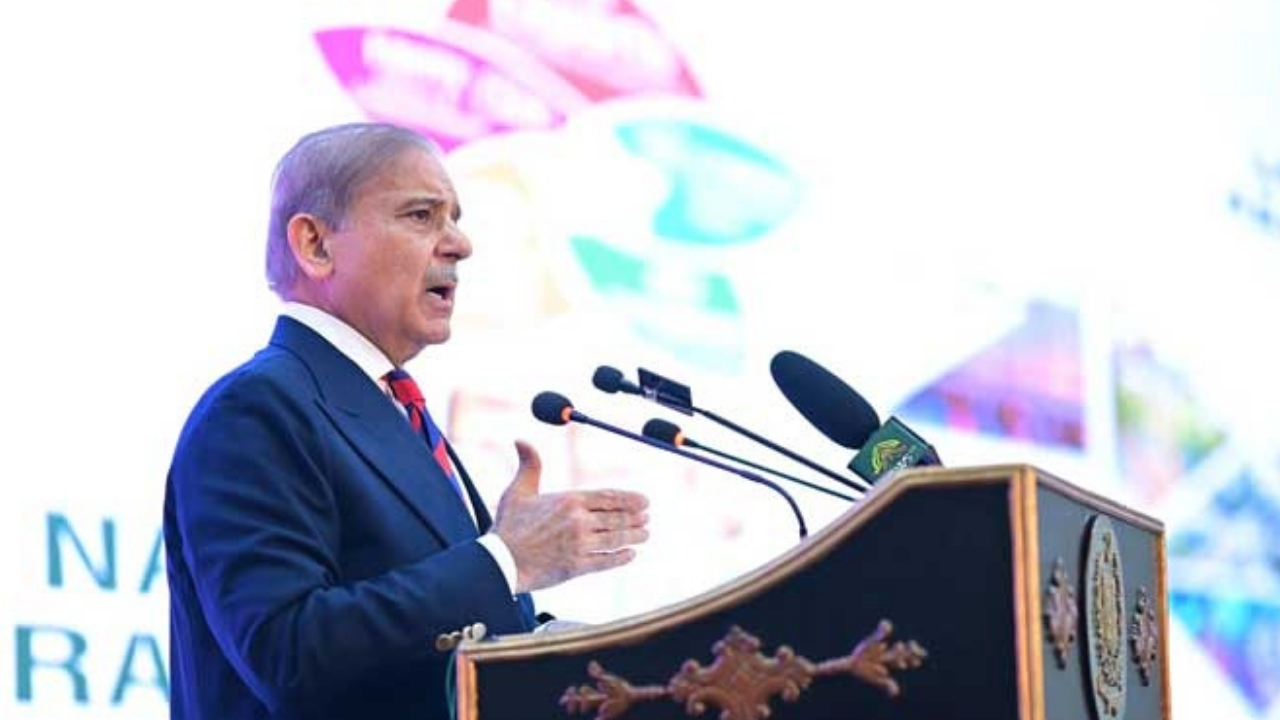
    Prime Minister Shehbaz Sharif has launched a five-year plan to help propel Pakistan out of the economic quagmire it finds itself bogged down in. According to Dawn, the PM aims to address chronic economic issues by focusing on the five ‘E’s of the economy.

    The five ‘E’s are exports, e-Pakistan, environment, energy, equity and empowerment. The plan, which has been named ‘Uraan Pakistan’, was launched in the presence of notable federal ministers and representatives of all four of Pakistan’s provinces.

    This plan was unveiled soon after it was revealed that the first quarter of the FY 2024-25 posted an abysmally low 0.92 per cent growth rate, which represents a sharp fall from the 2.3 per cent growth recorded in the same period last year. Islamabad is attempting to revive the economy in light of the subpar statistics that have emerged.

    At the event, Sharif highlighted his government’s priorities, pledging to increase economic growth by boosting exports. In November 2024, Sharif had already begun to consider a roadmap to boost exports as he began working on possible ways to boost Pakistan’s IT exports to $25 billion.

    Boosting exports is an excellent initiative, as it will also bring an influx of foreign reserves to cash-strapped Pakistan. Aside from exports, though, Sharif also outlined the need for macroeconomic stability. He claimed that from this point onward, the government would attempt to boost growth by relying on investment and policy reforms.

    He reiterated the importance of the IT sector in the success of the five-year plan. Moreover, Sharif linked industries related to agriculture, exports, mining, and minerals to national unity itself.

    The premier highlighted the need for political harmony and all stakeholders, including political parties, key institutions, and the general public.

    Sharif aims to support his economic revival plan by creating an environment that is friendly towards business activities. To achieve this, the private sector will be offered incentives, which the PM hopes will support export-oriented industries.

    The transformation plan that was unveiled will attempt to boost Pakistan’s Gross Domestic Product (GDP) to a whopping one trillion dollars by 2035. However, Pakistan’s GDP stands at just $374.6 billion.

    Dawn News reports that the plan aims to achieve $60 billion in annual exports from the IT, manufacturing, agriculture, mineral, manpower and blue economy sectors.

    Despite indirectly blaming the Pakistan Tehreek e Insaaf (PTI) for being responsible for economic mismanagement, Sharif wanted political reconciliation to take place.

  • 2025 fuel prices: Diesel relief, petrol challenges for businesses

    2025 fuel prices: Diesel relief, petrol challenges for businesses

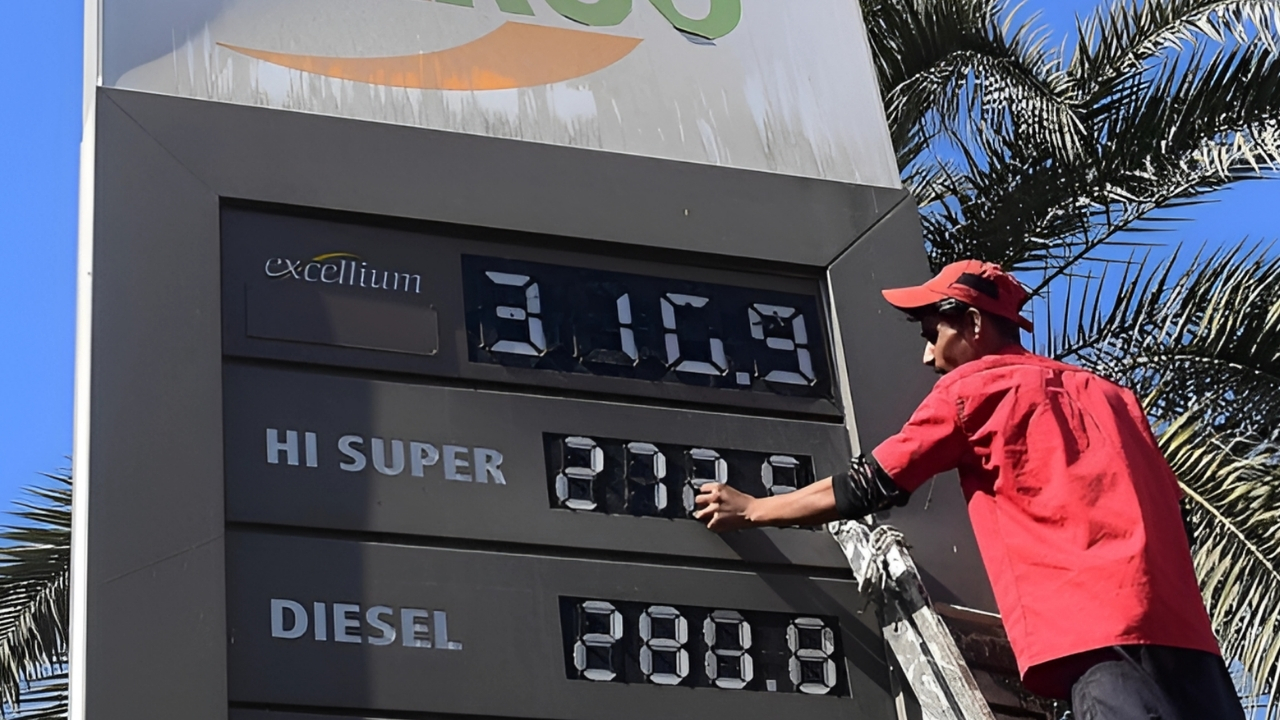
    Businesses began 2025 with some good news as the Ministry of Finance announced new fuel prices, revealing that the diesel price hike was lower than earlier predictions. The price of High-Speed Diesel (HSD) now stands at 258.34 rupees per litre after experiencing a price increase of 2.96 rupees.

    This is significantly lower than the initial expectation of a 3.62 rupee increase. To grasp the magnitude of the difference, the initial hike in HSD prices was nearly 22.3 percent higher than the one recently just imposed.

    However, the price of petrol rose sharply compared to early estimates. Although petrol prices changed by only 56 paisa to settle at 252.66 rupees per litre, the surge in prices was much higher than anticipated.

    Businesses that offer petrol allowances for their employees often pay the exact amount to commute to and from work to their residence. It is possible that businesses will have to increase these allowances especially given how news regarding the price hike comes at the start of the year. This is likely to increase costs for businesses while also decreasing profit margins for business owners.

    The increases in the price of fuel are also detrimental to the economy as they increase transportation costs, hurting transportation companies the most. Another sector that suffers tremendously due to the spikes in diesel prices is agriculture, which relies on tractors and water pumps that run on diesel.

    More worrying than the price hikes themselves is the inaccuracy of the estimates surrounding fuel prices. With the actual petrol price hike being 409 percent larger than the expected one, businesses are beginning to grow worried. While the petrol price hike will impact operations, experts believe that differences between expectations and reality cause businesses to grow weary while making decisions.

    These fluctuations show that businesses can’t rely credibly on estimations, adding to the uncertainty in the business environment that already exists. There have been countless instances in the previous year when estimates were wildly off as they predicted prices to rise while they remained unchanged instead.

    Even though the price of diesel remains lower at this point compared to January 2024, this remains a great achievement of the current government. It has managed to keep prices relatively stable despite rapid inflation surges that were witnessed in previous periods, such as in May 2023, when inflation reached as high as 38 percent.

    According to Express Tribune, however, the premium on oil is $8.69 per barrel, keeping in view the current rate of petroleum levy, general sales tax and currency exchange rate. It could be beneficial for businesses in the coming year if the petroleum levy is revised downwards to help them.

  • Pakistan’s 90 billion rupee tax shortfall fuels growing fiscal crisis

    Pakistan’s 90 billion rupee tax shortfall fuels growing fiscal crisis

    Pakistan’s economic situation is far from enviable as Islamabad’s tax target for December 2024 is expected to suffer from a colossal shortfall of 80 to 90 billion rupees, according to The News. This shortfall comes despite governmental efforts to boost taxation revenue by expanding the tax net.

    There is a silver lining in the fact that the Federal Board of Revenue (FBR) is expecting a collection of 70 billion rupees as the deadline for corporate sector returns approaches. According to Geo News, this follows the announcement of the presidential ordinance to levy a staggering 44 per cent tax on banking sector returns.

    The 44 per cent tax, however, is not as large as it used to be. The maximum rate had been negotiated down from 55 per cent as per an agreement for the tax year 2025.

    The aforementioned agreement reveals that the FBR could raise a whopping 70 billion rupees from the banking sector, which would allow Islamabad to meet its taxation target.

    As it stands, the FBR has faced a shortfall of 340 billion rupees in the first five months of the financial year (FY) 2024-25. The gap is the result of Islamabad setting the revenue target at 4.63 trillion rupees, while the FBR was only successful in collecting 4.29 trillion rupees. The numbers represent a revenue shortfall of 7.63 per cent from the targeted amount.

    With December’s shortfall ranging between 80-90 billion rupees, the overall shortfall will rise by approximately 22.2 per cent. The shortfall in the FBR’s targeted revenue amount might increase to approximately 425 billion rupees, indicating the economy would close its first half of the fiscal year 2024-25 with a large deviation from its target.

    It is concerning how Pakistan will manage to plug this shortfall in revenue, which is seemingly increasing without bounds. Experts are predicting a potential straining of ties between Islamabad and the International Monetary Fund (IMF) if the government does not implement strict corrective measures.

    Finance Minister Muhammad Aurangzeb, however, displayed confidence in a public interview earlier when questioned about the shortfall in tax revenue. He further stated that the government is taking the necessary steps to boost taxation levels, which could be an effort to maintain the IMF’s goodwill.

    Aurangzeb has also expressed great confidence in his claims regarding the IMF’s continued support in the near future. However, with the government lagging behind the revenue target by almost half a trillion rupees, it is difficult to judge if Islamabad can truly meet revenue targets in the future.

  • Fuel prices poised to squeeze Pakistan’s businesses again

    Fuel prices poised to squeeze Pakistan’s businesses again

    Owing to frequent fuel price hikes, business owners and citizens alike might not be surprised to know that the price of diesel and petrol might rise once the Oil and Gas Regulatory Authority (OGRA) submits its calculations to Islamabad. According to Dawn, the price of diesel is expected to rise by 3.62 rupees while petrol will increase by just 11 paisa from January 1, 2025.

    It is quite obvious that this will spell bad news for transport company owners. The cost of daily operations will increase sharply, as fuel is the largest material input in transportation companies.

    Transport companies could now see lower profit margins with rising operational costs. The only way these companies can avoid shrinking profit levels is to pass on these costs to their consumers in the form of higher fares. That could, however, cause a fall in the number of customers willing to travel with companies that raise their fares.

    Another sector that will be hit hard, and is often overlooked when considering the effects of higher fuel prices, is agriculture, where a significant number of farms rely on water pumps for irrigation.

    A report from the University of Veterinary and Animal Sciences in Lahore reveals an overwhelming majority of farm owners possess a water pump, with 73.3 per cent of farmers leaning towards using groundwater over surface water. However, with diesel prices rising, farmers are to bear the burden of extracting groundwater using pumps as it will be more expensive now.

    The plight of farmers does not end here, as tractors also require diesel to operate, causing a sharp rise in the costs that farmers will have to pay now. The agricultural sector is responsible for 36.43 per cent of employment in Pakistan, and falling profit margins due to diesel price hikes may result in landlords considering layoffs to maintain a healthy stream of profits.

    This might cause food prices to increase further if farmers pass on the additional costs they incur, or they will have to absorb these costs to satisfy customers while their profit margins fall. The impact of rising diesel prices will be most pronounced on sugarcane producers as sugarcane production alone consumes approximately 42 per cent of the total annual household water demand of Pakistan, according to the Pakistan Institute of Development Economics.

    Export-oriented sectors that are located further inland will suffer too. This is because the cost of transporting goods from factories to Karachi port will rise if fuel prices rise. Export competitiveness for sectors such as surgical instruments and textiles will drop. This is because Sialkot and Faisalabad are over 1300 kilometres and over 1100 kilometres from Karachi, respectively.

    If the expected price hike is realised, the price of diesel will come back to exactly what it was at the start of the year. While some claim this is the result of dropping inflation rates from 38 per cent in May 2023 to just 4.9 per cent, it is not the entire truth.

    The average price of crude oil per barrel was $77.64 in 2023, while it was just $73.23 in 2024. Diesel prices in Pakistan, therefore, have risen over the past year in real terms, even if they appear to be stable in nominal terms.

  • An overview of shifts in economic indicators in 2024

    An overview of shifts in economic indicators in 2024

    2024 was undoubtedly a turbulent year for Pakistan, beset by political uncertainty and terrorism. These factors undoubtedly harmed the economy, making it imperative to study key economic indicators to assess the direction in which Pakistan is headed.

    Pakistan’s Gross Domestic Product (GDP) skyrocketed from $337.46 billion to $374.6 billion. This remarkable rise can be attributed to various factors, including a low inflation rate, increased domestic consumption levels, and good governance.

    In the preceding year, 2023, the economy was in shambles as it shrank by 0.2 per cent. However, statistics from the International Monetary Fund (IMF) suggest that the real GDP growth rate for 2024 stood at a respectable 2.4 percent.

    While this is lower than the regional average of 6.4 percent, as per the World Bank, it is still a remarkable feat for Pakistan. This is because lawmakers in Islamabad successfully lifted the economy out of its downward spiral.

    GDP per capita also recovered slightly in 2024 to reach $1,590. This rise in GDP per capita reflects an 8.9 percent growth rate in absolute terms. While this could be lauded as a victory for Islamabad, it is to be noted that GDP per capita levels are still lower than they were in 2022, after which the economy shrank.

    It is worth noting that the unemployment rate in Pakistan shrank by over six percent and settled at eight percent despite the increase in the working-age population in the preceding year. The reasoning behind this could very well be the lower per capita income levels discussed earlier.

    Comparing the economy this year to the recent peak experienced in 2022 has several implications for the labour market. The falling unemployment rate could be attributed to the drop in per capita incomes.

    This is because employers may find it more economical to rely on labour as it can be procured in a relatively cheaper manner, causing an excessive demand for cheap labour. International investors could then invest in the economy to exploit lower wages in Pakistan and earn higher profits.

    This explanation makes sense as billions of dollars have been poured into Pakistan, especially around the Shanghai Cooperation Summit. Agreements with Saudi Arabia alone brought in over two billion dollars in investments.

    As for the rise between 2023-24, experts are posing an explanation that can be derived from the principles of economics. Many workers who were not willing to supply their labour at the low levels of income in the preceding year entered the market as employers bid wages up. Statistics from Trading Economics support this argument as the minimum wage rose from 32,000 to 37000 rupees in the past year.

    Pakistan’s current account deficit shrank from $3.27 billion to just under a billion. This trend is largely a result of the drop in international crude oil prices, which averaged around $70 per barrel, compared to last year’s higher average of $80 per barrel.

    The drop is a result of Pakistan’s historical reliance on crude oil imports, stemming from a lack of local supply. Petroleum-related entries on the import bill run as high as 17 billion dollars annually, according to the Observatory of Economic Complexity.

    It is in the interest of Pakistanis that economic recovery continues into the next year. If Pakistan posts up growth rates as it has this year, it could successfully complete its recovery. Businesses in Pakistan will welcome such a change as international investors are keen on investing in economies that aren’t going through recessions.

  • Zong to refund two billion rupees: What does this mean for you?

    Zong to refund two billion rupees: What does this mean for you?

    Islamabad High Court (IHC) ordered Zong to pay over two billion rupees back to its customers over charges that were “collected incorrectly”. This could undoubtedly seriously set back the Chinese-owned Pakistani mobile carrier.

    According to the IHC, the mobile data network operator had managed to collect a significant amount by “charging 10 rupees from customers each time they purchased and used a prepaid card valuing 100 rupees as service charges”.

    Pakistan Telecommunication Authority (PTA) has instructed Zong to credit the incorrectly collected amount directly to customer accounts. Moreover, the credited amount will not have an expiration date for use.

    The immediate monetary impact on the company, however, might create some minor cash flow issues because if customers get credit back, they are likely to not load up their accounts with as much money as they usually do.

    While two billion rupees is a colossal amount, it might not significantly hurt Zong. This is because Zong’s revenue figures stayed strong in FY 2023, resulting in a 126 billion rupee revenue as per PTA’s annual Report 2023. To put the financial loss into perspective, it is to be noted that the amount to be repaid is just 1.58 percent of annual revenue.

    Another benefit for Zong is that they will not incur transaction costs on the amount they are supposed to credit to consumers as they already have accounts registered with the company. However, an interesting question that arises is how former users will obtain their credit back, which was unfairly collected from them.

    Experts are predicting that the true cost to the mobile carrier will be implicit in nature. This is because Zong could now appear as exploitative, with fees designed to extract money from their customers unfairly.

    This could significantly damage the brand image and could erode the trust of the over 46 million subscribers that Zong has for its mobile services. This does not present an immediate threat to Zong’s revenue stream; however, a loss in brand reputation might detrimentally affect future cash flows as customers switch away to ‘more trustworthy’ competitors.

    The primary beneficiary in such a case is most likely to be Jazz, who has over 71 million mobile subscribers. Experts are claiming that it might be best for executives from Zong to credit customers back and prevent any potential reputation loss.

    It will be interesting to follow the developments and see how operations change for Zong once credit has been issued to its customers. The number of mobile phone users for the company has been rising steadily since 2019, so revenue losses from issuing credit might not be significant due to a larger customer base spending more money with the company.

  • The smoking trap: How tobacco companies are burning Pakistani farmers

    The smoking trap: How tobacco companies are burning Pakistani farmers

    Tobacco cultivators were hit hard when the annual procurement target for national and multinational companies was announced after a two-month delay. As per Dawn News, companies are reducing their procurement targets for the upcoming year in what appears to be a deliberate attempt to harm tobacco cultivators.

    Companies have reduced their total tobacco purchases by 2.5 million kgs, which brings their total demand for 2025 down to a little under 75 million kgs as per sources who relayed these statistics to Dawn.

    The reduction in demand is the second consecutive cut as demand stood at 77 million kgs in 2024 while in 2023, the combined company demand for tobacco stood at a high 85.5 kg in 2023.

    At first glance, it seems as if a fall in demand wouldn’t necessarily have posed an issue for farmers as companies are supposed to announce their demand levels to the Pakistan Tobacco Board (PTB) in advance. This observation has its merits as farmers can simply choose to grow crops other than tobacco that have a respectable level of demand in the economy.

    However, tobacco companies announced their quotas after the wheat sowing period had ended. Farmers are stuck now growing tobacco despite knowing it might never get loaded onto trucks bound for company warehouses.

    Moreover, it is to be noted that the high level of tobacco demand in the previous years resulted in tobacco farmers to expand their supply significantly. A drop in demand now will undoubtedly hurt farmers as they will struggle to find buyers for their yields.

    Legislation to protect farmers from precisely this situation exists, however, companies violated this law. As per The Martial Law Order (MLO) 487, which oversees the trade of tobacco, companies are supposed to disclose the volume of tobacco they aim to purchase by October 31.

    As such, farmers can freely choose whether they want to grow tobacco for these companies or if they should switch to other crops such as wheat.

    Farmers are growing agitated now and few can say their frustrations are not justified. Farmers have fallen victim to the exploitative practices of the tobacco buying companies.

    What is especially concerning is that farmers are looking towards the PTB, which is supposed to offer them protection. However, the PTB has no plans to hold the companies accountable for exploiting farmers by violating MLO 487.

    Farmers will now have to suffer financial losses due to companies not informing them on time. This could devastate the rural agricultural economy and deter investors from entering into business dealings with farmers.

    It will be interesting to see now what farmers do with the excess tobacco in the upcoming year. The solution may not be as far as many think it is. The Middle Kingdom, China, up north happens to be the largest importer of tobacco being responsible for 16.5 percent of all tobacco imports worldwide.

    Perhaps Pakistan’s geography will prove favourable for farmers not just to grow tobacco but also to export it.