Category: Business

  • Latest IMF bailout: Temporary relief?

    Latest IMF bailout: Temporary relief?

    Whispers of the latest disbursement of the IMF package to Pakistan can be heard in Islamabad as the International Monetary Fund (IMF) plans to release $1.1 billion to the cash-strapped nation on September 30.

    But what does this mean for the economy and, more importantly, the Rupee?

    To figure that out, we must consider the historical relationship between IMF loan programs and the value of the PKR alongside other economic indicators.

    The release of IMF funds signals the commitment of the country to IMF-stipulated reforms and financial stability. This will boost investor confidence as they will know Pakistan is committed to maintaining fiscal discipline and policy stability. The PKR, as a result, will appreciate as financial capital inflows to the country will rise.

    With the availability of these funds, the State Bank of Pakistan (SBP) can partake in open market operations to artificially increase the value of the PKR. The SBP can buy PKR in circulation using the freshly gained foreign exchange reserves.

    This move is likely to reduce inflation in the short term as well, leading to everyone breathing a much-needed sigh of relief because, as per the Finance Division of the Government of Pakistan, the Consumer Price Index inflation rate sits at an uneasy 26 per cent for July-April FY 2024.

    As far as inflation is concerned, the IMF-mandated fiscal discipline will lead the government to take austerity measures. To put it simply, government expenditures will be slashed while taxation will increase.

    The government is likely to want to retain the IMF’s goodwill to guarantee the disbursement of the remaining $5.9 Billion. These austerity measures will reduce consumer demand for goods and services, resulting in a decline in the inflation rate, thus easing inflationary pressures plaguing the economy.

    While reduced government expenditure will result in a fall in the GDP growth rate initially, it’s not all doom and gloom.  

    The fall in government expenditures should help private investors, as the financial scale of Government projects will shrink, causing interest rates to decline.

    This is true for two reasons.

    Firstly, the government often borrows money from local banks at exorbitant rates, putting upward pressure on the interest rates. This crowds out private investments as investors are not keen to borrow money at high interest rates. If the government ceases to borrow money from local banks, interest rates are expected to decline.

    Secondly, the decline in government expenditures will reduce inflation that was previously caused by expansionary fiscal policy. This will allow the SBP to target a lower interest rate, as inflation will be lower.

    The main question for the curious reader, however, should be whether Pakistan is likely to ever get out of its debt problems.

    Having spent the past 22 out of 30 years in bailout programs, Nadeem ul Haque doesn’t think so, as he called Pakistan an IMF addict. Prime Minister Shehbaz Sharif has, nonetheless, expressed hope and enthusiasm despite the quagmire the economy finds itself in.

    “God willing, this will be Pakistan’s last IMF Programme,” he has claimed.
  • Non-Filers in the crosshairs: Gold, forex and capital flight

    Non-Filers in the crosshairs: Gold, forex and capital flight

    Non-filers are likely to ditch the Rupee in favour of other commodities. The Federal Board of Revenue (FBR) has tightened its grip on non-filers by restricting their bank transactions, stock market activity, and real estate dealings. It is, thus, surely possible that many non-filers are seeking respite from the FBR’s eye in the forex or gold markets – where the gold market is currently riding a strong wave of investor confidence.

    But what does this mean, and who stands to benefit?

    Non-filers may now want to shift their financial holdings to assets that can not be audited by the FBR now that the financial capital is withdrawn from taxable sectors like the stock market, real estate, and banking.

    Pakistan is likely to see a surge in the local prices of these commodities, with a higher demand following the increase in the flow of funds into gold and forex markets.

    This means that the increased demand from non-filers could trigger upward pressure on the local gold and forex prices. The gold rates are already hitting record highs of around PKR 280,000 per tola, and the rupee is barely holding its own against the greenback — a result of import controls and the crackdown on smuggling across the Afghan-Pakistan border.

    If government authorities fail to address this trend, we may see a sharp decline in productivity, as capital is pulled from productive sectors like the stock market and redirected towards unproductive investments in gold.

    This is because while money in the stock market is used to produce other goods and services in the economy, gold does not have any productive value other than the mere speculative value investors assign to it – especially in times of economic uncertainty.

    What’s more unsettling is that non-filers with large amounts of cash and other assets stashed away are likely to emigrate as the metaphorical noose tightens around the financial freedoms that non-filers previously enjoyed.

    Investor Visas, such as the Portuguese golden visa, are gaining traction and garnering interest in non-filer social circles despite costing the visa applicants a staggering half a million Euros.  An emigration of this financially elevated class of the population is likely to result in immense levels of capital flight as non-filers may seek out more favorable destinations for their wealth.

    As for the PKR, the rapid conversion of rupees into foreign currencies will result in strong depreciatory pressures as, historically, the State Bank of Pakistan (SBP) tends to hold the PKR in a loose peg with the USD.

    What this means for the SBP is that as non-filers rapidly exchange their PKR for foreign currencies, the SBP will have to step in with contractionary open market operations. This entails selling liquid USD reserves that the SBP has in exchange for PKR to stabilise the value of the PKR and hold the loose peg.

    This, however, depletes foreign reserves held by the SBP and opens up the PKR to further speculative attacks from investors who feel that the SBP might not have enough reserves to hold the peg for longer. It is possible as the SBP holds a meagre $9.4 billion, which is not enough to sustain a long-term currency manipulation scheme, in the event of a speculative attack on the PKR.

    With the grim economic consequences of the crusade against non-filers in mind, a question arises: To what extent will the measures of the government serve to curb the tax evasion problem?

    The answer: Time.

  • FBR may be forced to announce extension of tax return deadline amid technical issues

    FBR may be forced to announce extension of tax return deadline amid technical issues

    Despite repeated warnings from the tax authority that the deadline for the submission of tax returns will not be extended, latest reports suggest that the Federal Board of Revenue (FBR) may be forced to extend the deadline for some filers due to an issue in the IRIS system.

    IRIS is an online portal from the FBR used by taxpayers to submit returns.

    Recently, the business community has also complained that they are facing issues with the IRIS website and demanded the deadline should be pushed further, however, the FBR ruled out the possibility’ and stated that the last date for filing tax returns will not be extended.

    According to sources within the FBR, the last date for filing returns is now expected to be extended by two weeks for individuals, associations of persons, businessmen, and companies.

    Those who are facing issues may be able to get an extension owing to their specific reasons, however, the official deadline will not be pushed beyond September 30 for the entire country.

    This means the two weeks’ extension, if announced, may not be for everyone.

    The tax authority is considering extending the deadline after the business community, during their meeting with the army chief, suggested that the FBR should create convenience for businessmen rather than difficulties.

    Earlier, filers and business owners demanded that the last date for filing annual tax returns be extended to at least October 15 so that maximum tax returns could be filed and difficulties faced by taxpayers could be eased.

  • Finance Division forecasts 8-9% inflation for September

    Finance Division forecasts 8-9% inflation for September

    Pakistan’s headline inflation may drop to 8-9 per cent in the next two months, according to the finance ministry.

    In a recent economic update, the finance division said that the Consumer Price Index (CPI) based inflation in the country has come down to single digits. This is the lowest level recorded in almost 14 months.

    Experts had earlier predicted that the inflation will drop to single digits soon with further decline expected in the coming months.

    Last month, CPI-based inflation was seen at 9.6 per cent on an annual basis. This represents a massive decline from the from 27.4 per cent recorded in August 2023.

    The finance ministry also noted positive indicators in the first two months of ongoing fiscal year in its recently released monthly report, confirming that the industrial output has increased, and big exporting sectors have also recorded notable growth.

    Moreover, the current account deficit has shrunk due to strategic measures taken by the government.

    The finance division expcts the trajectory to continue in the upcoming months.

  • State Bank confirms Pakistan has received initial $1.03 billion tranche from IMF

    State Bank confirms Pakistan has received initial $1.03 billion tranche from IMF

    The State Bank of Pakistan (SBP) announced on Friday that it has received the much-anticipated first tranche of Special Drawing Rights (SDR) worth 760 million, equivalent to USD 1.03 billion, from the International Monetary Fund (IMF).

    In a statement, the SBP said, “Following the approval of the IMF Executive Board of a 37-month Extended Fund Facility amounting to US$7 billion, the State Bank of Pakistan (SBP) has received the first tranche of SDR 760 million (equivalent to USD 1.03 billion) from the IMF today.”

    The central bank confirmed that these inflows would be reflected in the SBP’s liquid reserves, which are scheduled to be released on Thursday, October 3, 2024.

    The IMF’s Executive Board granted approval for the 37-month, $7 billion Extended Fund Facility (EFF) for Pakistan on Wednesday, marking a significant financial lifeline for the country.

    Pakistan and the IMF initially reached a staff-level agreement on the EFF, worth SDR 5,320 million (roughly USD 7 billion), on July 12, 2024, paving the way for today’s disbursement.

  • Pakistan can no longer afford non-filers: Finance Minister

    Pakistan can no longer afford non-filers: Finance Minister

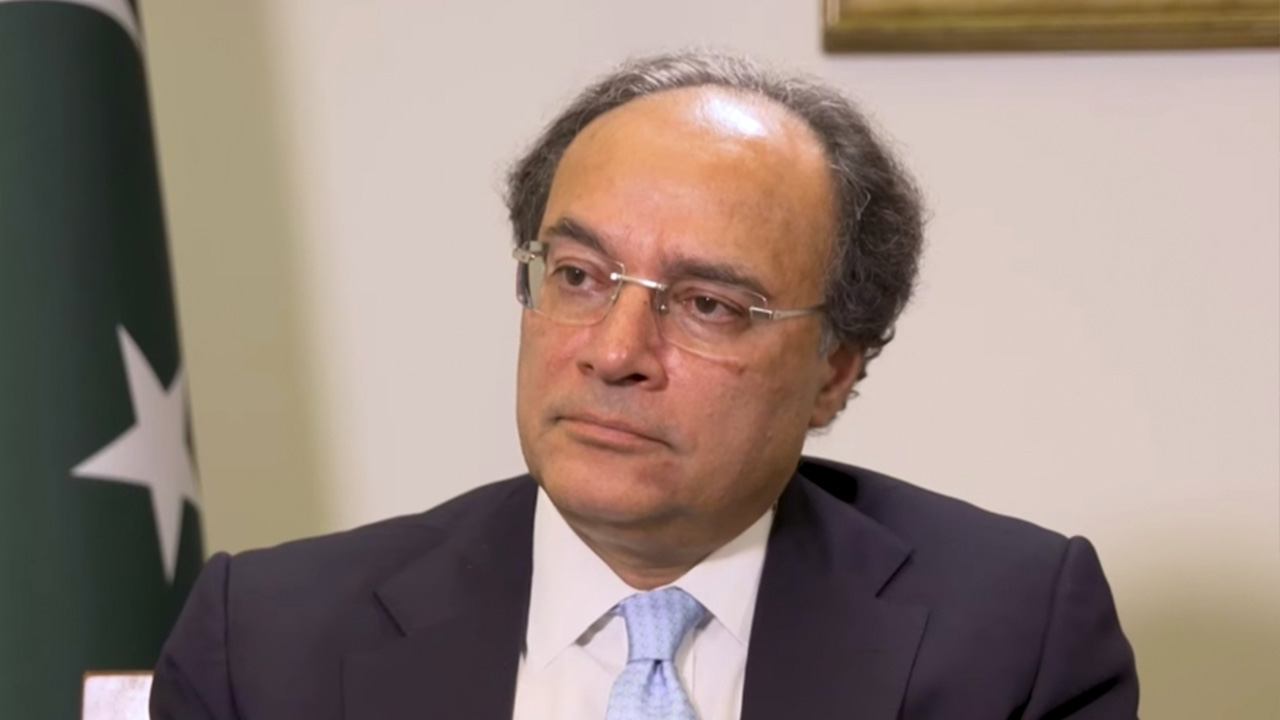
    Finance Minister Muhammad Aurangzeb has confirmed that the government is preparing to eliminate the category of non-filers, aiming to reduce the burden on those who actively file taxes.

    “It’s time to remove the non-filers category,” he stated in an interview with Voice of America during his visit to New York, USA.

    “Pakistan is probably the only country in the world with this concept. Either you are a filer, or you’re simply not paying taxes,” Aurangzeb explained. “The government is set to abolish this category.”

    He further added, “The government cannot afford this anymore.”

    This announcement follows remarks by Federal Board of Revenue (FBR) Chairman Rashid Mahmood, who said that the government had decided to do away with the non-filers category.

    For the 2023 tax year, 6 million returns have already been filed, and the government expects more following strict measures introduced against non-filers.

  • IMF finally greenlights $7 billion loan for Pakistan, first tranche expected by September 30

    IMF finally greenlights $7 billion loan for Pakistan, first tranche expected by September 30

    The International Monetary Fund’s (IMF) Executive Board has finally approved the long-delayed $7 billion Extended Fund Facility (EFF) for Pakistan.

    The initial tranche of $1.1 billion is now expected to be released by the global lender on September 30.

    As per recent reports, this loan also carries an interest rate of less than 5 per cent.

    IMF is likely to release the second installment of loan within the ongoing fiscal year.

    It is worth noting that this bailout, according to Prime Minister Shehbaz Sharif, would be Pakistan’s loan from the IMF.

    The Governor of the State Bank of Pakistan (SBP) Jameel Ahmed confirmed the approval from th IMF and saod that the country would get first installment soon as Islamabad has met all demands set by the lender.

    The approval of EFF follows confirmation of bilateral loans from China, UAE, and Saudi Arabia, totalling $12 billion.

    Pakistan and the IMF had reached an agreement on the 37-month bailout programme in July but it was repeatedly delayed as Islamabad was not included on the international lender’s agenda multiple times.

  • Gold price climbs to new record high of Rs275,500 per tola following Rs2,500 increase

    Gold price climbs to new record high of Rs275,500 per tola following Rs2,500 increase

    Bullion prices in Pakistan continued to climb on the  third trading day of the week as the rate for 24-karat gold was recorded Rs2,500 per tola higher than the previous closing.

    According to the All-Pakistan Gems and Jewellers Sarafa Association (APGJSA), the price of gold in local market was reported at Rs275,500 per tola.

    The latest price of gold is the highest ever rate recorded for the precious metial in Pakistan’s history.

    Furthermore, the price of ten grammes of gold was quoted by APGJSA at Rs236,197 after a rise of Rs2,144 in today’s session.

    This follows a surge in yellow metal’s value witnessed in the international market. According to APGJSA, gold price in the global market increased by $25 on Wednesday, clocking in at $2,653 per ounce. This rate also includes a premium of $20.

    Gold price in Pakistan has increased by more than Rs50,000 per tola this year due to fluctuations in the international market.

  • FBR to scrap non-filers category, aims to strengthen banking-based economy

    FBR to scrap non-filers category, aims to strengthen banking-based economy

    In a recent meeting with representatives of key industries, the Federal Board of Revenue (FBR) Chairman Rashid Mahmood Langrial said that the government is planning to eliminate the category of non-filers, which will require everyone to make transactions through banking channels.

    This is a part of FBR’s transformation plan to curb cash flows in the economy.

    Langrial was of the view that non-filing is a fraudulent method established domestically. He said that the FBR will generate data to monitor citizens’ financial transactions.

    Most importantly, property transactions will be categorised into only two groups: ineligible and eligible.

    According to Dawn, businesspeople were briefed regarding the tax authority’s overhaul. Langrial said that the FBR has no option but to eliminate the issue of nil-filing and non-filing of returns.

    This step is crucial because if the situation does not get better, it will be nearly impossible for the government to collect taxes.

    It was revealed that the tax authority will establish disincentives for non-compliant taxpayers, starting with linking the availability of facilities such as investments and the opening of bank accounts to the filing of tax returns.

    There will be no monetary transactions, and the source of funds will have to be established through digital interventions.

    The meeting highlighted the potential tax gap across 20 sectors, with the largest gap reported in the textile sector at Rs700 billion.

  • Gold price drops by Rs600 from record high to Rs271,900 per tola

    Gold price drops by Rs600 from record high to Rs271,900 per tola

    Gold prices in Pakistan dropped after hitting record high in the previous session.

    On first trading day of the week, according to the All-Pakistan Gems and Jewellers Sarafa Association (APGJSA), the price of 24-karat gold fell by Rs600 and closed at Rs271,900 per tola.

    The price of 10-gramme of gold was recorded at Rs233,110 after sliding by Rs471.

    It is worth mentioning that the gold price in the last two trading sessions jumped by Rs4,000 per tola.

    The last gold rate before Monday’s closing was Rs272,500 per tola.

    Furthermore, silver prices were unchanged once again, clocking in at Rs2,950 per tola.

    The price of gold in the global market also witnessed a loss of $5 during the day and was recorded at $2,617 per ounce. This price also includes a premium of $20.