Category: Business

  • Global oil prices drop more than 3% as fears of supply disruptions ease

    Global oil prices drop more than 3% as fears of supply disruptions ease

    Global oil prices dropped more than 3 per cent as the surge driven by increasing geopolitical tensions paused, with the market anticipating a response from Israel against Iran.

    Tamas Varga, an analyst at oil broker PVM, remarked in a Tuesday report, “Oil can only continue to rise for so long based on perceptions rather than actual disruptions in supply.”

    Following Iran’s launch of approximately 180 ballistic missiles at Israel last week, oil prices had climbed nearly 13 per cent by Monday’s close, sparking concerns that Israel could retaliate by targeting Iran’s oil sector.

    President Joe Biden has openly advised Israel against targeting Iran’s oil infrastructure. According to officials speaking to The New York Times, Israel is anticipated to prioritise strikes on military and intelligence sites in Iran.

    Similarly, The Jerusalem Post has reported that Israel’s efforts will likely concentrate on these military and intelligence facilities.

    Israeli Defense Minister Yoav Gallant is set to meet with US Secretary of Defense Lloyd Austin at the Pentagon on Wednesday to discuss ongoing security developments in the Middle East, as stated by press secretary Maj. Gen. Pat Ryder during a briefing on Monday.

  • Exchange rates: PKR drops over two paisa against US dollar

    Exchange rates: PKR drops over two paisa against US dollar

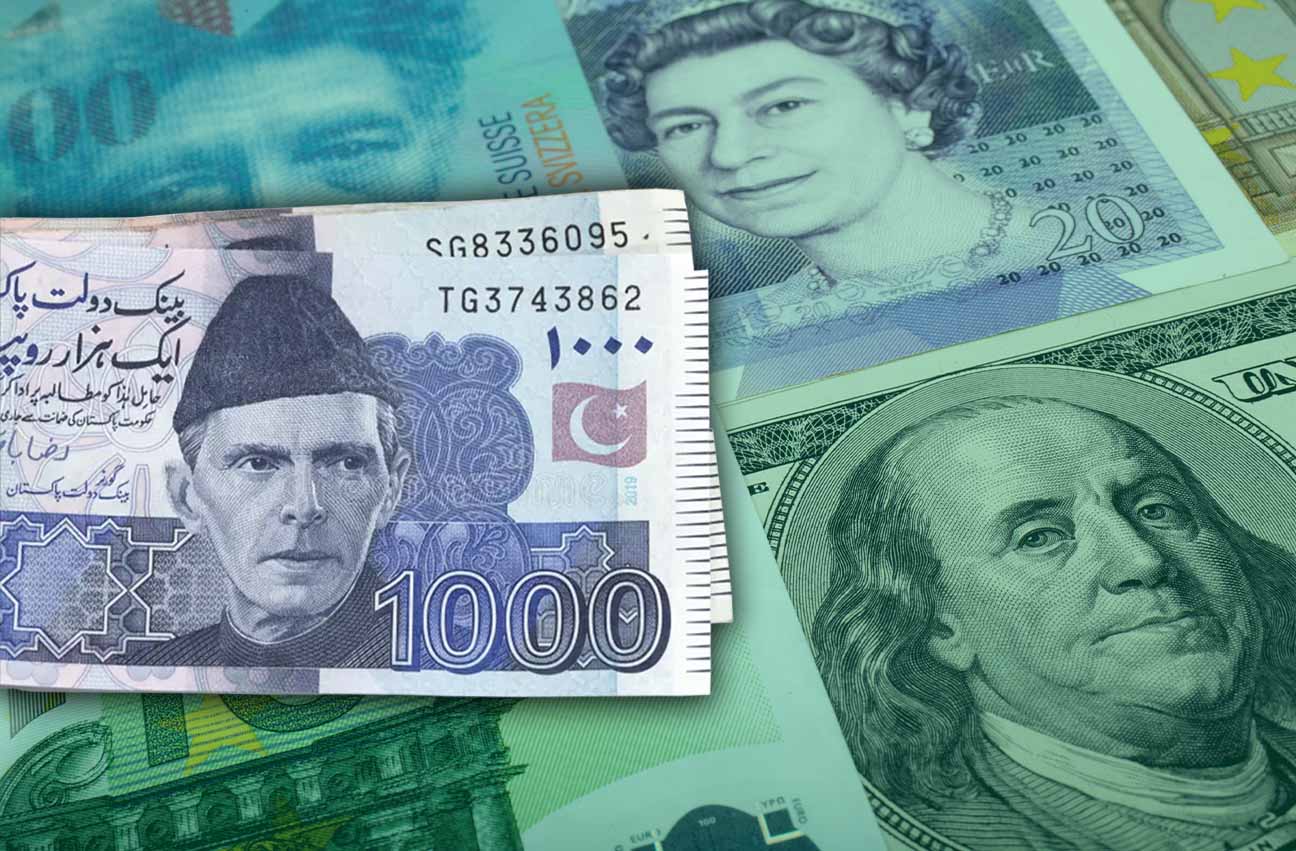
    The Pakistani rupee (PKR), on second trading day of the week, dropped by 2.78 paisa against the US dollar (USD) in Tuesday’s interbank session to settle the trade at Rs277.67 against the greenback.

    Today’s closing takes PKR 0.01 per cent higher compared to Monday’s closing rate of Rs277.64.

    PKR, during the trading session, saw an intraday high of Rs277.80 and a low of Rs277.70 per dollar.

    Exchange companies were buying the American dollar for Rs278.3 and selling it at Rs279.69.

    It is worth mentioning that, in the current financial year, Pakistani currency has gained against the US dollar about 67.11 paisa or 0.24 per cent. The current calendar year has witnessed rupee rise by Rs4.19 or 1.51 per cent.

    Here’s a comparison of the closing rates for today and those from the previous session:

    Exchange rates for today

    As compared to other foreign currencies, PKR lost 72.47 paisa against the Euro, closing at Rs305.2 compared to the Monday’s rate of Rs304.48.

    The British Pound became cheaper by 40.78 paisa closing at Rs363.48 compared to Rs363.89 from a day ago.

    The Swiss franc saw a gain of Rs1.43, closing at Rs325.12 compared to 323.69 from the previous session.

    Against the Japanese Yen, PKR lost 0.8 paisa, closing at Rs1.8807.

    The UAE Dirham increased by 1.17 paisa from Rs75.6 a day ago to Rs75.59.

    The Chinese Yuan lost 17.39 paisa, closing at Rs39.38.

    Lastly, the Saudi Riyal closed at Rs73.94 with a gain of 2.51 paisa from its value of Rs73.92 a day ago.

  • Pakistani rice exports: A booming sector that needs government support

    Pakistani rice exports: A booming sector that needs government support

    Pakistani rice is serving a purpose far greater than tasting good in Biryani: it’s turning into a lifeline for the country’s economy, bringing in nearly $4 billion annually.

    In July and August alone, exporters managed to export a staggering 620,000 metric tons of rice. That’s a huge deal, especially considering they did it without enjoying government perks like minimum support prices or energy subsidies.

    What’s even more impressive is how Pakistani rice is standing out globally. Compared to its counterpart India, Pakistan had 74 alerts, while India had a staggering 264 alerts. The result is that Pakistan is building a reputation for quality rice, especially in Europe.

    And with production ramping up significantly in the past year, Pakistan has been able to beat India in price, too. As such, Pakistan now has a 25 per cent share of Europe’s rice market while India is behind with 17 per cent. However, India isn’t sitting quietly – they’ve come out firing by lifting bans on certain rice varieties to regain their market share.

    Rice exports could be the key to pulling Pakistan out of its economic troubles. At the close of FY 2023, Pakistan’s current account deficit was a worrying $3.275 billion.

    But the Minister of Commerce, Jam Kamal Khan’s new vision might change that.

    He wants to boost rice exports by $3 billion, which could nearly wipe out the deficit and inject much-needed dollars into the economy. Moreover, the minister expressed interest in educating farmers to improve the quality of rice harvests to reduce the chances of getting flagged with a health alert by foreign authorities.

    However, the catch is that to jump from $4 billion in exports to $7 billion, a 75% increase, Pakistan’s rice industry needs help. But what could be the solution here? The solution: Government subsidies to rice exporters.

    While exporters are doing well, they could meet the minister of commerce’s goal with the right support. Access to state-of-the-art rice milling machines and government-improved irrigation systems is necessary. Rice is a water intensive crop, and any disruption in water supply wipes out a year’s worth of yields.

    But even low-cost milling machines can cost small farmers around PKR 3 million – a price many can’t afford on their own.

    If Jam Kamal wants to take rice exports to the next level, the government needs to step in. Supporting farmers and exporters with subsidies could be the difference between a negative and positive balance of trade in the coming years.

    Is rice the new saviour of the economy? Time will tell.

  • Samsung issues rare apology for poor results in tech ‘crisis’

    Samsung issues rare apology for poor results in tech ‘crisis’

    Samsung Electronics issued a rare apology and acknowledged on Tuesday it was facing a “crisis” over its technological competitiveness, reflected in a disappointing profit guidance, despite a global AI boom.

    Samsung said it expected third-quarter profits to rise to 9.1 trillion won ($6.8 billion), up 274.5 per cent from a year earlier, falling short of market expectations as the company struggles to leverage robust demand for the chips used in artificial intelligence servers.

    “Today, we, the management of Samsung Electronics, would like to first say sorry to you,” Samsung said in a statement signed by Jun Young-hyun, the vice chairman of its device solutions division.

    It said “concerns have arisen about our fundamental technological competitiveness and the future of the company” because of the results.

    “Our management will take the lead in overcoming the crisis […] We will make the serious situation we are currently facing an opportunity for a resurgence.”

    The results are up around three-fold from the same period last year but down nearly 13pc from the previous quarter.

    The rare apology came about a week after the tech giant said it intended to reduce staff in some of its operations in Asia, describing the move as “routine workforce adjustments”.

    Bloomberg reported that the layoffs could affect about 10pc of the workforce in those markets, while other reports claimed the planned move could affect up to 30pc of overseas employees at some operations.

    Samsung has been lagging behind South Korea’s SK hynix when it comes to high bandwidth memory (HBM) chips used in AI chipsets, which could be one of the biggest causes of the profit estimate released on Tuesday, said Kim Dae-jong at Sejong University in Seoul.

    “Given the circumstances, it appears that Samsung has also lost a significant number of (HBM-related) employees to SK hynix,” Kim told AFP.

    The company was facing a “grave situation”, he said.

    Shares in Samsung fell 1.31pc in afternoon trading in Seoul, with its stock down almost 30pc over the past six months.

    ‘Expected decline’

    The Samsung statement said management would “quickly assess and make any necessary adjustments to our workplace culture”.

    The firm is the flagship subsidiary of South Korean giant Samsung Group, by far the largest of the family-controlled conglomerates known as “chaebol” that dominate business in Asia’s fourth-largest economy.

    Jene Park, a senior analyst at Counterpoint Research, said there had been “an expected decline” in Samsung’s memory sector, with delays in supply of the newest chips and general reductions in memory demand.

    Even so, a sharp profit or sales decline was unlikely in the near future, he said. “Samsung plays a significant role in the global supply chain,” Park said.

    The company’s estimate for its sales for the third quarter was seen increasing 17.2pc on-year to 79 trillion won.

    Samsung is expected to release its final earnings report at the end of this month.
  • PSX Soars to New Heights: A Historic Milestone

    PSX Soars to New Heights: A Historic Milestone

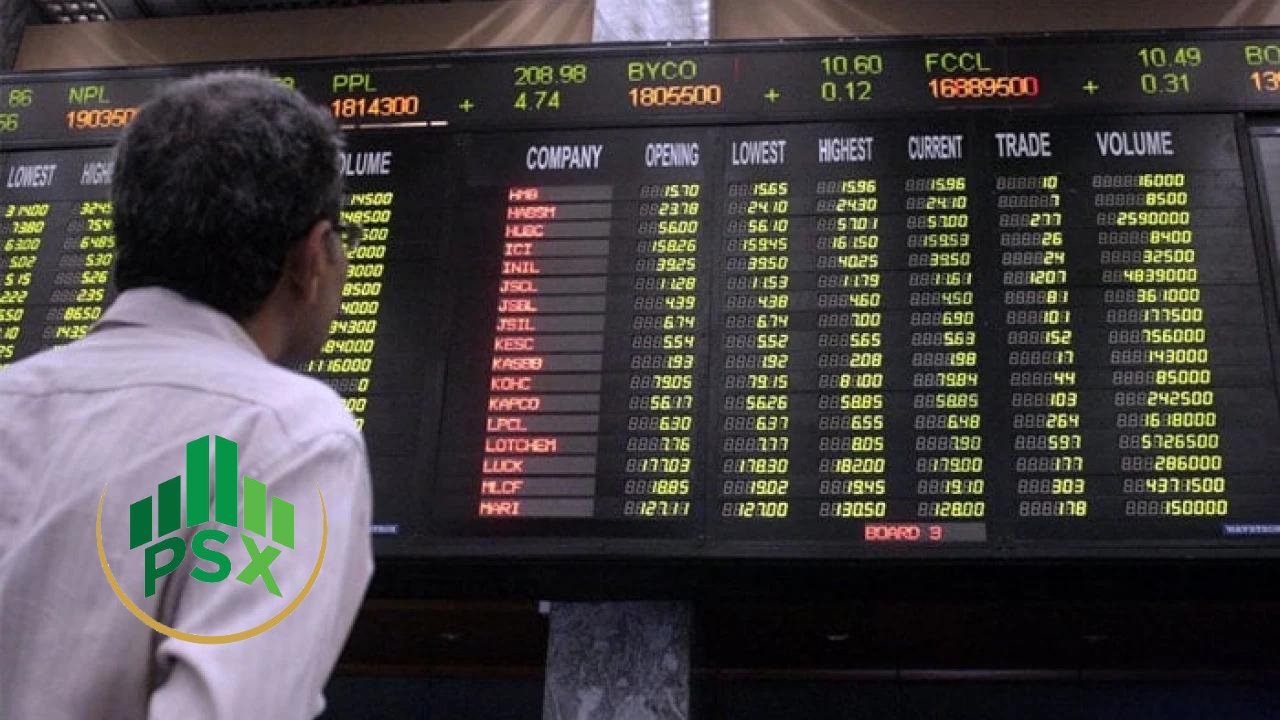
    The trading floor of the PSX (Pakistan Stock Exchange) buzzed with joy as the market shattered its all-time high today. KSE-100, the main benchmark of the stock market, closed at 84910 points, reporting a 1.62% rise in the index since trading began in the morning.

    Each index on the PSX remained in the green, with the OGTI (Oil and Gas Tradable) index posting astronomical gains at an appreciation of 4.81% of the entire index in just one day.

    The All Shares Index, which measures the performance of all the companies listed on the stock exchange, also received a boost of 968 points or 1.79%.

    In addition, Pakistan’s KSE-30, which reflects the stock value of the thirty largest companies operating in the country, stood higher by 487 points and ended the market session with an overall appreciation of the index at 1.79%.

    With growing investor confidence and the market sitting at the cusp of passing the 85,000-point mark, it seems inevitable that the wave of bullish investor sentiments will help to break a new record.

    The rise in investor confidence was a welcome surprise following the disturbances caused by PTI protests and growing terror concerns following the attack against Chinese workers. If the sentiments remain bullish, then investors are expected to record massive gains.

  • Pak-Cheen dosti Zindabad? Billions in investment hang in the balance

    Pak-Cheen dosti Zindabad? Billions in investment hang in the balance

    Shockwaves from the blast that claimed the lives of two Chinese engineers, in Karachi last night were felt by political leaders and investors alike in Beijing.

    With just a week remaining for the Chinese Prime minister’s official tour of Pakistan on October 14th, lawmakers in Islamabad scramble to protect economic ties with China to ensure the continuous flow of Yuan into CPEC projects. The initial budget that was allocated towards CPEC-related projects was $62 billion, of which $35 billion in investments remain – A sum Pakistan can’t afford to lose.

    However, the damage has already been done. China strongly condemned the lethal attack on its civilians and urged its citizens to remain cautious, noting that local security measures should be strengthened.

    This has hurt the confidence of already weary Chinese investors looking to invest in Pakistan as they now explore safer destinations for their investments. Somewhere, Chinese workers can safely work.

    China has remained the largest single foreign direct investor in the Pakistani economy, amounting to $568 million in FY 2024 alone. In fact, China is responsible for 30% of all foreign investments in Pakistan. 

    With Pakistan struggling to attract foreign direct investment and with the recent attack, it can be safely said Pakistan is not moving in the right direction.

    It is in the interests of the local business community to see increased collaboration with international investors. Lapses in security need to be remedied to ensure that Pakistan stops biting the metaphorical hand that feeds it.

  • Exchange rates: PKR gains 12 paisa against US dollar, Rs1.5 versus British Pound

    Exchange rates: PKR gains 12 paisa against US dollar, Rs1.5 versus British Pound

    The Pakistani rupee (PKR), on first trading day of the week, registered a marginal fall against the US dollar (USD).

    According to the State Bank of Pakistan (SBP), the PKR dropped 0.04 per cent or 12 paisa in the inter-bank market and closed Monday’s trading session at Rs277.64 against the USD.

    The currency market now seems a little stablised after the International Monetary Fund (IMF) approved the fresh bailout programme and released the first tranche of around $1.1 billion.

    Globally, the US dollar extended a rally sparked by Friday’s strong US jobs data and an escalation in the Middle East conflict.

    During  the day, the PKR saw an intraday high of Rs277.75 and a low of Rs277.65.

    In the open market, exchange companies were buying the greenback for Rs278.25 and selling it for Rs279.84.

    This financial year, PKR has climbed by 69.89 paisa or 0.25 per cent against the USD. While the current calendar year has seen rupee gain 1.52 per cent or Rs4.22.

    Here is how the PKR performed today against other major foreign currencies:

    CurrencyDifferenceToday’s ratePrevious rate
    British Pound1.5 rupees363.89365.39
    Euro1.47 rupees304.48305.95
    Japanese Yen2.23 paisa1.87271.895
    Swiss Franc1.87 rupees323.69325.55
    UAE Dirham3.18 paisa75.5575.59
    Chinese Yuan1.77 paisa39.5639.54
    Saudi Riyal4.3 paisa73.9273.88

    The British Pound dropped by Rs1.5, closing at Rs363.89 compared to last closing rate of Rs365.39.

    PKR gained Rs1.47 against the Euro and closed at Rs304.48 as compared to the Friday’s rate of Rs305.95.

    The Swiss franc dropped by Rs1.87, closing at Rs323.69.

    Against the Japanese Yen, PKR gained 2.23 paisa, closing at Rs1.8727.

    The Saudi Riyal closed at Rs73.92 with a gain of 4.3 paisa from its previous value of 73.88.

    The Chinese Yuan gained 1.77 paisa, closing at Rs39.56 against Rs39.54 from the previous session.

    The UAE Dirham gained 3.18 paisa from Rs75.59 a day ago to Rs75.55.

  • SECP registers over 400 new IT companies in Pakistan in one month

    SECP registers over 400 new IT companies in Pakistan in one month

    The Securities and Exchange Commission of Pakistan (SECP) registered 2,617 new companies in September 2024, marking a 5.7 per cent increase compared to the same month last year.

    This brings the total number of registered companies in Pakistan to 231,111.

    Of the companies registered in September, 55 per cent were private limited companies, while 41 per cent were single-member companies. The remaining 4 per cent included public unlisted companies, not-for-profit associations, trade organizations (TO), and limited liability partnerships (LLP).

    The majority of these companies—99.8 per cent—were registered online, with only 0.2 per cent registered offline.

    The information technology sector saw the highest number of new companies, with 410 being incorporated in September. Following closely were trading companies with 377 new firms and the services sector, which registered 306 companies.

    Other key sectors included:

    – Real estate development and construction: 237 new companies

    – Tourism and e-commerce: 125 new companies each

    – Food and beverages: 112 new companies

    – Education: 101 new companies

    – Mining and quarrying: 98 new companies

    – Marketing and advertising: 73 new companies

    Additional sectors that showed notable activity included:

    – Corporate agricultural farming: 60 new companies

    – Engineering: 57 new companies

    – Healthcare: 49 new companies

    – Textile: 49 new companies

    Smaller sectors, such as cosmetics and toiletries (46 companies), chemicals (42 companies), and transport (39 companies), also contributed to the overall growth, with a total of 82 companies incorporated in various other sectors.

    With over 400 new IT companies registered in Pakistan in just one month, the benefits are immense. This growth means more job opportunities, driving employment and boosting economic activity and innovation across the country.

    The rise of these IT firms also enhances Pakistan’s tech exports, bringing in much-needed foreign revenue and attracting international investments. On top of that, it helps improve digital infrastructure, inspires more people to start their own businesses, and boosts the skills of the local workforce.

  • World Bank ranks Pakistan in fourth quintile for challenging business environment

    World Bank ranks Pakistan in fourth quintile for challenging business environment

    The World Bank has placed Pakistan in the fourth quintile of economies owing to a challenging business environment caused by weak regulatory frameworks and limited public services, which hinder business operational efficiency.

    The newly released report, “Business Ready (B-READY),” is a data collection and analysis project to assess the global business and investment climate. This annual report replaces and improves upon the previous “Doing Business” project, with the first edition of B-READY covering 50 economies.

    B-READY is currently in a three-year rollout phase, from 2024 to 2026, during which the project will expand its geographic coverage and refine its methods. The 2024 report is the first of three in this rollout phase.

    Pakistan scored 65.90 in operational efficiency, placing it in the third quintile, indicating a mixed performance in its business environment.

    The report highlighted that eight economies—Botswana, Cambodia, Indonesia, Lesotho, Morocco, Pakistan, the Philippines, and the Seychelles—ranked in the top quintile for at least one topic. Meanwhile, Hungary and Singapore scored in the top quintile across eight topics.

  • Gold price drops by Rs700 to Rs275,500 per tola

    Gold price drops by Rs700 to Rs275,500 per tola

    The gold price in Pakistan declined on sixth trading day of the week after a drop in the international bullion rates.

    According to the All Pakistan Gems and Jewellers Sarafa Association (APGJSA), the price of the yellow metal on Saturday was recorded Rs700 per tola down from yesterday’s Rs276,200 per tola.

    Keeping in view the latest rates released by the association, the price for 24-karat gold was recorded at Rs275,500 per tola in local gold market.

    The price for ten gramme gold was reported about Rs600 down at Rs236,197.

    It is worth noting that the price for one tola gold was seen at an all-time high of Rs277,000 per tola in the previous week.

    One again, the price for silver remained unchanged in Pakistan at Rs3.050 for one tola.

    On the global front, the price of gold droppped by $7 to $2,653 per ounce. This price also includes a premium of $20.