Category: Business

  • Inflation has eroded purchasing power of Pakistanis: Bloomberg

    Inflation has eroded purchasing power of Pakistanis: Bloomberg

    A recent Bloomberg report reveals that Pakistan is facing the highest inflation rate in its region.

    The report explains that the Pakistani government has had to raise energy prices significantly to secure a new programme from the International Monetary Fund (IMF).

    Although inflation has decreased somewhat, electricity bills have risen sharply, now often surpassing household rent. This increase in power tariffs, aimed at meeting IMF conditions and implementing required reforms, has led to widespread protests across the country.

    Bloomberg’s report shows that since 2021, electricity prices in Pakistan have soared by 155 per cent. This surge followed the government’s decision to raise both industrial and retail electricity rates to improve the chances of obtaining IMF loans.

    The rising energy costs have worsened the country’s economic crisis, with inflation around 12 per cent—the highest in Asia—reducing people’s purchasing power and leading to a drop in electricity usage as individuals and businesses turn to solar power.

    In July, following the approval of a $7 billion IMF loan, the average residential electricity price increased by 18 per cent. Many residents now find their electricity bills exceeding their monthly rent, which ranges from $100 to $700, according to Samiullah Tariq, head of research at Pakistan Kuwait Investment Co.

    In response to growing public frustration, Prime Minister Shehbaz Sharif has announced a Rs50 billion ($180 million) subsidy over the next three months to help low-income households cope with the higher energy costs.

    The IMF programme is focused on improving Pakistan’s energy sector through cost reductions and the privatisation of state-owned power companies. The power regulator estimates that Pakistan loses about 16 per cent of its electricity due to theft and inefficiencies in its transmission and distribution systems.

    The Bloomberg report underscores the severity of Pakistan’s economic challenges and the urgent need for effective solutions in its energy sector.

  • Govt cuts petrol price by Rs8.47 per litre ahead of schedule

    Govt cuts petrol price by Rs8.47 per litre ahead of schedule

    The government has unexpectedly reduced petroleum prices ahead of the scheduled review date of August 16.

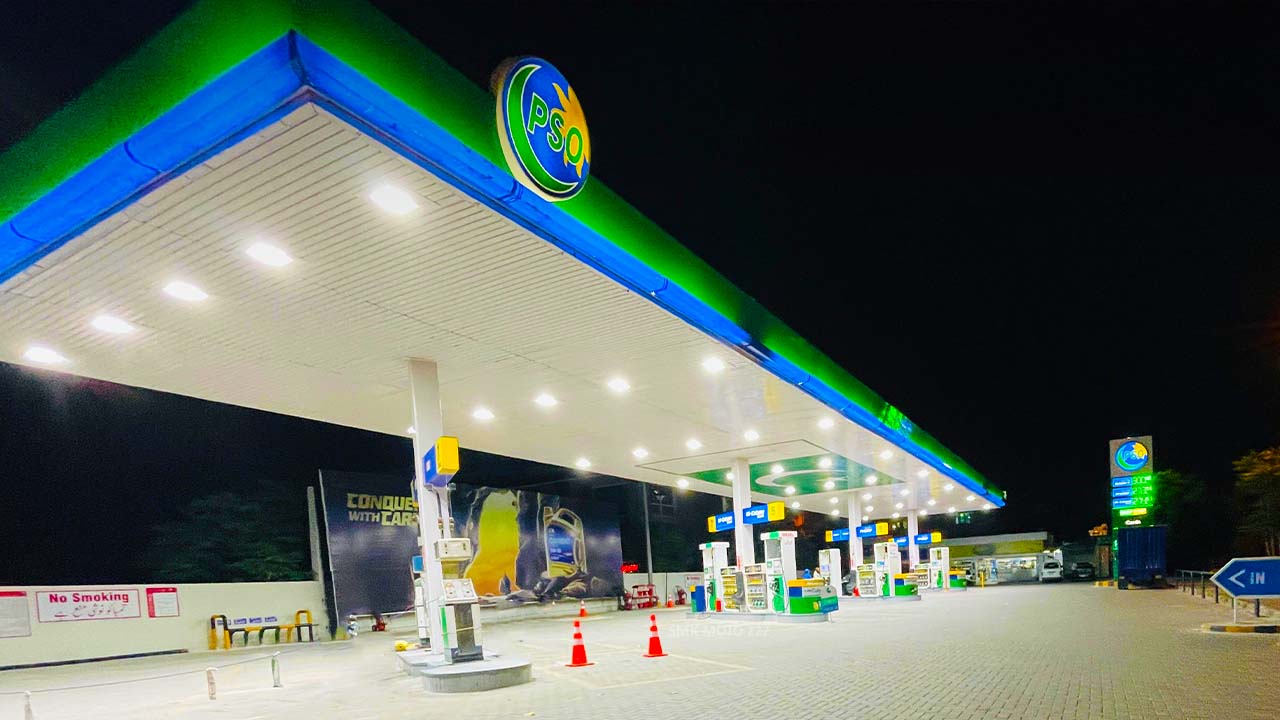
    For the remainder of the month, petrol prices have been cut by Rs8.47 per litre, largely due to a decline in global fuel prices.

    The new petrol price is Rs260.96 per litre, down from Rs269.43. In addition, the price of high-speed diesel (HSD) has been reduced from Rs272.77 to Rs266.07, a decrease of Rs6.70 per litre.

    The announcement was made by the Ministry of Information on Tuesday.

    While some may view this as a positive development, the reduction may not provide significant relief, as petrol remains above Rs260 per litre.

    However, it could help some individuals save a small amount and slightly reduce their daily commuting expenses.

  • Food & Agri Exhibition concludes with deals worth $1.2billion

    Food & Agri Exhibition concludes with deals worth $1.2billion

    A three-day food and agri event attended by more than 800 buyers from 75 countries ended in Karachi with 330 exporters exhibiting around 500 quality products.

    Dawn reported that international chain stores, buyers and multinational companies visited the Second International Food and Agriculture Exhibition at the Karachi Expo Centre. The largest participation was from China, comprising 150-plus buyers.


    As result of 7,000 business-to-business meetings, deals worth $1.2bn were finalised, besides signing of more than 36 Memorandums of Understanding (MoUs) mainly in rice, processed food, seafood, kinnow, potato, lentils, chickpeas, mangoes, confectionery, meat, food and beverages, spices, cereals and oil seeds by China, Malaysia, Egypt, Kazakhstan, Russia, Sri Lanka, Gambia and France.

    Trade Development Authority of Pakistan (TDAP) Chief Executive Zubair Motiwalla said the estimated export orders of $1.2bn will complement the target set by Prime Minister Shehbaz Sharif in his inaugural speech at the event.

    According to a press release issued by the Ministry of Commerce, $35 million worth of export contracts were signed between Pakistani and Chinese companies in the seafood sector. Additionally, several MoUs and investment interests were expressed by various companies, including HVA (dairy investment), Bolynta (potato seeds from the Netherlands), Huiyuan Beverages and Food Group (China), and METAS (Qatar).

  • FBR registers 58000 traders against 3.2 million target

    FBR registers 58000 traders against 3.2 million target

    The Federal Board of Revenue (FBR) has so far registered over 58,000 small traders or new shopkeepers under the Tajir Dost Scheme against the target of 3.2 million.


    Business Recorder has reported that monthly tax payments from traders will start from the ongoing month.
    Chief Coordinator of the Tajir Dost Scheme Naeem Mir said that the Board has projected total collection Rs 50 billion under this head in the current year.


    Mir said that it is an ambitious target and would require full cooperation of the traders to voluntarily deposit monthly tax payment installments.
    FBR has chalked out monthly advance income tax table for traders in 42 major cities of the country.
    Based on location of shops, the FBR has issued market or area wise indicative income, indicative income tax and Monthly Advance Tax to be paid by small traders.


    Under the monthly tax payment plan, the traders and shopkeepers in 78 percent of the markets would be required to pay monthly advance income tax of Rs 5,000.


    The monthly tax payment would be Rs 10,000 per month for traders covered in 14 percent markets of the country. The tax payment would be Rs 20,000 per month in five percent areas. Traders will pay Rs 30,000 per month as tax installment in two percent areas and Rs 45,000 monthly payment in 0.6 percent areas and traders would pay monthly advance income tax of Rs 60,000 per month in 0.40 percent markets of the country.

  • Profit margins slashed for select National Savings Schemes

    Profit margins slashed for select National Savings Schemes

    The Central Directorate of National Savings (CDNS) has announced a reduction in profit rates for several of its National Savings Schemes, while rates for other schemes remain unchanged.

    Effective from August 7, 2024, the profit rate for the Savings Account (SA) has been cut by 150 basis points to 19 per cent, down from the previous 20.5 per cent.

    The Short Term Saving Certificates (STSC) will now offer a return of 17.9 per cent, a decrease of 134 basis points from the earlier rate of 19.24 per cent.

    Additionally, the rate for the Sarwa Islamic Saving Account has also been reduced to 19 per cent, reflecting a 150 basis point drop.

    Rates for other National Savings Schemes have been maintained at their current levels.

    The CDNS, Pakistan’s largest financial institution, manages a portfolio exceeding Rs3.4 trillion and serves over 4 million customers through its network of 376 branches across the country, overseen by 12 Regional Directorates.

    The organisation plays a crucial role in generating funds for the government, contributing to budgetary needs and supporting key infrastructure projects.

    Last month, the Monetary Policy Committee (MPC) of the State Bank of Pakistan (SBP) reduced the key policy rate by 100 basis points to 19.5 per cent, marking its second consecutive cut.

    Pakistan’s headline inflation was recorded at 11.1 per cent on a year-on-year basis in July 2024, down from 12.6 per cent in June 2024.

    This represents the lowest Consumer Price Index (CPI) figure since November 2021, when it stood at 11.5 per cent, according to data from the Pakistan Bureau of Statistics (PBS).

  • Honda leads motorcycle sales, selling over 70,000 bikes in a month despite high prices

    Honda leads motorcycle sales, selling over 70,000 bikes in a month despite high prices

    Sales of motorcycles and three-wheelers in Pakistan rose by 15.5 per cent year-on-year in July 2024, reaching 84,993 units.

    This compares to 73,588 units sold during the same month last year, according to the latest data from the Pakistan Automotive Manufacturers Association (PAMA).

    However, on a month-on-month basis, sales declined by 5.45 per cent, down from 89,895 units in June 2024.

    Production figures for motorcycles and three-wheelers showed a total of 85,516 units in July, marking an 11.55 per cent increase from 76,661 units produced in July 2023. Conversely, production fell by 2.65 per cent compared to the 87,844 units manufactured in June 2024.

    Honda remained the market leader with 70,255 units sold in July, capturing an 82.66 per cent market share. This represents a 12.4 per cent decrease from the previous month but a 13.29 per cent increase compared to July 2023.

    United Auto Motorcycle and Suzuki ranked second and third, with sales of 9,202 and 1,643 units, respectively.

    Sazgar Three Wheeler sold 1,624 units in July, reflecting a 10.67 per cent decrease from the previous month but a significant 113.4 per cent increase compared to July 2023.

  • Pakistan will get $500 million from Islamic Bank to purchase crude oil

    Pakistan will get $500 million from Islamic Bank to purchase crude oil

    Pakistan has secured a $500 million loan from the Islamic Development Bank (IDB) to purchase crude oil from the international market. The loan will be provided in installments throughout the fiscal year 2024-25.

    The Nation has reported that Pakistan will receive $100 million from the IDB in the first quarter of FY2024-25, followed by $150 million in the second quarter. The remaining $25 million will be distributed equally in the third and fourth quarters of the fiscal year.

    It may be recalled that Pakistan was assured of $3.6 billion by the IDB at the Geneva Donor Conference held last year.

    Meanwhile, oil prices rose for a fifth consecutive session on Monday, extending gains from last week’s more than 3 percent rise, as US recession fears eased while geopolitical tensions in the Middle East supported prices.

    Brent crude futures climbed 28 cents, or 0.4 percent, to $79.94 a barrel by 0635 GMT, while US West Texas Intermediate crude futures rose 42 cents, or 0.6 percent, to $77.26.

    IG Markets analyst Tony Sycamore said that the rise in oil prices to improve US economic data from last week, which raised concerns about a potential US recession. Additionally, geopolitical tensions in the Middle East have contributed to the rising pressure on oil prices.

  • Government to introduce 5-year economic plan under supervision of British economist Stefan Dercon

    Government to introduce 5-year economic plan under supervision of British economist Stefan Dercon

    A five-year economic plan for the development of Pakistan’s struggling economy has been prepared under the supervision of Belgian-British economist Stefan Dercon. Prime Minister Shehbaz Sharif is likely to launch it on August 14.

    Geo News reported that the proposed economic plan has been named the Stefan Dercon plan. It contains target of 6 percent annual economic growth target by 2028.

    The ambitious plan also emphasises on structural reforms to take the export target to $60 billion by 2028.

    The proposed plan prioritises the promotion of private investment and the increase in exports. The successful implementation of reforms is estimated to create one million employment opportunities annually.

    According to the Dercon Plan, the proposed plan’s results would be fairly visible by 2028, one year after the IMF programme ends.

    “The failure of structural reforms for growth in Pakistan is not due to a lack of ideas, but a lack of political will to implement these reforms,” warns the draft report.

    It also warns that Pakistan won’t get chances like this; therefore, the opportunity must not be wasted.

  • Petrol price may be reduced by more than Rs10 per litre this week

    Petrol price may be reduced by more than Rs10 per litre this week

    Pakistan may experience a notable drop in fuel prices in the near future, with reductions of up to Rs12 per litre anticipated for various petroleum products, according to industry sources.

    Initial estimates indicate that the price of petrol could fall by more than Rs9 per litre, while high-speed diesel (HSD) might see a decrease of up to Rs8.50 per litre. Kerosene oil is also expected to become more affordable, with potential price cuts exceeding Rs12 per litre.

    The Oil and Gas Regulatory Authority (OGRA) is expected to finalise these pricing adjustments and submit its recommendations to the government by August 15. Finance Minister Muhammad Aurangzeb, in consultation with Prime Minister Shehbaz Sharif, will make the final decision on the new fuel prices.

    If approved, these reductions could offer significant relief to consumers grappling with high inflation and increasing living costs throughout the country. Further updates are anticipated following OGRA’s report submission.

  • Rashid Mahmood’s appointment as FBR chairman sparks controversy over overlooked senior officers

    Rashid Mahmood’s appointment as FBR chairman sparks controversy over overlooked senior officers

    The recent appointment of Rashid Mahmood as Chairman of the Federal Board of Revenue (FBR) has ignited debate, as it appears that a number of senior FBR officers were bypassed for the role.

    According to sources, Mahmood’s appointment has overlooked 24 senior officers in the field and 6 at the FBR headquarters, highlighting concerns over the lack of a seniority-based appointment process at the FBR—a stark contrast to other key institutions.

    Further sources reveal that Members of Customs Operations are currently on extended leave, and many senior officers are absent, which points to potential inefficiencies within the department

    Notably, Mahmood’s predecessors, including Amjad Zubair Tawana, Asim Ahmed, and Muhammad Ashfaq Ahmed, were also appointed despite more senior officers being available, raising questions about the appointment criteria.

    The timing of this appointment is particularly critical as the government faces a daunting tax target of Rs12.31 trillion for the coming 11 months. According to Mettis Global, if revenue collection falls short, even by a month or two, achieving this goal will be increasingly difficult.

    In addition to these challenges, the new chairman will need to navigate ambitious revenue collection targets and oversee essential system digitisation efforts.