Category: Business

  • IMF predicts modest 3.5% growth for Pakistan amid global economic uncertainty

    IMF predicts modest 3.5% growth for Pakistan amid global economic uncertainty

    The International Monetary Fund (IMF) has forecasted a 3.5 per cent growth rate for Pakistan’s economy in the fiscal year 2024-25 (FY25), slightly below the government’s target of 3.6 per cent.

    This comes after Pakistan’s economy grew by 2.4 per cent in the fiscal year 2023-24, missing the government’s target of 3.5 per cent.

    Pakistan’s economic challenges are compounded by chronic mismanagement, the aftermath of the COVID-19 pandemic, the war in Ukraine, inflationary pressures from supply chain disruptions, and severe flooding in 2022.

    The IMF’s World Economic Outlook (WEO) update warns of modest global growth over the next two years, influenced by cooling activity in the US, stabilization in Europe, and stronger consumption and exports from China, but significant risks remain.

    Globally, the IMF has maintained its 2024 growth forecast at 3.2 per cent and slightly increased its 2025 forecast to 3.3 per cent. IMF Managing Director Kristalina Georgieva has expressed concern over these tepid growth rates. The US growth forecast for 2024 has been revised down to 2.6 per cent, reflecting slower consumption, while the 2025 forecast remains at 1.9 per cent due to a cooling labor market and moderated spending.

    The IMF has raised China’s 2024 growth forecast to 5.0 per cent, reflecting a rebound in private consumption and strong exports, but recent data showing lower-than-expected GDP growth poses a downside risk.

    The IMF also highlighted persistent risks to inflation due to high services prices and wage growth in labor-intensive sectors, alongside potential trade and geopolitical tensions that could exacerbate price pressures. Additionally, the IMF warned of the impact of economic policy shifts from upcoming elections, which could lead to increased protectionism and fiscal irresponsibility.

    The IMF advised policymakers to restore price stability, gradually ease monetary policy, rebuild fiscal buffers, and implement policies to promote trade and productivity growth.

  • IMF deal to improve Pakistan’s financial outlook, but continuous reforms are essential: Moody’s

    IMF deal to improve Pakistan’s financial outlook, but continuous reforms are essential: Moody’s

    Moody’s Investors Service has stated that Pakistan’s recent staff-level agreement with the International Monetary Fund (IMF) enhances the nation’s funding prospects.

    However, the global rating agency stressed the necessity of sustained reforms to mitigate liquidity risks.

    On 12 July, Pakistani authorities and the IMF reached a staff-level agreement on a 37-month Extended Fund Facility (EFF) worth approximately $7 billion. This agreement still awaits approval from the IMF Executive Board, with no specific date set for the vote.

    Moody’s commented that once the loan deal is approved, which is highly anticipated, it will significantly boost Pakistan’s funding prospects. The new IMF program is expected to provide reliable financing from the IMF and attract additional funding from other bilateral and multilateral partners, addressing Pakistan’s external financing needs.

    Nonetheless, Moody’s cautioned that the government’s ability to consistently implement reforms will be crucial to maintaining continuous financial support throughout the IMF program, ultimately reducing liquidity risks.

    The new IMF EFF requires Pakistan to undertake extensive reforms, including broadening the tax base, eliminating exemptions, timely managing and privatising energy enterprises, phasing out agricultural support prices and related subsidies, advancing anti-corruption measures, enhancing governance and transparency, and gradually liberalising trade policy.

    Moody’s also warned that rising social tensions, driven by the high cost of living—which could be exacerbated by increased taxes and future energy tariff adjustments—might hinder reform implementation. Furthermore, the coalition government may struggle to maintain sufficient electoral support to implement these challenging reforms consistently.

    An IMF report published in May highlighted Pakistan’s external financing needs, estimated at $21 billion for fiscal year 2025 (ending June 2025) and approximately $23 billion for fiscal years 2026-2027.

    Moody’s noted that Pakistan’s external position remains precarious, with substantial external financing requirements over the next three to five years.

    The country remains vulnerable to policy slippages, weak governance, and high social tensions, which could impair the government’s ability to advance reforms, complete IMF program reviews, and secure external financing.

  • Govt hikes petrol price by Rs9.99 per litre, diesel by Rs6.18 for the rest of July 2024

    Govt hikes petrol price by Rs9.99 per litre, diesel by Rs6.18 for the rest of July 2024

    The government has announced an unexpected increase in petrol and diesel prices for the next fortnight.

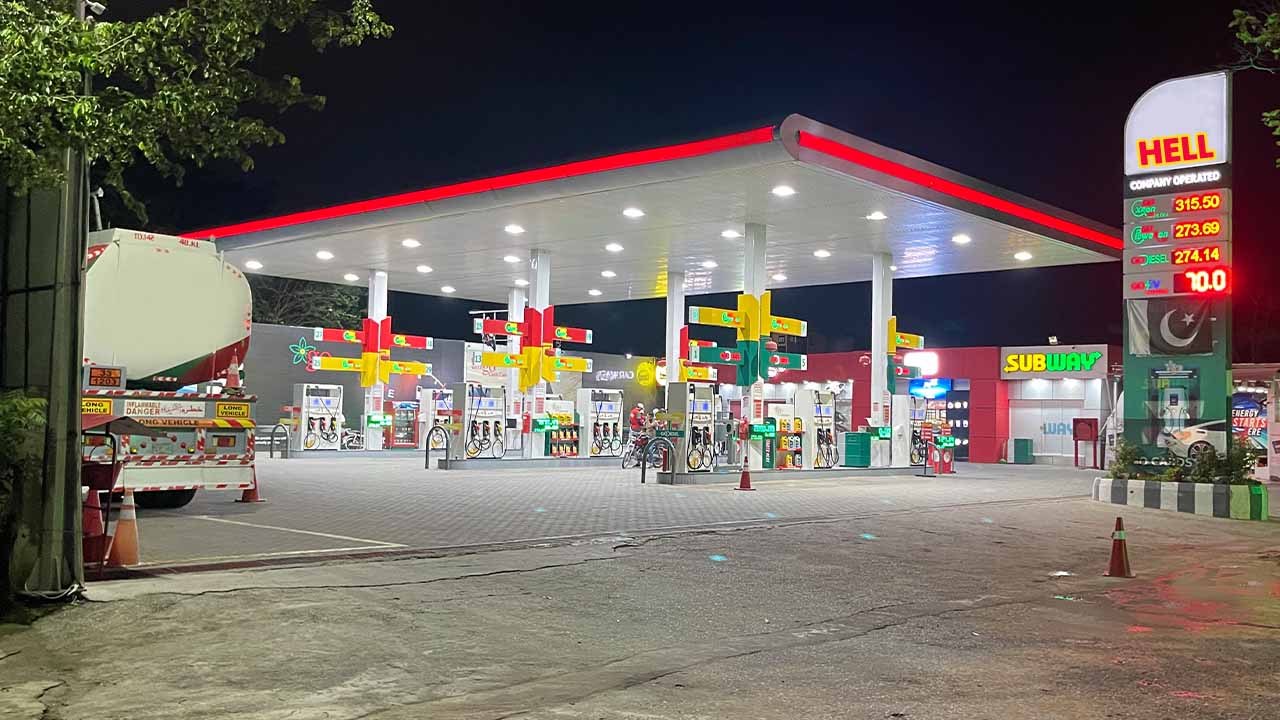
    In response to the rise in international oil rates, the price of petrol in Pakistan has been raised by Rs9.99 per litre to Rs275.60. Concurrently, the price of High Speed Diesel (HSD) has been increased by Rs6.18 per litre, bringing it to Rs283.63.

    The Finance Division issued a notification for these latest fuel prices under the fresh fortnightly review. This increase is expected to further exacerbate the financial burden on the populace, who are already struggling with the high costs of essential food items and basic necessities.

    Previously, there were projections that the government might increase the petrol price by Rs6-7 per litre, but such a significant hike was not anticipated.

    The Finance Division clarified that the duties and levies will remain unchanged, meaning the Petroleum Development Levy (PDL) stays the same in this latest fuel price review.

    This is the second time in a row that the government has not increased the levy on petroleum products.

  • Pakistan’s stock market surges to record high following IMF deal

    Pakistan’s stock market surges to record high following IMF deal

    On Monday, Pakistan’s stock market experienced a significant boost after the country secured a $7 billion loan agreement with the International Monetary Fund (IMF) over the weekend.

    The benchmark KSE-100 Index soared by 1,211.51 points, or 1.52 per cent, closing at an all-time high of 81,155.60. This surge reflects investor confidence in the economic stability promised by the new IMF programme.

    According to the IMF, the programme aims to build on the macroeconomic stability achieved over the past year. The successful staff-level agreement is expected to create a conducive environment for financial inflows from other multilateral institutions, bilateral partners, and friendly countries. These inflows are anticipated to bolster Pakistan’s foreign exchange reserves and alleviate external pressures.

    Additionally, the programme will provide much-needed clarity and certainty regarding the economic roadmap, alongside structural reforms over the next three years.

    During the trading session, the index fluctuated within a range of 684.97 points, hitting an intraday high of 81,428.43 points and a low of 80,743.46 points. The total trading volume for the KSE-100 Index was 219.58 million shares.

    Of the 100 companies listed on the index, 65 closed higher, 30 fell, and 5 remained unchanged. The sectors driving the index upwards included Commercial Banks (+295.96 points), Fertilizer (+203.92 points), Oil & Gas Exploration Companies (+193.68 points), Technology & Communication (+165.01 points), and Cement (+124.38 points).

    Conversely, sectors that negatively impacted the index included Tobacco (-20.20 points), Refinery (-4.40 points), Paper, Board & Packaging (-2.88 points), Transport (-2.30 points), and Textile Spinning (-1.42 points).

  • PM Shehbaz urges FBR to modernise tax system without burdening honest taxpayers

    PM Shehbaz urges FBR to modernise tax system without burdening honest taxpayers

    Prime Minister Muhammad Shehbaz Sharif has directed the Federal Board of Revenue (FBR) to implement a strategy using the latest technology to expand the tax base without imposing additional burdens on honest taxpayers.

    During his visit to the FBR Headquarters, the Prime Minister underscored the government’s commitment to steering Pakistan towards economic progress and stability.

    Prime Minister Sharif highlighted the necessity of collective and individual efforts, sincerity, and sacrifices to prioritise national interests over personal gains.

    He described the recent staff-level agreement with the International Monetary Fund (IMF) as a positive development for the country’s economy and expressed optimism that the IMF board would endorse it.

    He urged the FBR to work diligently to ensure this IMF programme is the last one needed, paving the way for a prosperous future.

    Sharif emphasised the importance of taxing those who evade payments to alleviate the repeated financial strain on honest taxpayers, including government employees. He advocated for leveraging modern technologies, such as artificial intelligence, to digitise FBR operations, which he viewed as crucial for broadening revenue sources without unfairly burdening compliant taxpayers.

    The Prime Minister criticised the reliance on foreign debts, stressing that sustainable nation-building requires self-reliance and effective tax collection. He insisted that current FBR reforms be conducted objectively and transparently, prioritising national interests. Sharif also instructed FBR Chairman Malik Amjad Zubair Tiwana to bring any departmental issues to light promptly.

    Acknowledging FBR’s success in collecting 30% more revenue compared to the previous year, Sharif insisted that tax enforcement should focus on achieving set targets without causing undue difficulties for compliant businesses and industrialists.

    He recalled the introduction of agricultural tax in Punjab 27 years ago, which was subsequently adopted by other provinces, highlighting the need to address general sales tax collection issues.

    Upon his arrival at FBR Headquarters, Sharif was welcomed by key government officials, including Finance Minister Muhammad Aurangzeb and Minister of State for Finance Ali Pervaiz Malik. The Prime Minister paid homage to the FBR’s fallen heroes by laying a wreath and offering Fateha. He reiterated that the automation and digitisation of FBR are government priorities and authorised the immediate release of Rs2 billion to enhance the Web-Based One Customs System (WeBOC).

    The meeting, attended by several ministers and senior officials, included a briefing on ongoing FBR reforms and the progress of the digitisation strategy.

    The Prime Minister was informed of the completion of the first phase of the FBR Tajir Dost Mobile application, which simplifies tax return processes. Additionally, the use of advanced technology has identified approximately 4.9 million potential taxpayers.

    Sharif instructed the FBR to expand the tax net to include these identified individuals and to address the legitimate demands of flour mill owners through direct engagement.

  • Nepra approves up to 51% increase in electricity prices for residential consumers

    Nepra approves up to 51% increase in electricity prices for residential consumers

    The National Electric Power Regulatory Authority (Nepra) has approved a significant increase of up to 51 per cent in the base electricity rates for residential consumers. This adjustment is part of a new tariff schedule aimed at addressing rising energy costs.

    Under the revised rates, consumers using up to 200 units per month will see their tariffs remain unchanged until September 2024. However, from October 2024 onwards, substantial hikes will take effect, impacting millions of households across the country.

    For protected consumers using up to 100 units monthly, the tariff will rise from the current Rs7.74 to Rs11.69 per kilowatt-hour (kWh), representing a steep 51 per cent increase.

    Similarly, those consuming between 101 and 200 units will face a 41 per cent increase, with rates jumping from Rs10.06 to Rs14.16 per kWh. Notably, over 15.5 million consumers fall into this protected category.

    Non-protected consumers will also bear the brunt of these increases. For those using up to 100 units, the tariff will rise by 43 per cent, escalating from Rs16.48 to Rs23.59 per kWh. For consumption between 101 and 200 units, the rate will increase by 31 per cent, from Rs22.95 to Rs30.07 per kWh.

    For consumers exceeding 200 units, tariff increases will vary between 14 per cent and 26 per cent, effective from July 2024, with no additional changes expected for the rest of the fiscal year. Additionally, fixed charges ranging from Rs200 to Rs1,000 per kWh have been introduced for these categories.

    Nepra conducted a public hearing on 8 July to discuss government requests for an additional burden of over Rs700 billion to be passed on to electricity consumers through an average national tariff increase.

    In its final order, Nepra stated, “The authority has no objection in approving the motion along with the subsequent addendum of the federal government.”

    As a result of these changes, the average base electricity tariff will rise by Rs3.29 per unit, bringing it to Rs33.07—an 11 per cent increase compared to the fiscal year 2023-24. This decision marks a significant shift in the financial landscape for residential electricity consumers across Pakistan.

  • IMF and Pakistan reach agreement on $7 billion extended fund arrangement

    IMF and Pakistan reach agreement on $7 billion extended fund arrangement

    In a significant development, Pakistani authorities and the International Monetary Fund (IMF) team have reached a staff-level agreement on a 37-month Extended Fund Arrangement (EFF) worth SDR 5,320 million or $7 billion, as per a statement issued by the IMF.

    This agreement is contingent upon approval by the IMF’s Executive Board and the timely confirmation of necessary financing assurances from Pakistan’s development and bilateral partners.

    The programme aims to build on the macroeconomic stability achieved over the past year by further strengthening public finances, reducing inflation, rebuilding external buffers, and removing economic distortions to promote private sector-led growth.

    In response to a request from Pakistani authorities, an IMF team led by Nathan Porter, IMF’s Mission Chief to Pakistan, held discussions from May 13-23, 2024, in Islamabad and virtually thereafter on IMF support for Pakistan’s medium-term policy and reform plans.

    The key policy goals of the programme include:

    1. Sustainable public finances: This will be achieved through gradual fiscal consolidation by broadening the tax base and removing exemptions, while increasing resources for critical development and social spending. The authorities plan to increase tax revenues by 1.5% of GDP in FY25 and 3% of GDP over the programme duration. The FY25 budget targets an underlying general government primary surplus of 1% of GDP (2% in headline terms). Revenue collection will be enhanced through simpler and fairer direct and indirect taxation, including properly taxing net income from the retail, export, and agriculture sectors.

    2. Fiscal balance between federal and provincial governments: A National Fiscal Pact has been signed to rebalance spending in line with the 18th constitutional amendment. This will see provincial governments taking on higher spending responsibilities for education, health, social protection, and regional public infrastructure. Provinces will also increase their tax collection efforts, particularly sales tax on services and agricultural income tax. From January 1, 2025, all provinces will harmonise their Agriculture Income Tax regimes with federal tax regimes.

    3. Reducing inflation and building external buffers: Monetary policy will focus on supporting disinflation to protect real incomes, especially for the vulnerable. The State Bank of Pakistan (SBP) will maintain a flexible exchange rate and improve the functioning and transparency of the foreign exchange market to build reserves and buffer against shocks. Financial stability will be enhanced by deepening access to financing, strengthening financial institutions, addressing undercapitalised banks, and upgrading the crisis management framework.

    4. Energy sector reforms: The authorities aim to restore energy sector viability and minimise fiscal risks through timely adjustment of energy tariffs, decisive cost-reducing reforms, and avoiding unnecessary expansion of generation capacity. Targeted subsidy reforms will replace cross-subsidies to households with direct BISP support.

    5. Private sector and export dynamism: Efforts will be made to improve the business environment, create a level playing field for businesses, and remove state distortions. This includes improving the operations and management of State-Owned Enterprises (SOEs), prioritising profitable SOEs for privatisation, and enhancing transparency and governance of the Pakistan Sovereign Wealth Fund.

    Additionally, incentives for Special Economic Zones will be phased out, agricultural support prices and subsidies will be reduced, and no new regulatory or tax-based incentives will be introduced that could distort the investment landscape.

    6. Anti-corruption and governance reforms: The authorities have committed to advancing anti-corruption measures, governance, and transparency reforms, and gradually liberalising trade policy.

    “The IMF team is grateful to the Pakistani authorities, private sector, and development partners for their hospitality during the visit to Islamabad and for the fruitful discussions,” the statement reads.
  • Gold price surges by Rs2,200 per tola amid renewed interest in investment

    Gold price surges by Rs2,200 per tola amid renewed interest in investment

    On Friday, the price of 24-karat gold in Pakistan increased by Rs2,200, bringing the total to Rs249,000 per tola. This rise follows the release of the US inflation report for June, which indicated the lowest price gains since 2021, sparking renewed interest in gold as an investment.

    Currently, the local price is about Rs2,800 lower than its actual cost, a discrepancy attributed to the reduced purchasing power of consumers.

    According to the Karachi Sarafa Association, the price of 24-karat gold is recorded at Rs213,477 per tola for a 10-gramme unit, reflecting a rise of Rs1,886 per tola. Meanwhile, the price of 22-karat gold has also seen an increase, now priced at Rs195,687 per 10-gramme.

    In contrast, silver prices in the domestic market have remained stable, with 24-karat silver being sold at Rs2,900 per tola and Rs2,486 per 10-gramme.

    On the global front, spot gold has levelled off after surpassing $2,400 per ounce, buoyed by the cooler-than-expected US inflation figures, which have raised hopes for an interest rate cut. On Thursday, gold closed 1.9 per cent higher, marking its most significant gain since March.

    The recent inflation data revealed the slowest growth in core consumer prices, the Federal Reserve’s preferred measure, since 2021.

    This development has led traders to anticipate a September rate cut, with expectations for at least two quarter-point reductions in 2024, according to Bloomberg. Such lower borrowing costs are generally favourable for bullion, which does not yield interest.

    Gold’s current rally, which has seen a 17 per cent increase this year, is supported by strong demand from central banks, geopolitical tensions, and increased purchases from Chinese consumers, as the metal approaches its all-time high of $2,450.07 set in May.

  • Car sales in Pakistan hit 15-year low in FY 2023-24: PAMA data

    Car sales in Pakistan hit 15-year low in FY 2023-24: PAMA data

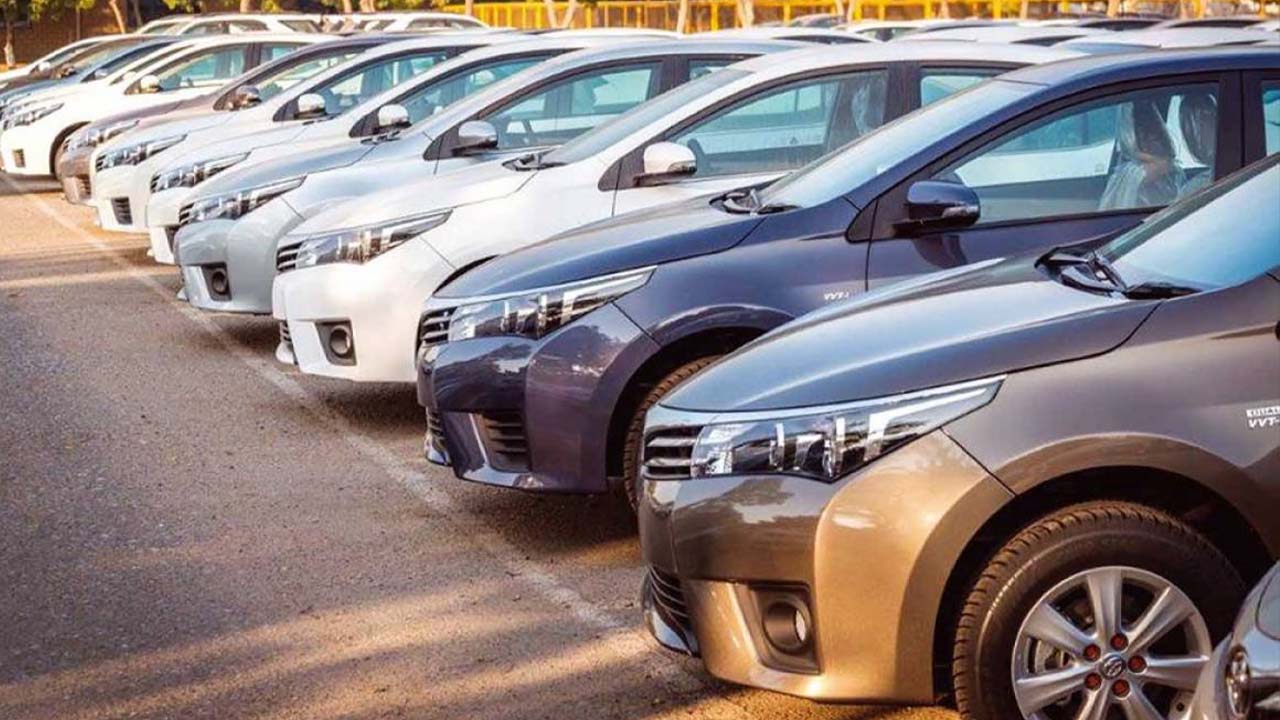
    Car sales in Pakistan plummeted to their lowest level in 15 years during the fiscal year 2023-24, as reported by the Pakistan Automotive Manufacturers Association (PAMA).

    The data reveals that sales of cars, including light commercial vehicles (LCVs), vans, and jeeps, declined by 18.2 per cent year-on-year, amounting to 103,826 units by the end of the fiscal year on June 30, 2024.

    This marks the lowest sales figures since FY 2009.

    In comparison, 126,878 units were sold in the previous fiscal year, while the average sales over the past five years stood at 188,030 units.

    Furthemore, passenger car sales decreased by 15.7 per cent year-on-year to 81,577 units during the fiscal year, compared to 96,811 units recorded in the previous year.

    Total production of passenger cars was 79,573 units in FY24, a 22.0 per cent decline from the 101,984 units produced last year.

    The PAMA data also highlighted that the highest number of passenger car sales occurred in the ‘Below 1000cc’ category, with 38,657 units sold in FY24.

    Within this segment, Suzuki Alto led with 35,883 units sold, followed by Suzuki Bolan with 2,774 units.

  • IMF to continue talks on Pakistan’s economic reform goals

    IMF to continue talks on Pakistan’s economic reform goals

    The International Monetary Fund (IMF) remains engaged in discussions with Pakistan on policy goals and actions to establish a medium-term, home-grown reform programme that could be supported under the Extended Fund Facility (EFF) arrangement.

    Julie Kozack, Director of the Communications Department at the IMF, highlighted this in a recent press briefing. She emphasised that the reform programme under consideration aims to enhance economic credibility through the consistent application of sound policies.

    The objective is to transition Pakistan from economic stabilisation to robust, inclusive, and resilient growth, ultimately improving the living standards of the Pakistani people.

    The IMF also noted significant progress towards a staff-level agreement with Pakistan.

    Addressing a query about the recent mission to Pakistan, Kozack stated, “Since our mission to Pakistan from May 13 to May 23, our staff has visited Islamabad. We will continue to discuss policy goals and actions that could form the basis of a medium-term, home-grown reform programme for Pakistan that could be supported under the EFF arrangement with the IMF.”

    Regarding the prior actions and the 2024-25 budget, she mentioned that discussions between the IMF team and Pakistani authorities are ongoing and that further information would be communicated in due course.

    Kozack further elaborated on the 2023 Stand-by Arrangement (SBA) for Pakistan, explaining that its goal is to return to stability and to maintain, broaden, and extend this stability to establish a foundation for sustainable growth.