Category: Editorial

  • Lockdown, you still there?

    Lockdown, you still there?

    As per authorities, a lockdown is not only in place in Pakistan but has also been extended.

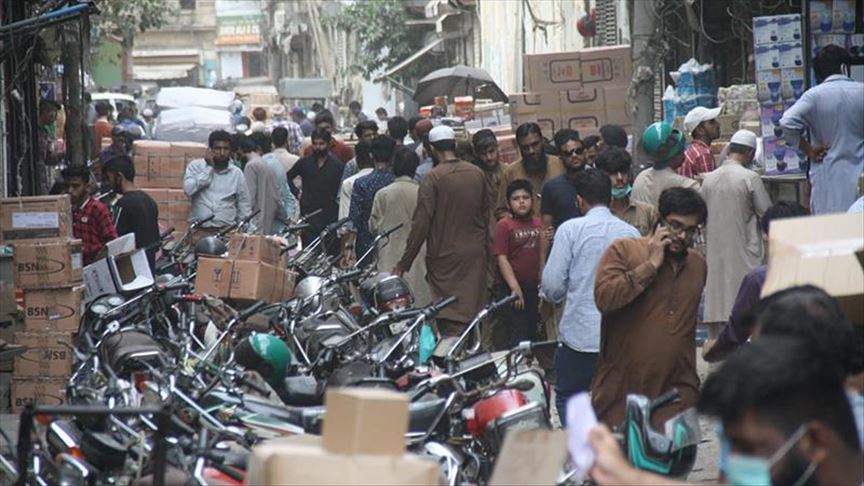
    Yet, there is no lockdown.

    We all know that when the federal and provincial governments imposed restrictions all across the country to curb the spread of coronavirus –COVID-19 –, most people followed the rules and stayed indoors. Less traffic was seen on the roads and consequently, the air quality became much better. But most importantly, the lockdown to some extent served its actual purpose in helping the authorities control coronavirus.

    Then in mid-April, the government announced that while the lockdown had been extended, some industries and shops ccould re-open. This led to ulema announcing that they too would reopen mosques and offer Taraweeh during the holy month of Ramzan. The government finally held negotiations with religious scholars and an accord was signed, as per which all mosques would have to follow 20 SOPs to remain open.

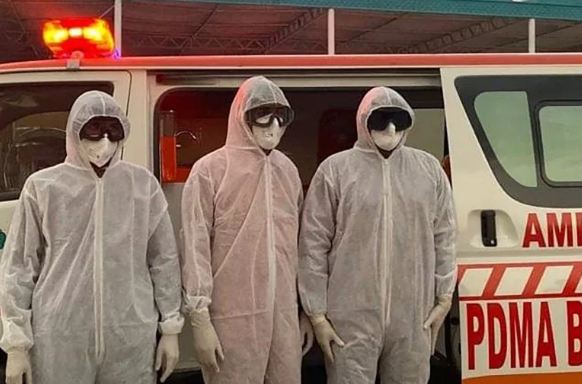
    A few days before Ramzan, senior doctors in Karachi held an urgent and heart-wrenching press conference. They said that after the lockdown was eased, a 40 per cent spike in coronavirus cases had been recorded from April 16-21. A 40 per cent increase in just five days. Imagine! The following day, senior doctors in Lahore also held a similar press conference and urged the government to consider imposing a stricter lockdown for the next two weeks.

    All this came amid the government’s realisation of the fact that the number of cases in Pakistan is likely to increase by mid-May. The Inter-Services Public Relations (ISPR) chief also warned of this in his press conference.

    In view of what the medical community was saying, the Sindh government on Thursday night decided to go back to their old SOPs of allowing just 3-5 people — mosque administration — to offer prayers at mosques. The rest of the country has allowed resumption of congregational prayers due to Ramzan. Apparently, not all mosques are following the agreed-upon SOPs. According to a survey conducted by the Pattan Development Organisation and published by Dawn, more than 80 per cent of mosques in Punjab and the federal capital did not put in place the measures agreed upon by the government and ulema regarding first Taraweeh congregations on Friday.

    The government will eventually have to reconsider this relaxation in lockdown. We understand that the economic downturn due to the coronavirus outbreak and lockdown was something the government was worried about and rightly so. The choice between saving the economy and an increase in coronavirus cases is difficult. But we will have to make a choice. Pakistan has crossed 13,000 cases. The number of deaths is also slowly increasing. We must remain vigilant.

    An aside: In his dua during Prime Minister (PM) Imran Khan’s telethon to raise funds for coronavirus relief, Maulana Tariq Jamil came under fire for criticising media. He later apologised when different anchors conducted shows against what he had said, but what he didn’t apologise for and what was not even highlighted much either, was how he correlated women and ‘behayai’ (vulgarity) and then said this ‘azaab’ is a result of the vices that exist in our society.

    Minister for Human Rights Shireen Mazari rightly pointed out in a tweet that it was “absurd for anyone under any guise to even suggest the COVID-19 pandemic was a result of women wearing short sleeves or because of private schools/universities misleading the youth. This simply reflects either ignorance abt pandemics or a misogynist mindset. Absolutely unacceptable.”

    In a country where thousands of women are killed in the name of honour annually, where domestic abuse is on the rise, where crimes against women keep increasing instead of decreasing, blaming women for a pandemic is unacceptable.
  • We’re on your side, dear minister

    We are all familiar with the adage that journalism is not a crime. Unfortunately, it seems that the ruling Pakistan Tehreek-e-Insaf (PTI) for some reason thinks it is.

    When The Current, with pictorial evidence, reported how unhygienic the conditions at a quarantine facility in Peshawar were, and when a few journalists shared the story on social media, the government did not take it very well. Khyber Pakhtunkhwa (KP) Health Minister Taimur Khan Jhagra took to Twitter and quote-tweeted journalist Benazir Shah.

    Other than questioning the report, he said:

    Targeting a well-respected journalist for tweeting a story about bad conditions at a quarantine facility in KP came as a surprise to many who had been commending both the KP government and Jhagra for their hard work in the fight against coronavirus. Jhagra could have ignored the story and not responded at all or just acknowledged the unhygienic conditions. If neither, he certainly could have responded without targeting Shah. 

    Jhagra is known to be decent and hardworking unlike many of his colleagues. Thus it came as a surprise when he targetted an accredited journalist, despite being fully aware of how the trolling brigade works. By targeting Shah specifically, he unleashed a troll army that is always ready to attack the media, especially women journalists.

    The notoriety of the ruling party’s troll army is an open secret despite official denial. Twitter trends against the media and renowned journalists have become a norm. Sharing private pictures of journalists taken from their social media accounts is another feather in the cap of these trolls. Any journalist who has attended Prime Minister (PM) Imran Khan’s media briefings in recent days and dared to ask him a tough question, has faced online trolling and vile attacks.

    Jhagra also implied in his Twitter thread regarding The Current’s story that the “privileged” cannot bear 48 hours of discomfort as the quarantine facilities may not be ideal. Well, this wasn’t about privilege. It was about highlighting the unhygienic conditions at a quarantine facility and nothing to do with privilege. Both the privileged and the under-privileged deserve clean quarantine facilities. This problem isn’t limited to Pakistan. In neighbouring India, many such cases of poor and unclean quarantine facilities have been highlighted on social as well as mainstream media.

    We understand that the government has limited resources and it will be difficult to deal with such pressures. We also acknowledge how hard the federal, as well as provincial governments, are working to fight the coronavirus and that mistakes are unavoidable as this is something the world hasn’t seen in recent times.

    We commend the hard work of our public officials, healthcare workers, doctors, policemen, security officials and everyone out there who is working day in and day out to ensure that the people of Pakistan stay safe and healthy during the pandemic. But we will also mention and highlight facts and news so that our readers stay informed. It is not our job to only highlight the positives; we have to report the truth even if the state does not like it. Journalists cannot be bullied by online trolls or campaigns against them. The media is not your enemy; coronavirus is our common enemy. Fight the virus, don’t fight the media without any reason.

    We don’t have rose-tinted glasses on, and red flags are not just flags to us…

  • Unbelievable times

    Unbelievable times

    We are living in unbelievable times. 

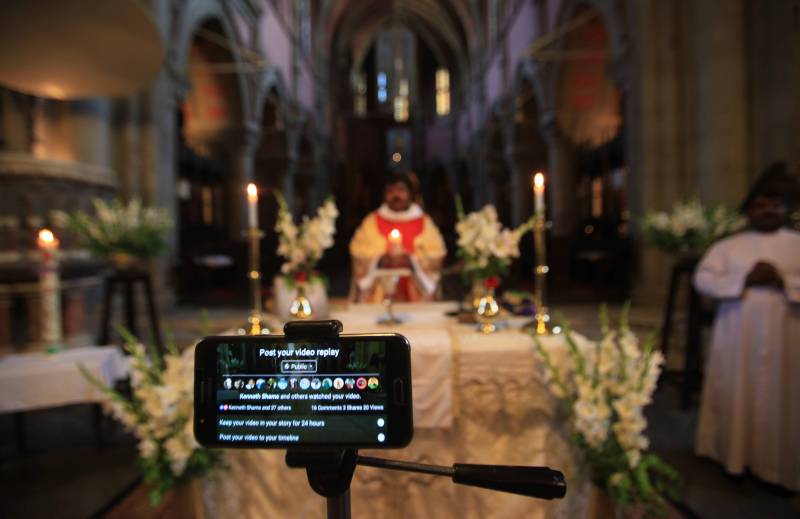
    “Wishing all our Christian citizens a happy Easter. Please stay safe and keep your families safe during the COVID-19 pandemic by praying and celebrating at home; and by observing the national safety protocols,” tweeted Prime Minister (PM) Imran Khan earlier today. The reality of coronavirus hits you hard when you read this tweet. Churches not just all over the country, but also in major parts of the world, are closed due to the coronavirus outbreak.

    A World Bank (WB) report on South Asia released last night is alarming. It says that Pakistan, India, Bangladesh, Afghanistan and other smaller countries may have so far reported relatively few coronavirus cases but they could be the next hotspots.

    “The economic outlook for South Asia is dire. South Asia will likely experience the worst economic performance of the last 40 years… for Pakistan, Afghanistan and Sri Lanka, the full range of their forecast GDP growth for this fiscal year is in negative territory,” says the report. It says that Pakistan may face a recession for the first time in 68 years.

    The report further states that the crisis will reinforce inequality in South Asia. This is something that the premier has constantly been worried about. The poorest of the poor will suffer the most is what he kept telling us about in his addresses to the nation as well as media briefings and interactions.

    This is indeed a catch-22 situation. Like his counterparts in other South Asian countries, PM Imran is in unchartered territory and is trying to deal with the pandemic by learning from other countries’ successes as well as mistakes and also by keeping in mind the local ground realities. He seemed confused about lockdown initially but later, and maybe soon enough, realised that there was no other choice. The federal government, as well as the provincial governments, will decide tomorrow (Monday) whether lockdown in the country should be extended.

    Many reports suggest that it may be extended till April 21.

    As the WB report suggests, smaller nations like Pakistan could be the next hotspot for coronavirus. Lockdowns may have helped to a great extent but we also need aggressive testing. Unfortunately, it hasn’t happened as we don’t have enough testing kits. Reports suggest some of these testing kits have also turned out to be faulty and/or substandard. Not having enough kits also points to another aspect, i.e. protectionism. The Global Trade Alert project says at least 69 countries have banned or restricted the export of protective equipment, medical devices or medicines during the pandemic while the World Health Organization (WHO) has warned protectionism could limit the global availability of vaccines.

    While the federal and provincial governments in Pakistan are doing their best under the circumstances and with the resources at hand, the real challenge lies in finding a cure for coronavirus. These are difficult times indeed and the predictions related to the coming months are not too bright either.

    Since it might soon be too late for all precautionary measures, stay home and stay safe for yourself and your dear ones.

  • Are you kidding us, Khan Sahib?

    Are you kidding us, Khan Sahib?

    Coronavirus pandemic has changed the dynamics of the entire world. Self-isolation, a concept most of us are not familiar with, will slowly but surely become necessary in the coming days. As Canadian Prime Minister (PM) Justin Trudeau said, “For a little while, this will be our new normal.”

    But while Trudeau and very few other world leaders, including New Zealand’s Jacinda Ardern, declare war on the pandemic, others, among whom is PM Imran Khan, still don’t appear to be understanding the gravity of the situation at hand.

    Four coronavirus patients have died in Pakistan — three in Khyber Pakhtunkhwa (KP) and one in Sindh. The number of cases is rapidly increasing (645 in less than a month), and if a nationwide lockdown isn’t put in place, it will continue to rise exponentially.

    After sticking to his mantra of ‘ghabrana nahi hai [don’t panic]’ for the past few days, the premier does no longer seem very sure if the masses should panic or not.

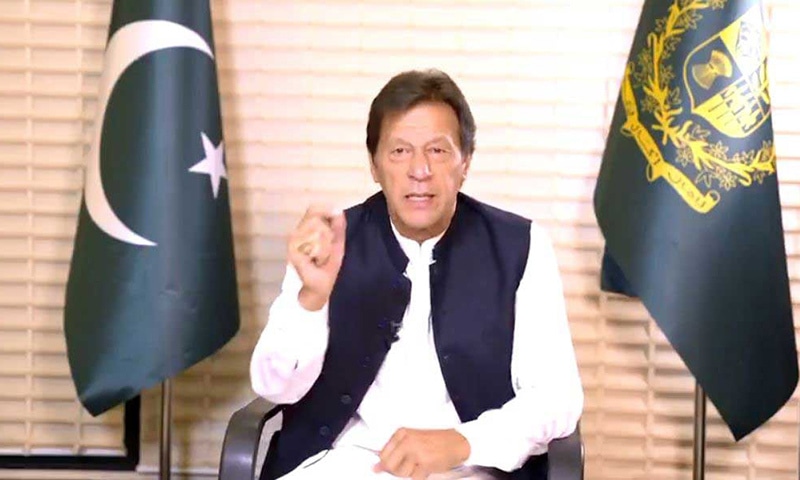
    “Pakistan cannot afford to impose a total lockdown. 25% of the people in the country live below the poverty line,” PM Imran said in his second address to the nation in three days on Sunday. “What will happen to them if I go ahead with the lockdown?”

    The premier added that if the economic situation of the country had been like that of Italy and China, he would have thought about imposing a lockdown. “Let me tell you what a lockdown is. A lockdown means putting a curfew and restricting people to their homes with the military on the streets,” he said.

    The situation escalated in Italy and China, Khan Sahib, evidently because the authorities didn’t impose a lockdown until it was too late.

    Your address to the nation and recent interaction with journalists were not exactly what we had hoped for. We understand you are worried about the poor, the daily wagers, the economy and many other things.

    But…

    After shutting down as much as the provincial governments already have, after the closure of educational institutions and the bearish trend in PSX amid global sell-out on COVID-19 fears, what further closures would a total lockdown entail?

    All international air operations are already closed. Most borders are closed. Wedding halls, shopping malls, restaurants are already shut. Massive unemployment has already been created. Moving towards total lockdown at this stage will presumably have a very little marginal impact.

    Is it paralysis of analysis which appears to be the hallmark of decision-making behind closed doors in Islamabad for quite some time now?

    In case of a total lockdown, what matters the most is taking care of the neglected segments of society – that they keep on receiving life support cash allowances or food aid. For starters, 50% of the budget of both civil and defence annual development programmes should be placed in a welfare account for such activities.

    Welfare… isn’t that what you promised, Khan Sahib?

    We know that a lockdown or delaying a lockdown is akin to be caught between a rock and a hard place. We understand that this is an immensely difficult and unforeseen situation but the government must act fast.

    Let’s learn from the mistakes made by countries that are the worst-hit by the new coronavirus, and try not to repeat them. 

    Lockdown does not mean that coronavirus cases will end, but it will definitely flatten the curve. This is what Pakistan needs to do. Our healthcare facilities are not equipped to deal with the impending crisis.

  • A health emergency

    A health emergency

    Coronavirus has taken the world by storm. The World Health Organization (WHO) says that Europe is now a new epicentre of the global pandemic. According to WHO, more than 132,500 people have been diagnosed with COVID-19 in 123 countries around the world, among which is Pakistan with 29 cases in Sindh, Gilgit-Baltistan and Islamabad.

    At least one infected patient is in a critical condition, reports have claimed.

    “Europe has now become the epicentre of the pandemic, with more reported cases and deaths than the rest of the world combined, apart from China,” said WHO Director General Dr Tedros Adhanom Ghebreyesus. “More cases are now being reported every day than were reported in China at the height of its epidemic.”

    The United States (US) has declared a national emergency due to the spread of coronavirus. Pakistan, too, is taking some measures now that the pandemic is spreading across the globe. Sindh government has been the most vigilant and its health department has proven to be the most efficient during the crisis.

    The way the Sindh government is monitoring people travelling from abroad to setting up isolation wards to test those with coronavirus symptoms is something all other provinces should emulate.

    During his visit to Karachi, WHO country representative in Pakistan, Dr Palitha Gunarathna Mahipala, said that Pakistan had in time come up with one of the world’s best national response programmes against the new coronavirus and it is being implemented very effectively. While there is a fear that other provinces are not equally proactive, which might lead to serious consequences, the good thing is that the federal government is taking the issue seriously and has ordered that educational institutions, cinemas and even marriage halls will remain closed for three weeks.

    Religious congregations and sports and cultural festivals have also been suspended for three weeks. PSL matches will take place without spectators while some foreign players have also left. We need more diagnostic labs as we only have seven at the moment in Pakistan, which can conduct up to 15,000 tests. If the suspected number of cases goes up, we need to be ready. While public gatherings are banned, we hope that the people take the coronavirus outbreak seriously as all of us are at risk.

    We need to take preventive measures in order to keep ourselves and our loved ones safe.

  • Why we march

    International Women’s Day is celebrated across the globe on March 8. Pakistan, too, marks the day as women from all walks of life take out rallies and marches across the country to ask for equal rights.

    Aurat March, a rally organised by women, is being held across several cities of Pakistan today. 

    Despite threats from the Jamiat Ulema-e-Islam-Fazl (JUI-F), Lal Masjid affiliates and other right-wing elements, women have not backed down and will continue marching, bearing the flag of equality.

    As for why we march; we march for those 1,000 women killed in the name of “honour” every year. We march because domestic violence has been normalised in our society. We march because more than a thousand Christian and Hindu girls are forcefully converted and then married off to Muslim men against their will. We march because only 5-10 per cent of women have land in their own name. We march because 70,000 young girls die during childbirth as a result of underage marriages. We march because acid attack victims are shunned by society. We march because rape survivors are shamed into silence. We march so that victims of sexual harassment do not fear speaking out. We march because freedom should win over fear. We march because misogynists like Khalilur Rehman Qamar are glorified by our media while strong women like Marvi Sirmed are asked to tone down their behaviour. 

    Women were told to change or tone down the slogans of Aurat March. They are being threatened that if this is how they ask for their rights, they will not be given anything. Well, enough! We will ourselves decide how to speak, how to walk, how to sit, what to wear, where to go, what to do. When a woman says no, it means NO! 

    When we say ‘Mera Jism, Meri Marzi’, we speak for those nameless rape survivors, for those who are victims of domestic violence, for those who are victims of sexual violence, for those whose reproductive health rights have been snatched away, for those women who continue to suffer silently because society does not give them a chance or a way out. 

    We will march and continue to fight patriarchy every step of the way. Without equality, there is no going forward. It is not an easy task but our women have never let us down. From Fatima Jinnah to Benazir Bhutto, from Asma Jahangir to Malala Yousafzai, our women have continued to make us proud. We are proud of each and every one of our women. More power to you. Happy Women’s Day!

  • Celebrating culture

    The eighth edition of the Lahore Literary Festival (LLF) is taking place this weekend. It is refreshing to see cultural events like the LLF take place in the country because we are fast becoming a society that doesn’t celebrate culture and critical thinking anymore.

    From Orhan Pamuk to William Dalrymple, from Audrey Truschke to Fatima Bhutto, from Omar Shahid Hamid to Vali Nasr, the line-up at the LLF is brilliant. It was good to see on the first day sessions discussing journalist integrity and the poetry of Pashtun poet Rehman Baba.

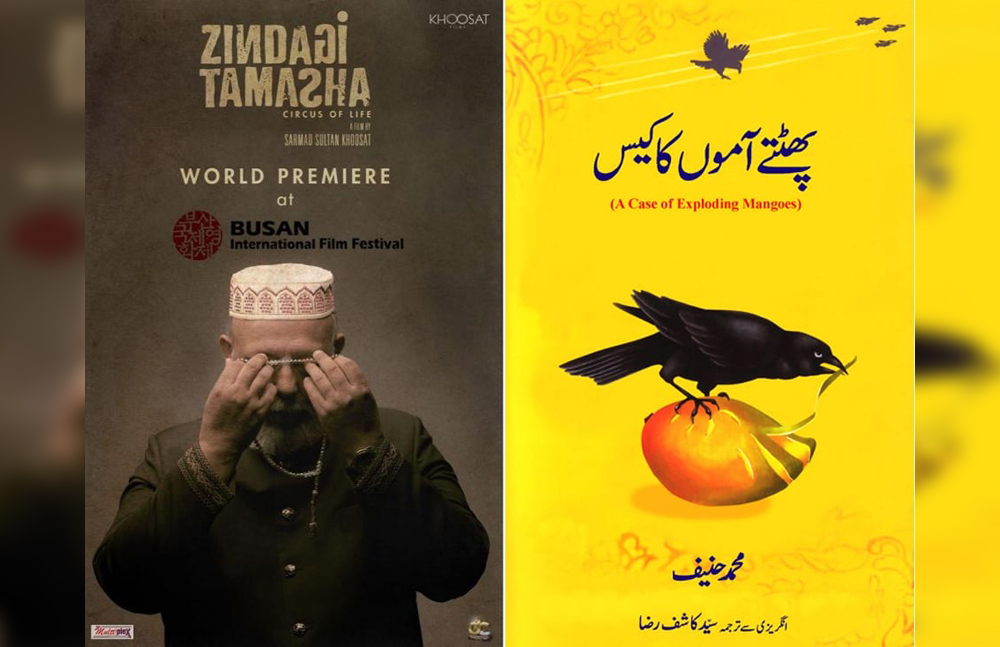
    Pakistanis boast generosity, kindness and hospitality. Yet there is something we are slowly but surely losing – tolerance. When movies like Zindagi Tamasha cannot be screened and Urdu translations of fictional books are not allowed, we should know that there’s something wrong. Neither do we entertain critical thinking nor do we tolerate difference of opinion. Also, we are quite a judgemental lot. 

    Last month, Fahad Mirza posted a picture of his European holiday with his wife Sarwat Gilani. They were kissing in the picture. Comments on social media under that picture were mostly so negative and vile that Gilani had to ask haters to unfollow her if they hated her so much. Imagine that a picture displaying affection between a husband and wife on social media could lead to such negativity, little wonder then that victims of sexual harassment get the sort of abuse that they do online and offline.

    Recently, we saw our parliamentary debates turn rowdy. The level of debates was not just low but downright personal. From Abdul Qadir Patel’s innuendo-laden speech targeting Murad Saeed to Saeed’s own abusive speech about “dogs” ruling Sindh, the level of discourse in parliament was quite disgraceful. If the people’s representatives can stoop so low, what kind of message are we giving to our citizens? No wonder then that peaceful protestors are booked under sedition charges and the prime minister thinks Maulana Fazlur Rehman should be tried for high treason under Article 6 of the constitution.

    FIA issued a statement saying that columnist Gul Bukhari will be charged with terrorism and her property confiscated if she doesn’t appear before the agency in Pakistan within 30 days. And this is because the government doesn’t like Bukhari’s tweets. One doesn’t have to agree with Bukhari’s tweets, but since when has criticism become terrorism? This is a country where terrorist Ehsanullah Ehsan escapes and flees to Turkey while the government remains silent except for interior minister’s confirmation – after over a week – but the same wants to regulate social media by asking tech companies to open their offices in Pakistan and share data of users the government thinks are making anti-state state?

    Intolerance on social media is at another level. If you support ‘ABC’ party, ‘XYZ’ party’s supporters will call you names we can only hope they never take in front of their families. Difference of opinion is not tolerated anymore – both online and offline. Thus to have literary festivals like the LLF, which celebrate critical thinking and have discussions on culture, arts, poetry and literature, is a blow of fresh air.

  • Coronavirus: Let’s do what needs to be done

    According to the National Health Commission’s latest figures, coronavirus has so far killed 636 people and infected 31,161 in mainland China. The death toll includes 73 new ones reported Thursday. Two people have died in Hong Kong and the Philippines, while 25 countries have confirmed cases of the novel virus.

    Meanwhile, the World Health Organization (WHO) is also ringing alarm bells to address the global outbreak.

    Although Pakistan has not yet confirmed any case of coronavirus, panic is running through the country due to trade worth over $15 billion between Islamabad and Beijing, besides China being a geographical neighbour. Pakistan has around 500 students in Wuhan — the epicentre of the coronavirus — and multiple video messages from Pakistanis in the Chinese city, who want the government to extract them, have also flooded the internet. Many other countries have rescued their nationals from Wuhan, while Pakistan, so far, hasn’t officially done so even though flights from China have resumed.

    The reason Pakistani health officials have been reluctant to bring Pakistanis back from Wuhan is not only because they feel that Pakistan is not capable of providing basic medicare to coronavirus patients and/even suspected cases, but also maybe because they know that not everyone would be risking their lives to save others, as seen in China. An evidence of this remains the Sindhi youth, who was not even provided necessary aid after doctors suspected he had contracted the virus from China.

    We don’t have proper quarantine facilities either. Others feel that these are just excuses and if countries like India and Bangladesh can bring back their citizens and quarantine them, so can Pakistan. It was quite insensitive of our embassy officials in China to tell those stuck there that death can come anywhere, be it Pakistan or China. Even if we could not evacuate them, there is a way of saying it in a more sensitive way rather than telling them that “one could die anywhere”. Our diplomatic staff definitely needs a crash course in diplomacy!

    It would be a tragedy if something were to happen to any corona-infected Pakistani in China. They and their loved ones deserve the full support of our government. Given the proximity to China and the presence of the Chinese workforce in Pakistan, we should definitely be prepared to deal with the virus in any case. We should not just be ready to deal with coronavirus cases, but we should also have special quarantine facilities ready in every major city. Our airports should have proper monitoring systems in place for people coming back from China. Preemptive measures should be our top priority.

    While this is what The Current believes should be done in times of this global health emergency, another thing — a rather social aspect — remains the apparently unintentional racism against Chinese nationals. At a time when certain people are antagonising the Chinese on the basis of their nationality, the least we can do is to not let our inner racist take over us as we try to help the world deal with the menace that is the coronavirus.

  • Regulating Freedom

    Regulating Freedom

    Earlier this month, Pakistan Electronic Media Regulatory Authority (PEMRA) uploaded a draft proposal on its website on regulating web and over the top television (OTT) content services.

    After going through the 25-page draft proposalThe Current is of the view that this is yet another effort by the government to silence independent voices. First of all, PEMRA has no authority and/or mandate to regulate social media. Secondly, Pakistan’s mainstream media is going through its worst period of censorship –- that too under a “democratic” dispensation. Pakistan is ranked 142 out of 180 countries in RSF’s 2019 World Press Freedom Index, i.e. three places lower than it was in 2018.

    Many Pakistani journalists have taken to social media to share their uncensored views online due to media censorship. Now, the government wants to regulate the internet by charging a hefty amount in fees for web TVs (both news and non-news) and OTTs and also issue licenses. They are also proposing a code of conduct without giving out any details. Reporters Without Borders rightly said that this draft proposal by PEMRA “betrays an intent to censor online video content relentlessly”. If this draft is not to discourage online content creators then what is? We, at The Current, firmly believe in freedom of expression and thus any moves to curtail our freedoms, our fundamental rights and our right to dissent, are unacceptable. Period.

    It is quite disappointing to see that a government that fully utilised social media and mainstream media before coming to power is now trying to shut down critics’ voices. Prime Minister (PM) Imran Khan recently said that he has stopped reading newspapers and watching evening news/current affairs shows because the media hammers him all the time is surprising, given that PM Imran has been media’s darling from the first day. His government is being criticised for its lack of performance and delivery. We believe the premier should not demonise media that helped him during his struggling days in politics and made him relevant.

    It is also quite alarming to see that peaceful protesters in Islamabad were arrested and charges of sedition were levelled against them. Their only crime was to be a part of a protest seeking the release of Pashtun Tahafuz Movement (PTM) Manzoor Pashteen. Some were released, but 23 political activists and human rights defenders, including Ammar Rashid and Nawfal Saleemi, are still under arrest — not to mention citizens like Khurram Qureshi who was there for solidarity. Their families are not being allowed to meet them despite the fact that it is their legal right. We would like to ask the government how it is sedition to protest peacefully when it is our fundamental right to do so. Releasing these protestors would be the right thing to do.

    From censorship in media to curbing online dissent to booking peaceful protesters under sedition charges, the state of Pakistan is acting more like a police state and less as a democracy. Let’s not go down this path.

  • Damning bans

    Damning bans

    “Creativity takes courage” – Henri Matisse

    Matisse wasn’t wrong. When filmmaker Sarmad Khoosat released the first trailer of his upcoming movie, ‘Zindagi Tamasha’, it created quite a buzz. The movie was supposed to release today (January 24) across Pakistan. It has already won the Kim Ji Seok Award at Busan International Film Festival. Film critics and the public at large were waiting for its release as Sarmad is known to be quite creative and the movie looked promising enough. Just like other governments, this government too promised the revival of Pakistani cinema. Sarmad Khoosat’s ‘Zindagi Tamasha’ seemed like a step in the right direction.

    But what happened when religious hardliner Tehreeke Labbaik Pakistan (TLP) threatened to hold protests against the movie just because the protagonist was a bearded man who is shunned by society after a video of him dancing at a wedding goes viral? The Pakistani state caved in to pressure, again.

    A film that was passed by three censor boards cannot be released now because the state fears the religious pressure group. The federal government has decided to block its release and has asked the Council of Islamic Ideology (CII) to critically review it. The Punjab government will review it on February 3 and a TLP representative will be in the review committee. The Sindh Censor Board halted its release citing the reason that it “may create unrest within religious quarters and may deteriorate and be detrimental to the peaceful circumstances in the country”.

    There is nothing outrageous or anti-Islam in the movie. Busting the myths about the movie, Mohammed Hanif writes for Samaa, “The only taboo the film breaks is showing a man with a beard doing house chores. It humanises a religious man.”

    Sarmad wrote two beautiful and heartfelt open letters – one was addressed to the president, prime minister, chief justice, army chief and information minister, while the other was for Pakistan and Pakistanis. He ended his first letter with these poignant words, “The space for rational and artistic thinking and expression must not be annexed by a few troublemakers for their political ends, but I fear this is what will happen if we buckle under this time.”

    We are barring the release of a movie that promises to be creative and critical while being sensitive and responsible at the same time. Why do we then complain about misogyny on our television screens if we will not allow films like ‘Zindagi Tamasha’ to be screened in our cinemas? Films that make us think, films that break stereotypes, films that make us question the dark side of our society; films that celebrate the beauty of our nation.

    There already are curbs on freedom of expression in Pakistan these days. Copies of the Urdu translation of Hanif’s ‘A Case of Exploding Mangoes’ were confiscated after threats to the publisher. The Punjab Assembly has recommended banning three books on Islam as they critically evaluate historical events. When a country starts banning books and movies, it means its descent into the dark ages is almost complete. Once we complete this downward journey, there’s no coming back.

    It’s better to stop right now and celebrate critical thinking instead of banning art and creativity.