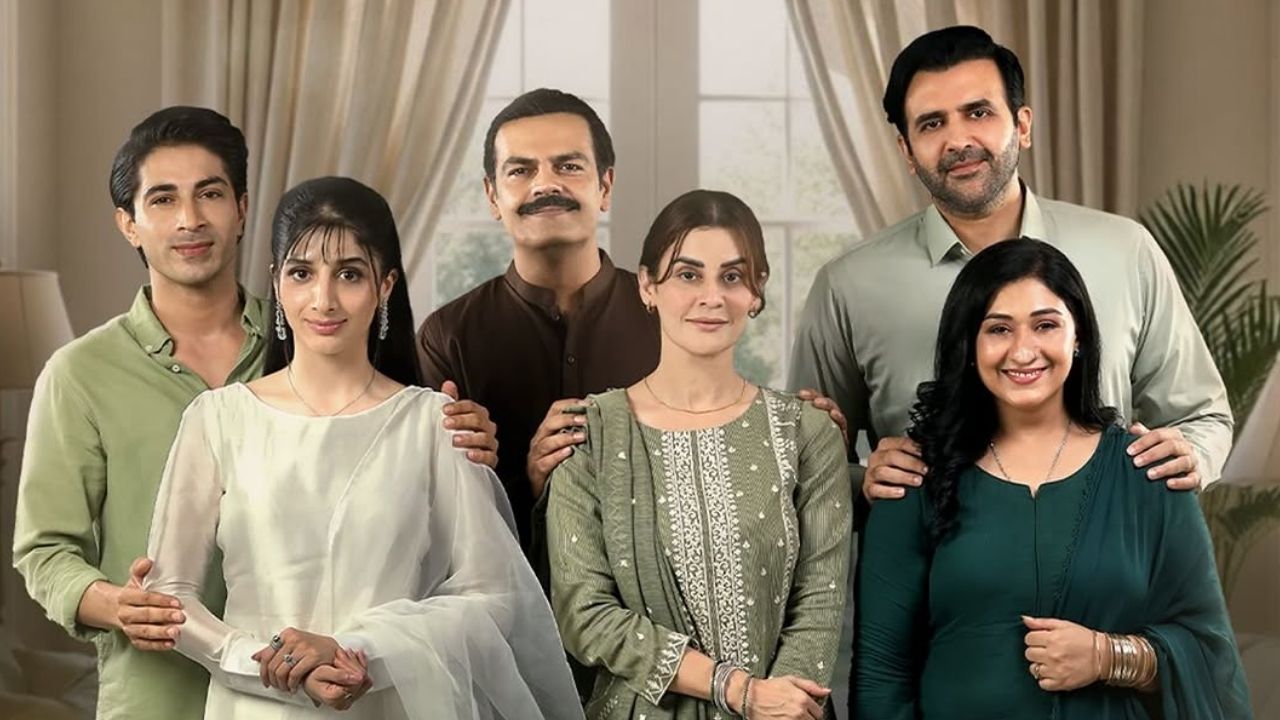
So many people are watching the smash hit drama serial Jama Taqseem that it’s likely the most watched drama on television (and YouTube) right now. It is a drama that resonates with women and men from every strata of society. Living in a joint family, marrying for love, sisters-in-law hating the new bahu and oh no….the family is breaking up! It’s literally every other drama. But why is this one in particular making a big splash with everyone?
The only reason is because of how real the serial it is. If you’ve lived in a joint family or been married into one, the drama has many moments that mirror the audience’s lived experience. From women chuckling that yeah, I’ve hidden milk and food from my in-laws before like the mazloom bahu Amna (Amna Malik) does for her husband to the bahu cooking competition which is pretty much universal as well.
The drama is at Episode 16 with Laila (Mawra Hocane) and Qais (Talha Chahour) in a strained relationship as Qais is missing his parents, who he left out of his own choice and Laila us feeling like she is getting the brunt of her husband’s sadness over his parents not speaking to him. Laila, like a well-intentioned and kind daughter-in-law (which somehow our society thinks are rare if they are modern and educated, which is exactly what her mother-in-law tells her), goes over to her parents-in-law asking them to come live with her. They, of course refuse, blaming her for their problems and their other sons leaving them as well.
It’s a beautiful episode to watch because again, parts of the same routine have played out in the lives of many well-intentioned women who live in joint families and face the ire of their in-laws when the sons decide to move to a home of their own. Laila asks them to come live with her and they, instead of thinking about why she’s there, lash out, blaming her for all their problems. But she doesn’t back down either.
She says her bit, and it’s the truth, that the family never painted a ‘perfect picture’ and that happened long before she got there. She breaks the perception the parents had of their two older daughters-in-law wanting to live with them in one big happy family and they know it’s the truth because they have nothing to say in response. It’s sad but Laila shows them the mirror to what they thought they had in a kind manner, showing them a way out. Everyone is rooting for Laila because she is softly breaking stereotypes that women try so very hard to fight. She might be educated but she knows how to respect her elders, and that is what she says to Qais’ parents and that’s exactly what women, who want to live on their own lives but be a part of a family, feel as well.
But as many women will tell you, Abba Jee (Javed Shaikh) is a universal character, who has been in their homes, loved and respected but won’t let his stubbornness allow him to be happy.
As it happens, he’s about to have a heart attack when he’s chatting about the issue with his friend, and then the parents realise that they need their kids after all.
The series is also bittersweet because it is all about karma in drama and reality, isn’t it? Earlier on we see their own daughter Nudrat rave about how amazing her parents are and how her in-laws were not and she managed to get her own home for herself and her husband. When the tables turn, and her parents are left alone, her husband refuses to let her stay with them and help them, reminding her that she did the same to his parents.
It is a look into give-and-take. What seems well-intentioned, like older bahu Rashida, who turns out to be the most bitter, what should be the safest place, home, turns out to be hell for Sidra who is molested by her older cousin living in the same house.
We all know how the drama will end, as everyone is following the road of redemption and realisation, that all was not how it seems. There likely will not be major masala twists and turns but despite that, Jama Taqseem will keep people hooked because when they look at the very beautifully developed (and acted out) characters, they will see parts of themselves and their own lives and hope that there, in the end, they will be understood and there will be a happy ending.