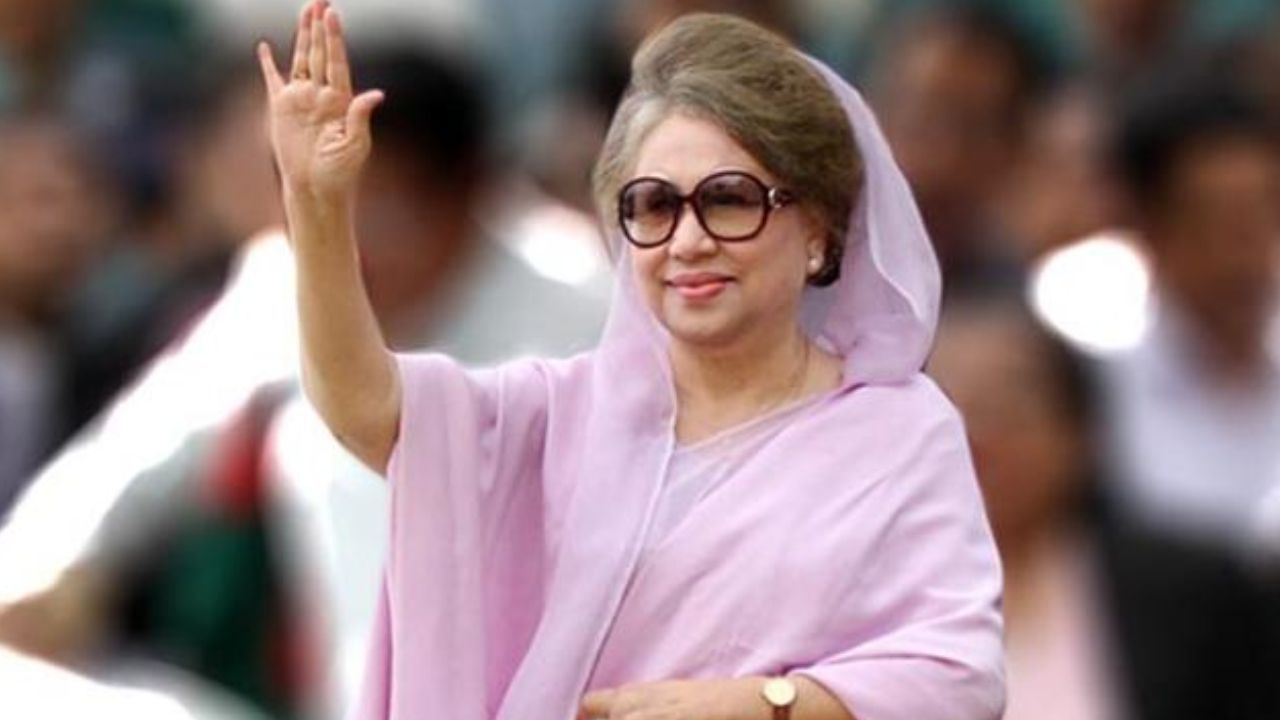
Khaleda Zia, the first woman to serve as prime minister of Bangladesh, has passed away on 30 December in Dhaka after months of deteriorating health.
Before entering politics, Khaleda was primarily a homemaker, devoted to raising her two sons while her husband, Ziaur Rahman, a prominent figure in Bangladesh’s independence movement, rose through the military ranks. He became president in 1977. At that time, Khaleda was described as a reserved and family-focused figure.
Following Ziaur Rahman’s assassination in 1981 by army officers in Chittagong, Khaleda took the reins of his Bangladesh Nationalist Party (BNP). She went on to serve as prime minister twice- first in the early 1990s and again in the early 2000s.
Born in 1945 in West Bengal, Khaleda was the daughter of a tea merchant. Her family moved to what is now Bangladesh following the 1947 partition of India.
At 15, she married Ziaur Rahman, who assumed the presidency after the military relinquished power in 1977, overseeing a return to political activity and a freer media environment. His tenure was marked by repeated coup attempts, often suppressed with extreme force.
Prior to her husband’s death, Khaleda had maintained a low public profile. But after 1981, she became actively involved in the BNP, rising to vice-chairperson and eventually party leader.
During the nine-year military rule that began in 1982, Khaleda organised campaigns advocating for democratic reforms.
She rejected participation in the army-controlled elections and was placed under house arrest, yet continued to orchestrate rallies and civic actions that ultimately forced the military to concede.
In 1991, Khaleda Zia led the BNP to victory in the first post-military general elections, becoming the country’s first female prime minister and only the second woman to govern a Muslim-majority nation democratically, following Pakistan’s Benazir Bhutto.
She absorbed significant powers formerly held by the presidency and introduced reforms, including making primary education free and compulsory, at a time when most children received only two years of schooling on average.
She lost the 1996 election to Sheikh Hasina’s Awami League but returned in 2001 with an alliance of Islamist parties, securing nearly two-thirds of parliamentary seats.
Khaleda stepped down in October 2006 ahead of scheduled elections, but political unrest and riots prompted military intervention, delaying the vote. The interim government launched a crackdown on high-level corruption, targeting leaders across political lines.
Both Khaleda and her longtime rival Sheikh Hasina faced arrests. Khaleda was placed under house arrest and later imprisoned on charges of extortion and corruption.
Her legal battles continued over the following years, including a 2011 case involving alleged misuse of funds for a charitable trust named after her late husband.
In 2014, BNP supporters boycotted national elections, citing potential rigging, and widespread arrests of party activists followed. Khaleda herself was confined and barred from organising protests, describing the government as “disconnected” from its people.
In 2018, she was convicted of embezzling roughly $252,000 intended for an orphanage trust and sentenced to five years in prison, which barred her from holding public office. She denied any wrongdoing, describing the charges as politically motivated.
Her health deteriorated while in detention. She was hospitalised in 2019 for severe arthritis and uncontrolled diabetes, and later released to house arrest.
The 2024 popular uprising that toppled Sheikh Hasina’s government led to Khaleda’s release and the unfreezing of her assets.
By this point, she was struggling with serious medical conditions, including cirrhosis of the liver and kidney damage. In January 2025, her travel restrictions were lifted, allowing her to seek treatment in London, though her health remained precarious.
Khaleda Zia’s death marks the end of a complex and often turbulent political career that spanned more than four decades, defined by fierce rivalry, imprisonment, and enduring influence over Bangladesh’s political landscape.
She is survived by her elder son, Tarique Rahman, who returned to Bangladesh in late December after years in exile in London, is widely expected to lead the party in future elections. Khaleda’s younger son, “Koko,” died in 2015.
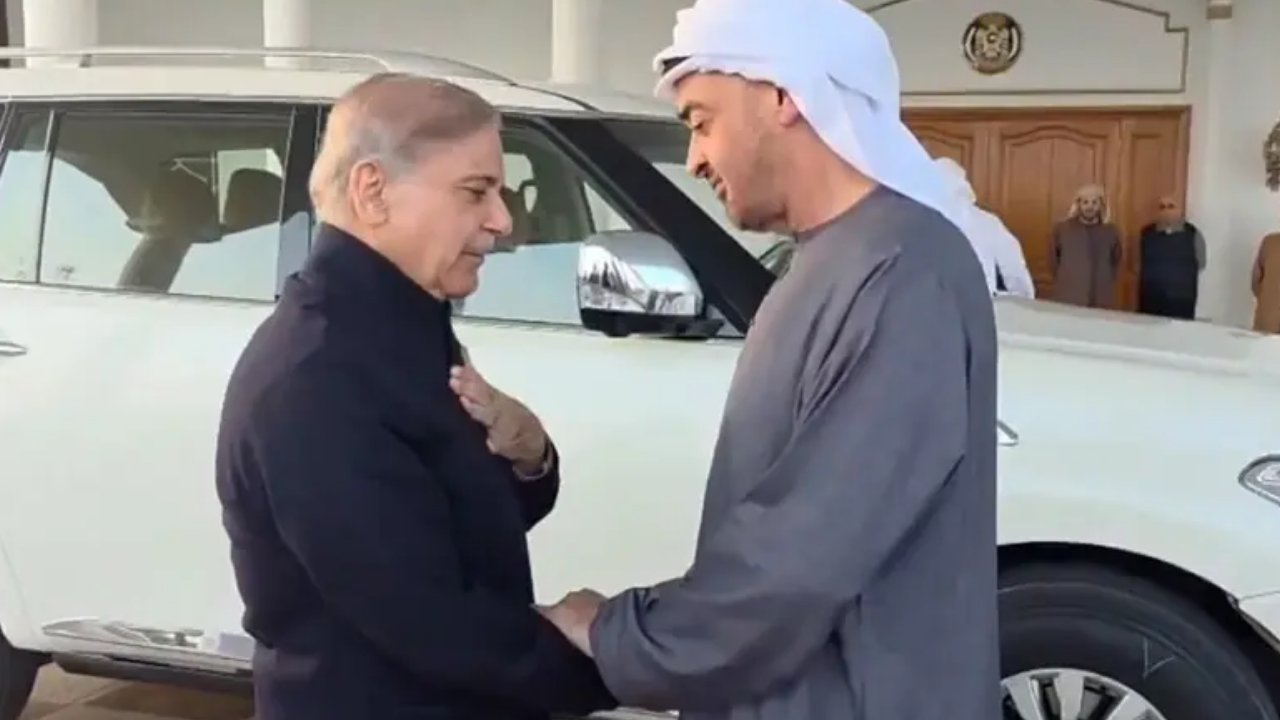
Prime Minister Shehbaz Sharif said he was deeply saddened by Khaleda’s death.
“Her lifelong service to Bangladesh and its growth and development leaves a lasting legacy,” he said.
“Begum Zia was a committed friend of Pakistan. My government and the people of Pakistan stand with the people of Bangladesh in this moment of sorrow,” he added.
“Our thoughts and prayers are with her family, friends and the people of Bangladesh during this difficult time,” Sharif said.
President Asif Ali Zardari said Khaleda’s “leadership and services will be remembered with respect”.
Ishaq Dar, the foreign minister and deputy prime minister, also sent his condolences for Khaleda’s passing.