Category: Global

  • Mojtaba Khamenei front-runner to succeed Khamenei

    Mojtaba Khamenei front-runner to succeed Khamenei

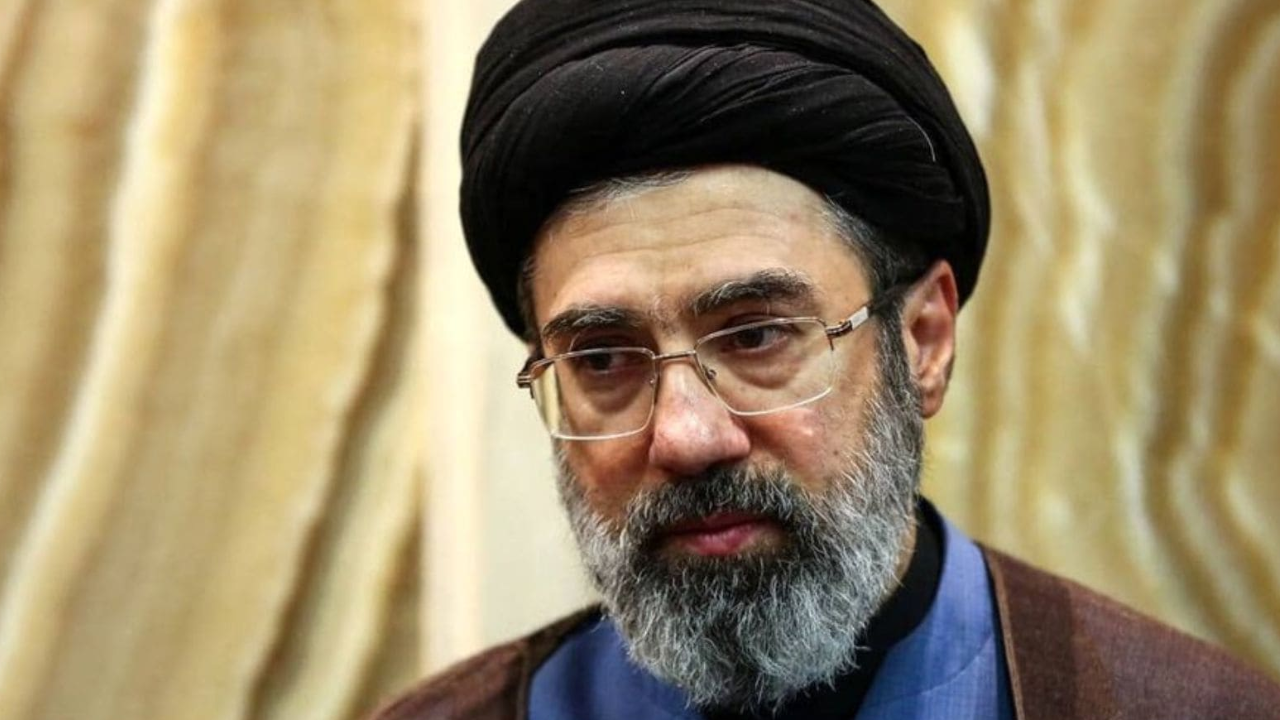
    Senior clerics tasked with appointing Iran’s next supreme leader met on Tuesday to deliberate on a successor to Ayatollah Ali Khamenei, who was killed in U.S.-Israeli strikes over the weekend. According to three Iranian officials familiar with the discussions, his son, Mojtaba Khamenei, emerged as the leading candidate.

    The officials said members of the Assembly of Experts were weighing whether to announce Mojtaba Khamenei’s appointment as early as Wednesday morning. Some clerics raised concerns that a public decision could make him a target for the United States and Israel. 

    The Assembly of Experts held two virtual meetings on Tuesday, one in the morning and another in the evening. An Israeli strike hit a building in Qum where the assembly had been scheduled to convene. Iran’s Fars News agency reported that the building was empty at the time.

    Vali Nasr, an Iran specialist at Johns Hopkins University, said the potential selection would be notable. “He was slated to become the successor for a long time,” Nasr said. “But for the past two years, it seemed to have dropped off from the radar. If he is elected, it suggests it is a much more hard-line Revolutionary Guard side of the regime that is now in charge.”

    Mojtaba Khamenei, 56, has maintained close ties with the Revolutionary Guards and has largely remained out of public view. The three officials said the Guards supported his candidacy, arguing that he had experience overseeing security and military coordination.

    “Mojtaba is the wisest pick right now because he is intimately familiar with running and coordinating security and military apparatuses,” said Tehran-based analyst Mehdi Rahmati. “He was in charge of this already.”

    Rahmati added that opposition was likely. “A portion of the public will react negatively and forcefully to this decision, and it will have a backlash,” he said.

    Other figures under consideration include Alireza Arafi, a member of the three-person transition council formed after Khamenei’s death, and Seyed Hassan Khomeini, grandson of Ayatollah Ruhollah Khomeini. Both are viewed as moderates, with Khomeini associated with reformist factions.

    Abdolreza Davari, a politician close to Mojtaba Khamenei, said before the conflict that if he succeeded his father, he could adopt a leadership style similar to Saudi Arabia’s Mohammed bin Salman. 

    The 88-member Assembly of Experts, elected through public vote, is constitutionally responsible for appointing and overseeing the supreme leader. This marks the second time in the Islamic Republic’s history that it will select a leader, following its 1989 decision to appoint Ayatollah Ali Khamenei.
  • ‘Armageddon’: US troops told Iran war is ‘God’s plan’ for Christ’s return to earth

    ‘Armageddon’: US troops told Iran war is ‘God’s plan’ for Christ’s return to earth

    The Military Religious Freedom Foundation (MRFF) said it has received over 200 complaints from the United States (US) military personnel alleging that commanders described the war on Iran as part of a religious prophecy involving “Armageddon”.

    The MRFF said the complaints came from members of the army, navy, air force, marine corps and space force, covering more than 40 units across at least 30 military installations.

    One combat unit commander, the MRFF said, told non-commissioned officers (NCOs) that Israeli-US attacks on Iran were “part of God’s plan” and that President Donald Trump was “anointed by Jesus to light the signal fire in Iran to cause Armageddon and mark his return to Earth”.

    A non-commissioned officer (NCO) who contacted the MRFF said the commander repeatedly referenced the Book of Revelation and described the conflict as part of “God’s divine plan”. 

    The NCO said the commander “had a big grin on his face when he said all of this, which made his message seem even more crazy”. The NCO added that the commander “would probably be described as a ‘Christian First’ supporter” and “makes it clear that he desires all of us under him to become just like him as a Christian”.

    Michael L. Weinstein, founder of the MRFF, said the organisation continues to receive complaints from personnel who were told they should support the war because it would bring about the return of Jesus Christ.

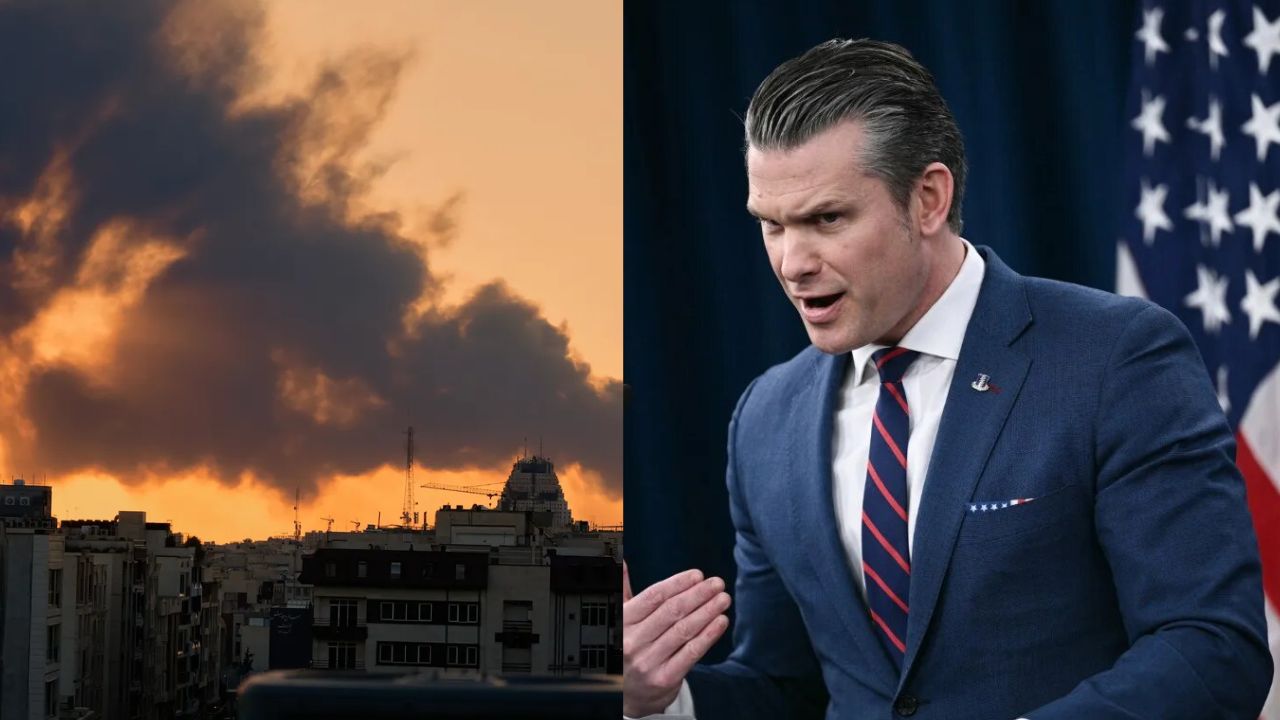
    The MRFF also cited US Secretary of War Pete Hegseth, described as an ultra-conservative Christian nationalist and the Pentagon’s “holy warrior”, who sponsors a weekly Bible study that preaches support for Israel. 

    The organisation said some Bible study leaders teach that Israel should be supported because God blesses Israel’s allies and curses its enemies.

    The MRFF also cited complaints following the Hamas-led attack on southern Israel on October 7, 2023, including a report that an air force commander told personnel the conflict had been foretold in the Book of Revelation.

  • ‘Mossad agents arrested in Qatar and Saudi Arabia,’ claims commentator Tucker Carlson

    ‘Mossad agents arrested in Qatar and Saudi Arabia,’ claims commentator Tucker Carlson

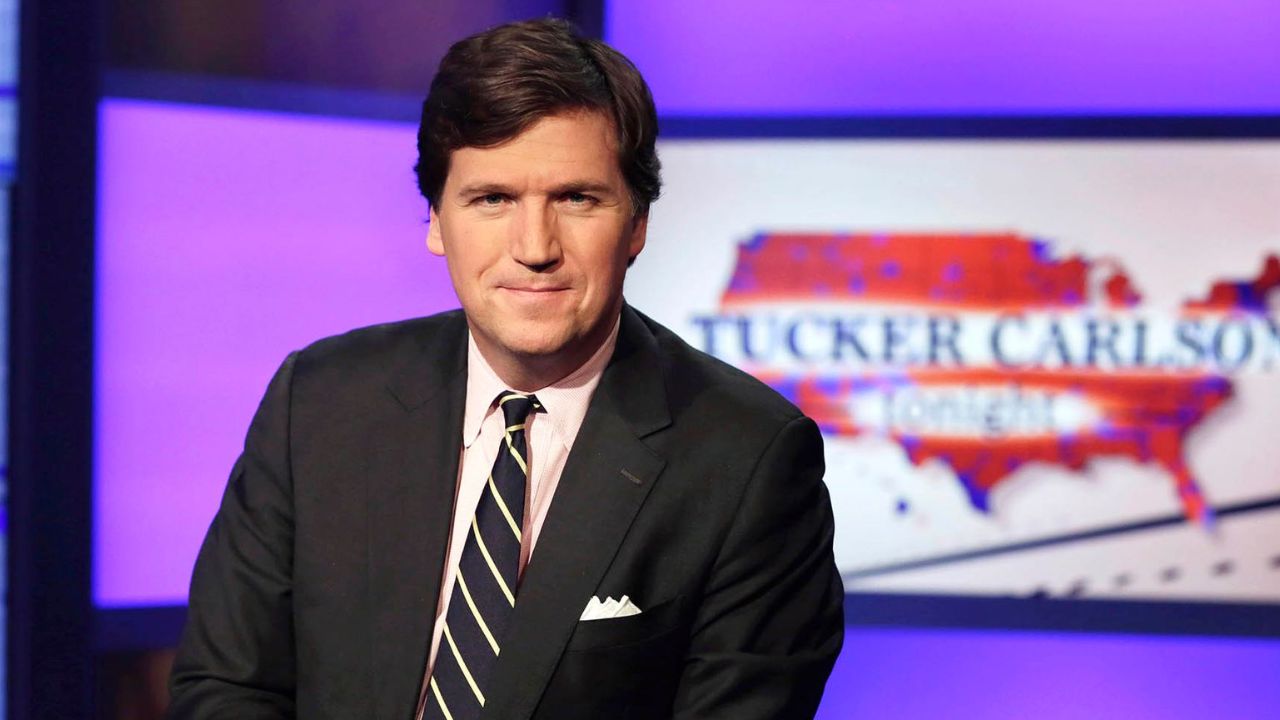
    Operatives of Israel’s premier spy agency Mossad were arrested in Qatar and Saudi Arabia while planning bombings and raising concerns over possible false-flag operations in the Gulf region, American conservative activist and commentator Tucker Carlson has claimed.

    As per the details, Carlson said that authorities in Qatar and Saudi Arabia had “apprehended Mossad operatives planning to detonate explosives in those countries”, and suggested that the actions were aimed at creating disorder, potentially framing Iran to involve Gulf states more directly in the regional conflict.

    He also said the intent appeared to be to “sow chaos and disorder, potentially blaming Iran to draw the Gulf states deeper into the ongoing regional war”.

    The allegations come amid escalating military actions in the region. Joint strikes by the United States (US) and Israel on Iran have resulted in the death of Supreme Leader Ayatollah Ali Khamenei besides hundreds of others.

    Iran has responded with multiple missile and drone attacks targeting Israeli positions and US military assets across the region.

    Iran’s Revolutionary Guards (IRGC) said they launched drones and missiles at a US air base in Bahrain, claiming the Sheikh Isa facility’s main command headquarters was destroyed. 

    Saudi Arabia reported drone strikes on the US embassy compound in Riyadh, causing limited material damage. Qatar, Kuwait, the UAE and Israel all reported intercepting missiles and drones fired from Iran.

    US Central Command confirmed that over 1,250 targets had been struck within 48 hours, including missile sites, naval vessels and command centres, and reported six US service member deaths. 

    The US State Department also advised Americans to leave 15 Middle Eastern countries, while Canada urged its citizens to depart the UAE if possible.

    IRGC warned that the US “will no longer be safe” if operations continue, and Qatar reserved the right to respond to Iranian strikes.

  • 4.3 magnitude quake hits southern Iran; internet speculates

    4.3 magnitude quake hits southern Iran; internet speculates

    An earthquake measuring 4.3 on the Richter scale has rocked the Gerash region in southern Iran at a depth of 10 kilometres, the United States Geological Survey said.

    While no significant damage or casualties were immediately reported, the tremor occurred amid escalating hostilities in the region as the United States (US) and Israel continue military strikes on Iranian territory following the assassination of Supreme Leader Ali Khamenei.

    The fragile situation also prompted internet to speculate if the tremors were a consequence of Iran secretly testing weapons of mass destruction, however, no official statement was released or any concerns expressed.

    It may be noted that Iran sits on several major fault lines, making it one of the most seismically active regions in the world. Weapon testing, even large-scale explosions, does not produce the same seismic signatures as tectonic earthquakes.

    Seismologists can distinguish between natural quakes and manmade blasts because they look very different in terms of wave patterns, depth and energy release. When the earthquake in Iran was reported, it was catalogued by international seismic monitoring networks as a natural tectonic event, not an artificial explosion.

    Meanwhile, the conflict entered its fourth day on Tuesday, with missile launches, drone interceptions and air strikes reported across the Middle East.

    Iran’s Foreign Minister Abbas Araghchi accused Washington of joining the conflict in support of Israel, stating on X that the US had entered “a war of choice on behalf of Israel” and placing responsibility for the loss of life on Israeli actions.

    Iran’s Revolutionary Guards (IRGC) said they launched drones and missiles at a US air base in Bahrain, claiming the Sheikh Isa facility’s main command headquarters was destroyed. 

    Saudi Arabia reported drone strikes on the US embassy compound in Riyadh, causing limited material damage. Qatar, Kuwait, the UAE and Israel all reported intercepting missiles and drones fired from Iran.

    Oil markets reacted to the conflict, with Brent crude rising to $79.44 a barrel and US West Texas Intermediate at $72.40.

    The US Secretary of State said the strikes targeted missile production and launch capabilities, not civilians, following a strike on a girls’ school that killed 180 people.

    US Central Command confirmed that over 1,250 targets had been struck within 48 hours, including missile sites, naval vessels and command centres, and reported six US service member deaths. 

    The US State Department also advised Americans to leave 15 Middle Eastern countries, while Canada urged its citizens to depart the UAE if possible. IRGC warned that the US “will no longer be safe” if operations continue, and Qatar reserved the right to respond to Iranian strikes.

  • Drones strike US embassy in Riyadh as regional conflict intensifies

    Drones strike US embassy in Riyadh as regional conflict intensifies

    Missile launches, drone interceptions and air strikes were reported across the Middle East on Tuesday as hostilities between Iran, Israel and the United States (US) entered another day, with governments issuing security alerts and statements throughout the region.

    Iran’s Foreign Minister Abbas Araghchi accused Washington DC of joining the conflict in support of Israel. In a post on X, he said: “Mr. Rubio admitted what we all knew: US has entered a war of choice on behalf of Israel. There was never any so-called Iranian ‘threat’.” 

    He added that responsibility for “Shedding of both American and Iranian blood is thus on Israel Firsters. American people deserve better and should take back their country”.

    Iran’s Revolutionary Guards (IRGC) said their forces launched drones and missiles at a US air base in Bahrain. State media reported that 20 drones and three missiles were fired at the Sheikh Isa facility at dawn. The statement claimed the base’s main command headquarters was destroyed, without releasing evidence.

    In Saudi Arabia, the defence ministry said two drones struck the US embassy compound in Riyadh, causing a limited fire and material damage. The embassy urged American nationals to shelter in place and restricted non-essential travel to military sites. Two further explosions were later heard in the diplomatic quarter, according to Reuters sources.

    Qatar’s defence ministry said two missiles targeting several areas were intercepted and neutralised. Kuwait’s armed forces said they were “dealing with a wave of missiles and drones” detected in the country’s airspace. 

    The United Arab Emirates (UAE) said its air defence systems were responding to ballistic missiles launched from Iran.The Israeli military said it had identified missiles fired from Iran and that interception systems were operating. 

    Oil markets reacted to the widening conflict and concerns over shipping through the Strait of Hormuz. Brent crude traded at $79.44 a barrel, up 2.2 per cent, while US West Texas Intermediate rose to $72.40. 

    US Secretary of State Marco Rubio said Washington would not “deliberately target” a school after 180 were killed in a strike on a girls’ school. He said US objectives were to dismantle missile production and launch capabilities and to prevent Iran from obtaining a nuclear weapon. He added that further measures would be announced to address rising energy prices.

    US Central Command confirmed that more than 1,250 targets had been struck within 48 hours, including missile sites, naval vessels and command centres. It also confirmed that six US service members had been killed since operations began.

    The US State Department urged Americans to leave 15 Middle Eastern countries, citing security risks, while Canada advised its citizens to depart the United Arab Emirates if possible. Qatar said it reserved the right to respond to Iranian attacks, and Iran’s Revolutionary Guards warned that the United States “will no longer be safe” if operations continue.

    The escalation follows joint US-Israeli strikes launched on Saturday, which Iranian media said killed Supreme Leader Ali Khamenei. Tehran has since launched missile and drone attacks against US-linked targets across the Gulf, as airspace closures and security restrictions continue across multiple countries.

  • China confirms one citizen dead in Iran conflict, over 3,000 evacuated

    China confirms one citizen dead in Iran conflict, over 3,000 evacuated

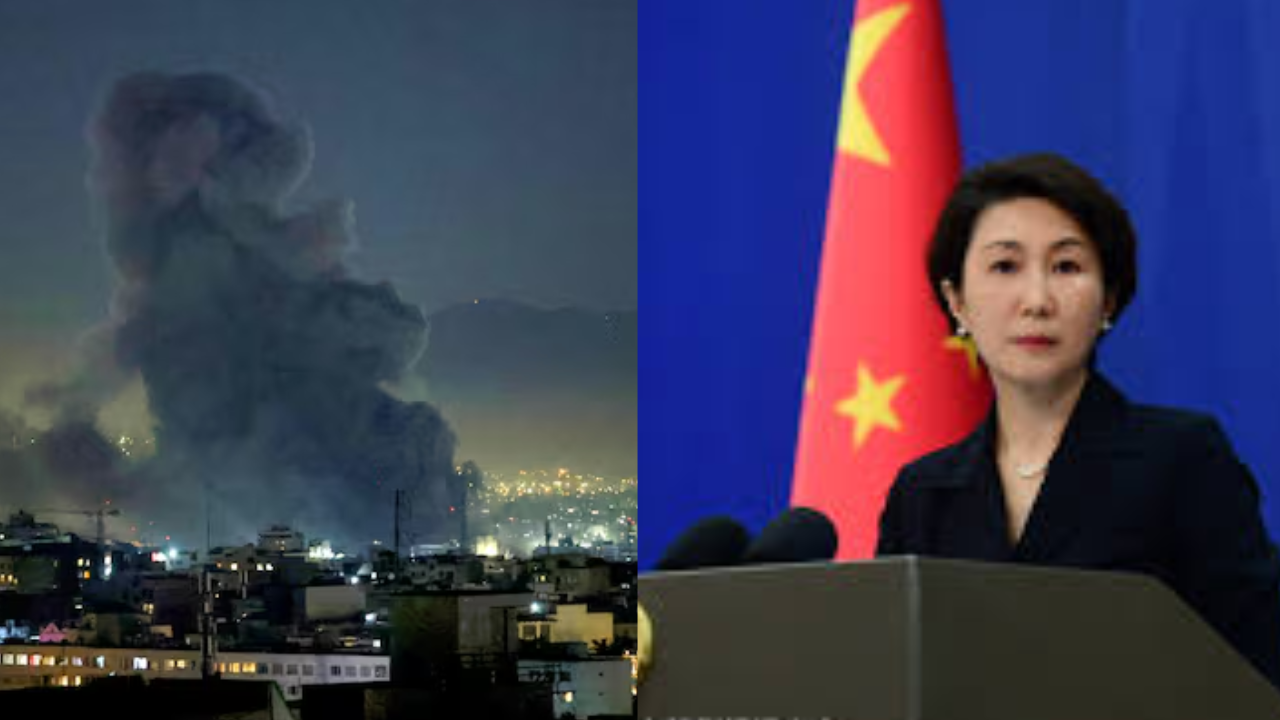
    China on Monday said that at least one Chinese national was killed in Tehran during the ongoing conflict, while more than 3,000 others were evacuated from the region.

    At a regular press briefing, Ministry of Foreign Affairs spokesperson Mao Ning said that Chinese embassies and consulates in neighbouring countries had been mobilised to assist those affected, and work groups set up by China would receive and assist those evacuated.

    While she did not provide details on how the evacuees would return to China, Mao added that Beijing was not informed in advance about the US military actions against Iran.

    She also denied reports suggesting that Iran and China were close to a deal to acquire supersonic anti-ship missiles, stating that China, as a major power, always fulfilled its international obligations.

    The escalation follows attacks by the YS and Israel on Saturday that killed Iran’s Supreme Leader Ali Khamenei. The strikes prompted retaliatory actions by Iran against Israel and other countries, including Gulf nations hosting US military bases.

    Mao reiterated condemnation of the attacks and the killing of Khamenei, urging all parties involved to “immediately cease military action to prevent escalation”.

  • Saudi Arabia breaks silence on reports that crown prince pushed Trump for attack on Iran

    Saudi Arabia breaks silence on reports that crown prince pushed Trump for attack on Iran

    Riyadh has finally broken silence on reports that United States (US) President Donald Trump ordered sweeping attacks on Iran after weeks of lobbying by two key allies in the Middle East — Israel and Saudi Arabia.

    On Sunday, it was reported by The Washington Post that strikes on Iran came despite US intelligence assessments maintaining Tehran was unlikely to pose a direct threat to US mainland within the next decade.

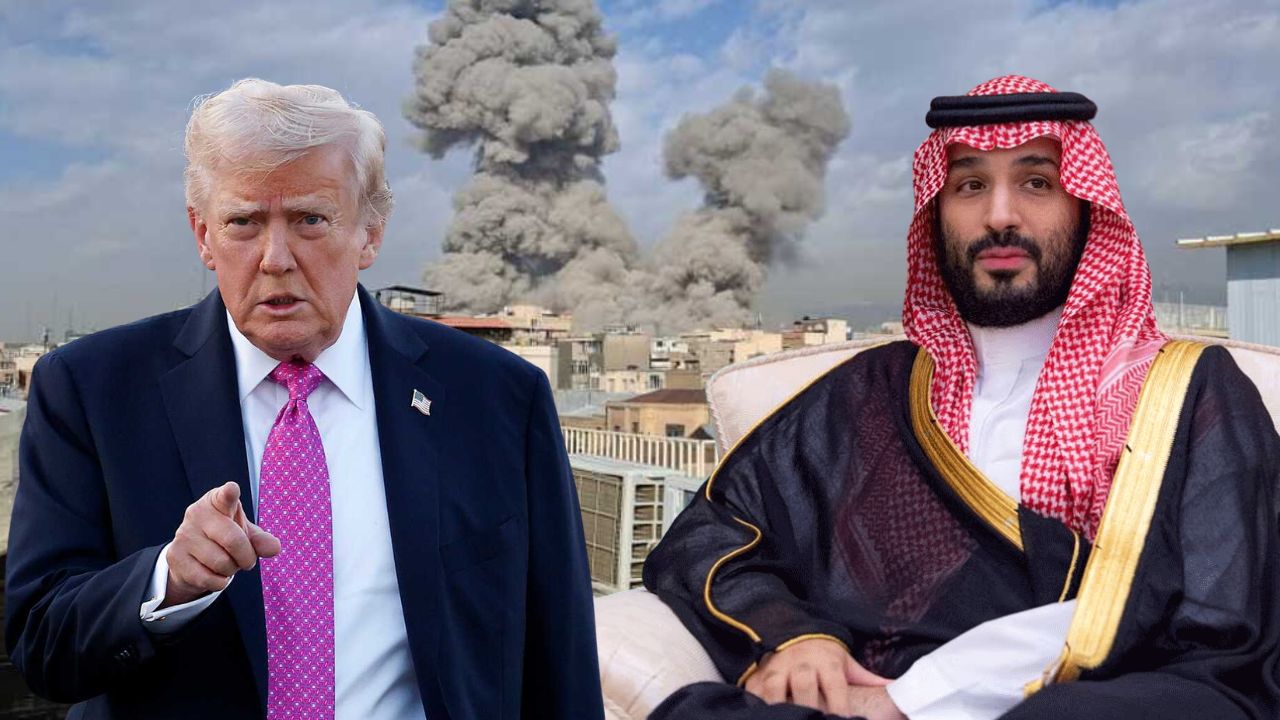
    Citing four people familiar with the matter, the report claimed that Israeli Prime Minister (PM) Benjamin Netanyahu continued his longstanding push for US strikes against Iran, while Saudi Crown Prince Mohammed bin Salman made multiple private calls to Trump over the past month advocating military action, despite publicly supporting diplomacy.

    “The Kingdom of Saudi Arabia has been consistent in supporting diplomatic efforts to reach a credible deal with Iran,” Fahad Nazer, the spokesperson for the Embassy of Saudi Arabia in Washington DC, said in a statement on X.

    He added that at no point in all of the Kingdom’s communication with the Trump administration had they lobbied the president to adopt a different policy.

    Saudi political researcher and foreign affairs expert Salman Al-Ansari also said that the report by The Washington Post was “categorically false”.

    “Some Western journalists have been asking me about this as if it were factual, so here is my response: This Washington Post report is categorically false. Riyadh did not lobby Trump to declare war on Iran in any way,” he wrote on X.

    Ansari went on to state that Saudi Arabia, on the contrary, had been working to prevent escalation.

    “Reporting like this appears designed to divert attention from those who actually advocated for conflict, as scrutiny of their role intensifies. The goal seems twofold: to drag Saudi Arabia into the war politically and to redistribute blame as public opinion turns against those who pushed for it,” he added.

    Meanwhile, Trump administration officials have also acknowledged in closed-door briefings with congressional staff that there was no intelligence suggesting Iran planned to attack US forces first.

    Reuters, quoting two people familiar with the matter, reported that Pentagon officials briefed Democratic and Republican staff of several national security committees in both the Senate and the House of Representatives for more than 90 minutes on the unfolding US attack in Iran.

    In the briefings, administration officials emphasised that Iran’s ballistic missiles and proxy forces in the region posed an imminent threat to US interests, but there was no intelligence about Tehran attacking US forces first, the two sources told Reuters.

    Earlier, it was also reported that Central Intelligence Agency (CIA) assessments presented to the White House in the weeks before the attack concluded that if Iranian Supreme Leader Ali Khamenei was killed, he could be replaced by hardline figures from the Islamic Revolutionary Guard Corps (IRGC) or equally hardline clerics.

  • UAE says govt will pay for hotels of travellers affected by Middle East tensions

    UAE says govt will pay for hotels of travellers affected by Middle East tensions

    Authorities in Dubai and Abu Dhabi have instructed hotels to allow guests to extend their stays if they are unable to leave due to ongoing travel disruptions, aiming to ensure international visitors are accommodated during the Middle East crisis.

    As per the details, Dubai’s Department of Economy and Tourism issued a directive to hotel managers requiring them to permit affected guests to extend their stays under the same terms as their original bookings. 

    The department said the measure “aligns with government directives to provide full support and assistance to international visitors during the ongoing situation”.

    Hotels were asked to fully cooperate to ensure that travellers unable to depart are accommodated without disruption. Officials also emphasised that guests should not be required to vacate rooms if they cannot immediately cover the cost of an extension, reflecting a focus on visitor welfare.

    Hotel operators were instructed to notify the department in such cases, providing information on the original booking duration, the extension period, and any operational challenges encountered.

    Abu Dhabi authorities issued a parallel directive with additional provisions. The Department of Culture and Tourism Abu Dhabi confirmed that the government will cover accommodation costs for stranded guests. 

    “In light of the current circumstances and given that some guests have reached their check-out date but are unable to travel for reasons beyond their control, you are kindly requested to extend their stay until they are able to depart,” read a circular sent to hotels.

    It added that “the cost of the extended stay will be covered by DCT Abu Dhabi” and instructed hotels to submit invoices directly to the department.

    Authorities described the measures as part of broader government efforts to maintain stability in the tourism sector while prioritising the welfare of travellers despite bombings since the US-Israeli strikes on Iran.

  • Regional conflict widens as Iran, Israel and US trade strikes

    Regional conflict widens as Iran, Israel and US trade strikes

    Strikes and counterstrikes continued across the Middle East on Monday as conflict involving Iran, Israel and the United States entered another day, with reports of casualties, missile launches and security restrictions across several states.

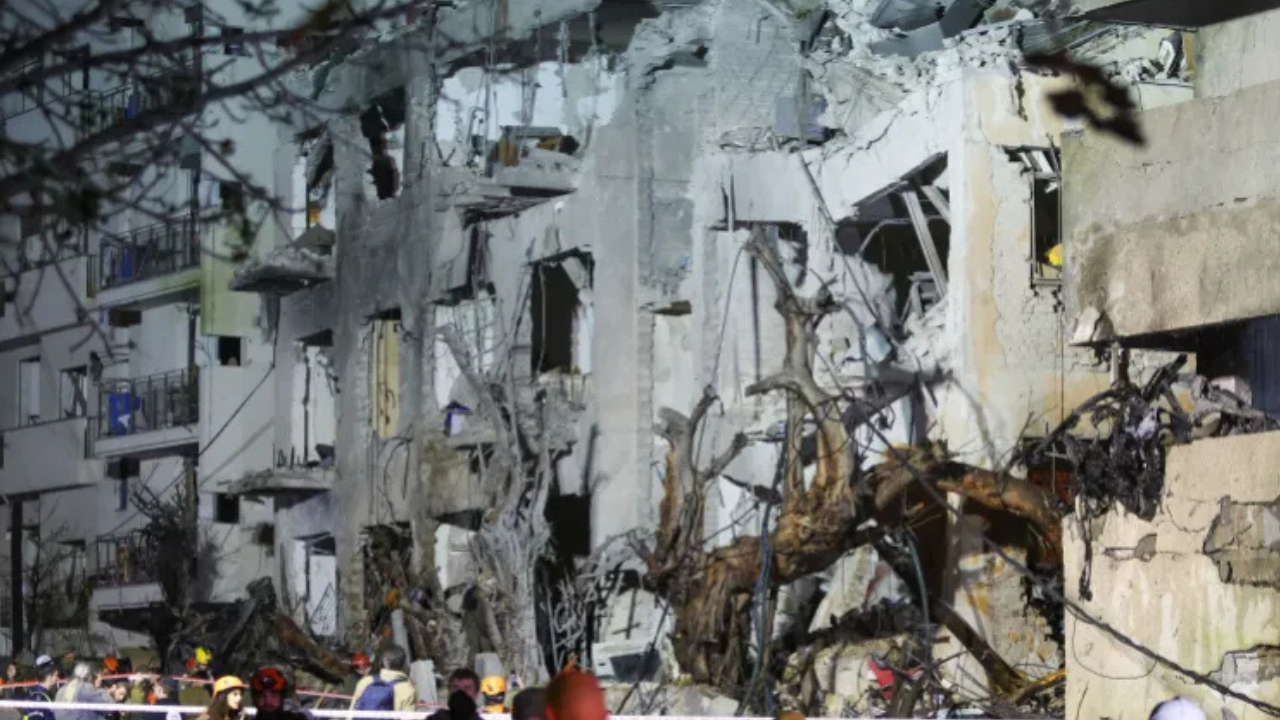
    Iranian media said air strikes hit residential areas in the western city of Sanandaj. Governor Gharib Sajjadi was quoted as saying three people were killed and others were injured. He said the number could increase as rescue work continued.

    In northern Iraq, loud explosions were heard near Erbil airport, where coalition forces are based. Journalists reported that air defence systems intercepted drones close to the facility. 

    Missile alerts were issued in Israel after the military said launches had been detected from Iran. Explosions were heard in Jerusalem, with no immediate reports of direct impact.

    Loud explosions were also reported in Gulf capitals, including Doha, Manama and Dubai, as sirens sounded in parts of the region.

    In Kuwait, the Kuwait News Agency reported that falling debris caused injuries to two workers at the Mina Al Ahmadi refinery near Kuwait City. The report came as Iranian strikes targeted US-linked assets in the Gulf.

    In Iran, seven military commanders were killed in strikes across the country, according to the Tasnim news agency cited by Reuters. Separately, Al Jazeera reported that the death toll from an attack on a girls’ school in Iran had reached around 180.

    Iran’s security chief Ali Larijani said Tehran would not enter talks with Washington, dismissing reports of renewed negotiations. In a separate post, he said statements by Donald Trump had pushed the region into disorder.

    Trump said he had a shortlist of three individuals who could lead Iran, without naming them. He also said he expected further casualties among US forces and indicated that military operations could continue for several weeks.

    Speaking to international media, he said deaths among US service members were expected during the operation, while adding that the strikes would continue until Washington’s objectives were achieved.

    Britain said its forces were responding to a suspected drone strike at the RAF Akrotiri base in Cyprus. No casualties were reported. UK Prime Minister Keir Starmer said the United States had been allowed to use British bases for missile defence activity, while stating that London was not taking part in strikes on Iran.

    In Lebanon, President Joseph Aoun said attacks launched from Lebanese territory undermined government efforts to keep the country out of regional fighting, while also condemning Israeli strikes on Lebanon.

    The Pentagon said Defence Secretary Pete Hegseth would hold a press conference alongside Joint Chiefs chair Dan Caine. The White House said Marco Rubio and other officials would brief Congress on the situation.

    Gulf states said they reserved the right to respond to Iranian attacks after a meeting of the Gulf Cooperation Council. The World Health Organization said reports of a hospital in Tehran being hit were concerning and stressed protections under humanitarian law.

    The United States and Israel launched joint strikes on Iranian targets on Saturday, describing the action as preventive. 

    Iranian media later confirmed that Supreme Leader Ali Khamenei was killed in the strikes.

    Iran has since launched missile and drone attacks against US-linked targets in the Gulf, while security measures and disruptions have been reported across several countries.

  • Iran hits 27 US bases and Israeli command headquarters

    Iran hits 27 US bases and Israeli command headquarters

    This morning, Iranian state media has confirmed that Supreme Leader Ayatollah Ali Khamenei was martyred at his office in the joint US-Israeli strikes yesterday. His daughter, son-in-law and grandson were martyred in the same wave of attacks and a 40-day national mourning period has been announced.

    Trump made the claim yesterday saying that, ‘one of the most evil people in History, is dead’, adding that, “he [Khamenei] was unable to avoid our Intelligence and Highly Sophisticated Tracking Systems and, working closely with Israel, there was not a thing he, or the other leaders that have been killed along with him, could do…Hopefully, the IRGC [Islamic Revolutionary Guard Corps] and Police will peacefully merge with the Iranian Patriots.”

    Khamenei, 86, had led Iran since 1989, succeeding Ayatollah Ruhollah Khomeini after the 1979 Islamic Revolution. He ruled for more than three decades and held ultimate authority over the government, military and judiciary while serving as the country’s highest religious authority.

    Khamenei consolidated the power of the Islamic Revolutionary Guard Corps (IRGC), endured sweeping sanctions, and repeatedly insisted Iran’s nuclear programme was civilian. His death is the most dramatic rupture in Iran’s leadership since the revolution.

    What happened?

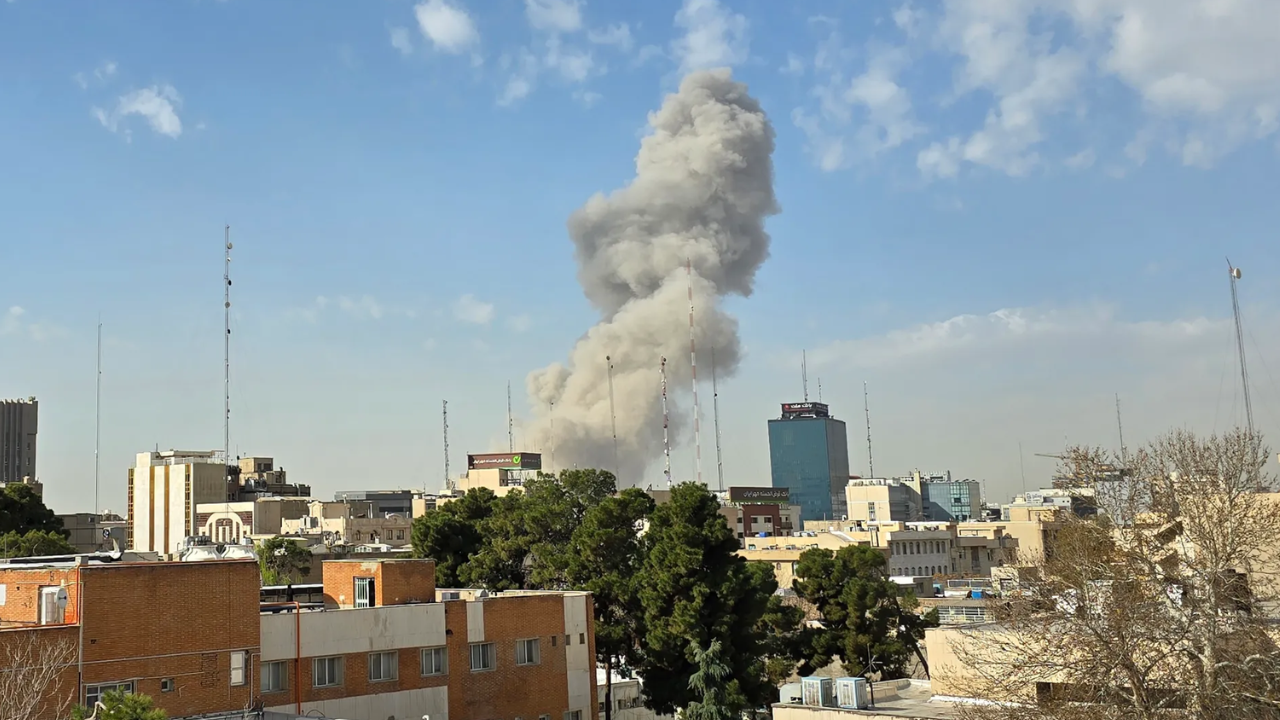
    On Saturday around noon, news of the US-Israel airstrikes in Tehran were confirmed. Multiple cities were targeted, including Tehran, Qom, Esfahan and Khoramabad. The Pentagon confirmed its involvement in the strikes, labeling their operation as “Operaton Epic Fury,” and Trump stated that the US had launched “major combat operations” to eliminate threats from Iran and prevent it from obtaining nuclear weapons.

    Within the hour, Iran confirmed that they would retaliate. Israel soon after, made the first claim, telling Reuters, that Ayatollah Khamenei was killed in the strikes.

    By 2PM, Iran had launched missiles towards Israel and explosions were heard in cities in northern Israel.

    Iran, then, targeted US based in Qatar, Kuwait, UAE and Bahrain and explosions were heard in Doha, Riyadh, Dubai and Abu Dhabi. Dubai was hit in a few areas, including a hotel and the airport, but primarily due to drone debris and faced no major casualties.

    Iran’s Red Crescent said more than 200 killed and 747 were injured across 24 provinces in Iran, the most devastating hit being on a girls’ elementary school in Minab, a city in the Hormozgan province of southern Iran, killing 108 people.

    A UN emergency session was called and Iran’s ambassador told the UN Security Council that civilians were killed in the Israeli strikes including 100 children in school. Pakistan became the only Muslim country to condemn the US-Israel attack on Iran at the UN session, alongside Russia and China, while also condemning Iran’s retaliatory attacks on the Gulf nations.

    The biggest question remained as Iran kept denying the news: Was Khamenei dead? Iran said no, adding that Khamenei was alive and ‘commanding the field’.

    Earlier this morning, Iranian state media confirmed that Ayatollah Ali Khamenei was martyred in the strikes.

    What is happening now and expected?

    The latest updates right now is that Iran has announced attacks on 27 US bases in Middle East. Reuters is reporting that the sounds of explosions were heard in Dubai.

    According to the Iranian state media, the IRGC has said that it is carrying out a ‘sixth wave of attacks’, with an “extensive missile and drone” attacks on Israel and US military bases in the region.

    Iran has claimed that 27 US bases, as well as the Israeli Tel Nof airbase, the Israeli army’s command headquarters at HaKirya in Tel Aviv, and a large defence industrial complex in the same city, were attacked. The forces added that they will, “implement a different and harsh step of revenge, with successive, regrettable slaps”.

    Meanwhile, the Israeli military has warned its residents not to share the locations of areas hit in Israel by Iran. In a post on X, the Israeli military also said that they should remain in their ‘protective bunkers’ unless told to leave.

    New leadership in Iran

    A three-person transitional council (president, judiciary chief, Guardian Council jurist) will assume leadership duties as Iran also confirmed that senior Iranian official Ali Shamkhani and the chief of the IRGC, Mohammad Pakpour were also killed.

    US-Israel position

    Trump has announced “major combat operations” in Iran and that bombing will continue “uninterrupted throughout the week or as long as necessary.” He also said that diplomacy may now be “much easier,” with new Iranian leadership. At home, Trump is being severely criticised over bypassing Congress before launching attacks with Israel.

    Global reaction

    Several countries have shut their airspace amid missile exchanges as the UN calls for immediate de-escalation. China has called for a halt to military action, Oman says that the negotiations were going well and were undermined and Russia has criticised the US negotiations as a “cover”.