Category: Global

  • Middle East closures trouble Indian airlines already struggling amid Pakistan airspace restrictions

    Middle East closures trouble Indian airlines already struggling amid Pakistan airspace restrictions

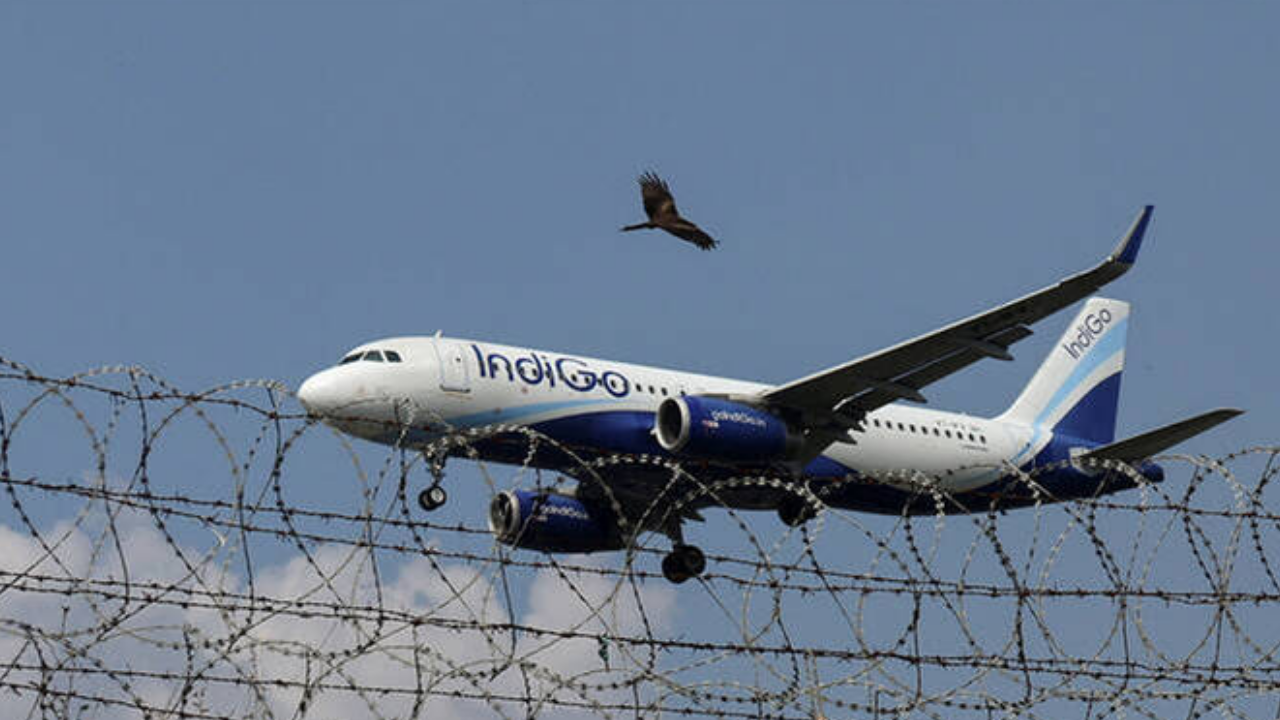
    Airspace restrictions across the Middle East amid the war involving Iran have disrupted international operations of Indian airlines already affected by a ban on flying over Pakistan.

    The region serves as a key corridor for flights from India to Europe and the United States. With parts of Middle Eastern airspace closed due to the conflict, airlines have been forced to reschedule or reroute flights. 

    The restrictions come as Indian carriers remain unable to use Pakistani airspace, leaving them with limited routing options.

    Data from aviation analytics company Cirium shows that the country’s two largest international carriers, Air India and IndiGo did not operate 64 per cent of their 1,230 scheduled flights to the Middle East, Europe and North America over the past ten days.

    Aviation analyst Amit Mittal said that the situation is affecting airlines operating international routes. “It is a double whammy for Indian airlines which fly international routes,” he said.

    Pakistan barred Indian airlines from its airspace in April last year following military tensions between the two countries.

    Financial services firm The Hongkong and Shanghai Banking Corporation Limited (HSBC) said last week that geopolitical tensions in the Middle East would place pressure on costs and profitability of Indian carriers. 

    The bank estimated that seven days of cancellations on affected routes could reduce its annual profit-before-tax forecast for airlines by 1.2 percent.

    While some routes have resumed, IndiGo has faced operational problems linked to aircraft used on its long-haul services. The airline relies on six long-range aircraft leased from Norse Atlantic Airways to operate flights to Europe. Because the aircraft remain registered in Norway, they must follow an advisory from the European Union Aviation Safety Agency that asks airlines to avoid the airspace of Iran, Iraq, Israel, Kuwait, Lebanon, Qatar, the United Arab Emirates and Saudi Arabia.

    As a result, IndiGo has been routing some flights through Africa. Data from Flightradar24 shows that the changes have increased flight times by up to two hours in some cases.

    One IndiGo flight from Delhi to Manchester returned to Delhi after air traffic control in Eritrea declined airspace use due to confusion over how a Norse-registered aircraft was being used by the airline, according to a source familiar with the matter. IndiGo said the aircraft returned after 13 hours in the air due to “last-minute airspace restrictions.”

    Another IndiGo aircraft travelling from London to Mumbai faced a similar issue and diverted to Cairo.

    Air India said on Monday it would operate 78 additional flights between India and Europe and the United States during the coming week in response to demand linked to the conflict.

    Air India, owned by Tata Group and Singapore Airlines, has previously estimated that the Pakistan airspace ban could cost the airline about $600 million annually. 

    The carrier reported losses of $433 million last year. Longer flight routes increase fuel consumption, adding to operating costs as oil prices rise during the conflict.
  • Trump-Epstein ‘Titanic’ statue pops up in Washington DC

    Trump-Epstein ‘Titanic’ statue pops up in Washington DC

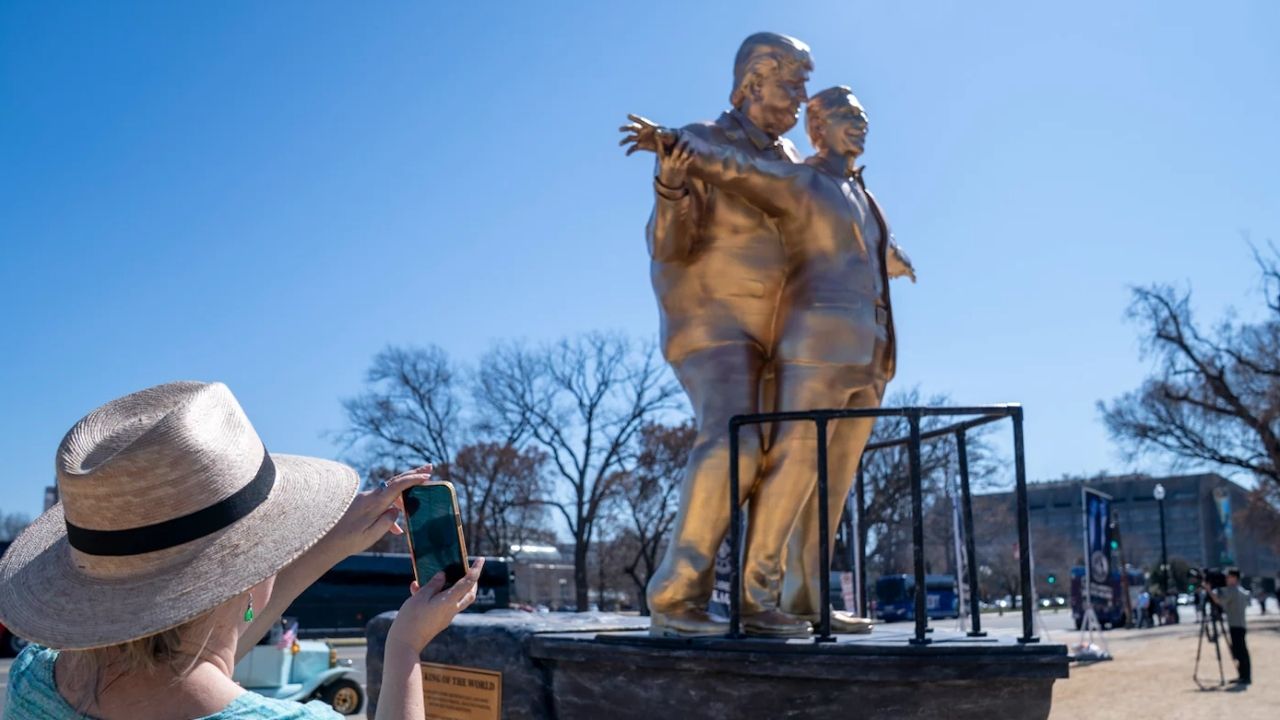
    An anonymous group of artists have installed a statue of US President Donald Trump and convicted sex offender Jeffrey Epstein on the National Mall in Washington DC on Tuesday, depicting the pair in a pose referencing a scene from the film Titanic.

    The installation, nearly 12 feet tall, shows Trump embracing Epstein. Plaques placed at the base of the statue read: “The tragic love story between Jack and Rose was built on luxurious travel, raucous parties, and secret nude sketches. This monument honors the bond between Donald Trump and Jeffrey Epstein, a friendship seemingly built on luxurious travel, raucous parties and secret nude sketches.”

    Ten banners were also placed nearby displaying a photograph of Trump and Epstein together alongside the words “Make America Safe Again”. The banners carry the insignia of the United States Department of Justice with the word “Justice” redacted.

    Trump had a long-standing association with Epstein, who died in jail in 2019 while facing sex trafficking charges. Trump has said he knew Epstein socially in Florida and that the two stopped interacting in the mid-2000s. He has also maintained that he was unaware of Epstein’s criminal conduct.

    The statue has been placed on Third Street NW between Jefferson and Madison drives and is the third installation by the artists depicting Trump and Epstein. In January, the group installed a replica of a birthday note and drawing bearing Trump’s name that appeared in a 2003 collection of messages for Epstein. Trump has denied writing the note and told reporters the signature was not his.

    In September, the same artists placed a bronze statue titled “Best Friends Forever” that showed Trump and Epstein holding hands.

    The artists identify themselves as “The Secret Handshake”, though their identities remain unknown. 

    According to the newspaper, the group uses an intermediary to obtain permits from the National Park Service for installations on the Mall. A copy of the permit reviewed by the publication shows the end date for the installation redacted.

    It remains unclear whether the redaction was made by the Park Service or was included as part of the installation.

    A spokesperson for the White House said that the statue reflects political hypocrisy.

    “When will these wealthy Democrat donors create sculptures of Democrats … who continued to solicit money and meetings from Epstein after he was convicted as a sex offender?” spokesperson Abigail Jackson asked in a statement.

    The National Mall has previously hosted protest art and installations aimed at highlighting political and social issues. Near the statue, a colorectal cancer awareness display featuring blue flags has also been installed on the Mall.

  • Russia denies sharing intelligence with Iran: Witkoff

    Russia denies sharing intelligence with Iran: Witkoff

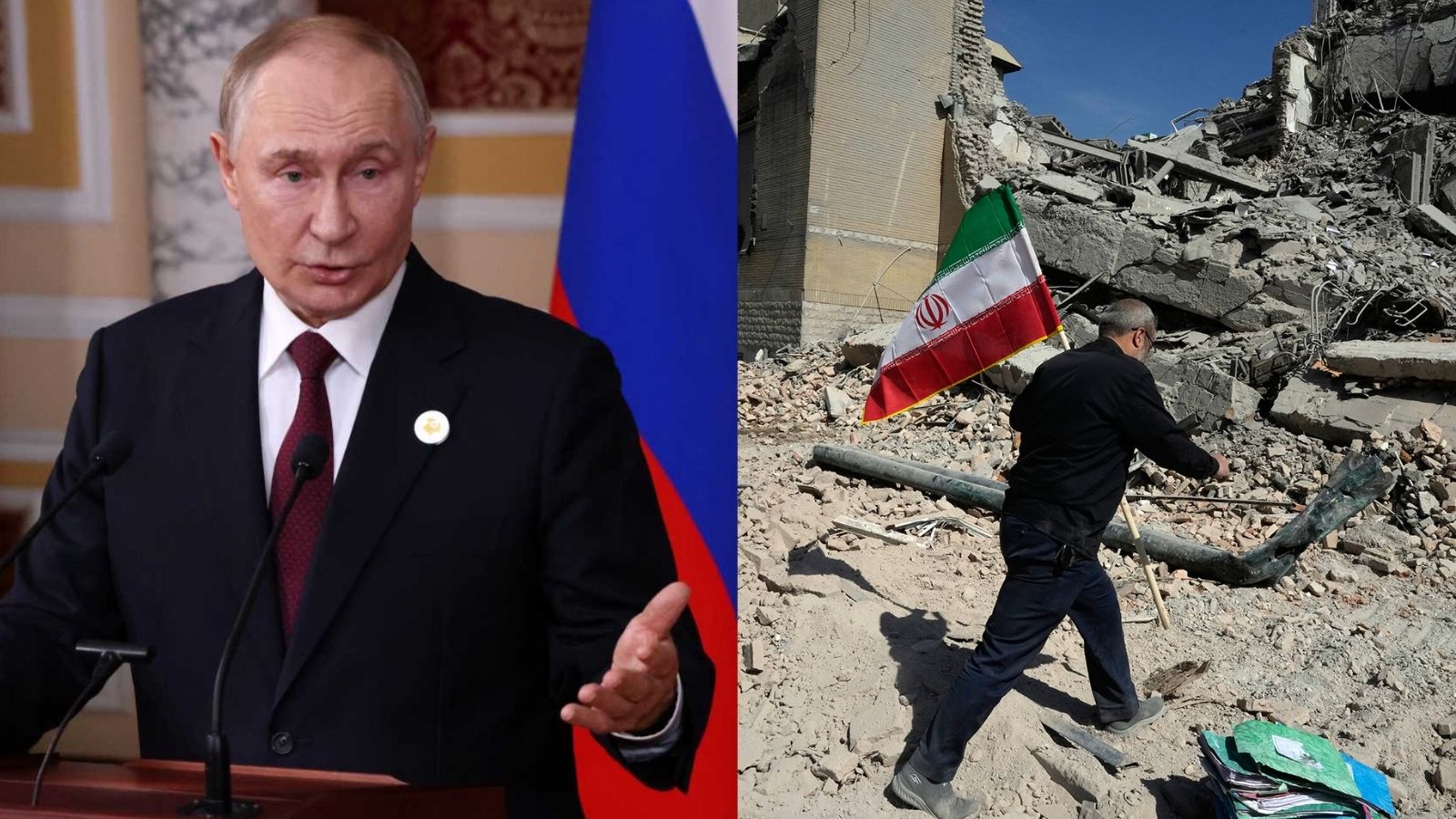
    Russian officials have told the United States (US) that Moscow is not sharing intelligence with Iran during the ongoing war, US Special Envoy Steve Witkoff claimed after American President Donald Trump and his Russian counterpart Vladimir Putin held a call. 

    Speaking to an international media outlet, Witkoff said that Russian leaders denied the allegations during the conversation with Trump on Monday.

    “So, you know, we can take them at their word,” Witkoff said. “Let’s hope that they’re not sharing.”

    When asked whether Russia was providing Iran with intelligence regarding the location of US military assets, Witkoff said he could not confirm the claim.

    “Well, I’m not an intel officer, so I can’t tell you,” Witkoff replied.

    He added that Russian officials told Trump during the call that Moscow had not shared intelligence with Iran.

    “I can tell you that yesterday, on the call with the president, the Russians said they have not been sharing,” Witkoff said. “That’s what they said.”

    Witkoff further revealed that he and Trump’s son-in-law Jared Kushner also spoke with Yuri Ushakov, Putin’s foreign policy advisor earlier on Monday.

    During that conversation, Ushakov repeated that Russia was not sharing intelligence with Iran, Witkoff noted.

    A report by an international publication had claimed that Russia had been providing Iran with intelligence on the location of US military assets in the Middle East, including warships and aircraft, citing three officials familiar with the matter.

    The officials, who spoke on condition of anonymity, said that Moscow began sharing targeting information after the conflict expanded in the region. 

    One of them described the effort as “pretty comprehensive”. Kremlin spokesperson Dmitry Peskov declined to comment on the claim.


    The report also cited analysts who said the pattern of Iranian strikes suggested access to detailed intelligence. Dara Massicot, an expert on the Russian military at the Carnegie Endowment for International Peace said that Iran appeared to be targeting early-warning radar systems and command infrastructure.

  • Iran says countries that expel US, Israeli envoys can have Hormuz passage

    Iran says countries that expel US, Israeli envoys can have Hormuz passage

    The Iranian Revolutionary Guard Corps (IRGC) announced that any Arab or European nation that expels the ambassadors of Israel and the United States (US) from its territory will be granted “full authority and freedom” to navigate the Strait of Hormuz.

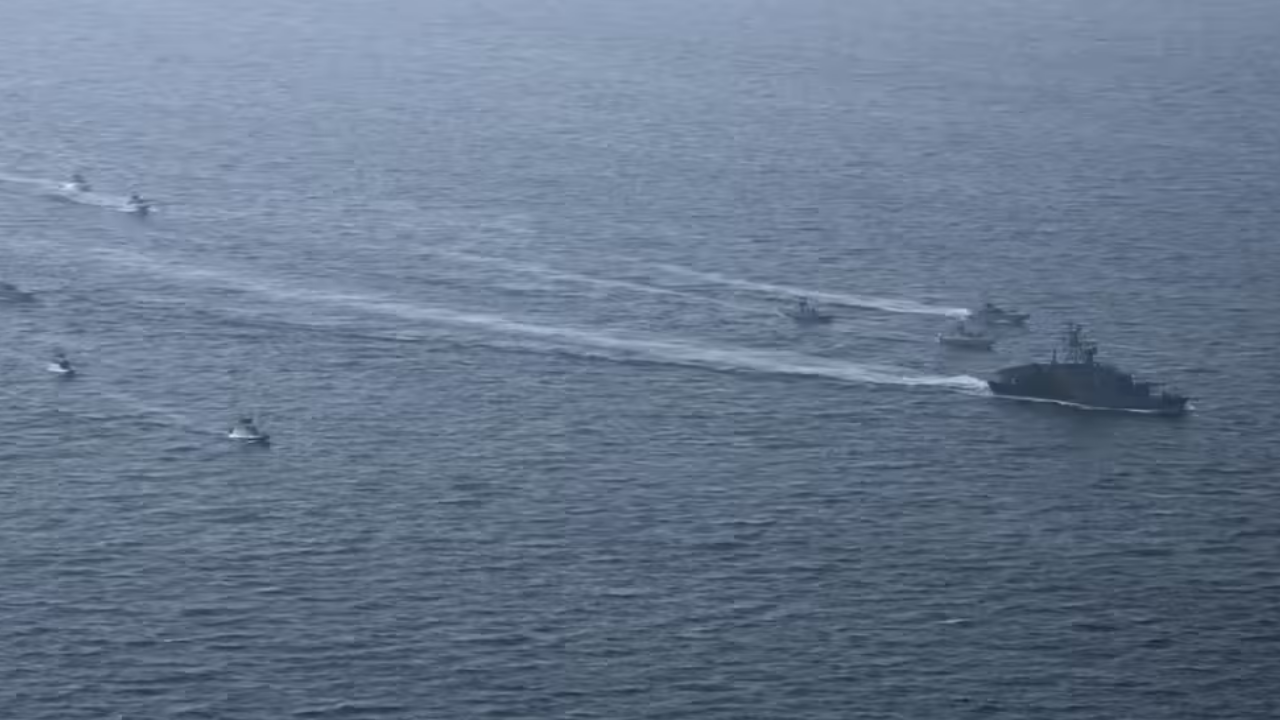
    The statement, reported by Iranian state media, comes as the IRGC maintains a blockade on the strategic waterway, where at least 10 vessels have been attacked since the conflict began. IRGC spokespeople stated that they, rather than American forces, will “determine the end of the war,” adding that the future status of the region is now in the hands of Iranian armed forces.

    US President Donald Trump claimed the military campaign has achieved its objectives and “is going to be ended soon.” Despite this, Trump warned that the US could “go further” and threatened to hit Iran “much, much harder” if it continues to block global oil supplies.

    Iranian Foreign Minister Abbas Araghchi dismissed the possibility of negotiations, telling an international media outlet that talking to the US is “no longer on the agenda.” Araghchi stated that Iran is prepared to continue missile attacks for as long as necessary. He also addressed the deployment of US HIMARS (High Mobility Artillery Rocket Systems) in neighboring countries, stating, “Nobody should complain if our powerful missiles destroy these systems wherever they are in retribution.”

    On the ground, violence continues to spread. Rescuers in Tehran reached the site of a missile strike in a residential area, while smoke was seen rising over the western part of the capital following Israeli airstrikes. In Iraq, the IRGC claimed a missile strike on the US Al-Harir Air Base in the Kurdistan region.

    Neighboring states are increasingly caught in the crossfire. Turkiye announced the deployment of a Patriot missile defense system in Malatya after NATO intercepted a second Iranian ballistic missile in Turkish airspace. Meanwhile, Iraq’s Prime Minister (PM) Mohammed Shia al-Sudani told US Secretary of State Marco Rubio that Iraqi airspace and territory must not be used for military actions targeting neighboring countries.

    The regional instability has prompted a mass exodus of foreign nationals. China’s foreign ministry confirmed that over 10,000 of its citizens have been evacuated from the UAE, Oman, and Saudi Arabia. In South Korea, President Lee Jae Myung admitted he could not stop the US from redeploying Patriot batteries from the peninsula to the Middle East, despite domestic opposition.

    Economic pressures are mounting globally. Egypt raised domestic fuel prices by 30 percent, citing pressures from the war. However, West Texas Intermediate (WTI) dropped over 6 percent to approximately $88 per barrel.

    Since the transition, Iran has launched multiple waves of missiles targeting Tel Aviv and US bases, while US Central Command claims to have struck over 5,000 targets, including 50 Iranian vessels.

    The human toll has surpassed 1,300 civilian deaths in Iran. In Bahrain, 32 civilians were wounded in a drone attack on Sitra.

  • From ICE detention to Gracie Mansion: Mahmoud Khalil joins Zohran Mamdani for iftar

    From ICE detention to Gracie Mansion: Mahmoud Khalil joins Zohran Mamdani for iftar

    New York Mayor Zohran Mamdani hosted pro-Palestine student activist Mahmoud Khalil for iftar at Gracie Mansion, marking one year since Khalil was illegally detained by United States (US) authorities over protests against Israel’s genocide in Gaza.

    Khalil attended the gathering with his wife and son. Mamdani and his wife Rama Duwaji hosted the iftar at the official residence of the New York City mayor, Gracie Mansion. The mayor shared a photo from the gathering on Instagram.

    In the caption, Mamdani referred to the events Khalil faced over the past year and wrote that it had been a year of “profound hardship and profound courage” for the activist.

    Khalil was arrested on March 9, 2025, from his residence at Columbia University in New York by agents of the US Department of Homeland Security. Authorities detained him after he participated in protests against Israel’s genocide in Gaza.

    Referring to the arrest and the period that followed, Mamdani wrote that Khalil was “detained by federal agents, flown to Louisiana, and then held in an ICE facility for months”. He added that during this period the activist was “forced to miss the birth of his first child”.

    The mayor linked the detention to Khalil’s participation in protests, stating that the actions taken against him came as a result of the activist “exercising his First Amendment rights in protesting the ongoing genocide in Palestine”.

    Mamdani also referred to the public response that followed Khalil’s detention, saying people across New York mobilised in support of the student activist. According to the mayor, the support campaign contributed to Khalil’s release and allowed him to reunite with his family.

    “We were honoured to host Mahmoud and his family,” Mamdani wrote in the post, adding that Khalil “is a New Yorker, and he belongs in New York City”.

    Khalil was among the first pro-Palestinian student activists to be detained during the second term of US President Donald Trump. His detention came as the administration moved against students involved in protests over Israel’s genocide in Gaza, where more than 72,000 Palestinians have been killed.

    During his presidential campaign, Trump had said his administration would take action against pro-Palestinian student protesters on US campuses.

    Khalil’s detention drew criticism from rights organisations, academics and members of the public.

    The activist remained in detention for months before a series of court proceedings led to his release in June. However, a later appeal overturned the ruling that resulted in his release, though Khalil has not been detained again by US authorities.

  • Israel uses prohibited white phosphorus in Lebanon attacks: HRW

    Israel uses prohibited white phosphorus in Lebanon attacks: HRW

    Human Rights Watch (HRW) has said that it found evidence that Israel used white phosphorus munitions in residential areas of southern Lebanon earlier this month, which it said violates international humanitarian law.

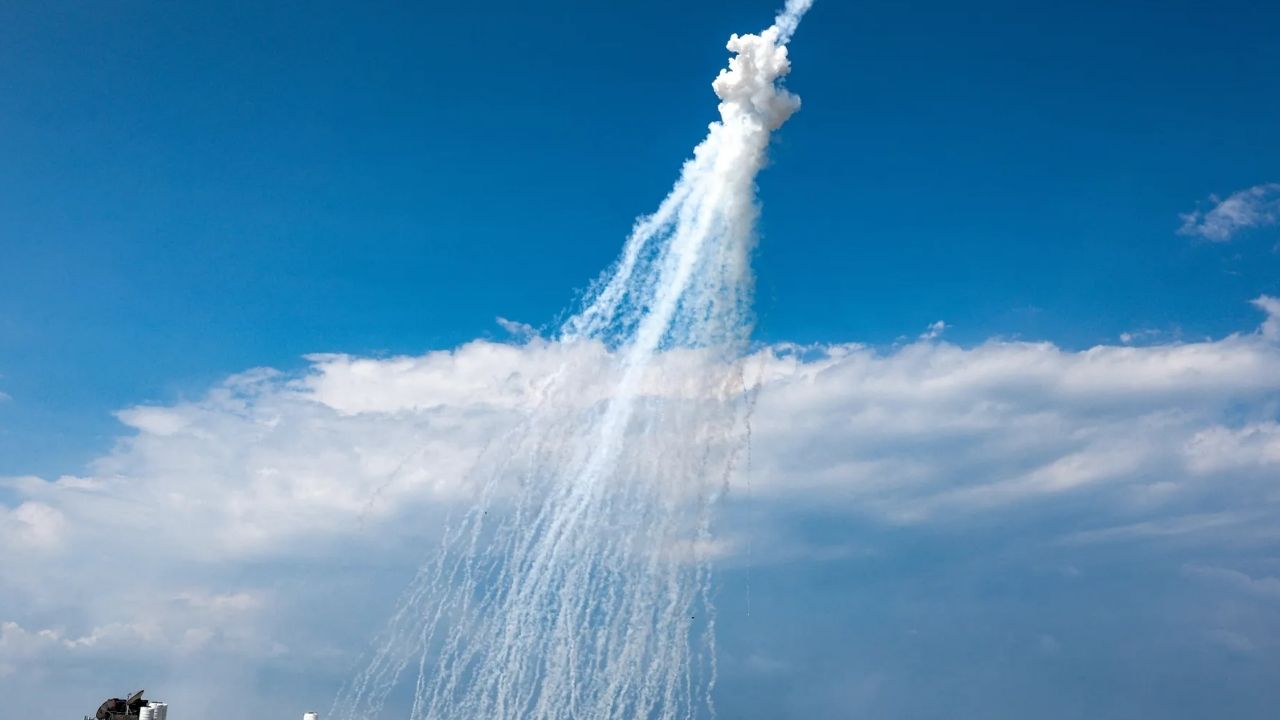
    In a report released on Monday, the New York-based organisation said it verified seven photographs showing white phosphorus munitions fired over a residential area in Yohmor in southern Lebanon on March 3. The report said that fires broke out in at least two homes following the attack.

    Ramzi Kaiss said, “The Israeli military’s unlawful use of white phosphorus over residential areas is extremely alarming and will have dire consequences for civilians.”

    “The incendiary effects of white phosphorus can cause death or cruel injuries that result in lifelong suffering,” he said.

    The organisation added that the use of airburst white phosphorus in populated areas was indiscriminate and did not meet the requirement under international humanitarian law to take precautions to prevent civilian harm.

    White phosphorus ignites when exposed to oxygen and can set homes, agricultural land and other civilian property on fire, the report said.

    Human Rights Watch said that the munitions were used over concentrations of civilians in Yohmor, which led to fires in homes and other civilian structures.

    The organisation mentioned that it verified and geolocated an image posted online by Lebanese media on the morning of March 3 showing at least two artillery-delivered white phosphorus munitions being airburst over a residential neighbourhood.

    The report added that the smoke cloud pattern from the airbursts was consistent with the “knuckle” created by the expelling and bursting charges of the M825-series 155mm artillery projectile that contains white phosphorus.

    Human Rights Watch also said that it verified and geolocated photographs posted on Facebook by the civil defence team of the Islamic Health Committee in Yohmor that showed workers extinguishing fires on residential rooftops and in a car.

    The organisation stated that the fires were likely caused by felt wedges containing white phosphorus due to the proximity of the sites to the area where the airburst munitions were observed.

    “Israel should immediately halt this practice and states providing Israel with weapons, including white phosphorus munitions, should immediately suspend military assistance and arms sales and push Israel to stop firing such munitions in residential areas,” Kaiss said.

    According to Lebanese authorities, more than half a million people have been registered as displaced after Israel issued displacement orders in several areas.

    National News Agency remarked that Israel carried out air strikes on Monday in Beirut’s southern suburbs, including areas between Ghobeiry and Haret Hreik and in the Safir district.

    The report came hours after the Israeli military said it was targeting positions of Hezbollah in the Lebanese capital.

    Lebanese authorities said at least 394 people had been killed and more than 1,000 injured in Israeli attacks in the country.

    Human Rights Watch urged that Israel’s allies, including the United States, the United Kingdom and Germany, to suspend military sales to Israel and impose sanctions on officials linked to alleged violations.

    The organisation also said Israel had previously used white phosphorus between October 2023 and May 2024 in villages along the southern Lebanon border, placing civilians at risk.

  • Mojtaba Khamenei, son of Ali Khamenei, becomes supreme leader of Iran

    Mojtaba Khamenei, son of Ali Khamenei, becomes supreme leader of Iran

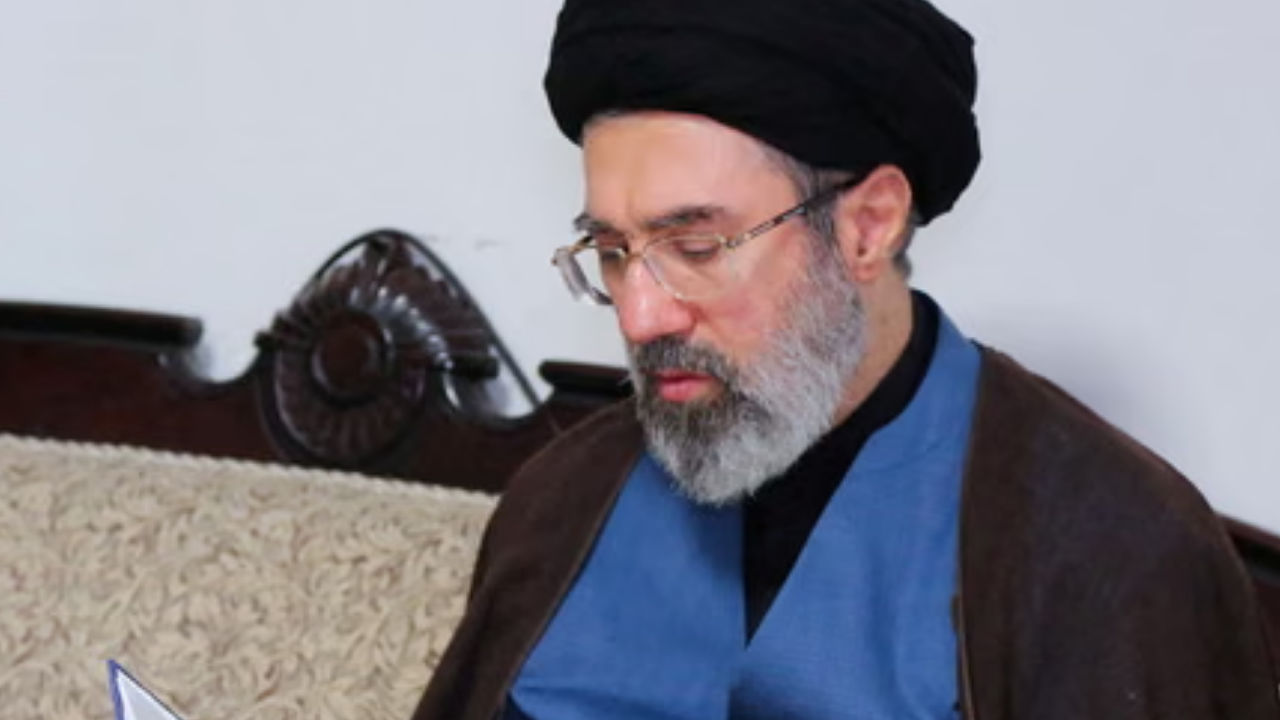
    Iran’s Assembly of Experts has named Mojtaba Khamenei as the country’s new Supreme Leader, replacing his father, Ayatollah Ali Khamenei, who was assassinated in the opening salvos of a United Stated (US)-Israeli attack nine days ago. The appointment was confirmed by state media and the Isna news agency, marking a significant transition as the conflict expands across the Middle East.

    The Iranian Revolutionary Guard Corps (IRGC) and the country’s armed forces have pledged “complete obedience” and “self-sacrifice” to the new leader. High-profile officials, including Parliament Speaker Mohammad Baqer Qalibaf and National Security Council Secretary Ali Larijani, called the decision precise, stating that following Mojtaba Khamenei is a “definitive religious and national obligation.”

    On the ground, the war has intensified. Iran launched its first wave of missiles under the new leadership, targeting Tel Aviv, the Negev desert, and US air bases. The IRGC described this as the “29th wave of Operation Honest Promise 4.” 

    Simultaneously, the US military confirmed its seventh service member was killed in action during Operation Epic Fury, following injuries sustained in Saudi Arabia on March 1.

    The economic fallout has been immediate. Asian equities plunged as oil prices soared 30 percent, with West Texas Intermediate hitting $118.88 per barrel. 

    US President Donald Trump, posting on Truth Social, dismissed the spike as a “very small price to pay,” adding that “only fools would think differently.” Trump has maintained that only the “unconditional surrender” of Iran will end the war.

    Regional spillover continues to affect neighboring states. In Bahrain, an Iranian drone attack on the island of Sitra wounded 32 civilians, including children. 

    The UAE’s Ministry of Defence reported engaging incoming drones and missiles, while Qatar intercepted a missile attack over Doha. Saudi Arabia also destroyed two drones heading toward the Shaybah oil field.

    The human cost has reached 1,332 civilian deaths, according to Iran’s UN Ambassador Amir Saeid Iravani. The Iranian army further reported that 104 people were killed in a US attack on an Iranian warship last week. 

    In Isfahan, security officials stated that eight people, including a woman, died during Israeli strikes involving over 80 fighter jets.

    Amid the violence, Iranian President Masoud Pezeshkian issued a formal apology to neighboring countries for retaliatory strikes but remained defiant against the US and Israel. “Our Iran, our country, will not bow easily in the face of bullying,” he stated, accusing the adversaries of trying to divide Islamic nations.

    Foreign Minister Abbas Araghchi rejected President Trump’s demand to have a say in picking the next Supreme Leader, telling an international media outlet that the US must apologize for starting the war. “We allow nobody to interfere in our domestic affairs,” Araghchi said.

    The conflict, which began on February 28 with “pre-emptive” joint strikes by the US and Israel, shows no sign of de-escalation. Iran’s military has warned that if energy infrastructure continues to be hit, it will target oil sites across the region. “If you can tolerate oil at more than $200 per barrel, continue this game,” warned military spokesperson Ebrahim Zolfaghari.

    As the Strait of Hormuz remains blocked, analysts report that at least 10 vessels have been attacked in the strategic waterway. France is scheduled to host a G7 finance meeting today to review the situation from an economic perspective, while Russia and the UAE have called for an end to civilian casualties on both sides.

  • Google evacuates over 1,000 employees from Dubai as Iran war continues

    Google evacuates over 1,000 employees from Dubai as Iran war continues

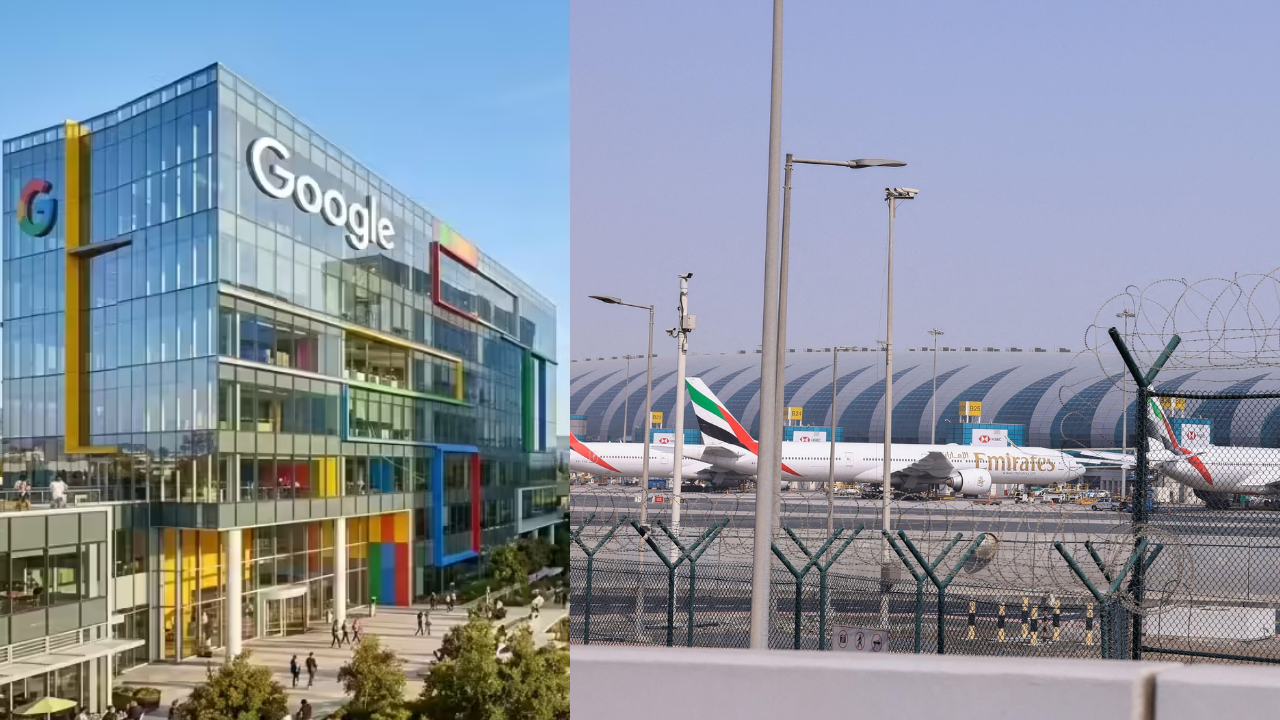
    More than 1,000 Google employees attending the company’s corporate sales event in Dubai were stranded in the city when hostilities with Iran escalated last weekend.

    Google’s cloud division had concluded its annual “Accelerate” conference on Friday when missiles and drones began striking the region. With sudden airspace closures, employees who had stayed on in Dubai for the weekend found themselves unable to secure flights home. Many staffers, who had traveled with their families, were left in hotels awaiting guidance from local authorities.

    “Grounded by a regional escalation that has paralyzed one of the busiest travel hubs on Earth, it’s hard not to feel scared,” Yasmeen Ahmad, a Google Cloud executive, wrote on LinkedIn, noting she had used Google’s AI tools to stay informed.

    Since Saturday, Google has arranged departures for many employees, and the number still stranded in the city has dropped significantly, according to two people familiar with the situation. 

    Paris-based Google engineer Samy Fadel, who returned to France, wrote on LinkedIn, “While I am deeply relieved to be home and safe, it honestly doesn’t feel like a real return yet. Many of my colleagues and fellow travelers are still trying to get back to their families as airspace disruptions and evacuations continue across the region.”

    A Google spokesperson said, “Our focus is on the safety and well-being of our employees in the region.”

    Private-charter company Elevate Aviation was hired by a corporate client to evacuate roughly 1,000 employees and their families, initially using an airport in Oman for departures, the company’s chief executive told an international media outlet.

    Since the outbreak of the conflict, nearly 20,000 Americans have returned from the Middle East, according to State Department spokesman Dylan Johnson, not including those still in transit or who left for other countries. France’s foreign minister said that 750 French citizens had been evacuated, with 5,000 still awaiting departure.

    The current hostilities have reached the city, with Iran reportedly firing 1,400 missiles and drones at the U.A.E., most of which were intercepted. Attacks in the past week damaged two Amazon Web Services data centers.

    Airports in the U.A.E. were closed due to airspace restrictions and drone strikes but have since reopened some flights. Travelers have also reached safety via overland routes to Oman or by private planes.

    Reports indicate that in the days before the conflict, many employees received no guidance from their companies or the U.A.E. government on potential risks or contingency plans. Initial missile interceptions were observed by Dubai residents, who continued their routines until attacks intensified and drones reached the city.

  • Indian journalist reveals Israel hides casualties, forbids taking photos of bodies

    Indian journalist reveals Israel hides casualties, forbids taking photos of bodies

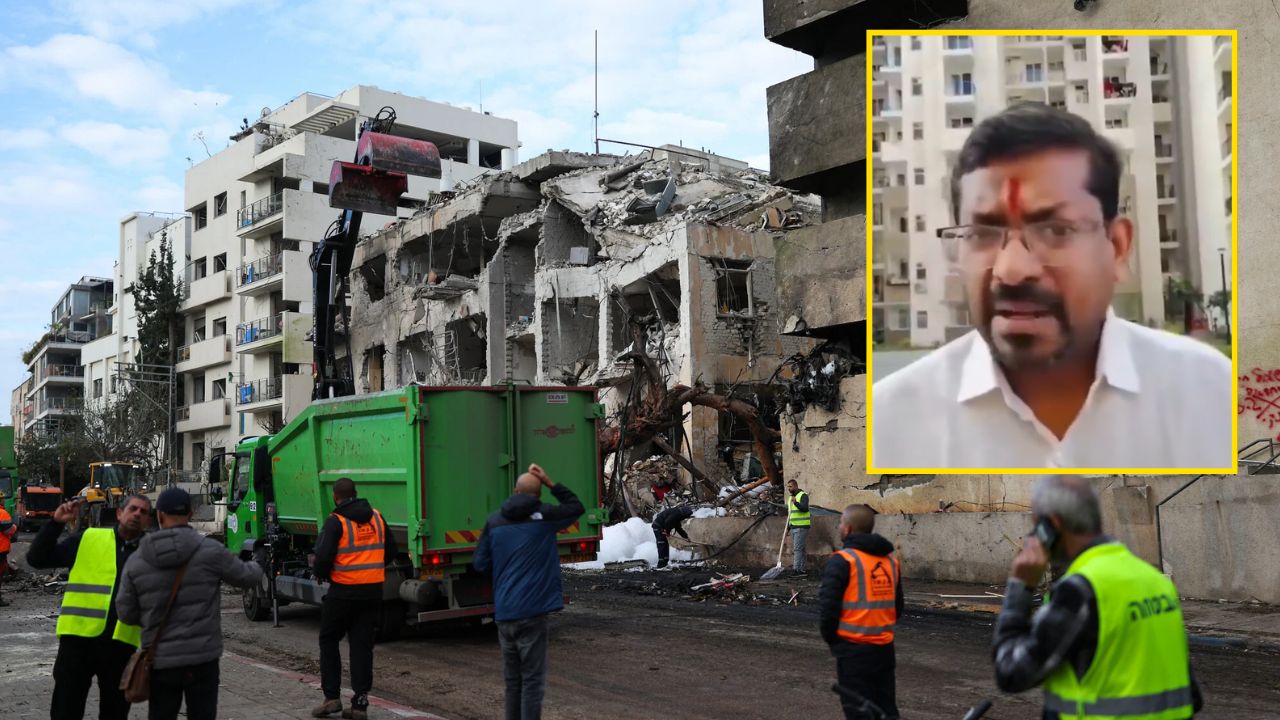
    Indian journalist Braj Mohan Singh has claimed that the Israeli government is concealing casualty figures and restricting access to hospitals after Iran’s recent retaliatory strikes on the country.

    Mohan Singh spoke about his experiences after returning from Israel, saying civilians suffered even in places the government described as safe.

    “Iranian missiles sometimes hit without sirens,” he said, suggesting that people died inside bunkers despite repeated assurances that they offered protection.

    “The government will not tell you anything, you can’t visit hospitals with bodies,” he added. “When an incident happens, we do not even know which location it is in.”

    Mohan Singh also alleged that Israeli authorities blocked access to filming the destruction and limited media coverage of the damage caused by the Iranian attacks.

    Israel has not publicly confirmed detailed casualty figures from the retaliatory strikes or commented on the journalist’s claims.

    It is worth noting that Israel and the US struck targets in Iran on February 28, killing Supreme Leader Ayatollah Ali Khamenei and other senior figures in a coordinated offensive. The campaign, called Operation Epic Fury, aimed at degrading Iran’s military infrastructure and leadership.

    Iran responded with widespread ballistic missile and drone attacks on Israeli territory and US bases in the Gulf.

    Reported casualties from the US and Israeli strikes in Iran have risen to more than 1,300 deaths, with thousands injured, according to international reporting. Iranian missile and drone strikes have also killed civilians and military personnel in Israel, the United Arab Emirates, and other Gulf nations.

    The conflict has disrupted shipping through the Strait of Hormuz, a vital route for global oil and gas supplies. The Revolutionary Guards said the Strait will remain open, but US and Israeli ships would be targeted.

    This affects Pakistan as well, as the federal government has raised petrol and diesel prices by Rs55 per litre due to surging global oil prices amid the US‑Israel war with Iran.

    The new price of petrol will be Rs321.17 per litre from Rs266.17, whereas the diesel rate will be Rs335.86 per litre from Rs280.86 after the review.

  • Russian intel helping Iran target US assets: report

    Russian intel helping Iran target US assets: report

    Russia has been providing Iran with intelligence on the locations of American military assets in the Middle East, including warships and aircraft, a report by an International media publication has claimed, citing three officials familiar with the matter. 

    The officials, who spoke on condition of anonymity due to the sensitivity of the matter, told the publication that Moscow began passing targeting information to Tehran after the conflict expanded in the region.

    The assistance marks the first indication that another major US adversary may be indirectly involved in the conflict, the report said.

    Since the fighting began on Saturday, Russia has shared the locations of US military assets in the region, the officials told the international media publication. One of them described the effort as “pretty comprehensive”.

    Kremlin spokesperson Dmitry Peskov declined to comment when contacted by the publication. Moscow has previously called for an end to the conflict, describing it as an “unprovoked act of armed aggression”.

    The extent of the intelligence support remains unclear, according to the officials, who added that Iran’s own ability to track US forces has weakened during the first week of fighting.

    The report said that  six US troops were killed and several others injured in an Iranian drone attack in Kuwait on Sunday.

    According to the publication, Iran has launched thousands of one-way attack drones and hundreds of missiles targeting US military positions, embassies and civilians.

    The strikes come as US and Israeli forces have carried out attacks on more than 2,000 targets inside Iran, including ballistic missile sites, naval assets and facilities linked to the country’s leadership.

    White House spokesperson Anna Kelly said the Iranian government was under military pressure but did not comment on the claims of Russian assistance.

    “The Iranian regime is being absolutely crushed,” Kelly said, according to the report.

    The CIA and the Pentagon declined to comment when asked about the intelligence findings.

    US Defense Secretary Pete Hegseth also downplayed the role of Russia and China when asked earlier this week about their involvement in the conflict.

    “They’re not really a factor here,” Hegseth said.

    Two of the officials cited in the report said there was no indication that China was assisting Iran’s military response despite close ties between the two countries.


    The Chinese embassy in Washington DC said that Beijing had been engaging in diplomatic efforts with partners in the region and called for the conflict to “immediately cease”.

    Analysts cited by the publication stated that the pattern of Iranian strikes suggested access to detailed intelligence.

    Dara Massicot, an expert on the Russian military at the Carnegie Endowment for International Peace, said Iran appeared to be targeting command and control systems and early-warning radar infrastructure.

    “They’re making very precise hits on early-warning radars or over-the-horizon radars,” Massicot said.

    Iran operates only a limited number of military satellites and does not have its own satellite constellation, meaning imagery from Russia’s space capabilities could improve targeting, she added.

    Nicole Grajewski, a researcher at Harvard Kennedy School’s Belfer Center who studies Iran-Russia cooperation, told the publication that Iranian retaliatory strikes showed a high level of planning.

    “They’re getting through air defenses,” she said noting that the quality of Iran’s strikes appeared to have improved even from its 12-day war with Israel last summer.


    People familiar with the matter also told the newspaper that the Pentagon is rapidly using its stockpile of precision weapons and air defence interceptors during the conflict.

    The officials said Russia’s support reshapes the pattern of proxy involvement in the region since its 2022 invasion of Ukraine. 


    US adversaries including Iran, China, and North Korea provided Russia with military aid or material support, while the US has supplied Ukraine with military equipment and intelligence.

    Iran has previously supported Russia during the Ukraine war by sharing technology to produce one-way attack drones used against Ukrainian targets, according to the officials cited by the publication.

    The publication reported that the Kremlin sees potential advantages in a prolonged conflict between the US and Iran, including increased oil revenue and a distraction from the war in Ukraine.