Category: Health

  • HRCP concerned over govt’s decision of asking private sector to import COVID-19 vaccine

    HRCP concerned over govt’s decision of asking private sector to import COVID-19 vaccine

    The Human Rights Commission of Pakistan (HRCP) has expressed serious concern over the federal government’s decision to ask provinces and the private sector to import the coronavirus vaccine.

    As per the details, with the Cabinet Committee on Procurement of COVID-19 Vaccine briefing Prime Minister (PM) Imran Khan on efforts being made to engage more pharmaceutical companies for procurement, HRCP has said that the government’s decision in this regard was not the right step.

    “It is the responsibility of the federal government to provide vaccines at heavily subsidised rates to the poor masses which form a majority of the country’s population,” read a statement by the rights watchdog.

    “The people of lower-income groups are struggling hard to survive the unprecedented economic crisis unleashed by misplaced priorities and pro-rich policies of the federal government. The foreign aid received and funding allocated for fighting the pandemic must be used transparently and spent on vaccinating the citizens,” the HRCP said.

    It also expressed concern after reports appearing in the electronic and social media that some of the agents in Karachi had started pre-booking of AstraZeneca vaccine for Rs 20,000 per dose.

    Earlier, the PM was informed that two vaccines had been registered for emergency use and efforts for fast-track registration of more vaccines were under way.

    He was also told that that the vaccine would be available within the first quarter of the current year.

  • New coronavirus strain: Do we need to worry?

    The news of new coronavirus strain came to light when a stricter level of lockdown was imposed in different parts of south-east England to curb the rapid spike in infections.

    Amid fears of the new strain of the coronavirus spreading quickly in the UK, many countries have imposed a temporary ban on all flights to and from the UK. Pakistan has also banned flights from England.

    The news of new strain of COVID-19 is causing panic and fear and everyone is searching for answers.

    Here’s what you should know:

    Why do we have a new strain of coronavirus?

    The short answer to this question is that because viruses “evolve”. Just like cell-based life, we get new strains of viruses because of some genetic changes caused due to the evolution of the virus.

    What is the new COVID-19 strain?

    The new coronavirus strain has been labelled “B.1.1.7”. Reportedly, the new strain of the virus can lead to a “quicker spread” (scientists are still looking for more evidence) of COVID-19.

    Scientists say it is about 40%-70% more transmissible. However, there is no evidence that this new strain of the virus is “more lethal”. B.1.1.7 has far more mutations than in any previous variant of the Sars-Cov-2 virus analysed since the pandemic started, but scientists are also wondering how it evolved so fast.

    According to some experts, it is entirely too early to make a definitive conclusion.

    Will vaccine work against the new strain?

    Scientists are hopeful that the vaccines will work against this new strain. This is because the parts that Pfizer/BioNtech, Moderna and Oxford/Astrazeneca shots target has not changed much.

  • Coronavirus: Antiviral drug to now be sold at Rs9,244 in Pakistan

    Coronavirus: Antiviral drug to now be sold at Rs9,244 in Pakistan

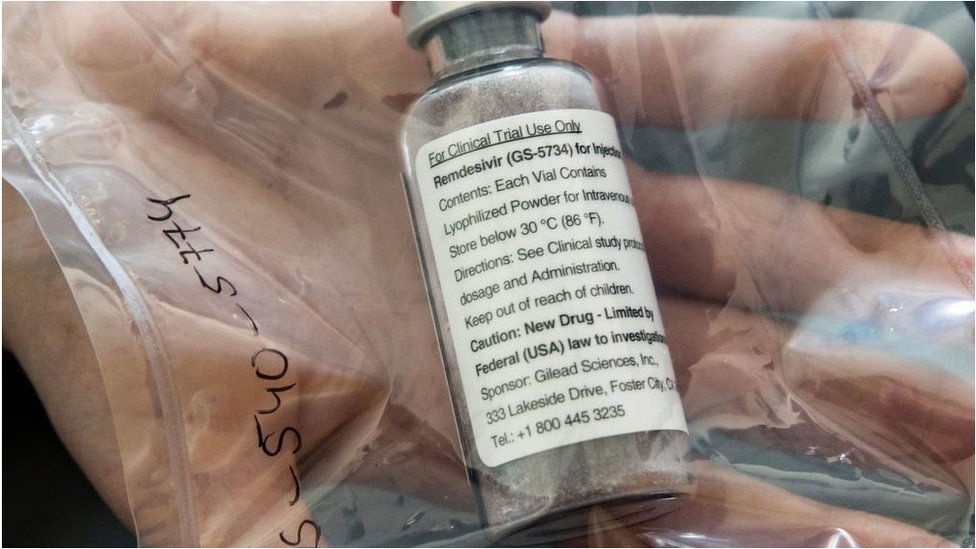
    In a major relief to coronavirus patients, the Drug Regulatory Authority of Pakistan (DRAP) on Monday reduced the price of Remdesivir, the first and only approved treatment for COVID-19 in the United States (US), by Rs1,629 to Rs9,244.

    In a notification, DRAP said that the price of Remdesivir injection has been slashed by Rs1,629, adding that the antiviral drug will be sold at Rs9,244 across the country.

    The regulatory authority warned that strict legal action will be taken against those who are selling the drug at higher prices.

    It is pertinent to mention that remdesivir has reportedly proved effective against the novel coronavirus and the federal cabinet had approved to reduce the price of the antiviral drug last month. In May, US pharmaceutical company Gilead had allowed Pakistan to produce the antiviral drug in the country.

    Meanwhile, COVID-19 cases are once again at rise in the country as 707 new infections were reported across the country on Sunday-Monday, lifting the national tally of infections to 328,602, said the National Command and Operation Centre (NCOC).

    Three patients, who were under treatment in hospitals, died during the aforementioned period, according to the latest update shared by the NCOC. The figure of patients recovered from the virus has reached 311,075. There are now nearly 11,000 active cases in the country.

    About 26,492 tests were conducted across the country on Sunday. Around 311,075 people have recovered from the disease so far across Pakistan. Since the pandemic outbreak, a total of 328,602 cases were detected, including Sindh reporting 143,836, Punjab 102,875, Khyber Pakhtunkhwa (KP) 39,043, Balochistan, 15,810, Islamabad, 1,902, Azad Jammu and Kashmir (AJK) 3,846, and Gilgit Baltistan (GB) has reported 4,180 cases.

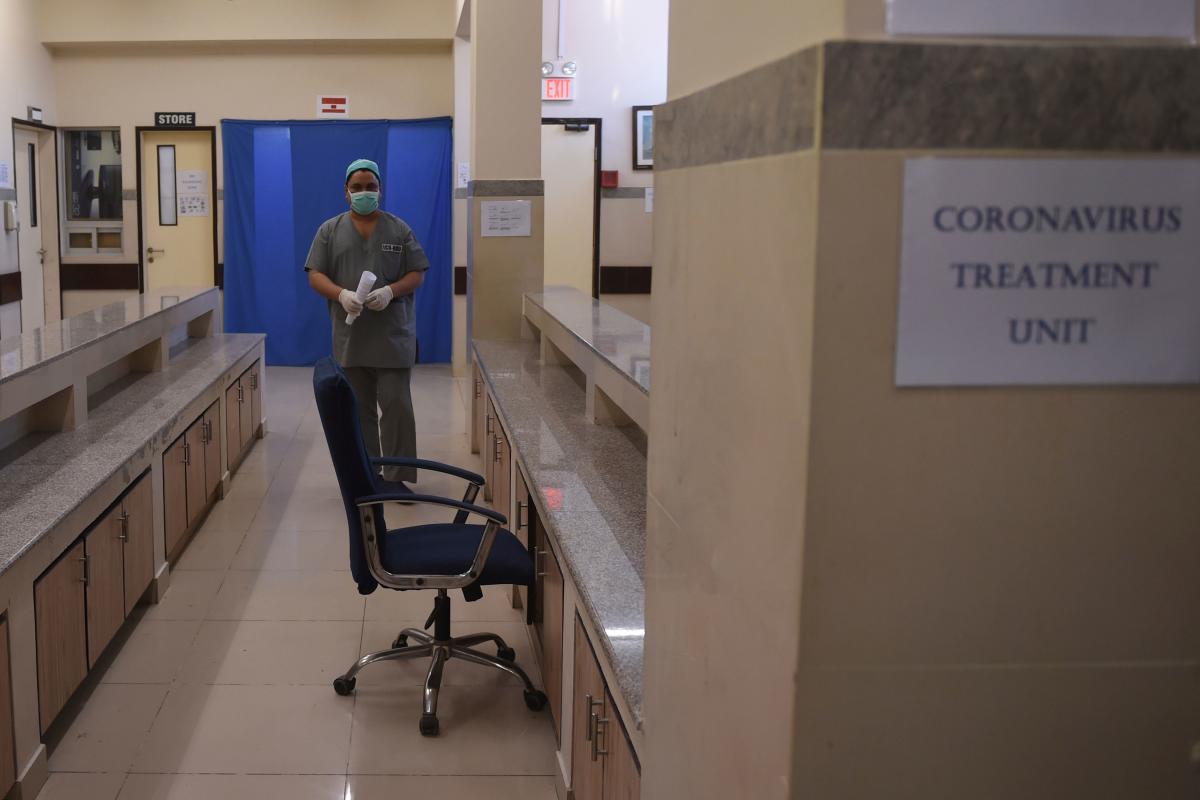
    A total of 4,290,545 tests have been conducted so far, while 735 hospitals are equipped with COVID-19 facilities. About 559 patients admitted to hospitals across the country are said to be in critical condition.

    Meanwhile, as many as 71 healthcare staff working at Pakistan Institute of Medical Sciences (PIMS) Islamabad have tested positive for the coronavirus in the past 30 days.

  • Detection of COVID-19 in students adds to second wave fears

    Detection of COVID-19 in students adds to second wave fears

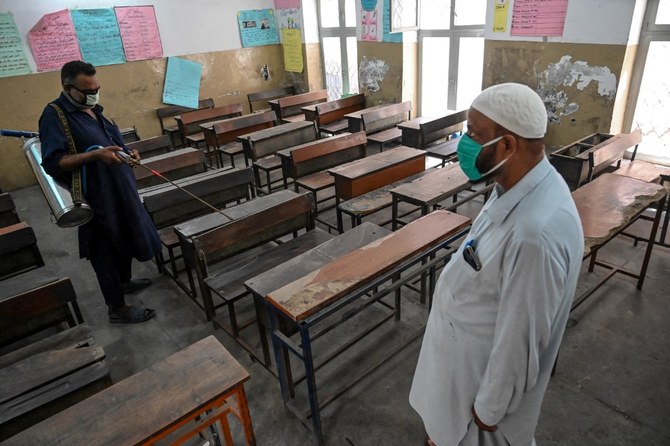
    Two more educational institutions in Islamabad have been sealed by the district health administration after the detection of COVID-19 cases among five students, fueling the outbreak’s second wave fears.

    In August, the government lifted most lockdown restrictions, which had come following a significant drop in new coronavirus cases. Federal Education for Minister Shafqat Mahmood had announced the re-opening of educational institutions on September 4, since when, at least 29 schools, colleges and universities have been sealed in the federal capital alone.

    The cases were reported despite the authorities concerned ensuring that necessary measures were taken ahead of the much-awaited re-opening of educational institutions.

    While it was earlier speculated that coronavirus has ended in Pakistan due to either an effective strategy of the government or multiple other reasons such as herd immunity being achieved, a sudden spike in the number of cases has left experts scratching their heads.

    Amid the rising positivity rate in the country which crossed 2% in September, the Pakistan Medical Association (PMA) has expressed concerns over the looming second wave of coronavirus, highlighting the carelessness in the implementation of standard operating procedures (SOPs) in schools and other public spaces.

    Taking to Twitter, Minister for Planning Development and Special Initiatives Asad Umar, who also chairs the National Command and Operations Centre (NCOC) to deal with COVID-19 in the country, has highlighted the rise in the number of infections as well.

    An analysis of previous data shows that since the easing of lockdown restrictions and reopening of education institutions in Pakistan, there has been a steady increase in the number of new COVID-19 cases.

    However, evidence from around the world has shown there is no correlation between students returning to institutions after coronavirus lockdowns and a rise or fall in new infections.

    According to Insights for Education, 52 countries, including France and Spain, actually saw infection rates rise during the holidays. Some, such as Croatia, have seen cases fall after reopening schools.

    Others, like Hungary and Great Britain, have seen a rise since reopening schools, according to the data — based on UNESCO and World Bank figures alongside rigorous daily media scans over the last six months — although the United Kingdom (UK) infection rate was already trending upwards before schools reopened.

    Overall, the picture is so varied that a link between schools and coronavirus transmission cannot be proved, the report suggested. Other factors, including the country’s health system capacity and economic openness and the robustness of its testing and tracing system, must be considered. 

    By the time this report was filed, Sindh had the highest number of infections and deaths in Pakistan — 140,997 and 2,566, respectively — followed by Punjab with 101,237 positive cases and 2,277 deaths.

    The total number of cases in the country stood at 321,218 with 305,395 recoveries.
  • Pakistan: Lowest daily count of COVID-19 in four months

    Pakistan: Lowest daily count of COVID-19 in four months

    Pakistan on Sunday reported 213 new coronavirus cases, its lowest daily count in more than four months, Geo reported.

    The country reported its first case of the deadly virus on February 26 and went into a three-week lockdown in late March. In the subsequent months, the caseload kept climbing, peaking at 6,825 new cases in a single day on June 13. While it recorded 153 deaths, its highest to date, on June 19.

    However, in the last month, Pakistan’s daily infections and fatalities have dropped significantly. On August 30, it recorded only 213 new cases in a day, and six deaths across the country, while it sampled 18,017 tests.

    The August 30 figure is the lowest tally since April 10, when 186 new infections were reported in a day.

    Recently, Dr Faisal Sultan, the senior most health official in Pakistan, who was recently appointed the prime minister’s advisor on COVID-19, told the Telegraph that while the decline is a promising sign for Pakistan, he remains cautious.

    “At the end of the day I keep reminding people that this is like smouldering embers and the embers are there. You provide them with fuel and with a little bit of oxygen, they will flare up,” he said.

  • Can passive smoking give you coronavirus?

    With lockdowns being lifted and offices besides all public spaces except wedding halls and educational institutions being re-opened, the threat of a sudden spike in coronavirus infections, despite the continuous drop, has once again risen its ugly head.

    While many people are taking necessary precautions, some are not, owing to which all of us have found ourselves assessing our surroundings and avoiding the virus as much as possible.

    Many amid the prevailing situation, among other things are wondering if one can get COVID-19 from secondhand smoke?

    Here’s what we know…

    Secondhand smoke isn’t believed to directly spread the virus, experts say, but infected smokers may blow droplets carrying the virus when they exhale.

    Being able to smell the smoke might be a red flag that you’re standing too close to the smoker. The respiratory droplets people spray when they talk, cough or sneeze are believed to be the main way the virus spreads. And people also exhale those droplets when smoking, as well as when they’re vaping.

    “Not only are they potentially spreading the virus by not wearing a mask, they are blowing those droplets to the people around them to potentially get infected,” says Dr Albert Rizzo, chief medical officer for the American Lung Association.

    You should steer clear of secondhand smoke regardless. Breathing in secondhand smoke from cigarettes can cause various health problems, according to the US Centers for Disease Control and Prevention.

    By the time this report was filed, the number of coronavirus infections in Pakistan stood at 294,668 with 279,630 recoveries and 6,275 deaths. Sindh continued to have the lead with 128,877 cases with Punjab trailing at 96,540 infections, followed by Khyber Pakhtunkhwa (KP) and Islamabad with 35,923 and 15,562 cases, respectively.

    The number of infections in Balochistan stood at 12,721 while Gilgit-Baltistan had 2,773 cases and Azad Jammu & Kashmir (AJ&K) had 2,272.

  • Lahore-based startup invents affordable, country’s first bloodless dialysis machine

    Lahore-based startup invents affordable, country’s first bloodless dialysis machine

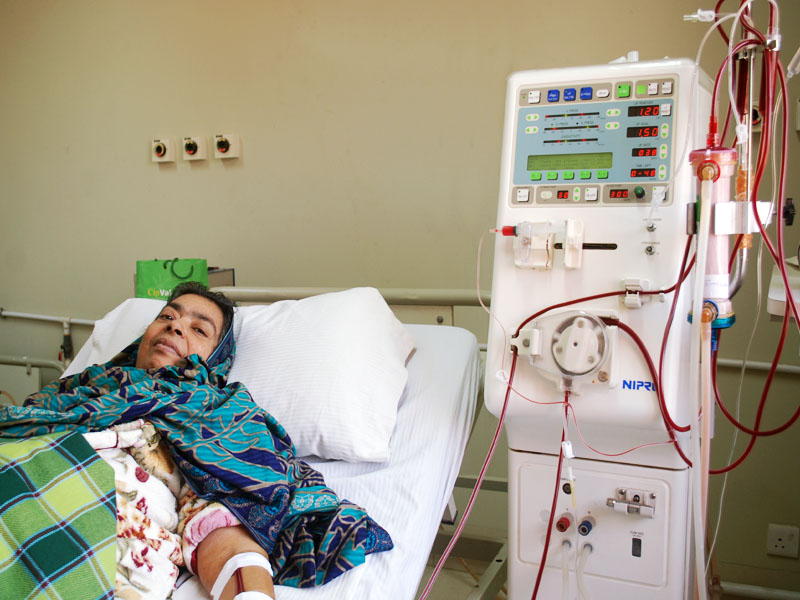
    An American startup based in Lahore has successfully invented Pakistan’s first dialysis machine that would allow kidney patients to receive affordable dialysis treatment at their homes.

    The company has named the machines and it is called “Robo-Kidney,” which will go into mass production after receiving from the healthcare regulators.

    The company has consulted Pakistan’s leading Nephrologists and healthcare professional before making the machine.

    It will not only let the patients get treated at home but will also minimise the risk of contracting hepatitis-C during the traditional dialysis procedure.

    According to the official statement by Byonyks, about 72% of kidney patients in Pakistan get infected with Hepatitis-C that spreads during the conventional dialysis treatment.

    “Robo-Kidney is an affordable and bloodless machine that will allow kidney patients to receive dialysis treatment at their homes”

    The founder of Byonyks, Farrukh Usman

    He added that Robo-Kidney will also ease the burden on national healthcare resources. It will also contribute to Pakistan’s economy through export to international markets.

  • ‘Coronavirus over in Pakistan’: Myth [busted?]

    The nationwide coronavirus lockdown in Pakistan ended on August 10 as the government announced returning to pre-coronavirus life with a few standard operating procedures (SOPs) and social distancing guidelines amid a significant drop in infections and fatalities.

    Previously shut down sectors, including tourism and recreation, food among all other businesses except marriage halls and educational institutions were allowed to re-open and now, despite the passage of nearly two weeks, no prominent increase in COVID-19 cases has been recorded against officials and experts’ predictions in light of Eidul Azha and Independence Day celebrations during which people flouted all guidelines.

    While large gatherings, including religious congregations and family feasts over the Eid weekend, added to the risk of a second wave of the virus in the days to come, a large number of people taking to roads on August 14 to express their love for Pakistan, mistaking the drop in COVID-19 cases for its eradication, did the same. Independence Day was marked by firework displays at midnight in major cities, including Lahore and Karachi, where tens of thousands flooded the roads without face masks or any regard to the SOPs.

    Here is how the pandemic situation turned out from August 1 to August 20 amid the said recklessness of the masses:

    While the country is still at risk owing to the behaviour of the people over Eid and the Independence Day as officials fear it can lead to a sudden spike in COVID-19 cases, some experts believe that herd immunity has been achieved in metropolises like Lahore and Karachi as they were the most affected by the virus when it peaked in June.

    A study conducted in 25 cities shows that almost 11% of Pakistanis have developed protective immunity (antibodies) across the country against COVID-19. The research further says that seropositivity in urban areas is more when compared to rural areas, and a majority of those who came into contact with corona-positive patients are more likely to have developed antibodies.

    While infectious disease experts such as Prof Dr Faisal Mahmood of Aga Khan Hospital say the drop in number of cases is real but the reason that led to it has not yet been ascertained, according to a report by The Telegraph, Pakistan’s young population — two-thirds of its total population is under the age of 30 — can also be a major factor if herd immunity has actually been developed.

    Even though it is too early to be sure about Pakistan’s victory in the battle against COVID-19, the significant drop is a huge achievement. It, however, might not last if people continue flouting social distancing guidelines in the days to come, leading to the second and or even third wave of the pandemic in September.

  • Corona times: What’s next for educational institutes, wedding industry, restaurants and cinemas?

    Corona times: What’s next for educational institutes, wedding industry, restaurants and cinemas?

    The spread of coronavirus in Pakistan has decreased significantly. In June, Pakistan ranked 12th on the list of the countries hit by the COVID-19 pandemic, but within two months, it has improved its ranking with a drop in both the number of daily infections and fatalities.

    Not only the drop but anti-corona efforts of Pakistan’s government which led to it are being praised internationally as president-elect of the United Nations General Assembly (UNGA), Volkan Bozkir, has termed the same a “good example for the world to follow”.

    The decline in COVID-19 cases has been followed by the government allowing to reopen all sectors that had been closed for months, excluding educational institutions and marriage halls. The two are likely to reopen on September 15, after a final review by authorities concerned on September 7. 

    While it’s still difficult to estimate the economic losses Pakistan suffered due to the global pandemic, it can be said that people associated with educational institutions, wedding halls, cinemas and restaurants were more vulnerable amid lockdowns.

    EDUCATIONAL INSTITUTIONS:

    Pakistan’s 317,328 educational institutions have remained closed for the past six months and as a result, more than 40 million students are suffering. Teachers, on the other hand, and other staffers have no source of income. While many have been sacked by private institutions, some private school owners such as Muhammad Danish from Karachi, who had been running the school for the past 14 years, has now been forced to set up a biryani stall at his own school.

    While reopening of the institutions still is to be decided upon, experts believe it will be hard to bounce back from the current situation and that with extra precautions.

    WEDDING INDUSTRY:

    As the second most-affected industry remains wedding, marriage halls have been served a severe blow. According to Punjab Marriage Halls Association President Khalid Idrees, as many as 12,000 marriage halls run the households of over four million staffers and management members in Punjab alone, all of whom have been jobless since March.

    Trends suggest that a number of people are awaiting the new wedding world order to once again resort to huge gatherings or continue shifting towards smaller, simpler functions.

    RESTAURANT SECTOR:

    Meanwhile, as the restaurant sector also remains affected by COVID-19, Arab News reported that 30% to 40% of restaurants in Lahore have shut down permanently.

    Admin of popular food blog Foodies ‘R Us, Asad Sheikh, believes some of the government-issued guidelines for coronavirus prevention are beyond comprehension as the dine-in capacity of restaurants being reduced by 50% would affect sales and ultimately leave owners with no other option but to prefer managing takeaways.

    CINEMAS & THEATRES:

    In the case of another hard-hit industry, cinema and theatre owners are not yet ready to implement social distancing SOPs for coronavirus either and ensuring limited seating capacity.

    While there are 160 cinemas in the country with almost 24,000 seating capacity, reopening to public at the cost of half their audiences would be unprofitable.

  • Lockdown order withdrawn; Punjab returns to ‘pre-coronavirus’ routine with a few exceptions

    The Punjab Primary and Secondary Healthcare Department has allowed resumption of “pre-COVID-19 practices subject to the adoption of social distancing guidelines” as it withdrew the government’s lockdown order.

    According to the notification dated August 9, all sectors barring marriage halls and marquees and educational institutions have been allowed to resume operations from Monday (August 10), with timings and weekly holidays “reverted to pre-COVID-19 practice”.

    According to Dawn, religious congregations will only be held after approval from the administration and will be bound to follow the standard operating procedures laid out by the government. Operators of public transport — that has been allowed to resume function — will also have to ensure that preventive measures are being observed by passengers.

    The notification was issued three days after the federal government announced it was lifting restrictions on the tourism sector, restaurants and public transport, after months of suspension.

    The decisions were made in a meeting of the National Coordination Committee, which was presided over by Prime Minister Imran Khan and attended by representatives of all the provinces. The meeting participants also decided to lift restrictions on railways, airlines and metro buses.

    While the restrictions are being eased as government boasts of having successfully tackled the pandemic, it is worth mentioning that a sudden spike has been recorded in coronavirus infections over the past week. The number of per day fatalities, however, on Sunday dropped to single digits for the first time in over 110 days.