Category: Health

  • Coronavirus in Pakistan: A July-August diary

    Since the beginning of July, there has been a decline in new coronavirus cases and the number of recovered patients has also increased. By the time this report was filed, there were 26,834 active COVID-19 cases in the country.

    While Prime Minister (PM) Imran Khan, as well as members of his team and other experts, repeatedly urged people to follow social distancing guidelines and standard operating procedures (SOPs) on Eidul Azha in order to avoid a June-like surge in coronavirus cases in the days to come, people were seen flaunting the same not only over the Eid weekend but also during rallies protesting illegal Indian annexation of held Kashmir on August 5.

    It was reported by Gulf News that the upper class of Karachi completely ignored Sindh government directives by sacrificing animals wherever they wished to despite 500 sites being designated by the provincial administration for the purpose. “Residents in the most expensive and posh neighbourhoods of the city were no exception… officials didn’t make any effort to ensure the people followed the law,” the report said.

    Meanwhile, the Punjab government on August 3 announced to lift the smart lockdown two days ahead of the scheduled date. The government announced to lift all restrictions on the third day of Eid because of a “significant” reduction in coronavirus cases.

    While Punjab Chief Minister (CM) Usman Buzdar expressed satisfaction over the observance of SOPs on Eidul Azha, Federal Minister for Planning, Development and Special Initiatives Asad Umar announced on Thursday that restrictions on the hospitality and recreational sectors, put in place nearly five months ago to curb the spread of the coronavirus, would be lifted by August 10.

    Dine-in restaurants, parks, cinemas, tourist spots and salons would be re-opened while marriage halls would remain closed at least until September 15 and the decision to re-open educational institutes would be looked into during the first week of September, he said.

    However, just a day after the announcement, Punjab witnessed a sudden increase in the number of new coronavirus cases. The everyday cases that had on an average dropped to below 100 during the past one month after reaching a new high in June, once again increased to around 300.

    Although some medical experts were not perturbed and declared it a routine surge, others believed that it might be a signal for the beginning of the second wave of the outbreak. Punjab reported 277 new confirmed cases of COVID-19 besides five deaths during the last 24 hours against 235 a day earlier, Dawn reported.

    Besides the lifting of lockdown restrictions for the economy’s sake in July, the surge is also being attributed to the fact that next to none social distancing guidelines were followed during the preparations and hosting of seminars and rallies to mark ‘Youme Istehsal [Exploitation Day]’ on the first anniversary of Narendra Modi-led India’s annexation of occupied Kashmir.

    Even though the coronavirus situation in Pakistan is getting better on paper, how the pandemic turns out over the next few days is subject to the behaviour of the masses and the policies of the government.
  • The Current Data: Province-wise breakdown of COVID-19 and how the numbers have dropped

    The Current Data: Province-wise breakdown of COVID-19 and how the numbers have dropped

    Before stepping down as the special assistant to Prime Minister (PM) Imran Khan on health, Dr Zafar Mirza, who spearheaded Pakistan’s fight against coronavirus, said that all estimates made by international organisations regarding COVID-19 in Pakistan proved to be wrong and the world was acknowledging the government’s efforts as well as the decline in infections in Pakistan. 

    On July 27, he shared the “good news” that the country had recorded its lowest number of deaths due to COVID-19 within the past three months when the virus is said to have peaked. On the same day, the premier said Pakistan was “one of the few countries that had overcome the coronavirus challenge” and stressed the need for people to continue taking precautionary measures over Eid holidays and during Muharram.

    By the filing of this report, the total number of coronavirus cases in the country stood at 276,287. The deadly virus had claimed 5,892 lives while the number of recovered COVID-19 patients stood at 244,883.

    The number of COVID-19 cases reported in worst-hit Sindh is 119,398 while the death toll from the virus is 2,172. Across the province, 108,989 patients have recovered and a total number of 720,230 tests have been conducted.

    Meanwhile, the number of cases in Pakistan’s most populous province, Punjab, which had briefly beaten Sindh to clinch the “worst-hit” tag from late April to late May, is 92,452. As many as 2,133 people have been so far died due to COVID-19 in the province while 82,512 people have recovered. The number of tests conducted in the province is 697,989.

    There are 33,724 patients of COVID-19 in Khyber Pakhtunkhwa (KP), of which 1,186 have lost their lives and 27,724 have recovered. A total of 208,869 people were tested.

    Islamabad, the federal capital, remains the fourth worst-hit territory where the virus was detected in 14,963 people of the total 177,467 who underwent COVID-19 testing. Out of the total number of patients, 165 people died and 12,377 recovered.

    The number of coronavirus cases in Balochistan is 11,654 and the death toll stands at 136. The number of recoveries is 10,080 while the number of tests is 56,919.

    Azad Jammu & Kashmir (AJK) has 2,055 cases, 50 people have died there and 1,543 people have recovered. Meanwhile, the number of patients, who tested positive of 17,561 total tests conducted in Gilgit, is 2,042. As many as 1,658 have recovered and at least 50 have lost their lives.

    While the government is boasting about its smart lockdown policy that it says “has led to the significant drop in coronavirus cases with little impact on the economy”, it is worth mentioning that experts believe lower testing besides a massive shift in behaviours could also be the reason behind the drop. They, however, fear a second and deadlier wave that can wreak havoc if people flout social distancing guidelines during or after Eid.

  • 103yo Pakistani becomes one of world’s oldest coronavirus survivors

    103yo Pakistani becomes one of world’s oldest coronavirus survivors

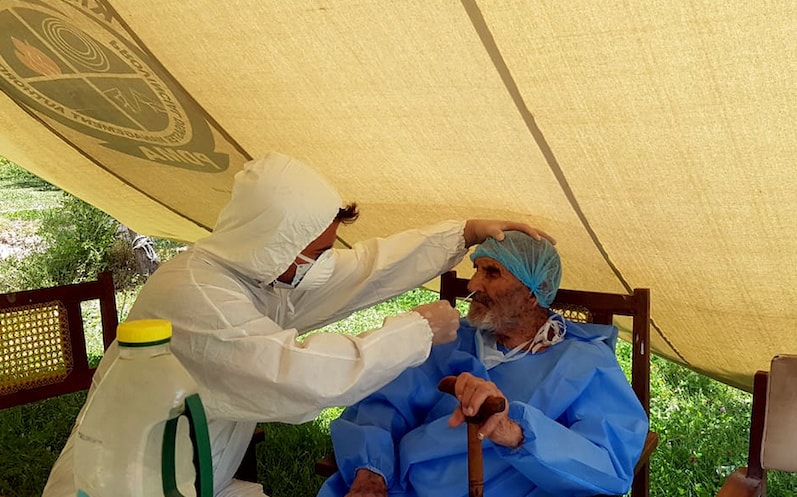
    A 103-year-old man has recovered from COVID-19 in Pakistan to become one of the oldest survivors of the disease in the world, beating the odds in a country with a weak healthcare system, his relatives and doctors said.

    Aziz Abdul Alim, a resident of a village in the mountainous northern district of Chitral, was released last week from an emergency response centre after testing positive in early July.

    “We were worried for him given his age, but he wasn’t worried at all,” Alim’s son Sohail Ahmed told Reuters on the phone from his village, close to the border with China and Afghanistan.

    Ahmed quoted his father as saying that he had been through a lot in life and the coronavirus did not scare him. He did however, not like being in isolation.

    READ: Pakistan’s secret to ‘flattening the curve’

    A carpenter until his 70s, Alim has outlived three wives and nine sons and daughters, said Ahmed, who is himself in his 50s, adding that his father had separated from his fourth wife and is currently married to his fifth.

    Alim also had to be provided with moral and psychological support during his isolation and treatment, Dr Sardar Nawaz, a senior medical officer at the Aga Khan Health Service emergency centre told Reuters on Friday.

    The makeshift centre was set up in a girls’ hostel just weeks before Alim was brought in and is the only one equipped to deal with COVID-19 patients for miles.

    Pakistan has registered more than 270,000 cases of the disease and 5,778 deaths. While the number of people testing positive has dropped over the last month, government officials fear there could be another rise during the Eidul Azha holidays and Muharram.

  • Coronavirus: Pakistan’s secret to ‘flattening the curve’

    According to a report published by The Washington Post on July 19, “Pakistan has flattened its coronavirus curve” as the past several days have seen fewer than 1,500 cases and 40 deaths on an average.

    So far, 5,677 people have succumbed to COVID-19 in Pakistan, which is 2.1% of the total infected population while almost 79% (210,468) patients have recovered.

    The initial estimate of the World Health Organization (WHO) was that the infection fatality rate (IFR) for COVID-19 would be 3.4%, which means that for every hundred cases at three or four people would lose their lives. But as per the Centre for Disease Control and Prevention, the IFR has turned out to be much lower — at a mere 0.65%

    READ: Did COVID-19 peak in Pakistan in June?

    Pakistan’s total number of deaths from COVID-19 in June was 2,835. Since the second week of June, an average of 80 to 100 people had been dying on a daily basis and the same trend continued till June 30. The highest single-day death toll was 153 on June 19.

    So far in July, the highest number of deaths was recorded on the fourth day while the daily death toll within the first week stood at around 80. The trend came down to 60 to 70 deaths a day in the second week and the latest trend suggests up to 30 or 40 COVID-19 fatalities a day.

    Punjab Health Minister Dr Yasmin Rashid says that due to the strict quarantine policy of the provincial government, the virus has not spread as expected. She also says most fatalities are of those who are older than 60 years of age or are suffering from certain other diseases.

    READ: Is coronavirus ending in Pakistan?

    The rate of COVID-19 infections and deaths seems to have dropped significantly in Pakistan but it is an open secret that the number of cases and deaths is also being grossly misreported.

    “I am aware of a few cases in which patients with COVID-19 symptoms were never taken to hospitals and in case of death were laid to rest at large funeral gatherings,” said Love for Data Chief Executive Officer (CEO) Syed Tajamul Hussain. He added that the country hadn’t had a mortality census in a while and it was highly likely that cases were being under-reported amid limited testing capacity.

  • Did COVID-19 peak in Pakistan in June?

    Special Assistant to the Prime Minister (PM) on Health Dr Zafar Mirza on July 1 said that the number of coronavirus cases was rapidly increasing by mid-June but the country was now in a better position than it was two weeks ago in the continuing battle against COVID-19.

    “The ratio of confirmed infections has gone down from 22% to 15% while the number of suspected cases has also decreased,” the premier’s aide said in an interview, adding that the rate of fatalities was also lower than before.

    READ: Govt is grossly under-reporting coronavirus deaths and infections: PM’s task force head

    Dr Mirza maintained that the government was to now determine over the next couple of days if Pakistan had passed the peak of the COVID-19 outbreak or was still only heading towards it. “If the situation remains stable in the coming days and the number of coronavirus cases continues to decrease, it would be good news for us.”    

    While the number of coronavirus cases in Pakistan is steadily declining amid selective lockdowns across the country and an increase in the number of recovered patients, it is not necessarily due to a decline in the rate of infections and an alleged lower testing rate could be the actual reason.

    However, according to official numbers, in June, a total of 140,726 confirmed cases of coronavirus were reported in Pakistan with at least 2,804 deaths.

    The second week of the said month proved to be the worst in terms of infections as 40,604 were reported. The third week was the most deadly as at least 856 people lost their lives to the virus.

    The last week of June saw 24,324 infections while the number of fatalities stood at 591 — 40 more than those recorded in the first week of the same month.

    It merits a mention that while PM Imran Khan and some members of his team, including senior doctors and other health experts, seem to believe that the virus peaked in Pakistan, especially in Punjab, during the second week of June and the curve has now started to flatten, Pakistan on Friday overtook Italy to become the 11th worst affected country from COVID-19.

  • Low testing rate bigger a reason for drop in coronavirus cases than govt efforts

    Low testing rate bigger a reason for drop in coronavirus cases than govt efforts

    Federal Minister for Planning, Development, Reforms and Special Initiatives Asad Umar has said that the coronavirus situation in the country is improving as the number of COVID-19 cases “decrease owing to effective measures taken by the government and a majority of people following social distancing guidelines”.

    But the statement the minister made while addressing a press conference at the National Command and Operation Centre (NCOC) last Friday, has been contradicted by the government itself as its data suggests that COVID-19 cases have declined over the past one week because of low testing rate.

    READ: Govt is grossly under-reporting coronavirus deaths and infections: PM’s task force head

    As many as 5,000 to 6,000 cases were being reported on a daily basis in Pakistan by mid-June, which had prompted the government to impose selective lockdowns in different parts of the country, especially Punjab and Sindh, and the number of daily infections has now dropped to 3,000 to 4,000.

    While data from June 15 to June 29 shows that the number of cases reported in the country after June 19 has comparatively been lower, contrary to Umar’s claims, a major reason behind the drop has been that the number of tests performed to diagnose COVID-19 across the country also dropped significantly during the said period.

    The rate of testing came down from 31,000 to 20,000 while the target set by the government to achieve in July was the enhancement of Pakistan’s testing capacity to 100,000.

    LIVE BLOG: COVID-19 pandemic

    If you look at the statistics, it is clear that Pakistan has conducted 1,327,638 (1.3 million) tests so far, while according to Worldometers, Pakistan ranks 32nd out of 49 Asian countries in terms of testing capacity. Countries including Iraq, Bhutan, Iran and Maldives have a higher testing capacity than that of Pakistan.

    According to Punjab health officials, the government is continuing to enhance testing capacity in the country but the testing rate has dropped because patients are less exposed to the virus amid lockdowns.

    “A test is conducted when a suspected patient comes forward after complaining of symptoms or as part of a random testing drive in hotspots,” they said, adding that both instances had seen a significant drop amid lockdown restrictions

  • Reports saying ‘Pakistan exported COVID-19’ upset Imran’s aide

    Reports saying ‘Pakistan exported COVID-19’ upset Imran’s aide

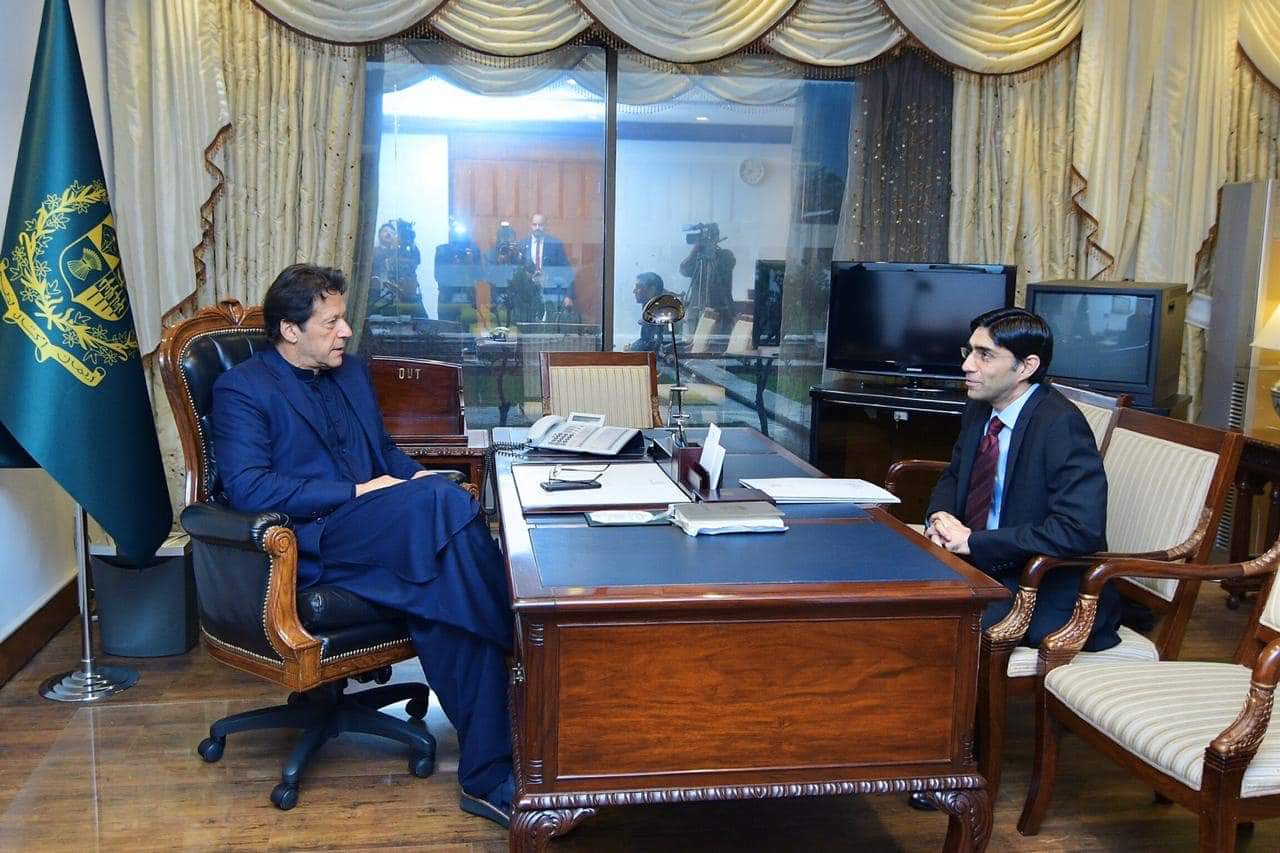
    Dr Moeed Yusuf, special assistant to the prime minister (SAPM) on national security, has denied the impression that Pakistan has been a source of the coronavirus in other countries, saying that the country has “been the most responsible” in the world.

    Last week, the United Arab Emirates (UAE) temporarily stopped receiving passengers on flights coming from Pakistan. The suspension, the UAE civil aviation authority said, will last until a special laboratory to conduct coronavirus tests is established. The decision was taken after as many as 30 passengers aboard an Emirates flight tested positive for coronavirus.

    “Over the past three months, Pakistan conducted tests and quarantined several people so that they won’t be the source of spread. No one appreciated us for that […] We will not allow Pakistan to be singled out,” Yusuf said while addressing a press conference in Islamabad on Thursday.

    He said that Pakistan’s government had also contacted the British High Commission and the latter’s officials had assured that this was not the position of the United Kingdom’s government.

    Yusuf told reporters that only 30 people who had travelled from Pakistan had tested positive. “This [impression to ‘export’ coronavirus] is absolutely false,” he said.

    Yusuf also urged people to avoid unnecessary travel as the government “cannot guarantee that the airspace will remain open three weeks from now”.

    He said that Pakistan has been “the most responsible among all developing countries in repatriating people as well as sending them away”.

    According to him, any passenger who is showing symptoms will not be allowed to leave the country. The SAPM told people to follow the guidelines set by the airlines they are travelling from and their destination countries as it would be a source of embarrassment for the country if the rules were violated.

  • The Current data: Are Lahoris actually ‘weird creatures’ not taking coronavirus seriously?

    The Current data: Are Lahoris actually ‘weird creatures’ not taking coronavirus seriously?

    Punjab government has finally once again sealed worst-hit areas of Lahore for at least two weeks despite which the number of coronavirus infections in Punjab rose to 71,987 on Friday.

    The development came days after Punjab Health Minister Dr Yasmin Rashid slammed the people of Lahore for not taking precautionary measures against COVID-19 and held them responsible for the surge in the number of infections in the country’s most populous province.

    “Lahoris are weird creatures. For them, everything is a joke. They are so ignorant… they do not listen and don’t care. No other nation is more ignorant and stupid than Pakistanis,” she had said.

    WATCH VIDEO:

    Seven COVID-19-affected areas have been sealed in Lahore over the past week. These include Gulberg, Model Town, Faisal Town, Garden Town, Defence Housing Authority (DHA), Gulshane Ravi and the Walled City.

    A complete ban has been imposed on transportation and businesses in the sealed areas where 3,606 cases have so far been reported. The actual number of cases is likely to be way more than official figures that are as follows:

    DHAGulbergModel TownFaisal TownGarden TownGulshan-e- RaviWalled city
    1,403736659188238212170

    Government guidelines were issued before re-opening business ahead of Eidul Fitr, under which shopkeepers were told not to let people gather at their stores, social distancing was stressed, availability of sanitisers for general public’s use was to be ensured and wearing gloves with masks was made necessary in most spaces.

    However, none of the SOPs [standard operating procedures] were followed by most Lahoris, resulting in the provincial capital of Punjab becoming the epicenter of COVID-19 in the province.

    At present, there are 71,191 coronavirus cases in Punjab while 35,582 cases (about 49.98 per cent of the total number of infections) are in Lahore alone with the local spread in the city standing at 69.4 per cent.

    Despite a lockdown being put in place again, government SOPs are still not being followed by people as many believe that coronavirus “does not even exist”, and throng to markets, destroying social distancing among other guidelines.

    A look at stats of police actions against violators of SOPs amid the government’s “smart” lockdown, also proves the same.

    According to Lahore police stats from June 16 to June 24, almost 238,400 citizens violating coronavirus guidelines were warned and sent back home. As many as 8,251 motorcycles and vehicles were confiscated while 4,599 citizens submitted surety bonds for not unnecessarily leave their homes again.

    During the ongoing lockdown, 8,927 cases have been registered and 1,888 shops have also been sealed for violating SOPs in Lahore.

  • Patient dies after ‘family unplugs ventilator to turn on air cooler’

    Patient dies after ‘family unplugs ventilator to turn on air cooler’

    A 40-year-old man died at a hospital after his family members allegedly unplugged the ventilator he was on to plug in an air cooler.

    Hospital authorities said a three-member committee will probe the incident.

    According to reports, the patient, who was suspected to be suffering from COVID-19, was brought to the ICU of the government-run hospital in the Kota city of India’s Rajasthan state on June 13. His test report, however, came negative later.

    The man was shifted to an isolation ward on June 15 as a safety measure after another patient in the ICU tested positive for the disease.

    Since it was very hot in the isolation ward, his family members bought an air cooler the same day. On finding no socket for the cooler, they allegedly unplugged the ventilator.

    They immediately informed doctors and medical staff, who administered CPR upon the patient, but he died.

    Hospital Superintendent Dr Naveen Saxena said the committee comprising the deputy superintendent, nursing superintendent and chief medical officer on duty will probe the incident and submit a report.

    The committee has recorded statements of medical staff in the isolation ward but the family members of the deceased patient are not responding to the panel, he alleged.

    The family members allegedly did not seek permission to plug in the cooler and when the patient died, they “misbehaved” with the medical staff and the resident doctor on duty, other hospital authorities said.

  • Projection: August likely to be the worst month for Pakistan with one million coronavirus cases

    Projection: August likely to be the worst month for Pakistan with one million coronavirus cases

    The effects of poorly managed or no lockdowns at all are raising their ugly heads as Pakistanis has reached the 14th position in the global ranking of countries most affected by the new coronavirus — COVID-19 — with 165,062 cases, while it now ranks 6th among nations with the most number of active cases around the globe, as per Worldometers.

    The World Health Organization (WHO) earlier this year warned that South Asia could become yet another new epicenter of the pandemic, however, despite the warning and rapidly increasing number of coronavirus cases, Prime Minister (PM) Imran Khan has only announced the imposition of “smart lockdowns” with only certain areas in worst-hit cities being put under restrictions.

    The decision was taken keeping in view the consequent struggles of the poor, whom the government believes might not be able to survive a complete lockdown and its effects on the already deteriorating economic conditions.

    While experts, including Dr Attaur Rahman of PM’s task force, believe the government has already failed to deal with the pandemic and is grossly under-reporting both COVID-19 fatalities and infections, the virus is yet to peak — by the end of July or August –, data suggests.

    An analysis by The Current showed that before lockdown restrictions were eased in Pakistan ahead of Eidul Fitr, the highest number of confirmed coronavirus cases stood at 24,648 during the first week of May. The figure then crawled up to 122,574 by June 11, while the number of coronavirus cases as of this moment stands past 165,000 with thousands of cases being reported every day despite a low testing capacity.

    It is estimated that the actual number of infections is very high with Lahore alone having more than 2 million cases by now.

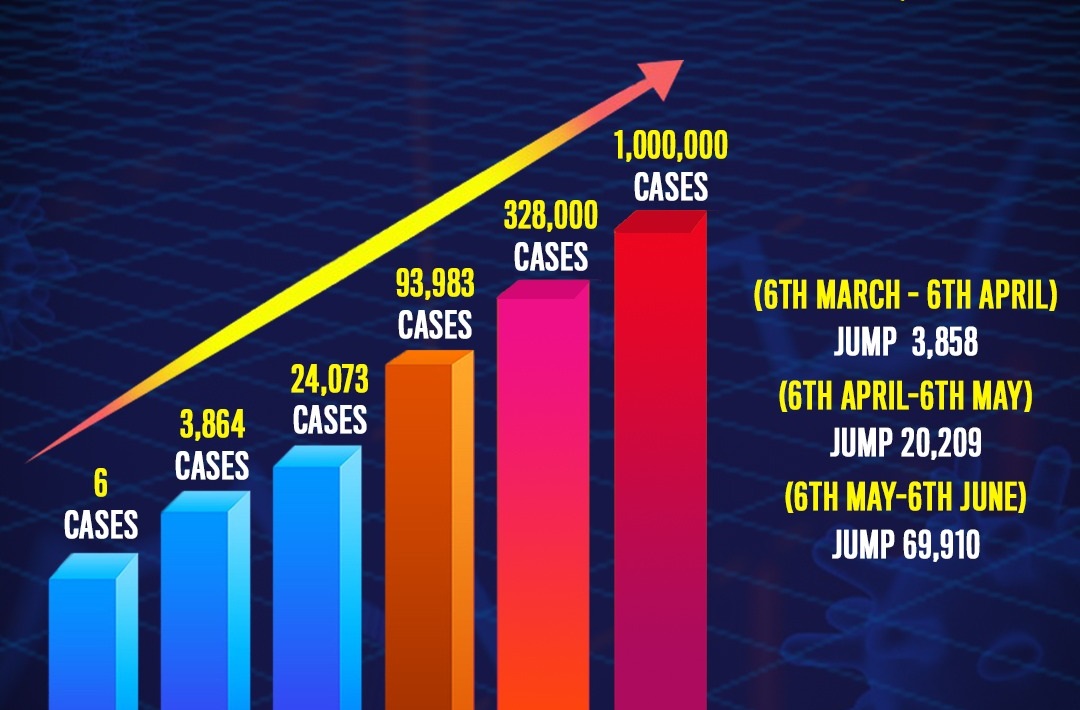
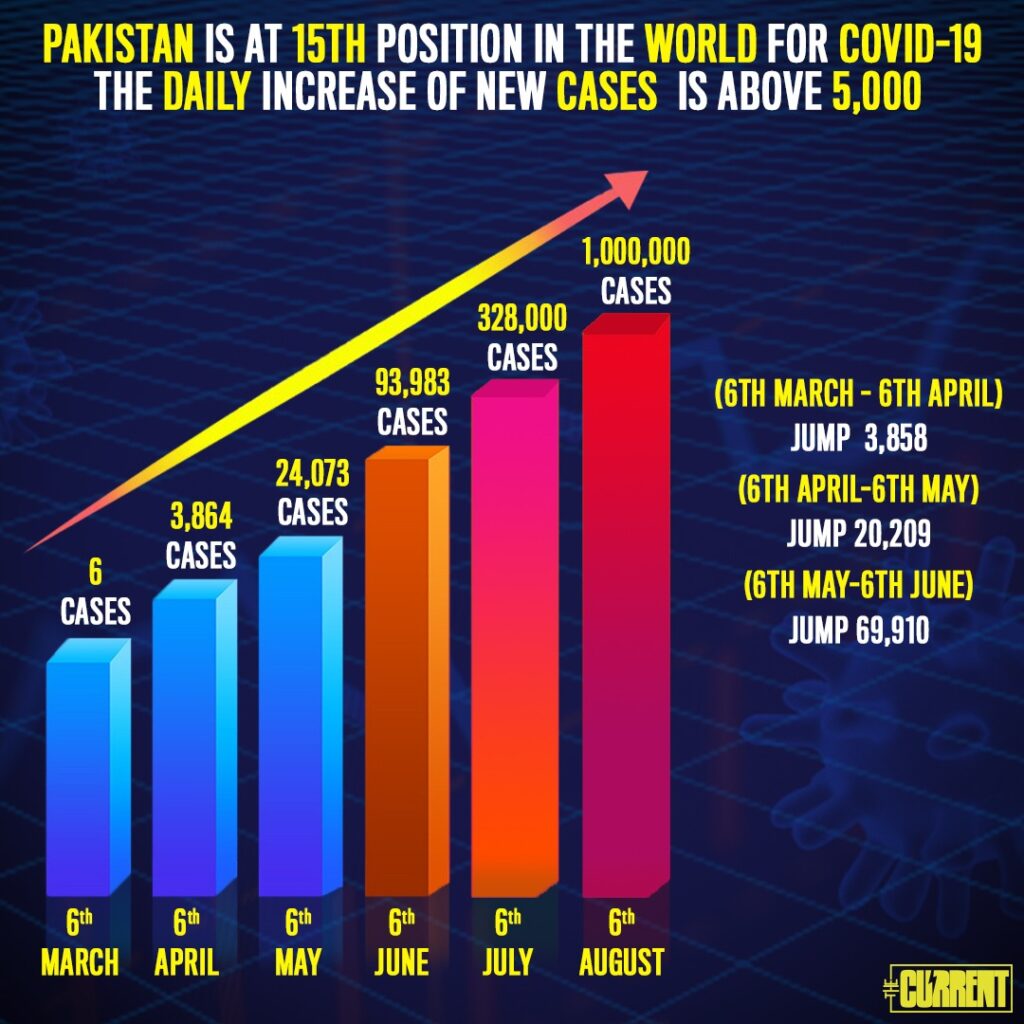
    Pakistan has experienced its largest month-wise jump since the pandemic began, with 69,910 cases being reported between May 6 to June 6. Earlier, 3,858 COVID-19 cases were recorded between March 6 and April 6 while 20,209 were reported between April 6 to May 6.

    According to projections, the figure is likely to reach a million by August 6 if strict lockdowns aren’t imposed and social distancing guidelines are not followed.

    A comparison with the best and worst managed lockdowns from across the globe also puts things into perspective.

    CountryOutcome
      New Zealand
    Prime Minister Jacinda Ardern announced a strict lockdown on March 25 when 100 people had tested positive and no deaths had been reported.  After a 76-day lockdown, New Zealand lifted all restrictions, declaring the country ‘corona free’ but borders remain closed. No new case for more than two weeks has been reported in the country except three suspected ones.
    Wuhan
    The capital of Hubei province of China was the origin of the deadly virus, where 11 million residents were locked up at their homes since January.After an effective 77-day lockdown, Hubei reports zero COVID-19 infections and the country has reported zero coronavirus deaths since January.        

    On the other hand:

    CountryOutcome
    India
    On March 25, India imposed a countrywide lockdown that was called a curfew by PM Narendra Modi. The development had come when 519 confirmed cases and 10 deaths had been reported across India.  A bit over two months later, with India easing lockdowns and shopping malls, restaurants as well as temples being re-opened, it has become the country with 4th highest number of coronavirus cases in the world.
    Iran
    Iran shut schools, postponed events and discouraged travel since the country reported its first COVID-19 death in February. Despite these measures, the number of deaths and infections continued to grow until a countrywide lockdown was imposed in March.  With the lockdown being eased from mid-April to May 26 when everything was reopened, including shopping malls, parks, religious shrines, restaurants and historical sites, the number of deaths has jumped to nearly 10,000 with over 200,000 infections.

    By the time this report was filed, Sindh topped the chart with most infections in Pakistan (62,269), with Punjab trailing behind at 61,678, Khyber Pakhtunkhwa (KP) at 20,182, Islamabad at 9,941, Balochistan 8,998 and Gilgit-Baltistan and Azad Jammu Kashmir (AJK) at 1,225 and 769 infections, respectively.