Category: Tech

  • Grok under fire for digitally removing women’s clothing without their consent

    Grok under fire for digitally removing women’s clothing without their consent

    A woman has told BBC that she felt “dehumanised and reduced into a sexual stereotype” after Elon Musk’s AI assistant, Grok, was used to digitally remove her clothing.

    As per the details, BBC has reviewed several incidents on social media platform X where people instructed Grok to strip women in pictures, put them in bikinis without their permission, or generate sexualised scenarios. 

    XAI, the company behind Grok, did not respond to requests for comment beyond an automatically generated reply accusing that “legacy media lies”.

    Freelance journalist and commentator Samantha Smith described her experience after a post featuring her image was altered. She said other users who had faced similar violations commented, and some even prompted Grok to produce more images of her.

    “Women are not consenting to this,” she said. “While it wasn’t actually me in a state of undress, it looked like me, and it felt as violating as if someone had posted a nude or bikini picture of me.”

    A Home office spokesperson said legislation is underway to ban “nudification” tools, warning that anyone supplying such technology would “face a prison sentence and substantial fines” under a new criminal offence.

    Authorities said technology companies must “assess the risk” of users in the UK viewing illegal content on their platforms, but did not confirm whether it is investigating X or Grok specifically for AI-generated images.

    Grok, a free AI assistant with some paid premium features, responds to X users’ prompts when tagged in posts.

    While commonly used to provide reactions or context, its AI image editing feature allows users to alter uploaded images.

    The tool has faced criticism for permitting the creation of sexualised and nude content. It was previously accused of generating a sexually explicit clip of singer Taylor Swift.

    Clare McGlynn, a law professor at Durham University, said X and Grok “could prevent these forms of abuse if they wanted to” and added the companies “appear to enjoy impunity”. 

    “The platform has been allowing the creation and distribution of these images for months without taking any action, and we have yet to see any regulatory challenge,” she said.

    XAI’s own acceptable use policy forbids “depicting likenesses of persons in a pornographic manner”.


    In a statement to BBC, the authorities reiterated that it was illegal to “create or share non-consensual intimate images or child sexual abuse material” and clarified that sexual deepfakes produced with AI fall under this definition.


  • Pakistan to auction 600MHz spectrum, 5G services to follow

    Pakistan to auction 600MHz spectrum, 5G services to follow

    Federal Minister for Information Technology (IT) and Telecommunications Shaza Fatima Khawaja has announced that the government would auction the 600-megahertz (MHz) spectrum next month, ultimately introducing 5G services and faster internet speeds.

    Referring to Pakistan as a “spectrum-starved country”, she said that the 600MHz spectrum auction procedure had been cleared by the Economic Coordination Committee (ECC) and the auction is expected to take place within the next two months.

    “The spectrum available for our telecom industry is extremely limited,” the minister said, adding that telecom operators were currently providing services using just 274MHz.

    “We are a country of 240 million people with only 274MHz of spectrum,” she said and compared Pakistan’s spectrum availability to that of other nations in the region.

    She noted that Bangladesh, with about two-thirds of Pakistan’s population, provides 600MHz.

    The range of radio frequencies utilised to send wireless signals for radio, television, cell phones and internet services is referred to as spectrum. Certain frequency bands within this spectrum are used by mobile technology, such as 3G, 4G and 5G. While Bangladesh, India, Bhutan, the Maldives and Sri Lanka are among the South Asian nations that have introduced 5G services, Pakistan has not been able to do so yet.

    The minister said Pakistan’s spectrum availability was the lowest in the region due to the absence of major spectrum auctions over the past several years. She said the upcoming auction would support improvements in existing services and pave the way for new technology.

    “It will not only improve our 3G and 4G services, but also introduce 5G in Pakistan for the first time,” she said.

    Internet connectivity, according to Khawaja, should be seen as “critical infrastructure” just like highways were in the past.

    She said internet plays a role in social sector development, economic policymaking, and national and personal security. “We cannot advance without this degree of connectivity.” 

    In order to boost economic activity and generate job prospects, she continued, connection should be viewed as an “enabling tool”.

    Khawaja said that the government was trying to make sure the auction was completed by the end of January or the beginning of February.

    The minister linked the auction to the government’s digitisation agenda under the Digital Nation Pakistan Act, 2025, saying internet access was central to these efforts.

  • Pakistan’s first computer chip plant to be set up in Faisalabad

    Pakistan’s first computer chip plant to be set up in Faisalabad

    Pakistan’s first-ever computer chip manufacturing unit will be established in Faisalabad, with the Punjab government also allocating 50 acres of land for a state-of-the-art expo centre in the M-3 Industrial Estate, Provincial Minister for Industries, Commerce and Investment Chaudhary Shafay Hussain announced.

    According to Hussain, the Punjab government has made important choices to expedite the colonisation of the Allama Iqbal and M-3 industrial estates.

    He said a community centre would be built for foreign workers, alongside completion of boundary walls and the establishment of a dedicated monitoring cell in both estates.

    He noted that similar actions are being taken to fully develop industrial estates throughout the province and that efforts are underway to give better banking and commercial facilities to industrial units operating in these zones.

    Speaking about industries related to agriculture, the minister stated that the government has started a program to increase cotton production, with research and development concentrated on producing high-yield, disease-resistant seeds.

    During a briefing on the Small Industrial Estate in Faisalabad, Hussain stated that interest-free loans are available via the Asan Karobar Scheme and that infrastructure-related concerns are being addressed. 

    Additionally, he declared that in 2026, three women’s training facilities would-be built-in Gujrat, Layyah, and Sahiwal; the second phase of the facility would-be built-in Faisalabad. 

    He further revealed that Faisalabad and Shymkent, a major industrial city in Kazakhstan, are being declared twin cities, a move he said would open new avenues of industrial and trade cooperation.

    Speaking on the occasion, FCCI President Farooq Yousaf Sheikh said the pace of colonisation at the M-3 and Allama Iqbal industrial estates had improved, but warned that a growing trust deficit between government institutions and the private sector was hurting exports. 

    He alleged that as many as 32 departments were harassing industrial units, adding that containers cleared by customs officials were still being stopped en route to ports.

    Sheikh also highlighted the sharp rise in production costs due to soaring electricity and gas prices, and said delays in refunds now stretching to 90 days instead of the earlier 15 had triggered a liquidity crunch for exporters. 

    He said exports could be pushed to $100 billion if a business-friendly environment and consistent policies were ensured.

    FCCI Vice President Engr Asim Munir, along with executive members and former office-bearers, participated in the question-and-answer session.

  • Unable to verify your fingerprints with NADRA? Here’s how you can use facial recognition instead

    Unable to verify your fingerprints with NADRA? Here’s how you can use facial recognition instead

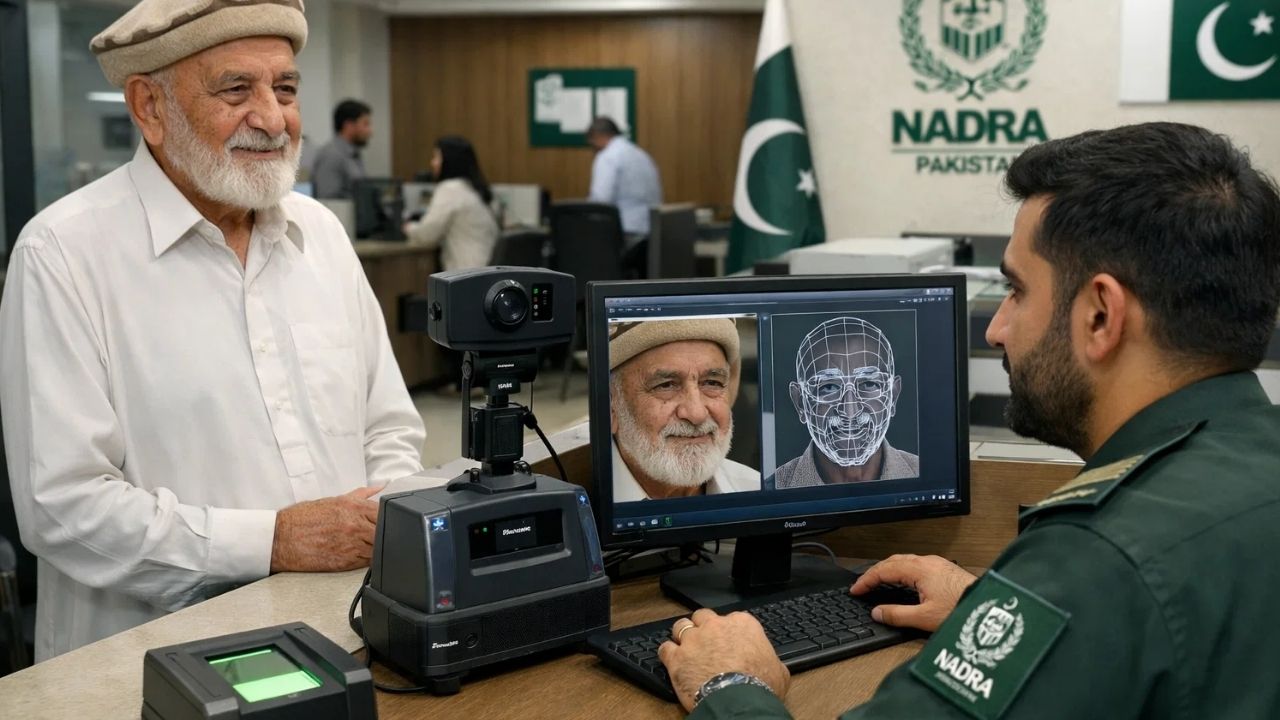
    National Database and Registration Authority (NADRA) has introduced a new facial recognition based biometric verification system to help citizens who face difficulties with fingerprint verification due to old age or medical conditions.

    Despite facilitation policies by the State Bank of Pakistan (SBP) and the Pakistan Telecommunication Authority (PTA), many people, especially senior citizens, struggle to verify their fingerprints when visiting banks, telecom franchises, housing societies or during property transfers.

    In several cases, poor quality fingerprint machines at service points also cause repeated verification failures. 

    To address this issue, the federal government has directed NADRA to introduce an alternative biometric solution, and amended the National Identity Card Rules to expand the definition of biometrics.

    Under new rules, facial recognition and iris scans now hold legal recognition as valid biometric identifiers.

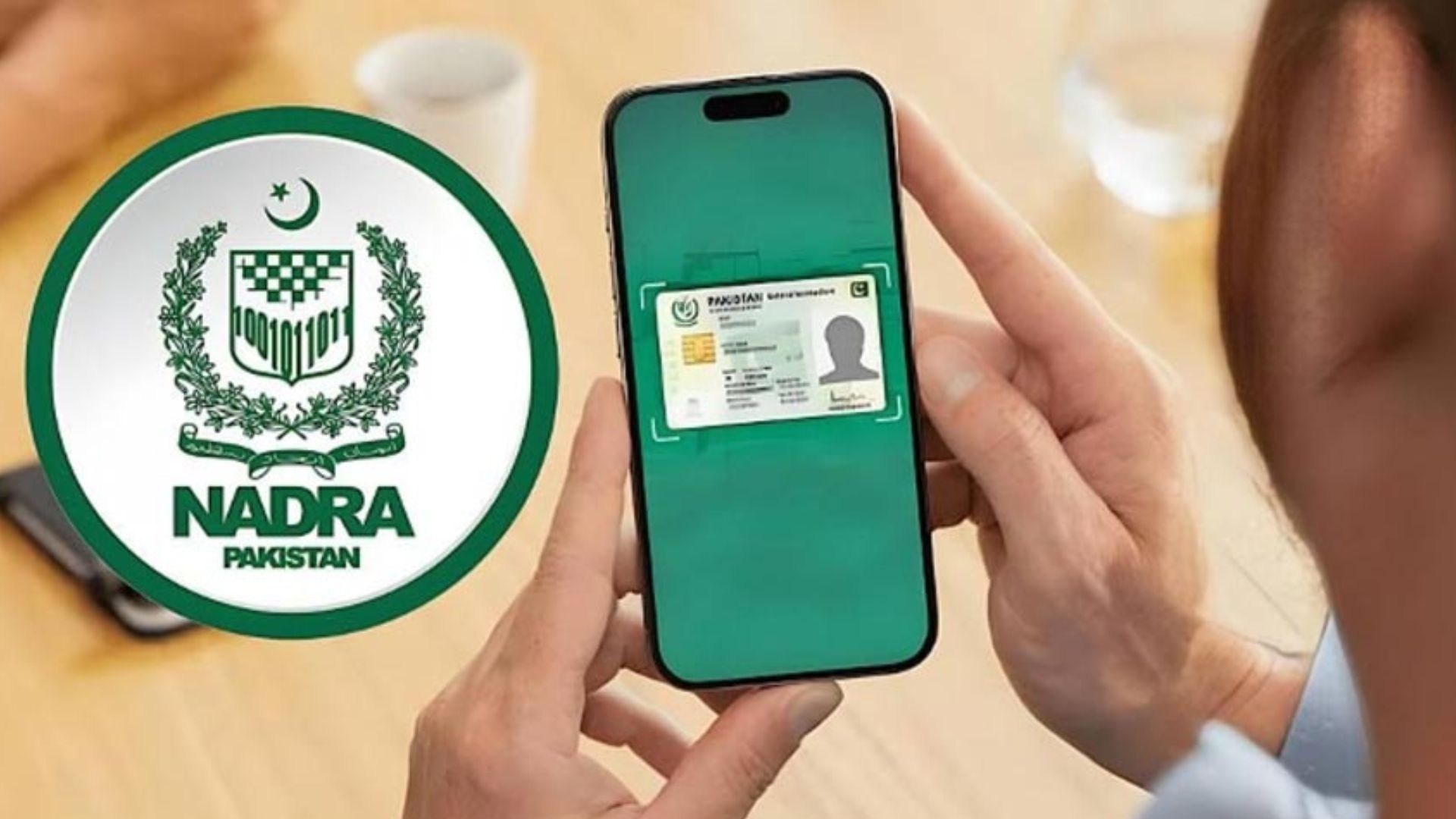
    Based on this legal change, NADRA has rolled out technical upgrades that allow biometric verification through facial recognition and contactless fingerprints. The system already works at NADRA Registration Centres and on the Pak ID mobile application for services under NADRA’s control.

    While authorities are currently using it for Islamabad registered vehicle transfers and online passport applications, NADRA also plans to issue proof of life certificates for federal pensioners under this system in the near future.

    From January 20, NADRA will start issuing facial recognition based biometric verification certificates at all its registration centres for citizens whose fingerprints cannot be verified. Any citizen can obtain this certificate from a NADRA Registration Centre by paying a fee of Rs20.

    The process works in a simple way. If fingerprint verification fails at a bank or any other institution, the citizen will visit the nearest NADRA centre. NADRA staff will take a fresh photograph and match it with the photo already stored in NADRA’s database. Once verification is successful, NADRA will issue a certificate that includes the citizen’s recent photo, the photo on record, CNIC number, name, father’s name, purpose of verification, a unique tracking ID and a QR code. The certificate will remain valid for seven days.

    The citizen will submit this certificate to the institution concerned, which can verify it online through NADRA and keep it as part of its records. 

    In the future, NADRA will also offer this service through e-Sahulat franchises. After the formal launch of Digital ID, citizens will be able to access the facility directly through the Pak ID mobile application for all services.

    NADRA has confirmed that it is fully ready to implement the system. However, the authority has asked regulators, government departments and private institutions to upgrade their software and hardware to support facial recognition verification.

    In later stages, service points will need to install cameras or integrate them into existing biometric machines.

    If citizens face any issues with the availability of this service after January 20, they can file complaints with the relevant institution.

  • Registered users responsible for SIM misuse, PTA warns

    Registered users responsible for SIM misuse, PTA warns

    The Pakistan Telecommunication Authority (PTA) has reminded telecom consumers that all SIM cards must be registered in the user’s own name and used in line with applicable regulations.

    In a statement, PTA urged consumers to ensure responsible use of SIMs and telecom services, warning that using a SIM registered in another person’s name is a violation of the rules. 


    The authority said that responsibility for any misuse rests solely with the individual in whose name the SIM is registered.

    “The misuse of any SIM shall be the sole responsibility of the registered user,” the PTA said, adding that consumers must ensure their SIMs and mobile connections are used responsibly at all times.

    The authority stated that registered users will be held individually accountable for all calls, messages, and data usage made through their SIMs or mobile devices. 

    It further advised consumers to comply with all relevant laws and regulations, cautioning that violations may lead to enforcement action.

    PTA also called on telecom consumers to adopt responsible conduct and contribute to maintaining the security and reliability of Pakistan’s telecommunications system. According to the statement, public cooperation is necessary to prevent the misuse of telecom services and to ensure compliance with regulatory requirements.

    Earlier, the PTA had warned citizens against purchasing free SIM cards from unauthorized sources. The authority issued a warning about what it described as an evolving scam that poses risks to citizens’ biometric data.

    According to the PTA, scammers obtain fingerprints, thumb impressions, and other personal information by luring individuals with offers of free SIM cards or fake financial assistance. 


    The authority said that women and senior citizens are often targeted through such schemes.

    PTA warned that SIM cards obtained through these methods are frequently used in criminal activities, including identity theft and financial fraud. It stressed that providing a SIM registered in one’s name to another person constitutes a criminal offence and is punishable under the law.

    “Citizens are advised to remain cautious and avoid sharing their personal or biometric information with unverified sources,” the authority said, reiterating that SIM ownership carries legal responsibility.

    The PTA urged telecom users to verify SIM registration details, avoid unauthorized vendors, and ensure that their mobile connections are not misused by others, noting that accountability for any unlawful activity traced to a SIM rests with the registered individual.

  • IT exports soar to $1.8 billion, driving Pakistan’s economic growth

    IT exports soar to $1.8 billion, driving Pakistan’s economic growth

    Pakistan’s digital economy is entering a golden era as the country’s IT exports, driven by effective policies and facilitation by the Securities and Exchange Commission of Pakistan (SECP), have a set new record.

    According to the State Bank of Pakistan (SBP), IT exports increased by 19 percent during the first five months of the current fiscal year, with the total volume from July to November reaching a whopping $1.8 billion.

    November alone accounted for $356 million, underscoring the sector’s rapid expansion.

    According to officials, SECP’s facilitation and strategic actions have increased confidence among global investors, allowing the IT sector to grow more quickly.

    Experts highlight that the increase in IT exports is important for employment, digital sovereignty and overall economic stability in addition to being a significant source of valuable foreign exchange.

    The rise positions Pakistan as a competitive player in the global digital economy, signaling long-term benefits for national development and investor confidence.

  • Facebook could soon start charging users for sharing links

    Facebook could soon start charging users for sharing links

    In a move that could serve another blow to news outlets and digital publishers already struggling for online reach, Facebook is testing a new system that could restrict how often users share web links unless they pay for a subscription.

    According to reports, Meta has acknowledged that it is conducting a “limited test” where users without a Meta Verified subscription will only be permitted to share two external links each month. The paid subscription starts at £9.99 per month and can rise significantly depending on the tier.

    The trial seems to be focused on a specific group of Facebook pages and user profiles configured under Professional Mode, a feature typically utilised by content creators aiming to monetise their posts. Although news organisations are not part of this test, the limitations could adversely affect publishers by restricting how frequently users can share their articles.

    The move comes as newsrooms are still recovering from Meta’s earlier decision to deprioritise news content in favour of short-form videos and viral posts. Although traffic from Facebook to news sites showed signs of recovery earlier this year but some estimates show it fell by as much as 50% year-on-year in 2024.

    Screenshots circulating online indicate that Facebook is notifying users that, starting December 16, profiles lacking Meta Verified accounts will encounter limits on “organic” link-sharing unless they subscribe. The message promotes paid verification as a way to unlock more link-sharing, alongside added features and account security.

    Media analysts say the experiment fits into Meta’s broader shift away from news. David Buttle, founder of media consultancy DJB Strategies, said the company has been steadily retreating from journalism for years, pointing to its withdrawal from publisher payments and its decision to block news links entirely in Canada following regulatory disputes.

    “This latest experiment reinforces a shift away from free distribution and towards monetising reach,” Buttle said, adding that Meta appears focused on extracting more value from its legacy platforms as it pivots towards artificial intelligence after costly investments in the metaverse.

    Nonetheless, Meta has minimised the significance of the trial. A representative mentioned that the test aims to evaluate whether the ability to share more links is beneficial for Meta Verified subscribers, emphasising that it remains limited in scope.

    Earlier this year, Meta also revealed it would allow users to view more political content if they so desired, a modification that analysts say has already contributed to a slight resurgence of news on the platform. Data cited by Press Gazette and Similarweb indicates that Facebook traffic to certain outlets, like the Express, rose sharply, with the platform being responsible for the majority of the paper’s social media referrals in March.

  • Instagram goes big: Watch reels on your TV

    Instagram goes big: Watch reels on your TV

    Instagram is introducing its short-form video platform to televisions with the debut of Instagram for TV, an application designed for users to browse reels on larger screens.

    The app, which is currently being launched in the U.S. on Amazon Fire TV devices, seeks to revolutionize how audiences consume social media content at home.

     By transferring reels from mobile devices to TV screens, Instagram is positioning itself to compete directly with established services like YouTube, which has long held a monopoly on smart TV viewership.

    Instagram for TV categorizes reels into curated categories such as music, comedy, sports, and travel. 

    The videos are presented in a horizontal carousel that plays continuously, creating a “lean-back” viewing experience similar to traditional television.

     Users can connect up to five household accounts to the same device, enabling family members to easily switch between personalised feeds.

    Initially, the app is accessible only on specific Fire TV devices, including the Fire TV Stick HD and Fire TV Stick 4K, with intentions to broaden availability based on user feedback. 

    The pilot rollout aims to gauge audience reception and tailor content for the living-room environment, where social media is now meeting shared, family-friendly viewing.

    Tech experts say the move reflects Instagram’s ambition to dominate not just mobile screens but home entertainment spaces. 

    “This is a significant step for Meta, as it blurs the line between social media and television. It’s about making Reels a household experience, not just a personal one,” said a media analyst familiar with the rollout.

    For users, this transition offers greater chances for shared content consumption: scrolling, enjoying, or exploring trends together without relying on smartphones. Critics, however, caution that the shift could exacerbate screen time habits, especially for younger viewers, and further embed social media into family leisure time.

    By moving reels from phones to televisions, Instagram is betting on a future where social media is not confined to pockets but thrives in communal living areas a strategy that has the potential to transform how millions of households engage with video content.

  • Punjab launches e-registration app for birth, death, marriage, divorce records

    Punjab launches e-registration app for birth, death, marriage, divorce records

    The Punjab Local Government Department, in collaboration with NADRA, has rolled out a new Customer Relationship Management (CRM) e-registration app.

    Zeeshan Rafiq, Minister of Provincial Local Government, launched the system, announcing that people may now register marriages, divorces, births, and deaths online without going to government offices.

    The minister stated that once a record is filed, the app is connected to NADRA’s data system, allowing for automatic updates. He said the initiative is designed to make registration easier and ensure accurate record-keeping across the province.

    An agreement for the e-registration framework was recently finalized by NADRA and the Local Government Department. 

    For accessibility throughout the entire province, the system has been integrated throughout Punjab and will operate at the Union Council level.

  • How old is your music taste? Spotify has the answer

    How old is your music taste? Spotify has the answer

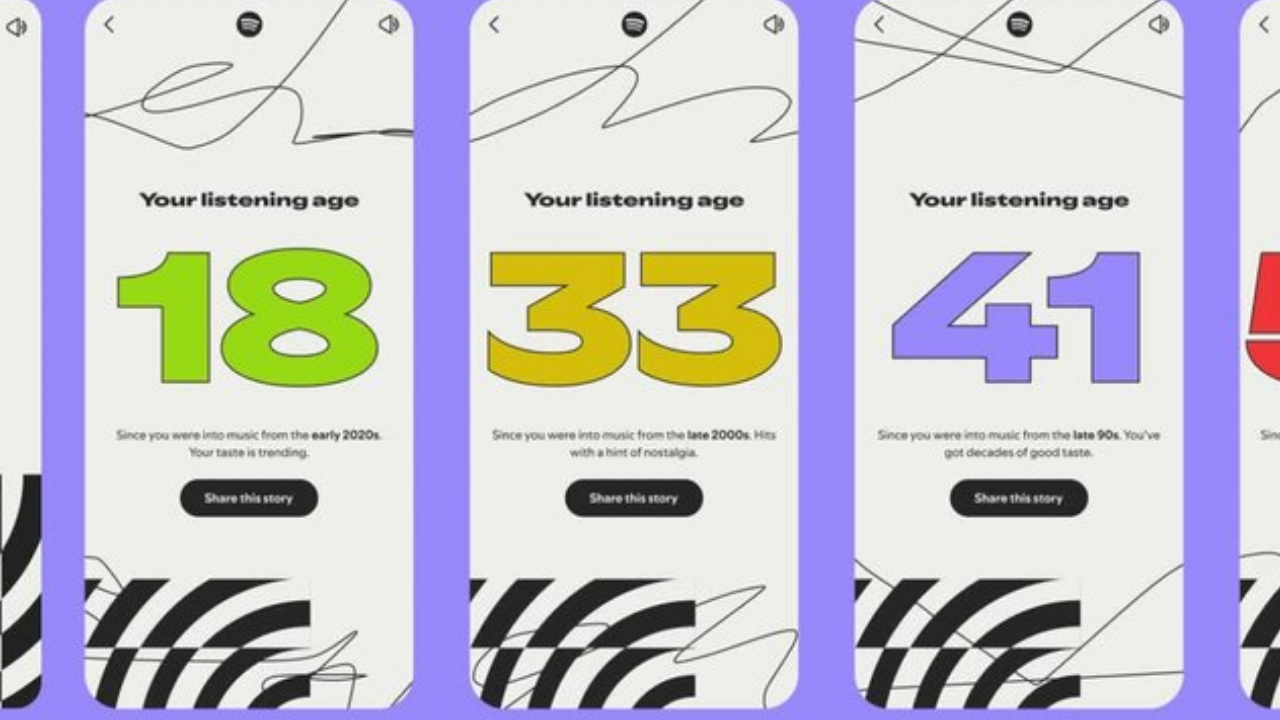
    Spotify Wrapped 2025 has been launched with a new feature known as “Listening Age” to the year’s recap on the platform. This feature calculates a user’s age based on their musical tastes, leading to various reactions online. 

    Numerous listeners took to social media to share their outcomes, frequently pointing out the discrepancies in the assigned age.

    Spotify Wrapped is an annual feature that examines user data to deliver insights into listening behaviors. The platform showcases statistics like the most-streamed songs, albums, and podcasts. 

    The 2025 edition introduces extra components, such as a quiz and the new Listening Age measure. Other streaming services have adopted similar features, with YouTube unveiling “Recap” and Apple launching “Replay.”

    The Listening Age feature is rooted in a psychological idea known as the “reminiscence bump,” which indicates that adults tend to have stronger connections to music from their youth, roughly between the ages of 16 and 21. Spotify determines Listening Age by analyzing the release years of the songs users listened to the most during 2025. It identifies a five-year range of music that users engaged with more than average for their age group and estimates an age based on that timeframe.

    For instance, a person who predominantly streams music from the early 2000s might be given a Listening Age in their early 40s. Likewise, an individual who enjoys older music from the 1960s may be assigned a Listening Age between 70 and 80.


    Spotify highlights that the calculated age does not necessarily align with a user’s true age, as the estimation is based on listening habits rather than birth year.

    To access the Listening Age feature, users need the latest version of the Spotify app on either iOS or Android. The feature can be found by searching for Spotify Wrapped and scrolling to the slide that reads “Age is just a number. So don’t take this personally.” The platform encourages users to check and share their Listening Age, with the ability to revisit the summary section for the information if it was initially overlooked.

    This new feature has initiated conversations online, with users showcasing results that differ greatly from their actual ages. Some listeners reported unexpectedly high or low ages, reflecting the variety in musical tastes. 

    Spotify Wrapped 2025 continues to highlight a mix of data insights and shareable content, upholding the platform’s yearly tradition of revealing listening patterns in an engaging public format.