Category: Tech

  • Govt eyes minimum 100mbps broadband speed for all users across Pakistan

    Govt eyes minimum 100mbps broadband speed for all users across Pakistan

    As part of a nationwide overhaul of the country’s digital infrastructure, the Ministry of Information Technology and Telecommunication (MoITT) has announced plans to ensure a minimum fixed broadband speed of 100mbps for all users across Pakistan.

    To achieve this target, MoITT will hire a consulting firm to develop Pakistan’s first National Fiberization Policy and Plan. The initiative is being launched under the World Bank supported Digital Economy Enhancement Project (DEEP) to expand fiber infrastructure, improve high-speed connectivity and advance the government’s broader digital transformation agenda.

    The new policy aims to expand fixed broadband coverage by deploying 8 to 10 million optical fiber-based house passes across the country. It also seeks to improve mobile network capacity and reliability by connecting 80 percent of telecom towers to fiber. These steps are considered vital for strengthening 4G networks and preparing Pakistan for future 5G rollout.

    The government hopes the effort will help Pakistan climb into the top 50 countries in Ookla’s global speed rankings.

    The consultant will conduct a national gap assessment that includes mapping the current fiber network, analysing service availability and identifying gaps in quality of service, coverage, latency, penetration and operator incentives.

    Pakistan’s fiber development will be benchmarked against the Fiber Development Index (FDI) and other international indicators to align with global best practices.

    Following the assessment, the consultancy will prepare a detailed National Fiberization Strategy and Operational Plan. This will outline investment options, financing models and governance structures to guide participation from both public and private sectors.

    Bankable feasibility studies will be developed to attract local and international investors through public private partnership models. The strategy will also highlight priority areas for new fiber deployment and recommend measures to strengthen network resilience against disasters and cyber threats.

  • Meta accused of withholding evidence linking Facebook use to mental health harm

    Meta accused of withholding evidence linking Facebook use to mental health harm

    Legal documents in the U.S. assert that Meta discontinued internal studies that indicated a connection between Facebook usage and negative mental health effects. 

    The documents were filed in a lawsuit initiated by school districts against Meta and other social media companies.

    The filing details a 2020 initiative called Project Mercury, which involved Meta’s researchers and the survey company Nielsen, measuring the impact of users deactivating Facebook for a week. Internal papers indicated that “individuals who stopped using Facebook for one week reported decreased levels of depression, anxiety, loneliness, and social comparison.”

    According to the filing, Meta ended the project rather than publishing the findings. The documents claim that Meta internally suggested that the results were affected by the prevailing media narrative concerning the company. 

    One researcher mentioned, “The Nielsen study does show causal impact on social comparison,” and included an unhappy face emoji. Another employee drew a parallel between remaining silent and the tobacco industry, stating it would be akin to “conducting studies and knowing that cigarettes were harmful, then keeping that information hidden.”

    The filing contends that Meta informed Congress it had “no ability to quantify whether its products were harmful to teenage girls,” despite possessing the internal findings. It also mentions that similar investigations focusing on Instagram were stopped.

    In response, Meta spokesperson Andy Stone stated that the study was terminated due to methodological issues, emphasizing, “The complete record will demonstrate that for over ten years we have heeded parents’ concerns, researched critical issues, and implemented meaningful changes to safeguard teens.”

    These allegations are part of a broader lawsuit filed by the law firm Motley Rice, which also includes Google, TikTok, and Snapchat on behalf of school districts in the U.S. The plaintiffs claim that these companies concealed the dangers of their products from users, parents, and educators.

    The filing alleges that the companies encouraged children under 13 to engage with their platforms, failed to tackle child sexual abuse material, and sought to boost student usage during school hours. 

    It also asserts that these companies endeavored to collaborate with child-focused organizations to promote public messages regarding product safety.

    TikTok, Google, and Snapchat have not responded to requests for comments. A court hearing on this matter is slated for January 26 in a district court in northern California.

  • Pakistan eyes ‘Digital Nation’ status as IT investments cross $700m

    Pakistan eyes ‘Digital Nation’ status as IT investments cross $700m

    Pakistan is accelerating its drive to become a “Digital Nation,” prioritising IT expansion, artificial intelligence, and cybersecurity, Federal Minister Shaza Fatima Khawaja said on Sunday. 

    She noted that the country has already attracted over US$700 million in international digital investments. 

    Speaking to participants at the National Defence University’s 27th National Security Workshop, Khawaja stated that Pakistan’s economic security, strategic stability, and international competitiveness now heavily depend on the digital sector. 

    Parliamentarians, entrepreneurs, journalists, and members of civil society came together for the workshop.

    Khawaja listed the government’s main projects, which include 43 Software Technology Parks, 85 incubators, eight National Incubation Centers, two CEGA centers, more than 400 tech companies operating inside converted malls, and support for more than 4,100 startups through international partnerships with the United States, the United Kingdom, Canada, the United Arab Emirates, Saudi Arabia, Azerbaijan, Germany, and Jordan.


    She also highlighted important national initiatives including the Prime Minister’s Cloud Programme, DigiSkills 3.0, which is training 4.3 million Pakistanis, the Pakistan Startup Fund, BridgeStart, which sends Pakistani companies to international accelerators, and the SkillTech Initiative. 

    Additional reforms include TikTok’s STEM Feed, Meta’s AI-in-Urdu project, revamped IT and AI curricula, and a semiconductor program that trains 7,200 workers.

    Pakistan has taken part in international events such as GITEX Global 2025, WAIC Shanghai, LEAP Riyadh, the DCO General Assembly in Amman, and the AI for Good Summit in Geneva.

     Khawaja added that Google has completed the formalities to open its office in Pakistan and has signed an MoU to support national digital-skills development.

    The minister also commended Pakistan’s cybersecurity performance during Marka-e-Haq, attributing the success to coordinated efforts between the armed forces, the government, and the private sector under Prime Minister Shehbaz Sharif and Field Marshal General Syed Asim Munir.

    Khawaja concluded by reaffirming Pakistan’s commitment to building a secure, modern, and globally competitive digital nation.

  • Apple’s latest product meets hilarious criticism on social media

    Apple’s latest product meets hilarious criticism on social media

    Apple’s latest product, a knitted phone strap called the iPhone Pocket, has the internet laughing at the design and the price. 

    The tech giant has said that the Pocket, developed with Japanese fashion designer Issey Miyake, can be worn in a multitude of ways including directly on the body, tied on to a laptop bag or handbag and can be carried by hand. 

    The product comes in two sizes: a shorter size that is available in eight colours and can be bought for $149.95 while a longer version is available in three colours and retails for an eye watering $229.95. 

    Molly Anderson, Apple’s Vice-President of Design, has said, “The color palette of iPhone Pocket was intentionally designed to mix and match with all our iPhone models and colors — allowing users to create their own personalized combination.”

    Apple itself said in a statement earlier this week that the iPhone Pocket was, “Born from the idea of creating an additional pocket, its understated design fully encloses iPhone, expanding to fit more of a user’s everyday items.” 

    The flowery description has not stopped the internet from roasting the company. On social media, many made fun of the Pocket in hilarious ways, targeting its design and price for creative jokes. 

    One X (formerly Twitter) user simply asked, “Do they not know we have pockets?” 

    Another user wrote, “It’s 2025. We were promised flying cars but got $150 socks for our iPhones instead.” 

    One account called it a “cut up sock” while another termed it a test : “iPhone Pocket is an IQ test. Do you want a pocket for $230 or keep the phone in your actual pocket for $0” while many accounts simply compared it to a “a thong for your phone”. 


    One shrewd user however pointed out that even if one percent of Apple users buy the sock, it will generate billions in revenue.

  • Elon Musk tries to prove he’s ‘human’ after best-selling author slams his behaviour

    Elon Musk tries to prove he’s ‘human’ after best-selling author slams his behaviour

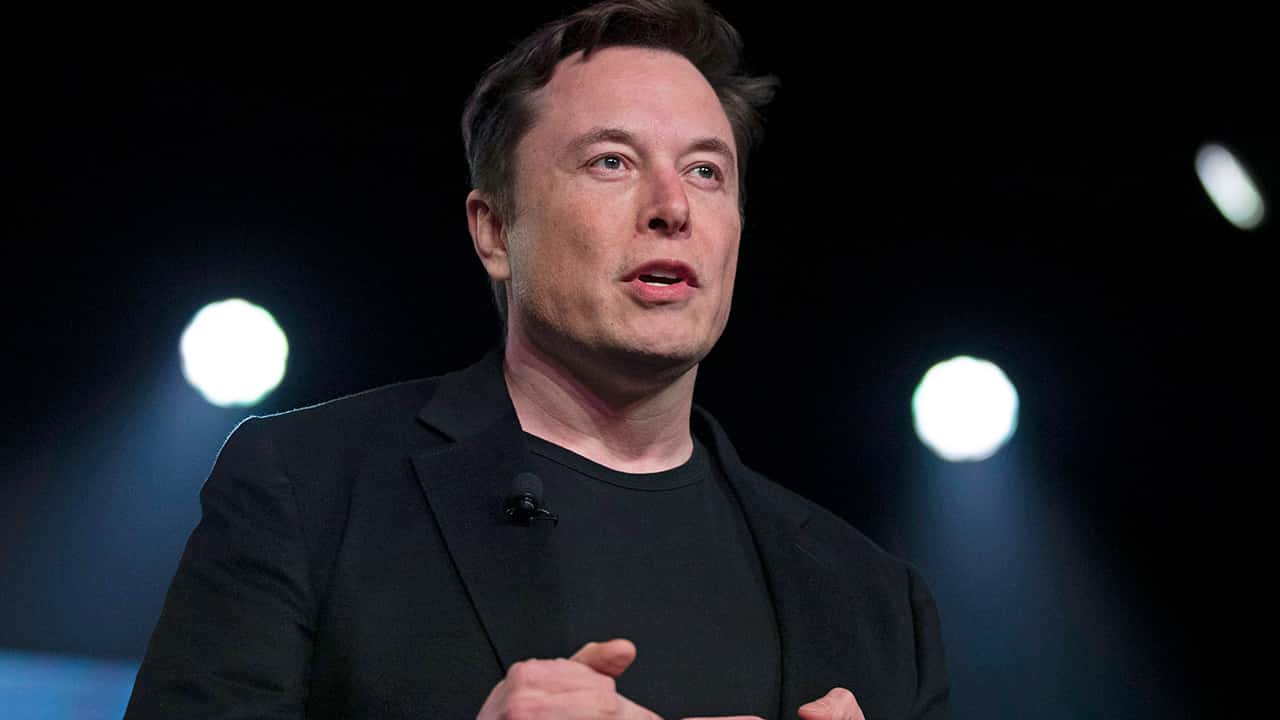
    Elon Musk has gone on a binge of tweets trying to prove that he is a ‘human’ with real human interests after best-selling author Joyce Carol Oates tweeted out about his odd behaviour. 

    On Saturday morning, Musk shared a video of an AI generated woman, smiling at the camera. By evening, best-selling author Joyce Carol Oates tweeted out an observation about the richest man on earth that got traction on the very platform he owns, X (formerly Twitter). 

    The 87-year-old writer said, “So curious that such a wealthy man never posts anything that indicates that he enjoys or is even aware of what virtually everyone appreciates— scenes from nature, pet dog or cat, praise for a movie, music, a book (but doubt that he reads); pride in a friend’s or relative’s accomplishment; condolences for someone who has died; pleasure in sports, acclaim for a favorite team; references to history.” 

    Joyce concluded the tweet with an incisive observation: “In fact he seems totally uneducated, uncultured. The poorest persons on Twitter may have access to more beauty & meaning in life than the ‘most wealthy person in the world.” 

    Musk’s usual X activity revolves around complaining about trans persons, retweeting anyone who praises him and agreeing with far-right extremists. 

    Oates’ diatribe, that went viral, got under Musk’s skin. He let off a furious series of tweets, calling her “an angry liar”, “demonstrably false” and “mean”. 

    Then the billionaire tried to prove Oates wrong by suddenly replying to an account dedicated to movies. He called Edge of Tomorrow a “great movie” and then wrote, “Man on Fire is great!” He also wrote another one liner about Fifth Element, offering nothing more than short sentences to show why he liked the movies. 

    Musk has previously talked about books, including Douglas Adams’ best-selling A Hitchhiker’s Guide to the Galaxy. But most of social media was in agreement that it seemed like he hadn’t actually read the book. 

    He also infamously made a faux-pas when he described his Tesla Cybertruck as a vehicle “the Blade Runner would have driven”. There is no character called the Blade Runner in the movie Blade Runner. 

    Joyce Carol Oates’ tweet has been viewed more than five million times and has received more than 11,000 retweets.

  • Over a million people show ‘suic*dal intent’ on ChatGPT every week, says OpenAI

    Over a million people show ‘suic*dal intent’ on ChatGPT every week, says OpenAI

    OpenAI has revealed that it has been working closely with over 170 mental health professionals to minimise harmful or inappropriate responses during sensitive conversations as over a million people show “suicidal intent” on ChatGPT every week.

    The data was revealed as the company announced major updates to its chatbot, aiming to better identify and support users experiencing mental health crises, marking one of OpenAI’s clearest acknowledgements of how artificial intelligence can sometimes worsen mental health challenges.

    According to the company’s findings, around 0.07 per cent of ChatGPT’s weekly active users —approximately 560,000 out of 800 million — show possible signs of experiencing mental health emergencies, including symptoms related to psychosis or mania.

    OpenAI emphasised that such cases are difficult to measure accurately and that these findings are based on early analysis.

    The update also comes as OpenAI faces growing scrutiny following a widely publicised lawsuit filed by the family of a teenager who died by suicide after extensive interaction with ChatGPT. Additionally, the United States (US) Federal Trade Commission has launched a broad investigation into AI chatbot companies, including OpenAI, to examine how they assess potential risks to children and teenagers.

    In response, OpenAI said that its latest GPT-5 update has significantly reduced undesirable chatbot behaviour and improved overall safety. During model evaluations involving more than 1,000 self-harm and suicide-related conversations, GPT-5 demonstrated 91 per cent compliance with desired safety standards as compared to 7 per cent for the previous version.

    To further strengthen the system, OpenAI has expanded access to crisis hotlines and introduced features reminding users to take breaks during extended sessions. The company also collaborated with healthcare experts through its Global Physician Network, asking clinicians to rate response safety and assist in crafting appropriate answers to mental health-related questions.

  • Pakistani-founded Securiti AI sells for $1.7 billion

    Pakistani-founded Securiti AI sells for $1.7 billion

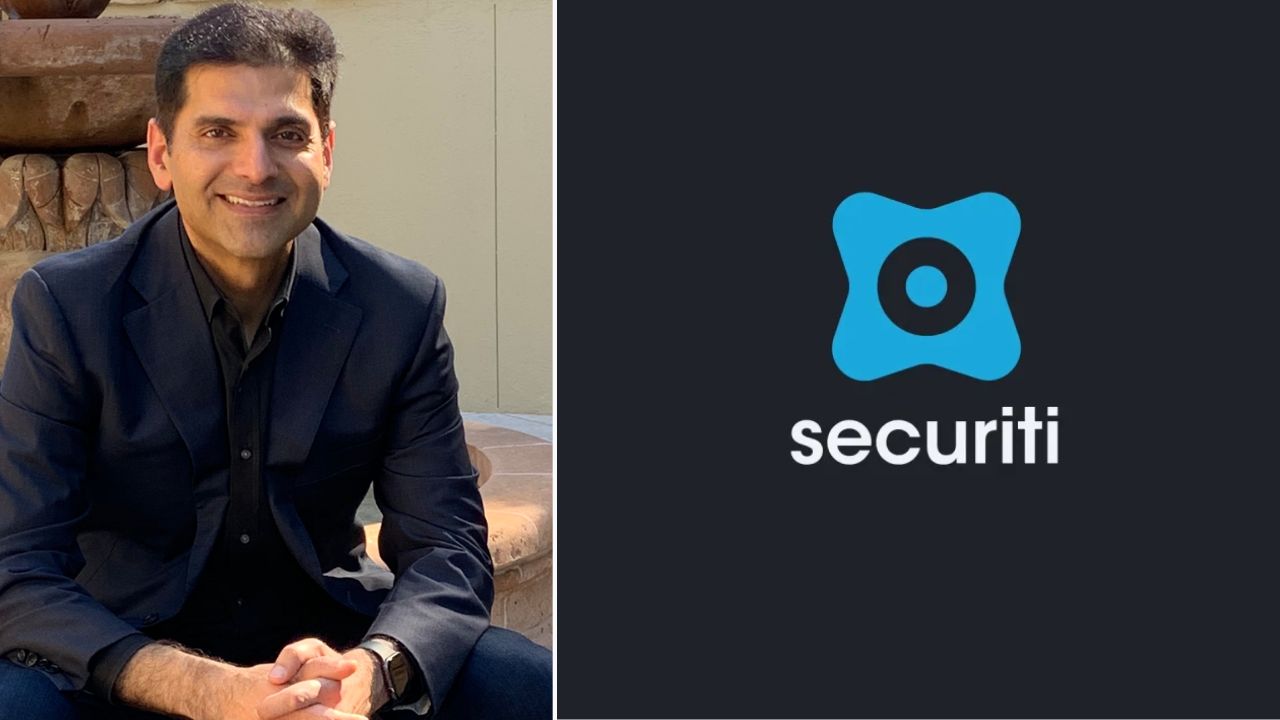
    Data-resilience firm Veeam has acquired Securiti AI, a company founded by Pakistani entrepreneur Rehan Jalil, for around $1.7 billion.

    According to media reports, the deal is one of the biggest global exits involving a Pakistani founder and will integrate Securiti’s data-security and AI-governance tools into Veeam’s product line.

    Securiti AI develops software that helps organizations discover, protect, and manage their data across cloud platforms and SaaS applications. Its flagship platform, the Data Command Center, enables customers to control privacy, governance, and security for data used in artificial intelligence systems.

    Veeam said the acquisition will strengthen its ability to secure and manage business data as more companies adopt AI. Under the agreement, Securiti’s founder and CEO, Rehan Jalil, will join Veeam as President of Security and AI once the transaction closes later this year. The deal involves a mix of cash and stock and is subject to standard regulatory approvals.

    Analysts say the acquisition highlights a growing demand for tools that ensure AI systems use data responsibly while maintaining privacy and compliance. This trend has boosted the value of firms like Securiti AI, which specialize in data protection and AI governance.

    For Pakistan’s tech community, the sale marks a major milestone and a proud moment. Rehan Jalil, who has an extensive background in cloud security, founded Securiti to help companies adopt AI safely and ethically.

    Veeam said it will continue to offer Securiti’s products and plans to integrate its privacy, governance, and AI-trust capabilities into Veeam’s backup and recovery services. The companies believe the merger will help customers adopt AI faster while keeping sensitive data secure and recoverable.

  • You could lose access to your digital bank account, wallet starting today

    You could lose access to your digital bank account, wallet starting today

    With new biometric verification regulations by the State Bank of Pakistan (SBP) coming into effect, millions of Pakistanis could be losing access to their digital bank accounts and wallets starting today.

    According to reports, the move aimed at streamlining account opening and onboarding processes while strengthening anti-money laundering and counter-terrorism financing efforts, effectively ends the 60-day period earlier offered to account holders to complete biometric verification.

    Under the new framework, customers who have not completed biometric verification by October 25 could face blocking of their accounts, including immediate service disruptions and the inability to send or receive funds.

    The SBP’s updated rules issued July, require all banks, digital banks, microfinance banks, development finance institutions and electronic money institutions to make biometric verification the primary method for customer identification.

    The central bank’s ‘Consolidated Customer Onboarding Framework’ now applies to both in-branch and remote onboarding for individuals and entities, covering local and foreign currency accounts.

    The framework mandates a unified approach to customer due diligence, regardless of how the account was opened. These requirements are mandatory for all SBP-regulated entities, including banks, DFIs, microfinance banks, digital banks, and electronic money institutions.

    Earlier, financial institutions were given three months to comply with the new requirements designed to enhance the integrity of the country’s financial system.

    With no deadline extension announced, experts warn that tens of millions of accounts could be affected, including foreign currency and Roshan Digital Accounts.

  • Google Chrome in trouble as OpenAI unveils ChatGPT Atlas browser

    Google Chrome in trouble as OpenAI unveils ChatGPT Atlas browser

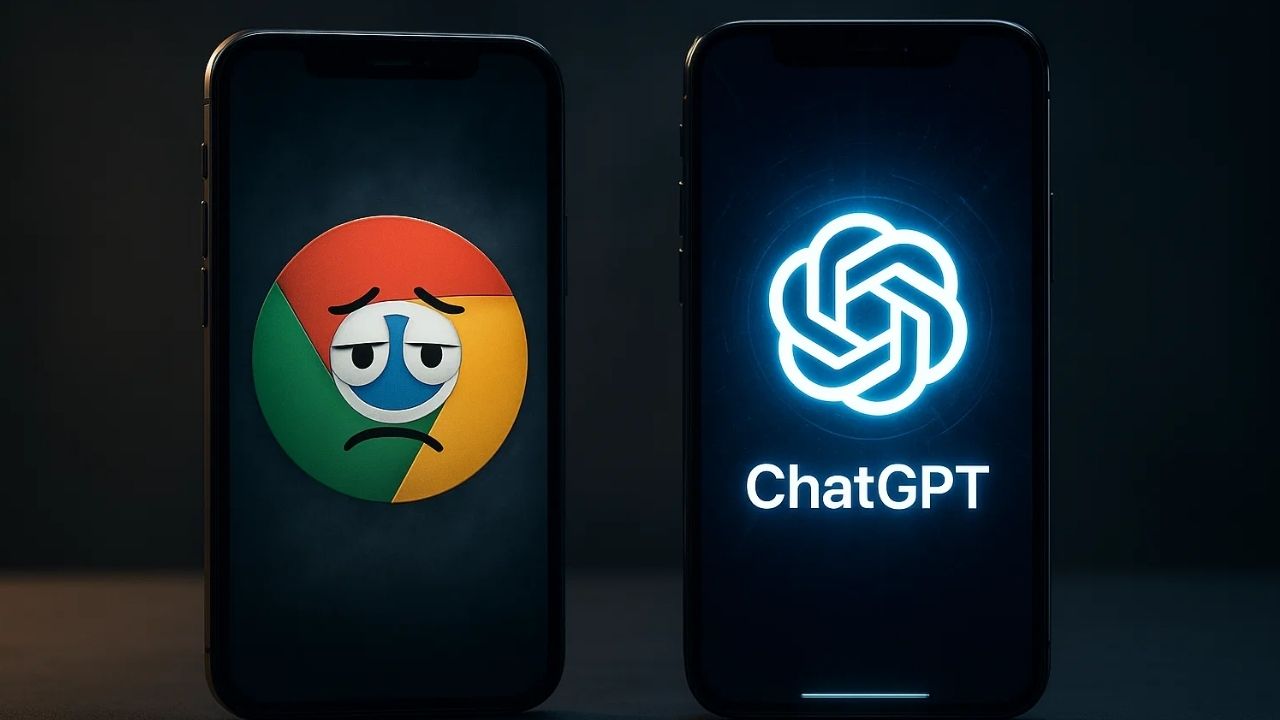
    OpenAI has introduced a new AI-powered web browser called ChatGPT Atlas, built on its popular chatbot ChatGPT.

    According to tech reports, Atlas helps users perform various tasks while browsing the web. The company described Atlas as more than just a browser, calling it an intelligent assistant designed to make web use more natural and interactive. The goal is to turn the internet from a place to look at information into one where users can understand and talk to it.

    Instead of typing in a search bar or clicking links, users can now directly ask ChatGPT to summarize web pages, compare products, book airline tickets, or highlight key points from an article.

    Each web page includes an Ask ChatGPT button that allows users to chat about the page’s content instantly.

    Atlas also remembers previous conversations to offer more personalized suggestions. Users have full control over whether their data is saved or deleted.

    The browser can automatically handle actions like online shopping, booking flights, and scheduling meetings. These features are currently available only to ChatGPT Plus and Pro subscribers.

    A built-in ChatGPT sidebar summarizes page content and helps explain information in detail.

    OpenAI says ChatGPT Atlas could challenge traditional browsers like Google Chrome by offering a completely different browsing experience powered by AI.

    The browser is currently available on macOS, and versions for Windows, iOS, and Android will be launched soon.

  • TikTok removes over 25 million videos in Pakistan

    TikTok removes over 25 million videos in Pakistan

    Social media giant TikTok has removed more than 25.4 million videos in Pakistan between April and June 2025 for violating its Community Guidelines, according to the platform’s Q2 2025 enforcement report.

    The company said it identified 99.7 percent of the content proactively and removed 96.2 percent within 24 hours of posting.

    Globally, TikTok took down 189.5 million videos during the same period, equal to 0.7 percent of all uploads. Of these, 163.9 million were detected automatically, while 7.4 million were later restored after review.

    TikTok also deleted 76.9 million fake accounts and 25.9 million suspected underage accounts. The report stated that 30.6 percent of the removed videos contained mature or sensitive content, 14 percent violated safety standards, and 6.1 percent breached privacy rules.

    The company said the report highlights its efforts to maintain a safe digital environment and uphold transparency through regular updates.