Category: Tech

  • New AI model ‘Nano Banana’ from Google sparks global buzz

    New AI model ‘Nano Banana’ from Google sparks global buzz

    Google has taken the AI image generation field up by several notches with its Nano Banana, a new AI-driven image editing model integrated into its Gemini platform. Internally referred to as ‘Gemini 2.5 Flash Image’, this tool is designed for multi-turn editing while ensuring precision and consistency throughout the modifications.


    Nano Banana allows users to edit images by providing simple text commands. For instance, a picture of a room can be modified with prompts like “change the couch to red” or “transform this into a rainy night scene,” with results produced in seconds. Unlike previous AI editing tools that often distorted images after multiple alterations, Google claims this model maintains identity, context, and intent even after more than ten changes.


    In initial demonstrations, users supplied stick figure drawings with character images, and Nano Banana produced anime-style illustrations that corresponded to both templates. The tool can merge as many as thirteen distinct elements into one unified image. It can also revive old photographs and execute face-swaps while preserving likeness.

    The model’s user interface depends on natural language prompts, making it user-friendly for people lacking design expertise. Users can create a scene from scratch, insert objects, or progressively tweak details without the need for professional editing software. By tracking earlier adjustments, it sidesteps the typical issue of images becoming warped or inconsistent after multiple edits.

    Beyond individual use, Google is starting to incorporate Nano Banana into its broader ecosystem. It is accessible via the Gemini app on both web and mobile platforms, as well as through enterprise solutions like Vertex AI, Google AI Studio, and Gemini APIs. Developers can use it for projects that range from e-commerce catalogs to virtual set design.

    Google has showcased examples where the model has been successfully applied in real-life situations. An online retailer utilized it to create 3D product mockups, while an architecture firm significantly reduced revision cycles through iterative room visualizations. A school district produced tailored science visuals for classrooms, reporting that it enhanced comprehension among student pilots.

    To tackle concerns surrounding AI-generated content, all images created with Nano Banana come with SynthID, an invisible watermark developed by Google DeepMind. Visible watermarks are also placed where necessary to indicate authenticity.

  • Massive cyberattack hits Google, 2.5 billion Gmail users at risk

    Massive cyberattack hits Google, 2.5 billion Gmail users at risk

    Google confirmed a major cyberattack that affected 2.5 billion Gmail users worldwide. The company reported that hackers targeted accounts between August 8 and August 18 using compromised OAuth tokens to gain access on a global scale.

    The breach extended beyond individual Gmail accounts and infiltrated Salesforce databases as well. According to Google’s Threat Intelligence Group (GTIG), the hacker group UNC6395 carried out the attack. The group is notorious for targeting Salesforce users in the past. Hackers exploited compromised tokens from the Salesloft Drift app to execute this breach.

    Although Google has fixed the enterprise-level breach, the company urged all Gmail users to take immediate security measures. Users should run a Security Check-up, fix any detected issues, set strong passwords with special characters and numbers, enable two-factor authentication, log out of unfamiliar devices, revoke access to suspicious third-party apps, monitor recent login activity, and avoid opening suspicious links or attachments.

    Google emphasised that following these steps significantly reduces the chances of falling victim to future cyberattacks.

  • Google launches AI Mode in Pakistan

    Google launches AI Mode in Pakistan

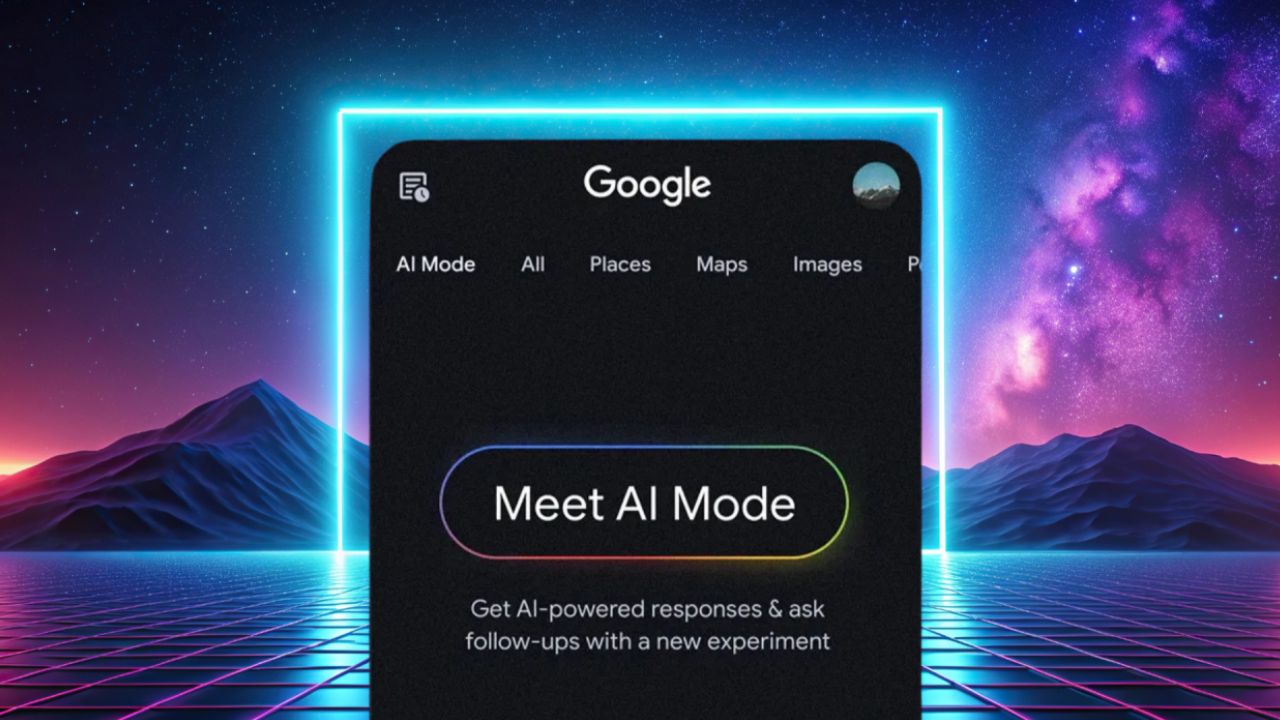
    Google has launched its new AI-powered search feature, “AI Mode,” for users in Pakistan. The tool is a custom version of Gemini 2.5 and offers a smarter, more comprehensive search experience.

    AI Mode lets users ask longer and more complex questions that would normally require multiple searches. Google says early tests show searches using this tool are two to three times longer than traditional queries, making it ideal for product comparisons, trip planning, and detailed “how-to” queries.

    “It dives deep to answer multiple questions at once, with helpful links for further exploration,” the company said in a statement.

    Pakistani users can now access AI Mode through the Google app on Android and iOS, as well as on mobile and desktop versions of Google Search.

    The tool allows users to plan trips, find the best places to eat, and explore activities by entering a single prompt. It uses a “query fan-out” technique to break down questions into subtopics and run multiple searches simultaneously.

    AI Mode pulls live information from Google’s Knowledge Graph, product databases, and web content to deliver accurate results. If the system detects low confidence in an answer, it switches to classic search results.

    Google says AI Mode will provide smarter, more in-depth search results, but admits it’s still a work in progress as the system is in its early stages.

  • YouTube turns to AI to spot children posing as adult

    YouTube turns to AI to spot children posing as adult

    YouTube has started using artificial intelligence (AI) to figure out when users are children pretending to be adults on the popular video-sharing platform amid pressure to protect minors from sensitive content.

    The new safeguard is being rolled out in the United States as Google-owned YouTube and social media platforms such as Instagram and TikTok are under scrutiny to shield children from content geared for grown-ups.

    A version of AI referred to as machine learning will be used to estimate the age of users based on a variety of factors, including the kinds of videos watched and account longevity, according to YouTube Youth director of product management James Beser.

    “This technology will allow us to infer a user’s age and then use that signal, regardless of the birthday in the account, to deliver our age-appropriate product experiences and protections,” Beser said.

    “We’ve used this approach in other markets for some time, where it is working well.”

    The age-estimation model enhances technology already in place to deduce user age, according to YouTube.

    Users will be notified if YouTube believes them to be minors, giving them the option to verify their age with a credit card, selfie, or government ID, according to the tech firm.

    Social media platforms are regularly accused of failing to protect the well-being of children.

    Australia will soon use its landmark social media laws to ban children under 16 from YouTube, a top minister said late last month, stressing a need to shield them from “predatory algorithms.”

    Communications Minister Anika Wells said four-in-ten Australian children had reported viewing harmful content on YouTube, one of the most visited websites in the world.

    Australia announced last year it was drafting laws that will ban children from social media sites such as Facebook, TikTok and Instagram until they turn 16.

    “Our position remains clear: YouTube is a video sharing platform with a library of free, high-quality content, increasingly viewed on TV screens,” the company said in a statement at the time.

    “It’s not social media.”

    On paper, the ban is one of the strictest in the world.

    It is due to come into effect on December 10.

    The legislation has been closely monitored by other countries, with many weighing whether to implement similar bans.

  • Pakistan removes over 500 social media accounts linked to banned groups

    Pakistan removes over 500 social media accounts linked to banned groups

    Pakistan has shut down over 500 social media accounts that are reportedly associated with banned militant groups, as part of a coordinated crackdown with international platforms.

    Information from the National Cyber Crime Investigation Agency (NCCIA) and the Pakistan Telecommunication Authority (PTA) indicates that more than 850 accounts were flagged on platforms such as Facebook, Instagram, TikTok, X, Telegram, and WhatsApp. Among these, 533 accounts have been deleted, while actions regarding the remaining accounts are still in progress.

    Officials have stated that these accounts were linked to organisations like Tehreek-e-Taliban Pakistan (TTP), Baloch Liberation Army (BLA), and Baloch Liberation Front (BLF). All three groups are banned in Pakistan and recognised as proscribed entities by the United Nations (UN), the United States (US), and the United Kingdom (UK). The total number of followers for the blocked accounts exceeded two million.

    The NCCIA and PTA collaborated to identify and report these accounts, working with representatives of the platforms to provide information and request their removal. Federal IT Minister Shaza Fatima Khawaja secured direct cooperation from Telegram, despite the app being banned in Pakistan.

    The level of compliance varied among the platforms. Facebook and TikTok removed more than 90% of the accounts reported, while X and WhatsApp acted on approximately 30% of the requests. 

    The government has called for increased international cooperation to combat the use of social media by prohibited organisations. Officials have urged platforms to implement precautionary measures, including permanent bans on accounts linked to such groups and the application of artificial intelligence systems to identify and eliminate related content.

    Authorities noted that, although extremist content is absent from mainstream Pakistani media, online platforms continue to be used for recruitment and incitement. They proposed creating direct, rapid-response communication channels between platform operators and Pakistani regulators to strengthen enforcement.

  • WhatsApp to introduce real-time voice chats with Meta AI

    WhatsApp to introduce real-time voice chats with Meta AI

    WhatsApp is testing a new feature that allows real-time voice chats with Meta AI through the app’s interface. The option is currently available for some beta users on iOS via the TestFlight app, as part of the 25.21.10.76 beta update.

    Users can start a voice session with Meta AI by tapping a waveform icon located in the Chats tab. There is a voice preference option that allows voice chats to automatically begin when Meta AI is activated from this tab; the setting is disabled by default.

    Additionally, some users can initiate a voice chat with Meta AI from the Calls tab, offering another quick way to start the conversation. The interface features a list of suggested prompts to assist users who might be uncertain about how to initiate the interaction.

    While engaged in a voice session, users can also attach and send photos from their gallery or camera, using shortcuts positioned near the input field. This facilitates the inclusion of visual content during the ongoing voice chat.

    The voice chat can continue to operate in the background if the user navigates to a different app. By selecting the collapse icon, the session remains active while users engage in other activities like reading or browsing.

    Users have the option to mute their microphone or terminate the voice session by clicking the close button or reverting to text chat. On iOS devices, an orange dot appears in the upper corner of the screen whenever an app accesses the microphone. This is managed by the operating system and cannot be modified or turned off by WhatsApp.

    At the moment, the feature is restricted to a select group of beta testers. WhatsApp is anticipated to broaden access to additional users in the upcoming weeks.

  • More than entertainment: The Apple Vision Pro and the Neuroscience of Spatial Computing

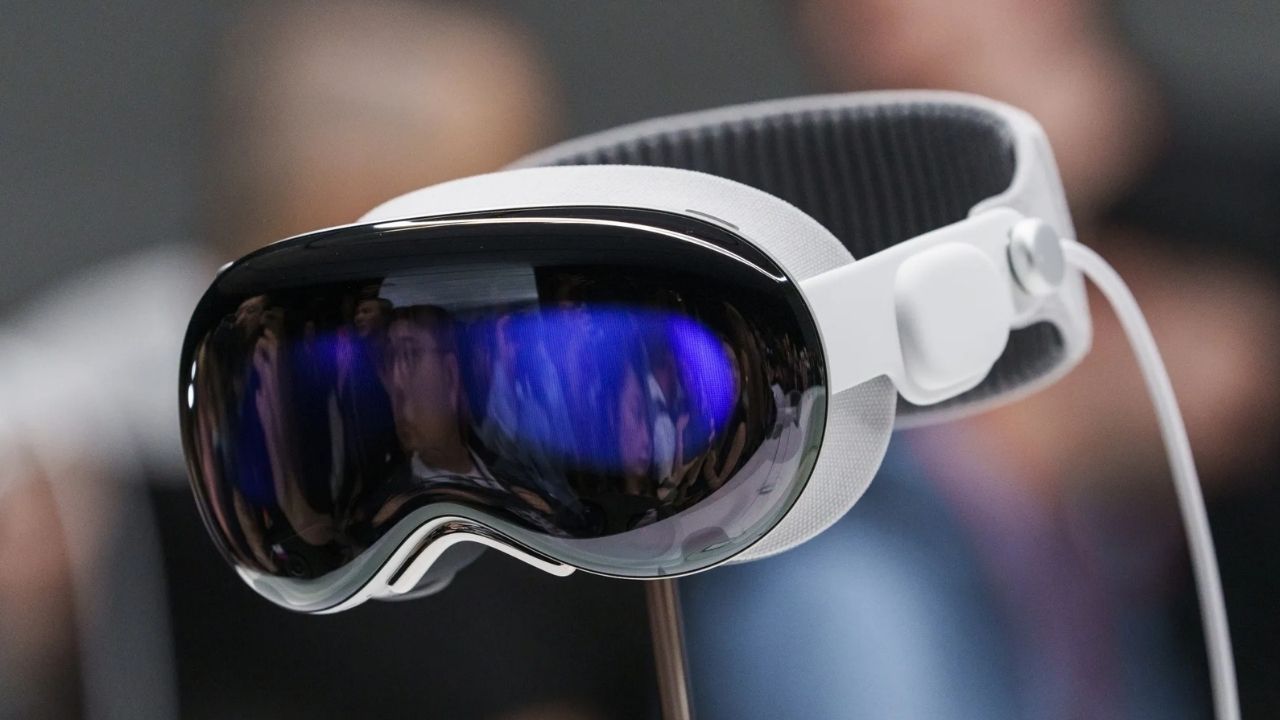
    More than entertainment: The Apple Vision Pro and the Neuroscience of Spatial Computing

    What if you could navigate a digital world solely with your thoughts? No hand gestures, no voice commands; just pure, neural intent.

    At 64, Mark – an ALS patient who lost function in his upper limbs due to deteriorating muscle function – became the first person to do just that, thanks to the integration of Synchron’s brain-computer interface (BCI) with the Apple Vision Pro to send texts, play online solitaire and watch immersive Apple TV. More recently, Synchron – an American neurotech company – took this synchronisation even further, adding NVIDIA’s AI Holoscan technology to allow Rodney, another ALS patient, to control digital home appliances without lifting a finger. From turning on the fan to messaging his wife, this technology demonstrates how sci-fi levels of accessibility are now within our reach.


    Mark and Rodney’s experience, as well as the growing Apple-Synchron partnership, has highlighted how the Apple Vision Pro is much more than cutting-edge immersive entertainment – it has the potential to open up a world of possibilities in fields of neuroscience. More specifically, this technology can revolutionise neurotherapy by integrating physical and virtual worlds like never before.


    Where Virtual Worlds Meet Recovery


    The Apple Vision Pro isn’t only found in living rooms – it can now also be found in rehabilitation centres. The use of spatial computing gives this headset the power to simulate real-world environments with intricate detail, making it a powerful tool for neurotherapy. 3D environments can be used to stimulate neural pathways, regain cognitive abilities and practice motor skills. This is a particular game-changer for individuals suffering from strokes, brain injuries or neurological impairments by paving the way to making therapy and treatment more accessible. This looks like recovering from a stroke not just by performing repetitive physical exercises, but by navigating an immersive 3D kitchen to practice reaching, walking and memory recall – all from a hospital bed.


    What makes this form of therapy particularly revolutionary is how it taps into neuroplasticity – the brain’s ability to form new neural connections and respond to new life experiences on a cognitive level. The Vision Pro gives therapists the ability to create customizable rehab scenarios to engage specific regions of the brain, allowing for targeted rehab and recovery. It’s no longer just about practising movements and motions – it’s about stimulating the mind to actively re-learn how it responds to different stimuli.


    Merging Mind and Machine


    What’s truly remarkable about the Apple Vision Pro is its ability to be paired with BCIs. These devices convert electrical nerve impulses from brain activity to commands for external technology. When integrated with the Vision Pro, this technological marvel can give patients full control of their world alone, creating a seamless connection between mind and machine. This means that individuals with neurological impairments or limited mobility can stimulate their neuroplasticity, undergo neurotherapy and develop cognitive abilities all without requiring physical movement. This technology also allows each action to be tracked, studied and adjusted in real-time, creating potential to speed up the rehabilitation process.


    For example, Synchron – a private neurotech company – developed a BCI that can be implanted within the human brain through a non-invasive procedure. They partnered with Apple to integrate this BCI with the Apple Vision Pro – creating an opportunity to provide patients with a truly immersive experience. This very partnership allowed 64 year old Mark to control the Vision Pro to send texts, play games and watch Apple TV just by thinking about moving his hands.


    Brain Training, Memory Enhancement and More


    With research into cognitive therapies already progressing, the Vision Pro’s immersive capabilities serve as a powerful tool for cognitive training and memory enhancement. Its VR integration can be used to help patients practice complex cognitive tasks, such as memory games, problem-solving exercises, and even practising responses in social simulations. Furthermore, the Apple Vision Pro’s ability to create immersive environments can be significantly leveraged by therapists and doctors to create highly personalised experiences that trigger and train specific regions of the brain. Instead of using flashcards or apps on a screen, patients can very literally find themselves in an entirely new yet realistic world that actively trains their brain.


    From interactive memory exercises to slow cognitive decline to immersive virtual environments to improve attention span – the possibilities are endless. Throughout such activities, therapists are also able to gather real-time data and metrics, all while the patients are kept engaged and immersed in realistic scenarios. The compact nature of the Vision Pro also makes it easier for patients to become more regular with such exercises and activities – all from the comfort of their own home.


    The Road Ahead: What’s Next?


    The future of neuroscience and brain training is no longer confi ned to traditional methods – the synergy between neurotherapy, BCIs and the Apple Vision Pro is just the beginning. For individuals dealing with neurological challenges, this integration doesn’t just provide hope – it’s a tangible path to cognitive healing and improvement beyond physical rehabilitation. As spatial computing and neurotechnology continue to evolve, we may soon be able to unlock the full potential of the human brain in ways we’ve only dreamed of.


  • OpenAI set to launch GPT-5 in August

    OpenAI set to launch GPT-5 in August

    Artificial intelligence pioneer OpenAI is preparing to roll out its highly anticipated GPT-5 model as early as August, The Verge reported Thursday, citing sources familiar with the plan.

    The upcoming model is expected to be a multi-purpose AI system that integrates multiple models, instead of relying on just one.

    Backed by Microsoft, OpenAI aims to combine its o3 model with other technologies in GPT-5, a move CEO Sam Altman hinted at in February to streamline the company’s product lineup.

    The long-term goal is to merge the GPT-series and o-series into a single system capable of leveraging all available tools to handle a broader range of tasks.

    While GPT-5 is expected to launch in early August, the report noted OpenAI’s release timelines are often subject to change due to development hurdles, server capacity constraints, or competitive pressure from rival AI model leaks and launches.

  • PTA warns public against fake courier messages seeking verification codes

    PTA warns public against fake courier messages seeking verification codes

    The Pakistan Telecommunication Authority (PTA) has issued a warning to the public about fraudulent messages impersonating delivery services and requesting verification codes from recipients. 

    The Authority indicated that numerous individuals have reported receiving text messages or alerts via messaging apps that appear to be from courier companies. These messages urge users to input or share codes, which could be exploited for unauthorized access to personal accounts. 

    PTA emphasized that legitimate courier companies do not require customers to provide any verification codes for parcel deliveries. “Do not disclose any codes received through SMS or messaging apps, as they may be exploited for illegal access,” the Authority remarked.

    The regulator recommended that the public confirm such messages by directly contacting the courier service before responding. It also encouraged citizens to report any suspicious behaviors to the appropriate authorities.

    Additionally, the PTA reminded users to routinely check their digital privacy settings and to refrain from clicking on links included in such messages, as they could direct to phishing sites or lead to unauthorized gathering of personal information.

    In its announcement, the Authority stated that it is actively working to safeguard consumers from online fraud and has been releasing public awareness notices about cybercrime threats.

    Similar alerts have also been issued by banks, advising customers against sharing one-time passwords or verification codes with anyone claiming to represent financial institutions.

    The PTA urged the public to remain vigilant and verify all communications regarding parcel deliveries through official company channels prior to taking any action.

  • Starlink faces global outage after internal software failure

    Starlink faces global outage after internal software failure

    SpaceX’s Starlink experienced a major disruption on Thursday after an internal software malfunction caused a global outage, leaving many users without service.

    Outage monitoring site Downdetector reported that connectivity issues began around 3 p.m., primarily affecting users in the U.S. and Europe. During the incident, the platform recorded over 61,000 user complaints.

    In a statement on X, Starlink, which provides satellite internet services to more than 6 million customers across approximately 140 countries and territories, acknowledged the outage. The company stated that it was “actively implementing a solution.”

    According to Michael Nicolls, the vice president of Starlink Engineering, service began to resume after 2.5 hours. In an update on X, Nicolls explained that the disruption was due to a “failure of key internal software services that operate the core network” and expressed regret, adding that the team was working to identify the root cause.

    Elon Musk, the CEO of SpaceX, also responded via X, apologising for the outage and promising that SpaceX would address the root cause to prevent future occurrences.

    Experts highlighted that such a widespread failure is rare for Starlink, a significant contributor to global internet connectivity. Doug Madory from the internet analysis firm Kentik referred to this incident as “likely the longest outage ever for Starlink, at least since it became a major service provider.”

    Some analysts proposed that the disruption could stem from a software bug or an update error, while others raised the possibility of a cyberattack. Gregory Falco, who heads a space and cybersecurity lab at Cornell University, likened this incident to last year’s CrowdStrike software glitch, which affected millions of Microsoft Windows devices and resulted in extensive flight delays.

    Starlink has rapidly expanded, launching new satellites to cater to the increasing demand for faster services. Additionally, SpaceX is collaborating with T-Mobile to create direct-to-cell text messaging aimed at ensuring emergency connectivity in remote areas.

    Since 2020, SpaceX has deployed over 8,000 Starlink satellites, establishing a low-Earth orbit network that serves military clients, the transportation sector, and rural communities with limited internet options.

    It remains unclear whether the outage impacted Starshield, SpaceX’s military satellite division, which has multibillion-dollar contracts with U.S. defence and intelligence agencies.