Category: Tech

  • Apple devices secretly wiretap sounds in surrounding, whistleblower claims

    Apple devices secretly wiretap sounds in surrounding, whistleblower claims

    A former Apple contractor, Thomas le Bonniec, has sent a letter to all European data protection regulators, stating that “it is worrying that the tech giant and iPhone manufacturer keeps ignoring and violating fundamental rights and continues its massive collection of data”.

    “I am extremely concerned that big tech companies are wiretapping entire populations despite European citizens being told that the European Union (EU) has one of the strongest data protection laws in the world. Passing a law is not good enough: it needs to be enforced upon privacy offenders.”

    “The recordings are not limited to the users of Apple devices, but also involve relatives, children, friends, colleagues and whoever could be recorded by the device. The system recorded everything: names, addresses, messages, searches, arguments, background noises, films, and conversations. I heard people talking about their cancer, referring to dead relatives, religion, sexuality, pornography, politics, school, relationships, or drugs with no intention to activate Siri whatsoever,” he said.

    “These practices are clearly at odds with the company’s ‘privacy-driven’ policies and should be urgently investigated by data protection authorities and privacy watchdogs. With the current statement, I want to bring this issue to your attention, and also offer my cooperation to provide any element substantiating these facts. Although this case has already gone public, Apple has not been subjected to any kind of investigation to the best of my knowledge,” Bonniec maintained.

    Le Bonniec, 25, worked with Apple as a subcontractor and used to transcribe users’ requests in English and French. He quit the job in the summer of 2019 because he didn’t want to be part of the unethical practices. He argues that the “company operates on a moral and legal grey area and they have been doing this for years”.

  • Work-from-home causes burnout, isolation: Microsoft CEO

    Work-from-home causes burnout, isolation: Microsoft CEO

    The chief executive officer (CEO) of Microsoft, Satya Nadella, has said that making remote work permanent can have a deteriorating impact on social interactions and mental health of the workers, whereas virtual conferences cannot replace in-person meetings. 

    “Those who are used to traditional office setting and appreciate social interactions that take place at the office, a sudden shift to remote work will impact their mental health due to isolation and burnout.”

    After the outbreak of coronavirus, companies around the world made work from home mandatory as a safety measure but according to Nadella, this step is not good for the wellbeing of workers.

    Speaking to a private media outlet, Nadella said that remote setup would be “replacing one dogma with another dogma”. 

    “What does burnout look like? What does mental health look like? What do connectivity and community building look like? One of the things I feel is, hey, maybe we are burning some of the social capital we built up in this phase where we are all working remotely. What’s the measure for that?,” Nadella added.

    His remarks come after Twitter allowed its staff to work from home “forever” even after the end of COVID-19 pandemic. 

    Twitter has become the first company to allow employees to work from home indefinitely as the pandemic changes work culture around the world.  

    Tech giants like Facebook and Google have also allowed most of their employees to work remotely until the end of this year.

    Microsoft has also extended its work-from-home policy until October at least, besides, nothing will hinder the operations and progress of Microsoft as the CEO clearly stated, “We’re going to boldly allocate and acquire, build, innovate, partner, whatever.”

    “We are also going to make sure that we have the ability to do credit for small businesses and other organisations that need that help.”

  • Amazon owner likely to become world’s first trillionaire

    Amazon owner likely to become world’s first trillionaire

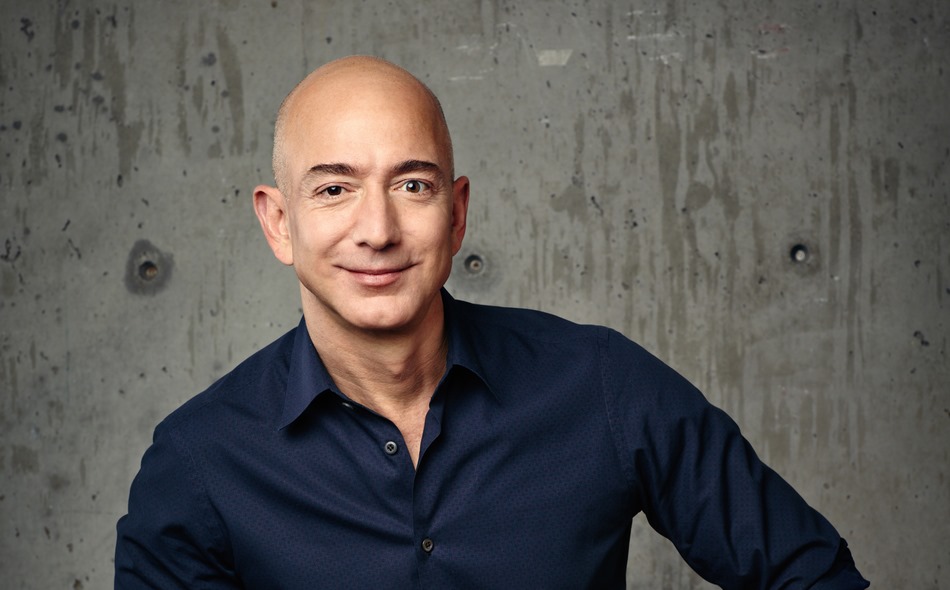
    While the coronavirus pandemic has racked the global economy with uncertainty, Amazon founder Jeff Bezos is on track to become the world’s first trillionaire by the year 2026.

    The business software comparison site used data collected from the last five years of the Forbes Rich List to calculate the yearly wealth growth rate of the world’s richest billionaires.

    The results concluded that Bezos, whose wealth is over $140bn, could become the world’s first trillionaire in 2026, by then he will be 62 years old.

    The study also says that Mark Zuckerberg, founder of Facebook, could become the youngest trillionaire in the world in 2036 when he will be 51 years old.

    Physical shopping is not a thing at the moment, therefore, Amazon is doing well at the moment because the demand for online is very high.

    Last month Jeff Bezos donated $100 million to US food banks which are struggling to feed a growing number of Americans who have lost their jobs due to the coronavirus crisis.

    According to the Billionaires Index, Bezos is one of the world’s five richest people who hasn’t lost money in 2020 as a result of the coronavirus pandemic. Amazon has reported $75.5 billion in revenue for the first quarter of 2020.

  • Pakistan is now manufacturing oxygenators

    Pakistan is now manufacturing oxygenators

    In a first, Pakistan has started manufacturing oxygenators that are imperative for the treatment of 80 per cent of COVID-19 patients, Minister of Science and Technology Fawad Chaudhry has reportedly said.

    Oxygenators are a simple form of ventilators that help patients who have breathing difficulties.

    Furthermore, Pakistan is also making ventilators and N95 masks by using indigenous technology. For the manufacturing of ventilators, the Pakistan Engineering Council received 53 ventilator designs out of which 13 have been shortlisted. Seven have been approved and they are in the last stage of licensing following the European Union (EU) benchmarks.

    “In six to seven months, Pakistan will not just have sufficient ventilators to meet local demand but will be in a position to export these lifesaving machines,” the minister has said.  

    He said that the moment of crisis had made it clear that the role of scientific research and development was underrated in Pakistan during the last decade, adding that it was the only country in the world to cut funding for research and development after 2007 from 0.67 per cent of the GDP to 0.24p per cent.

    “Cities ran short of hand sanitiser, disinfectants and masks immediately after the first two cases of COVID-19 were detected in Pakistan, between Feb 26 and March 5″, the minister said.

    “Since Pakistan is a major exporter of raw ethanol, an important ingredient in sanitisers and sprays, the Pakistan Council for Scientific and Industrial Research (PCSIR) was tasked to produce sanitisers and disinfectant sprays.

    “In two months, Pakistan is not just self-sufficient but is in a position to export these products. The PCSIR now has the capacity to produce 1,000 litres of sanitiser a day, which is available at Utility Stores.” Ziaur Rehman from the PCSIR said.

    The School of Biomedical and Engineering and Sciences and Attaur Rehman School of Applied Biosciences, both constituent colleges of the National University of Sciences and Technology (NUST), have also started working on eye-protection shields, personal protection equipment (PPE) and Covid-19 testing equipment according to World Health Organization (WHO) standards.

    In addition, NUST is in the final stages of introducing Covid-19 test kits and they will be available in the market within a week. The Drug Regulatory Authority of Pakistan (DRAP) has run clinical trials of the kits and they’re in the last stage of approval.

  • France accuses Apple of not helping it with COVID-19 app

    France accuses Apple of not helping it with COVID-19 app

    Tech giant Apple Inc. allegedly refused to help France in its efforts to fight the new coronavirus — COVID-19 — by refusing to make iPhones compatible with a contact-tracing app called “StopCovid”.

    Countries are increasingly developing smartphone apps and taking technical measures to keep the global pandemic in check while reopening the hard-hit economy.

    These dedicated apps use Bluetooth to allow phones to interact with nearby devices and detect when users, who are potential carriers of the deadly virus, come into contact.

    Usually, Apple’s iPhone blocks access to Bluetooth in background running apps, unless the users allow it themselves.

    According to reports, French officials want Apple to change the settings to let their app access Bluetooth in the background, however, the company refused to make the said modifications.

    “Apple could have helped us make the application work even better on the iPhone. They have not wished to do so. I regret this, given that we are in a period where everyone is mobilised to fight against the epidemic, and given that a large company that is doing so well economically is not helping out the government in crisis,” said French minister for digital technology in an official statement.

    A spokesperson for Apple in France, on the other hand, declined to comment on the matter.

    Certain speculations are, however, being made.

    Companies like Apple and Google — who are responsible for managing the data of almost all smartphones — want the data of phones to stay in the device, rather placing it in central databases that are managed by governments around the world.

    However, France and other countries want to keep contact data in the central database, which can trigger security breaches and pose threats to users.

    The French minister thinks that “oversight of the healthcare system, fighting the coronavirus, is a matter for governments and not necessarily for big American companies.”

    “The app should be ready to be deployed by June 2 regardless of Apple’s stance, and would enter a testing phase by May 11, when the country starts to unwind its lockdown,” he reportedly said.

    It merits a mention that In France, Apple’s mobile operating system accounted for 21.1 per cent of the market in the first quarter, while Google’s Android accounted for 78.8%. Britain, which is using the same centralised approach as France to store data, will start testing its COVID-19 tracing app on the Isle of Wight from Tuesday (today).

  • Three UFO videos by US Navy pilots released officially

    Three UFO videos by US Navy pilots released officially

    The Pentagon — headquarters of the United States (US) Department of Defense — has released three declassified videos that show US Navy pilots encountering what appear to be unidentified flying objects, The Guardian reported.

    The grainy videos, which the Pentagon says depict “unexplained aerial phenomena”, were previously leaked, with some believing they show alien UFOs.

    The Pentagon said it released the footage to “to clear up any misconceptions by the public on whether or not the footage that has been circulating was real or whether or not there is more to the videos,” a statement on the Department of Defense website said.

    “After a thorough review, the department has determined that the authorized release of these unclassified videos does not reveal any sensitive capabilities or systems, and does not impinge on any subsequent investigations of military air space incursions by unidentified aerial phenomena,” the statement said.

    The videos had been “circulating in the public domain after unauthorized releases in 2007 and 2017”, the statement said, adding that “the aerial phenomena observed in the videos remain characterized as ‘unidentified’”.

    The three videos show what the pilots saw during training flights in 2004 and 2015. Two of the videos were published by the New York Times in 2017. The other video was released by the To the Stars Academy of Arts and Science group, a media and private science organisation.

    WATCH VIDEO:

    The 2004 video shows an incident that happened 100 miles out over the Pacific, according to the New York Times. Two Navy fighter pilots found an oblong object hovering above the water. It then flew quickly away. “It accelerated like nothing I’ve ever seen,” one of the pilots, Commander David Fravor, told the NYT.

    The 2015 videos show objects moving quickly through the sky, one of them seeming to spin in the air. “Look at that thing, dude!” a pilot says. “It’s rotating!”

    The release of the videos by the Pentagon adds to the legitimacy of the videos and will spur more speculation that humans have recently interacted with extraterrestrials.

  • Twitter updates its COVID-19 policies in a bid to contain the spread of false information

    Twitter updates its COVID-19 policies in a bid to contain the spread of false information

    Twitter is working to ensure that misinformation and panic does not spread through the platform. According to the official Twitter Safety handle, the social media site has “removed over 2,230 tweets containing misleading and potentially harmful content.”

    https://twitter.com/TwitterSafety/status/1253044734416711680?s=20

    Twitter Safety tweeted: “We have broadened our guidance on unverified claims that incite people to engage in harmful activity, could lead to the destruction or damage of critical 5G infrastructure or could lead to widespread panic, social unrest, or large-scale disorder.”

    “Our automated systems have challenged more than 3.4 million accounts targeting manipulative discussions around COVID-19,” the tweet further read.

    “We’re prioritising the removal of COVID-19 content when it has a call to action that could potentially cause harm,” TechCrunch quoted a spokesperson for Twitter as saying.

    With the entire world fighting against coronavirus, many social media domains have made consistent efforts on their part to ensure only relevant remains on their platforms. Earlier, Whatsapp placed a limit on the number of times a message could be forwarded.

  • Wikipedia breaks record: 673 million page views in a day on  COVID-19

    Wikipedia breaks record: 673 million page views in a day on COVID-19

    A large number of users are switching to Wikipedia as a trusted source to share and find COVID-19 updates. Around 4,504 Wikipedia pages have been created to record different aspects of the pandemic like it’s spread to different countries, research to find its treatment and popular conspiracy theories, a private media outlet reported.

    Although the information on Wikipedia is available in 130+ languages, however, the English-language articles on Wikipedia about the virus alone have registered over 240 million views.

    The report also says that Wikipedia Foundation observed a record five-years high traffic, with over 673 million page views in a single day –the traffic was mostly — if not completely to COVID-19 articles.

    On March 12, 2020, the day World Health Organization (WHO) declared COVID-19 as a global pandemic, the main English Wikipedia article on virus received over 1.4m page views; which means that it increased by 73 per cent from the day before WHO’s declaration.

    BATTLING MISINFORMATION

    It is not easy to control misinformation, that is why a dedicated page titled as ‘Misinformation related to the 2019-20 coronavirus pandemic’ is constantly charting and debunking falsehoods on the outbreak. Also, a large number of people are editing information by citing credible sources.

    According to the editor, the key to maintain accuracy on the platform is to cite sources, a single line cited with the credible source will be published but a complete paragraph written by a doctor, without citation will not be published on the platform.

  • Data of 115m Pakistani mobile users for sale on dark web

    Data of 115m Pakistani mobile users for sale on dark web

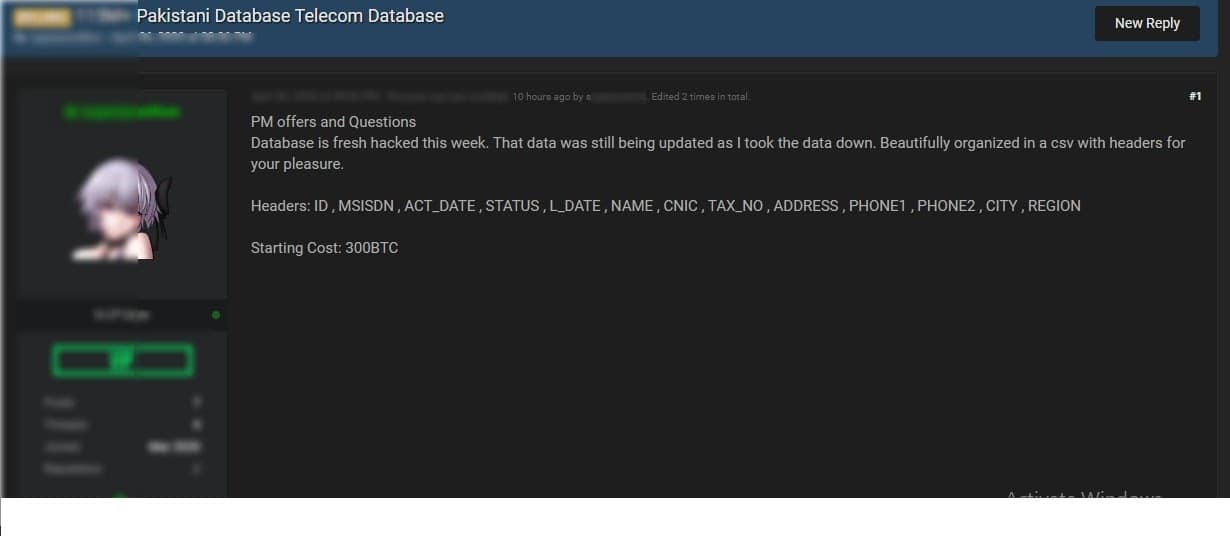
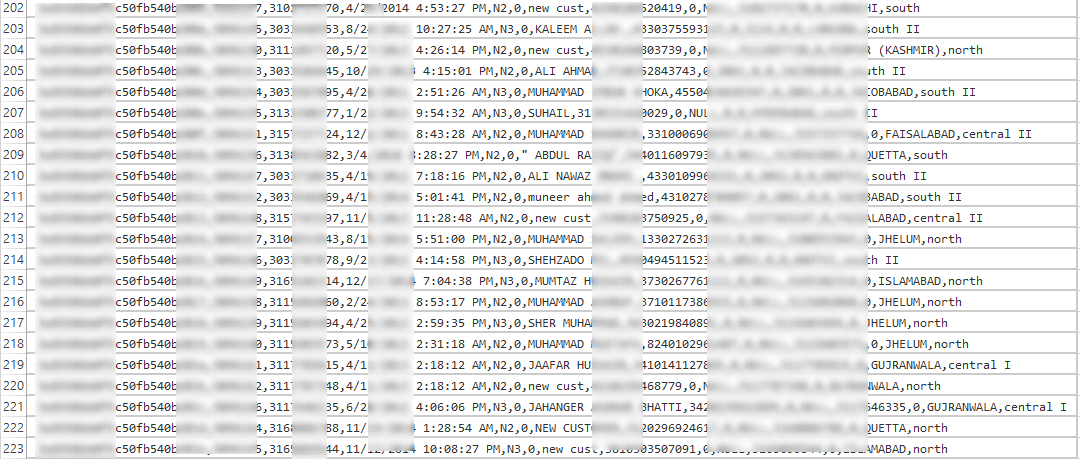
    A Pakistani cybersecurity company has come across data of 115 million Pakistani mobile phone users currently for sale on the dark web, a private media outlet reported.

    The asking price for this data is 300 Bitcoins (BTC), which is equivalent to 2.1 million USD. Cybercriminals is the company who is selling data, they’re also VIP members of the platform.

    Rewterz’s — Pakistani information security company — Threat Intelligence team has analyzed some of the samples from the telecom database up for sale on the notorious dark web. The data includes personal information of the users such as names, contact numbers, residential addresses, CNIC numbers, and NTN numbers.

    According to the report, these threat actors are financially motivated, who’re working in Pakistan. Moreover, organizations with outdated
    cyberinfrastructure are more vulnerable to these threats.

    The team further notes that it is unclear for now whether only single or more telecom companies have fallen victim to cybercriminals.

    According to the given sample’s visible results, the latest data is from 2014 and none of the latest number schemes (0317, 0308 etc) is mentioned.

    As yet, none of the telecom operators has notified their customers that their data has been compromised.

  • Whatsapp imposes new limits on the forwarding of viral messages

    Whatsapp imposes new limits on the forwarding of viral messages

    We are all being bombarded with Whatsapp forwards about coronavirus cures or other related issues in our family/friends or other Whatsapp groups. Many times, these messages turn out to be fake.

    With heightened scrutiny on the potential of private message apps to spread misinformation related to the coronavirus pandemic, WhatsApp on Tuesday said it would place new limits on the forwarding of messages. Messages that have been identified as “highly forwarded” — sent through a chain of five or more people — can only be forwarded to a single person. The move is designed to reduce the speed with which information moves through WhatsApp, putting truth and fiction on a more even footing.

    “We know many users forward helpful information, as well as funny videos, memes, and reflections or prayers they find meaningful. In recent weeks, people have also used WhatsApp to organize public moments of support for frontline health workers,” the company, which is part of Facebook, said in a blog post. “However, we’ve seen a significant increase in the amount of forwarding which users have told us can feel overwhelming and can contribute to the spread of misinformation. We believe it’s important to slow the spread of these messages down to keep WhatsApp a place for personal conversation.”

    For much of WhatsApp’s existence, it was easy for users to forward a single message to as many as 256 people with just a few taps. Initially, these messages were not labelled as forwards, and the end-to-end encryption in WhatsApp could make it almost impossible for authorities to determine who might be using the app to spread hate speech or calls to violence. This triggered a crisis in India, where WhatsApp was linked to mob violence.

    In 2018, WhatsApp began experimenting with limits on the number of times a message could be forwarded. It also began labeling forwarded messages for the first time, and adding two arrows to show that a message has been repeatedly forwarded. Last year, the company began limiting the number of people you can forward a single message to to five.

    It’s a soft limit: nothing prevents you from forwarding the same message over and over again to different people. But introducing more friction helped to slow the rate of forwarding overall — in the past year, WhatsApp says, forwards are down 25 percent around the world.

    But amid a huge surge in use related to the pandemic, WhatsApp has come under the spotlight for the way it can be used to spread misinformation. Last month, CNN and other news organisations found that the app had been used to share a variety of false information about “cures” for COVID-19 and hoaxes about military activity related to the disease. The prime minister of Ireland, Leo Varadkar, urged people to “please stop sharing unverified info on Whatsapp groups.”

    In response, WhatsApp promoted a bot made by the World Health Organisation (WHO) that provides information about the disease that has been vetted by healthcare professionals. The app has been used by more than 10 million people. WhatsApp also donated $1 million to the International Fact-Checking Network.