Tag: China

  • Man ordered to pay ex-wife $7,700 as compensation for housework

    Man ordered to pay ex-wife $7,700 as compensation for housework

    A Chinese court has ordered a man to pay his former wife 50,000 yuan ($7,700) as compensation for housework she did during their five-year marriage. Under a landmark civil code that seeks to better protect the rights of individuals, spouses can seek compensation from their partners in a divorce if they have shouldered more responsibilities – including housework.

    According to details, the woman, who did not work outside the home during the marriage, sought compensation for housework she had done after her husband filed for divorce at a district court in Beijing last year.

    The judge ruled in her favour, telling the man to pay 50,000 yuan for her labour. Additionally he must also pay 2,000 yuan a month to support their child, with other assets such as property to be divided equally.

    Read more – Groom beaten after first wife ‘crashes’ third marriage

    The award of compensation for housework sparked debate on Chinese social media, with many netizens saying the amount was too little.

    “A nanny’s annual income is already in the tens of thousands of yuan,” said a social media user. “This is too little.”

  • China shares dramatic footage of deadly clash with India troops

    China shares dramatic footage of deadly clash with India troops

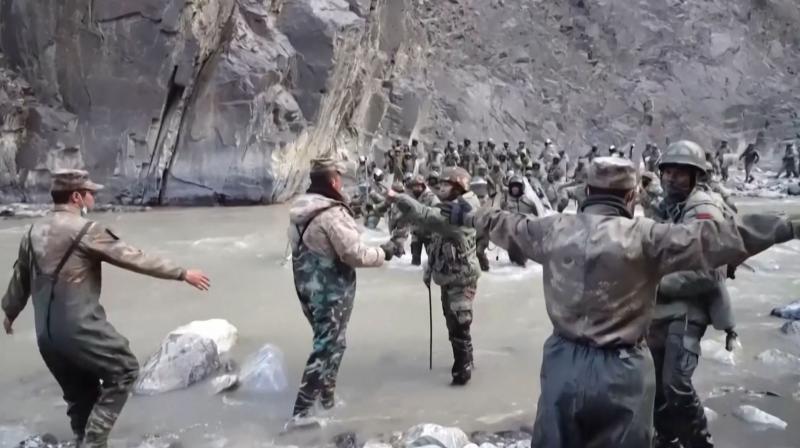
    Dramatic footage released by Chinese state media purportedly shows deadly clashes between troops at the Indian border last year — a rare insight into violence at the tense, remote frontier.

    China’s defence ministry on Friday named four soldiers killed in the brawl, in the first confirmation of deaths by Beijing from an incident that had also claimed the lives of at least 20 Indian soldiers.

    Footage later released by state broadcaster CCTV appeared to show Indian troops wading through a river towards Chinese soldiers in the barren and ice-covered Karakoram Mountains, carrying sticks and shields reading “police”.

    A bilateral accord prevents the use of guns by either side, and brutal clashes between the two sides on the ill-defined border often involve sticks, rocks and fist-fights.

    “They have now moved another new tent here,” one soldier says in the video, which claims the Indian side broke the consensus and crossed the line to “provoke” the Chinese soldiers.

    Later footage shows a large melee of troops from both sides and clashes in the dark, before Chinese soldiers are seen treating a man on the floor whose head is covered in blood.

    The high-altitude border battle in the Galwan valley in June was one of the deadliest clashes between the two sides in recent decades.

    Beijing acknowledged that the clash had resulted in casualties but did not confirm if any Chinese soldiers died until this week.

    The CCTV voiceover said the Chinese soldiers were “heroically sacrificed”.

    Battalion commander Chen Hongjun and three other soldiers have been given posthumous awards, the defence ministry said. State media reported that the youngest soldier to die was 19.

    India and China fought a border war in 1962 and have long accused each other of seeking to cross their frontier — which has never been properly agreed — in India’s Ladakh region, just opposite Tibet.

    Beijing and New Delhi later sent tens of thousands of extra troops to the border, but said last week they had agreed to “disengage” along the border area.

  • NASA’s Perseverance rover lands on Mars, China trails behind

    NASA’s Perseverance rover lands on Mars, China trails behind

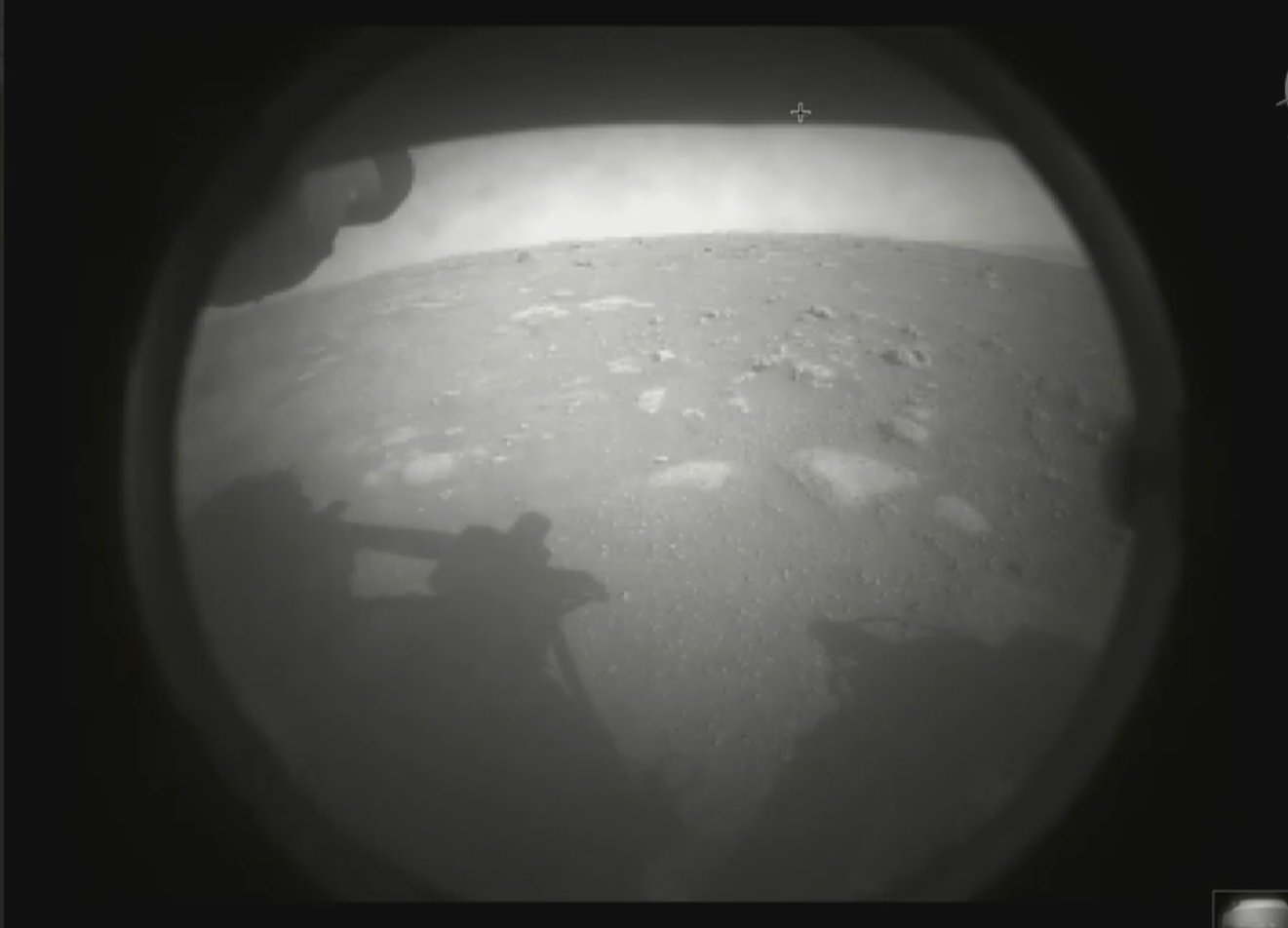
    NASA successfully landed its fifth robotic rover, Perseverance, on the surface of Mars on Thursday after its six-month journey from Earth.

    “Touchdown confirmed. Perseverance is safely on the surface of Mars,” said Swati Mohan, an engineer on the Perseverance team.

    The rover is the most technologically advanced robot NASA has ever sent to Mars. The agency’s goal is to use it to explore the surface in nearly two years.

    NASA spent about $2.4 billion to build and launch the Perseverance mission, with another $300 million in costs expected for landing and operating the rover on the Mars surface.

    Perseverance also has a small helicopter named Ingenuity that NASA would use to try the first flight on another planet.

    The rover’s weight is about 1one ton. It is 10 feet long, nine feet wide and seven feet tall. The camera is fixed in a robotic arm that reaches about seven feet. It also has a chemical analyser and a rock drill.

    Perseverance traveled 293 million miles to reach Mars over the course of more than six months after it was launched on a United Launch Alliance Atlas V rocket on July 30.

    Meanwhile, China’s Tianwen-1 spacecraft has also entered into the orbit and might land on the surface later this year.

  • GDP growth in 2021: Pakistan likely at par with Nigeria at 1.5%; India at 11.5%, China at 8.1%

    GDP growth in 2021: Pakistan likely at par with Nigeria at 1.5%; India at 11.5%, China at 8.1%

    The International Monetary Fund (IMF) has raised its forecast for global economic growth in 2021 but warned that there was still “extraordinary uncertainty” about the outlook.

    According to the latest World Economic Outlook forecast, the IMF projects global growth at 5.5%, which is higher than their previous forecast in October. Global growth will moderate to 4.2% growth in 2022, the IMF said.

    As per the forecast, Pakistan’s gross domestic product (GDP) growth in the ongoing year will stand at 1.5% that it shares with Nigeria, while neighbouring India and China are likely to stand at staggering 11.5% and 8.1%, respectively.

    GDP is the total monetary or market value of all the finished goods and services produced within a country’s borders in a specific time period. As a broad measure of overall domestic production, it functions as a comprehensive scorecard of a given country’s economic health.

    Malaysia’s growth is likely to stand at 7%, Turkey: 6%, Spain: 5.9%, France: 5.5%, the United States (US) 5.1%, Indonesia: 4.8%, the United Kingdom (UK): 4.5%, Mexico: 4.3%, Brazil: 3.6%, Canada: 3.6%, Germany: 3.5%, Japan: 3.1%, Russia: 3%, Italy: 3%, while the GDP growth of Saudi Arabia has been predicted to stand at 2.6%.

    The upgrade for this year reflects the positive effects from the start to vaccinations in some countries, additional fiscal support in the US and Japan, and at least a partial return to business and consumer normality as the health crisis wanes.

    “Much now depends on the outcome of this race between a mutating virus and vaccines to end the pandemic, and on the ability of policies to provide effective support until that happens,” said IMF chief economist Gita Gopinath in a blog post accompanying the updated forecast.

    The global economy contracted by 3.5% in 2020, the worst peacetime contraction since the Great Depression of the 1930s, the agency said.

    Close to 90 million people are expected to enter extreme poverty in 2020 and 2021, reversing the trends of the past two decades, the IMF said.

    Altogether, the COVID-19 pandemic will cost the global economy $22 trillion over 2020-2025 relative to pre-pandemic projected levels.

  • Govt announces free vaccine for all citizens

    Govt announces free vaccine for all citizens

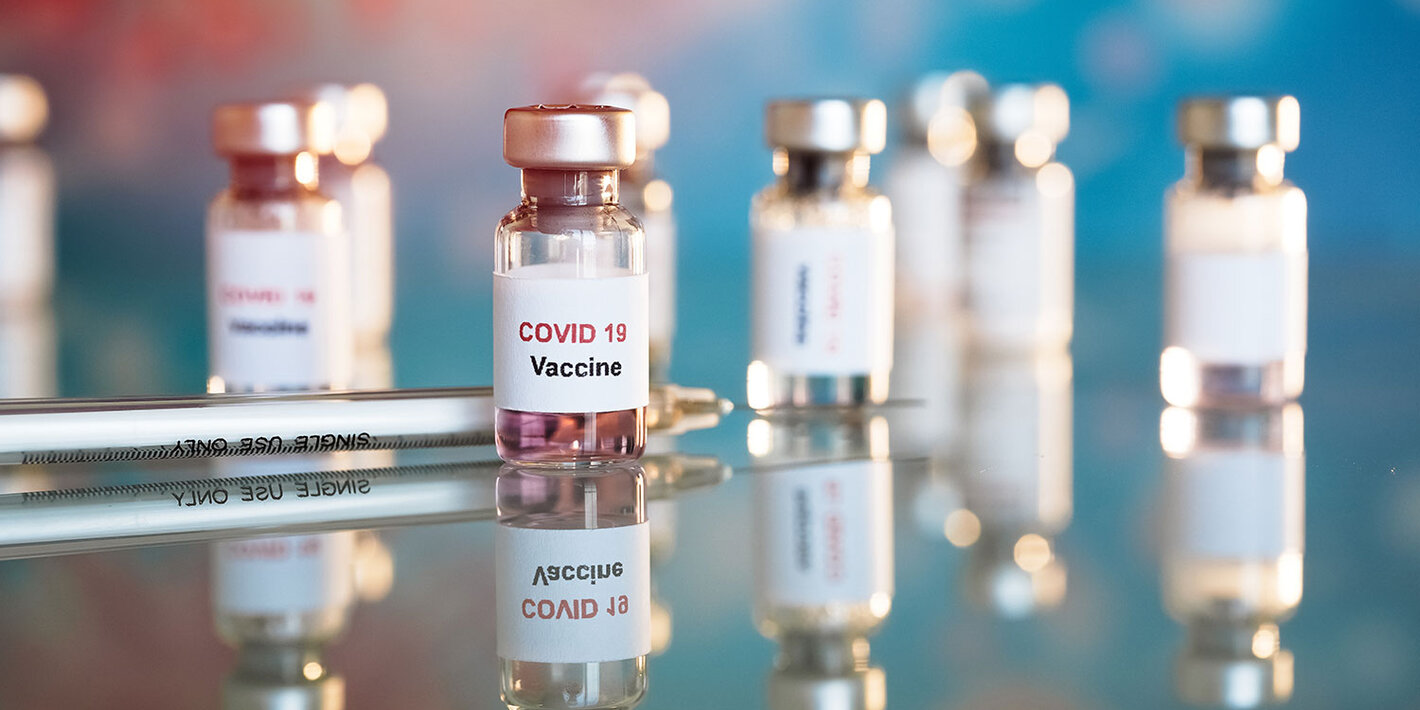
    The federal government has announced free coronavirus vaccine for all Pakistanis, saying the government will inoculate health workers and elderly people in the first phase.

    Dr Faisal Sultan, prime Minister’s aide on health, said that the government is eyeing procurement of at least 20 million vaccine doses in the first stage; however, only 1 million doses will be procured by March this year.

    He further said that the registration process for the vaccination is underway and the government would soon begin the drive once the vaccine doses arrive from China.

    Reports say China will provide 0.5 million vaccines by the end of this month free of cost, while more vaccines from China will arrive in Islamabad next month.

    Foreign Minister Shah Mahmood Qureshi also talked about the procurement from the United Kingdom. He said the government was in talks with the UK to procure the vaccine developed by the British pharmaceutical company.

    So far, three firms, British firm Oxford-AstraZeneca, Chinese firm Sinopharm and CanSino Biologics, have asked Pakistan to buy their vaccine. Oxford-AstraZeneca and Sinopharm are already registered with Pakistan whereas CanSino is conducting phase-III trials in the country.

    Recently, the Human Rights Commission of Pakistan (HRCP) had expressed serious concerns over the government’s decision to ask provinces and the private sector to import the coronavirus vaccine.

    As per the details, with the Cabinet Committee on Procurement of COVID-19 Vaccine briefing Prime Minister Imran Khan on efforts being made to engage more pharmaceutical companies for procurement, HRCP had said that the government’s decision in this regard was not the right step.

    It may be noted that amid reports of a delay in the procurement of vaccine, some journalists claimed that the government was in no hurry to order the coronavirus vaccine as most of the senior government members had already been vaccinated against the deadly disease.

  • CPEC to come down crashing? Foreign media report claims ‘most serious disagreement’ between Pakistan, China

    Pakistan and China are embroiled in their most serious disagreement relating to the Belt and Road Initiative, causing the annual bilateral summit of the China-Pakistan Economic Corridor (CPEC) to be delayed, the world’s largest financial newspaper has claimed.

    The Joint Cooperation Committee (JCC) is CPEC’s principal decision-making body. It is jointly chaired by Pakistan’s minister for planning, development and special initiatives and the vice chairman of China’s National Development and Reform Commission.

    The first JCC meeting was held in August 2013 and the last in November 2019. The 10th JCC was scheduled for early 2020, but remains postponed.

    Initially, the COVID-19 pandemic was the reason, but later disagreements between the two countries over the Main Line 1 (ML-1) railway project and special economic zones became the main points of disagreement, Nikkei Asia has learned from informed sources.

    Asad Umar, Pakistan’s minister for planning, development and special initiatives, told local media in November that the 10th JCC would be held the following month. However, officials in the Planning Commission of Pakistan, who asked not to be named, recently told Nikkei that the meeting will not take place for at least three months — by far the longest JCC gap to date.

    ML-1 is the largest CPEC project and worth $6.8 billion. China is expected to lend $6 billion of this, which Pakistan wants to borrow at a concessional interest rate of less than 3%.

    China offers a mixture of concessionary and commercial loans for such projects. This could significantly increase the aggregate interest rate Islamabad will face, according to the planning commission officials.

    “China is reluctant to lend money for ML-1 because Pakistan has already sought debt relief to meet G-20 lending conditions and it is not in a position to give sovereign guarantees,” Nasir Jamal, a senior journalist in Lahore covering business and the economy, told Nikkei. He said Beijing’s appetite for lending money for large infrastructure projects has diminished because these projects are vulnerable to local politics that delay returns on investment for China. That has hindered agreement on the finance framework for ML-1.

    Andrew Small, a senior trans-Atlantic fellow with the Asia program at the German Marshall Fund, a U.S. think tank, said China tends to base its decisions about interest rates for loans to Pakistan on a couple of criteria. Firstly, do low-interest rates encourage projects that do not make sense financially? Secondly, what precedents are set for other countries looking for similar concessions?

    “China is much more comfortable deferring payments or providing new financing than it is offering concessional rates in the first place,” Small told Nikkei. He said this approach provides Beijing with greater leverage and control even if they are willing to be very flexible at the back-end.

    With host countries under pressure to repay at higher rates, China trades payment deferments in return for influence, which helps it get more favorable arrangements.

    The delayed JCC meeting and unsettled ML-1 financial framework is complicating matters for Pakistan. Early this month, Pakistan Railways asked the government for 11 billion rupees ($69 million) to provide ML-1 security. Without the Chinese financing framework being agreed by the JCC, it is hard for Islamabad to come up with such a large amount given the state of the economy and severe budgetary constraints.

    The other major disagreement between Beijing and Islamabad delaying the JCC meeting relates to SEZs. In the second phase of CPEC scheduled for 2020 to 2025, Chinese companies are due to start producing goods in Pakistan and exporting from there.

    Currently, the industrial cooperation framework for the SEZs is limited to a memorandum of understanding without detailed modalities. Matters such as tax exemptions and requirements for employing local labor have not been finalized. These need to be agreed by China for confirmation at the JCC. The Board of Investment of Pakistan submitted the draft agreement for the industrial cooperation framework to the Chinese government last month and is still awaiting a response.

    In December 2020, during a meeting of the Joint Working Group on Industrial Cooperation under CPEC, Asim Ayub, the project director for industrial cooperation at the Board of Investment, pressed for early signing of the industrial cooperation framework agreement.

    The seriousness of the delay is clear from China’s unprecedented reluctance to schedule a JCC meeting. In the past, JCCs were always held in time, and China agreed to Islamabad’s requests most of the time. Some experts believe the delay is evidence that CPEC is derailing.

    According to Small, there were plenty of announcements about CPEC last year, but actually setting deals in motion was another matter. “The optics do matter to China so I still expect them to figure out terms in the end, and certainly to keep some narrative of continued progress alive,” Small told Nikkei. “But that doesn’t mean they’re willing to agree on something that doesn’t make sense for other reasons just to speed things up a little.”

    Pakistan is currently renegotiating its $6 billion extended fund facility with the International Monetary Fund (IMF), which was suspended in April 2020. The IMF reportedly will only resume the program if Pakistan does not take out any new commercial loans, and that is one of the reasons it is looking for concessions on loans for the ML-1 project.

    An important long-term implication of this case for other BRI countries could be that China will be more wary of lending to countries that have entered loan agreements with global lenders such as the IMF.

    Hasaan Khawar, an Islamabad-based public policy analyst, views the situation from a different perspective. “The back-and-forth with China by Pakistan on the interest rate and additional guarantees for the ML-1 project is a good sign,” he told Nikkei. “The Pakistani side is appraising the terms carefully and trying to negotiate a better deal.”

    The report originally appeared on Nikkei Asia
  • Ice cream tests positive for COVID-19

    Ice cream has been found to have been contaminated with COVID-19 in China after three samples of the dessert tested positive for the virus.

    As per details, authorities in China are tracing people who may have come into contact with the contaminated batches, which were produced by the Chinese food company.

    All products made by the firm have been sealed after the samples it sent to the municipal centre for disease control this week tested positive for coronavirus.

    Initial epidemiological investigations show the ice cream batch has used raw materials that include milk powder imported from New Zealand and whey powder imported from Ukraine.

    Authorities said the company produced 4,836 boxes of the contaminated ice cream of which 2,089 had been sealed away in storage.

    A total of 935 boxes of the ice cream, out of 2,747 boxes that entered the market, were in Tianjin and only 65 were sold to markets.

    Authorities said citizens who may have bought the product must report their health and physical movements to those in their communities.

    The city has also informed the market regulation authorities in other provinces where the ice cream was sent so it can be traced.

    Meanwhile, 1,662 employees of the company have gone into isolation.

  • Pakistan takes money from China to pay back $1bn Saudi loan

    Pakistan takes money from China to pay back $1bn Saudi loan

    Pakistan will return $1 billion to Saudi Arabia this week with the help from China that agreed to lend Islamabad $1-1.5bn on a short notice to pay back the Saudi loan.

    It may be noted here that Saudi Arabia had provided Pakistan a financial package, originally estimated at $6.2 billion, to help the government of Prime Minister Imran Khan to avoid looming default on international debt obligations two years ago.

    However, due to apparent strain in ties, the Saudis have already suspended the oil facility and taken a billion back. Pakistan paid it back as a first tranche in May this year. Pakistan returned $1 billion to Saudi Arabia after taking an equal amount of loan from China. Reports claim that the next tranche will be paid by the coming month to clear the remaining Saudi dues.

    The government has also not been able to get the suspended $6 billion IMF programme restored, which is making it difficult for it to continue uninterrupted foreign inflows.

    By Sept last year, Prime Minister Imran Khan-led government had admitted to taking $10.37 billion debt from different countries and international lenders.

    In a written reply to a question in the National Assembly, Minister for Economic Affairs Hammad Azhar had said the Pakistan Tehreek-e-Insaf (PTI) government secured $10.37 billion from various governments and international institutions from August 14, 2018, to September 30, 2019.

    The government, during this period, received $1.54 billion from China, $151.79 million from Saudi Arabia, $68.6 million from France, $0.4 million from Germany, $62.48 million from Japan, and $0.01 million from Kuwait.

  • Titanic II is preparing to sail in 2022

    Titanic II is preparing to sail in 2022

    Titanic II, a nearly identical replica of the doomed ship, might make its maiden trip in 2022, giving fans a chance to experience the journey themselves.

    According to reports, Australian businessman and politician Clive Palmer is behind the initiative. Work on the ship recently restarted after a financial dispute with the Chinese government stopped development back in 2015. The idea for the ship was first floated in 2012.

    The new ship will be an identical copy of the ship, which sank in 1912 after hitting an iceberg. It will have the same cabin layout, public areas, swimming pool, Turkish baths, and a grand staircase as the original ship.

    Titanic II will also be equipped with plenty of life boats and will have modern navigation and radar equipment to avoid any disaster.

    When construction is completed, there will be nine floors and 840 cabins, and passengers will have their pick between first, second, or third-class tickets. The first sailing is scheduled to take place in 2022.

  • ‘Only Turkey, not even China, supported Pakistan at FATF,’ Indian media reports claim

    ‘Only Turkey, not even China, supported Pakistan at FATF,’ Indian media reports claim

    After the Financial Action Task Force (FATF) decided to keep Pakistan in the grey-list till February, Indian media reports have claimed that Recep Tayyip Erdogan’s Turkey was the only country to back Pakistan at the plenary meeting of the global anti-money laundering watchdog while China bailed out.

    The FATF, also known by its French name, Groupe d’action financière, is an intergovernmental organisation that combats money laundering. In 2001, its mandate was expanded to include terrorism financing.

    Pakistan was placed on the FATF’s grey list in 2018 whereas in February 2019, the country had secured an extra four months to complete the plan after missing 13 of the 27 targets set by the global watchdog.

    According to reports, Turkey, during October 23’s plenary, proposed a special visit to Islamabad to make an onsite assessment of the Imran Khan government’s implementation to plug holes in its legal framework to curb terror financing.

    READ: ‘Successful implementation’: Hammad Azhar says FATF blacklisting off the table

    The suggestion was seen as an effort to let Pakistan off the hook for now and immediately place it on the white list but was not supported by any other country, including allied China and Malaysia.

    “Out of 27 points, we have implemented 21 points given by the authorities concerned regarding FATF, ” Minister for Revenue Hammad Azhar said while talking to a private television channel after the watchdog decided to retain Pakistan on its grey list.

    Except India, every country had appreciated the efforts of Pakistan for satisfying the people dealing FATF, he added.

    BLACKLISTING OFF THE TABLE:

    In a statement, FATF urged Pakistan to complete an internationally agreed action plan by February 2021. FATF said Pakistan had now reached 21 targets out of 27 set for it in 2018 when Pakistan was placed on FATF’s “grey list” of countries with inadequate controls over terrorism financing.

    But Pakistan still needs to demonstrate that law enforcement agencies are identifying and investigating the widest range of terrorism financing activity, FATF said.

    The watchdog also asked Islamabad to demonstrate that terrorism financing probes resulted in effective, proportionate and dissuasive sanctions.

    “FATF acknowledged that any blacklisting is off the table now,” Pakistani federal minister Hammad Azhar tweeted.

    Azhar, who leads Pakistan’s delegation at FATF plenary meetings, said the forum’s discussions were focused on how Pakistan could be supported in meeting its targets before a formal review in the middle of next year.