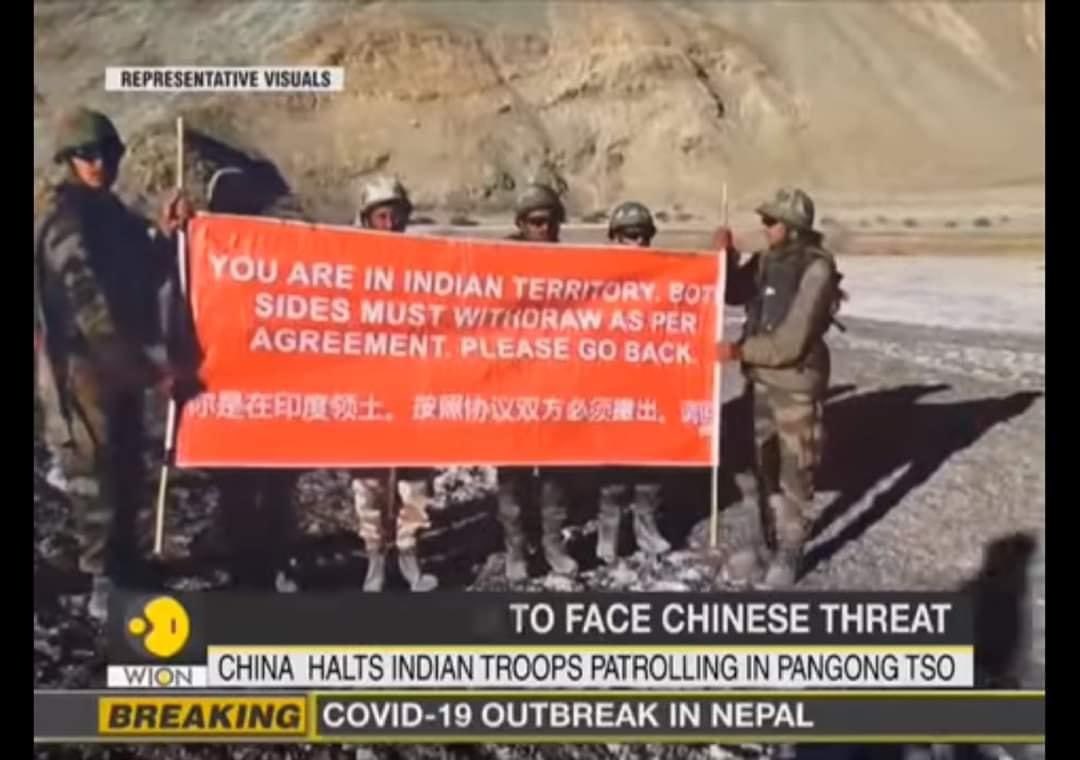
At least 20 Indian soldiers were killed in an armed clash with China in Galwan Valley of Ladakh earlier this week.
While the number of Chinese casualties is still unclear, anchors of an Indian news channel have claimed that 30 were killed, reading out their names from a fake Whatsapp forward message.
While the message was falsely credited to Chinese daily tabloid newspaper Global Times, there’s no evidence to support its validity.
However, later in its bulletin, the news channel probably noticed the faux pas and mentioned that the information could be a “fake forward”.
Following this, several Indian news outlets fact-checked this and found that no such information had been shared by Global Times. A search on the organisation’s website also led to no results while the news organisation has not shared any such information on its Twitter account as well.
Meanwhile, Hu Xijin, editor-in-chief of Global Times, tweeted that the Chinese government had not released the official number of casualties.
Chinese side didn’t release number of PLA casualties in clash with Indian soldiers. My understanding is the Chinese side doesn’t want people of the two countries to compare the casualties number so to avoid stoking public mood. This is goodwill from Beijing.
“My understanding is the Chinese side doesn’t want people of the two countries to compare the casualties number so [as] to avoid stoking public mood. This is goodwill from Beijing,” Xijin wrote.
A plane made an emergency landing after a drunk woman broke a window during the flight. She was reportedly upset because her boyfriend broke up with her. The incident occurred last month during a domestic Loong Airlines flight in China.
As per reports, 29-year-old Li “lost control of her emotions” on the flight on May 25.
Photos doing rounds on social media show Li crying on her seat and striking the glass window even as squad members and other passengers tried to restrain and calm her. She cracked the first layer of the plane window by hitting it repeatedly.
After the woman broke the window, the pilot was forced to make an emergency landing. The plane was supposed to travel from Xining to the coastal city of Yancheng. However, the pilot was forced to make an emergency stop in Zhengzhou.
Image credit: Weibo.com
Zhengzhou police said that Li’s boyfriend had ended the relationship which resulted in the outburst of emotions. They said that Li had consumed half a liter of the Chinese grain alcohol known as ‘baijiu‘ before boarding the flight. The beverage has an alcohol volume of between 35 to 60 percent.
Luckily, nobody was hurt during the mid-air scare. Crew passengers managed to confine the woman before the plane touched down in Zhengzhou, where she was detained by police.
Her blood alcohol content was measured at 160mg/100ml. Police have not revealed how long the woman was remanded in custody for, or whether she will be fined for damaging the aircraft.
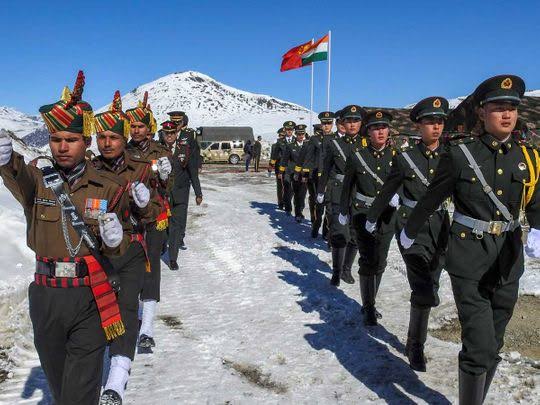
In an armed conflict between two nuclear-armed neighbours, at least 20 Indian soldiers were killed in the Galwan Valley in Ladakh after a “violent face-off” with Chinese troops ensued.
According to Indian media reports, both sides “have disengaged” after 17 Indian troops were injured.
The injured troops “exposed to sub-zero temperatures in the high altitude terrain have succumbed to their injuries”, ANI reported, adding this had brought the death toll, from the earlier reported three to 20.
And exposed to sub-zero temperatures in the high altitude terrain have succumbed to their injuries, taking the total that were killed in action to 20. Indian Army is firmly committed to protect the territorial integrity and sovereignty of the nation: Indian Army (2/2) https://t.co/5duc0Jlfwb
According to earlier reports by Indian media, three troops, including an officer and two soldiers were among those killed near the Line of Actual Control (LAC).
“During the de-escalation process underway in the Galwan Valley, a violent face-off took place yesterday night with casualties. The loss of lives on the Indian side includes an officer and two soldiers. Senior military officials of the two sides are currently meeting at the venue to defuse the situation,” an official statement said.
Meanwhile, British news outlet The Telegraph, quoting Indian army sources, reported that four soldiers are currently missing and a further 32 “were handed back after being captured”.
Indian media also reported that 40 Chinese soldiers were killed in the clash, however, the news was soon retracted.
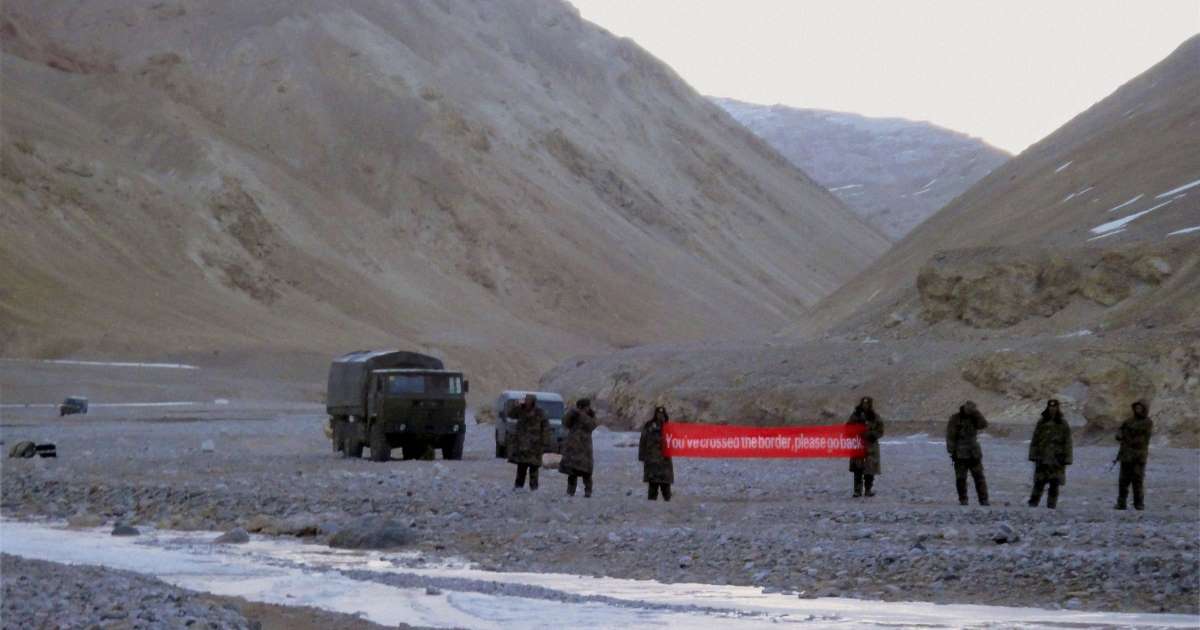
India and China have been locked in a standoff in the western Himalayas for weeks, though there had been no casualties on either side.
In Beijing, Zhao Lijian, a spokesman for the Foreign Ministry, said that Indian forces had twice crossed the border illegally on Monday and attacked Chinese personnel. He said the Chinese side had “lodged strong protests” but continued to work toward resolving the tensions between the two countries.
According to the Hindustan Times, Beijing accused the Indian army of provoking and attacking Chinese soldiers after a border meeting to de-escalate the ongoing tension led to a “physical conflict” between the two sides. Reuters’ report suggested that Beijing warned New Delhi not to take unilateral action or stir up trouble.
The Asian giants have rival claims to vast swathes of territory along their 3,500 kilometers Himalayan border, but the disputes have remained largely peaceful since a border war in 1962.
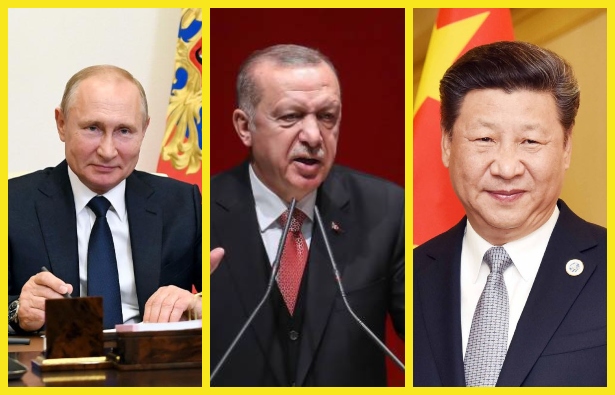
Twitter has removed over 200,000 handles for spreading pro-China and Russia messages while also boosting support for Turkish President Recep Tayyip Erdogan.
The company said “a core network” of 23,750 highly active Chinese accounts had been removed, along with another 150,000 “amplifier accounts”.
Amplifier accounts share content to increase engagement that increases word-of-mouth exposure.
Twitter said the Chinese network had links to an earlier state-backed operation dismantled last year by Twitter, Facebook and Google’s YouTube, which had been pushing misleading narratives about political dynamics in Hong Kong.
Twitter said 23,750 accounts were the main focus while other accounts were identified as helping to boost the messages.
Twitter also revealed it has shut down more than a thousand Russian-based misinformation accounts.
In an official statement on fake Turkish Twitter accounts, they said that “those accounts were fake profiles designed to support the president and were single-handedly managed by a central authority”.
However, Erdogan’s Communications Director Fahrettin Altun denied the allegations through his official Twitter handle while stating that it was an “attempt to smear the Turkish government and a popular political movement, which was unacceptable”.
Twitter'ın Türkiye'de bazı hesapları kapatma kararı ve kapattığı hesaplarla ilgili ortaya attığı iddialara ilişkin açıklama: pic.twitter.com/dXaHWYBVn9
In general, the entire network was involved in a range of manipulative and coordinated activities. They were tweeting predominantly in Chinese, Russian and Turkish languages and spreading geopolitical narratives for political agendas.
Last week, Twitter also accused United States (US) President Donald Trump of making false claims in some of his posts, although the platform has come under fire for not removing coronavirus misinformation.
Earlier this week, the company said it was trialing a new “read before you retweet” pop-up aimed to promote “informed discussions”.
A message will appear on articles that users share without actually following the link to the article.
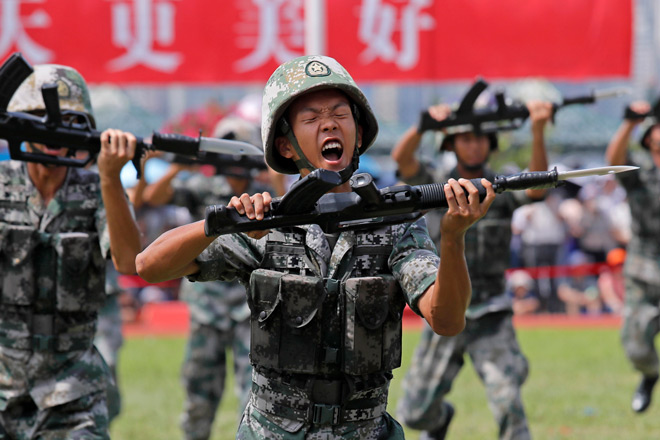
Chinese President Xi Jinping has ordered his army to strengthen the training of its troops and “prepare for war”, foreign media outlets reported.
The Chinese president said that it was important to “comprehensively strengthen the training of troops and prepare for war”, “resolutely safeguard national sovereignty” and “safeguard the overall strategic stability of the country”.
Xi’s speech comes amid rising tensions with the United States (US) and escalating clashes with the Indian army at the Ladakh border. Both armies are said to have deployed additional troops in sensitive areas along the boundary with experts predicting a lengthy standoff.
As per a report by ThePrint, Beijing has also increased up security on its side of the Line of Actual Control (LAC) by locating an estimated 1,200 to 1,300 troops near the Pangong Lake.
Xi, who chairs China’s powerful Central Military Commission (CMC), made the comments at a meeting of the delegation of the People’s Liberation Army (PLA) and People’s Armed Police Force (PAPF) on the sidelines of the annual session of the National People’s Congress (NPC), the country’s parliament.
He emphasised on preparing for a military struggle “…to flexibly carry out actual combat military training, and to comprehensively improve our military’s ability to carry out military missions”.
“This epidemic prevention and control struggle is a practical test for national defence and military reform, fully embodies the effectiveness of the reform, and also puts forward new requirements for reform,” he added.
Two days back, Chinese diplomat Wang Yi, criticised the efforts of some US politicians to fabricate “rumours” and “stigmatise” China to blame it for the pandemic.
A Himalayan border standoff between old foes India and China was triggered by India’s construction of roads and airstrips in the region as it competes with China’s spreading Belt and Road Initiative (BRI), Indian observers said on Tuesday.
Soldiers from both sides have been camped out in the Galwan Valley in the high-altitude Ladakh region, accusing each other of trespassing over the disputed border, the trigger of a brief but bloody war in 1962.
About 80 to 100 tents have sprung up on the Chinese side and about 60 on the Indian side where soldiers are billeted, Indian officials briefed on the matter in New Delhi and in Ladakh’s capital, Leh, said.
Both were digging defences and Chinese trucks have been moving equipment into the area, the officials said, raising concerns of a long faceoff.
“China is committed to safeguarding the security of its national territorial sovereignty, as well as safeguarding peace and stability in the China-India border areas,” the Chinese Foreign Ministry spokesperson’s office said in a statement.
“At present, the overall situation in the border areas is stable and controllable. There are sound mechanisms and channels of communication for border-related affairs, and the two sides are capable of properly resolving relevant issues through dialogue and consultation.”
There was no immediate Indian foreign ministry comment. It said last week Chinese troops had hindered regular Indian patrols along the Line of Actual Control (LAC).
But interviews with former Indian military officials and diplomats suggest the trigger for the flare-up is India’s construction of roads and airstrips.
“Today, with our infrastructure reach slowly extending into areas along the LAC, the Chinese threat perception is raised,” said former Indian foreign secretary Nirupama Rao.
“Xi Jinping’s China is the proponent of a hard line on all matters of territory, sovereignty. India is no less when it comes to these matters either,” she said.
After years of neglect Prime Minister Narendra Modi’s government has pushed for improving connectivity and by 2022, 66 key roads along the Chinese border will have been built.
One of these roads is near the Galwan valley that connects to Daulat Beg Oldi airbase, which was inaugurated last October.
“The road is very important because it runs parallel to the LAC and is linked at various points with the major supply bases inland,” said Shyam Saran, another former Indian foreign secretary.
“It remains within our side of the LAC. It is construction along this new alignment which appears to have been challenged by the Chinese.”
China’s BRI is a string of ports, railways, roads and bridges connecting China to Europe via central and southern Asia and involving Pakistan, China’s close ally and India’s long-time foe.
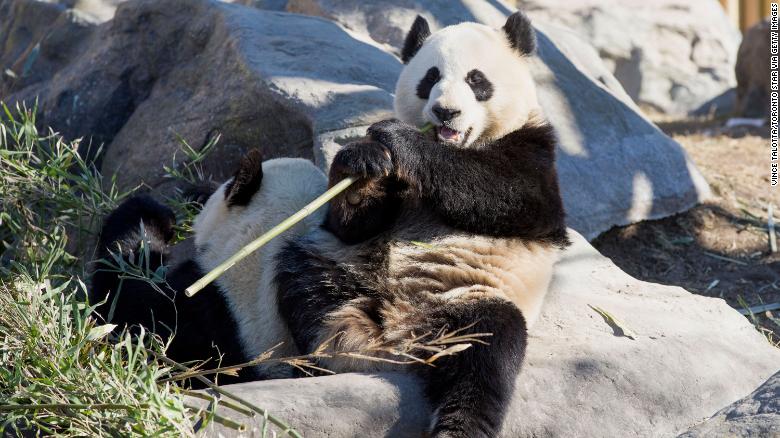
The Calgary Zoo in Canada is sending two giant pandas back to China due to a shortage of bamboo. A lack of flights due to the COVID-19 pandemic has caused issues with shipments of high-quality bamboo imported from China, forcing the zoo to make the difficult decision.
“When you’re looking after the welfare of animals, you need to put the politics and business aside,” said Calgary Zoo president Dr Clement Lanthier. “It is too much of a risk for the health and welfare of (the pandas).”
Er Shun and Da Mao have been in Calgary since March of 2018 and were expected to remain through 2024 as part of a 10-year agreement between Canada and China. The pair spent their first five years at the Toronto Zoo.
The facility had originally been importing bamboo from China to Calgary directly but when those flights were cancelled due to the coronavirus crisis, they began receiving the bamboo via Toronto. However, when flights from China to Toronto were scaled back, it affected the regularity of their shipments. Delivery times were also slower than normal causing poor quality bamboo.
They began bringing bamboo in from the United States but Er Shun and Da Mao refused to eat it, preferring the taste of Chinese bamboo instead.
According to Dr Doug Whiteside, a senior veterinarian at The Calgary Zoo, this can happen because giant pandas have a specific taste and smell for bamboo and are selective eaters.
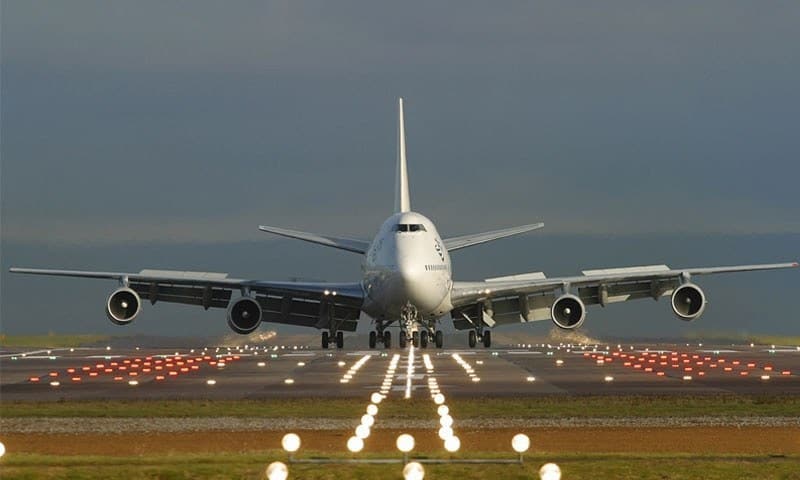
A day after the government announced to repatriate students from the Chinese city of Wuhan, Pakistan International Airlines (PIA) spokesperson Abdullah Hafeez on Saturday confirmed that a special flight of the national flag carrier will bring back stranded nationals on May 18.
According to Hafeez, some 250 students will be brought back on the first flight which will land in Islamabad.
The schedule for three more flights will be announced next week, he added.
The announcement was originally made by Special Assistant to Prime Minister for Overseas Pakistani Syed Zulfikar Abbas Bukhari on Twitter. “I’m very happy for the 1st flight going to Wuhan to bring back our Pakistani students on 18/05/2020,” he wrote.
I’m very happy for the 1st flight going to Wuhan to bring back our Pakistani students on 18/05/2020. You guys have been the bravest soldiers, PM @ImranKhanPTI & Pakistan are proud of you.
A potential antiviral drug for the coronavirus has reportedly failed in its first randomised clinical trial, Financial Times reported.
According to reports, there had been widespread hope that remdesivir could treat the new coronavirus — COVID-19 — that has left at least 191,000 people dead and 2.7 million infected across the globe.
But a Chinese trial showed that the drug had not been successful, according to draft documents accidentally published by the World Health Organization (WHO).
The drug did not improve patients’ condition or reduce the pathogen’s presence in the bloodstream, it said.
Researchers studied 237 patients, giving the drug to 158 and comparing their progress with the remaining 79. The drug also showed significant side effects in some, which meant 18 patients were taken off it.
Interest in the drug, had been high as there are currently no approved treatments or preventive vaccines for COVID-19, and doctors are desperate for anything that might alter the course of the disease that attacks the lungs and can shut down other organs in extremely severe cases.
The United States (US) firm behind the drug, Gilead Sciences, is testing it in multiple trials, and highly anticipated trial results from a study involving 400 patients hospitalised with severe cases of the illness are expected later this month.
It says the WHO documents mischaracterised the study.
Remdesivir, which previously failed as a treatment for Ebola, is being tried against COVID-19 because it is designed to disable the mechanism by which certain viruses, including the new coronavirus, make copies of themselves and potentially overwhelm their host’s immune system.
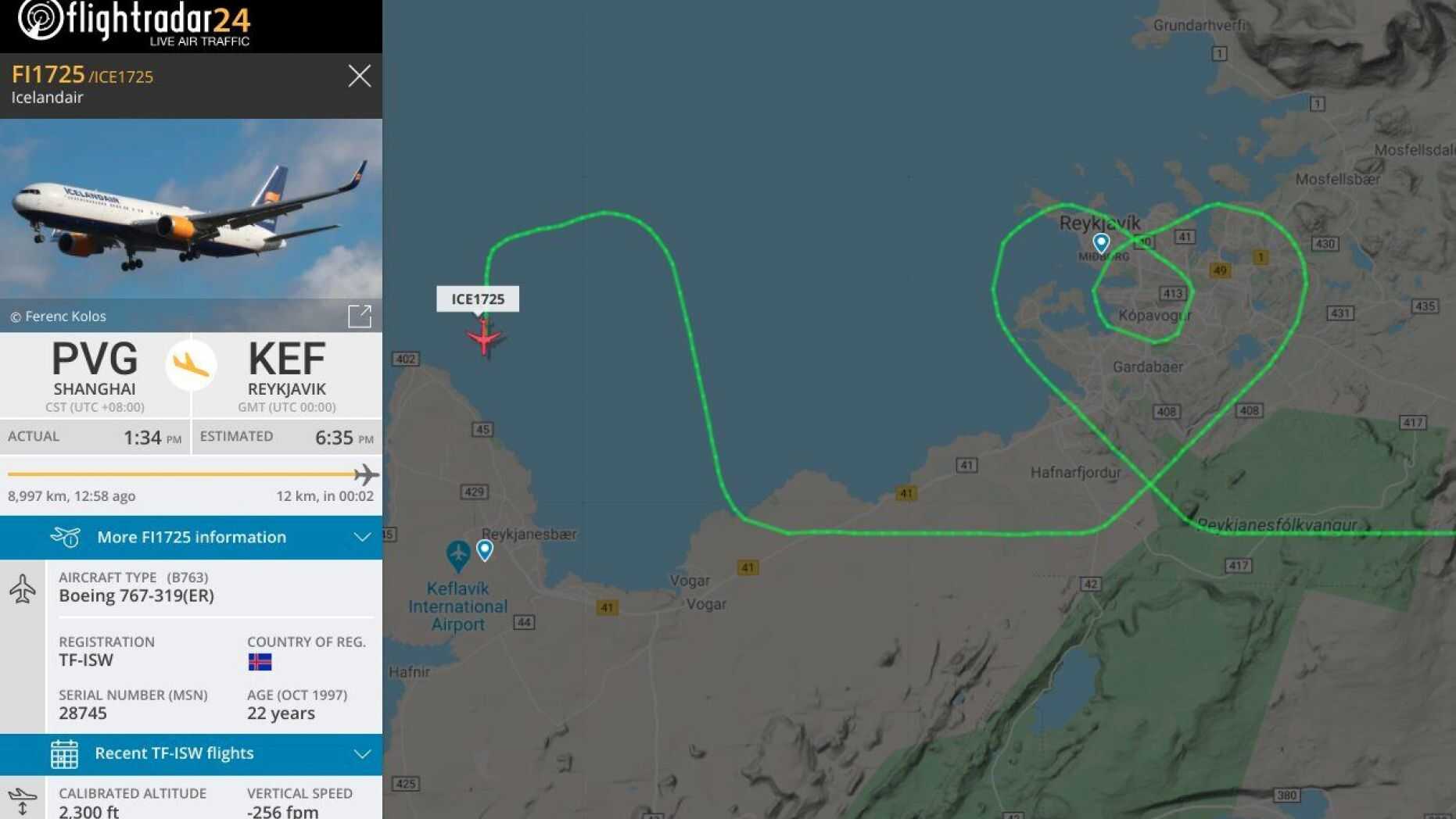
A pilot of Icelendair — flag carrier airline of Iceland — has drawn a heart in the sky over hospitals in the capital city of Reykjavík to thank healthcare workers for their bravery and dedication during the coronavirus pandemic.
According to The Reykjavík Grapevine — an Icelandic magazine –, during a recent flight from China, the anonymous pilot of the Boeing 767 aircraft drew a large heart with the plane’s flight path. It was an important journey of nearly 5,600 miles, as the Icelendair flight was importing much-needed medical supplies.
Before the flight landed, the plane doubled back to doodle a heart above two of the capital city’s hospitals. Though the change in course reportedly added another nine minutes to the flight, it was a heartfelt salute for the nation’s healthcare personnel.
The plane marked the last of three flights from China that have carried a total of some 50 tonnes of various medical supplies, including masks and protective suits, intended for Iceland’s healthcare workers treating those infected with the coronavirus.
As of Wednesday, 1,778 confirmed cases of the novel coronavirus had been reported in Iceland. The viral disease has also claimed the lives of at least ten people in the Nordic island nation.