Tag: China

  • Do you know what were the top three most polluted countries in 2023?

    Do you know what were the top three most polluted countries in 2023?

    IQAir, a Swiss air monitoring organisation, published its World Air Quality Report on Tuesday revealing troubling details of the world’s most polluted countries, territories, and regions in 2023.

    “IQAir’s annual report illustrates the international nature and inequitable consequences of the enduring air pollution crisis. Local, national, and international effort is urgently needed to monitor air quality in under-resourced places, manage the causes of transboundary haze, and cut our reliance on combustion as an energy source,” states Aidan Farrow, Sr. Air Quality Scientist, Greenpeace International.

    “In 2023, air pollution remained a global health catastrophe. IQAir’s global data set provides an important reminder of the resulting injustices and the need to implement the many solutions that exist to this problem.”

    The report revealed that Pakistan, alongside Bangladesh and India, remained among the top three countries with the highest levels of air pollution, particularly concerning particulate matter, in 2023.

    The concentrations of PM2.5, harmful airborne particles detrimental to respiratory health, surpassed recommended levels by a staggering margin, as indicated by the World Health Organization (WHO).

    In Bangladesh, the average concentration of PM2.5 reached 79.9 micrograms per cubic meter, while in Pakistan, it stood at 73.7 micrograms per cubic meter. These figures starkly contrast with the WHO’s guideline of no more than 5 micrograms per cubic meter.

    “Because of the climate conditions and the geography (in South Asia), you get this streak of PM2.5 concentrations that just skyrocket because the pollution has nowhere to go,” said Christi Chester Schroeder, air quality science manager at IQAir.

    “On top of that are factors such as agricultural practices, industry and population density,” she added. “Unfortunately, it really does look like it will get worse before it gets better.”

    In 2022, Bangladesh was ranked fifth for its air quality, with India in the eighth position. Approximately 20% of premature deaths in Bangladesh are attributed to air pollution, with related healthcare costs accounting for a substantial portion of the country’s GDP, according to Md Firoz Khan, an air pollution expert at Dhaka’s North South University.

    India also witnessed an escalation in pollution levels in 2023, with PM2.5 levels exceeding the WHO standard by about 11 times. Notably, New Delhi emerged as the worst-performing capital city, recording a PM2.5 level of 92.7 micrograms.

    China experienced a 6.3% increase in PM2.5 levels in 2023, marking a departure from five consecutive years of decline. Conversely, only a handful of countries, including Australia, Estonia, Finland, Grenada, Iceland, Mauritius, and New Zealand, met the WHO standards for air quality.

    The IQAir report, based on data from over 30,000 monitoring stations across 134 countries and regions, highlighted significant gaps in air quality monitoring, particularly in countries where the health impacts of pollution are most severe.

    Christa Hasenkopf, director of the Air Quality Life Index at the University of Chicago’s Energy Policy Institute, said 39pc of countries have no public air quality monitoring.

    “Considering the large potential benefits and relatively low cost, it’s stunning that we don’t have an organised global effort to deploy resources to close these data gaps, especially in places where the health burden of air pollution has been largest,” she said.
  • TikTok and its ‘secret sauce’ caught in US-China tussle

    TikTok and its ‘secret sauce’ caught in US-China tussle

    Seoul (AFP) – As a US campaign to sever TikTok from its Chinese parent heads to the Senate, analysts say Beijing’s response to a forced sale of the app – and its ‘secret sauce’ algorithm – will be clear: Hands off.

    Under new legislation that passed the House of Representatives last week, TikTok could be banned in the United States if it does not cut all ties with Chinese tech giant ByteDance.

    But in the battle over TikTok’s future in the United States, what strikes many as a contradiction has emerged: while the company tries to convince Congress of its independence from Beijing, China has come out swinging in its defence.

    Beijing does not want a precedent to be set where a Chinese company is strong-armed into selling one of its most valuable assets, including an algorithm that is the envy of competitors, analysts say.

    “This kind of threat is like daylight robbery,” Mei Xinyu, a Beijing-based economist, told AFP. “All things considered, the Chinese government’s actions so far have been very mild.”

    “What the US government is proposing is way over the line.”

    US lawmakers and security agencies say TikTok presents a threat because China can access and use the vast troves of data the app collects for influence and espionage.

    TikTok has denied the allegations, saying it has spent around $1.5 billion on “Project Texas”, under which US user data would be stored in the United States.

    However, many lawmakers and bodies including the FBI remain unconvinced.

    Some critics have said the data itself is only part of the issue, and that the algorithm that produces personalised recommendations for TikTok users must also be disconnected from ByteDance.

    ‘The secret sauce’

    That ByteDance algorithm has helped drive TikTok’s stratospheric success since the app was launched for the international market in 2017.

    It crunches huge amounts of user data, such as their interactions on the app and their location, to provide more content tailored for them.

    Its precise details are a closely guarded secret, but it helped propel TikTok to one billion users in just four years. Facebook, by comparison, took more than eight years to reach that milestone.

    Other social media platforms also deploy tailored recommendations based on algorithms that analyse user data, but analysts say TikTok’s has been so successful that it is considered by some to be the company’s most precious asset.

    The algorithm is “valuable because TikTok is sticky. People spend more time on TikTok than they do on other social media”, James Andrew Lewis, a technology expert at the Center for Strategic and International Studies (CSIS), told AFP.

    “This is the secret sauce that makes TikTok a success.”

    The algorithm has been at the centre of discussions about any potential sale of TikTok since the administration of then US president Donald Trump sought to ban TikTok in 2020.

    That year, the Chinese government designated algorithms that provide recommendations based on user data analysis as a protected technology, meaning their export would require Beijing’s approval.

    While no specific app or firm was cited, the economist Mei said the move was “to a very large extent” because of US pressure against TikTok.

    TikTok has said that under Project Texas, its recommendation algorithm for US users is stored along with their data on Oracle servers in the United States.

    However, The Wall Street Journal reported in January that ByteDance employees in China updated the TikTok algorithm so frequently that Project Texas workers could not track all changes.

    TikTok did not respond to AFP’s questions about the Wall Street Journal report or about where its algorithm is updated.

    CEO Shou Zi Chew has said previously that TikTok will not be “manipulated by any government” and that it has never been asked by the Chinese government for US user data.

    ‘Commercial plunder’

    In Beijing, however, officials have not minced words in their opposition to the TikTok bill, saying China will take all necessary measures to protect its interests.

    “You’ve got the desire to protect the option for a relationship with the intelligence services, and you’ve got a little bit of nationalist pride because it’s so successful,” said Lewis at CSIS.

    “Some of it is just (being) annoyed with the Americans for trying to force them to sell. All of that puts Beijing right behind ByteDance.”

    Beijing wants to avoid a forced sale to protect Chinese firms, Zhang Yi, founder of the Guangzhou-based tech research firm iiMedia, told AFP.

    “Once the precedent is set, there may be countless other Chinese companies that will face a similar fate in the future.”

    Hu Xijin, a former editor of the nationalist Chinese newspaper Global Times, urged ByteDance not to give in to US pressure.

    “The essence of this matter is commercial plunder,” he wrote this month.

    “As long as ByteDance remains firm, willing to shut down TikTok rather than give up ownership, it will create reverse pressure on the passage of the bill.”

  • China warns proposed TikTok ban will ‘come back to bite’ US

    China warns proposed TikTok ban will ‘come back to bite’ US

    Beijing (AFP) – Beijing warned on Wednesday that a proposed ban on Chinese-owned video-sharing app TikTok would “inevitably come back to bite the United States”.

    The US House of Representatives is set to vote later Wednesday on a bill that would force the app to cut ties with its Chinese owner or get banned in the United States.

    The legislation is the biggest threat yet to the video-sharing app, which has surged to huge popularity across the world while raising fears among governments and security officials over its Chinese ownership and potential subservience to the Communist Party in Beijing.

    Ahead of the vote, foreign ministry spokesperson Wang Wenbin condemned the proposed ban.

    “Although the United States has never found evidence that TikTok threatens US national security, it has not stopped suppressing TikTok,” he said.

    “This kind of bullying behaviour that cannot win in fair competition disrupts companies’ normal business activity, damages the confidence of international investors in the investment environment, and damages the normal international economic and trade order,” he added.

    “In the end, this will inevitably come back to bite the United States itself,” Wang said.

    The vote is likely to occur at 10:00 am (1400 GMT) and is expected to pass overwhelmingly in a rare moment of bipartisanship in politically divided Washington.

    The fate of the bill is uncertain in the Senate, where key figures are against making such a drastic move against an hugely popular app that has 170 million US users.

    President Joe Biden will sign the bill, known officially as the “Protecting Americans from Foreign Adversary Controlled Applications Act,” into law if it comes to his desk, the White House has said.

    TikTok staunchly denies any ties to the Chinese government and has restructured the company so the data of US users stays in the country, the company says.

    TikTok CEO Shou Zi Chew is in Washington, trying to shore up support to stop the bill.

    “This latest legislation being rushed through at unprecedented speed without even the benefit of a public hearing, poses serious Constitutional concerns,” wrote Michael Beckerman, TikTok’s vice president for public policy, in a letter to the bill’s co-sponsors seen by AFP.

  • Apple’s iPhone sales decline by 24% in China, while Huawei’s sales surge

    Apple’s iPhone sales decline by 24% in China, while Huawei’s sales surge

    In the first six weeks of 2024, Apple experienced a significant downturn in iPhone sales in China, facing a 24 per cent year-on-year decrease, according to a report by research firm Counterpoint.

    The decline was attributed to heightened competition from local rivals, notably Huawei, which witnessed a remarkable 64 per cent increase in unit sales during the same period.

    Apple, once holding the second position in the Chinese smartphone market in 2023 with a 19 per cent market share, now finds itself in fourth place with a reduced share of 15.7 per cent.

    On the other hand, Huawei climbed to second place, expanding its market share from 9.4 per cent to 16.5 per cent year-over-year.

    Counterpoint’s senior analyst, Mengmeng Zhang, explained the dynamics, stating that Apple faced formidable competition from a resurgent Huawei at the high end while also encountering pricing pressures from domestic brands like OPPO, Vivo, and Xiaomi in the middle segment.

    To counteract the decline, Apple initiated measures such as subsidising certain iPhone models by up to 1,300 yuan ($180.68) through flagship stores on Tmall, Alibaba’s major marketplace platform.

    Earlier, the company had offered discounts of up to 500 yuan on its official sites.

    Huawei’s resurgence in premium smartphone sales was attributed to the successful release of its Mate 60 series in August.

    Overcoming years of challenges posed by US restrictions on key component exports, Huawei managed to reclaim its position in the market.

    Additionally, Honour, the smartphone brand that separated from Huawei in 2020, witnessed a 2 per cent increase in unit sales, making it the only other top-five brand to experience growth in the first six weeks of the year.

    Contrastingly, Chinese brands Vivo, Xiaomi, and Oppo faced declines of 15 per cent, 7 per cent, and 29 per cent, respectively, highlighting the fiercely competitive landscape in the Chinese smartphone market.

    Overall, the report indicates a 7 per cent shrinkage in the country’s smartphone market during this period.

  • ‘Better than a real man’: Young women turn to AI boyfriends

    ‘Better than a real man’: Young women turn to AI boyfriends

    BEIJING: Twenty-five-year-old Chinese office worker Tufei says her boyfriend has everything she could ask for in a romantic partner: he’s kind, and empathetic, and sometimes they talk for hours.

    Except he isn’t real.

    Her “boyfriend” is a chatbot on an app called “Glow”, an artificial intelligence platform created by Shanghai start-up MiniMax that is part of a blossoming industry in China offering friendly – even romantic – human-robot relations.

    “He knows how to talk to women better than a real man,” said Tufei, from Xi’an in northern China, who declined to give her full name. “He comforts me when I have period pain. I confide in him about my problems at work,” she told AFP. “I feel like I’m in a romantic relationship.”

    The app is free – the company has other paid content – and Chinese trade publications have reported daily downloads of Glow’s app in the thousands in recent weeks.

    Some Chinese tech companies have run into trouble in the past for the illegal use of users’ data but, despite the risks, users say they are driven by a desire for companionship because China’s fast pace of life and urban isolation make loneliness an issue for many.

    “It’s difficult to meet the ideal boyfriend in real life,” Wang Xiuting, a 22-year-old student in Beijing, told the publication. “People have different personalities, which often generates friction,” she said. While humans may be set in their ways, artificial intelligence gradually adapts to the user’s personality — remembering what they say and adjusting its speech accordingly.

    ‘Emotional support’ 

    Wang said she has several “lovers” inspired by ancient China: long-haired immortals, princes and even wandering knights. “I ask them questions,” she said when she is faced with stress from her classes or daily life, and “they will suggest ways to solve this problem”. “It’s a lot of emotional support.”

    Her boyfriends all appear on Wantalk, another app made by Chinese internet giant Baidu. There are hundreds of characters available — from pop stars to CEOs and knights – but users can also customise their perfect lover according to age, values, identity, and hobbies.

    “Everyone experiences complicated moments, loneliness, and is not necessarily lucky enough to have a friend or family nearby who can listen to them 24 hours a day,” Lu Yu, Wantalk’s head of product management and operations, told the outlet. “Artificial intelligence can meet this need.”

    ‘You’re cute’ 

    At a cafe in the eastern city of Nantong, a girl chats with her virtual lover. “We can go on a picnic on the campus lawn,” she suggests to Xiaojiang, her AI companion on another app by Tencent called Weiban. “I’d like to meet your best friend and her boyfriend,” he replies. “You are very cute.”

    Long work hours can make it hard to see friends regularly and there is a lot of uncertainty: high youth unemployment and a struggling economy mean that many young Chinese worry about the future. That potentially makes an AI partner the perfect virtual shoulder to cry on. “If I can create a virtual character that… meets my needs exactly, I’m not going to choose a real person,” Wang said.

    Some apps allow users to have live conversations with their virtual companions — reminiscent of the Oscar-winning 2013 US film “Her”, starring Joaquin Phoenix and Scarlett Johansson, about a heartbroken man who falls in love with an AI voice. The technology still has some way to go. A two- to three-second gap between questions and answers makes you “clearly realise that it’s just a robot”, user Zeng Zhenzhen, a 22-year-old student, told AFP.

    However, the answers are “very realistic”, she said. AI might be booming but it is so far a lightly regulated industry, particularly when it comes to user privacy. Beijing has said it is working on a law to strengthen consumer protections around the new technology.

    Baidu did not respond to AFP’s questions about how it ensures personal data is not used illegally or by third parties. Still, Glow user Tufei has big dreams. “I want a robot boyfriend, who operates through artificial intelligence,” she said. “I would be able to feel his body heat, with which he would warm me.”

  • Suspected Chinese spy pigeon released by India after 8 months of investigation

    Suspected Chinese spy pigeon released by India after 8 months of investigation

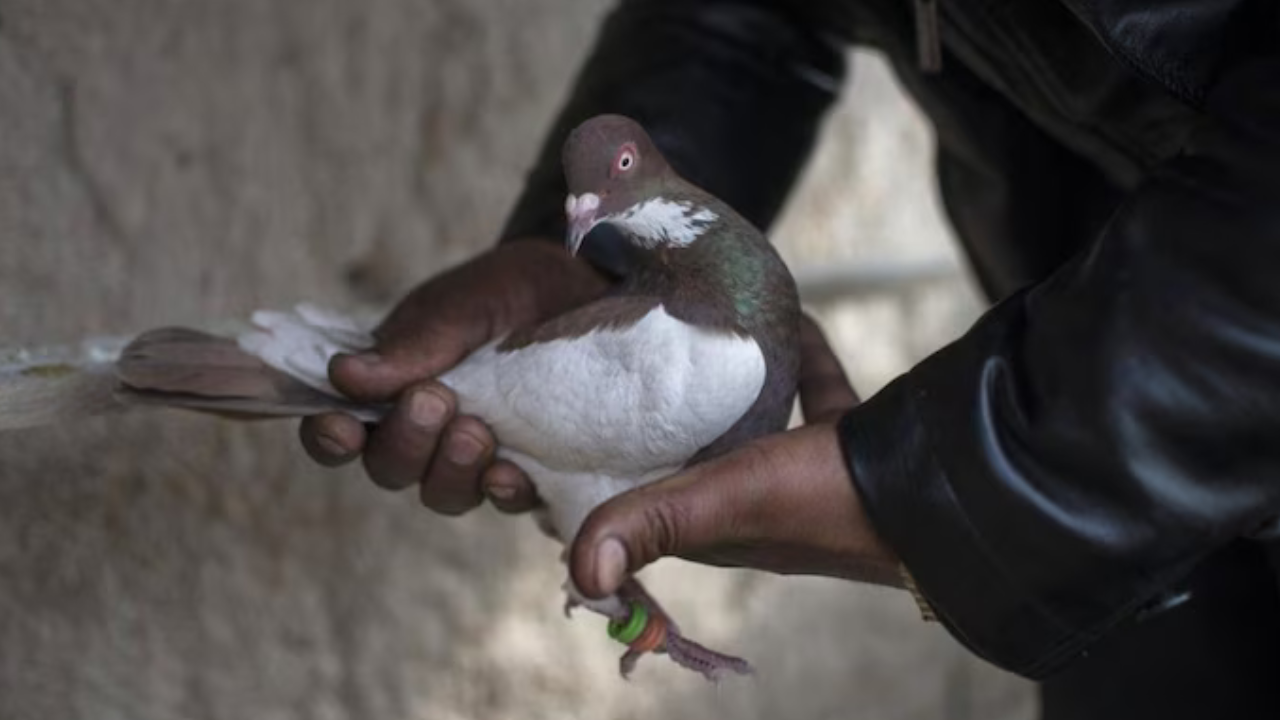
    A pigeon that spent eight months in Indian police custody has been released after it was finally cleared of being a suspected Chinese spy.

    The bird was caught at a port in the financial capital Mumbai with “messages written in a Chinese-like script” on its wings, the Times of India newspaper reported.

    “Initially, the police had registered a case of spying against the bird, but after completing their inquiry, they dropped the charge,” the report added.

    The unnamed bird was held under lock and key at a city hospital while police carried out an investigation.

    That probe took an “astonishing eight months”, the India office of the People for the Ethical Treatment of Animals (PETA) said in a Thursday statement.

    PETA India said police had granted “formal permission for the hospital to release the pigeon” on Wednesday.

    Local media reports said the bird fluttered away in good health.

    The pigeon is the latest of several detained by Indian authorities on suspicion of espionage.

    Border security officers took a pigeon into custody in 2016 after it was found carrying a threatening message to Prime Minister Narendra Modi close to India’s border with arch-rival Pakistan.

    In 2020, police in Indian-controlled Kashmir released a pigeon belonging to a Pakistani fisherman after a probe found that the bird, which had flown across the heavily militarized border between the nuclear-armed nations, was not a spy.

  • ‘Game changer’: Gene therapy offers hope for children born deaf

    ‘Game changer’: Gene therapy offers hope for children born deaf

    A gene therapy that has allowed several children born deaf to hear for the first time is being hailed as a “game changer” that raises hopes of the first new treatment for hereditary deafness in decades.

    Several medical teams around the world are trialling the procedure, which focuses on a rare genetic mutation that affects only a small number of the 26 million people with congenital deafness globally.

    But several success stories announced this week are already being seen as a turning point.

    On Tuesday, the Children’s Hospital of Philadelphia revealed that 11-year-old Aissam Dam, who was born deaf, was now “literally hearing sound for the first time in his life”.

    Aissam still has mild-to-moderate hearing loss, and may never learn to talk because the brain’s window for acquiring speech closes around the age of five.

    But a trial in China, the results of which were announced in The Lancet journal on Thursday, tested a similar treatment on six younger children.

    Five gained the ability to hear, according to the findings of the trial that started in 2022, making it the first to have tested the gene therapy on humans.

    Some of the children were already able to speak thanks to a cochlear implant — which they now no longer need, study co-author Zheng-Yi Chen of the Massachusetts Eye and Ear hospital told AFP.

    But one, a baby only a year old, had never been able to communicate verbally, Chen said.

    Chen said that after the treatment, when the mother asked the baby “who am I?”, the baby responded: “Mama.”

    When asked what a chicken sounds like, the baby responded: “Coo-coo.”

    “Everyone just cried with joy, it’s really amazing,” said Chen, adding that the baby was expected to grow up speaking normally.

    Not since cochlear implants were invented 60 years has there been such an advance, Chen said, adding that the therapy “symbolises a new era in the fight against all types of hearing loss”.

    – How does it work? –

    For now, the trials in China, the United States and another announced in France this week all use a similar technique to focus on people born with a mutation of the OTOF gene.

    This defect means they can no longer produce the protein otoferlin, which is needed for hair cells in the inner ear to convert sound vibrations into electrical signals that can be sent to the brain.

    The treatment involves injecting a harmless virus into the inner ear that smuggles in a working version of the OTOF gene, restoring hearing.

    The French trial will focus on babies aged 12-31 months, in the hopes it can “enable the acquisition of language”, said Nawal Ouzren, CEO of the firm Sensorion developing the treatment.

    Natalie Loundon, a French doctor and hearing loss expert, called the technique “a game-changer, a technological advance that will revolutionise therapeutic care”.

    “The idea is to be able to offer this treatment to children rather than an implant, which is not always received well,” she told AFP.

    For the China-based trial, the researchers will continue to study the participants to find out if their improved hearing lasts.

    Chen estimated that the treatment tested in that trial could be ready to apply for regulatory approval within three to five years.

    – Targeting the other genes –

    But this particular treatment will only help a fraction of those born deaf.

    Around one in every 1,000 children are born deaf due to gene defects, but a lack of otoferlin is the cause of only around three percent of those cases.

    More than 150 other genes have been discovered that trigger genetic hearing loss.

    But Chen had some good news.

    So far, the otoferlin treatment seems to work just as well in humans as it did in during trials on mice — which is not always the case for such research.

    Trials on mice targeting other gene defects that cause hearing loss have also been successful, Chen said.

    Researchers therefore hope this first treatment opens the door to others.

    France’s Pasteur Institute, which pioneered the research on otoferlin, and Sensorion are already working on another therapy that focuses on a gene whose mutations are responsible for the most common forms of hereditary deafness.

  • India’s Ambani no more the richest man in Asia. Who has grabbed the title?

    India’s Ambani no more the richest man in Asia. Who has grabbed the title?

    India’s Mukesh Ambani lost the title of Asia’s richest man after almost a year. He has been replaced by Gautam Adani who once again became Asia’s richest man after cracking a deal worth over half a billion dollars for the Adani group.


    It should be noted that in January 2023, American short-selling company Hindenburg said in a report that Adani Group has been involved in stock market manipulation and fraud accounting for decades. It called Gautam Adani the biggest fraudster in corporate history.


    Gautam Adani’s wealth declined after the report, pushing him to the bottom of the list of the world’s richest people in 2023, while Mukesh Ambani took the title of Asia’s richest person.


    But in recent days, the Supreme Court of India has issued an order that there is no need for a new investigation on Hindenburg’s allegations. Gautam Adani’s assets consequently increased and now he has once again become the richest man in Asia.


    According to a Bloomberg report on January 4, Gautam Adani’s net worth increased by $7.7 billion to $97.6 billion, after which he overtook Mukesh Ambani to become Asia’s richest man. Ambani currently owns $97 billion.


    Gautam Adani started 2023 as the third richest person in the world with $119 billion and then went down after a steady decline in wealth. Now, a year later, he has become the richest person in Asia and the 12th richest person in the world.


    Syed Mohammad Ali wrote in an article for The Express Tribune that the deal with the USA is part of the greater scheme of countering China’s growing influence in the region. Half a billion dollars is a sign of the restoration of confidence for the Adani conglomerate-backed Colombo seaport project in Sri Lanka.


    “This American deal with Adani seems compelled by growing great power competition across South Asia. The US government intends to use its International Development Finance Corporation to counter the Chinese Belt and Road Initiative in the Indo-Pacific, and its investment in Sri Lanka is part of that plan,” asserts Ali.
    Adani is closely linked to Prime Minister Narendra Modi and he has long been accused of benefitting from this friendship for the growth of his business. Like Modi, Adani has emerged unscathed from a potentially devastating storm of alleged wrongdoings. And both these men have the US to thank for helping them not only survive but thrive, due to America’s own vested interests, Ali explains.

  • At least 116 dead in northwest China earthquake

    At least 116 dead in northwest China earthquake

    At least 105 were killed and almost 400 injured in Gansu province, local officials said, after the strong, shallow tremor struck around midnight.

    According to state broadcaster CCTV, 11 others were killed and 100 injured in the city of Haidong in the neighbouring province of Qinghai.

    The quake brought homes crashing down and caused other significant damage, sending people running into the street for safety, state news agency Xinhua said.

    “I was almost scared to death. Look at how my hands and legs are shaking,” said a woman of about 30 in a video posted to a social media account associated with the state-run People’s Daily newspaper.

    “As soon as I ran out of the house, the earth on the mountain gave way, thudding on the roof,” she said as she sat swaddled in a blanket outside, cradling a baby.

    Footage from CCTV showed family possessions visible among strewn masonry from a house that caved in during the quake.

    Rescue work was under way early Tuesday, with Chinese President Xi Jinping calling for “all-out efforts” in the search and relief work.

    Temperatures are below freezing in the high-altitude area, and rescuers should be on guard for secondary disasters, he said according to CCTV.

    The quake, which was logged as magnitude 5.9 by the US Geological Survey, struck in Gansu near the border with Qinghai, where Haidong is located.

    That epicentre is about 100 kilometres (60 miles) southwest of Gansu province’s capital, Lanzhou.

    Xinhua reported the quake — which was felt in the major city of Xi’an in northern Shaanxi province, about 570 kilometres (350 miles) away — as being magnitude 6.2.

    Several smaller aftershocks followed the initial earthquake, and officials warned that tremors with a magnitude of more than 5.0 were possible in the next few days.

    A quake measured at magnitude 5.2 by USGS was detected further northwest in Xinjiang province on Monday morning.

    Freezing temperatures

    Power and water supplies were disrupted in some villages around the epicentre, Xinhua said.

    Footage from one of the worst-hit places on CCTV showed residents warming themselves by a fire while emergency services set up tents.

    CCTV said more than 1,400 firefighters and rescue personnel had been sent to the disaster zone, while another 1,600 remained “on standby”.

    The broadcaster added that supplies including drinking water, blankets, stoves and instant noodles were also being sent to the affected area.

    Footage showed emergency vehicles driving along snow-lined highways towards the scene with their lights flashing.

    Rescue workers in overalls were pictured shoulder-to-shoulder in the trucks, while other images showed them lining up in ranks to receive instructions.

    Other clips showed emergency personnel going through debris by torchlight, unfolding orange stretchers for the casualties.

    Hundreds of people have been evacuated in Gansu, officials said.

    The earthquake struck at a shallow depth at 11:59 pm local time Monday (1559 GMT), according to the USGS, which revised the magnitude downwards after initially reporting it to be 6.0.

    Earthquakes are not uncommon in China. In August, a shallow 5.4-magnitude earthquake struck eastern China, injuring 23 people and collapsing dozens of buildings.

    In September 2022, a 6.6-magnitude quake hit Sichuan province leaving almost 100 dead.

    A 7.9-magnitude quake in 2008 left more than 87,000 people dead or missing, including 5,335 schoolchildren.

  • iPhone 16 batteries to be primarily manufactured in India

    iPhone 16 batteries to be primarily manufactured in India

    In a strategic manoeuvre aimed at reducing its reliance on China, Apple has reportedly communicated a strong preference for manufacturing iPhone 16 batteries in India.

    As part of this initiative, an existing Indian battery supplier has been encouraged to scale up production, while Chinese suppliers, including Desay and Simplo Technology, have received directives to establish battery factories within India.

    Additionally, Japanese battery supplier TDK is gearing up for its own production facility in the country.

    This significant shift in strategy deviates from the original decision made by Steve Jobs to centralize most of Apple’s manufacturing operations in China, a move that was previously lauded as a key achievement by Tim Cook during his tenure as COO. 

    The change reflects a growing recognition of the strategic risks associated with being overly dependent on a single country, evident in events such as the COVID-19 pandemic and ongoing geopolitical tensions between the US and China.

    The multifaceted rationale behind this move includes concerns about the impact of global events on manufacturing capacity, the unpredictability of trade relations between major economies, and the reputational challenges posed by close associations with a country facing human rights criticisms.

    Apple’s decision aligns with a broader industry trend of diversifying manufacturing locations to mitigate risks associated with geopolitical and economic uncertainties.

    Notably, the company aims to prioritise Indian production for iPhone 16 batteries, with local government support evident in a Japanese supplier, TDK, establishing a significant facility in Manesar, Haryana.

    While this facility is expected to begin production in 2025, post-iPhone 16 release, it signifies a strategic commitment to bolstering the electronics manufacturing ecosystem in India.

    Apple’s move underlines the industry’s evolving approach to supply chain management in response to a dynamic global landscape.